" Powder River" Jack H LeeBiblio.com
4 242 résultats
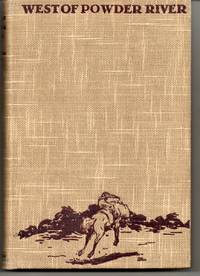
193312164New York: Huntington Press. Fine. 1933. First Edition. Hardcover. Patterned tan cloth lettered & illustrated in brown. Illustrated with full page drawings. Inscribed on half-title with a drawings by the author: "With best wishes from Powder River Jack Lee & wife "Kitty" and with courtesy of Clara P. Caulfield. " ; 8vo 8" - 9" tall; 204 pages; Signed by Author . Huntington Press hardcover
0011609Denver And Rio Grande Railroad System No date. Map. Very Good. Measures approximately 14 x 17.5 inches on onionskin paper three breaks at the horizontal fold at left. Extracted from its tourist guide book. <br/><br/>Estimated date of 1895. This map 17" x 14" oddly uses crude overprinting in red to insert some town names including Durango La Plata Montrose Gunnison Salt Lake City Pueblo and - oddly - Denver. The maps extend from Las Vegas New Mexico in the southeast to Salt Lake City and Ogden in the extreme northwest. Overprinted color is used to indicate Standard Gauge Narrow Gauge and Three Rail lines. The Inset map shows the main route to San Francisco. This map is attributed to S. K. Hooker. Next to the cartouche is an emblem for the Denver & Rio Grande R.R. Scenic Line of the World. Denver And Rio Grande Railroad System unknown
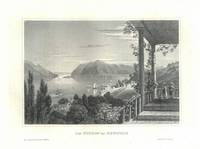
185959904Hildburghausen. Uten Ã¥r. 1859-63. OriginaltstÃ¥lstikk fra “Meyers Universumâ€. Motivets størrelse : 154 cm X 10 cm. Medfølger tekst pÃ¥ tysk. Tysk. unknown
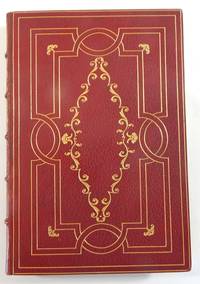
191321564Roma: Imprimerie Polyglotte 1913. First edition. Hardcover. Near fine. 8vo. xvi 323pp. Illustrated.<br /> <p><br /> Full scarlet morocco intricately tooled in gilt on the boards spine in sic compartments gilt gilt inner dentelles all edges gilt. Deep blue-green endpapers.<br /> Upper hinge nearly invisibly strengthened else this is a fine copy of a lovely binding by Riviere and Son signed on the front inner board.<br /> <p><br /> In Italian<br /> <p>. Imprimerie Polyglotte hardcover
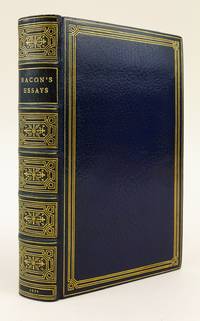
1891ST16866fLondon and New York: Printed by Cambridge University Press for Macmillan and Co 1891. From the "Golden Treasury" series. 210 x 133 mm. 8 1/4 x 5 1/4". xxiii 1 388 pp.Edited with notes and glossarial index by W. Aldis Wright M. A. Trinity College Cambridge. <br/> HANDSOME NAVY BLUE MOROCCO GILT BY RIVIERE AND SON stamp-signed on front turn-in covers with border composed of five plain rules and incorporating a scalloped corner configuration containing a pentagonal element raised bands spine intricately gilt in compartments outlined by plain and stippled rules enclosing an inner frame repeating the cover design and at the center an elaborate fleuron emanating from a floral tool and punctuated by many tiny dots turn-ins densely gilt maroon glazed endpapers top edge gilt other edges untrimmed. Engraved frontispiece in three states and the title page with the same image in a fourth tissue guard before title page. A Large Paper Copy. Spine just slightly and uniformly sunned toward blue-green title page with faint offsetting from tissue guard another page with a small area of darkening from laid-in piece of paper one leaf with two tiny marginal tears expertly repaired one page with trivial foxing but all of these imperfections insignificant and in general a very fine copy in a most attractive binding the text uniformly fresh bright and clean and the binding lustrous and virtually unworn.<br/> <br/> This is a special luxury copy of a late 19th century edition of Bacon's famous "Essays" first printed in 1597. As Oxford Companion indicates the text here comprises Bacon's "collections of reflections and generalizations and extracts from previous authors woven together . . . into counsels for the successful conduct of life and the management of men." Some of the essays "deal with questions of state policy . . . some with personal conduct . . . some on abstract subjects such as 'Truth' 'Death' and 'Unity' . . . and some reveal Bacon's delight in Nature such as the pleasant essay 'Of Gardens.'" Day says that "in Bacon's hand the essay is an impersonal gem of worldly wisdom" and most of the essays reflect an intention to provide "cold-blooded instruction on how to get ahead in life." In short incisive prose modeled after Tacitus "the aphoristic skill and wise experience of Bacon unite to form some of the most memorable and penetrating phrases in English." DNB indicates that this is an important edition pointing out "the accuracy of Wright's text and the concise learning of its notes." In very fine condition our volume gives special pleasure from the handsomely decorated Riviere binding to the high quality laid paper to the carefully printed text within enormous margins. <br /> <br /> Riviere is one of the foremost names in English binding partly because the firm did consistently fine work and partly because it was so long in business. Robert Riviere began as a bookseller and binder in Bath in 1829 then set up shop as a binder in London in 1840; in 1881 he took his grandson Percival Calkin into partnership at which time the firm became known as Riviere & Son and the bindery continued to do business until 1939. [Printed by Cambridge University Press for] Macmillan and Co unknown
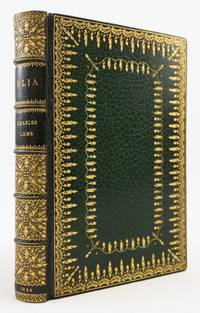
1823ST19567-072London: Taylor and Hessey 1823. FIRST EDITION First State imprint with single address for publisher. 200 x 125 mm. 8 x 5". 2 p.l. 341 1 pp. 3 leaves ads. <br/> VERY PRETTY DARK GREEN CRUSHED MOROCCO ELABORATELY GILT BY RIVIERE & SON stamp-signed on front turn-in covers with double frames formed of floral sprigs drawer handles and other small tools raised bands spine panels densely gilt with stippling floral tools radiating from small central flower gilt lettering turn-ins with floral garlands at corners olive green watered silk endleaves top edge gilt other edges untrimmed. Ashley III 50; Tinker 1457. Spine darker green than the covers though not at all noticeable in the four compartments that are almost solidly gilt front joint a little rubbed and with two-inch thin crack at top final leaf of ads with repaired curving two-inch tear into text isolated small stains or faint foxing but still very attractive--clean and fresh internally in a very lustrous binding sparkling with gilt.<br/> <br/> This is a handsomely bound copy of Lamb's largely autobiographical essays that embrace the broad subject of mankind at large as seen through the author's own experience and impressions. As Oxford Companion says Lamb's essays "present with exquisite humor and pathos and in a brilliant and inimitable style characters that the author has known . . . the productions of a playful or melancholy fancy . . . and general comments and criticism." The name "Elia" as Lamb says was "clapt down" on these essays in honor of a fellow clerk at South Sea House a building of commercial offices and the subject of the first essay. A second collection "The Last Essays of Elia" appeared in 1833. Charles Lamb 1775-1834 worked in the office of the East India Company and wrote poetry essays and plays. With his sister Mary he was the author of "Tales of Shakespeare" a flowing and lucid prose rendition of 20 of the bard's dramas that helped rekindle 19th century interest in the plays. The strikingly attractive binding done in an elaborately gilt style reminiscent of the Roger Payne era is the work of Riviere one of the foremost names among English binderies partly because the firm did consistently fine work and partly because it was so long in business. Robert Riviere began as a bookseller and binder in Bath in 1829 then set up shop as a binder in London in 1840; in 1881 he took his grandson Percival Calkin into partnership at which time the firm became known as Riviere & Son and the bindery continued to do business under the Riviere name until 1939 when it was acquired by Bayntun. Taylor and Hessey unknown
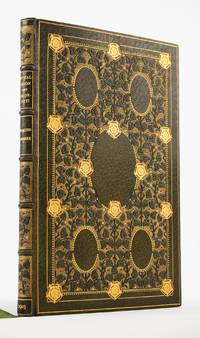
1903ST20957London: John & E. Bumpus 1903. 211 x 140 mm. 8 1/2 x 5 1/2". 86 pp. <br/> LOVELY GREEN MOROCCO GILT AND INLAID FOR J. & E. BUMPUS stamped in gilt on rear turn-in LIKELY BY RIVIERE & SON upper cover with gilt fillet frame central panel with densely blind-stamped leafy vines on a gilt pointillé background accented with onlaid red morocco dots large oval at center and four smaller ovals all framed by gilt beads the central oval adorned with four gilt and onlaid red and white morocco Tudor roses 10 more such roses at corners and along the sides of outer frame lower cover with gilt fillet frame raised bands spine compartments with blind-stamped leafy sprig on pointillé ground with onlaid black ivory and red morocco dots gilt lettering turn-ins with gilt border gilt trio of leaves at corners all edges gilt. With engraved frontispiece portrait title page vignette two headpieces and two tailpieces. Upper cover and spine evenly faded to olive green likely from being displayed just a hint of bowing to boards but A VERY FINE COPY the text entirely clean fresh and bright and the binding unworn.<br/> <br/> This lovely printing of Spenserian poetry comes in an unusual and skillfully executed binding likely by Riviere & Son which was producing some of its very best work at the time of publication. The poems here were inspired by Spenser's courtship of and 1594 marriage to his second wife Elizabeth Boyle. Day calls "Amoretti" "a unique sonnet sequence in Renaissance England" and he is unreserved in his praise for "Epithalamion" calling it "the most beautiful nuptial poem in English and perhaps in any language." Spenser 1552 - 99 was the first modern English poet to achieve major stature and Day points out that those "influenced by Spenser are virtually a roster of the great English poets since his time" among them Milton Wordsworth Keats Rossetti and Tennyson. Bumpus bindings were done for the bookselling firm of John and Edward Bumpus founded in 1780. The firm long enjoyed a reputation as purveyors of fine and beautiful bindings without ever operating a bindery. Instead they outsourced the work to the best binders of the day including Riviere and Morrell the former being a likely choice here. The combination of swirling blind-stamped vines a densely stippled background and onlaid blossoms demonstrates creativity in design proficiency in a range of finishing techniques and meticulous execution. The five blank ovals on the upper cover bring to mind the layout of Cosway bindings a specialty of the Riviere firm in which those ovals would be filled with miniature paintings on ivory under glass. Cosway bindings could sometimes be ornate to the point of being overwhelming so the blank ovals here are a welcome moment of restraint amid the animation of the cover design. Apparently an earlier owner enjoyed displaying this binding--as who would not--and the leather has mellowed to an olive green--which may actually be a more pleasing foundation for the decoration than the original brighter green. Certainly the book saw no other use as the contents are as fresh as the day the volume left the printer. John & E. Bumpus unknown
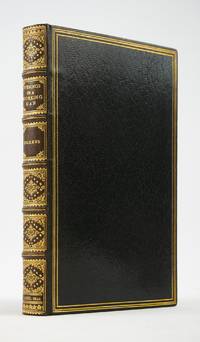
1844ST20685-2London: T. C. Newby 1844. FIRST EDITION. 170 x 102 mm. 6 3/4 x 4". 1 p.l. xiii 3 205 1 pp. 1 leaf ads.Preface by Charles Dickens. <br/> VERY PLEASING GREEN CRUSHED MOROCCO BY RIVIERE & SONS stamp-signed on front turn-in covers framed with gilt rules densely tooled cornerpieces with floral sprigs on a stippled ground raised bands spine panels lavishly gilt with a starburst of floral tools emanating from a central medallion all on a stippled ground gilt lettering turn-ins gilt ruled with floral garlands at the corners all edges gilt original tan cloth wrappers bound in at rear. Title page printed in blue and red. Eckel pp. 146-47; Podeschi B-121. Sheila M. Smith "John Overs to Charles Dickens: A Working-Man's Letter and Its Implications" Victorian Studies 18 no. 2 1974: 195–217. Spine just slightly sunned though hard to tell because of the heavy gilt a few trivial spots internally but A VERY FINE COPY in quite a pretty binding.<br/> <br/> This attractively bound volume of a working class poet's verse and prose represents one of Dickens' charitable efforts in the spirit of social reform. A carpenter by trade John Overs 1808-44 had become acquainted with Dickens in 1839 when he submitted poetry for publication in "Bentley's Miscellany" then under Dickens' editorship. Over the next several years Dickens became a literary mentor and something of a friend to Overs providing writing advice lending books and helping Overs to secure a position at Drury Lane Theatre when his tuberculosis became too severe to continue his work as a carpenter. Literary scholar Sheila M. Smith has suggested that Overs may have served as an influence for "The Chimes" Dickens' penultimate Christmas book; she writes that Overs "was neither a political agitator nor a trade unionist. . . yet he was bitter and exulting in the idea of social revolution. A working man of this kind goaded to such feelings would have aroused Dickens's sympathy at a period when the novelist was experiencing his most violent indignation about his country's poor." To whatever degree that sympathy proved a literary inspiration for Dickens it directly led to the publication of the present work. When it was clear by the spring of 1844 that Overs would not survive his illness Dickens suggested to him that he publish a collection of his writings to help provide for his family after his passing. And so the present anthology was published only months before Overs' death on September 28 1844 with the proceeds from the book along with an additional charitable collection taken up by the publisher allowing his widow to make a living by opening a small milliner's shop. T. C. Newby unknown
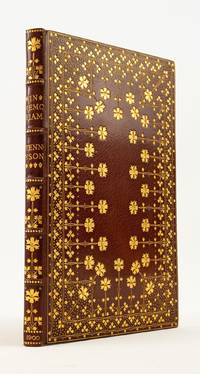
1900ST20797New York; London: Printed at the Bankside Press for M. F. Mansfield 1900. No. 83 OF 100 COPIES reserved for Great Britain from a total edition of 500. 244 x 155 mm. 9 1/2 x 6 1/8". CXXXI pp. 1 leaf colophon. <br/> LOVELY HONEY BROWN MOROCCO ELABORATELY GILT BY RIVIERE & SONS stamp-signed on front turn-in covers framed by delicate gilt chains the outer edge punctuated with tiny heart and dot tools the space between the gilt rules filled with many gilt dots and with 86 trefoils the central panel with 28 irises extending from the edge of the frame on alternating two and three chain link stems corner pieces with an oblique iris stem on a background of gilt dots accented by trefoils and small leaves raised bands spine panels with an iris rising from a cluster of small leaves gilt lettering gilt-ruled turn-ins with trio of irises on a stippled ground at corners top edge gilt other edges untrimmed. In the original felt-lined leather chemise with gilt lettering on spine and in a marbled paper slipcase bottom panel carefully reinforced with cellotape. With decorative initials from designs by Blanch McManus printed in orange. A FINE COPY--internally clean fresh and bright and THE BINDING SPARKLING AND UNWORN.<br/> <br/> This is a famous poet's most famous poem offered in elegantly vigorous binding from a pre-eminent English workshop. First published in 1850 the elegy "In Memoriam" is a tribute to Tennyson's college friend Arthur Henry Hallam 1811-33 son of the famous historian Henry Hallam 1777-1859. Tennyson 1809-92 had been publishing verses for seven years before Hallam's death but after the loss of his friend nothing from his pen appeared for nearly a decade. During that period he was working on the present poem the product of protracted meditation. Written in rhyming quatrains the poem moves from grief and doubt to certainty that the universe is purposeful. It was a sensational bestseller striking a deep note of resonance with Victorian readers. The queen herself told the poet "Next to the Bible 'In Memoriam' is my comfort." The design of our binding is especially intricate and the tooling is impeccable resulting in a notable aesthetic achievement. Riviere is one of the foremost names in the field partly because the firm did consistently fine work and partly because it was so long in business. Robert Riviere began as a bookseller and binder in Bath in 1829 then set up shop as a binder in London in 1840; in 1881 he took his grandson Percival Calkin into partnership at which time the firm became known as Riviere & Son and the bindery continued to do business until 1939. The condition of our volume is impressive; the original chemise has kept the binding safe from the fading of sunlight so that it looks virtually as it did when it left the bindery. [Printed at the Bankside Press for] M. F. Mansfield unknown
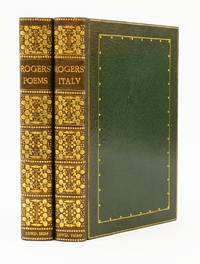
1830ST17640vLondon: Printed for T. Cadell 1830 1834. First Illustrated Editions. 202 x 135 mm. 8 x 5 1/2". iv 2 284 pp.; viii 295 1 pp. Two separately published works bound in two volumes but often found as companion volumes. <br/> VERY ATTRACTIVE GREEN MOROCCO BY RIVIERE & SON stamp-signed on front turn-in BEAUTIFULLY GILT-TOOLED BY FINISHER CHARLES MCLEISH covers with frame of two gilt rules with gilt dots along the inner frame raised bands spine lavishly gilt in compartments with complex design formed by trefoils sprouting from a central branch along with clusters of berries the background with gilt pointillé gilt lettering gilt-rule-and-dot frame repeated on turn-ins maroon endpapers all edges gilt. The two volumes with a total of four plates 20 illustrations in the text and more than 100 fine steel-engraved headpieces and tailpieces after designs mostly by J. M. W. Turner and Thomas Stothard. Italy with A HANDWRITTEN NOTE SIGNED BY ROGERS bound in at front. Ray 13 15. Spines evenly sunned to a light brown as usual with green morocco a hint of sunning to top inch of three covers faint offsetting from engravings other trivial imperfections but A FINE SET clean and fresh internally IN LUSTROUS UNWORN BINDINGS.<br/> <br/> In handsome morocco finished by one of the finest binders of the day this is an extremely appealing set of two poetic works with illustrations of considerable interest. Born in 1859 finisher Charles McLeish was apprenticed to Andrew Grieve in Edinburgh then came to London to work for the prestigious Riviere firm. When Cobden-Sanderson founded the Doves Bindery in 1893 he hired McLeish as the firm's finisher; McLeish held that estimable position until 1909 when he left to go into partnership with his son also named Charles who had apprenticed under Roger de Coverly. McLeish's expertise in applying the gilt decoration to bindings is evident here in the intricate tooling of the spine compartments which required applying individual small tools dozens of times and doing so with such exactness that only the most careful inspection will spot a couple of minute variations between one compartment and another.<br /> <br /> The scion of a wealthy banking family Samuel Rogers 1763-1855 first achieved fame with the publication in 1792 of "The Pleasures of Memory." After Italian travels during which he met Shelley and Byron in Pisa Rogers produced a first version of "Italy" in 1822 and issued a sequel in 1826 both of which sold poorly. He destroyed the unsold copies revised the poems and published them at his own expense in the present edition of 1830 our first volume embellished this time by illustrations. These were the work of two artists with very different propensities--Stothard 1755-1834 who did demure figure scenes and Turner 1775-1851 who provided landscape vignettes. The success of this edition was perhaps due as much to the artists as to the poet. <br /> <br /> Britannica describes Rogers as a "witty conversationalist" who "maintained an influential position as a leading figure in London society and as a generous host to brilliant company." Bound in here is an invitation to tea at his lovely home at 22 St James's Place: "Dear Katherine / If you & Miss Mallet / & Wm. have nothing better to do / pray come & drink tea with me / next Sunday the earlier the better. / Yours very truly Saml Rogers / St. James's Place / Thursday Evg." It is possible "Katherine" was London socialite Katherine Jane Canning daughter of British diplomat Stratford Canning 1st Viscount Stratford de Redcliffe; Rogers inscribed a copy of the 1845 edition of his poems to her according to auction records. Printed for T. Cadell unknown
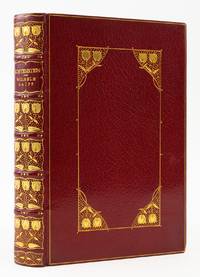
1900ST17635London and New York: Ernest Nister; E. P. Dutton & Co ca. 1900. 194 x 125 mm. 7 5/8 x 4 7/8". 304 pp.Adapted for English readers by L. L. Weedon. <br/> EXTREMELY ATTRACTIVE CONTEMPORARY RED MOROCCO BY RIVIERE & SON stamp-signed in gilt on front turn-in covers with gilt-ruled border and panel the panel corners each with two tulips stems on ground stippled in gilt raised bands one compartment with gilt titling the others densely gilt with three tulip stems on ground stippled with gilt and within a curving gilt-ruled border gilt ruled turn-ins with gilt tulips and stippling at each corner red watered silk pastedowns and endleaves all edges gilt. With frontispiece seven plates several in text-illustrations and head- and tailpieces by T. H. Robinson. AN ALMOST PERFECT COPY the binding especially lustrous and virtually pristine internally.<br/> <br/> This is a beautifully bound English translation of a popular German historical romance set in 16th century Württemberg. Inspired by the novels of Sir Walter Scott poet and novelist Wilhelm Hauff 1802-27 set his tale in Swabia during the reign of Duke Ulrich 1487–1550 a volatile nobleman dubbed "the Swabian Henry VIII" for his scandalous exploits. The novel appeared in German in 1826 just a year before the author's untimely death from typhoid and was a huge success. Duke Ulrich's descendant Duke Wilhelm of Ulrach was so taken with the story that he restored the eponymous Lichtenstein Castle. With prominent gilt blossoms against a stippled ground our especially pretty Riviere binding is done in the style of the Doves workshop which was flourishing under the direction of Thomas J. Cobden-Sanderson at the time of publication. The long-lived Riviere firm began with Robert who set up as a bookseller and binder in Bath in 1829 then established a bindery in London in 1840; in 1881 he took his grandson Percival Calkin into partnership at which time the firm became known as Riviere & Son; the bindery continued to do business until 1939 when it merged with Baytun of Bath. Rivere's work has consistently been of the highest standard throughout its long years of operation. The binding here is little changed since the day it left the workshop and the glossy brilliant white leaves of the text look like new. Ernest Nister; E. P. Dutton & Co unknown
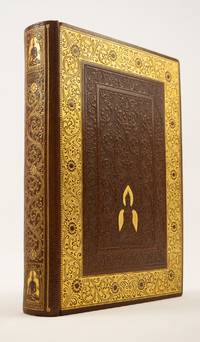
1913ST20673Paris: L'Édition d'Art H. Piazza 1913. ONE OF 12 COPIES on Japon with an original watercolor and two additional states of illustrations and 50 on Japon with one additional state of illustrations and 288 on vélin à la cuve. 238 x 165 mm. 9 3/8 x 6 1/2". 179 1 pp. 3 leaves. <br/> HANDSOME CARAMEL-COLORED MOROCCO DRAMATICALLY DECORATED IN GILT AND BLIND BY DURVAND stamp-signed on front turn-in covers with a wide gilt border of round flowers and scrolling vines flanked by dotted rolls surrounding a similar border tooled in blind front cover with a central panel similarly decorated with a central seated figure in blind surrounded by a solid gilt aureole smooth spine decorated with a similar gilt design of flowers and vines with a seated figure at the head and tail wide turn-ins with four gilt rules chocolate brown watered silk endleaves leather hinges top edge gilt. Original red and gold printed paper wrappers bound in. In a slightly worn felt-lined marbled paper slipcase. Text within decorative chromolithographed frames elaborate borders to title page and to beginning pages of the five chapters hybrid beasts on the limitations page and in the colophon two full-page color plates in a similar style WITH 51 POCHOIR COLOR ILLUSTRATIONS BY JOSEPH DE LA NÉZIÈRE nine of these full page THESE REPEATED IN TWO ADDITIONAL STATES one in monochrome on vélin à la cuve and one in pochoir on Japon plus AN ORIGINAL WATERCOLOR FRONTISPIECE by Joseph de La Nézière. A few faint smudges internally if you look hard to find them but A VERY FINE COPY extremely fresh and clean in a gleaming binding.<br/> <br/> This is an especially opulent production in a memorable binding from a major publisher of bibliophile editions. Our binder Durvand 1852-1924 operated one of the finest workshops in turn-of-the-century Paris and trained a number of talented artisans. In 1900 he was awarded a silver medal for his bindings at the Universal Exhibition and according to Flety he was devoted to improving the craft of binding right up to his death. Here the rich texture of the profusely used blind and gilt decoration creates the wonderful effect of a gleaming temple emerging from the shadow of a dense forest. This sumptuous covering is well-suited to the book's contents comprising vivid descriptions of life in the exotic Far East by an author familiar with the region. Lawyer and judge Paul-Louis Rivière 1873-1959 specialized in French colonial law and spent time living in Siam now Thailand. The richly colored plates are by noted Orientalist painter Joseph de La Nézière 1873–1944 who travelled widely in North Africa and the Far East. While he is known primarily for his landscapes and portraits this is apparently the only book that La Nézière illustrated. One of just a dozen deluxe copies ours includes three complete suites of the illustrations two beautifully colored with pochoir with glowing buttery light being used to great effect. The original watercolor frontispiece is especially lovely the scene of boaters at sunrise gleaming with the rising sun on the graceful palms and shimmering water. As lovely as the binding and the illustrations are the dazzling condition here is one further recommendation for the book. L'Édition d'Art, H. Piazza unknown
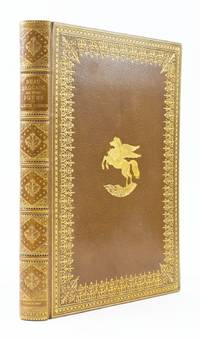
1892ST17864eLondon: Kegan Paul Trench Trübner & Co 1892. No. 10 OF 450 LARGE PAPER COPIES 250 for England and 200 for America SIGNED by the author on the limitations page. 253 x 178 mm. 10 x 7". xiii 3 83 9 pp. <br/> ELEGANT CONTEMPORARY TAN MOROCCO GILT BY RIVIERE & SON stamp-signed on front pastedown "Bound by Riviere & Son for L. Samuel Montagu 1893" covers with gilt rule and bead-and-star roll border intricate dentelle frame Pegasus ornament at center raised bands spine compartments with central fleuron enclosed by a lozenge of star tools curling cornerpieces gilt lettering densely gilt turn-ins marbled endpapers top edge gilt other edges untrimmed. Original ivory cloth binding bound in. With 50 illustrations by Hugh Thomson 25 of these plates printed on Japanese vellum. Signed on title page by the artist. AN IMMACULATE COPY.<br/> <br/> This collection of 18th century-style ballads by a poet of the Aesthete School comes in a refined binding that captures the elegance of that time. Described by Day as a "genteel bureaucrat" who specialized in "the graceful insouciance of 'vers de société' rather than the 'flowers of evil'" favored by others of his cohort Henry Austin Dobson 1840-1921 wrote light witty verse that reflected his fascination with the 18th century. Day notes that "he could write heroic couplets with much of Pope's conversational ability" and "could reproduce the elaborate French stanzas" of triolet ballade and rondeau with a finesse matched by few Englishmen. Dobson's extensive knowledge of the 18th century was so respected that DNB says "any publisher intending to reissue an eighteenth-century work went to Dobson for an introduction." Our binder Riviere is one of the foremost names in English binding partly because the firm did consistently fine work and partly because it was so long in business. Robert Riviere began as a bookseller and binder in Bath in 1829 then set up shop as a binder in London in 1840; in 1881 he took his grandson Percival Calkin into partnership at which time the firm became known as Riviere & Son and the bindery continued to do business until 1939. This binding was done for L. Samuel Montagu perhaps Louis Samuel Montagu 1869-1927 son of financier Liberal MP and philanthropist Samuel Montagu 1st Baron Swaythling. While the delicate filigree tooling is very characteristic of Riviere's finishing the Pegasus centerpiece is not a regular Riviere tool and was perhaps particular to this client. In any case the brilliant gilt and intricate finishing make for a memorable piece of work. Kegan, Paul, Trench, Trübner, & Co unknown
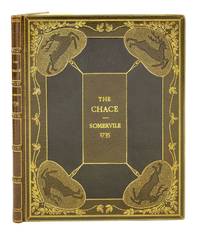
1735ST15797London: Printed for G. Hawkins and sold by T. Cooper 1735. FIRST EDITION. ONE OF 750 COPIES. 263 x 207 mm. 10 1/4 x 8 1/8". 6 p.l. 106 pp. 1 leaf errata. <br/> SUPERB OLIVE GREEN CRUSHED MOROCCO BY RIVIERE & SON stamp-signed on front turn-in cover with lettered central panel surrounded by four onlaid sections of darker green morocco outer frame of leafy vines emanating from the tips of the fan-palm-shaped cornerpieces each of these compartments with a blind-stamped leaping stag on a stippled gold ground raised bands spine with gilt-ruled compartments gilt titling gilt-ruled turn-ins all edges gilt. In a somewhat worn fleece-lined burgundy buckram chemise and marbled paper slipcase. Engraved allegorical frontispiece featuring Diana and Apollo by Scotin after Gravelot. Front pastedown with morocco ex-libris of Alfred Barmore Maclay. Foxon S-562; Hayward 158; Rothschild 1932; Schwerdt II 166. ◆Leather on spine uniformly sunned to olive brown as expected with green morocco text perhaps lightly washed and pressed in keeping with bibliophilic fashion at the time of binding occasional faint marginal smudges otherwise fine internally and in a very lustrous binding with no signs of wear.<br/> <br/> This is the first edition of the most popular work by Somerville 1675-1742 a mock-heroic poem about hunting in an apt and very striking binding by a renowned English workshop. Divided into four books of Miltonic blank verse "The Chace" is considered to be one of the finest didactic poems of the first half of the 18th century. The text covers hounds and their kennels along with the hunting of hare fox and otter and there are digressions that bring in methods of the chase in exotic localities. Most of the hunts described are accompanied by dogs and set in England past or present but the poet occasionally strays far afield to describe lion stalking or the hunting habits of Genghis Khan. According to Schwerdt the book was "highly approved of by the first literary characters of his day." The extraordinarily handsome binding by Riviere incorporates the hunting motif with four stags appearing to chase one another around the covers. Riviere is one of the foremost names in English binding partly because the firm did consistently fine work and partly because it was so long in business. Robert Riviere began as a bookseller and binder in Bath in 1829 then set up shop as a binder in London in 1840; in 1881 he took his grandson Percival Calkin into partnership at which time the firm became known as Riviere & Son and the bindery continued to do business until 1939. Our volume comes from the library of Alfred Barmore Mackay 1871-1944 who after a very brief career at his family's bank devoted himself to collecting books art and antiques engaging in equestrian sports and designing a sumptuous garden at his Florida estate now a state park. Printed for G. Hawkins, and sold by T. Cooper unknown
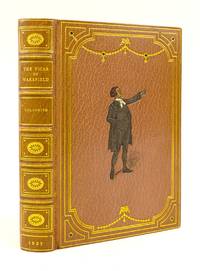
1927ST16866hLondon and New York: Macmillan Co 1927. 191 x 127 mm. 7 1/2 x 5". xxxvi 306 pp.Preface by Austin Dobson. <br/> CHARMING CONTEMPORARY FAWN-COLORED PICTORIAL CRUSHED MOROCCO BY RIVIERE & SON covers with frame formed by multiple gilt rules with onlaid green dot cornerpieces and gilt festoons at head and tail of frame central PICTORIAL INLAY IN FOUR COLORS depicting a vicar pontificating and in front of him as an indication of shadow thin penwork lines inscribed into the morocco; raised bands spine gilt in French fillet compartments with central gilt patera wide gilt-framed turn-ins with ribbon cornerpieces leather hinges marbled endpapers all edges gilt. In a linen-covered slipcase. With frontispiece and 181 illustrations in the text by Hugh Thomson. ◆Spine very slightly and uniformly sunned toward a butterscotch color but A VERY FINE COPY the text clean fresh and bright and the lustrous appealing binding with only the most insignificant wear.<br/> <br/> This copy of Goldsmith's classic is delightful enhanced by the appealing illustrations of Thomson and the book's charming pictorial cover. Riviere is one of the foremost names in English binding partly because the firm did consistently fine work and partly because it was so long in business. Robert Riviere began as a bookseller and binder in Bath in 1829 then set up shop as a binder in London in 1840; in 1881 he took his grandson Percival Calkin into partnership at which time the firm became known as Riviere & Son and the bindery continued to do business until 1939. <br /> <br /> Written in 1761-62 but not published until four years later "The Vicar of Wakefield" was said to have been rescued from some of Goldsmith's unpublished manuscripts by Dr. Johnson who thus saved the penniless author from debtors' prison by selling it to a publisher for £60. Considered to be the masterpiece of the middle-class domestic novel the "Vicar" has never gone out of style because its whimsically delineated characters have a delightful simplicity that somehow insulates them against ultimate misfortune and the innocent and virtuous are rewarded as they should be in the end. Macmillan Co unknown
193372090Los Angeles: Metropolitan Water District 1933. First edition for this year. This was a progressive report of developments in the construction of the aqueduct and there were other issues in 1931 1934 and 1935. Small octavo 5 3/4 x 4 inches. 36 pp. including 10 photographic illustrations and a double page map of the construction work underway. Publisher's red wrappers with white lettering. An excellent copy.Photographs include: Aqueduct Intake on Colorado River East Portal Coxcomb Tunnel Dragline Shovel at Work Interior of East Coachella Tunnel and others. "The 242-mile Colorado River aqueduct provided the water that made the large scale population and economic growth of Southern California possible. Stretching 242 miles from the Colorado River on the California-Arizona border to its final holding reservoir near Riverside California the Colorado River Aqueduct consists of more than 90 miles of tunnels nearly 55 miles of cut-and-cover conduit almost 30 miles of siphons and five pumping stations. Supplying approximately 1.2 million acre-feet of water a year - more than a billion gallons a day - it helped make possible the phenomenal growth of Los Angeles San Diego and surrounding Southern California areas in the second half of the 20th century. Funded by a bond issue of $220 million approved by voters in 1931 the Colorado River Aqueduct is capable of lifting more than 1600 cubic feet of water per second to a static height of 1600 feet as it travels over several desert mountain ranges. Recognizing the project's unprecedented length cost pumping rate lift and severe climate and terrain the American Society of Civil Engineers in 1955 selected it as one of Seven Modern Civil Engineering Wonders" American Society of Civil Engineers. Metropolitan Water District unknown
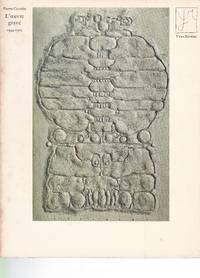
28937-Yves Riviere 1973-. Catalogue raisonne. First edition 1973. Text in French. 234 pages. Illustrated throughout in black and white with 10 pages in colour. Paperback. Very good. We are specialists in Catalogues: Exhibitions Auctions Collections etc. with a picture of the cover available on request. All items are as described and dispatched within 36 hours in a secure package. We are professional booksellers with over 35 years experience you may order with confidence. Pierre Courtin. L'oeuvre grave 1944-1972 French artist -Yves Riviere (1973)- paperback
1878607880México D.F.: La Socieded "Andres del Río 1878. Softcover. Very Good. Issues number 1 and 2. Slim octavos. 40pp. Text in Spanish. At a later date each issue was cloth-backed and the two gatherings bound into clothbacked card covers with a typed cover label. Binding worn and the second issue's cloth backing has neatly separated from the binding but both issues are sound and nicely preserved we are unsure if they were originally issued in wrappers. Prints a mathematical articles by Manuel E. Pastrana and "Un teorema de algebra superior" by Carlos Tamborrel among other material. Issues are uncommon. La Socieded "Andres del Río unknown
1960E13792BPhiladelphia: Simpson & Curtin Transportation Engineers 1960. Hardcover. Very Good. Oversized in printed paper covered boards over navy blue cloth spine. 43 pp; 14 folding plates. Seperate portion of larger plan for the development of high-speed radid transit between Philadelphia and Camdena nd the south Jersey suburbs specifically a the proposed rail line serving Haddonfield and Kirkwood. Inaddition to the plates of the proposed route contians sections on track equipment power substations signals and communication fare structure and collection projected patronage passenger trends in trips across the Delaware River revenues proposed operating schedules capital costs operating costs etc. Boards somewhat bowed and front cover rubbed about the edges <br/><br/> Simpson & Curtin Transportation Engineers hardcover
192245446Denver: The Van Noy Inter-State Company 1922. Paperback. Wide small 4to. Stiff calf-textured wrappers and large ornate gilt lettering string-tied. 40pp. Numerous large sepia-tone photographs. Very good. Faint wear to outer wrappers only. Tight and attractive first edition of this oversize promotional vehicle for the storied Denver & Rio Grande Railroad featuring full-page images of the major tourism sites such as Mesa Verde Bryce Canyon Great Salt Lake Pike's Peak etc. The Van Noy Inter-State Company paperback
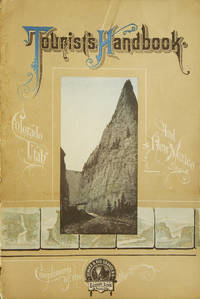
1895250835Chicago: Poole Brothers 1895. Denoted the "thirteenth edition two hundredth thousand" on title page. With illustrations. Plus folding map. 56 pp. 8vo. Original pictorial wrappers. Wrappers worn along spine. Some neat early pencil marginalia. Very good. In a half morocco and cloth folding case spine gilt. Denoted the "thirteenth edition two hundredth thousand" on title page. With illustrations. Plus folding map. 56 pp. 8vo. A useful turn of the century tourists' guide for places along the railroad's routes. This copy has pencil marginalia beside entries for five cities including Salt Lake City giving the impressions of a traveller in 1898. <br/><br/> Poole Brothers] hardcover
19582090202120411594Kobunsha 1958. Soft Cover. Fine. Number of books: 1 Kobunsha paperback
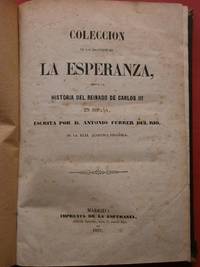
185740.52Madrid: Imp. de La Esperanza 1857. 1ª ed. Holandesa piel. 15x22.7. Imp. de La Esperanza hardcover
1875120795New York: Appleton 1875. First Edition. hardcover. good. 60 engravings map of Hudson River Valley. 53 pages ads. 4to original pictorial wrappers re-backed in modern cloth; wrappers chipped around edges. New York: Appleton 1875. Good.<br/> <br/> Appleton unknown
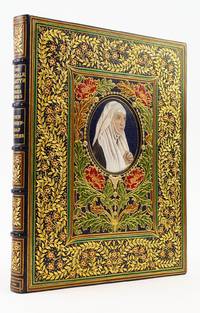
1914ST18714London 1914. 265 x 207 mm. 10 1/2 x 8 1/4". 41 3 blank pp. 1 leaf colophon. <br/> RESPLENDENT IN DARK BLUE MOROCCO RICHLY GILT AND ONLAID BY RIVIERE & SON stamp-signed on front doublure covers with wide frame of swirling gilt vines bearing red morocco blossoms and blue and green berries bordered by strips of green and tan morocco central panel of upper cover with recessed oval containing a portrait of a young nun sculpted in leather with painted details this encircled by an onlaid ivory morocco rosary and surrounded by an exuberant spray of red morocco poppies with green and tan leaves central panel of lower cover with an arch-backed black morocco cat beneath the arch of a gray morocco horseshoe at center a black and red witch's hat above the horseshoe and the whole on a very densely stippled gilt ground incised with calligraphic curls and set with nine silver stars around the cat this centerpiece surrounded by curling gilt vines bearing red morocco and gilt posies raised bands spine compartments framed with tan morocco and containing a gilt and onlaid floral sprig TAN MOROCCO DOUBLURES bordered by a strip of purple morocco this with onlaid green morocco frame adorned with gilt latticework densely stippled gilt cornerpieces set with purple morocco passionflowers all accented with inlaid circles of purple navy and green in varying sizes leather hinges apricot watered silk endleaves all edges gilt. In the original silk- and velvet-lined green morocco box. Numerous two- to three-line initials in red blue or burnished gold three three-line illuminated initials 11 five- to six-line initials in shades of purple blue and green with highlights of pink and burnished gold two of these with extensions running the length of the text and two incorporated into full borders four very large initials 12 lines or more in colors and gold five full borders that on title page incorporating a small oval miniature of Whittier and TWO FULL-PAGE MINIATURES one of a young nun at prayer the other of two lovers walking in a forest. Calligraphed colophon SIGNED by Sangorski stating: "This manuscript . . . was designed written out and illuminated by Alberto Sangorski for Messrs. R. Rivière & Son Bookbinders & Booksellers to his Majesty King George V. London. This manuscript will not be duplicated. This manuscript was executed by me." From the collection of Phoebe A. D. Boyle her sale at Anderson Galleries 19-20 November 1923 lot 368. Front flyleaf with engraved bookplate of comic book pioneer M. C. Gaines 1894-1947; typed description from "Kolb Collection" Louis Kolb laid in. Ratcliffe "Albert Sangorski Bibliography" SJR 245. Vellum a bit wavy as is typical but A BEAUTIFUL COPY the leaves creamy and bright being painted with rich colors and glittering gold and IN A FLAWLESS BINDING.<br/> <br/> This is an outstanding example of the artistry of Alberto Sangorski and that of the binders gilders and finishers of Riviere & Son the volume being executed at the zenith of their creative powers and formerly owned by the most important collector of Sangorski's manuscripts. Sangorski has written out and illuminated three poems by American author John Greenleaf Whittier: "The Female Martyr" inspired by an 18-year-old nun from the Sisters of Charity who died nursing cholera victims; "The Witch's Daughter" set in Puritan New England; and "Memories" a lover's touching reminiscences of youthful romance. In addition to elaborate initials and borders in his preferred palette of blues purples and greens brightened with burnished gold Sangorski has created two full-page paintings one of the beautiful young nun at prayer the other of youthful sweethearts strolling arm-in-arm through a wood. <br /> <br /> Alberto Sangorski 1862-1932 started his professional life as secretary to a goldsmith's firm became attracted to the book arts at the age of 43 and began doing illuminated manuscripts that were then bound by his brother Francis' firm Sangorski & Sutcliffe. Sometime around 1910 Alberto and Francis had a falling out and the artist went to work for Riviere the chief competitor to his brother's firm. Like the manuscript here our binding by Riviere is the work of many months with hundreds of individual inlays onlays and applications of gilt. Robert Riviere began as a bookseller and binder in Bath in 1829 then set up shop as a binder in London in 1840; in 1881 he took his grandson Percival Calkin into partnership at which time the firm became known as Riviere & Son and the bindery continued to do business until 1939. New York collector Phoebe A. D. Boyle was the widow of a canvas manufacturer who had made a fortune providing tents to the U.S. Army in the Civil War. George Sutcliffe described this important client as "rivalling the Medici in her patronage of the production of beautiful books." Stephen Ratcliffe deems the Boyle collection as "unrivalled" for its jewelled bindings and modern illuminated manuscripts; 33 of Alberto Sangorski's creations appeared in her sale at Anderson Galleries in 1923 and during World War I she was one of the only customers for extravagant productions like the present item. Any book from the Boyle collection which was put together with the greatest taste and discrimination is recognized as desirable beyond its intrinsic literary merit. unknown