BUC'HOZLivre Rare Book
33 résultats
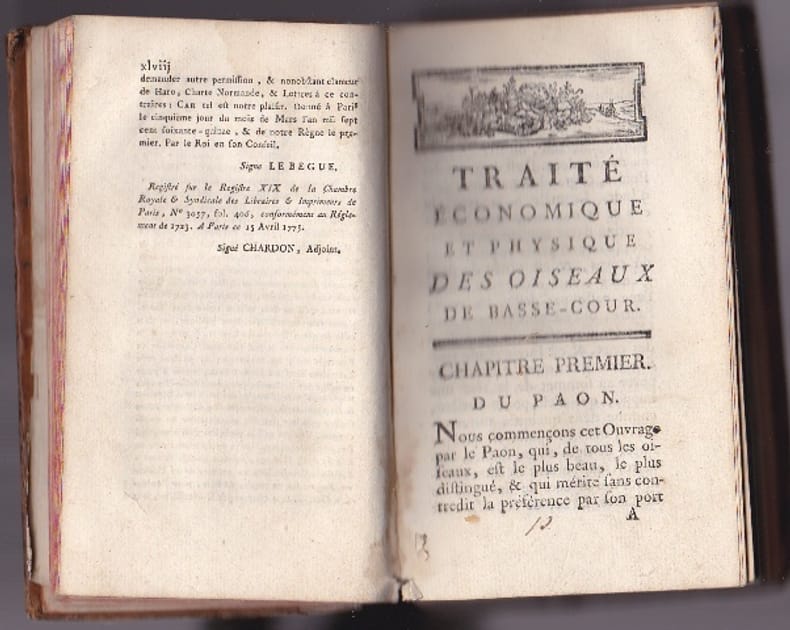
1775112EzParis Chez Lacombe 1775 In12 455 pages - Exemplaire a Retaurer - BON ETAT INTERIEUR - Importants manques de cuir sur les plats et au dos - coiffes arrachées - mauvais état de la reliure
1760173693Paris, Bauche, 1760. 4°. M. gest. Tit. u. 46 gef. Kpfr.-Taf. v. F.N. Martinet. 1 Bl., 516, LXVII S. Ldrbd. d. Zt. m. Rsch. u. Rverg. Einbd. stark berieben u. bestoßen. Ecken, Kanten u. Rücken etwas beschäd. Vorsätze fehlen. Gest. Tit. beschnitten (ohne Textverl.). Teils leicht braunfl. Breitrandiger Druck.
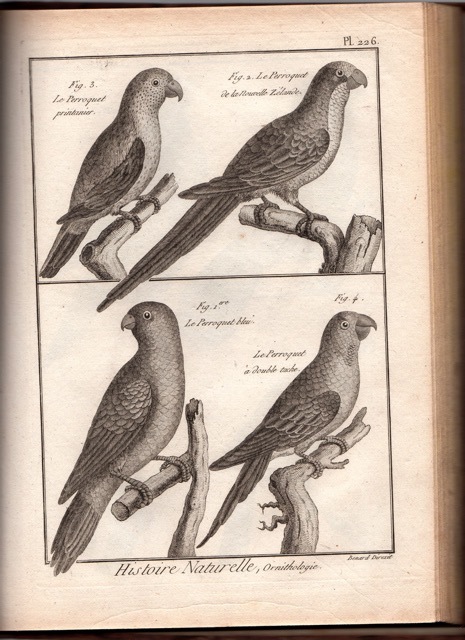
17907496Première édition de ce volume consacré aux oiseaux contenant de magnifiques planches.Tomaison 2 au dos de la reliure. 1/2 veau havane, dos long orné. Reliure défraichie. Très bon Paris Panckoucke 1790 1 volume grand in-4°.
179028587A Paris, chez Panckoucke, 1790. Un vol. au format in-4 (292 x 233 mm) de 76 pp. et [99] planches gravées. Reliure XIXème de demi-percaline satinée lie-de-vin, dos lisse orné de filets gras dorés, titre doré, tranches mouchetées.
1797biblio2Bewick Thomas: 1753-1828 History of British Birds. The Figures Engraved on Wood by T. Bewick. Vol. 1 and Vol. 2 containing the description and history of land birds etc. Newcastle: Sol. Hodgson; Edward Walker 1797; 1804 1804. 2 vols. 8vo. xxx ii 335 1; xx 400 pp. With 233 cuts of birds in the text. Contemporary half-polished calf over boards spine gilt; an excellent copy with respect to the interior of the book. Unfortunately the board is detached and nearly off. This copy is signed by Henry Oates and presented to him by his Aunt Ann Rayner in Dec. 1797. Ascended from Joseph Henry Oates to Lawrence Titus Oates who accompanied Scott on his expedition to the South Pole.First edition second issue as shown by the presence of the words "Wycliffe 1791" from the figure of the sea eagle on p. 11 of Volume I. Mottled calf over paper boards with some damage to the leather on volume one and volume two. Occasional spotting but otherwise a nice clean and internally bright copy. This is a very rare set owing in part to the signature and ascension of the Oates family. Published in two parts the first deals with land birds the second with water birds. "The text of the first volume was entirely written by Ralph Beilby; the illustrations are all by Bewick. It is as illustrator and artist that Bewick is best known and mainly on account of his excellent woodcuts this work passed through numerous editions a supplement being published by him in 1821. He also issued a number of small atlases of cuts without descriptive matter. The text in all the treatises bearing his name is mostly compilations from earlier writers." Thomas Bewick 1753-1828 is best remembered for his wood engravings especially those in his two works of Natural History: A General History of Quadrupeds and A History of British Birds Vol. I Land Birds Vol. II Water Birds. The methods of printing used in the eighteenth century led Bewick to develop techniques of engraving that far surpassed the work of his contemporaries. He lowered the surface of the blocks in the areas which he 'wished to appear pale so as to give the effect of distance'. These techniques together with Bewick's complete mastery of the traditional methods and his artistic ability resulted in some exquisite engravings. Masterful engraving indeed but all too frequently the printers of the day had neither the opportunity time or the incentive to produce fine sensitive impressions. Today printing the engravings individually and using a combination of eighteenth and nineteenth century techniques and twentieth century materials I was able to produce impressions that I hope go some way towards revealing the full potential of the blocks. As always it was both a privilege and a pleasure to print these wood engravings. Bewick was born in the north of England at Cherryburn on the south bank of the river Tyne twelve miles west of Newcastle upon Tyne. At the age of fourteen he was apprenticed to Ralph Beilby a general engraver in Newcastle. Ten years later he formed a partnership with Beilby. Wood engraving was only a small part of the business and the majority of the work involved engraving inscriptions and decorations on a wide variety of objects such as guns dog collars harness clock faces rings cutlery and the engraving of banknotes billheads and even bookbinders' tools and letters. Bewick is best known for his wood engravings in his two works of natural history: A General History of Quadrupeds and A History of British Birds Vol.1 Land Birds Vol. 2 Water Birds. Bewick started to engrave the illustrations for the Quadrupeds in 1785 and in his autobiographical Memoir 1 recounts: 'The greater part of these Wood cuts were drawn & engraved at nights after the days work of the shop was over. The <br />book was very well received and Bewick was encouraged to work on a history of birds. © David Esslemont 1997.These books were purchased at a Dominic Winter Auction and further family provenance is as follows from a Oates historian. "Joseph Oates whose name is inscribed in the volume was the great-grandfather of Captain Lawrence Oates. Joseph Oates was born in 1743 and died in 1824. His wife was Elizabeth Rayner which accounts for the other signature in the book. Joseph Oates and Elizabeth Rayner had six children and the youngest Edward 1792-1865 married Susan Grace in 1836. One of their five children was William Oates 1841-1896 the father of Captain Oates 17 March 1880 – 17 March 1912- He died on his birthday. His grandparents' names were included in the full name of Captain Oates - i.e. Lawrence Edward Grace Oates. There is a strong connection with travel and exploration throughout the Oates ancestors." There is no connection to be found that these books were taken on the expedition or recovered from the expedition if they were they would be worth considerably more than our price. It is safe however to say that it was a treasured set by grandparents and parents of Oates and that both the great grandfather and Captain Oates' father had an interest in birds and collected such upon their travels around the world. From the age of 20 until his death at 32 Captain Lawrence Oates was mostly away in service or in the Antarctic. He spent 9 months at his ancestral home recovering from a leg wound he received in the Boer War in 1901. In the expedition at near death starving; Captain Lawrence Oates on his birthday said "I am just going outside and may be some time." Hew was known as a gentleman brave and determined to try and save his companions. His body was never found. Sol. Hodgson; Edward Walker hardcover
1791VV193891791-1795 (1st ed.) xvi, 840, xx, 800, xviii, 946 p., 26, 18, 31 (+ 5a & 5b) engraved, folded pls, 3 frontispieces, contemporary spickled paper covered boards (somewhat rubbed). Library stamps on blank end papers, and blank verso tiitle-page. A small waterstain on upper margin of first frontispiece, the great majority of text and plates clean, a little foxing on a few scattered pages, but nothing serious. Several plates depict two birds and these are counted in this work as two separate plates (in all there are 49 full page plates + 3 frontispieces).This is the complete birds section (volumes 2-4) in First edition! Volume 1 treated the mammals.
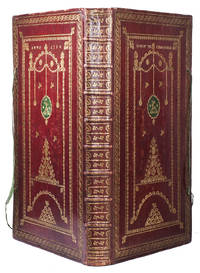
1784ABC_46946The Netherlands 1784. Large folio 52 x 33.5 cm. Contemporary richly gold-tooled red morocco over boards sewn on 8 supports each board with a round gold-tooled green morocco inlaid centre piece gold-tooled board edges 2 pairs of green cloth ties gilt edges and block-printed paste-paper endpapers in red and yellow. The spine is also richly gold-tooled with 2 different rolls to frame the compartments and underline the leaf and flower stamps. The front and back boards match except for the gold lettering: on the front board "konst tekeningen" and on the back board "anno 1784". The tooling shows 4 different rolls used for multiple frames and numerous stamps of leaves flowers vases birds and other decorative elements. With 18 large beautifully hand-drawn and coloured illustrations of birds. 90 ll. Splendidly bound drawing book containing 18 unsigned detailed watercolour and gouache drawings of birds. The colourful birds appear to be drawn after the plates in Edward Donovan's The natural history of British birds first published in instalments between 1794 and 1819. If so the present drawings must have been added to the drawing book at least 10 years after it was bound.The blank drawing-book was bound according to the gold lettering on the back board in 1784 and the tools identify it as the work of the most important and arguably the best bindery in the 18th-century Netherlands dubbed the First Stadholder Bindery by Storm van Leeuwen. Since the names of the binders remain unknown the name now used alludes to the fact that it produced many bindings by order of the Stadholder Willem V and presumably his father Willem IV. Its great importance rests on the number of its surviving bindings the diversity of the work it produced the quality of the tooling the exceptionally large number of binding tools it must have owned and the length of time it must have been operating from at least 1722 to 1793 Storm van Leeuwen. The paper is laid with no watermark and appears to be quite consistent.Occasional minor foxing but otherwise internally fine and clean. The binding shows only slight signs of wear so both the album and the binding are in very good condition. A sumptuously bound album of attractive illustrations of British birds.l For the binding: Jan Storm van Leeuwen Bookbinding 18th century IIA pp. 67-101; for images of the rolls etc.: Jan Storm van Leeuwen De achttiende-eeuwse Haagse boekband pp. 388-395. ABE CAT Art History hardcover
176620596Florence Italy: Giuseppe Vanni 1766. Print. Very good condition. Contemporary hand colored copper engraving. From the Natural History of the Birds Treated Systematically and Adorned with Copperplate Engraving Illustrations in Miniature and Life-Size 1766-1777. <br /> <br /> The work carries some interesting historical importance according to Peter Dance: "The production of its five massive folio volumes must have been one of the most remarkable publishing ventures ever undertaken in Florence. Begun in 1767 and based on birds taken from the collection of Giovanni Gerini it was completed ten years later. It was larger better engraved and more vividly coloured than any previous work on birds but these are not its only claim to fame. The attitudes of the birds themselves give this book its unique character. Strutting parading posturing and occasionally flying.are birds whose real-life counterparts would surely disown them and not without reason for Manetti seems in these pictures to be depicting the human comedy the habits and mannerisms of contemporary Italian society. His book may still be rated among the very greatest bird books if only for its magnificent comicality" S. Peter Dance The Art of Natural History: Animal Illustrators and their Work. London 1978.<br /> <br /> Approx. 10 5/8 x 13 1/2" platemark on watermarked paper measuring 14 1/2 x 18". The original images were drawn by Lorenzo Lorenzi Violante Vanni or Manetti himself. Giuseppe Vanni unknown