2 067 résultats
1897DEMO007259ILondon: Chapman and Hall 1897. New edition. Hardcover. Good. 12mo 296 iv pages green cloth recased with new endpapers. <br/><br/>"The novel breathes with the overtones of plain sky and stars in the setting of a South African farm". "Her best and most famous novel . a neurotic but powerful presentation of life on a remote ostrich farm in the Veld. She was an early passionate but unintegrated feminist -NOVELS AND NOVELISTS." Chapman and Hall hardcover
14828Henry Barrère éditeur Paris 1897. Chemise in/8 percaline éditeur verte plat avec décor à froid et titre doré contenant une grande carte grand format 12 m x 82 cm en couleur contrecollée sur toile. Excellent état. unknown
4B12251Imprimerie Alsabatt Beyrouth 1911. 263 S. mit 10 Tabellen uns 1 Korrektur-Blatt im Anhang betitelter originaler Leineneinband Name auf Vorsatz / Kanten etwas berieben. - seltene original Ausgabe in erster Auflage / gutes Exemplar / Text französisch - unknown
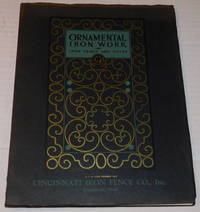
192896752Cincinnati Ohio: Cincinnati Iron Fence Co. Inc. 1928. 1928. Very good. - Quarto 11-1/4 inches high by 8-3/4 inches wide. Softcover bound in yapp-edged black wraps titled in black and light green with gilt and green art deco decorations on the front cover and a gilt vignette of an iron fence on the rear cover. The edges of the covers are slightly creased and the top edge is faded. There is a short tear along the bottom edge of the rear joint extending into the spine. 96 pages with a title leaf and foreword with profuse full-page black & white illustrations of various styles of architectural iron fences & gates and installations making use of them. The last 2 pages includes a partial list of owners of Cincinnati Iron Fences. Very good. <p>The text also includes instructions for taking measurements as well as some information on dimensions and prices.<p>The illustrations include many photographs of homes and property enclosed by ironwork fences as well as commercial properties which sometimes make use of attractive fencing and at other times simple chain link fencing. One example depicts simple but attractive iron fencing used as bridge railing for Cincinnati's Mt. Auburn's Walker and Ringold Street Bridge.<p>RARE. WorldCat locates only 2 copies those at the Columbia University Avery Classics library and The Henry Ford Benson Ford Research Center. Cincinnati, Ohio: Cincinnati Iron Fence Co., Inc., (1928). paperback
196313556Los Angeles: The Westerners 1963 1963. Very good. - Small quarto 10-1/8 inches high by 8-1/8 inches wide decorative light brown & gilt paper covered boards backed with green cloth with a pictorial label in cream & black mounted on the front board. The boards are lightly bumped with a few tiny chips to the paper along the front edges. The label is unevenly darkened. Title & pages 98-136 printed on cream stock. Profuse illustrations in brown & cream with a large folding color plate. There is an owner's address label ink signature & blind stamp on the front endpaper with the same blind stamp on the bottom corner of the title page. Very good. <p>First edition.<p>The book is based on and quotes extensively from a taped narrative of Ellsworth's life and experiences made by the artist.<p>Iron Eyes Cody 1907-1999 a friend and next-door neighbor of Ellsworth was born Espera DeCorti the son of two Italian immigrants. On moving to California in 1924 he changed his name to Cody and became an actor passing himself off as a Native American. He married an American Indian woman and they adopted two American Indian sons. He lived and worked as a Native American all his adult life devoted himself to promoting Native American causes and was honored for his efforts by Hollywood's Native American community in 1995. His best-known peerformance was that of the Indian who sheds a tear for the American environment in an ad that ran in the 1970s and 1980s.<p>Rare. WorldCat locates three copies. [Los Angeles?: The Westerners?, 1963?] hardcover
200131.00Santander: Fundación Marcelino Botín 2001. 1ª ed. Rústica con estuche. 15x20. . Fundación Marcelino Botín paperback
218412Paris: Librairie Générale de L'Architecxture et des Travaux Publics Ducher et Cie nd. Missing 6 20 26 30 32 50 83 of 84 plates 2 of plate 22. 2 page of text. 1 vols. Folio. In portfolio. Some foxing to plates else near fine. Missing 6 20 26 30 32 50 83 of 84 plates 2 of plate 22. 2 page of text. 1 vols. Folio. Librairie Générale de L'Architecxture et des Travaux Publics Ducher et Cie unknown
199422.829Manuscrito s.a. aprox. 1994. 21x29.5. Manuscrito unknown
31261<p>Early Pennsylvania Iron Industry – Forge Founded by Maj. Gen Arthur St. Clair.</p><p>The collection contains two ledgers:</p><p>Johnston Alexander <strong>Manuscript Ledger Relating to The Hermitage Furnace Grist Mill and Store in Westmoreland County 1810-1812</strong></p><p>Folio 396 manuscript pages 20-page name index entries written neatly in ink bound in contemporary full sheep tooled in blind spine label binding worn hinges starting text in very good clean and legible condition. Johnstons' partial signature is found on the front board.</p><p>A contemporary manuscript note on the front free endpaper states "Bound for Patterson & Hopkins in Pittsb." This firm was the short-lived Pittsburgh book-selling business conducted by Robert Paterson and John Hopkins which lasted from 1810 until it was dissolved on November 5 1812. The business of this company was continued thenceforth until the end of 1817 under the new firm of Robert & Joseph Patterson. While this firm mostly sold books and stationery and supplied local printshops with paper the two brothers also conducted some small-scale publishing perhaps mostly using the press owned by Silas Engles.</p><p>Another contemporary manuscript note taking up most of the rear free endpaper states: "Ledger a for A. Johnston Esqr by James Nouman 1810 for Hermitage Furnace" – perhaps Nouman was the binder.</p><p>The ledger contains accounts for the Hermitage Furnace as well as a grist mill and general store under the management of Alexander Johnston. St. Clair in addition to the Hermitage Furnace also operated "a mill and other property" including a blacksmith shop these were all likely the properties leased by St. Clair about 1806 to Pittsburgh capitalists. The account book contains entries for various castings produced by the furnace bar iron and tools used in production forge hammers et cetera. There are also accounts for Johnstons' own Kingston Furnace the Washington Furnace another Westmoreland County Furnace and the Youngstown Store as well as numerous individuals many of whom were likely Hermitage Furnace workers. The general store accounts may have been an early "company store" for Hermitage workers and nearby farmers.</p><p><strong>Manuscript Ledger containing Accounts for Alexander Johnston 1805-1850</strong></p><p>Narrow folio 236 pages several inlaid items bound in contemporary sheep binding worn and shaken identified as "Ledger F" on front cover Alexander Johnstons ownership on rear cover a number of pages excised at rear the volume was used as a "herbarium" at one point there are stains from plant specimens however the entries are clean and legible.</p><p>"The iron industry of Pennsylvania took root in the eighteenth century in the southeastern part of the state but as the frontier moved westward ironworks were established not far behind. Furnaces and forges quickly sprang up to supply the agricultural communities with iron products that were badly needed. The spread settlement afforded men of initiative and capital the opportunity of producing iron first for a local market and then in many cases for more distant markets. At the beginning of the nineteenth century frontier conditions still prevailed in many parts of Pennsylvania but the iron industry – at that time a combination of iron manufacture and agriculture – played an important part in the development of the economic life of the state and the nation and in bringing about the change from an agrarian to an industrial civilization.</p><p>During the first part of the nineteenth century all the iron furnaces in the country were cold-blast furnaces. By the time of the Civil War however technological changes were taking place as can be seen in the use of bituminous and anthracite coal or coke as fuel in many furnaces and in the application of a hot blast instead of a coal one …</p><p>The blast furnace with its casting house blast house stock house and wooden blowing cylinders or tubs operated by an overshot water wheel or steam engine was an impressive sight in its agricultural setting when in blast. Not far from the plant were the houses of the workers the "mansion house" of the ironmaster the office the stables and the smith shop. Many of these communities also included a forge where pig iron from the blast furnace was heated and hammered into the bars of commerce. … old iron furnaces were part of a busy community where families lived toiled and died …" – Arthur C. Bining.</p><p>The Hermitage Furnace was the second built in Westmoreland County Pennsylvania. The furnace was built by Major General Arthur St. Clair after he returned from the governorship of Ohio circa 1802-1803. The furnace was built at The Hermitage the onetime home of St. Clair located about two miles northeast of Ligonier on the road leading to Johnstown. St. Clair built the furnace in hopes of restoring his depleted fortune. The furnace was first managed by James Hamilton a prominent Carlisle Pennsylvania lawyer named deputy attorney general of the Western District of Pennsylvania by Thomas Jefferson. Hamilton's name appears several times in the ledger.</p><p>An advertisement in the November 21 1806 issue of the <em>Farmer's Register</em> published in Greensburg by John M. Snowden taken out by Henry Weaver & Son Greensburg merchants it reads:</p><p>"Hermitage Furnace in Blast. The subscribers being appointed Agents by General Arthur St. Clair for the sale of his castings generally and for the delivery of castings and stoves for any number of tons in good terms. Samples of the castings and stoves to be seen at their store in Greensburg at any time after the 10th inst."</p><p>At Hermitage Furnace they were compelled to use a small amount of coal in the blacksmith shop this was packed in sacks and shipped from a mine in Lockport on the Conemaugh River a distance of about 12 miles. This was kept up until about 1807-08 when a great flood which washed away the surface ground near Ligonier exposing the previously unknown Pittsburgh coal seam. Coal banks were opened and they used their own coal instead of Lockport coal. In 1818 when lots were advertised for sale in Ligonier the coal banks a mile or two from the proposed town were used as an inducement to prospective settlers.</p><p>Shortly after 1806 General St. Clair abandoned the management of the furnace himself and leased it with his mill and some other property to some Pittsburgh investors for about $ 3000.00 per year. St. Clair's creditors were closing in on him and in 1810 the furnace was sold by the sheriff and purchased by James O'Hara. Alexander Johnston prominent iron master and sheriff justice of the peace and treasurer of Westmoreland County must have had a financial interest in the furnace.</p><p>Johnston was born in Enniskillen County Fermanagh Northern Ireland July 10 1773 he emigrated to America in 1797. He married Elizabeth Freame. The couple then operated a hotel in Greensburg then removed to Pittsburgh where Johnston trained to be an iron master and after along life spent mostly in western Pennsylvania died in Kingston Westmoreland County in 1872. He began work in the iron industry in the late 18th century beginning with his own Kingston Furnace which wasn't a success. The main ledger offered here was kept beginning at the time when St. Clair sold the furnace in 1810. One of the early pages in the ledger lists the times the Hermitage Furnace "blew" "stopt" or "quit." It appears Johnston and others kept the furnace going until at least May 28 1811 when "William Bailey quit managing."</p><p>The furnace seems to have remained idle following the hard times of the Embargo until 1816 when it was again put into blast by O'Hara and Skully under the management of John Henry Hopkins. Hopkins was not a successful manager and the furnace closed down in 1817 and never operated again.</p><p>Boucher John N. <em>History of Westmoreland County</em> vol. 1 pp. 445-457</p><p>New York: The Lewis Publishing Company 1906</p><p>Harman J. Paul <em>Stone-Stack Smelting Furnaces in Westmoreland County</em></p><p>Pennsylvania History: A Journal of Mid-Atlantic Studies Vol. 19 No. 2 April 1952 pp. 185-193</p><p>https://www.jstor.org/stable/277769302</p>
19841435Atlanta GA: Ringsider Magazine Georgia Championship Wrestling Inc. 1984. First Edition First Printing. Original wraps. Very Good . 8 1/4 X 10 3/4 Inches. 6 PP. Original circa 1984 Georgia wrestling program featuring the National Heavyweight Champion "Super Destroyer" AKA The Spoiler and The Iron Shiek among others. Rare program with Johnny "Wildfire" Rich on the cover. Original price of $1.00 on front. Slight wear to egdes and corners but a clean copy overall. Ringsider Magazine (Georgia Championship Wrestling, Inc.) unknown
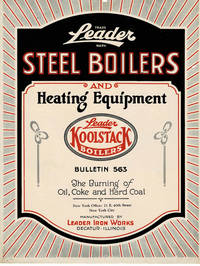
192798996Decatur Illinois: Leader Iron Works 1927. 1927. Fair. - Quarto 10-7/8 inches high by 8-3/8 inches wide. Softcover bound in printed cream wraps titled and decorated in blue black & red on the front cover. The covers are separated along the spine and detached. 11 & 1 pages including the covers with profuse black white & red illustrations of the firm's boilers gages & controls and buildings. There is a small hole through the top edge of the first few pages. Good. <p>Together with a form letter on "Leader Iron Works" stationery signed by William Phillip Stauder as V.P. and Sales Manager dated October 31 1927 and with the June 15 1927 "Dealer Net Price" list.<p>Leader Iron Works was founded in Decatur IL in the early 1900's.<p>RARE. Decatur, Illinois: Leader Iron Works, [1927]. paperback
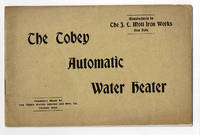
1898100094New York: The J.L. Mott Iron Works 1898. 1898. Good. - Oblong octavo 5-7/8 inches high by 9 inches wide. Softcover bound in tan wraps titled in copper on the front cover. The covers are slightly soiled and the corners bumped. The edges of the rear cover are darkened. 16 pages with 3 pages of black & white illustrations depicting the heaters and the Tobey steam trap. The corners of the pages are bumped. Good. <p>Established in 1828 by Jordan L. Mott in New York City the American hardware dealer and manufacturer The J.L. Mott Iron Works operated during the late 19th century through the 1920's. Mott's products were mentioned in Benson Lossing's "History of New York City". The company exhibited an elaborate 25 foot tall cast iron fountain at the 1876 Philadelphia Centennial Exposition.<p>RARE. New York: The J.L. Mott Iron Works, 1898. paperback
1890502San Francsico California: Pacific Rolling Mill Company 1890. 8vo. 250 x 170 mm. 10 x 7 inches. 100 pp. plus 4 leaves of ruled paper 2 with measurements in manuscript. Illustrated throughout with simple drawings of parts many stenciled with green wash; one plate folding. Bound in limp cloth covered boards title in gilt on front cover; a cloth binding shows some wear to gilt title two pencil drawings on front endpaper; other a very good sound copy. Straight forward price list of iron bar steel rail rolled and forged metal axles nuts bolts washers and dozens of other metal products. There is no introduction about the history of the firm just images of parts prices and a few lines of text describing specifications for some of the more complicated manufacture items. What distinguishes this rare trade catalogue is the design sense of many of the images and the application of stenciled color to highlight the object. The printed form of the parts are in outline and as one pages through the catalogue the images take on an abstract quality. Metal parts become contoured shapes with form being determined only by the light green wash applied to the physical part of the design. Although unintentional I am sure this late 19th century publication replete with many of the characteristics of period book design exhibits a very modernist feel one that is most unusual in publications of this nature. Although called the 7th edition this is only one of three issues of the PRMC's product guide and price list that is known. Organized in 1867 PRMC grew continuously and by 1892 was producing more than 40 thousand tons of iron and steel. "This giant enterprise is so closely identified with the manufacturing interests of the Pacific Coast that there is scarcely a manufacturing firm or corporation on the Coast that does not depend upon its output. The mills are located at Potrero Point in South San Francisco and cover an immense area" Master Hands. Romaine Guide to American Trade Catalogues p. 200 this edition and one from 1886 both known in only one copy each at California Historical Society. OCLC cites an edition from 1885 in one copy at San Francisco Public Library and this edition 1890 also in only one copy at California H. S. See: Master Hands in the Affairs of the Pacific Coast Historical Biographical and Descriptive. A Resumé of the Builders of Our Material Progress. San Francisco: Western Historical Publishing Company 1892 pp. 260. Pacific Rolling Mill Company unknown
19000086438Wisconsin: np 1900. Wraps. Very Good. A large unique book ca. 1900 14 x 8.5 inches vertically oriented; softcover about 100 pages of typescript in purple carbon very seldom with ink corrections culled from “The Republic†— probably the Baraboo Republic a newspaper of the period published in Baraboo the county seat of Sauk County Wisconsin this book with material relating to the Iron Brigade the 6th Wisconsin Regiment of volunteers who fought for the Union in the Civil War and also concerning the Sauk County Riflemen. It apparently was compiled by a veteran-turned-historian who concludes this compilation writing “Returned to private life -- became the 'man behind the hoe' instead of 'behind the gun.’†Very rare and a great resource for anyone interested in this period of Wisconsin history. np unknown
19462110502150412150Asahishinbunsha 1946. Soft Cover. Fine. Volume: 1 Asahishinbunsha paperback
0366009893.Gpaperback. Good. Access codes and supplements are not guaranteed with used items. May be an ex-library book. paperback
2111902156000882Shimizu Machinery Industry Cooperative Association N.A. Soft Cover. Fine. The book is in fine condition. Shimizu Machinery Industry Cooperative Association paperback
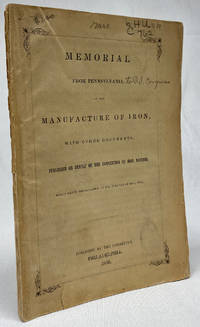
184910210Philadelphia: Published by the Committee 1849. Sewn binding. Very good . Octavo 100pp. illustrated with charts and graphs two of which are inserted as issued. A crisp clean example very good or better in the original side-sewn binding and printed wrappers. Short tear to the front wrapper pencilled call number else no evidence of any library markings. Contents clean though the two graphs printed on cheaper paper are evenly age-toned. Spine somewhat chipped. Published by the Committee unknown
190652925Philadelphia PA: Penn Metal Ceiling & Roofing Co. 1906. Oblong folio. 14 x 10.25 in. 62 pp. With over 300 woodcut-engraved text illustrations diagrams and photo illustrations. Quarter-gray cloth over limp gray embossed printed softcovers Arts & Crafts style decoration & ornamental letters in embossed raised silver & white lettering slight shelfwear still a NF copy. First edition of this scarce and lavishly illustrated catalogue of Edwardian architectural and ornamental ironwork filled with designs and illustrations for metal ceiling and side wall paneling and tiles; ornamental rock-faced stone & pressed steel brick; decorative iron awnings; galvanized steel and iron crestings cornices mouldings metallic cresting blocks ornamental finials corrugated roofing and siding weathervanes ventilators and skylights. In addition this catalogue includes an illustrated section of the necessary tools paint brushes and edging tongs required to install maintain and paint the attached metal pieces. Sagendorph 1842-1909 a Rhode Island Civil War veteran founded the Penn Metal Ceiling & Roofing Co. in 1889 and quickly became one of the largest manufacturers of corrugated iron & steel roofing galvanized pipe pressed metal ceilings and more. Sagendorph who had founded his first manufacturing company in 1869 was also a noted inventor and manufacturers securing over 100 patents for sheet metal manufacturing machinery with emphasis on his methods of corrugating metal sheets by means of rolls. Worldcat locates 3 copies Cleveland Public Hagley Univ. of Chicago; See: Penn Metal Company Seventy-fifth Penn Metal Year 1869-1944. Penn Metal Ceiling & Roofing Co., paperback
15667Letter: Tredegar Monmouthshire Wales. 12 July 1844. Copy agreement: 29 October 1841. Copy agreement: 2pp. 4to. Letter: 1p. 4to. The two on a single bifolium with the agreement on both sides of the first leaf and the letter on the recto of the second. The reverse of the second leaf is addressed with Penny Red stamp and Newport and Tredegar postmarks to 'Henry Mostyn Esq Solr Usk'. In good condition lightly aged and worn. The agreement begins: 'Mrs Williams to let to Mr Powell and Mr William Protheroe her Coal under lands at Pen y Van Bedwellty whilst any Marketable Coal remains unworked paying 1s/- Royalty 2520 lbs to the ton weighed at Court y bella or any other public machine. . Mr Powell and Mr William Protheroe are to work the Coal belonging to Sir H. Protheroe's representatives under the undivided lands held by them with Mrs Williams as well as some other adjoining lands.' Other topics include the 'Usual covenants' 'Way leave' 'rubbish room'. In the letter signed 'R. Waters' Waters explains that he is sending 'a copy of the agreement which was entered into by Mrs. Lawrence & Messrs. Powell & Protheroe as the basis or instruction for the Coal Lease entered into between the parties'. While conceding that the agreement 'was not signed by Mrs. Lawrence' Waters explains that it was made 'with her sanction & approval & in the presence of all the parties interested therein.' Bedwellty Pits coal mine was sunk in 1850 by the Tredegar Iron & Coal Co. Letter: Tredegar [Monmouthshire, Wales]. 12 July 1844. Copy agreement: 29 October 1841. unknown
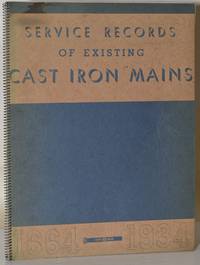
1934281734Chicago: The Association 1934. First Edition. Spiral Bound. Very Good binding. 32 unnumbered pages including the title leaf. With pictorial map endpapers; the front being: “In these important cities the original Cast Iron Mains are still in serviceâ€; the rear being “An historical record of Cast Iron Gas Mains in the United States†showing the age of the oldest cast iron mains still in service in various cities. With black and white photographic illustrations throughout. An uncommon item with less 10 copies located on OCLC. Very Good binding. The Association unknown
2010PMV503703QParis New York: Centre Pompidou Paris ; MOMA Museum of modern art New York 2010. Trade paperback. Good/Not issued. 236 x 297 x 27 cm. Paperback • Nombreuses illustrations en noir et en couleurs couverture illustrée en couleurs • <b><i>French text translated from English</i></b> • Printed 2010. Centre Pompidou (Paris) ; MOMA [Museum of modern art] (New York) paperback
1908055962Galata - Constantinople: Imprimerie de Castro Constantinople Galata AH 1324 = 1908. 1908. 2nd Edition . Soft cover. Very Good. 4to - over 9¾ - 12" tall. Original greenish tan wrappers. 4to. 30 x 21 cm. Bilingual in Ottoman Turkish and French. 11 p. Occasional chippings on extremities of the front wrapper a couple of stamps were deleted on two pages. Else a very good copy. Scarce bilingual statutes in French and Ottoman Turkish of the Imperial Ottoman Baghdad Railway Company printed at the "De Castro" Press one of the earliest Jewish printing houses in Galata. This edition includes the second and third series together of the Emprunt Impérial Ottoman 4% du Chemin de Fer de Bagdad Ottoman Imperial Loan 4% of the Baghdad Railway and reflects the contractual framework of the railway's financing. The first series was originally issued in 1905. ON "DE CASTRO" PRINTING HOUSE: In 1808 a work titled Tikuney Zohar was printed at the Hebrew printing press established by Yitshak ben Avraham Castro in the same year. It appears that the press did not publish any works until 1823 when printing resumed. From that year onward books bore the imprint "Yitshak de Castro and Sons." The place of printing was recorded as "el Saray de Ingiliz the English Palace." Castro who did the typesetting of the books in his own home used the English Palace in Constantinople as the printing house. This press primarily published Ladino works translated from Hebrew. Among these were books such as Ben Sira Sefer ha-Yashar and Kav ha-Yashar along with various collections of responsa and sermons. The most remarkable works published by this press were two books written in opposition to Christianity and British missionary activities. The press remained active until 1848 closing after the death of Yitshak Castro. After 1849 two Hebrew printers were active in Istanbul: Nisim de Castro and Moshe de Castro. They are believed to have been the sons of Yitshak Castro and following their father's death each established his own independent printing house. Between 1849 and 1850 Nisim de Castro's press produced three books two in Hebrew and one in Ladino. Moshe de Castro's press issued two Hebrew works one in 1849 and another in 1862. This press continued to operate under the name "Castro Press" publishing two additional Ladino books in 1877 and 1925. In 1853 Leon Haim de Castro likely a descendant launched and edited Or Israël The Light of Israel the first Jewish newspaper published in Istanbul. Meral. As of May 2025 OCLC lists only two copies worldwide: one at the Staatsbibliothek zu Berlin Preußischer Kulturbesitz and another at the Universitätsbibliothek Bamberg 1158592367 and 634693982. No copies are recorded in U.S. libraries. <br/> <br/> Imprimerie de Castro, Constantinople, Galata, AH 1324 = 1908. paperback
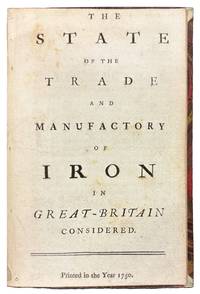
175042149London 1750. 8vo. 6 7/8 x 4 1/4 inches. 15 pp. An abridgement of the Interest of Great Britain in supplying herself with Iron circa 1747. Half red morocco and marble paper boards. Marginal notes trimmed<br/> <br/> A conflicted call for economic protectionism on the eve of industrial transformation and a snapshot of British iron trade policy in 1750 caught between timber tariffs and transatlantic competition.<br/> <br/> An important and revealing mid-eighteenth-century pamphlet addressing the British iron industry at a moment of significant economic and technological transition. This work is considered an abridged version of The Interest of Great Britain in Supplying Herself with Iron published circa 1747 and offers a pointed critique of foreign and colonial competition in iron production. The anonymous author provides a rare quantitative estimate of domestic iron output 18000 tons annually and laments the numerous challenges facing British ironmasters including the rising cost and increasing scarcity of timber then still the primary fuel used in smelting. In a notably conflicted argument the tract decries the influx of Swedish iron while expressing even greater alarm over the growth of ironworks in Britain's North American colonies viewing both as threats to the domestic market. Strikingly the pamphlet makes no mention of the use of pit coal i.e. mineral coal in iron manufacturing a technological development that would prove pivotal. This omission is particularly curious given that Lord Dudley had patented the process in 1619 and that Abraham Darby's pioneering use of coke at Coalbrookdale had been underway for over a decade by the time of this publication. The absence of such a reference suggests either a conservative industrial perspective or a lack of awareness of emergent metallurgical practices that would soon transform the industry and pave the way for Britain's dominance during the Industrial Revolution. Referenced by J.R. McCulloch in his A Select Collection of Scarce and Valuable Tracts on Commerce 1859 who found it "curious" for its data and omissions alike this tract provides not only valuable insight into 18th-century economic policy and protectionist sentiment but also a fascinating snapshot of the iron trade on the cusp of technological upheaval.<br/> <br/> ESTC T76989; Sabin 90635. McCulloch The Literature of Political Economy 1845. unknown
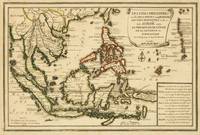
1702143641Paris: Nicolas de Fer 1702. Very Good. Paris Nicolas de Fer circa 1702. A hand-coloured engraved map printed surface 225 × 339 mm sheet size 250 × 361 mm. Engraved by Charles Inselin. Light tanning; a few unobtrusive spots and marks; crease to the border in the top right-hand corner with minimal loss to the marginal corner-tip; in very good condition. A map of the Philippines the Indonesian archipelago mainland Southeast Asia as far north as Taiwan and the Mariana Islands from de Fer's 'Atlas Curieux' 1700-1705. Nicolas de Fer unknown