657 résultats
188339339MacLean, Roger et Cie Couverture souple Ottawa 1883
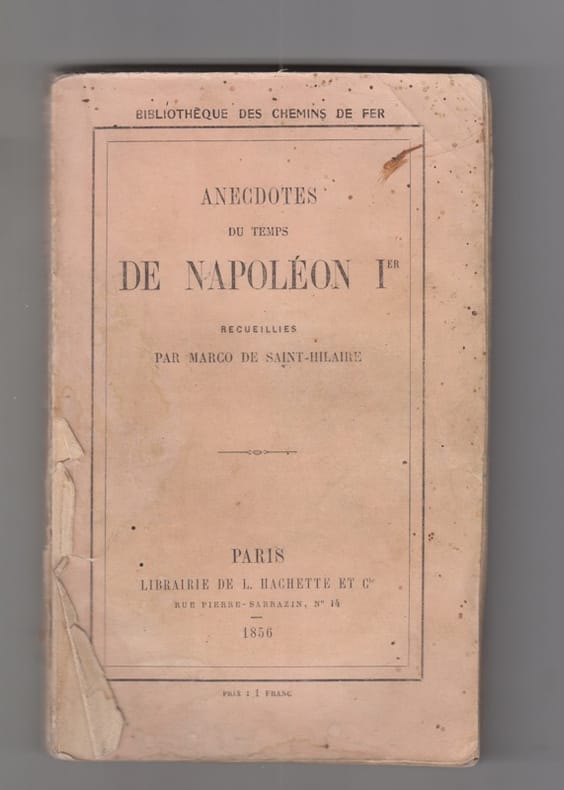
185613191856 HACHETTE Bibliothéque des Chemins de Fer 1856- br.couv.rose-leg.tachée-pt.manque bas dos-232p.-trace de mouillure claire en marge de qques feuillets.
187946402046Paris, Motteroz, 1879 ; in-8, broché, couv. verte imprimée. 213 pp., 1f . de table, 5 cartes dépliantes en couleurs.EDITION ORIGINALE. Walch 449.
1882RO80183045DUNOD. 1882. In-12. Relié. Etat d'usage, Tâchée, Dos satisfaisant, Intérieur frais. 214 Pages. Nombreuses figures en noir et blanc dans et hors texte. Couverture désolidarisée. Plats tachés.. . . . Classification Dewey : 625-Chemins de fer, routes, autoroutes
1855015788Paris Librairie Hachette - Bibliothèque des Chemins de fer 1855 In-folio Broché
18653839Travaux Artistiques, plomb, zinc, cuivre, tôle. Album 1865. Mit lithogr. Titel u. 45 (6 doppelblattgr.) lithogr. Tafeln nach A[ntoni] Sanguineti. Paris, Imp. Becquet, 1865. 4to. (30,5 x 23,5 cm). Halbleinwandband d. Zt. mit Deckeltitel.
189433621894 plaquette in-douze, couverture verte imprimée, illustrations photographiques + 1 de Grenoble sur une double page, 48 pages, Juin 1894 à La Tronche Offert par Veuve de Mortillet et Besson Pépinières et Etablissement Horticole,
185526585Nantes 1855 Une gravure Originale sur zinc en noir, présentée sous verre avec carton en renfort au dos, Format de la gravure : Hauteur : 23 centimètres Largeur : 42 centimètres, sans nom d'auteur, sans date (1855 - des débuts de l'arrivée à nantes du chemin de fer,
18913690CBBerlin, Ernst & Sohn, 1891. Fol. 2 Bl.Mit 72 (tls. doppelblattgr. und mehrf. gefalt.) gestoch. Tafeln. Halbleinen d. Zt. Beschabt und bestoßen. Bibliotheksschildchen. Jahrgang XLI.
1894R320079795BAUDRY ET CIE. 1894. In-8. Relié. Etat d'usage, Couv. convenable, Dos frotté, Intérieur frais. XVI + 327 Pages - Quelques schèmas en noir et blanc dans et hors texte - Dos légèrement frotté. . . . Classification Dewey : 625-Chemins de fer, routes, autoroutes
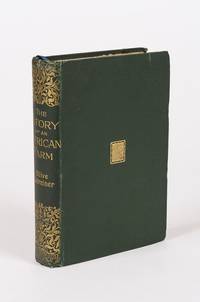
1883140940359London: Chapman and Hall 1883. First Edition. Near Fine. First edition first printing of what is widely recognized as one of the first feminist novels. Near Fine with light rubbing to binding pages toned and with occasional instances of light spotting. Finely bound in full black ostrich skin by Sangorski and Sutcliffe mirroring the book's setting on an ostrich farm. At the time of publication the South African ostrich farming industry was rapidly developing to meet a craze for the high demand of ostrich feathers with their weight-price approaching that of gold's. The industry's rise brought about much cruelty and suffering for ostriches and the novel highlights the crossover among the contemporary leading activists of women's rights movement and the champions of animal rights. Published under a male pseudonym of Ralph Iron this was Scheiner's first novel and was met with immediate success. A complex narrative woven around themes of cruelty and restriction set against a colonial backdrop. It's notable for the main female character's handling of themes of love marriage and motherhood while subverting the traditional gender roles female sexuality and intellectual power. Published under a male pseudonym of Ralph Iron this was Scheiner's first novel and was met with immediate success. A complex narrative woven around themes of cruelty and restriction set against a colonial backdrop. It's notable for the main female character's handling of themes of love marriage and motherhood while subverting the traditional gender roles female sexuality and intellectual power. Chapman and Hall unknown books
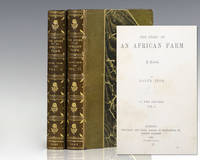
1883118143London: Chapman and Hall 1883. First edition of this highspot <span class="match">of</span> Afric<span class="match">an</span> literature. Octavo 2 volumes bound in three quarters contemporary morocco over marbled boards with gilt titles and tooling to the spine in six compartments within raised gilt bands top edge gilt marbled endpapers. Published under <span class="match">the</span> pseudonym 'Ralph Iron' t<span class="match">he</span> entire printing <span class="match">of</span> this first edition has been estimated to be about 300 copies and most were destined to libraries. From the library of British-born South African financier mining magnate and politician Sir Lionel Phillips with his bookplates to the pastedowns. Lionel and Florence Phillips left South Africa a major legacy through their art collections. Florence campaigned for the founding of the Johannesburg Art Gallery and arranged its first collections including her lace collection while Lionel donated seven oils and a Rodin sculpture. Rare and with desirable provenance. The Story of an African Farm published in 1883 under the pseudonym Ralph Iron was South African author Olive Schreiner's first published novel. It was an immediate success and has become recognized as one of the first feminist novels. In writing the first great South African novel Schreiner drew on childhood memories of life on the isolated African veld to fashion a powerful indictment of the rigid Boer and English social conventions of her day. It was greeted by both praise and condemnation for its feminist views on women's status and on marriage and for its unorthodox critique of dishonesty and hypocrisy in the doctrines and practices of "respectable" Christian church people. Chapman and Hall hardcover books
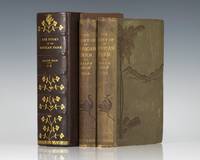
188330040London: Chapman and Hall 1883. First edition of this highspot <span class="match">of</span> Afric<span class="match">an</span> literature. Octavo original olive cloth 2 volumes. Published under <span class="match">the</span> pseudonym 'Ralph Iron'. <span class="match">The</span> entire printing <span class="match">of</span> this first edition has been estimated to be about 300 copies. and most were destined to libraries. Housed in a custom half morocco clamshell box. Rare especially in the original cloth. The Story of an African Farm published in 1883 under the pseudonym Ralph Iron was South African author Olive Schreiner's first published novel. It was an immediate success and has become recognized as one of the first feminist novels. In writing the first great South African novel Schreiner drew on childhood memories of life on the isolated African veld to fashion a powerful indictment of the rigid Boer and English social conventions of her day. It was greeted by both praise and condemnation for its feminist views on women's status and on marriage and for its unorthodox critique of dishonesty and hypocrisy in the doctrines and practices of "respectable" Christian church people. Chapman and Hall hardcover books
1883118143London: Chapman and Hall 1883. First edition of this highspot of African literature. Octavo 2 volumes bound in three quarters contemporary morocco over marbled boards with gilt titles and tooling to the spine in six compartments within raised gilt bands top edge gilt marbled endpapers. Published under the pseudonym 'Ralph Iron' the entire printing of this first edition has been estimated to be about 300 copies and most were destined to libraries. From the library of British-born South African financier mining magnate and politician Sir Lionel Phillips with his bookplates to the pastedowns. Lionel and Florence Phillips left South Africa a major legacy through their art collections. Florence campaigned for the founding of the Johannesburg Art Gallery and arranged its first collections including her lace collection while Lionel donated seven oils and a Rodin sculpture. Rare and with desirable provenance. The Story of an African Farm published in 1883 under the pseudonym Ralph Iron was South African author Olive Schreiner's first published novel. It was an immediate success and has become recognized as one of the first feminist novels. In writing the first great South African novel Schreiner drew on childhood memories of life on the isolated African veld to fashion a powerful indictment of the rigid Boer and English social conventions of her day. It was greeted by both praise and condemnation for its feminist views on women's status and on marriage and for its unorthodox critique of dishonesty and hypocrisy in the doctrines and practices of "respectable" Christian church people. Chapman and Hall hardcover
1883140940359London: Chapman and Hall 1883. First Edition. Near Fine. First edition first printing of what is widely recognized as one of the first feminist novels. Near Fine with light rubbing to binding pages toned and with occasional instances of light spotting. Finely bound in full black ostrich skin by Sangorski and Sutcliffe mirroring the book's setting on an ostrich farm. At the time of publication the South African ostrich farming industry was rapidly developing to meet a craze for the high demand of ostrich feathers with their weight-price approaching that of gold's. The industry's rise brought about much cruelty and suffering for ostriches and the novel highlights the crossover among the contemporary leading activists of women's rights movement and the champions of animal rights.<p><br /> <br /> Published under a male pseudonym of Ralph Iron this was Scheiner's first novel and was met with immediate success. A complex narrative woven around themes of cruelty and restriction set against a colonial backdrop. It's notable for the main female character's handling of themes of love marriage and motherhood while subverting the traditional gender roles female sexuality and intellectual power. <br /> <br /> Published under a male pseudonym of Ralph Iron this was Scheiner's first novel and was met with immediate success. A complex narrative woven around themes of cruelty and restriction set against a colonial backdrop. It's notable for the main female character's handling of themes of love marriage and motherhood while subverting the traditional gender roles female sexuality and intellectual power. Chapman and Hall unknown
1896120209AB1896. London Hutchinson & Co 1896. 13.5 cm x 19.5 cm. Frontispiece XV 346 pages. Hardcover publisher's original cloth with gilt lettering and decoration on spine. Small embossment to front board. Deckled top edge. Very good condition with only minor signs of external wear. Minor bumps to board corners. Small cutout of old name on halftitle. Interior lightly tanned throughout but bright and clean. Binding is strong firm and square. Includes for example the following: Shadows from Child Life / Plans and Bushman-Paintings / Sunday Services / Bonaparte Blenkins Makes his Nest / Waldo's Stranger / Gregory Rose Finds his Affinity / A Boer-Wedding / Dreams etc. Olive Schreiner 24 March 1855 11 December 1920 was a South African author anti-war campaigner and intellectual. She is best remembered today for her novel The Story of an African Farm 1883 which has been highly acclaimed as one of the first feminist novels. It tells the story of a girl on an isolated farm on the veld who struggles for her independence in the face of rigid Boer social conventions. in doing so it deals boldly with such contemporary issues as agnosticism existential independence individualism the professional aspirations of women and the elemental nature of life on the colonial frontier. Since the late 20th century scholars have also credited Schreiner as an advocate for the Afrikaners and other South African groups who were excluded from political power for decades such as indigenous Blacks Jews and Indians. Although she showed interest in socialism pacifism vegetarianism and feminism amongst other topics her views escaped restrictive categorisations. Her published works and other surviving writings promote implicit values such as moderation friendship and understanding amongst all peoples and avoid the pitfalls of political radicalism which she consciously eschewed. Called a lifelong freethinker she also continued to adhere to the spirit of the Christian Bible and developed a secular version of the worldview of her missionary parents with mystical elements. Wikipedia hardcover
188330040London: Chapman and Hall 1883. First edition of this highspot of African literature. Octavo original olive cloth 2 volumes. Published under the pseudonym 'Ralph Iron'. The entire printing of this first edition has been estimated to be about 300 copies. and most were destined to libraries. Housed in a custom half morocco clamshell box. Rare especially in the original cloth. The Story of an African Farm published in 1883 under the pseudonym Ralph Iron was South African author Olive Schreiner's first published novel. It was an immediate success and has become recognized as one of the first feminist novels. In writing the first great South African novel Schreiner drew on childhood memories of life on the isolated African veld to fashion a powerful indictment of the rigid Boer and English social conventions of her day. It was greeted by both praise and condemnation for its feminist views on women's status and on marriage and for its unorthodox critique of dishonesty and hypocrisy in the doctrines and practices of "respectable" Christian church people. Chapman and Hall hardcover
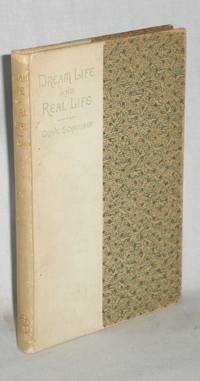
1893011428Boston: Roberts Brothers 1893. First U. S. Edition. 12mo. 12mo. 91 4pp.ads. Short stories. Allegories of lIfe set in Africa. Bound in half floral paper covered boards over white linen lettered in light blue spine lettering gilt some rubbing to edges spine somewhat darkened. Roberts Brothers unknown books
18662092902144201629Not Available 1866. Soft Cover. Fine. The book is in fine condition. Not Available paperback
18792536Dreitheiliges Langschwellen-System de Serres & Battig. Darstellung seiner Eigenthümlichkeit, seiner Verwendung im Eisenbahnwesen, in der Industrie und im Bergbau, seiner Vorzüge in technischer und ökonomischer Beziehung. Deutscher Text von M[oritz] Pollitzer. Mit 30 (20 doppelblattgr., 9 gefalt.) lithogr. Tafeln u. 69 Abb. im Text. Wien, Lehmann & Wentzel, 1879. 4to. (33,0 x 21,0 cm). 2 Bll., 126 S., 1 S. Berichtigungen. Halbleinwandband d. Zt.
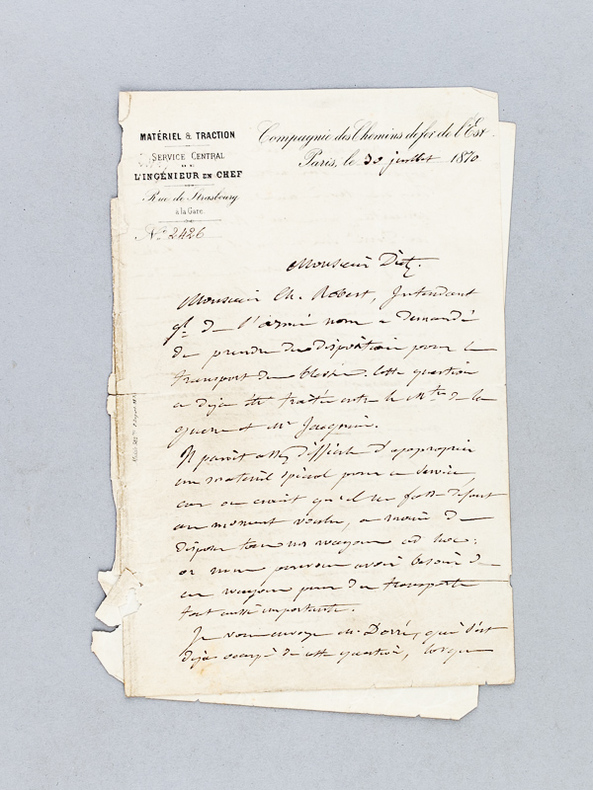
187056071Lot de 14 courriers dont 11 adressés à David Dietz, chef d'atelier à la Compagnie des Chemins de Fer de l'Est aux débuts de la Guerre franco-allemande de 1870, du 20 juillet 1870 au 5 août 1870 (en général 1 ou 2 pages par lettres) : I : Lettre signés de l'Ingénieur en Chef de la Compagnie Vuillemin, du 20 juillet 1870, précisant le rôle de leurs services et l'organisation des Corps Francs des Chemins de fer. M. Dietz est nommé dans ce cadre chef du matériel roulant, 2 pp. ; II : Lettre de nomination à ce poste signée du Directeur de la Compagnie M. Sauvage, 1 p. ; III : Lettre signés de l'Ingénieur en Chef de la Compagnie Vuillemin, du 30 juillet 1870 ; IV : Copie manuscrite de la décision de nomination d'un second, M. Doré ; IV : Lettre signés de l'Ingénieur en Chef de la Compagnie Vuillemin, du 30 juillet 1870 à M. Dietz, précisant les "divers travaux ou fournitures qu'exigent les transports militaires" qui sont de deux sortes, "les uns qui restent à la charge de la Compagnie, tels que confections de strapontins... les autres directement demandés par l'autorité militaire et restant à la charge de l'Etat" ; V : Lettre signés de l'Ingénieur en Chef de la Compagnie Vuillemin, du 2 août 1870 à M. Dietz, approuvant notamment les hamacs installés par Dietz [ pour le confort des blessés ] ; VI : Copie conforme signée par Vuillemin d'une réquisition de l'Armée du Rhin ; VII : Lettre du service central de l'Ingénieur en Chef à M. Dietz, datée du 3 août 1870, évoquant la livraison de bidons, d'urinoirs et de deux modèles de hamacs ; VIII : Lettre à en-tête de l'Exploitation de la Compagnie, datée du 4 août 1870 "J'ai immédiatement adressé à Messieurs les médecins de la Cie de l'Est une circulaire pour les inviter à prêter leur concours tant pour le transport que pour la visite des blessés de l'armée" ; IX : Lettre du service central de l'Ingénieur en Chef à M. Dietz, datée du 4 août 1870, relative à l'envoi d'un troisième modèle de hamac, de 30000 pitons, etc. ; X : Lettre du service central de l'Ingénieur en Chef à M. Dietz, datée du 5 août 1870 ; XI : Lettre du service central de l'Ingénieur en Chef signé de Vuillemin à M. Dietz, datée du 5 août 1870 : "J'ai remarqué que pour les transports des blessés militaires, sur vos hamacs dans les wagons N ou autres, il faut un temps assez long pour amener les blessés aux wagons et pour les placer sur les hamacs. En supposant que les gares dans lesquelles doit s'effectuer l'embarquement soient pourvues de hamacs avec les cordes et leurs pitons, nos hommes seraient en mesure de tout disposer dans le premier wagon venu, pour peu qu'ils soient prévenus quelques heures d'avance. Il ne serait donc pas nécessaire de garnir tous nos wagons de pitons, mais il faudrait toujours avoir aux gares d'embarquement des pitons que nos ouvriers placeraient dans les wagons..." ; XII : on joint 3 autres pièces
18712092902141600064Not Available 1871. Soft Cover. Fine. Size: 22.5x15.5cm Not Available paperback
18683469156Weimar, Voigt, 1868. XIV, 120 S. Halbleder (Exlibris, Stempel auf Titelrückseite, Bibliotheks-Rückenschild
187621935Paris Librairie Hachette 1876 In-12 ( 2 ) - 395 pp, dos passé ( de l'aubergine au brun ) , rousseurs mais bonne reliure
1897R320071394VICQ-DUNOD ET CIE. 1897. In-8. Relié plein cuir. Etat d'usage, Couv. convenable, Dos frotté, Intérieur frais. VIII + 495 + 16 pages augmentées de nombreuses figures en noir et blanc dans le texte - et quelques planches dépliantes - en noir et blanc quelques annotations sur la page de garde -. . . . Classification Dewey : 625-Chemins de fer, routes, autoroutes