LAMB, CharlesBiblio.com
8 771 résultats
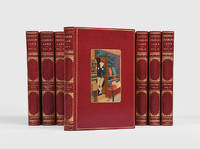
1899192038London: Macmillan & Co. 1899-1900. A different pictorial onlay on each volume First collected Ainger edition one of 675 sets this very ornately bound in the so-called "Kelliegram" style. The front board of all 12 volumes is features a scene from Lamb's work executed with multicolour leather onlays heightened with paintwork detail. The much-imitated "Kelliegram" binding style was one of the many innovations of the English commercial binding firm Kelly & Sons. The Kelly family's bindery was an established part of the London trade. It was founded in 1770 by John Kellie as the name was then spelled and carried on by successive family members into the 1930s. The leading binderies of the early 20th centuries of which Birdsall was one of the largest provincial ones adopted this style. Alfred Ainger 1837-1904 was a foremost authority on Lamb. Livingston notes that this edition saw "further considerable additions" to the letters p. 278. 12 vols octavo 225 x 150 mm. Portrait frontispiece with tissue guard to the Life. Finely bound in near-contemporary red crushed morocco by Birdsall spines with two raised bands lettered and decorated with floral pattern in gilt single gilt fillet to boards each front board with a different onlaid rectangular panel illustrating a scene from Lamb's work each executed in multicoloured morocco and onlays some painted gilt inner dentelles red silk endpapers top edges gilt other edges untrimmed. Housed in custom red cloth slipcases. A fine set. Luther S. Livingston A Bibliography of the First Editions in Book Form of the Writings of Charles and Mary Lamb 1903. hardcover
17102092902141700914Not Available 1710. Soft Cover. Fine. Volume: 1 Not Available paperback
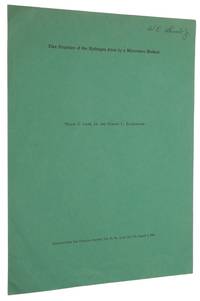
19476543Lancaster PA and New York NY: American Institute of Physics 1947. First edition. <p>First edition very rare offprint signed by Lamb who received a half-share of the 1955 Nobel Prize in Physics for this work. The Lamb-Retherford experiment of 1947 was the first to measure what is now known as the Lamb shift-the difference in energy between two energy levels 2S½ and 2P½ of the hydrogen atom-which had not been correctly predicted by the Dirac relativistic wave equation. "The Lamb shift experiment was a landmark in 20th-century physics" Biographical Memoir National Academy of Sciences. "After it was reported at Shelter Island the Lamb-Retherford experiment became the point of departure for the renormalization program" Silvan Schweber. </p>. THE LAMB SHIFT - NOBEL PRIZE IN PHYSICS 1955. <p>First edition very rare offprint signed by Lamb who received a half-share of the 1955 Nobel Prize in Physics for this work. The Lamb-Retherford experiment of 1947 was the first to measure what is now known as the Lamb shift-the difference in energy between two energy levels 2S½ and 2P½ of the hydrogen atom-which had not been correctly predicted by the Dirac relativistic wave equation. "The Lamb shift experiment was a landmark in 20th-century physics" Biographical Memoir National Academy of Sciences. "After it was reported at Shelter Island the Lamb-Retherford experiment became the point of departure for the renormalization program" Silvan Schweber. Lamb 1913-2008 received his doctorate at Berkeley in 1938 under the guidance of J. Robert Oppenheimer. "Unlike many of his generation of physicists Lamb did not follow Oppenheimer into the wartime atom-bomb project. Instead he concentrated on his specialisms - microwaves and radar - at Columbia University in New York performing the experiments that culminated in the observation of the Lamb shift. This shift is a tiny difference in energy between two atomic orbitals in hydrogen denoted 2S and 2P distinguished only by their angular momenta. Quantum theories of the time predicted that these levels should have identical energies. The discovery that they did not demanded a fundamental theoretical rethink - one that was initiated almost immediately by Hans Bethe. The Lamb shift thus became a cornerstone of the modern edifice of quantum electrodynamics QED. This the quantum field theory of the electromagnetic interaction explains the shift as resulting from energy fluctuations in the vacuum that smear out the position of the electron in a hydrogen atom. This process has a greater effect on the Coulomb energy of the electron's binding to the central proton at smaller radii where the 2S state is most likely than at larger radii where the 2P state dominates. Today precise measurements of the Lamb shift have tested QED to an accuracy of better than one part in a million" Sargent. On Lamb's 65th birthday Freeman Dyson wrote "those years when the lamb shift was the central theme of physics were golden years for all the physicists of my generation. You were the first to see that this tiny shift so elusive and hard to measure would clarify in a fundamental way our thinking about particles and fields." Not on OCLC or RBH.</p> <br /> <p>Provenance: Willis Lamb signature on front wrapper. Lamb was born in Los Angeles the son of a telephone engineer. He entered the University of California at Berkeley in 1930 where he earned a bachelor's degree in chemistry 1934. Lamb continued at Berkeley as a graduate student in theoretical physics directed by J. Robert Oppenheimer receiving his doctorate in 1938. In that year Lamb joined the faculty at Columbia University New York where he carried out research in microwaves and radar. His defence-related investigations focused on the problem of how to make shorter higher frequency microwave sources for radar. It was this that would eventually lead to a Nobel prize in 1955. Lamb continued working in atomic spectroscopy and laser physics at Stanford University 1951-56 where he devised microwave techniques for examining the hyperfine structure of the spectral lines of helium and then as professor at Oxford 1956-62. He returned to the US in 1962 as Henry Ford II professor of physics at Yale joining the University of Arizona in 1974 until his retirement in 2002.</p> <br /> <p>"In the second quarter of the 20th century quantum theory faced some serious challenges including unexplained details of atomic spectra and difficulties in calculating basic properties of charged particles. In 1947 Willis Lamb and Robert Retherford of Columbia University discovered an unexpected detail in the hydrogen spectrum later called the Lamb shift that became an essential clue in solving both problems. The measurement agreed with new calculations and was the first indication that the theoretical approach called renormalization could resolve the mathematical infinities that had threatened to derail the progress of quantum mechanics.</p> <br /> <p>"By the 1940s theorists understood a variety of phenomena that had small effects on the energies of atomic electrons such as relativistic corrections and interactions between spin and orbital angular momentum. These effects showed themselves in the so-called fine structure of atomic spectra-the way that many spectral lines corresponding to jumps between electron energy levels are seen on close examination to split into groups of closely spaced lines.</p> <br /> <p>"Lamb and graduate student Retherford wanted to measure the hydrogen fine structure by investigating two specific electron states. One was a relatively long-lived S state with a spherically symmetric orbital and the other was a shorter-lived P state with less symmetry. Standard theory predicted that the two states should have equal energy but that applying a magnetic field should influence the states in different ways and induce an energy difference between them.</p> <br /> <p>"The team sent a stream of electrons at right angles into a beam of hydrogen atoms exciting a few of them into the S state and also deflecting them slightly from the main beam direction. The excited atoms passed through a region containing both microwave radiation and an adjustable magnetic field and then hit a metal target. The excited atoms would then drop back to the ground state emitting electrons that the team could detect as a current. The key to the experiment was that if the magnetic-field-induced energy difference between the two states was equal to the energy of the microwave photons then the long-lived S state would absorb a photon and turn into the short-lived P state. These atoms would drop back to their ground state before reaching the target and the current in the detector would essentially vanish.</p> <br /> <p>"By plotting the critical magnetic-field strength for a variety of microwave frequencies Lamb and Retherford could determine the energy difference between the two states in the absence of a magnetic field. Contrary to expectation the difference was not zero.</p> <br /> <p>"This departure from theory became known as the Lamb shift and was a prime topic for discussion at the Shelter Island Conference on Quantum Mechanics that took place in June 1947 at the far end of Long Island New York. Many of the attending theorists argued that the Lamb shift was a result of the 'self-energy' problem in quantum electrodynamics. The problem was that calculations of the interaction of an electron's charge with its own field yielded apparently infinite values for the particle's energy and mass and also threw off calculations of atomic spectra.</p> <br /> <p>"It was Hans Bethe on the train ride home who wrote a short paper giving a somewhat sketchy but fairly accurate calculation of the shift. The solution to the self-energy problem proposed by others was to think of the 'bare' electron as having infinite energy that is mostly cancelled out by the infinitely negative energy of its interaction with its own electric field. This so-called renormalization approach leads to a correction to the classical energy that depends on distance. A P-state electron spends a different amount of time close to the nucleus than an S-state electron so they require different corrections. Bethe's estimate for the resulting Lamb shift fit the experimental result remarkably well and demonstrated that renormalization-which is at the core of today's quantum mechanics-could be verified in experiments" Lindley.</p> <br /> <p>"Swedish physicist Ivar Waller who made the presentation speech when Lamb was awarded the Nobel Prize in 1955 observed that 'it does not often happen that experimental discoveries exert an influence on physics as strong and invigorating as did your work. Your work led to a re-evaluation and a reshaping of the theory of the interaction of electrons and electromagnetic radiation thus initiating a development of utmost importance to many of the basic concepts of physics a development the end of which is not yet in sight'" Schweber QED and the Men Who Made It p. 218.</p> <br /> <p>"Speaking at a conference on the history of particle physics in 1980 Lamb obviously with some pleasure remarked that he had been in contact with the leading figures in the history of fine structure Michelson Sommerfeld and Dirac. When he was still a high-school student he had met Michelson who spent his last years at Caltech at a chess festival in Pasadena. 'We talked a little about the game but not about physics and although I knew that he was famous for the measurement of the velocity of light I did not know of any other reasons.' He never met Sommerfeld but 'in 1950 he sent me a handwritten note that indicated that he had heard of our measurements and he mentioned that he was the '81-year-old great-grandfather' of the hydrogen fine-structure theory.' Lamb met Dirac repeatedly. About one occasion he remembers that Dirac asked him if he had enjoyed participating in the discovery of the fine-structure anomaly. Lamb said he had but added that he would have had much more pleasure if instead he had discovered the Dirac equation. As Lamb recalls after a brief pause Dirac said gently 'Things were simpler then'" Brandt Harvest of a Century p. 306.</p> <br /> <p>Lindley 'Quantum Milestones 1947: Lamb Shift Verifies New Quantum Concept' Physics 18 2025 p. 41 ;/a>. Sargent 'Willis E. Lamb Jr 1913-2008' Nature 453 2008 p. 867.</p> <br/> <br/> 4to 266 x 198 mm pp. 241-243 1 blank. Original printed wrappers a bit ceased at the foot. American Institute of Physics unknown
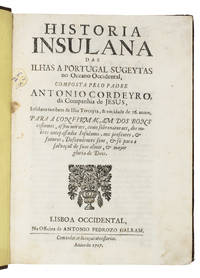
1717ABC_48313Lisboa occidental 1717. Small folio ca. 28 x 21 cm. Na officina de Antonio Pedrozo Galram Gold-tooled brown calf from the first half of the 19th century with the title and year of publication lettered in gold on the spine red pseudo-marbled paper sides yellow end papers. With a woodcut printer's device on the title-page woodcut decorated initials and woodcut head- and tailpieces. 1 1 blank 14 528 pp. First edition of a history of the collection of four archipelagos in the North Atlantic off the coasts of Africa and Europe called Macaronesia and the Azores in particular written by a native of Terceira. The work describes each island separately focussing on its history discovery natural resources and inhabitants. It also gives important information on prominent Azorean families including the author's own. These parts are preceded by shorter parts about the history of Portugal the Canaries Cape Verde and Madeira with references to Brazil and the Americas. This work rarely appears on the market.Antonio Cordeiro 1641-1722 was a Jesuit priest born on Terceira. He based his work on one of the most important pre 17th-century sources on Macaronesia Saudades da terra by historian Gaspar Frutoso ca. 1522-1591. Until its publication the manuscript was kept in the library of the Jesuit College of Ponta Delgada on the island São Miguel in the Azores where Cordeiro probably found it. Cordeiro's work closely follows the structure of the Saudades. Furthermore he used is as a main source for the 16th-century history of the region including the description of the sugarcane industry in Madeira. After sugarcane was introduced there in the 1430s Madeira soon became the most important location for the production of sugar for the Portuguese producing 20000 arrobas a unit of measure similar to 10-15 kg's of the finest grade sugar per year. Unfortunately due to diseases in the sugarcane crops the industry started to decline in the second half of the 16th century. Initially neighbouring islands took over before the production of sugar was eventually moved to Brazil.With a manuscript number on the front pastedown "6770" a round sticker underneath "66" and remnants of a paper label. The edges and corners of the boards are somewhat scuffed and creased. The binding is somewhat scratched with some loss of material on the back board. The first few leaves are slightly browned. Otherwise in very good condition.l De Backer/Sommervogel II 1436; Innocencio I pp. 114; Leclerc 632; Porbase 765570 10 copies; Sabin 16759; Schäffer Portuguese exploration to the West p. 14; not in USTC. ABE CAT Anthropology & Ethnography hardcover
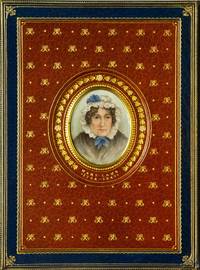
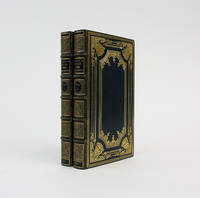
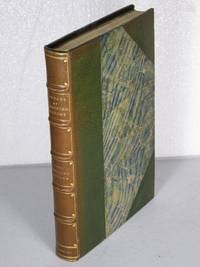
1885320703Edinburgh: William Paterson 1885. Extra-illustrated. 2 vols. 4to. Blue morocco gilt with Cosway style miniature on the front pastedown of each volume "designed and bound by Sangorski & Sutcliffe London. Extra-illustrated. 2 vols. 4to. The miniature portraits are of Charles Lamb in Volume One and of Mary Lamb in Volume Two Last Essays. William Paterson unknown
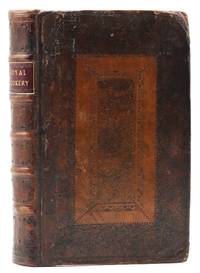
17109656London: Printed for Abel Roper and sold by John Morphew near Stationer's Hall 1710. Octavo 19 x 12 cm. 12 127 12 12 pages. 35 plates mostly folding. The final unnumbered pages include bills of fare and bookseller's advertisements. All edges marbled. FIRST EDITION published a year after the great chef's death. Maclean describes an additional printing of the first edition printed for and sold by Maurice Atkins. "Lamb brought a touch of French snobbery to traditional English recipes for an increasingly prosperous group of wealthy merchants urban professionals and rural gentry. His recipes show a preference for French-style stewed and braised dishes over the boiled staples of seventeenth century England" Anne Willan The Cook Book Library page 197. As cook to five kings and queens of England "few others could possibly afford to emulate the vast spreads of exotic and costly foods which Lamb so often called for in his book of Royal recipes." Eric Quayle Old Cook Books. ~ Internally sound pages a bit darkened throughout. Some plates with browning to some creases or with an early and neat reinforcement at creases. In later full brown calf blind- and gilt-paneled and compartmented with gilt-titled red morroco spine label. New endpapers. Binder's ticket of Period Binders of Bath England pasted-in at rear. OCLC records eighteen copies of this Roper printing and five of the Atkins printing; Bitting page 271 calling for 34 plates only; Cagle 809; Maclean page 88; Pennell page 144; Simon 939 the third edition of 1731; Vicaire page 490; ESTC T91554. Printed for Abel Roper and sold by John Morphew, near Stationer's Hall unknown
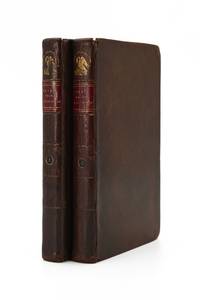
1807168764London: printed for Thomas Hodgkins at the Juvenile Library 1807. A child's copy of the first great Shakespeare book for children First edition in a contemporary binding. Charles and Mary Lamb's retellings of Shakespeare's plays for children stand as "the first work for children of British authorship never to have been out of print. Its success established the retelling of classics of English literature to children as a worthy task" Grolier. Shakespeare's stories were adapted for a young audience from at least the 1790s but this work was the first to enjoy a great commercial success establishing "children's Shakespeare" as a subgenre. Though only Charles is credited as the author on the title page the collection was the result of a collaboration with Mary contributing fourteen adaptations and Charles the remaining six. The Tales are beautifully illustrated with engravings generally attributed to the Irish painter William Mulready 1786-1863. This was the copy of Angoulême Moira Forbes 1796-1810 the fourth son of George Forbes 6th Earl of Ganard with both title pages inscribed with his name and the date 1807. Angoulême Moira was 11 at the time and it seems likely that he received the books as a gift; the confident handwriting suggests that they were inscribed on his behalf. On the front pastedown of volume II is the later inscription of another member of the family one C. S. Forbes. This copy has Wise's points of first issue with the imprint of the printer T. Davison on the verso of p. 235 in volume and with the Hanway Street address in the final adverts. 2 vols duodecimo 160 x 99 mm. With 20 engraved plates. Contemporary black straight-grain half roan smooth spines divided by gilt fillets and lettered in gilt marbled sides and edges vol. II only retaining red silk bookmarker loosely inserted. Bound without last leaf of advertisements in vol. II. Shelf wear to board edges front inner hinge of vol. II partially cracked at foot the binding firm light foxing and marks to endpapers and occasionally to contents else clean. A very good set. Ashley III pp. 42-3; Grolier Children's 100 24. unknown
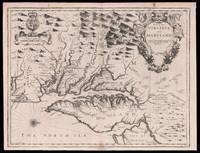
167615097London : Thomas Basset & Richard Chiswell 1676. 390 by 500mm. 15.25 by 19.75 inches. Sheet size 400 by 520mm 15.75 by 20.5 inches. Engraved map text on verso. Publishers Thomas Bassett and Richard Chiswell republished English cartographer John Speed's 1552-1629 popular 1611 atlas "The Theatre of the Empire of Great Britain" in 1676. As a supplement they included new section "A Prospect of the most Famous parts of the World" which contained maps engraved by Francis Lamb of the English colonies of New England and New York Virginia and Maryland Carolina and Florida and Jamaica and Barbados. This map separates Virginia and Maryland from New England and New York to show this area in greater detail and it also includes a small part of northern Carolina. It is the ninth and last derivation of John Smith's general outline of the area from 1612. The map is updated to incorporate details from Augustine Herrman's "Virginia and Maryland As it is Planted and Inhabited this present Year 1670". Although Herrman's publication bore a royal Privilege it did not protect the map from being copied particularly in the naming of the places and landmarks and a clearer delineation of the shore of the north-eastern part of the Chesapeake Bay. Hermann's map did not include specific borders however he did include a double line of trees showing the division of Virginia and Maryland on the Eastern shore from the 1668 border settlement which is also included on the present map. The text on the verso includes descriptive information on the region and is condensed from John Ogilby's "America". Burden 456 state 1 Tooley p170 Derivative 9 state 1 Thomas Basset & Richard Chiswell, unknown
18074086<p>London: Printed for Thomas Hodgkins at the Juvenile Library. 1807. First edition first issue. Two volumes. 12mo. 165x100mm. Vol. I. ix i.bl 2 235 1 with T. Davison imprint. 10 engravings. Vol. II. 4 261 3pp. adverts with the Hanway Street address. 10 engravings. Contemporary calf spines with red morocco labels lettered in gilt and small round black labels numbered in gilt. At head of spine in gilt is the Pelican of Mercy and the motto "Pandite Coelestes Fortae". This is the crest of James Gibson of Ingliston Writer to the Signet whose armorial bookplate is on the front pastedowns. Also with the label of Donald and Mary Hyde who formed one of the great libraries of eighteenth-century literature and whose Samuel Johnson collection was donated to the Houghton Library at Harvard. Slight split to the head of joint with upper boards and corners a little bumped. Housed in a custom-made box. Internally very good but with some foxing heavy to a few leaves in volume two. The illustrations although unsigned and unattributed they are almost certainly by the Irish artist William Mulready. An extremely nice copy of the rare first issue in a smart contemporary binding. With Mary providing the adaptations of the comedies and Charles the tragedies the history plays and Roman plays were not adapted Tales from Shakespear was one of the most popular books of the nineteenth century and the first to present Shakespeare's plays in a form suitable for children. Its popularity did much to broaden Shakespeare's appeal and ensure the flowering of his Victorian cult. The title page shows Charles Lamb as the sole author Mary's contribution going unacknowledged until the seventh edition in 1838. A strange omission given that the book was published by William Godwin Thomas Hodgkins was employed to run The Juvenile Library whose strong-minded wife must one would imagine have lobbied for Mary's work to have been recognised.</p> London: Printed for Thomas Hodgkins at the Juvenile Library. 1807 hardcover
18953London: printed for Thomas Hodgkins at the Juvenile Library. 1807. First edition first issue with the T. First edition first issue with the T. Davison imprint on the verso of p.235 of volume 1 and the earlier address of Hanway Street on the advertisements in volume two. Two volumes. 12mo. Superbly bound in full blue morocco by Lortic of Paris with extensive gilt decoration including gilt vignettes of Puck to each corner of the boards. The spines with five raised bands and compartments with decoration and titles in gilt. Gilt dentelles. All edges gilt. Marbled endpapers. Illustrated with 20 engraved plates after drawings by William Mulready. A near fine set the bindings firm and bright with a slight split to the head of the upper joint of the first volume and minor rubbing to the extremities of each. The contents with the bookplates of Robert Hoe and Robert J. Collier to the front pastedowns of each volume and a little scattered foxing are otherwise clean throughout. A beautiful set of the first edition of this important work which formed the first attempt to make Shakespeare accessible to a young audience. The Tales were chiefly the work of Charles's sister Mary Lamb who produced 14 of the 20 adaptations with the rest by Charles under the suggestion and encouragement of William Godwin who had hired Thomas Hodgkins to run The Juvenile Library on his behalf. "Originally the Tales were to be anonymous but Godwin persuaded the unreluctant Charles to have his name printed on the title-page" Mary's name did not appear until the seventh edition in 1838 St Clair The Godwins and the Shelleys. It was "the first book which appealing to a general audience and to a rising generation made Shakespeare a familiar and popular author" and went on to become a perennial favourite remaining in print ever since Cambridge History of English Literature. Ashley III.42; Gumuchian 3614; Muir English Childrens' Books 102-3 Grolier Club One Hundred Books Famous in Children's Literature 24. Provenance: from the library of Robert Hoe 1839-1909; first president of the Grolier Club; the library of Robert J. Collier 1876-1918. Further details and images for any of the items listed are available on request. Lucius Books welcomes direct contact with our customers. London: printed for Thomas Hodgkins, at the Juvenile Library. 1807 hardcover
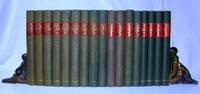
1937617G1246Victoria British Columbia: The Archives of British Columbia/British Columbia Historical Association. Good. 1937. First Edition. Hardcover. Seventeen volumes individually and uniformly bound in green cloth with with red labels and gilt lettering upon backstrips. Index in each volume. Fold-out maps. Black and white plates. Includes all issues from 1937 through 1945 and 1947 through 1954. Bindings tight. Unmarked. Moderate wear. A magnificent repository of early British Columbia history. Very heavy. Special shipping considerations may apply.; 8vo - over 7¾" - 9¾" tall; British Columbia Quarterly History . The Archives of British Columbia/British Columbia Historical Association hardcover
007042Quarter Calf. Very Good. A beautiful illuminated manuscript rendering of Lamb's witty and whimsical classic satiric essay which pokes fun at the extremes engendered by the quest for gastronomic bliss. The illustrations are done in a faux Chinese style as befitting the subject matter of the essay. N.p. n.d. 20th century. 4to. 30 by 24 cm. Unpaginated 16 leaves with content on both sides other than title and final text leaf followed by five blank leaves. With 12 watercolored illustrations most half to nearly full paged with text written with a calligraphic hand. The artist and calligrapher we should think were one and the same but remain anonymous other than initials given at the end which given the letter placement could be FME or FEM. Condition: splitting along rear joint of the leather. Revealed are cords and some of the paper gathering. Boards are splayed. Internally clean and bright and one might fairly rank as fine. unknown
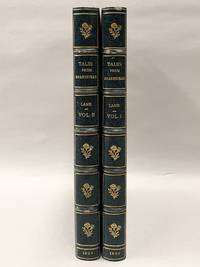
180753689London: Thomas Hodgkins 1807. First Edition. Full leather. Fine. 2 volumes 235pp. 261pp. plus 3pp. of advertisements at the end of volume II. Illustrated with 20 copper-engraved plates all present. First issue with the T. Davison imprint on the verso of the title page in volume I and the Hanway Street address listed in the advertisement at the end of volume II. Bound in handsome late 19th century full blue crushed morocco by Riviere with gilt frames gilt compartments all edges gilt and marbled endpapers. A handsome early 20th century bookplate is present in each volume though both of these at some point became detached from the paste-downs and are laid-in with only mild residue evident on the paste-downs. A few tiny abrasions to the raised bands on the spines but still an about fine set internally clean but for a few faint marginal stains and only the faintest foxing to a few of the plates. Fine. Hardcover. <br /> <br />The publisher Hodgkins was tasked by William Godwin and his wife Mary to adapt Shakespeare's plays for a juvenile audience a job they hired out to Charles and Mary Lamb. Though only Charles is credited on the title pages his sister Mary adapted fourteen of the twenty plays adapted herein all of the comedies. Her work was only credited to her after the seventh edition. <br /> <br />Of the countless editions of Shakespeare this is among the most significant being the first successful attempt to adapt his brilliant complicated stories to a young audience. <br /> <br />A very handsome set in pleasing condition and bound by one of the great 19th century English bookbinders. 53689 <br />$4500.00 <br/><br/> Thomas Hodgkins hardcover
1814003120London: J Johnson 1814 Bound in later signed 3/4 green morocco over marbled boards aeg 368 pp. 5 plates fine.Magnificent copy quite unlikely to come up at auction again.Rare Book Hub records the last copy at auction in 1945.This copy with some spine fade and touch of wear at tips. J Johnson hardcover
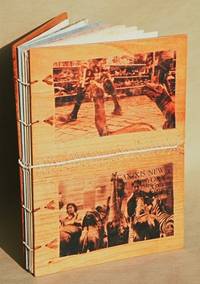
9988Bahia Brazil 2003. Unique. Hardcover. Fine in Fine Archival Box. Unique. Hardcover. Extraordinarily strong exploration of immigrant life. "This one was my first artist book Caxixis-New York: a parallel between street fairs in New York City and a remote small town in northeast Brazil. The photographs taken as soon as I came to New York reflect the psyche of my first moment arriving abroad and having learned to look at the world that way I assigned myself the task of incorporating this quality of otherness to my own origins. Shown side by side these two essays form a parallel between street fairs in New York City and a remote small town in northeast Brazil. <br /> The resulting body of work resulted in a solo show in my native city; this book was a companion piece. Having no bindery at home it was made in my mother's kitchen using whatever materials I could find around. The hand of the maker sure shows: the original 35mm images were acrylic-medium-transfered to the pages. It is a low-tech process that involves vast amounts of rubbing. In addition a few of the images were silk-screened. <br /> A book dealer asked me to get together some ephemera related to the show - that was when I realized: I have been doing this for so long now there is even history to it." Artist Statement. Cedar wooden boards onlayed images caterpillar stitch decorative elements mixed media 35mm mounted prints matting faces are pasted cotton cheesecloth silkscreened elements; housed with ephemera material in a custom-fitting linen covered box. 4to. np. Illus. color and b/w plates. Signed by the author. hardcover
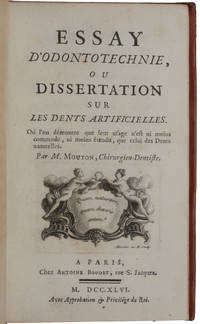
17465166Paris: Antoine Boudet 1746. First edition. <p>First edition rare on the market of "the first specialized book on dental prosthetics" G & M and perhaps the first contribution to what would later be called "cosmetic dentistry." Mouton introduced the use of gold crowns which he enamelled to give them the same appearance as natural teeth. He was the first to speak of artificial teeth fixed to the natural teeth adjoining them by means of springs or clasps. He was also the first to describe successful transplants procedures which gave him great renown not only in France but also in England.</p>. THE FIRST SPECIALIZED BOOK ON DENTAL PROSTHETICS. <p>First edition rare on the market of "the first specialized book on dental prosthetics" G & M and perhaps the first contribution to what would later be called "cosmetic dentistry." "Mouton in 1746 . gave to the light a monograph the first extant on mechanical dentistry. The methods of this author for the most part do not differ from those of Fauchard nevertheless one finds several important innovations in his work. To prevent the further deterioration of teeth already much destroyed and to preserve them some time longer Mouton had recourse to the application of "calottes d'or" that is gold crowns. He used this for the front teeth as well as for the molars but in the former case he had them enamelled to give them the same appearance as natural teeth. Mouton also invented a new method of applying artificial teeth. Up to then the ordinary method had been that of fixing them to the natural teeth by means of threads passed through holes made in the artificial teeth expressly for that purpose. Mouton is the first to speak of artificial teeth fixed to the natural teeth adjoining them by means of springs or clasps. This author relates having carried out several transplantations with perfect success a thing that contributed greatly to his renown not only in France but also in England. He distinguished himself besides by the correction of dental irregularities. Lastly it is to be noted that this author frequently had recourse as a remedy against toothache to the stretching of the dental nerve by means of moving and partially raising the tooth subluxation" Guerini pp. 303-4. Mouton cites only Galen Géraudly and Fauchard and those only rarely. ABPC/RBH lists only two complete copies perhaps the same copy in the last 40 years Ketterer Kunst Doerling May 27 2013 lot 490 €2160; ibid. November 16 2009 lot 267 €2196. </p> <br /> <p>Little is known about the life of Claude Mouton. "It is beyond any doubt that he was a contemporary of Pierre Fauchard and studied closely his book Le chirurgien dentiste ou traité des dents Paris 1728. Hoffmann-Axthelm reproduces a Parisian list in which Mouton is named as 'Dentiste du Roi' domiciled in Rue d'Orléans S. Honoré in which Fauchard himself and some other renowned dentists such as Bourdet Jourdain Laudumiay or the Calais and Hervieux ladies appear all of them in the 'Experts' category while only three people are recorded as 'Maistres en Chirurgie'.</p> <br /> <p>"In 1746 the Essay d'Odontotechnie ou Dissertation sur les dents artificielles was published by Antoine Boudet's press Rue S. Jacques . it is divided into five chapters . This dissertation Mouton confesses was the fruit of several years' experience but the flame that lit the fuse was actually the help requested by a twenty-two-year-old girl who had lost two upper incisors 'that had been irretrievably undermined by cavities as a result of childbirth.' Though reluctant she was persuaded by one of her friends to accept the presence of strange teeth in her mouth. Mouton made her see the disadvantages of the lack of these teeth and the advantages of replacing them by a skillful hand. The success and uniqueness of the case encouraged Mouton to publish an account of the treatment addressed to the public with a double message: to promote the care of natural teeth and to banish prejudices about the use of false teeth.</p> <br /> <p>"The first chapter comprised of 30 pages is entitled: 'Of the inconveniences caused by the lack of teeth .' Mouton points out the inconveniences that arise from the loss of teeth such as alterations in pronunciation especially for public speakers; the contraction of the lips in trying to hide the loss of teeth which can end up becoming a repertoire of grimaces; the escape of saliva through the gap created by the missing teeth; the sinking of the lip at the level of the missing teeth especially the upper ones or of the cheek in the case of lateral loss - a defect for which some try to compensate by carrying a kind of ball in their mouths; and finally the lack of teeth can lead to significant digestive disorders as a result of the inability to grind food properly. Having noted these drawbacks the text now focuses on the explanation of the functions of the teeth mainly masticatory and modulating of the voice not forgetting the aesthetic aspect. Finally Mouton discusses the two plagues of the mouth tartar and cavities dealing at length with the effects of the first on the gingiva and resulting dental mobility.</p> <br /> <p>"The second chapter 16 pages long is entitled: 'Utility of dentistry or the art of replacing natural teeth with false teeth'. Mouton recalls that false teeth were known to the ancients appearing in the epigrams of the satirical Roman poet Martialis. Nevertheless he concludes that false teeth must be regarded 'as a modern invention':<br /> <br /> 'There is nothing that ages like the loss of teeth especially in the anterior part hence it is necessary to exercise the art of returning the teeth to their natural state. For this there is nothing better than to replace the missing teeth with false teeth which experience shows fulfill the same duties as long as they are placed by a good dentist who combining manual skill with the necessary knowledge will avoid the many accidents that ignorance causes every day'.</p> <br /> <p>"This is one of the author's obsessions: he is a Dentist with a capital letter but to carry out this kid of treatment the dentist must have special knowledge no matter how much he knows about how to perform the other tasks of his profession. The architect of the mouth has to measure combine reason prevent and always plan three objectives: the adornment the comfort and the duration. He closes this chapter by recounting the case of a woman in whom he had placed false teeth - although another dentist had advised her against them she had been wearing them for four years without any problem.</p> <br /> <p>"'Answers to all the difficulties that may arise regarding the use of false teeth' is the title of the third chapter comprising 34 pages. In it Mouton refutes each of the assumptions of the common people that sustain the six most frequent prejudices about the use of artificial teeth: that inserting them is a painful operation; that false teeth can harm others; that they must be removed every time you eat; that they become loose; that despite the wearer's cleanliness the mouth exhales an unpleasant smell; and that they don't last long. Later outside of this main group he mentions other inconveniences suggested by the common people such as the different colour of false teeth their reluctance to wear teeth taken from corpses or the shame of appearing with prostheses after losing their own teeth . Mouton uses these concerns to justify the insertion of a post in the root canal taking into account that the nerve has been destroyed by decay - but if there is still some part of what he calls the 'dental chord' nerve vein and artery remaining he says this could be eliminated by adding cinnamon essence or more quickly some caustic with renders the root insensitive.</p> <br /> <p>"The fourth chapter must be considered as the 'central' one in Mouton's book - 'Méchanique des dents artificielles' is its title and it covers all types of dental prostheses as well as their composition. Other issues such as transplantation and reimplantation are also considered. A short introduction again emphasizes that the hand of an expert dentist is necessary - not everyone in the trade is capable.</p> <br /> <p>"'Dents à tenon' is the first type of prosthesis. They are the most solid teeth their solidity resulting from the use of a small gold post inserted into the root canal; a single such post is capable of supporting more than one tooth. Teeth tied with threads can be used when no roots are available their stability depending largely on the state of the teeth adjacent to the gap. </p> <br /> <p>"Single or double spring dentures are complete dentures. Both the upper and lower ones could be joined to the dental remains of the opposing arch to provide them with stability or in when both are used they could be joined together with the same device all before piercing the bone to pass a thread attached to the prosthesis in order to provide it with stability. Although the patient will suffer some discomfort he will become accustomed to it and may learn to eat with it. </p> <br /> <p>"Part natural and part false teeth are another type of prosthesis that repair the lingualization of a tooth by applying an enameled sheet on the buccal aspect. </p> <br /> <p>"Natural teeth can be transformed into false teeth. When due to the effect of tartar they fall out the root is cut and the tooth reinserted when there is room; this helps patients who are uncomfortable with carrying anything strange in their mouth. </p> <br /> <p>"Teeth racks 'Dents à coulisses' are prostheses with a spring on each side to fit them into the ones adjacent to the gap. </p> <br /> <p>"Two very different techniques to repair a dental loss are discussed: transplantation and reimplantation. He notes that the first is often regarded even by the most skilled as impossible even for single-rooted teeth or premolars undoubtedly due to the difficulty in finding an alveolar bed with the same characteristics as the root being transplanted. For success it is necessary that locally the external fibers of the alveolus and the root are found and anastomosed and in general that the 'donor' be in good health. Regarding reimplants performed by his hand he proposes to secure the reimplanted tooth to its neighbours with ligatures although this is not always necessary. And he also proposes as had Fauchard to extract a decayed tooth in order to cut the 'nerve connection' and stop the pain plug it - plunge it - and reimplant it. Finally he talks about the matter of artificial teeth sourced from the animal kingdom although human teeth are often preferable. Among these those of the ox are the most used especially when the nerve is ossified. The hippopotamus and other marine animals and fish are also widely used especially for large pieces. An interesting trick is recommended by the author. It involves covering one of the teeth with a gold cap 'une calotte' so that the other teeth do not contact each other and thus the occlusal wear that occurs due to bruxism would be avoided. </p> <br /> <p>"'Of the care required by false teeth' is the fifth and last of the chapters 21 pages long. The instructions and advice to keep artificial teeth in optimal condition are the same as for natural teeth: the usual cleaning of the tongue and false teeth and the removal of tartar if it has already been deposited on them. However he also mentions some tools such as toothpicks abd toothbrushes and also talks about toothpastes recommending avoiding the repeated use of coral due to its extraordinary abrasiveness" Sanz freely translated.</p> <br /> <p>Crowley Dental Bibliography 774; Garrison & Morton 3672.2; not in Wellcome. Guerini A History of Dentistry 1909. Sanz El primer tratado de prostodoncia: Essay d'Odontotechnie 1746 de Claude Mouton .</p> <br/> <br/> 12mo 156 x 95 mm pp. xi i 162 4 with engraved title vignette. Contemporary calf spine richly gilt with red lettering-piece very minor wear to extremities. A very fine copy. Antoine Boudet unknown
171610542London: J Nutt & A Roper 1716. Second-hand hardcover. <p>Lamb Patrick. Royal-Cookery. 2nd Ed J Nutt & A Roper: London 1716. 8vo 200x120mm contemporary panelled speckled calf 830210pp; 40 engraved plates 33 folding. Rebacked owner bookplate to front pastedown</p> <p><br /> LAMB Patrick ca.1650-1709<br /> <br /> Royal-cookery : or the Compleat Court-Cook. Containing the choicest receipts in all the several branches of cookery viz. for making of soops bisques olio's terrines surtouts puptons ragoos forc'd-meats sauces pattys pies tarts tansies cakes puddings jellies &c. as likewise forty plates curiously engraven on copper of the magnificent entertainments at coronations and instalments; of balls weddings &c. at court; as likewise of city-feasts. To which are added bills of fare for every month in the year. By Patrick Lamb Esq; near fifty years master-cook to their late Majesties King Charles II. King James II. King William and Queen Mary and Queen Anne. The Second Edition with the Addition of several new cuts and above five hundred new receipts all disposed alphabetically.<br /> <br /> London : printed for J. Nutt and A.Roper; and to be sold be E.Nutt at the Middle-Temple in Fleet Street 1716. Second Edition first published 1710. <br /> <br /> Octavo 200x125mm professionally rebacked sympathetic spine five raised bands blind tooled compartments red morocco gilt lettered recent spine label; contemporary ornamental blind tooled 'Cambridge style' panelled mottled calf boards gilt decorated edges 8 30210pp : A4. B-U8 X4. Forty out-of-text engraved copper plates showing bills of fare thirty-three folding. Ex-libris bookplate "Robert Carl & Marion Oak Sticht. 1909" to front pastedown. Boards lightly worn corners bruised; endpapers replaced circa 1900; pages agetoned lightly foxed more to the margins; plates all correct but showing some wear edges occasionally soiled creased or small closed tears; G2 offset toned; Tab 16 closed tear; bottom free corner of the text block stained.<br /> <br /> <br /> Patrick Lamb had a fifty year career in British Royal kitchens from the Restoration to the beginnings of the Hanoverian dynasty serving Charles II James II William and Mary and Anne. Despite this career not much is known of Lamb other than can be determined from the menus and books he left behind. In the late seventeenth century Court cookery was heavily influenced by French tastes and trends. The first edition. published posthumously in 1710 begins with elaborate or courtly receipts some taking up 6 pages however it contains only 87 or so detailed recipes for cookery. The second edition was much expanded and contains 'above five hundred new receipts'. There are many echoes of Massialot in Lamb's enlarged and re-organised alphabetically second edition; thus raising in some minds questions as to authorship. Lamb's receipts reflect Court tastes with French-style stewed and braised rather than boiled dishes. There is an emphasis on 'ragoos' and 'cullis' coulis or sauces¹. His recipes use French seasonings and call for the use of a butter and flour liaison roux base for sauces. Table settings whether for dinners or feasts were elaborate as illustrated by the plates and ceremonial. Dishes and menus are included for each of Lamb's Royal employers with many of the plates showing the tables set for the Stuart Court Dutch recipes for William and Mary and menus for dinners for Queen Anne. <br /> <br /> Royal-Cookery represents the zenith of Courtly cuisine and the endpoint of the influence of the nobility on the fashion social and dining trends of Britain. Post Lamb Royal Cookery was published again in 1726 and 1731 the increasingly wealthy emerging middle-classes sought a simpler less grand more domestic table and economy. Perhaps in keeping with this the authorship of popular cookery books in the eighteenth century changes from professional male chefs of which Lamb was one of the last to female domestic servants and cooks such as Ann Cook Hannah Glasse and Elizabeth Raffald.<br /> <br /> Sticht 1856-1922 was an American born metallurgist who ran the remote Mount Lyell copper mine in Queenstown North West Tasmania from 1895 until his death. A man of many interests between 1900 and 1913. Sticht assembled an exceptionally fine private library and art collection which included incunabula manuscripts Caxton Bibles Reformation tracts early editions of Shakespeare and Australiana. His art collection included Dürer woodcuts and Rembrandt etchings. After Sticht's death the collection was disposed of. Some of the collection books and art is housed in the National Gallery of Victoria and other public institutions acquired through the Felton Bequest. A large portion of the remaining library was then placed with A H Spencer of the Hill of Content for sale. Sticht had three bookplates produced for his collection. Two were designed by Sticht from woodcut engravings in his collection and produced by the Melbourne firm Osboldstone and Atkins; this is the second of those plates. ²<br /> <br /> An excellent copy of one of the definitive British cookery books of the early Eighteenth century complete with the provenance of a significant Australian collector. Scarce.<br /> <br /> § OCLC records 21 holdings almost all in the USA none in Australasia<br /> § Cagle 810; Maclean p.88; Oxford p.53 see note; Schraemli 1 262; Vicairie 490; Simon BG 939 other editions; Bitting p.271 earlier edition.<br /> <br /> ¹ Willan Anne The Cookbook Library: four centuries of the cooks writers & recipes that made the modern cookbook. Berkeley : University of California Press 2012 p.197.<br /> ² Lowe Heather. The Robert Carl Sticht Collection: a forgotten legacy. Melbourne : Art Journal 381997.</p> J Nutt & A Roper unknown
18528889Santiago: Imp. y LitografÃa de J. Rey Romero 1852. Second edition. Hardcover — Tapa dura. 212x153mm. 8¼x6". Santiago de Compostela Imp. y LitografÃa de J. Rey Romero 1852. En 4º menor 212 x 153mm. Frontispicio xviii-101 pp. 1 h. 10 láminas 8 de ellas plegadas. Encuadernación en holandesa de época cubiertas originales ilustradas en papel amarillo. Segunda edición del viaje de Antonio MarÃa de Orleans y MarÃa Fernanda de Borbón a Galicia en 1852 comenzando en Ferrol pasando por La Coruña Santiago Pontevedra MarÃn y Vigo desde donde saldrÃan hacia Lisboa recorriendo el territorio y disfrutando de sus gentes sus paisajes y sus costumbres. Imp. y Litografía de J. Rey Romero hardcover
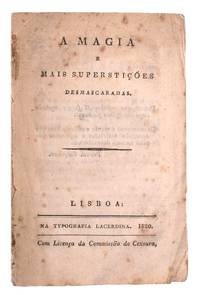
1820333195Lisboa: Na Typografia Lacerdina 1820. First edition. 72 pp. 16mo. Stitched lacking the wrappers. Title page and final page are unevenly tanned and lightly soiled. First edition. 72 pp. 16mo. Magic and Other Superstitions Unmasked procedes as both a catalogue of superstitions and popular beliefs including witches astrology spells and enchantments and Jacobinism. The bulk of the text is a history of magic starting with the pagans then the early Christians the belief in miracles and divination through papal decrees treating diabolical pacts the Holy Office of the Inquisition in Portugal and the damage it wrought against the Portuguese citizenry.<br /> <br /> Manuel Borges Carneiro 1774-1833 was a major legal and political figure in Portugal. Published in the year of the Liberal Revolution of 1820 the upheaval of which brought the Portuguese Imperial Court back from Brazil where they had fled from Napoleon this book is an enlightened scientific treatise against the belief and practice of magic and its works.<br /> <br /> Issued as 'A Magia.' complete as issued; a 'Part 2' was separately published as an appendix Appendice sobre as operações da Santa Inquisição Portugueza ou parte segunda do discurso sobre a Magia e mais superstições desmascaradas Lisboa concerning magic and superstitions during the Holy Inquisition in Portugal. Silva I.F. da. Diccionario bib. portuguez V p. 380; OCLC lists 6 holdings 2 in the US U Penn Brown Na Typografia Lacerdina unknown
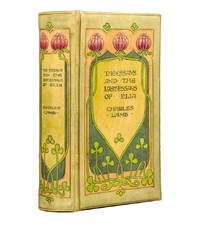
19006329London: J.M. Dent & Co 1900. Second edition. Fine. Two volumes bound in one small octavo 6 15/16 x 4 1/16 inches; 177 x 103 mm. xxii 294 1 imprint 1 blank; xii 254 1 imprint 1 blank pp. Two engraved frontispieces and one hundred and sixty-two black & white illustrations including decorative head and tailpieces all by Charles E. Brock. Bound ca. 1906 in a fine pastel "vellucent" binding by Cedric Chivers stamp-signed in gilt on rear lower turn-in with a delicately hand-painted 'Art Nouveau' floral design. This binding is No. LXXXV on page 34 of the Cedric Chivers catalog "Books in Beautiful Bindings." The front cover with three red flowers and a green vine design enclosing the title "The Essays And The Last Essays of Elia. Charles Lamb". Lower cover with a similar design but with just one red flower. Smooth spine similarly decorated and lettered in watercolor and gilt gilt ruled turn-ins mottled pale-green liners and end-papers all edges gilt. Neat ink inscription dated "Xmas 1906" on front blank. A very fine example housed in the original fleece-lined green cloth slipcase missing the movable spine panel.<br /> <br /> Patented in 1898 Chivers's "vellucent" bindings departed from traditional methods of creating hand-painted vellum bindings. The usual approach was to merely bind a book in vellum and then paint on a design but this is prone to rubbing and flaking and such examples are often now found chipped and deteriorated. In the 18th century Chivers's great predecessor Edwards of Halifax painted in reverse on the underside of translucent vellum thereby providing a layer of protection for the design. His technique was not widely copied and almost vanished with his death and it was not until the 1890s that Chivers developed his own similar method for protecting the design underneath the vellum itself - the backing sheet of the vellum was painted which was then covered in vellum which had been shaved to transparency. The vellum was then tooled in gilt on occasion incorporating additional mother-of-pearl and onlays. The books which Chivers thus bound have always been a favorite of collectors and usually still present well the vellum having served its purpose of protecting the design for many decades as Chivers intended. Chivers was also known to have employed a great many craftswomen at his bindery in Portway: "forty women for folding sewing mending and collating work and in addition five more women worked in a separate department to design illuminate and colour vellum for book decoration and to work on embossed leather. These five were Dorothy Carleton Smyth Alice Shepherd Miss J.D. Dunn Muriel Taylor and Agatha Gales" Tidcombe.<br /> <br /> This book brings together Charles Lamb's Essays of Elia first published in 1823 with the subsequent volume Last Essays of Elia issues in 1833. The accessible and conversational essays were published under the pseudonym Elia inspired by an Italian man that Lamb had known at the South Sea House and had appeared serially in The London Magazine between 1820 and 1825. Despite his struggles with mental illness Charles Lamb 1775-1834 would be celebrated for his literary contributions producing a range of material from essays to poems. Lamb belonged to an active literary circle which included Percy Bysshe Shelley and Lord Byron. Fine. J.M. Dent & Co unknown
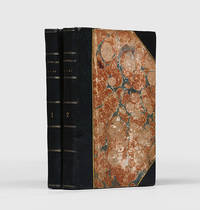
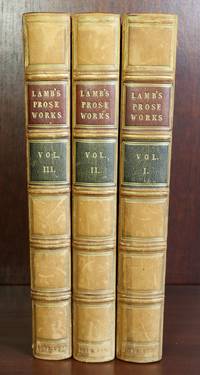
18355756London: Edward Moxon 1835. Bound in Full Calf by Charles Lewis. These three volumes are George Daniel's custom bound copies of Lamb's prose works. George Daniel was a famous collector of Elizabethan books including Shakespeare folios. These volumes measure approximately 7.75" x 5" with 356 340 and 295 numbered pages respectively.<br /> <br /> Finely bound in full calf by Charles Lewis the renowned London bookbinder. Leather bookplate of famous Samuel Johnson collector R. B. Adam. All edges gilt. With marbled endsheets.<br /> <br /> The volumes are in very good condition. Minor wear and staining to the leather bindings. Vol I has a cracked front hinge. Interior pages are bright and clean. Volume I likely signed by George Daniel - Esquire of Canonbury. Newspaper clippings affixed to front endpapers. Volume II with a signed letter from the poet Bernard Barton who was a close friend of Charles Lamb. Each volume has a bookplate from R. B. Adam on the front pastedown who was a famous Buffalo rare book collector. <br /> <br /> Please view the many other rare titles available for purchase at our store. We are always interested in purchasing individual or collections of fine books. Edward Moxon unknown
182894790Philadelphia: Carey Lea and Carey 1828. Hardcover. Very Good. First American editions and the true first complete edition of the second series of essays the second series wasn't published in England until 1833 as The Last Essays of Elia. Two volumes. 12mos. Linen and original printed glazed papercovered boards with paper spine labels. Each volume bears on the front pastedown the bookplate of James Fenimore Cooper Jr. grandson of the American author. Laid in are an old bookseller's description and a letter dated 1916 to Mrs. James Fenimore Cooper Jr. sending the books along and discussing some of the bibliographical niceties. Front joint professionally and neatly repaired and the spine label partly perished on First Series small stains on the boards chip on the unprinted front fly in Second Series. Still a nice set in the uncommon original boards in better condition than one might reasonably expect of these famous autobiographical essays and with an interesting association. In 1820 Lamb invented the pseudonym Elia for his first essay about the work place of his brother by taking the name of a clerk no longer employed there. The pseudonym stuck however and it allowed Lamb to develop a persona with which he examined a variety of subjects with his celebrated humor and style. Probably Lamb's best work though he is also remembered for his children's versions of Shakespeare and Homer which he wrote with his sister Mary who became his charge after her bout with insanity in 1796 when she killed their mother. Carey, Lea, and Carey hardcover
1802100380London: Printed by T. Plummer for G. and J. Robinson 1802. First edition. 8vo. Uncut in publisher's pink boards; fine in a custom green cloth chemise Fine first edition in boards of Lambs first play a presentation copy from Fanny Holcroft to fellow author Catherine Hutton. Holcroft 1780-1844 a translator and novelist and friend of Charles and Mary Lamb was the author of the anti-slavery poem The Negro and such novels as Fortitude and Frailty and The Wife and the Lover. Her father was the dramatist and radical Thomas Holcroft 1745-1809 who published several of her translations in his Theatrical Recorder. Catherine Hutton 17561846 was a novelist The Miser Married The Welsh Mountaineer Oakwood Hall and prolific letter-writer.A letter from T. Harral editor of the periodical La Belle Assemblée to Catherine Hutton May 20 1827 records a gift of a Lamb title presumably the present volume: "Miss Holcroft has given me a little volume for you the production of a particular friend of hers Mr. Charles Lamb whom you will probably recollect as the author of some admirable paper signed 'Elia' in the London Magazine " Reminiscences of a Gentlewoman of the Last Century: Letters of Catherine Hutton 1891 pp. 194-5.Following the blank-verse tragedy John Woodvil which was rejected by Drury Lane and never performed are several short works and the poem Helen Mary Lambs first appearance in print.PROVENANCE: Catherine Hutton contemporary presentation inscription from Fanny Holcroft on title-page; Robert S Pirie book-plateREFERENCE: Roff pp. 47-52 Printed by T. Plummer for G. and J. Robinson hardcover
1830ST15812London: Edward Moxon 1830. FIRST EDITION. 188 x 118 mm. 7 3/8 x 4 5/8". vii 1 150 pp. 1 leaf ads. <br/> SUPERB NAVY BLUE CRUSHED MOROCCO GILT AND INLAID BY DE SAMBLANX-WECKESSER stamp-signed on front turn-in covers with intricate gilt frame of trumpet vines bearing 36 inlaid scarlet flowers and buds raised bands spine gilt in compartments with inlaid trumpet flower at center gilt titling turn-ins framed with gilt vine navy blue moiré silk endleaves marbled flyleaves all edges gilt. In a slightly worn marbled paper slipcase. Title page with engraving of a putto composing verses. Front flyleaves with bookplates of Edwin Holden dated 1894 and John Whipple Frothingham. Wise Ashley Cat. III 52; Thomson p. 76. A hint of rubbing to front joint occasional mild browning due to paper quality but A FINE COPY clean and fresh internally and in a lustrous binding.<br/> <br/> In a lovely Art Nouveau binding by a Belle Époque master this is a collection of poems assembled by essayist Charles Lamb 1775-1834 to launch the publishing career of his friend and future son-in-law Edward Moxon 1801-58 to whom he dedicated the work. Composed of rather slight verses composed for the amusement of Lamb's friends and of more substantial works previously printed in periodicals this first book bearing Moxon's imprint did well enough to attract the business of other prestigious poets many of them friends of Lamb. Moxon who married Lamb's adopted daughter Emma Isola in 1833 went on to print the works of Wordsworth Shelley Tennyson and other luminaries of the Victorian era. The graceful binding is by Belgian master craftsman Charles de Samblancx or Samblanx 1855-1943 who began his binding career at age 11 as an apprentice to Coppens. He eventually established his own firm though from 1889-1909 his gilder Jacques Weckesser was in partnership with him. His binding career extended over several decades and he worked in a variety of period styles sensitively reproducing the bindings of previous centuries. His work often involving great complexity of design is invariably executed with the highest degree of skill. Our copy was once owned by American bibliophile and Grolier Club president Edwin Holden 1861-1906. Edward Moxon unknown
185658090New York: Derby & Jackson 1856. Signed on the first free end page in pencil with his ownership signature "J. A. Garfield Hiram Ohio Sept. 1856." Garfield's personal bookplate "Inter Folia Fructus Library of James A. Garfield" is affixed to the front pastedown. Housed in a custom half morocco chemise case. Rare and desirable from the library of the 20th President of the United States. At Geauga Academy which he attended from 1848 to 1850 Garfield learned academic subjects he had not previously had time for. He shone as a student and was especially interested in languages and elocution. Later Garfield graduated from Williams College in August 1856 as salutatorian giving an address at the commencement. Garfield biographer Ira Rutkow pointed out that the future president's years at Williams gave Garfield the opportunity to know and respect those of different social backgrounds and despite his origin as an unsophisticated Westerner he was liked and respected by socially conscious New Englanders. "In short" as Rutkow later wrote "Garfield had an extensive and positive first experience with the world outside the Western Reserve of Ohio." On his return to Ohio the degree from a prestigious Eastern school made Garfield a man of distinction. He returned to Hiram to teach at the Institute and in 1857 was made its president. He did not see education as a field that would realize his full potential. At Williams he had become more politically aware in the intensely anti-slavery atmosphere of the Massachusetts school and began to consider politics as a career. Derby & Jackson unknown