Félix DeslandesLivre Rare Book

30 résultats
1818boz_003266Dessin au crayon Singe par Félix Deslandes au Château de Rassay, Génillé, 1818 Dimensions feuille : 40,2 x 29,2 cm État : Bon état. Voir photos pour plus de détails.
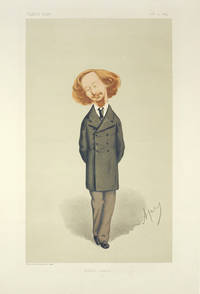
18741262721874. London: Vanity Fair November 21 1874. <br /> <br /> Color lithographic portrait after a watercolor painting by Pellegrini. Image size: 12 x 7 inches 30.5 x 18cm. Matted in a museum board. Printed by Vincent Brooks Day & Son Lith. Fine.<br /> <br /> § This portrait of the English poet 1837-1909 emphasizes his diminutive stature oversized head and shambling posture. It is not generally known that the Italian-born Pellegrini 1836-1889 was the originator of the Vanity Fair series of weekly caricatures of individuals of distinction and that the better-known Sir Leslie Matthew Ward 1851-1922 known as "Spy" was his successor. unknown
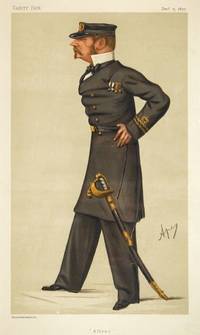
18773158141877. London: Vincent Brookes Day and Son for Vanity Fair 15 December 1877. A full-length lithographic portrait of Young after Pellegrini from the 'Men of the Day' series no. 167 image size 310 x 184mm; very good mounted with a photocopy of the original text to the verso.A portrait of the Arctic explorer Sir Allen Young shortly after he was knighted for his services to Arctic exploration. Allen served as the navigating officer of the Fox under Sir Leopold M'Clintock in 1857 during its expedition to follow through John Rae's discoveries relating to Franklin's fate: 'During the two years spent in following Franklin's tracks Young made notable sledge journeys exploring about 380 miles of new coast line including the southern and western coasts of Prince of Wales Land and both shores of Franklin Strait. He also discovered McClintock Channel but was unable to cross its rough ice. In 1860 he had command of the Fox in the north Atlantic telegraph expedition which surveyed a telegraph route between Europe and America via the Faeroes Iceland and Greenland. He visited the east coast of Greenland but believing it to be impracticable for a cable route did not land. He sailed on for the west coast landed with Rae who was in charge of the land part of the expedition and ascended to the ice cap near Julianehab; but he returned on deciding that a telegraph line could not be carried across Greenland' ODNB. Young later travelled to Baffin Bay in support of Sir George Nares' 1875-1876 Arctic expedition and returned the following year when 'in spite of great difficulties he landed dispatches for Nares at Cape Isabella and Littleton Island' op. cit.; for his services to Nares' expedition Young was knighted in 1877 shortly before this portrait was executed. Young's last Arctic expedition was in June 1882 when 'he commanded the whaler Hope chartered with government help in order to search for the explorer Benjamin Leigh Smith who had sailed for Franz Josef Land in July of the previous year. Nares and Young were instrumental in launching the relief expedition and in August 1882 the Hope found Leigh Smith and his party at Matochkin Shar on the west coast of Novaya Zemlya which they had reached in boats after the destruction of their vessel off Franz Josef Land' op. cit. unknown
1897134341London, Edward Lloyd Ltd. 1896 and 1897. Two volumes. XIV, (1), 286 pages and 25 plates in colour & XIV, (1), 302 pages with Plate 26 to 41 and 8 folded maps. Original cloth binding. (Partially demaged). 19x13 cm
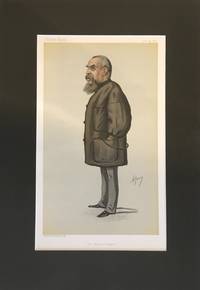
1885CABF-19Original <i>Vanity Fair</i> caricature of Sir Richard F. Burton dated October 24th 1885. <b><i>A fine fresh copy</i></b> matted in archival mount and shrink-wrapped. Sheet 15.5" x 10.5" image 12.5" x 7.5"; matted to 19" x 13".<br /><br />With original biographical sketch by Jehu Junior.<br /><br />At the time this image was produced Burton the British polymath -- he was an author explorer linguist geographer soldier orientalist ethnologist and so much more -- had recently published his celebrated 10-volume <i>The Book of the Thousand Nights and a Night</i> better known as the caption suggests as "The Arabian Nights". <i>Vanity Fair</i> magazine celebrated the achievement by featuring him here; the biographical sketch ends "He is a wonderful man." Vanity Fair