1 111 résultats
1959R240056176HORIZONS DE FRANCE. 1959. In-4. Relié. Etat d'usage, Couv. convenable, Dos satisfaisant, Intérieur acceptable. 206 pages - 80 planches en héliogravure et 16 hors texte en couleurs - jaquette en état d'usage.. Avec Jaquette. . . Classification Dewey : 597.9-Reptiles
2013MM189562013 191 p., 3 figs, 25 pls, paperbound. Scripta Geologica.
2001VR448482001 759 p., numerous illustrations (many coloured), hardbound. Mertensiella, Supplement zu Salamandra. Ex library Roger Bour (with his small stamp). Very good copy.
1898VR219031898 9 p., 1 lithographed plate, disbound (no covers, loose). Published in: Proceedings of the Zoological Society of London.
1897VR104471897 with Remarks on the Affinities of the Aglossa; 76 p., 4 lithographed pls, disbound (no covers). Published in: Journal of the Linnean Society. Zoology.
1976VR410821976 [6], 90 p., numerous figures, 12 plates with coloured photographs, paperbound.
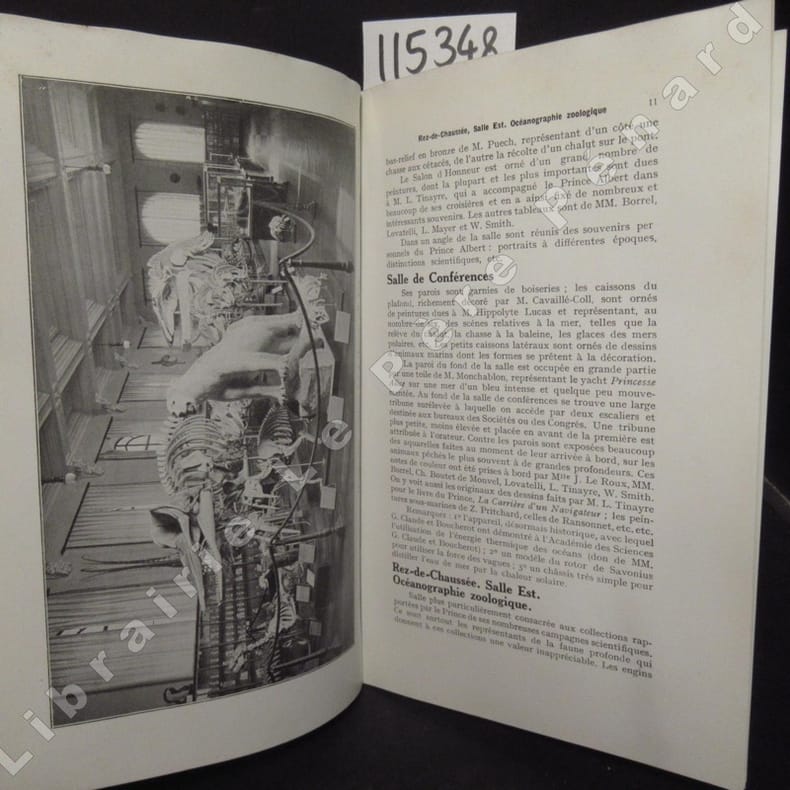
115348sd Edition du Musée Océanographique de Monaco - Ouvrage non daté (Approx. 1930 / 1940) - 18e édition - 89e Mille - Petit in-8, broché avec illustration sur la première de couverture, sous papier cristal - 67 pages - Très nombreuses illustrations et reproductions photographiques en N&B in et hors texte
1913BL2854Berlin:: R. Friedlander & Sohn 1913. 1913. 8vo. vi 545 pp. Figures plates including color. Gilt-stamped half black cloth over marbled papered boards. Fine copy. Sternfeld's article on "mimicry" in snakes is accompanied by many beautiful plates. "In mimicry a message feature or signal of one organism the mimic resembles some message of another organism which usually belongs to a different species some feature of the environment or a generalization of either of those that is called the model. This resemblance should have some functionality for the mimic by being deceptive for a third participant the receiver whose recognition and response is relevant for the mimic. Some researchers use the notion mimicry system to emphasize the systemic nature of mimicry and the relatedness of the three participants. There is a remarkable variety among mimicry cases in nature. Mimicry exists in most animal classes and also in many plants. Mimetic messages can be transferred in visual auditory chemical tactile and other channels or frequencies that animals use for communication. Mimicry can also be based on many ecological relations such as predation symbiosis parasitism and it can employ different life functions such as foraging reproduction and defense. To organize such high diversity researchers have proposed many mimicry types and typologies. Historically the oldest and best-known mimicry types are Batesian mimicry resemblance of harmless species to some non-edible species that signals their unsuitability to possible predators Mullerian mimicry resemblance of aposematic signals of different non-edible species and aggressive or Peckhamian mimicry resemblance of predators' messages to messages of some species or to some objects that are harmless to their prey. Biologists who have carried out most of the research in mimicry pay much attention to evolutionary aspects of the phenomenon. The main aspects in the mimicry research of modern biology include: dynamics of mimic and model populations in various selective situations and environmental conditions; behavior of signal receivers with respect to mimics and models receivers' abilities to discriminate and learn; variability of mimetic features including genetic and geographical variability of mimics and models. There are also alternative explanations to mimicry that do not rely on evolutionary concepts. Researchers have explained mimicry for instance as coincidence because of limited structural combinations in living organisms or as similarity caused by influences of physical conditions in similar living environment. Also paradigms outside of the natural sciences use the concept of mimicry. For instance in postcolonial studies mimicry has been understood as disruptive imitations that are characteristic of postcolonial cultures. In psychology many authors use mimicry to indicate unconscious imitations between humans especially related to facial gestures and body movements. In a semiotic context several authors Sebeok Noth Deacon have discussed biological mimicry in terms of sign categories and sign processes. There are indeed many directions in mimicry studies where a semiotic approach can be productive. For instance semiotics can be applied in analyzing long and complex mimicry displays. Uexkullian biosemiotics that pays attention to meanings in nature can be successful in analyzing abstract mimicry where abstract features such as ocular shapes movements or body types common to larger groups are imitated rather than species-specific characteristics. The Peircean typology of signs opens up new perspectives for classifying mimicry resemblances. This article was written with the support of Estonian Science Foundation Grant No 6670." - Semiotics Encyclopedia Online. The Natural History Society of Berlin GNF was founded in 1773 and is adjacent to the Gdansk Scientific Society the oldest German private natural history society. She had a number of prominent members in the natural sciences especially the biology influential members. The company still exists today and is currently based at the Institute of Zoology Free University of Berlin. R. Friedlander & Sohn, 1913. hardcover books
1995MM346351995-1996 34, 43 p., 29 figs, printed wrappers. Published in: Cahiers des Naturalistes.We added: Le Renard et al., 1996. On Candinia (Juliidae), a new fossil genus of bivalved gastropods (6 p., 7 figs).
1770ZW233201770 xvi, 147, [1] p., 1 folded plate with five engraved figures, contemporary speckled paper-covered boards (spine worn, inner joint reinforced with ''old' paper strip. Pages 59-62 are missing. Repaired tear in margin of plate. Rare.
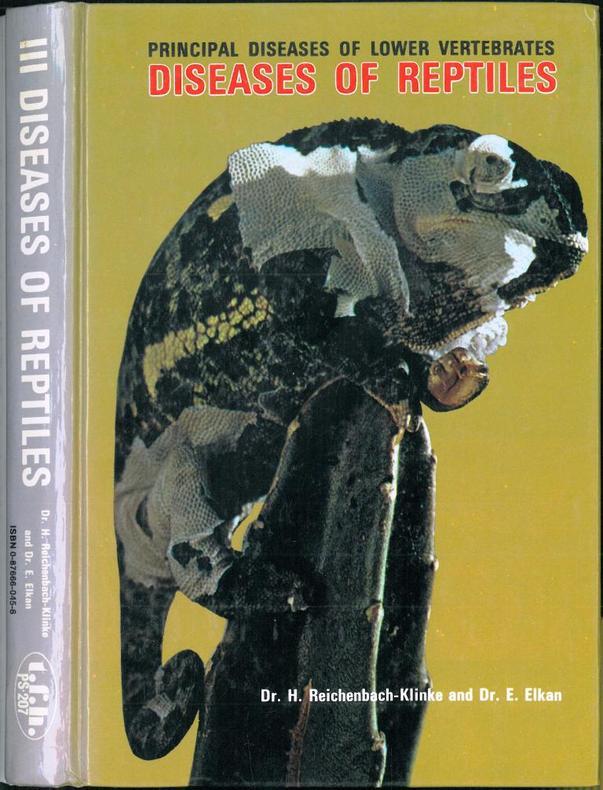
1965VR323391965 Neptune, T.F.H., 1965 : In-8 Carré, Cartonnage d'éditeurs. xii, pp. 385-600, fig. 288-397 in-texte, 3° livre d'une série traitant des maladies des vertébrés inférieurs, un excellent livre sur la pathologie des reptiles Très bon état, Couv. fraîche, Dos fané, Intérieur frais.
1898VF250881898 84 p., 6 figs, 2 lithograpghhed pls, cloth. Thesis. Some marginal lighter spots on front cover. Library stamps (Zoologisch Museum Amsterdam).
2011VR242012011 49 p., 20 (4 col.) figs, disbound (no covers). Published in: Contributions to Zoology.We added from the same journal: Grosjean, 2005. The choice of external morphological characters and developmental stages fro tadpole-based anuran taxonomy: a case study in Rana nigrovittata (16 p., 7 figs).
pp. 1-79, 10 figs., refs. 8vo. Offprint, orig. wrs.
VR449232013 (2nd ed.) 472 p., numerous coloured photographs and maps, 4to, paperbound. New copy.
VR449242013 (2nd ed.) 472 p., numerous coloured photographs and maps, 4to, paperbound. Ex library Jérôme Maran (with his small stamp and signature on first free endpaper). Very good copy.
1987VF250301987 160 p., num. figs & col. photographs, paperbound. Library stamps (Zoologisch Museum Amsterdam), else a good copy of this scarce work.
1960VR41080n.d (ca. 1960) 24 p., 5 figures, 8 photographs, original printed wrappers.
1960VR41173n.d (ca. 1960) 24 p., 5 figures, 8 photographs, original printed wrappers.
1738012097Leipzig und Rudolstadt: Wolffgang Deer 1738. Book. Very Good. Vellum. 8vo 11 X 18cm. Multiple works all dated 1738 bound together. First work with separate title page and frontispiece plate; pp. 46 770 22 Second wirk title page printed in black and red also dated 1738 with frontispiece plate pp. 126 second title page pp. 142 third title page pp. 158 missing final leaf Contemporary full vellum binding with autographed title to spine. Binding very good with a little general wear and rubbing to extremities a little marked. Contents clean and tight. A very good tight copy. Scarce. Wolffgang Deer Hardcover
1957VR114001957 14 & 2 p., 14 (11 col.) & 4 pls, 2 (1 folded) maps, paperbound. Together in a complete volume 18 of The Natural History Bulletin of the Siam Society.
1971VR448281971 109 p., several figures, 4to, paperbound. IUCN Publications New Series. Library stamps, number pasted on lower end spines.
1969VR448271969 [4], 100 p., several figures, 4to, paperbound. IUCN Publications New Series. Library stamps, number pasted on lower end spines.
VR448321971 / 1973 Two parts. 39, 30 p., 4 figures, 2, 3 plates, printed wrappers. IUCN Monograph No. 1 & 2. Library stamps, number pasted on lower end spines.
2006VR449202006 306 p., numerous figures, 4to, paperbound. Good copy. Several papers in English, and several papers in French. Scarce.