Joseph FoxBiblio.com
319 résultats
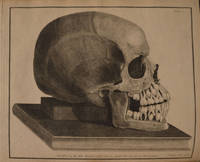
18147194<p>Second Edition Enlarged. Modern black cloth; bookplate of Benjamin Ackerman to front pastedown; some prefatory text pages document-taped; lacks explanatory text for final plate of part two; title page soiled otherwise very good with clean impressions. Enlarged edition with 13 copper engraved plates to part one and an additional 10 plates accompanying part two Diseases and Artificial Teeth. 28 x 23 cm. Additional images and further information provided upon request. Shipped through USPS insured Priority Mail.</p> E. Cox & Son hardcover
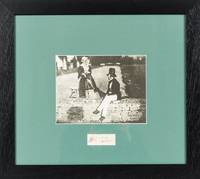
1860382AG1860. England c. 1860. Original autograph. Beautifully framed. The frames with the photographs inside measure: 50cm x 40 cm The frame with the vintage autograph is slightly smaller: 47 cm x 42 cm. Excellent condition. The only existing autograph of Fox Talbot on the international market at the time of cataloging. Very rare ! William Henry Fox Talbot 11 February 1800 17 September 1877 was a British scientist inventor and photography pioneer who invented the salted paper and calotype processes precursors to photographic processes of the later 19th and 20th centuries. His work in the 1840s on photomechanical reproduction led to the creation of the photoglyphic engraving process the precursor to photogravure. He was the holder of a controversial patent which impacted the early development of commercial photography in Britain. He was also a noted photographer who contributed to the development of photography as an artistic medium. He published The Pencil of Nature 184446 which was illustrated with original salted paper prints from his calotype negatives and made some important early photographs of Oxford Paris Reading and York. Wikipedia unknown
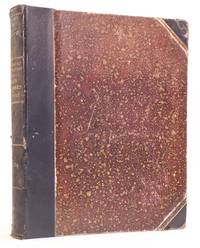
18811409565New York: E. B. Treat 1881. First Edition. Hardcover. Quarto viii 48 plates 106 pages. In Very Good minus condition. Quarter-bound in black leather and marbled paper boards. Gilt lettering and decoration on compartmentalized spine and corners. Free endpapers and paste downs marbled. Red speckling to edges of text block. Mild shelf wear on boards concentrated on spine and edges. Chipping along the hinges of spine and corners. Slight white staining on front board. Three stickers from previous owners adhered to front and back pastedowns. Reinforcements to endpapers/ Mild staining on text block concentrated on pages i-iii and 81-106. All 48 plates included. Shelved in in Case 4. George Henry Fox was one of the six founders of the American Dermatological Association and was often. This book was publisher almost a decade before before he served simultaneous terms as president of the New York County Medical Society and the New York State Medical Society. Source: The New York Times. 1409565. Shelved Dupont Bookstore. E. B. Treat hardcover
1814011940E. Cox & Son 1814. Modern quarter calf marbled boards. Old faded library ink stamp on title page; light foxing. Total of 23 plates collates complete. Collation: x 4 100 14 4 179 12 pp. 23 engraved plates. Second Edition Enlarged. Hard Cover. Very Good. E. Cox & Son Hardcover
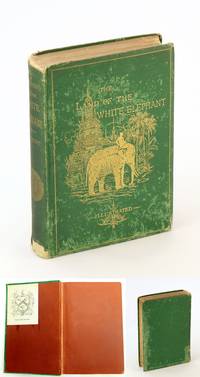
1874431j2644New York: Harper & Brothers Publishers. Fair with No dust jacket as issued. 1874. First Edition. Hardcover. "Frank Vincent Jr. 1847 -1916 was an American explorer businessman and art collector. The first American citizen to publish a detailed account on Angkor while he was a guest at the court of the King of Siam he is best known for his detailed accounts of journeys through Southeast Asia and Northern Europe particularly this title". - Wikipedia/Angkor Database. Bookplate of Charles Fox Gardiner inside from board. Dr. Gardiner 1857-1947 served as a physician in the new state of Colorado. He became internationally known for his theories on the treatment of tuberculosis and wrote an acclaimed book entitled 'Doctor at Timberline' which recounted some of his extraordinary medical adventures in the wilds of Colorado. A prior owner's name and date appear in light pencil upon first blank leaf. xvi 316 4 ads p. Original bevelled emerald cloth is richly adorned in gilt and bears above-average wear and insect markings. Lacking bottom half-inch of backstip. Narrow opening to each inner joint. A worthy first edition example of this early account. ; 8vo . Harper & Brothers Publishers hardcover
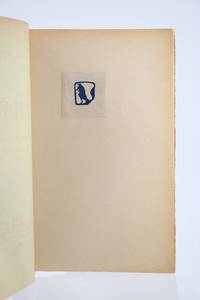
189878088Paris: Librairie Charpentier et Fasquelle 1898. Fine. Librairie Charpentier et Fasquelle Paris 1898 13 x 19 cm broché First edition with no mention of deluxe paper copies. Precious signed autograph inscription from Octave Mirbeau to his friend Jules Renard. Blue pencil mark by Jules Renard on the front cover. Our copy is further enriched with the famous bookplate of Jules Renard designed and engraved by Henri de Toulouse-Lautrec. Librairie Charpentier et Fasquelle unknown
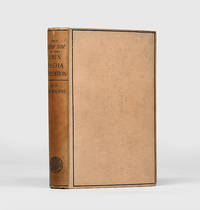
1891168943London: Chatto & Windus 1891. The gains have been cumbrously and expensively procured. by blundering and bad faith First edition scarce of this repost to Henry M. Stanley and condemnation of the "Scramble for Africa". "The chief reason for finding fault with this Expedition is that by exposing its blunders and ill effects something may perhaps be done to deter civilised Englishmen from ever again sanctioning or applauding such proceedings" preface. Records show only a single copy appearing at auction in the last two decades. In 1890 as the secretary of the Aborigines' Protection Society Henry Fox Bourne 1837-1909 began denouncing atrocities being committed in the Congo Free State "emerging as a fierce public critic to European territorial claims in Sub-Saharan Africa" Mitchell. Here quoting extensively from In Darkest Africa and other expedition narratives he levels charges of mendacity of motive and callousness in the face of suffering: "Stanley himself neither knows nor cares how many thousands of slaughtered natives should be added to the 311 dead Zanzibaris Soudanese and Somalis to make up the huge total of mortality incident to the methods and exploits of the Emin Relief Expedition" p. 188. Fox Bourne was nothing if not relentless: his 1903 Civilisation in Congoland elaborated on the horrendous treatment meted out to colonial subjects by the Belgian government. Provenance: with the January 1908 ownership inscription on the front free endpaper of Florence Kelsey born c.1857 the wife of Arthur Kelsey 1835-1922 an East India Company assistant surgeon who subsequently entered private practice in 1863. Loosely inserted is an early twentieth-century cigar label showing Emin Pasha. Octavo. 2 pp. publisher advertisements at end. Original light brown cloth remainder binding for the Times Book Club spine lettered in black with book club device at foot in black front board with black frame edges untrimmed. Spine toned boards lightly foxed endpapers browned text generally clean: a very good copy. Angus Mitchell Roger Casement: 16 Lives 2014. hardcover
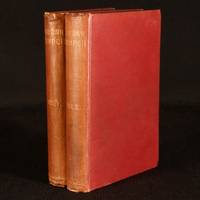
1887998F18Edinburgh: William Blackwood and Sons 1887 . First edition. Cloth. Very Good. 8" by 6". None. Inscribed by the author to his own mother this is the very scarce first edition of Samuel Middleton Fox's entertaining science fiction novel about a society's failure to run a futuristic pleasure city. The very scarce first edition of this work complete in two volumes.Signed by the author with a presentation inscription to the half title of volume I reading 'For Mama from the Author Xmas'. The author's mother was Quaker Rachel Elizabeth Fox.This inscription additionally provides the date 1886 indicating that he inscribed this copy for his mother prior to the official publication date of 1887.A thrilling and entertaining science fiction novel anonymously authored offering 'a fairly mild-mannered Satire of high society featuring a pleasure city on the Riviera which proves too expensive to run' according to The Encyclopaedia of Science Fiction.With a publisher's catalogue to the rear of volume II.Fox only published one other novel 'George: A Story in Drab and Scarlet' in 1890. In the publisher's original cloth binding. Boards bright. Fading to back strips with shelf wear to back strip head and tail and bumping to back strip heads. Front hinge of volume II strained but firmly held. Author's inscription to half title of volume I. Internally firmly bound. Pages bright with spotting throughout and the odd handling mark. Very Good William Blackwood and Sons hardcover
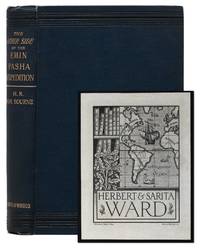
18917927London: Chatto & Windus 1891. First edition. Fine. Original publisher's primary blue cloth gilt there are examples of remainder bindings extant octavo. Edges untrimmed 32 pp. publisher's ads at rear mostly uncut pictorial bookplate of Herbert & Sarita Ward to front pastedown. Fore-edge foxed otherwise a Fine copy with outstanding provenance. <br /> <br /> An extraordinary association copy of a noted rarity a sharp critique of the "Scramble for Africa". The copy of Herbert Ward sculptor writer and member of the Emin Pasha Relief Expedition. He was directly under the command of Major Edmund Barttlelot at the rear column having been appointed by Stanley as a lieutenant. The infamous column features heavily in Fox Bourne's work with the entirety of chapter five dedicated to the topic. Ward and his work My Life with Stanley's Rear Guard are quoted extensively and Fox Bourne clearly makes an example of Ward's illegal and immoral behaviour. A particularly disturbing example is the case of the execution of Burgari who was initially charged with stealing food from Ward before attempting to flee. Two officers Troup and Jameson wanted the punishment to be downgraded but Ward along with Bonny and Barttlelot voted for the death penalty. <br /> <br /> Fox Bourne became secretary of the Aborigines Protection Society in 1889. He edited its journal Aborigines' Friend and lobbied for the rights of indigenous peoples and especially advocated for those in Africa. He stated that indigenous people had fundamental rights to their land their rites and their institutions. He later published Civilisation in Congo Land A Story of International Wrong-Doing in 1903 focusing on the horrendous treatment of the indigenous population by the Belgian government. Fine. Chatto & Windus unknown
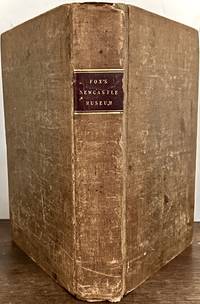
182723959Newcastle: J. Hodgson 1827. First edition. Hardcover. Later brown cloth brown leather spine label lettered in gilt. Very good. xxii 2 312 pages. 23 x 15 cm. illustrated with engraved frontispiece folding table 7 plates 2 of which by Thomas Bewick and illustrations in the text. Provenance: Author to son Charles Fox with inscription dated 1830 gifted from "Mrs. Charles C. Fox dated 15 Nov. 1915. One of the most significant 18th century collections of Natural History and Ethnography. A catalogue of the museum's holdings that includes a section entitled "Utensils of Savage Nations" which includes material from New Zealand "Owhyhee and other Sandwich Islands" "Otaheite and Society Islands" George's Island the Pacific Northwest etc including material collected during Cook's voyages and a number of natural history specimens are described like the wombat illustrated the koala and the duck-billed platypus from Australia and an extensive foreign ornithological section which includes many specimens from the South Seas. Forbes lists only one copy and could find no references to this rare work. Some spotting or browning to plates and offsetting from plates to text. Interior contents fresh and clean. Rubbing to backstrip extremities. J. Hodgson hardcover
188120104New York: E.B. Treat 1881. FIRST EDITION. With 48 hand-coloured photographic plates. Modern half-calf and marbled boards; interior toned with only minimal browning. A very nice copy. First edition. Like his Photographic illustrations of skin diseases published a year earlier Fox's aim was "to present a practical exposition of the subject with special reference to points of diagnosis and treatment" preface. The photographic plates produced by Harroun and Bierstadt of New York depict a wide variety of dermatologic manifestations of syphilis.<br /> <br /> Fox 1846-1937 was a professor of dermatology at the College of Physicians and Surgeons of New York and was the longest surviving member of the six founders of the American Dermatological Association. "His contributions to dermatologic teaching were unmatched. His writings were numerous and outstanding including the first photographic atlas of skin diseases" Shelley. E.B. Treat unknown
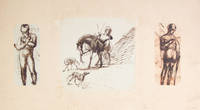
18479675n.p. 1847. 1 vols. Folio. Sewn into original brown wrappers worn. 1 vols. Folio. The artist from internal evidence seems to be Rev. H.L. Bennet--clearly an ardent and well-connected sportsman as most of his sketches are portraits and caricatures of well-known hunting men and women of the day many of whom are identified. These include a portrait of Lord Jersey who Nimrod called "perhaps the most elegant rider for hounds the world has ever seen" and many others. The drawings are skilfully executed and are often amusing. A unique production of one of the golden ages of British sport.<br /> <br /> Including : Examples of 2 pages 7 images: Mrs. Rowley's Groom on his Compact Mare Rush Esq Farthgghoc Col. Joddsch Lord Anson's steward M-- Wyatt. J.H. Jr T.T.D.<br /> <br /> Another: 2 pages; Rev. G. Loyd T.T Darke Esq. 2 others<br /> <br /> Another: 2 pages; Col. Goodell 4 others Mr. Drakes Grey's horse. unknown
1846468908London: Printed by Palmer and Clayton 1846. Hardcover. Good. First edition. Quarto. 4 338pp. 1 Talbotype salt print and 16 plates two of which are folded. Contemporary dark green quarter morocco and cloth over boards gilt spine. Ex-library with small date “1846†lettered by hand on spine else a clean unmarked copy. Wear to the joints and leather corners loss at head of spine about an inch bottom compartment of spine is rubbed loss at bottom right corner of title page not affecting the letterpress else very good with modest toning to the endpapers and scattered foxing. The highly sought after eighth volume of this important journal featuring William Henry Fox Talbot’s original salt print with a letterpress caption pasted underneath: “The Palace of Justice at Rouen. From Nature 1843†and a letterpress label pasted on the reverse: “Patent Talbotype or sun picturesâ€. The volume also contains sixteen other exemplary plates. A scarce copy in the original boards of “the first magazine in the world to be illustrated with a photographâ€. Gernsheim 620. Printed by Palmer and Clayton hardcover
1803218202London: Thomas Cox 1803. hardcover. very good. The Natural History of the Human Teeth Including a Particular Elucidation of the Changes which Take Place during the Second Dentition. viii 100pp followed by 13 copper plate engarvings. London: Thomas Cox 1803. AND: The History and Treatment of the Diseases of the Teeth the Gums and the Alveolar Processes with the Operations which they Respectively Require. iv 170pp followed by 9 copper plate engravings lightly foxed and stained. 4to with wide margins bound in full diced calf well-rubbed but sound. London: Thomas Cox 1806.<br/> <br/> Landmark work on orthodontics. Two classical treatises by the pioneering London dental surgeon. Fox was first to give explicit directions for correcting dental irregularities as well as instructions for various surgical procedures. Weinberger History of Dentristry Vol. I; pp. 340-4. In 1799 Joseph Fox pupil of John Hunter received the appointment of dental surgeon to Guy's Hospital the first hospital to add a dental surgeon to its staff and the first to institute a special course of dental lectures. GM 3679; 3671.1. Campbell 54 and 59.<br/> <br/> Thomas Cox unknown
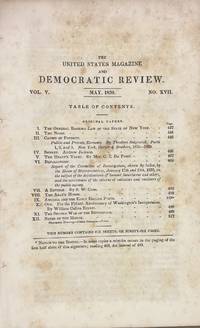
18393335Washington D.C.: Langtree & O'Sullivan 1839. First edition. Light foxing throughout. Otherwise in very good condition. First edition. 3 428–520. <p><br /> One of the earliest American reports on the photographic innovations by Daguerre and Talbot.<br /> <p><p><br /> This significant issue of Democratic Review includes one of the earliest American accounts of the pioneering discoveries in photography by Louis Daguerre and William Henry Fox Talbot. The article "Photogenic Drawing" pp. 517–520 offers a detailed overview of Daguerre's daguerreotype process highlighting images such as a view of Paris from the Pont des Arts a crouching Venus statue and a spider magnified under a microscope. However except for the Venus photograph the other images mentioned are now lost. The section on Daguerre draws from Henri Gaucheraud's article published on January 6 1839 in La Gazette de France and Samuel F. B. Morse's report "The Daguerrotipe" from The New-York Observer April 20 1839. The article also covers Talbot's photogenic drawing referencing his "Account of the Processes employed in Photogenic Drawing" presented to The Royal Society in February 1839 and published in The Literary Gazette. <br /> <p><p><br /> This publication captures a critical moment in the early history of photography and its introduction to the American public.<br /> <p>. Langtree & O'Sullivan unknown
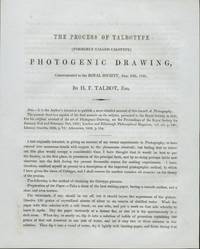
184152094London: Printed by J. & H. Cox Brothers 74 & 75 Great Queen Street Lincoln's-Inn Fields 1841. First edition. 4to. 4 pp. Aside from a few faint pinpoint spots of foxing this is a fine as new copy. Housed in a custom made cloth chemise and slipcase titled in gilt along the spine. Shortly after the presentation of his paper before the Royal Society on 31 January 1839 Talbot at his own expense printed the text as a pamphlet of 14 pages; "Some Account of the Art of Photogenic Drawing."became the world's first separate publication on photography. Through this process an ordinary piece of writing paper was immersed in a sensitizing solution dried placed in a camera and exposed in daylight to a subject for upwards of an hour or longer. Upon examination a tonally reversed rendering of the subject was visible. It was then soaked in a solution of salt and washed and dried then the process was essentially repeated exposing the first print to the new sensitized sheet reversing the tones to produce an image with the tonality as in nature. Through a series of further experiments over the next months Talbot discovered that a "latent" image always existed and that through chemical development it could be brought to life. This allowed for speeding the exposure in the camera to be cut to a mere 30 seconds and the enriched chemical solutions would produce a sharper and tonally richer image. This process he first called the Calotype from the Greek kalos - beautiful. <br /> <br /> On June 10 1841 Talbot presented the Calotype process at a meeting of the Royal Society and at his own expense he published a four page description of his process. Unlike his earlier publication on Photogenic Drawing here he states in detail the full process. <br /> Upon the urging of John Herschel and David Brewster he began to call his process the Talbotype rather than Calotype. His intention was to license this process and likely this printed description was printed to distributed to potential licensees. <br /> <br /> Aside from changing the name from Calotype to Talbotype in the title of this publication and the slight alteration in the printer's imprint the text of the two issue are identical - the word Calotype remains in the body of the text This is the foundation stone of the negative-positive process that has been in use since it was first published.<br /> <br /> This printing is much rarer than the Calotype variant with WorldCat locating only Harvard University - Houghton Library and Cornell University. Gernsheim Incunabula No. 655 listing only the Calotype variant. Roosens and Salu No. 10285 listing only the Calotype variant. Weaver HENRY FOX TALBOT SELECTED TEXTS AND BIBLIOGRAPHY No. 87 listing only the Calotype variant. Printed by J. & H. Cox, Brothers, 74 & 75, Great Queen Street, Lincoln's-Inn Fields unknown
184649London: Printed by J. and H. Cox Brothers 74 and 75 Great Queen Street Lincoln’s-Inn Fields 1846. First edition under this title. Privately printed reprint of Talbot’s memoir that was published with variant title and imprint Process of Calotype Photogenic Drawing … London: J. L. Cox & Sons 1841. The printers J. & H. Cox were active from 1844–1846. Housed in blue cloth folder. In fine condition. First edition under this title. Privately printed reprint of Talbot’s memoir that was published with variant title and imprint Process of Calotype Photogenic Drawing … London: J. L. Cox & Sons 1841. The printers J. & H. Cox were active from 1844–1846. Housed in blue cloth folder. 4 p. In this paper Talbot 1800–1877 photographer inventor announced his invention of the photographic process the first permanent negative process on paper that he called Calotype and later – first in print in the title of this paper – Talbotype. His process was the forerunner of most photographic processes of the 19th and 20th century. It also had the advantage of fastness compared to other photogenic drawing processes of the time. <br /> An extremely rare and early paper on photography as Talbot printed privately in limited number for presentation to his friends and editors. Printed by J. and H. Cox, Brothers, 74 and 75, Great Queen Street, Lincoln’s-Inn Fields unknown
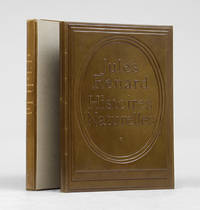
189997129Paris: Floury 1899. Toulouse-Lautrec's masterpiece of the illustrated book First edition number 84 of 100 copies only one of the most celebrated and sought-after of all livres d'artiste some of Lautrec's finest illustrations and the prototype of nearly all modern bestiairies Garvey. Lautrec and Jules Renard met first in 1894. The artist asked to illustrate some of the charming and witty portraits of animals and his first sketches were made at the Jardin d'Acclimatation and Jardin des Plantes in 1896. The last two illustrations printed were executed by Lautrec while he was a patient at the Neuilly clinic of Dr Sémalaigne. Renard's Histoire naturelles "contains some of Toulouse Lautrec's most refined draftsmanship and with Yvette Guilbert it is considered one of the masterpieces of the illustrated book. It was Lautrec who requested the pleasure of illustrating Renard's bestiary and Renard agreed hoping for descriptions that 'would please the animals themselves'. The two creative personalities clashed. Lautrec resented the book's limitation to mundane animals while Renard although paid homage to by a cover design of a fox objected to a number of Lautrec's drawings. Today we are amazed that it took Floury twenty years to sell out the edition of 100 copies" Donson/Gripp. Small folio 310 x 220 mm. With an original transfer lithograph to front wrapper on Japan paper and 22 throughout the text on vélin paper by Toulouse-Lautrec. Finely bound in 1973 by Pierre Lucien Martin 1913-1985 in olive green modelled calf titles to covers in raised lettering. Housed in a matching quarter calf chemise and slipcase. Foot of spine lightly rubbed with one small nick contents fresh; slipcase slightly sunned and rubbed. A finely bound copy. Adhémar 333-355; The Artist and the Book 304; Delteil 297-319; Donson/Gripp Great Lithographs by Toulouse-Lautrec nos. 78/79; Garvey 304 "Now one of the greatest rarities of the 19th century. Not only does it contain some of Lautrec's finest illustration but it is the prototype of nearly all modern bestiaries"; Rauch 17; Wittrock Toulouse-Lautrec I 202-224. unknown
184148243London.: Printed by J. L. Cox and Sons. 1841. Loose as issued later morocco-backed portfolio. 4to. 229 x 182 mm. Leaf with drop-head title and note above opening text printed text recto and verso on following leaves folded as issued. The rare first edition of the first announcement of William Henry Fox Talbot's calotype method - the negative / positive photographic process - the most important innovation in the history of photography.Although Talbot had announced his researches and progress in the field of what was to become photography in his 1839 lecture to the Royal Society 'Some Account of the Art of Photogenic Drawing . &c.' that lecture although ground-breaking dealt largely with the achievement of an image on treated paper and only alluded briefly to the possibility of a more versatile development. It was not until his 1841 lecture to the same body the title as per the present publication is 'The Process of Calotype Photogenic Drawing . &c.' that the details of his refinements and most particularly his successes with the negative / positive process were delineated. Those successes and Talbot's development of the resultant negative / positive process for photographic reproduction and duplication remained the predominant methodology in the field for more than 150 years; all subsequent refinements whether in the chemicals used differing methods for image capture printing and so on were merely variations on Talbot's original scheme. Talbot had patented his method in secret he was awarded 'Her Majesty's Royal Letters Patent No. 8842' in February 1841 prior to his lecture to the Royal Society concerned by Arago's announcement of Daguerre's discoveries the efforts of Hippolyte Bayard and the priority of his own work.'In 1841 William Henry Fox Talbot announced an improvement of his photogenic drawing process which he named 'calotype' from the Greek meaning 'beautiful picture'. Previously he had allowed his sensitized paper to remain exposed to light until an image became visible. He now made a remarkable discovery: a much shorter exposure so changed the characteristics of the silver salts that they could be reduced to silver by chemical after-treatment. This principle of the 'development of the latent image' is basic to most subsequent photographic processes . To make a calotype negative Talbot bathed a sheet of paper in two solutions one of silver nitrate the other of potassium iodide . After exposure the paper was bathed again in this solution a mixture of gallic acid and silver nitrate which acted as a physical developer and gradually brought out the image . He printed them the resultant negative with his original silver chloride paper.' Beaumont Newhall. 'Privately printed for the author for distribution to friends and editors.' Gernsheim.'Between 1835 and 1839 Talbot and Henneman continued their experiments motivated by a desire . for reproducing images from nature. Following Arago’s announcement to the Académie des Sciences 7 January 1839 of the existence of Daguerre’s photographic process Talbot became concerned over the priority of his work; he frantically sought to improve his process prior to the disclosure of Daguerre’s . In 1840 Talbot would develop a latent image on paper and he called this new process the calotype. He patented and then disclosed the process in a paper presented to the Royal Society in June of 1841 . '. DSB.Talbot's document is scarce: COPAC locates no copies in the UK and the catalogue for the British Library reports no example; OCLC lists two copies in Germany at Marburg and Stuttgart's Staatsgalerie and four in the US at Syracuse Columbia Harvard and Princeton.The document was reprinted with an altered title 'The Process of Talbotype formerly called Calotype Photogenic Drawing . &c. in 1846.Gernsheim 655; see Beaumont Newhall's 'The Calotype: The Pencil of Nature' in 'The History of Photography' New York 1997 pg. 43. Printed by J. L. Cox and Sons. unknown