319 résultats
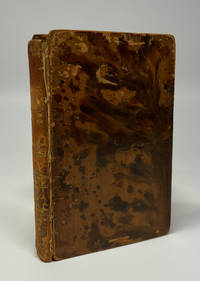
1875000008Philadelphia: Henry C. Lea 1875. Third Edition . Cloth. Fine/No Jacket. 283 pp. Cloth w/ leather binding boards and leather spine with Gold lettering and decorations on spine. Very Good condition. Partially damaged page in index page 283 <br/> <br/> Henry C. Lea hardcover
19001ivDa0033London: Abbey Library/Murrays Sales & Service Co. Cresta House 1900. Book. Very Good. Hardcover. Copyright 1900. 12mo or 12° Duodecimo: 6¾" x 7¾" tall. 1099 pp. A rare hard-to-find out-of-print collectible gem! Solidly bound copy with moderate external wear. Clean text. Moderate foxing on page edges not affecting text. No publishing year given. Publishing year gleaned from other sources therefore it is an approximation. Tome printed in Romania. Dust jacket suffers few cuts and tears around edges. Over-sized and/or over weight book; may require extra postage. Please note that large and/or heavy items may incur an additional shipping charge. . Abbey Library/Murrays Sales & Service Co., Cresta House Hardcover
1849d023R.516GB: Charles Fox 1849. Generally very cleran tight text but a few leaves at start creased. Recently rebo8und in a strong black cloth with bright gold lettering and rules on spine. So a very good working copy. . Hardback. Good/No DW. Charles Fox Hardcover
1896MSF12170Albany NY: Fisheries Game and Forest Commission. Good. 1896. Hardcover. Folding map 28 x 36 published by Fisheries Game and Forest Commission in 1896. Comes in the green map case with gilt lettering on front. Map has some tears along some of the top fold and does have some toning. Map is in good condition. ; 8vo 8" - 9" tall . Fisheries, Game and Forest Commission hardcover
18892602260002<p>Albany Publishing Company 1889. Hardback. Very Good. 1st Edition - Albany Publishing Co. 1889 Original boards replace with black buckram with gilt lettering on the spine. Original decorative end papers retained. No marks noted in text. Binding is tight and square. vi 580 p. . . . . . . . Regimental Losses in the American Civil War 1861-1865 is a large statistical study by Union veteran William F. Fox that quantifies combat and mortality in Union regiments using official federal and state military records. The opening chapters analyze the nature of Civil War casualties - distinguishing killed in action died of wounds and died of disease; calculating maximum numbers and percentages killed in single regiments and battles; and comparing losses among different arms of service infantry cavalry artillery and among white volunteer regular and United States Colored Troops units. Subsequent chapters identify what Fox terms the three hundred fighting regiments giving each a short historical sketch a list of its principal engagements and detailed tables of its killed and mortally wounded by company together with total enrollment and percentage lost - designed to show which organizations saw the heaviest and most continuous fighting. Much of the volume is devoted to regiment-by-regiment and state-by-state statistical tables that record for every Union regiment and battery the number killed or mortally wounded deaths from disease and other causes total deaths and in many cases losses in specific battles. Fox then broadens his treatment with chapters that aggregate casualties by army and corps present chronological lists of battles with their official casualty figures and estimate Confederate regimental and army losses for comparison drawing on the Official Records and other contemporary documentation.</p> Albany Publishing Company hardcover
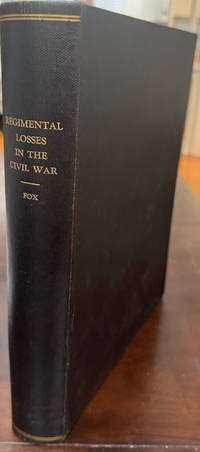
188972321Albany Publishing Company Albany New York 1889. Hardcover. Used - Very Good. Albany Publishing Company 1889. 595 pages. 11 x 8.5" gold stamped half leather cloth boards. Cover scuffed VG. Albany Publishing Company, Albany, New York hardcover
180612398London: James Cundee "Albion Press Printed" 1806. First Edition . Hardcover. Fair. 12mo 265pp. plus Index. Engraved title page and frontispiece. Some foxing to those leaves but the contents clean. Binding rough with the rear board detached but present other spine joint loosened but holding and spine quite worn including only the ghost of a label. Overall in fair condition. James Cundee ("Albion Press Printed") hardcover
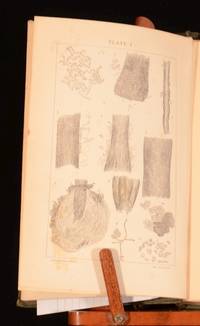
1863GEN18-F-11London : Robert Hardwicke 1863. Cloth. Good Only. 9" by 6". None. A scarce copy of this work on parasitic skin diseases. With four plates collated complete. Including chapters on the nature of parasitic diseases nomenclature and description of parasitic diseases and treatment. In a cloth binding. Externally sound though backstrip is lifting. Splitting to cloth on both joints. Internally generally firmly bound although slightly strained in places. Some institutional ink stamps throughout. Pages are slightly age-toned with some spotting to the first few pages. Good Only Robert Hardwicke hardcover
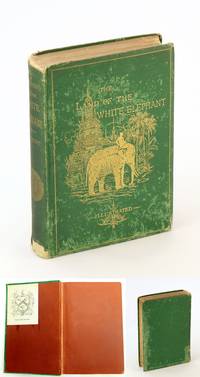
1874431j2644New York: Harper & Brothers Publishers. Fair with No dust jacket as issued. 1874. First Edition. Hardcover. "Frank Vincent Jr. 1847 -1916 was an American explorer businessman and art collector. The first American citizen to publish a detailed account on Angkor while he was a guest at the court of the King of Siam he is best known for his detailed accounts of journeys through Southeast Asia and Northern Europe particularly this title". - Wikipedia/Angkor Database. Bookplate of Charles Fox Gardiner inside from board. Dr. Gardiner 1857-1947 served as a physician in the new state of Colorado. He became internationally known for his theories on the treatment of tuberculosis and wrote an acclaimed book entitled 'Doctor at Timberline' which recounted some of his extraordinary medical adventures in the wilds of Colorado. A prior owner's name and date appear in light pencil upon first blank leaf. xvi 316 4 ads p. Original bevelled emerald cloth is richly adorned in gilt and bears above-average wear and insect markings. Lacking bottom half-inch of backstip. Narrow opening to each inner joint. A worthy first edition example of this early account. ; 8vo . Harper & Brothers Publishers hardcover
189620465Paris.: H. Simonis Empis. 1896. Original printed wrappers with design by Vallotton on front cover. 16mo. First edition illustrated with original designs by Felix Vallotton. H. Simonis Empis. unknown
1891017571Boston: George R. Reed 1891. Book. Very Good. Hardcover. 426 pages wear to edges blanked out owner name INSCRIBED by publisher to Elizabeth Custer and SIGNED by Elizabeth Custer. A book which was in her library. George R. Reed Hardcover
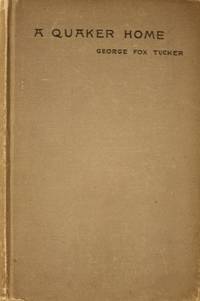
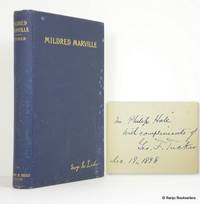
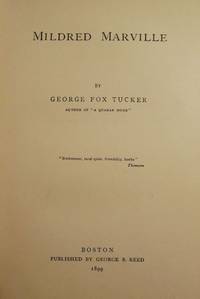
1899014173Boston: George B. Reed 1899. Book. Very Good. Hardcover. Inscribed by Authors. First Edition. Wright III 5592. Inscribed by the author to previous owner dated Dec 19 1898 on the second free endpaper. Light wear to the extremities. There are bleached spots on the boards and some mild foxing to the endpapers. In a sound binding with hinges intact. Size: 8vo - over 7¾" - 9¾" tall. George B. Reed Hardcover
189949301George B. Reed 1899. TUCKER George Fox. MILDRED MARVILLE. Boston: George B. Reed 1899. Small 8vo. navy-blue cloth stamped in gilt. First Edition. Signed presentation by Tucker on front blank page: "Mrs. Dutton with the compliments of Geo. F. Tucker. Dec. 27 1898." Very Good bright. $125.00. George B. Reed unknown
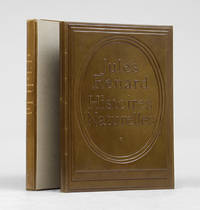
189997129Paris: Floury 1899. Toulouse-Lautrec's masterpiece of the illustrated book First edition number 84 of 100 copies only one of the most celebrated and sought-after of all livres d'artiste some of Lautrec's finest illustrations and the prototype of nearly all modern bestiairies Garvey. Lautrec and Jules Renard met first in 1894. The artist asked to illustrate some of the charming and witty portraits of animals and his first sketches were made at the Jardin d'Acclimatation and Jardin des Plantes in 1896. The last two illustrations printed were executed by Lautrec while he was a patient at the Neuilly clinic of Dr Sémalaigne. Renard's Histoire naturelles "contains some of Toulouse Lautrec's most refined draftsmanship and with Yvette Guilbert it is considered one of the masterpieces of the illustrated book. It was Lautrec who requested the pleasure of illustrating Renard's bestiary and Renard agreed hoping for descriptions that 'would please the animals themselves'. The two creative personalities clashed. Lautrec resented the book's limitation to mundane animals while Renard although paid homage to by a cover design of a fox objected to a number of Lautrec's drawings. Today we are amazed that it took Floury twenty years to sell out the edition of 100 copies" Donson/Gripp. Small folio 310 x 220 mm. With an original transfer lithograph to front wrapper on Japan paper and 22 throughout the text on vélin paper by Toulouse-Lautrec. Finely bound in 1973 by Pierre Lucien Martin 1913-1985 in olive green modelled calf titles to covers in raised lettering. Housed in a matching quarter calf chemise and slipcase. Foot of spine lightly rubbed with one small nick contents fresh; slipcase slightly sunned and rubbed. A finely bound copy. Adhémar 333-355; The Artist and the Book 304; Delteil 297-319; Donson/Gripp Great Lithographs by Toulouse-Lautrec nos. 78/79; Garvey 304 "Now one of the greatest rarities of the 19th century. Not only does it contain some of Lautrec's finest illustration but it is the prototype of nearly all modern bestiaries"; Rauch 17; Wittrock Toulouse-Lautrec I 202-224. unknown
189522735<p>F. M. Harley Publishing Co. Chicago 1895. HB NODJ ISSUED 1895 1ST Edition 1st Printing VG-/Good SOLD AS-IS NODJ Dark blue Cloth Lettered Black front & Spine Cover Water Damage Stains & slight Bend covers 294 pgs Interior nice clean TIGHT Light FoX some Light Water stains slight Wrinkling some pgs . First Edition. Hard Cover.</p> F. M. Harley Publishing Co. Chicago hardcover
1808LTH28-B-5London: William Miller 1808. Leather. Very Good. 12" by 10". Unamed. A history of the early part of the reign of the Catholic English King James II. First printing for W. Bulmer and Co. Including frontispiece of Charles James Fox. Fox was born in 1749 and served as a long term member of parliament. Openly in opposition of George II he publicly supported America patriots and their freedom from British rule. Fox would also briefly serve as the first Foreign Secretary of Britain. This particular work was originally intended as part of a larger history spanning until the reign of William III. However Fox failed to complete the work before his death in 1806. Instead this work only covers the first year of James II reign. With an extensive appendix to the rear containing correspondence between Louis XIV and M. Barillon the Bill for the Preservation of the King's Person and much more. Rebacked in calf with original boards and backstrip preserved. Externally sound though with loss to the original leather some marks and bumping to the extremities. Internally firmly bound. Ink inscription to verso of front free-endpaper. Pages are bright and quite clean with just the occasional instance of foxing. Very Good William Miller hardcover
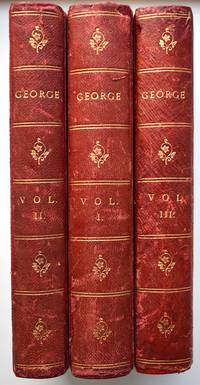
1890104853London: David Stott 1890. 1st Edition . Hardcover. Very Good/No Jacket. 12mo - over 6¾ - 7¾" tall. Complete in three volumes Fox's second novel was like his first originally published anonymously and is now exceptionally hard to find. This first edition set has had its bindings carefully repaired and re-sewn using the original boards and spine strips to present a very appealing used appearance with the strength of a fully rebound set. Internally there is some foxing early and late in each volume but otherwise only very occasionally with stock lightly toned and generally clean and bright. Half titles and titles present in each volume. No inscriptions. New endpapers. Original marbled paper-covered boards with half red leather all worn to edges but none the less attractive for that. 12mo. i.290pp; ii.234pp; iii.263pp <br/> <br/> David Stott hardcover
1846468908London: Printed by Palmer and Clayton 1846. Hardcover. Good. First edition. Quarto. 4 338pp. 1 Talbotype salt print and 16 plates two of which are folded. Contemporary dark green quarter morocco and cloth over boards gilt spine. Ex-library with small date “1846†lettered by hand on spine else a clean unmarked copy. Wear to the joints and leather corners loss at head of spine about an inch bottom compartment of spine is rubbed loss at bottom right corner of title page not affecting the letterpress else very good with modest toning to the endpapers and scattered foxing. The highly sought after eighth volume of this important journal featuring William Henry Fox Talbot’s original salt print with a letterpress caption pasted underneath: “The Palace of Justice at Rouen. From Nature 1843†and a letterpress label pasted on the reverse: “Patent Talbotype or sun picturesâ€. The volume also contains sixteen other exemplary plates. A scarce copy in the original boards of “the first magazine in the world to be illustrated with a photographâ€. Gernsheim 620. Printed by Palmer and Clayton hardcover
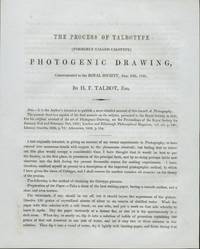
184148243London.: Printed by J. L. Cox and Sons. 1841. Loose as issued later morocco-backed portfolio. 4to. 229 x 182 mm. Leaf with drop-head title and note above opening text printed text recto and verso on following leaves folded as issued. The rare first edition of the first announcement of William Henry Fox Talbot's calotype method - the negative / positive photographic process - the most important innovation in the history of photography.Although Talbot had announced his researches and progress in the field of what was to become photography in his 1839 lecture to the Royal Society 'Some Account of the Art of Photogenic Drawing . &c.' that lecture although ground-breaking dealt largely with the achievement of an image on treated paper and only alluded briefly to the possibility of a more versatile development. It was not until his 1841 lecture to the same body the title as per the present publication is 'The Process of Calotype Photogenic Drawing . &c.' that the details of his refinements and most particularly his successes with the negative / positive process were delineated. Those successes and Talbot's development of the resultant negative / positive process for photographic reproduction and duplication remained the predominant methodology in the field for more than 150 years; all subsequent refinements whether in the chemicals used differing methods for image capture printing and so on were merely variations on Talbot's original scheme. Talbot had patented his method in secret he was awarded 'Her Majesty's Royal Letters Patent No. 8842' in February 1841 prior to his lecture to the Royal Society concerned by Arago's announcement of Daguerre's discoveries the efforts of Hippolyte Bayard and the priority of his own work.'In 1841 William Henry Fox Talbot announced an improvement of his photogenic drawing process which he named 'calotype' from the Greek meaning 'beautiful picture'. Previously he had allowed his sensitized paper to remain exposed to light until an image became visible. He now made a remarkable discovery: a much shorter exposure so changed the characteristics of the silver salts that they could be reduced to silver by chemical after-treatment. This principle of the 'development of the latent image' is basic to most subsequent photographic processes . To make a calotype negative Talbot bathed a sheet of paper in two solutions one of silver nitrate the other of potassium iodide . After exposure the paper was bathed again in this solution a mixture of gallic acid and silver nitrate which acted as a physical developer and gradually brought out the image . He printed them the resultant negative with his original silver chloride paper.' Beaumont Newhall. 'Privately printed for the author for distribution to friends and editors.' Gernsheim.'Between 1835 and 1839 Talbot and Henneman continued their experiments motivated by a desire . for reproducing images from nature. Following Arago’s announcement to the Académie des Sciences 7 January 1839 of the existence of Daguerre’s photographic process Talbot became concerned over the priority of his work; he frantically sought to improve his process prior to the disclosure of Daguerre’s . In 1840 Talbot would develop a latent image on paper and he called this new process the calotype. He patented and then disclosed the process in a paper presented to the Royal Society in June of 1841 . '. DSB.Talbot's document is scarce: COPAC locates no copies in the UK and the catalogue for the British Library reports no example; OCLC lists two copies in Germany at Marburg and Stuttgart's Staatsgalerie and four in the US at Syracuse Columbia Harvard and Princeton.The document was reprinted with an altered title 'The Process of Talbotype formerly called Calotype Photogenic Drawing . &c. in 1846.Gernsheim 655; see Beaumont Newhall's 'The Calotype: The Pencil of Nature' in 'The History of Photography' New York 1997 pg. 43. Printed by J. L. Cox and Sons. unknown
184649London: Printed by J. and H. Cox Brothers 74 and 75 Great Queen Street Lincoln’s-Inn Fields 1846. First edition under this title. Privately printed reprint of Talbot’s memoir that was published with variant title and imprint Process of Calotype Photogenic Drawing … London: J. L. Cox & Sons 1841. The printers J. & H. Cox were active from 1844–1846. Housed in blue cloth folder. In fine condition. First edition under this title. Privately printed reprint of Talbot’s memoir that was published with variant title and imprint Process of Calotype Photogenic Drawing … London: J. L. Cox & Sons 1841. The printers J. & H. Cox were active from 1844–1846. Housed in blue cloth folder. 4 p. In this paper Talbot 1800–1877 photographer inventor announced his invention of the photographic process the first permanent negative process on paper that he called Calotype and later – first in print in the title of this paper – Talbotype. His process was the forerunner of most photographic processes of the 19th and 20th century. It also had the advantage of fastness compared to other photogenic drawing processes of the time. <br /> An extremely rare and early paper on photography as Talbot printed privately in limited number for presentation to his friends and editors. Printed by J. and H. Cox, Brothers, 74 and 75, Great Queen Street, Lincoln’s-Inn Fields unknown
184152094London: Printed by J. & H. Cox Brothers 74 & 75 Great Queen Street Lincoln's-Inn Fields 1841. First edition. 4to. 4 pp. Aside from a few faint pinpoint spots of foxing this is a fine as new copy. Housed in a custom made cloth chemise and slipcase titled in gilt along the spine. Shortly after the presentation of his paper before the Royal Society on 31 January 1839 Talbot at his own expense printed the text as a pamphlet of 14 pages; "Some Account of the Art of Photogenic Drawing."became the world's first separate publication on photography. Through this process an ordinary piece of writing paper was immersed in a sensitizing solution dried placed in a camera and exposed in daylight to a subject for upwards of an hour or longer. Upon examination a tonally reversed rendering of the subject was visible. It was then soaked in a solution of salt and washed and dried then the process was essentially repeated exposing the first print to the new sensitized sheet reversing the tones to produce an image with the tonality as in nature. Through a series of further experiments over the next months Talbot discovered that a "latent" image always existed and that through chemical development it could be brought to life. This allowed for speeding the exposure in the camera to be cut to a mere 30 seconds and the enriched chemical solutions would produce a sharper and tonally richer image. This process he first called the Calotype from the Greek kalos - beautiful. <br /> <br /> On June 10 1841 Talbot presented the Calotype process at a meeting of the Royal Society and at his own expense he published a four page description of his process. Unlike his earlier publication on Photogenic Drawing here he states in detail the full process. <br /> Upon the urging of John Herschel and David Brewster he began to call his process the Talbotype rather than Calotype. His intention was to license this process and likely this printed description was printed to distributed to potential licensees. <br /> <br /> Aside from changing the name from Calotype to Talbotype in the title of this publication and the slight alteration in the printer's imprint the text of the two issue are identical - the word Calotype remains in the body of the text This is the foundation stone of the negative-positive process that has been in use since it was first published.<br /> <br /> This printing is much rarer than the Calotype variant with WorldCat locating only Harvard University - Houghton Library and Cornell University. Gernsheim Incunabula No. 655 listing only the Calotype variant. Roosens and Salu No. 10285 listing only the Calotype variant. Weaver HENRY FOX TALBOT SELECTED TEXTS AND BIBLIOGRAPHY No. 87 listing only the Calotype variant. Printed by J. & H. Cox, Brothers, 74 & 75, Great Queen Street, Lincoln's-Inn Fields unknown
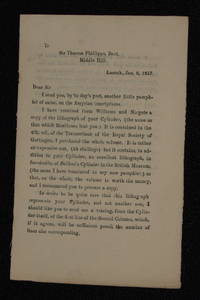
1866MH205Cheltenham : Middle Hill Press 1866 Book. Very Good. Disbound. 4 pages. Final page blank. Disbound torn along the inner margin. Transcribes a letter from Fox Talbot about Babylonian cylinders and the inscription on one owned by Sir Thomas. Holzenberg 544. [ Middle Hill Press ] unknown
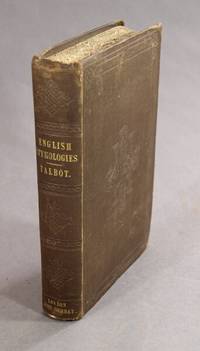
184744318London: John Murray 1847. First and only edition and one of only 500 copies printed; 8vo pp. viii 492 16-p. publisher's catalogue dated January 1847; original brown blindstamped cloth gilt lettering on spine; bottom of spine a little cracked prelims lightly foxed; a very good sound copy. A little-known work by the photography pioneer. "Talbot not only invented the negative/positive process that was the forerunner of modern photographic materials but he also produced the first books to be illustrated with photographs" Witkin & London p. 249. In this work on English etymology in which he chastens Dr. Johnson who "had no taste for etymology" Talbot details the etymologies of approximately 900 English words and proper names. Not a common book in the trade. Kennedy 8291; Vancil p. 233. John Murray unknown
184753117London: John Murray 1847. First edition. 8vo. vii 492 pp. with 16 pp. of advertisements dated July 1846. Publisher's cloth decorated in blind and titled in gilt on the spine. Tips slightly curled and rubbed; a clean tear at the rear joint and at the spine crown have been expertly repaired and are barely noticeable. Original owner's neat signature on the front pastedown. Polymath William Henry Fox Talbot inventor of the negative/positive photographic process the photogravure printing process which afforded reproduction of images from life to ink on paper translator of Assyrian cuneiforms and etymologist of the English language here states "in giving the opinion of previous inquirers I have frequently quoted Johnson and also Thompson's Etymons of English Words. But it is evident that Johnson had no taste for etymology so that the assistance to be derived from him is usually rather meagre."<br /> <br /> Limited to 500 copies. John Murray unknown
185149876Paris Bachelier 1851. 4to. No wrappers. In: "Comptes Rendus Hebdomadaires des Séances de L'Academie des Sciences" Tome 33 No 22. Pp. 589- 632 entire issue offered. Talbot's paper: pp. 623-627. <br/><br/><em>First printing of the paper in which Talbot describes how he worked out the method of instant photography. He patented it in 1852 and 1858. "The beginning of high speed photography might be considered to be William Henry Fox Talbot's experiment in 1851. He attached a page of the London Times newspaper to a wheel which was rotated in front of his wet plate camera in a darkened room. As the wheel rotated Talbot exposed a few square inches of the newspaper page for about 1/2000th of a second using spark illumination from Leyden jars. This experiment resulted in a readable image." </em> unknown