64 résultats
180036704New York: Isaac Collins 1800. Two volumes each in full sheep with gilt-lettered red morocco spine titles front board of volume 1 detached but present; other hinges starting. lxxviii 440 2 blanks; 464 16 pp.<br/><br/> "One of the most extraordinary and instructive narratives in the world" Sabin from a quotation by Sir James Mackintosh. First printed in London in 1694.<br/>Evans 37441. Sabin 25352. Isaac Collins unknown books
176531259London: printed by W. Richardson and S. Clark. Sold by Luke Hinde 1765. Folio pp. 2 lix 1 679 1 27 index; full contemporary calf red morocco label; joints cracked some from leftover tape stains from old repair on spine; all else very good. George Fox 1624-1691 was the founder of the Society of Friends also known as the Quakers. The preface is by William Penn. <br/><br/> printed by W. Richardson and S. Clark. Sold by Luke Hinde unknown books
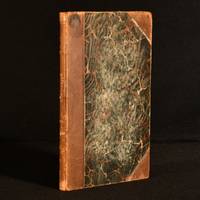
177921871London: G. Kearsley Fleet Street 1779. 96 1 56 pp. 1 vols. 4to. Later quarter red morocco and boards. Upper board loose some contemporary notes in ink. 96 1 56 pp. 1 vols. 4to. The Bill would disallow the adulterer from marrying the person with whom he or she had been adulterous with. Bound in with another incomplete work lacking the first gathering but by the same publisher with ads at the end. Drop title is "The Picture Gallery G. Kearsley, Fleet Street unknown books
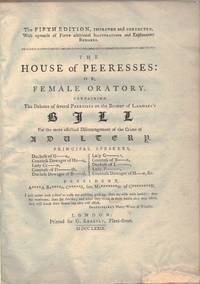
177928070London: G. Kearsly 1779. Fifth edition improved and corrected with upwards of 50 additional illustrations and explanatory remarks. 4to pp. 6 5-56. Bound without the half-title in new boards and end papers small paper repair at the bottom of the title-page. A fine clean copy. The British Mueum attributes this to Shute Barrington the Bishop of Landaff; however the NYPL copy has a MSS note suggesting the author is Charles Fox a more likely candidate. Not in Halkett and Lainge. The lady president of this "mock meeting " is Aa BAss Cs late Ma ss of Cn. known as AmeIia Baroness Conyers Late Marchioness of Carmarthen who eloped from her husband with a John Byron who with his second wife was the parent of Lord Byron. Parliament granted her husband a divorce in May 1779. In reading through the Parliamentary debates for 1779 we find a dismayed Bishop introducing a bill to discourage adultery: i.e. attempting to prevent the adulterer read woman from marrying her lover. Citing the increase in the number of divorces in this recent reign the Bishop calls upon the Parliament to punish such behavior before the entire social fabric unravels. During the discussion in the House of Commons Charles Fox vehemently opposes this bill calling it "unequal unjust and tyrannical." In this marvelous scathing tract the titled ladies discuss their marriages perceptions of their lords and power and in the final vote recollecting an incident from Don Quixote decide to toss the Bishop about in a blanket. It seems highly unlikely that the conservative Bishop would have had such a laugh at his own expense. On a more serious note this is an important look at the state of marriage and divorce during the late 18th century in England. G. Kearsly unknown books
17935139London J. Debrett 1793 Deuxième édition. Bel exemplaire de cette lettre ouverte adressée à ses électeurs par le radical Charles James Fox. Il y défend sa position radicale et son opposition à la guerre avec la France. Cette lettre est importante car la France déclara la guerre au Royaume-Uni six jours plus tard. Bien que cet exemplaire semble dépourvu de la moitié du titre et d'un blanc, puisqu'il commence par la page de titre, et que le feuillet suivant porte la signature B, notre exemplaire suit la pagination de l'OCLC 6595972. Nous supposons donc que la deuxième édition n'avait pas de demi-titre. La table des matières est complète. A la fin se trouve un seul feuillet de publicité de Debretts, avec un "the" suspendu indiquant qu'il devrait y avoir un deuxième feuillet (ici manquant). Cousu avec de la ficelle (comme pour tous les autres exemplaires que nous avons vus). Les couvertures ont un peu de marques et d'usure, mais à l'intérieur, le contenu est propre et bien rangé. [ii], 43, [1]. pages. Charles James Fox, un réformateur Whig radical, a été élu pour la première fois pour un borough pourri en 1768 alors qu'il était encore mineur. Il représenta pour la première fois l'important borough de Westminster en 1780, et resta leur membre du parlement jusqu'à sa mort en 1806. 20 cm x 11,5 cm. Conforme à WorldCat / OCLC : 6595972.
1782BIBRR1112250331782. Paperback. USED. THIS RARE/ANTIQUE BOOK PUBLISHED IN THE YEAR 1782 BY Not mention HAVING 491 PGS AND SIZE 5.008.00 WRITTEN IN English. THE BOOK IS IN READABLE CONDITION Originally in Unbound with some issues like loose binding and some Pin Holes. THE IMAGE OF THIS BOOK IS GIVEN FOR YOUR REFERENCE. WE CAN REBIND THE SAME IN LEATHER BINDING FOR EXTRA $ 25. paperback
1734916P36London: T. and J. Egerton 1734-84. Leather. Good. 8" by 4.5". Not Stated. A very scarce political satire by Charles James Fox bound with four poems by Jonathan Swift. A very scarce work.The second edition.Illustrated with a hand-coloured frontispiece depicting Charles James Fox.A political satire by Charles James Fox writing under the pseudonym 'Carlo Reynardo'. This work satrisies the contemporary government with reference to Fox himself Edmund Burke and Fox's great rival William Pitt the Younger who was Prime Minister at the time of this publication.This copy is also bound with pages 1 to 23 of 'A New Miscellany For the Year 1734' the first part only containing Jonathan Swift's poetry. This contains 'An Epistle to a Lady' 'On Reading Dr. Young's Satires Called the Universal Passion' 'On Poetry; a Rhapsody' and 'On the Words Brother-Protestants and Fellow-Christians'. Bound without the title page.Bound without the half-title.An interesting piece of political satire insightful of the state of politics under George III and William Pitt the Younger. In a half calf binding with marbled paper to the boards. Externally a little rubbed. Minor bumping to the head and tail of the spine and to the extremities. Small tear to the head of the front joint. A few light marks to the boards and spine a little heavier to the head of the front joint. Light dampstain to the front joint. Front hinge is starting but firm. Internally firmly bound. Pages are lightly age-toned and generally clean with some scattered spots. Bound without the half-title to the first work and the title page of the second work. Good T. and J. Egerton hardcover
17612633141761. hardcover. very good. 108 pages. Slim 12mo speckled brown boards rubricated edges. No place no publisher 1761.A very good copy.<br/> <br/> Quite scarce -- OCLC lists only 4 copies.<br/> <br/> unknown
17612633141761. hardcover. very good. 108 pages. Slim 12mo speckled brown boards rubricated edges. No place no publisher 1761.A very good copy.<br/><br/> Quite scarce -- OCLC lists only 4 copies.<br/><br/> unknown books
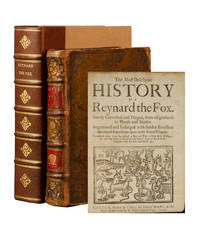
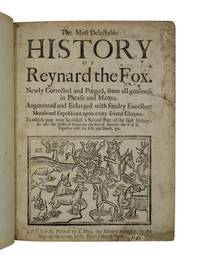
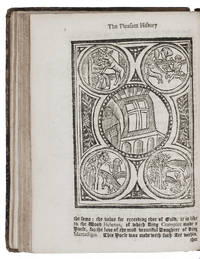
17016399London: T. Ilive 1701. Early English editions. Bound together with:<br /> <br /> The Most Pleasant and Delightful History of Reynard the Fox. The Second Part. Containing Much Matter of Pleasure and Content. Written For the Delight of young Men Pleasure of the Aged and Profit of all. To which is added many Excellent Morals. London: Printed by A.M. and R.R. for Edward Brewster 1681.<br /> <br /> And:<br /> <br /> The Shifts of Reynardine The Son of Reynard the Fox Or a Pleasant History of His Life and Death. Full of Variety &c. And may fitly be applied to the Late Times. Now Published for the Reformation of Mens Manners. London: Printed by T.J. for Edward Brewster and Thomas Passenger 1684.<br /> <br /> Three parts in one small quarto volume 7 5/16 x 5 9/16 inches; 186 x 141 mm. 156 2 table of contents 2 publisher's advertisements; 111 1 publisher's advertisements; 8 160 pp. Mostly black letter with titles and side notes in roman letter. Sixty-two woodcuts in the first part printed from thirty-nine blocks and fifteen woodcuts in the second part five repeated all repeats from the first part. Most cuts signed "E.B." Edward Brewster. Woodcut on C1 recto Part I printed upside down. Some browning occasional light damp staining and soiling. Part I with tiny puncture marks in the lower blank margin through gathering I just touching one letter in the imprint on the title-page six small holes in I3 and one tiny hole in I4 causing loss of a couple of letters. Part III with paper flaw in the upper blank corner of A3 and A4 tiny tear 1/4 inch in the lower blank margin of F4 and paper flaw in the lower blank corner of I2 none affecting text. Contemporary sprinkled sheep. Covers ruled and decoratively tooled in blind spine decoratively tooled in gilt in compartments with two red morocco gilt lettering labels. Some expert restoration to joints and corners. Armorial bookplate of Gloucester on front free endpaper. Bookplate of Hugh Cecil Lowther 5th Earl of Lonsdale 1857-1944 on front pastedown his sale 12 July 1937 lot 445. An excellent copy. Housed in a felt-lined quarter brown morocco clamshell case spine with five raised bands decoratively tooled and lettered in gilt in compartments.<br /> <br /> Reynard the Fox "hero of several medieval European cycles of versified animal tales that satirize contemporary human society. Though Reynard is sly amoral cowardly and self-seeking he is still a sympathetic hero whose cunning is a necessity for survival. He symbolizes the triumph of craft over brute strength usually personified by Isengrim the greedy and dull-witted wolf. . The main literary tradition of Reynard the Fox descends from the extant French 'branches' of the Roman de Renart about 30 in number nearly 40000 lines of verse. The facetious portrayal of rustic life the camel as a papal legate speaking broken French the animals riding on horses and recounting elaborate dreams all suggest the atmosphere of 13th-century France" Merriam-Webster's Encyclopedia of Literature. There is some variation in chapter number within the early editions: From "Caxton's first edition 1481 to Thomas Gaultier's only edition 1550 the story is divided into 43 chapters" while the anonymous edition 1560-1585 has 58 chapters Varty. By the 17th century when the text is titled The Most Delectable History of Reynard the Fox it appears with only 25 chapters and maintains its image cycle. Early 17th century editions also maintained this "picture cycle" through Edward Brewster's 1662 edition but at this point the Wynkyn de Worde blocks were extremely worn and new set was created Varty. Forty images were used for his second edition 1671 and all contain his initials EB. "He published further illustrated editions in 1676 1681 1694 and 1701. in 1672 he grafted new life onto the old story with A Continuation Or Second Part of the Most Pleasant and Delightful History of Reynard the Fox" Varty for which he eventually created an additional 15 illustrations. In 1684 he would produce an additional sequel following the adventures of Reynard's son Reynardine. <br /> <br /> Brunet IV cols. 1228-1229. Lowndes p. 2076. Varty Appendix Three: "A Short-Title List of All Extant Illustrated Histories of Reynard the Fox from Wynkyn de Worde c. 1495 to A. Soulby c. 1800 which are kept in United Kingdom libraries based on H. Menke Bibliotheca Reinardiana" 24 18 and 21. Wing S3512 Part II and S3436 Part III. T. Ilive unknown
1701AQ33150London: Printed by T. Ilive for Edward Brewster 1701. 160pp. With a terminal leaf of publisher's advertisements. ESTC T60836. Bound with: The Most Pleasant and Delightful history of reynard the fox. The second part. London. Printed by A. M. and R. R. for Edward Brewster 1681. 112pp. ESTC R218371 Wing M2912. And: The shifts of reynardine The son of Reynard the Fox Or a Pleasant history of his life and death. London. Printed by Thomas James for Edward Brewster 1684. 8 160pp. ESTC R40614 Wing S3426. Quarto. Text predominantly black letter with headlines and side notes in roman and italic. Modern blind-ruled chestnut morocco lettered in gilt to spine. Very occasional minute marginal worm-tracks scattered spotting naive marginal paper repairs to title page and first mentioned and terminal leaf of final mentioned work. Reynard the Fox 'hero of several medieval European cycles of versified animal tales that satirize contemporary human society. Though Reynard is sly amoral cowardly and self- seeking he is still a sympathetic hero whose cunning is a necessity for survival. He symbolizes the triumph of craft over brute strength usually personified by Isengrim the greedy and dull-witted wolf.The main literary tradition of Reynard the Fox descends from the extant French 'branches' of the Roman de Renart about 30 in number nearly 40000 lines of verse. The facetious portrayal of rustic life the camel as a papal legate speaking broken French the animals riding on horses and recounting elaborate dreams all suggest the atmosphere of 13th-century France' Merriam-Webster's Encyclopedia of Literature. ESTC R35186. Quarto. Printed by T. Ilive, for Edward Brewster unknown
170122642London 1701. 4to. Thomas Ilive for Edward Brewster Late-18th-century sprinkled calf sewn on 5 cords 3 attached to the boards and 2 cut short gold double fillets blind-tooled board edges red morocco spine label in 2nd of 6 compartments red sprinkled edges. With woodcut of King Lion's court on the title page 61 woodcuts in text of part 1 including 23 repeats all signed Edward Brewster and all half-page 7.5 x 10.5 cm to nearly full-page 13 x 9.5 cm and 15 woodcuts in part 2 all repeated from part 1. Further with a large woodcut decorated initial in part 3 and decorations built up from cast fleurons in parts 1 and 2. Set in textura types with incidental roman and italic including Moxon's 1669 Canon roman on the title-page of part 3. 3 parts in 1 volume. 160; 112; 4 160 pp. One of the rare sets of all 3 parts of the English Reynard the Fox the third part here in its first edition. The Reynard stories were already established as a coherent collection in the 12th century and were first printed in 1479 in a Dutch prose edition. They became especially well known when translated into English and adapted for Caxton's 1481 edition in 43 chapters. The publisher Edward Alde in London began work on an extensive revision of Caxton's text with many new additions but he published only the first part probably in 1620 the first edition of the present part 1 containing 25 chapters some corresponding with chapters in Caxton's edition and some not. Although the second part would have to wait 52 years the first part quickly became the standard English version of the Reynard the Fox stories with 8 editions from 1620 to 1671. Its language was modernized giving both a view of the stories as they were known through most of two centuries and insights into English values and culture of the time. In 1684 Brewster added the present first edition of part 3 giving the adventures of Reynard's son Reynardine.With 20th-century woodcut bookplate. The woodcut on C1 of part 1 is printed upside down. In good condition with parts 2 and 3 slightly browned. One front endleaf is detached the spine slightly damaged at the head and the front hinge cracked.l Ebert II 18879; ESTC T60836 R218371 R40614; Kirmse 15; Menke V B c note on pp. 221-222 nos. 35 29 30; Wing S3512 S3436 parts 1-2; not in Prien. hardcover
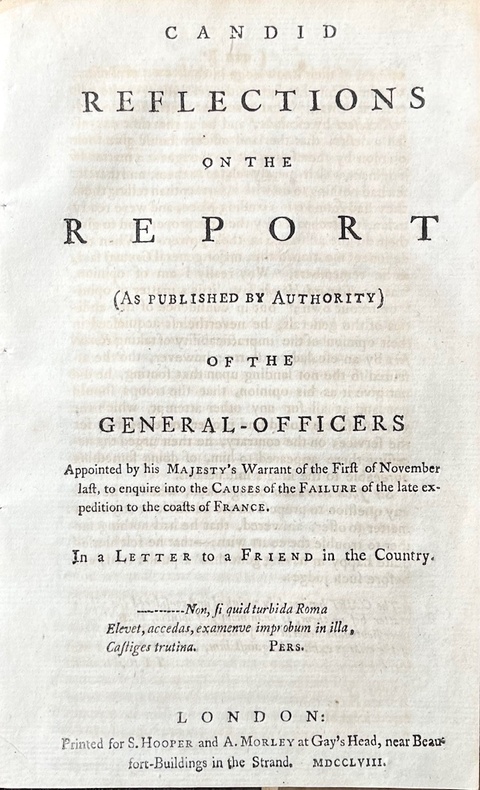
17586349London, printed for S. Hooper and A. Morley at Gay's Head, near Beaufort-Building, MDCCLVIII [1758]. 1758 1 vol in-8° (197 x 125 mm) de: 26 pp. (rogné court en marge inférieure avec petite petite atteinte texte). Broché, couverture de papier ancien muette.
178835128London, John Stockdale, 1788. Later full cloth. Gilt lettering on spine. Woodcut frontispiece (Lords of Commons) and with a fox. (4),XVII,74 pp. At p. 68 a large woodcut ""The revolution Pillar 1788"" with a hanged fox.