Edwards, GeorgeBiblio.com

90 résultats
17587020London:: The Royal College of Physicians 1758-1764. First edition. Fine. Pl 282 The Spur Fish & The Indian Gattorugina. Original hand-colored copperplate engraving. Quarto 9 x 12 inches. Includes text. George Edwards London 1694-1773 was a Fellow of the Royal Society and Fellow of the Society of Antiquaries in London who rejected his early formal training and potential career in business to pursue his passion in natural history. His dedication and talent as a draftsman and naturalist was evident thus gaining the attention of Sir Hans Sloane President of the College of Physicians and the Royal Society. Sir Hans offered Edwards the post of Librarian of the Royal College of Physicians in London and enlisted him to draw the natural curiosities of Sloane's private museum. This connection became the inspiration for Edward's masterful achievements; A Natural History of Uncommon Birds Published between 1743 and 1751 and the subsequent work; Gleanings of Natural History which was produced between 1758 and 1764. These two works illustrated and documented many previously unrecorded specimens of birds reptiles and insects held in England's private collections up to the mid eighteenth century. A monumental achievement Edwards documented- in English and French- painted engraved and hand-colored every one of the fine compositions in this Pre-Linnaean natural history opus. Although not a field naturalist Edwards placed many of his birds and animals in landscaped settings which was unusual for the time. In other compositions birds are elegantly perched on stylized branches in a classic Georgian format more decorative than realistic charming nonetheless. A gracious and humble man Edwards established firm and respected alliances with naturalist pioneers Carl Linnaeus 1707-78 Mark Catesby 1683-1749 from whom he learned the art of engraving and subsequently aided Catesby in the revision of his publication; The Natural History of Carolina Florida and the Bahama Islands London c.1754 as well as William Bartram from whom he acquired several species of Pennsylvanian birds included in his volumes. As Edwards' work predates the completion of the Linnaean classification system Linnaeus was to borrow the English names of many of Edwards species for his renowned work on classification and nomenclature. Ref: Buchanan Jackson Fine Bird Books. Matted in Rag Board The Royal College of Physicians, unknown
17587018London:: The Royal College of Physicians 1758-1764. First edition. Fine . Pl 283 Sea Bat & The Pyed Acarauana. Original hand-colored copperplate engraving. Quarto 9 x 12 inches. Includes text. George Edwards London 1694-1773 was a Fellow of the Royal Society and Fellow of the Society of Antiquaries in London who rejected his early formal training and potential career in business to pursue his passion in natural history. His dedication and talent as a draftsman and naturalist was evident thus gaining the attention of Sir Hans Sloane President of the College of Physicians and the Royal Society. Sir Hans offered Edwards the post of Librarian of the Royal College of Physicians in London and enlisted him to draw the natural curiosities of Sloane's private museum. This connection became the inspiration for Edward's masterful achievements; A Natural History of Uncommon Birds Published between 1743 and 1751 and the subsequent work; Gleanings of Natural History which was produced between 1758 and 1764. These two works illustrated and documented many previously unrecorded specimens of birds reptiles and insects held in England's private collections up to the mid eighteenth century. A monumental achievement Edwards documented- in English and French- painted engraved and hand-colored every one of the fine compositions in this Pre-Linnaean natural history opus. Although not a field naturalist Edwards placed many of his birds and animals in landscaped settings which was unusual for the time. In other compositions birds are elegantly perched on stylized branches in a classic Georgian format more decorative than realistic charming nonetheless. A gracious and humble man Edwards established firm and respected alliances with naturalist pioneers Carl Linnaeus 1707-78 Mark Catesby 1683-1749 from whom he learned the art of engraving and subsequently aided Catesby in the revision of his publication; The Natural History of Carolina Florida and the Bahama Islands London c.1754 as well as William Bartram from whom he acquired several species of Pennsylvanian birds included in his volumes. As Edwards' work predates the completion of the Linnaean classification system Linnaeus was to borrow the English names of many of Edwards species for his renowned work on classification and nomenclature. Ref: Buchanan Jackson Fine Bird Books. Matted in Rag Board The Royal College of Physicians, unknown
17587019London:: The Royal College of Physicians 1758-1764. First edition. Fine . Pl 288 The Prickled Dog or Hound-fish with an insect called the Walking-stick. Original hand-colored copperplate engraving. Quarto 9 x 12 inches. Includes text. George Edwards London 1694-1773 was a Fellow of the Royal Society and Fellow of the Society of Antiquaries in London who rejected his early formal training and potential career in business to pursue his passion in natural history. His dedication and talent as a draftsman and naturalist was evident thus gaining the attention of Sir Hans Sloane President of the College of Physicians and the Royal Society. Sir Hans offered Edwards the post of Librarian of the Royal College of Physicians in London and enlisted him to draw the natural curiosities of Sloane's private museum. This connection became the inspiration for Edward's masterful achievements; A Natural History of Uncommon Birds Published between 1743 and 1751 and the subsequent work; Gleanings of Natural History which was produced between 1758 and 1764. These two works illustrated and documented many previously unrecorded specimens of birds reptiles and insects held in England's private collections up to the mid eighteenth century. A monumental achievement Edwards documented- in English and French- painted engraved and hand-colored every one of the fine compositions in this Pre-Linnaean natural history opus. Although not a field naturalist Edwards placed many of his birds and animals in landscaped settings which was unusual for the time. In other compositions birds are elegantly perched on stylized branches in a classic Georgian format more decorative than realistic charming nonetheless. A gracious and humble man Edwards established firm and respected alliances with naturalist pioneers Carl Linnaeus 1707-78 Mark Catesby 1683-1749 from whom he learned the art of engraving and subsequently aided Catesby in the revision of his publication; The Natural History of Carolina Florida and the Bahama Islands London c.1754 as well as William Bartram from whom he acquired several species of Pennsylvanian birds included in his volumes. As Edwards' work predates the completion of the Linnaean classification system Linnaeus was to borrow the English names of many of Edwards species for his renowned work on classification and nomenclature. Ref: Buchanan Jackson Fine Bird Books. Matted in Rag Board The Royal College of Physicians, unknown
17437008London:: The College of Physicians 1743-51. First edition. Fine . Pl. 121 The American Nightingale & the Green Sparrow or Green Ruby-throated Hummingbird. Original hand-colored copperplate engraving. Quarto 11.5 x 9 inches. Includes text. George Edwards London 1694-1773 was a Fellow of the Royal Society and Fellow of the Society of Antiquaries in London who rejected his early formal training and potential career in business to pursue his passion in natural history. His dedication and talent as a draftsman and naturalist was evident thus gaining the attention of Sir Hans Sloane President of the College of Physicians and the Royal Society. Sir Hans offered Edwards the post of Librarian of the Royal College of Physicians in London and enlisted him to draw the natural curiosities of Sloane's private museum. This connection became the inspiration for Edward's masterful achievements; A Natural History of Uncommon Birds Published between 1743 and 1751 and the subsequent work; Gleanings of Natural History which was produced between 1758 and 1764. These two works illustrated and documented many previously unrecorded specimens of birds reptiles and insects held in England's private collections up to the mid eighteenth century. A monumental achievement Edwards documented- in English and French- painted engraved and hand-colored every one of the fine compositions in this Pre-Linnaean natural history opus. Although not a field naturalist Edwards placed many of his birds and animals in landscaped settings which was unusual for the time. In other compositions birds are elegantly perched on stylized branches in a classic Georgian format more decorative than realistic charming nonetheless. A gracious and humble man Edwards established firm and respected alliances with naturalist pioneers Carl Linnaeus 1707-78 Mark Catesby 1683-1749 from whom he learned the art of engraving and subsequently aided Catesby in the revision of his publication; The Natural History of Carolina Florida and the Bahama Islands London c.1754 as well as William Bartram from whom he acquired several species of Pennsylvanian birds included in his volumes. As Edwards' work predates the completion of the Linnaean classification system Linnaeus was to borrow the English names of many of Edwards species for his renowned work on classification and nomenclature. Ref: Buchanan Jackson Fine Bird Books. Matted in Rag Board The College of Physicians, unknown
17437012London:: The College of Physicians 1743-51. First edition. Fine . Pl. 73 The Bustard Cock. Original hand-colored copperplate engraving. Quarto 11.5 x 9 inches. Includes text. George Edwards London 1694-1773 was a Fellow of the Royal Society and Fellow of the Society of Antiquaries in London who rejected his early formal training and potential career in business to pursue his passion in natural history. His dedication and talent as a draftsman and naturalist was evident thus gaining the attention of Sir Hans Sloane President of the College of Physicians and the Royal Society. Sir Hans offered Edwards the post of Librarian of the Royal College of Physicians in London and enlisted him to draw the natural curiosities of Sloane's private museum. This connection became the inspiration for Edward's masterful achievements; A Natural History of Uncommon Birds Published between 1743 and 1751 and the subsequent work; Gleanings of Natural History which was produced between 1758 and 1764. These two works illustrated and documented many previously unrecorded specimens of birds reptiles and insects held in England's private collections up to the mid eighteenth century. A monumental achievement Edwards documented- in English and French- painted engraved and hand-colored every one of the fine compositions in this Pre-Linnaean natural history opus. Although not a field naturalist Edwards placed many of his birds and animals in landscaped settings which was unusual for the time. In other compositions birds are elegantly perched on stylized branches in a classic Georgian format more decorative than realistic charming nonetheless. A gracious and humble man Edwards established firm and respected alliances with naturalist pioneers Carl Linnaeus 1707-78 Mark Catesby 1683-1749 from whom he learned the art of engraving and subsequently aided Catesby in the revision of his publication; The Natural History of Carolina Florida and the Bahama Islands London c.1754 as well as William Bartram from whom he acquired several species of Pennsylvanian birds included in his volumes. As Edwards' work predates the completion of the Linnaean classification system Linnaeus was to borrow the English names of many of Edwards species for his renowned work on classification and nomenclature. Ref: Buchanan Jackson Fine Bird Books. Matted in Rag Board The College of Physicians, unknown
1780200080AG1780. Italy no year c.1780. Original hand-coloured copper engravings. Plate Size: 8 cm x 12.3 cm. Sheet Size: 12.5 cm x 18.5 cm. Original prints. In very good condition. Brightly coloured. Some very minor traces of browning only. A beautiful set of eight hand-coloured engravings of wild animals. The animals included are: The Jaguar / Bear / Royal Vulture / Saki Monkey / Tropical Bird / Coucous Goose / Great Hornbill / Common Murre & Puffin. unknown
17437009London:: The College of Physicians 1743-51. First edition. Fine . Pl 124. The Greatest Bulfinch-hen. Original hand-colored copperplate engraving. Quarto 9 x 12 inches. Includes text. George Edwards London 1694-1773 was a Fellow of the Royal Society and Fellow of the Society of Antiquaries in London who rejected his early formal training and potential career in business to pursue his passion in natural history. His dedication and talent as a draftsman and naturalist was evident thus gaining the attention of Sir Hans Sloane President of the College of Physicians and the Royal Society. Sir Hans offered Edwards the post of Librarian of the Royal College of Physicians in London and enlisted him to draw the natural curiosities of Sloane's private museum. This connection became the inspiration for Edward's masterful achievements; A Natural History of Uncommon Birds Published between 1743 and 1751 and the subsequent work; Gleanings of Natural History which was produced between 1758 and 1764. These two works illustrated and documented many previously unrecorded specimens of birds reptiles and insects held in England's private collections up to the mid eighteenth century. A monumental achievement Edwards documented- in English and French- painted engraved and hand-colored every one of the fine compositions in this Pre-Linnaean natural history opus. Although not a field naturalist Edwards placed many of his birds and animals in landscaped settings which was unusual for the time. In other compositions birds are elegantly perched on stylized branches in a classic Georgian format more decorative than realistic charming nonetheless. A gracious and humble man Edwards established firm and respected alliances with naturalist pioneers Carl Linnaeus 1707-78 Mark Catesby 1683-1749 from whom he learned the art of engraving and subsequently aided Catesby in the revision of his publication; The Natural History of Carolina Florida and the Bahama Islands London c.1754 as well as William Bartram from whom he acquired several species of Pennsylvanian birds included in his volumes. As Edwards' work predates the completion of the Linnaean classification system Linnaeus was to borrow the English names of many of Edwards species for his renowned work on classification and nomenclature. Ref: Buchanan Jackson Fine Bird Books. Matted in Rag Board The College of Physicians, unknown
17437010London:: The College of Physicians 1743-51. First edition. Fine . Pl 188. The Gros-beak or Haw-finch. Original hand-colored copperplate engraving. Quarto 9 x 12 inches. Includes text. George Edwards London 1694-1773 was a Fellow of the Royal Society and Fellow of the Society of Antiquaries in London who rejected his early formal training and potential career in business to pursue his passion in natural history. His dedication and talent as a draftsman and naturalist was evident thus gaining the attention of Sir Hans Sloane President of the College of Physicians and the Royal Society. Sir Hans offered Edwards the post of Librarian of the Royal College of Physicians in London and enlisted him to draw the natural curiosities of Sloane's private museum. This connection became the inspiration for Edward's masterful achievements; A Natural History of Uncommon Birds Published between 1743 and 1751 and the subsequent work; Gleanings of Natural History which was produced between 1758 and 1764. These two works illustrated and documented many previously unrecorded specimens of birds reptiles and insects held in England's private collections up to the mid eighteenth century. A monumental achievement Edwards documented- in English and French- painted engraved and hand-colored every one of the fine compositions in this Pre-Linnaean natural history opus. Although not a field naturalist Edwards placed many of his birds and animals in landscaped settings which was unusual for the time. In other compositions birds are elegantly perched on stylized branches in a classic Georgian format more decorative than realistic charming nonetheless. A gracious and humble man Edwards established firm and respected alliances with naturalist pioneers Carl Linnaeus 1707-78 Mark Catesby 1683-1749 from whom he learned the art of engraving and subsequently aided Catesby in the revision of his publication; The Natural History of Carolina Florida and the Bahama Islands London c.1754 as well as William Bartram from whom he acquired several species of Pennsylvanian birds included in his volumes. As Edwards' work predates the completion of the Linnaean classification system Linnaeus was to borrow the English names of many of Edwards species for his renowned work on classification and nomenclature. Ref: Buchanan Jackson Fine Bird Books. Matted in Rag Board The College of Physicians, unknown
17437011London:: The College of Physicians 1743-51. First edition. Fine . Pl. 71 The Brown and Spotted Heathcock. Original hand-colored copperplate engraving. Quarto 11.5 x 9 inches. Includes text. George Edwards London 1694-1773 was a Fellow of the Royal Society and Fellow of the Society of Antiquaries in London who rejected his early formal training and potential career in business to pursue his passion in natural history. His dedication and talent as a draftsman and naturalist was evident thus gaining the attention of Sir Hans Sloane President of the College of Physicians and the Royal Society. Sir Hans offered Edwards the post of Librarian of the Royal College of Physicians in London and enlisted him to draw the natural curiosities of Sloane's private museum. This connection became the inspiration for Edward's masterful achievements; A Natural History of Uncommon Birds Published between 1743 and 1751 and the subsequent work; Gleanings of Natural History which was produced between 1758 and 1764. These two works illustrated and documented many previously unrecorded specimens of birds reptiles and insects held in England's private collections up to the mid eighteenth century. A monumental achievement Edwards documented- in English and French- painted engraved and hand-colored every one of the fine compositions in this Pre-Linnaean natural history opus. Although not a field naturalist Edwards placed many of his birds and animals in landscaped settings which was unusual for the time. In other compositions birds are elegantly perched on stylized branches in a classic Georgian format more decorative than realistic charming nonetheless. A gracious and humble man Edwards established firm and respected alliances with naturalist pioneers Carl Linnaeus 1707-78 Mark Catesby 1683-1749 from whom he learned the art of engraving and subsequently aided Catesby in the revision of his publication; The Natural History of Carolina Florida and the Bahama Islands London c.1754 as well as William Bartram from whom he acquired several species of Pennsylvanian birds included in his volumes. As Edwards' work predates the completion of the Linnaean classification system Linnaeus was to borrow the English names of many of Edwards species for his renowned work on classification and nomenclature. Ref: Buchanan Jackson Fine Bird Books. Matted in Rag Board The College of Physicians, unknown
1758699London:: The Royal College of Physicians 1758-1764. First edition. Fine. A fine original hand-colored copperplate engraving. Quarto 9 x 12 inches. George Edwards London 1694-1773 was a Fellow of the Royal Society and Fellow of the Society of Antiquaries in London who rejected his early formal training and potential career in business to pursue his passion in natural history. His dedication and talent as a draftsman and naturalist was evident thus gaining the attention of Sir Hans Sloane President of the College of Physicians and the Royal Society. Sir Hans offered Edwards the post of Librarian of the Royal College of Physicians in London and enlisted him to draw the natural curiosities of Sloane's private museum. This connection became the inspiration for Edward's masterful achievements; A Natural History of Uncommon Birds Published between 1743 and 1751 and the subsequent work; Gleanings of Natural History which was produced between 1758 and 1764. These two works illustrated and documented many previously unrecorded specimens of birds reptiles and insects held in England's private collections up to the mid eighteenth century. A monumental achievement Edwards documented- in English and French- painted engraved and hand-colored every one of the fine compositions in this Pre-Linnaean natural history opus. Although not a field naturalist Edwards placed many of his birds and animals in landscaped settings which was unusual for the time. In other compositions birds are elegantly perched on stylized branches in a classic Georgian format more decorative than realistic charming nonetheless. A gracious and humble man Edwards established firm and respected alliances with naturalist pioneers Carl Linnaeus 1707-78 Mark Catesby 1683-1749 from whom he learned the art of engraving and subsequently aided Catesby in the revision of his publication; The Natural History of Carolina Florida and the Bahama Islands London c.1754 as well as William Bartram from whom he acquired several species of Pennsylvanian birds included in his volumes. As Edwards' work predates the completion of the Linnaean classification system Linnaeus was to borrow the English names of many of Edwards species for his renowned work on classification and nomenclature. Ref: Buchanan Jackson Fine Bird Books. Matted in Rag Board The Royal College of Physicians, unknown
17906401London:: G. Shaw and F.P. & E. Nodder 1790-1813. First edition. Fine in original bright hand-coloring. A Fine and rare original hand-colored copperplate engraving by Frederick Polydore Nodder and/or his son Richard Polydore Nodder from The Naturalist's Miscellany. Archivally framed in one inch walnut burl moulding. Sized to 19.5 x 17 inches. Includes the original text in both English and Latin by George Shaw MD FRS. The Naturalist's Miscellany distinguished by the refined hand-colored copperplate engravings and astute naturalists' observations was aptly named as a diverse naturalists' compendium of the birds mammals reptiles insects fish and crustacean identified by seventeenth and eighteenth century naturalists spanning the globe particularly around the South Seas. Many of nature's most fascinating and unusual creatures were discovered during this period several of which were introduced through The Naturalist's Miscellany. Doctor George Shaw 1751-1813 Fellow of the Royal Society cofounder of the Linnaean Society as well as Zoologist of the British Museum contributed the text. Publication of the Naturalist's Miscellany ceased with his death in 1813. Upon the death of the artist FP Nodder 1770-1800 his wife Elizabeth and their son Richard Polydore Nodder 1793-1820 contributed artistically and editorially to the publication. Indeed a family affair both Frederick Polydore Nodder and his son Richard produced every one of the plates. A gifted and distinguished naturalist Frederick P. Nodder was the preferred Botanical Painter to Her Majesty Queen Charlotte. His early skills as botanical and animal draughtsman and engraver were honed from his association with Sir Joseph Banks who employed Nodder to complete and engrave the drawings from the sketchbooks of the late Sydney Parkinson. Parkinson accompanied Banks as botanical draughtsman aboard Captain James Cook's The Endeavor in 1771. Parkinson died on the return of this South Seas Voyage. These engravings along with the natural history collections of the British Museum were the basis for the mastery of the Naturalist's Miscellany. Frederick's son Richard P. Nodder a gifted animal painter in his own right was distinguished as botanic painter to King George III. At the time of its creation The Naturalist's Miscellany was highly coveted as a definitive natural history offering and as was the custom the work was issued in installments between 1790 and 1813. Each volume was dedicated by permission and dutifully inscribed to the most devoted patrons and contributors of the natural historical pursuits of eighteenth and early nineteenth century Britain: Queen Charlotte Sir Joseph Banks Thomas Pennant Esq. The Universities of Oxford and Cambridge The Trustees of the British Museum to name a few. Andrews1986 Blunt 151Coats 25 Sitwell FBB 142 Wood 482. Copyright: Lowry-James Rare Prints & Books 1/09. Archivally Framed G. Shaw and F.P. & E. Nodder, unknown
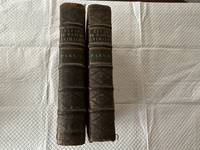
1744011778Strand: J. Whiston in Fleetstreet J Osborn 1744. First Edition . Decorative Calf. Very Good/No Jacket. 4to - over 9¾" - 12" tall. 2 volumes complete . 4to - over 9¾" - 12" tall. Brown Decorative Calf Red edge on pages. engraved vignette on title-page and on last page of text. Spines joints cracked corners bumped spine ends worn. All pages very clean. Greek and latin text continuous pagination with part title to second vol. small lib. blindstamps to titlesRL.Grosvenor Bartelot FSA in a coart of arms. library plate of Devs praesidivm. gaughran Eugene R. L. Gaughran on end papers to each volume. Claudius Aelianus on animals. Wood 1832: A useful edition of Aelianus since it contains the original Greek text and the Latin translation by Gesner as revised by Gronovius and an Index Plantarum et Natura Animalium et Auctorum. Claudius Aelianus lived about 140 A.D. <br/> <br/> J. Whiston in Fleetstreet, J Osborn unknown
17903924London:: G. Shaw and F.P. & E. Nodder 1790-1813. First edition. Fine in original bright hand-coloring. A Fine and rare original hand-colored copperplate engraving by Frederick Polydore Nodder and/or his son Richard Polydore Nodder from The Naturalist's Miscellany. Octavo 6 x 9.5 inches 15.24 x 24.13 cm. Includes the original text in both English and Latin by George Shaw MD FRS. The Naturalist's Miscellany distinguished by the refined hand-colored copperplate engravings and astute naturalists' observations was aptly named as a diverse naturalists' compendium of the birds mammals reptiles insects fish and crustacean identified by seventeenth and eighteenth century naturalists spanning the globe particularly around the South Seas. Many of nature's most fascinating and unusual creatures were discovered during this period several of which were introduced through The Naturalist's Miscellany. Doctor George Shaw 1751-1813 Fellow of the Royal Society cofounder of the Linnaean Society as well as Zoologist of the British Museum contributed the text. Publication of the Naturalist's Miscellany ceased with his death in 1813. Upon the death of the artist FP Nodder 1770-1800 his wife Elizabeth and their son Richard Polydore Nodder 1793-1820 contributed artistically and editorially to the publication. Indeed a family affair both Frederick Polydore Nodder and his son Richard produced every one of the plates. A gifted and distinguished naturalist Frederick P. Nodder was the preferred Botanical Painter to Her Majesty Queen Charlotte. His early skills as botanical and animal draughtsman and engraver were honed from his association with Sir Joseph Banks who employed Nodder to complete and engrave the drawings from the sketchbooks of the late Sydney Parkinson. Parkinson accompanied Banks as botanical draughtsman aboard Captain James Cook's The Endeavor in 1771. Parkinson died on the return of this South Seas Voyage. These engravings along with the natural history collections of the British Museum were the basis for the mastery of the Naturalist's Miscellany. Frederick's son Richard P. Nodder a gifted animal painter in his own right was distinguished as botanic painter to King George III. At the time of its creation The Naturalist's Miscellany was highly coveted as a definitive natural history offering and as was the custom the work was issued in installments between 1790 and 1813. Each volume was dedicated by permission and dutifully inscribed to the most devoted patrons and contributors of the natural historical pursuits of eighteenth and early nineteenth century Britain: Queen Charlotte Sir Joseph Banks Thomas Pennant Esq. The Universities of Oxford and Cambridge The Trustees of the British Museum to name a few. Andrews1986 Blunt 151Coats 25 Sitwell FBB 142 Wood 482. Copyright: Lowry-James Rare Prints & Books 1/09. Archivally framed in triple black matting & 1.5 inch Bird's Eye Maple moulding with conservation glass sized to 18.75 x 20.5 inches G. Shaw and F.P. & E. Nodder, unknown
17056428Leiden:: Rumphius 1705. First edition. Fine . Fine hand-colored copperplate engraving. 10 x 15 inches. Archivally matted and framed to 16.5 x 21.5 inches as shown. Although best known for her revolutionary discoveries of the metamorphosis of the caterpillar and her painterly compositions for her masterpiece: Metamorphosis Insectorum Surinamensium Maria Sibylla Merian 1647-1717 provided the precise and exacting illustrations for this work. Rumphius commissioned by the Dutch East India Company traveled to Ambon as deputy prefect and as a passion studied and documented the natural order of the island. His legacy the Rariteitkamer published posthumously included natural objects such as these decorative dendrite stones. Dendrites of Iron oxide and manganese oxide on limestone were shaped for emblems and jewelry. Archivally Framed Rumphius, unknown
17546489London:: C. Marsh 1754. Second Edition. Near Fine with original hand-coloring. Original hand-colored copperplate engraving. Folio. Near Fine condition with one minute foxed mark on right edge of plate mark. Archivally framed in walnut burl 23 x 20 inches. This powerful image of the Chain-snake is decoratively surrounded by a blooming Frutex lauri a shrub native to Virginia. This second edition of Mark Catesby's renowned series was published posthumously by George Edwards; a friend and noted colleague. Archivally Framed C. Marsh, unknown