"A Lady" .Biblio.com

10 051 résultats
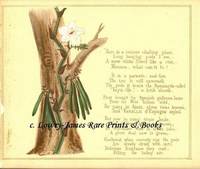
18662100London:: Dean and Son 1866. First edition. Fine. A fine and rare original hand-colored lithograph. Octavo 8.5 x 7 inches. Finely matted in double ivory rag matting with gilt French line decoration. In the classic tradition of an illuminated manuscript this charming print was executed by an unidentified gentlewoman; an artist and naturalist simply known as "A Lady" whom by the unfortunate plight of a physical malformation became an outcast to Victorian high society. Seeking solace she traveled to the far reaches of Ceylon and Corfu where she developed her inherent gifts here represented with her insightful depiction of the native flora and fauna of the Far East. Brightly colored butterflies insects or birds intermingle with rich blossoms or native grasses or perch on finely detailed branches of fruit and berries all surrounding the fine poetic expression of this keen nineteenth century naturalist. Matted in Rag Board Dean and Son , unknown
18662098London:: Dean and Son 1866. First edition. Fine. A fine and rare original hand-colored lithograph. Octavo 8.5 x 7 inches. Finely matted in double ivory rag matting with gilt French line decoration. In the classic tradition of an illuminated manuscript this charming print was executed by an unidentified gentlewoman; an artist and naturalist simply known as "A Lady" whom by the unfortunate plight of a physical malformation became an outcast to Victorian high society. Seeking solace she traveled to the far reaches of Ceylon and Corfu where she developed her inherent gifts here represented with her insightful depiction of the native flora and fauna of the Far East. Brightly colored butterflies insects or birds intermingle with rich blossoms or native grasses or perch on finely detailed branches of fruit and berries all surrounding the fine poetic expression of this keen nineteenth century naturalist. Matted in Rag Board Dean and Son , unknown
18662094London:: Dean and Son 1866. First edition. Fine. A fine and rare original hand-colored lithograph. Octavo 8.5 x 7 inches. Finely matted in double ivory rag matting with gilt French line decoration. In the classic tradition of an illuminated manuscript this charming print was executed by an unidentified gentlewoman; an artist and naturalist simply known as "A Lady" whom by the unfortunate plight of a physical malformation became an outcast to Victorian high society. Seeking solace she traveled to the far reaches of Ceylon and Corfu where she developed her inherent gifts here represented with her insightful depiction of the native flora and fauna of the Far East. Brightly colored butterflies insects or birds intermingle with rich blossoms or native grasses or perch on finely detailed branches of fruit and berries all surrounding the fine poetic expression of this keen nineteenth century naturalist. Matted in Rag Board Dean and Son , unknown
18662102London:: Dean and Son 1866. First edition. Fine. A fine and rare original hand-colored lithograph. Octavo 8.5 x 7 inches. Finely matted in double ivory rag matting with gilt French line decoration. In the classic tradition of an illuminated manuscript this charming print was executed by an unidentified gentlewoman; an artist and naturalist simply known as "A Lady" whom by the unfortunate plight of a physical malformation became an outcast to Victorian high society. Seeking solace she traveled to the far reaches of Ceylon and Corfu where she developed her inherent gifts here represented with her insightful depiction of the native flora and fauna of the Far East. Brightly colored butterflies insects or birds intermingle with rich blossoms or native grasses or perch on finely detailed branches of fruit and berries all surrounding the fine poetic expression of this keen nineteenth century naturalist. Matted in Rag Board Dean and Son , unknown
18662092London:: Dean and Son 1866. First edition. Fine. A fine and rare original hand-colored lithograph. Octavo 8.5 x 7 inches. Finely matted in double ivory rag matting with gilt French line decoration. In the classic tradition of an illuminated manuscript this charming print was executed by an unidentified gentlewoman; an artist and naturalist simply known as "A Lady" whom by the unfortunate plight of a physical malformation became an outcast to Victorian high society. Seeking solace she traveled to the far reaches of Ceylon and Corfu where she developed her inherent gifts here represented with her insightful depiction of the native flora and fauna of the Far East. Brightly colored butterflies insects or birds intermingle with rich blossoms or native grasses or perch on finely detailed branches of fruit and berries all surrounding the fine poetic expression of this keen nineteenth century naturalist. Matted in Rag Board Dean and Son , unknown
18662096London:: Dean and Son 1866. First edition. Fine. A fine and rare original hand-colored lithograph. Octavo 8.5 x 7 inches. Finely matted in double ivory rag matting with gilt French line decoration. In the classic tradition of an illuminated manuscript this charming print was executed by an unidentified gentlewoman; an artist and naturalist simply known as "A Lady" whom by the unfortunate plight of a physical malformation became an outcast to Victorian high society. Seeking solace she traveled to the far reaches of Ceylon and Corfu where she developed her inherent gifts here represented with her insightful depiction of the native flora and fauna of the Far East. Brightly colored butterflies insects or birds intermingle with rich blossoms or native grasses or perch on finely detailed branches of fruit and berries all surrounding the fine poetic expression of this keen nineteenth century naturalist. Matted in Rag Board Dean and Son , unknown
18662104London:: Dean and Son 1866. First edition. Fine. A fine and rare original hand-colored lithograph. Octavo 8.5 x 7 inches. Finely matted in double ivory rag matting with gilt French line decoration. In the classic tradition of an illuminated manuscript this charming print was executed by an unidentified gentlewoman; an artist and naturalist simply known as "A Lady" whom by the unfortunate plight of a physical malformation became an outcast to Victorian high society. Seeking solace she traveled to the far reaches of Ceylon and Corfu where she developed her inherent gifts here represented with her insightful depiction of the native flora and fauna of the Far East. Brightly colored butterflies insects or birds intermingle with rich blossoms or native grasses or perch on finely detailed branches of fruit and berries all surrounding the fine poetic expression of this keen nineteenth century naturalist. Matted in Rag Board Dean and Son , unknown
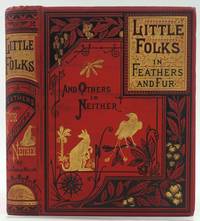
188028764New York: E.P. Dutton & Company 1880. Hardcover book. Fine condition. A children's book describing the animal kingdom in a gorgeous red gilt and black decorative binding with the gilt animals on the covers including a kangaroo bird of paradise dragonfly penguin and armadillo. The kangaroo story is entitled "A Baby That Lives in a Bag" p21. Other stories about the echidna black swan cockatoo lyrebird & platypus. Long sections on beetles and other insects undersea creatures. Handsome gift book. Copyright 1879. 8vo 1-7 8-357pp XIpp Index at back. OCLC: 25660855. Both copies cited on Trove are electronic resources only. E.P. Dutton & Company hardcover
1939012790New York: Charles Scribners Sons 1939. Green hardcover cloth binding clean and tight spine cocked. Bit of White chalk-like mark on front cover blue ink mark bottom righthand corner. Shelfwear top and bottom of spine bumped corners. Bookplate fep. Yellowing pages some foxing but overall clean interior. 261 pages. Many b/w sketches throughout by noted artist Paul Brown. Scarce book about a dog part Irish Terrier in the text but all Irish Terrier in Brown's drawings who worked his way into the affection of an army company during World War I. No dogs are supposed to be on the transport but Mike manages to be on it when it reaches France. Both author and illustrator were with the AEF. This is a moving and humorous story of a dog at war who becomes the soldiers' friend and comrade. Size: 8vo - over 7¾" - 9¾" tall. Illus. by Brown Paul. 1st. Hardcover. Good/No Jacket. Charles Scribners Sons Hardcover
17437017London:: The College of Physicians 1743-51. First edition. Fine . Pl 206 The Sea-tortoise. Original hand-colored copperplate engraving. Quarto 9 x 12 inches. Includes text. George Edwards London 1694-1773 was a Fellow of the Royal Society and Fellow of the Society of Antiquaries in London who rejected his early formal training and potential career in business to pursue his passion in natural history. His dedication and talent as a draftsman and naturalist was evident thus gaining the attention of Sir Hans Sloane President of the College of Physicians and the Royal Society. Sir Hans offered Edwards the post of Librarian of the Royal College of Physicians in London and enlisted him to draw the natural curiosities of Sloane's private museum. This connection became the inspiration for Edward's masterful achievements; A Natural History of Uncommon Birds Published between 1743 and 1751 and the subsequent work; Gleanings of Natural History which was produced between 1758 and 1764. These two works illustrated and documented many previously unrecorded specimens of birds reptiles and insects held in England's private collections up to the mid eighteenth century. A monumental achievement Edwards documented- in English and French- painted engraved and hand-colored every one of the fine compositions in this Pre-Linnaean natural history opus. Although not a field naturalist Edwards placed many of his birds and animals in landscaped settings which was unusual for the time. In other compositions birds are elegantly perched on stylized branches in a classic Georgian format more decorative than realistic charming nonetheless. A gracious and humble man Edwards established firm and respected alliances with naturalist pioneers Carl Linnaeus 1707-78 Mark Catesby 1683-1749 from whom he learned the art of engraving and subsequently aided Catesby in the revision of his publication; The Natural History of Carolina Florida and the Bahama Islands London c.1754 as well as William Bartram from whom he acquired several species of Pennsylvanian birds included in his volumes. As Edwards' work predates the completion of the Linnaean classification system Linnaeus was to borrow the English names of many of Edwards species for his renowned work on classification and nomenclature. Ref: Buchanan Jackson Fine Bird Books. Matted in Rag Board The College of Physicians, unknown
17437015London:: The College of Physicians 1743-51. First edition. Fine . Pl 207 Double-headed Snake & The Black Butterflies. Original hand-colored copperplate engraving. Quarto 9 x 12 inches. Includes text. George Edwards London 1694-1773 was a Fellow of the Royal Society and Fellow of the Society of Antiquaries in London who rejected his early formal training and potential career in business to pursue his passion in natural history. His dedication and talent as a draftsman and naturalist was evident thus gaining the attention of Sir Hans Sloane President of the College of Physicians and the Royal Society. Sir Hans offered Edwards the post of Librarian of the Royal College of Physicians in London and enlisted him to draw the natural curiosities of Sloane's private museum. This connection became the inspiration for Edward's masterful achievements; A Natural History of Uncommon Birds Published between 1743 and 1751 and the subsequent work; Gleanings of Natural History which was produced between 1758 and 1764. These two works illustrated and documented many previously unrecorded specimens of birds reptiles and insects held in England's private collections up to the mid eighteenth century. A monumental achievement Edwards documented- in English and French- painted engraved and hand-colored every one of the fine compositions in this Pre-Linnaean natural history opus. Although not a field naturalist Edwards placed many of his birds and animals in landscaped settings which was unusual for the time. In other compositions birds are elegantly perched on stylized branches in a classic Georgian format more decorative than realistic charming nonetheless. A gracious and humble man Edwards established firm and respected alliances with naturalist pioneers Carl Linnaeus 1707-78 Mark Catesby 1683-1749 from whom he learned the art of engraving and subsequently aided Catesby in the revision of his publication; The Natural History of Carolina Florida and the Bahama Islands London c.1754 as well as William Bartram from whom he acquired several species of Pennsylvanian birds included in his volumes. As Edwards' work predates the completion of the Linnaean classification system Linnaeus was to borrow the English names of many of Edwards species for his renowned work on classification and nomenclature. Ref: Buchanan Jackson Fine Bird Books. Matted in Rag Board The College of Physicians, unknown
17437013London:: The College of Physicians 1743-51. First edition. Fine . A fine original hand-colored copperplate engraving. Quarto 9 x 12 inches. Includes text. George Edwards London 1694-1773 was a Fellow of the Royal Society and Fellow of the Society of Antiquaries in London who rejected his early formal training and potential career in business to pursue his passion in natural history. His dedication and talent as a draftsman and naturalist was evident thus gaining the attention of Sir Hans Sloane President of the College of Physicians and the Royal Society. Sir Hans offered Edwards the post of Librarian of the Royal College of Physicians in London and enlisted him to draw the natural curiosities of Sloane's private museum. This connection became the inspiration for Edward's masterful achievements; A Natural History of Uncommon Birds Published between 1743 and 1751 and the subsequent work; Gleanings of Natural History which was produced between 1758 and 1764. These two works illustrated and documented many previously unrecorded specimens of birds reptiles and insects held in England's private collections up to the mid eighteenth century. A monumental achievement Edwards documented- in English and French- painted engraved and hand-colored every one of the fine compositions in this Pre-Linnaean natural history opus. Although not a field naturalist Edwards placed many of his birds and animals in landscaped settings which was unusual for the time. In other compositions birds are elegantly perched on stylized branches in a classic Georgian format more decorative than realistic charming nonetheless. A gracious and humble man Edwards established firm and respected alliances with naturalist pioneers Carl Linnaeus 1707-78 Mark Catesby 1683-1749 from whom he learned the art of engraving and subsequently aided Catesby in the revision of his publication; The Natural History of Carolina Florida and the Bahama Islands London c.1754 as well as William Bartram from whom he acquired several species of Pennsylvanian birds included in his volumes. As Edwards' work predates the completion of the Linnaean classification system Linnaeus was to borrow the English names of many of Edwards species for his renowned work on classification and nomenclature. Ref: Buchanan Jackson Fine Bird Books. Matted in Rag Board The College of Physicians, unknown
17587020London:: The Royal College of Physicians 1758-1764. First edition. Fine. Pl 282 The Spur Fish & The Indian Gattorugina. Original hand-colored copperplate engraving. Quarto 9 x 12 inches. Includes text. George Edwards London 1694-1773 was a Fellow of the Royal Society and Fellow of the Society of Antiquaries in London who rejected his early formal training and potential career in business to pursue his passion in natural history. His dedication and talent as a draftsman and naturalist was evident thus gaining the attention of Sir Hans Sloane President of the College of Physicians and the Royal Society. Sir Hans offered Edwards the post of Librarian of the Royal College of Physicians in London and enlisted him to draw the natural curiosities of Sloane's private museum. This connection became the inspiration for Edward's masterful achievements; A Natural History of Uncommon Birds Published between 1743 and 1751 and the subsequent work; Gleanings of Natural History which was produced between 1758 and 1764. These two works illustrated and documented many previously unrecorded specimens of birds reptiles and insects held in England's private collections up to the mid eighteenth century. A monumental achievement Edwards documented- in English and French- painted engraved and hand-colored every one of the fine compositions in this Pre-Linnaean natural history opus. Although not a field naturalist Edwards placed many of his birds and animals in landscaped settings which was unusual for the time. In other compositions birds are elegantly perched on stylized branches in a classic Georgian format more decorative than realistic charming nonetheless. A gracious and humble man Edwards established firm and respected alliances with naturalist pioneers Carl Linnaeus 1707-78 Mark Catesby 1683-1749 from whom he learned the art of engraving and subsequently aided Catesby in the revision of his publication; The Natural History of Carolina Florida and the Bahama Islands London c.1754 as well as William Bartram from whom he acquired several species of Pennsylvanian birds included in his volumes. As Edwards' work predates the completion of the Linnaean classification system Linnaeus was to borrow the English names of many of Edwards species for his renowned work on classification and nomenclature. Ref: Buchanan Jackson Fine Bird Books. Matted in Rag Board The Royal College of Physicians, unknown
17587018London:: The Royal College of Physicians 1758-1764. First edition. Fine . Pl 283 Sea Bat & The Pyed Acarauana. Original hand-colored copperplate engraving. Quarto 9 x 12 inches. Includes text. George Edwards London 1694-1773 was a Fellow of the Royal Society and Fellow of the Society of Antiquaries in London who rejected his early formal training and potential career in business to pursue his passion in natural history. His dedication and talent as a draftsman and naturalist was evident thus gaining the attention of Sir Hans Sloane President of the College of Physicians and the Royal Society. Sir Hans offered Edwards the post of Librarian of the Royal College of Physicians in London and enlisted him to draw the natural curiosities of Sloane's private museum. This connection became the inspiration for Edward's masterful achievements; A Natural History of Uncommon Birds Published between 1743 and 1751 and the subsequent work; Gleanings of Natural History which was produced between 1758 and 1764. These two works illustrated and documented many previously unrecorded specimens of birds reptiles and insects held in England's private collections up to the mid eighteenth century. A monumental achievement Edwards documented- in English and French- painted engraved and hand-colored every one of the fine compositions in this Pre-Linnaean natural history opus. Although not a field naturalist Edwards placed many of his birds and animals in landscaped settings which was unusual for the time. In other compositions birds are elegantly perched on stylized branches in a classic Georgian format more decorative than realistic charming nonetheless. A gracious and humble man Edwards established firm and respected alliances with naturalist pioneers Carl Linnaeus 1707-78 Mark Catesby 1683-1749 from whom he learned the art of engraving and subsequently aided Catesby in the revision of his publication; The Natural History of Carolina Florida and the Bahama Islands London c.1754 as well as William Bartram from whom he acquired several species of Pennsylvanian birds included in his volumes. As Edwards' work predates the completion of the Linnaean classification system Linnaeus was to borrow the English names of many of Edwards species for his renowned work on classification and nomenclature. Ref: Buchanan Jackson Fine Bird Books. Matted in Rag Board The Royal College of Physicians, unknown
17587019London:: The Royal College of Physicians 1758-1764. First edition. Fine . Pl 288 The Prickled Dog or Hound-fish with an insect called the Walking-stick. Original hand-colored copperplate engraving. Quarto 9 x 12 inches. Includes text. George Edwards London 1694-1773 was a Fellow of the Royal Society and Fellow of the Society of Antiquaries in London who rejected his early formal training and potential career in business to pursue his passion in natural history. His dedication and talent as a draftsman and naturalist was evident thus gaining the attention of Sir Hans Sloane President of the College of Physicians and the Royal Society. Sir Hans offered Edwards the post of Librarian of the Royal College of Physicians in London and enlisted him to draw the natural curiosities of Sloane's private museum. This connection became the inspiration for Edward's masterful achievements; A Natural History of Uncommon Birds Published between 1743 and 1751 and the subsequent work; Gleanings of Natural History which was produced between 1758 and 1764. These two works illustrated and documented many previously unrecorded specimens of birds reptiles and insects held in England's private collections up to the mid eighteenth century. A monumental achievement Edwards documented- in English and French- painted engraved and hand-colored every one of the fine compositions in this Pre-Linnaean natural history opus. Although not a field naturalist Edwards placed many of his birds and animals in landscaped settings which was unusual for the time. In other compositions birds are elegantly perched on stylized branches in a classic Georgian format more decorative than realistic charming nonetheless. A gracious and humble man Edwards established firm and respected alliances with naturalist pioneers Carl Linnaeus 1707-78 Mark Catesby 1683-1749 from whom he learned the art of engraving and subsequently aided Catesby in the revision of his publication; The Natural History of Carolina Florida and the Bahama Islands London c.1754 as well as William Bartram from whom he acquired several species of Pennsylvanian birds included in his volumes. As Edwards' work predates the completion of the Linnaean classification system Linnaeus was to borrow the English names of many of Edwards species for his renowned work on classification and nomenclature. Ref: Buchanan Jackson Fine Bird Books. Matted in Rag Board The Royal College of Physicians, unknown
17437008London:: The College of Physicians 1743-51. First edition. Fine . Pl. 121 The American Nightingale & the Green Sparrow or Green Ruby-throated Hummingbird. Original hand-colored copperplate engraving. Quarto 11.5 x 9 inches. Includes text. George Edwards London 1694-1773 was a Fellow of the Royal Society and Fellow of the Society of Antiquaries in London who rejected his early formal training and potential career in business to pursue his passion in natural history. His dedication and talent as a draftsman and naturalist was evident thus gaining the attention of Sir Hans Sloane President of the College of Physicians and the Royal Society. Sir Hans offered Edwards the post of Librarian of the Royal College of Physicians in London and enlisted him to draw the natural curiosities of Sloane's private museum. This connection became the inspiration for Edward's masterful achievements; A Natural History of Uncommon Birds Published between 1743 and 1751 and the subsequent work; Gleanings of Natural History which was produced between 1758 and 1764. These two works illustrated and documented many previously unrecorded specimens of birds reptiles and insects held in England's private collections up to the mid eighteenth century. A monumental achievement Edwards documented- in English and French- painted engraved and hand-colored every one of the fine compositions in this Pre-Linnaean natural history opus. Although not a field naturalist Edwards placed many of his birds and animals in landscaped settings which was unusual for the time. In other compositions birds are elegantly perched on stylized branches in a classic Georgian format more decorative than realistic charming nonetheless. A gracious and humble man Edwards established firm and respected alliances with naturalist pioneers Carl Linnaeus 1707-78 Mark Catesby 1683-1749 from whom he learned the art of engraving and subsequently aided Catesby in the revision of his publication; The Natural History of Carolina Florida and the Bahama Islands London c.1754 as well as William Bartram from whom he acquired several species of Pennsylvanian birds included in his volumes. As Edwards' work predates the completion of the Linnaean classification system Linnaeus was to borrow the English names of many of Edwards species for his renowned work on classification and nomenclature. Ref: Buchanan Jackson Fine Bird Books. Matted in Rag Board The College of Physicians, unknown
1969013859New York: Random House 1969. Pictorial hardcover binding same as dustjacket is clean and tight rubbed along edges orange endpapers illustrated with horse heads from various titles in the series. No writing tears or marks inside. DJ missing chip bottom of spine rubbed along edges some wrinkles and small closed tears. Protected from further damage in clean Brodart jacket. 187 pages. 18th book by Farley 17th in the Black Stallion/Island Stallion series. Book list on back flap lists to this one. No printings listed. This title not in list opposite title page. 295/295 on dj flap for price. Alec and the Black encounter a mysterious rider with a beautiful gray mare in the Everglades. Scarce original printing in rare dustjacket. Size: 8vo - over 7¾ - 9¾" tall 1st Printing Language: ENG. Illus. by Draper Angie. 1st Edition. Hardcover. Good/Good. Random House Hardcover
190801039New York: Macaulay Company 1908. First edition. Hardcover. Very Good. Ladd Morals Socology Fidelity. Nice Green cover no dust jacket. The perils of lose morals on a woman and her pain at cheating on her husband. TURN OF THE CENTURY so horrid it was a major flob and considered pornagraphic. A Great and rare collectible book excellent clean and right condition has former owners name inscribed inside front cover 278 pages. <br/><br/> Macaulay Company hardcover
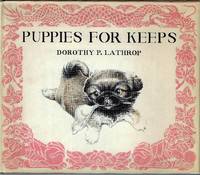
1943010001New York: MacMillan Company 1943 Brown cloth hard cover; illustrated dust jacket with light chipping to spine ends tiny edge tears with clear tape reinforcement on verso. Adorable soft pencil illustrations of Dorothy Lathrop's own Pekingese. Delightful story revolving around puppies named Lucky Sugarplum The Mouse and Star. A beautiful copy of a scarce and desirable Lathrop title. Stated First Printing. Cloth Hard Cover. Fine/Very Good. Oblong 4to. MacMillan Company hardcover
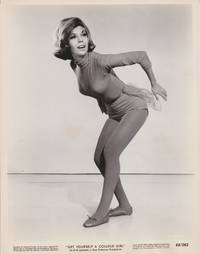
1964164291Beverly Hills CA: Metro-Goldwyn-Mayer MGM 1964. Vintage studio still photograph from the 1964 film showing Nancy Sinatra in a tulle-embellished dance costume. <br /> <br /> A star-studded comedy about a college girl moonlighting as a successful pop songwriter. Actress Mary Ann Mobley's film debut and featuring performances by The Dave Clark Five The Animals Stan Getz and Astrud Gilberto The Jimmy Smith Trio the Standells and the Bell Boys.<br /> <br /> 8 x 10 inches. Very Good plus with a faint dampstain at the center left. Metro-Goldwyn-Mayer [MGM] unknown
194609632London: Eyre & Spottiswoode Dymock's Book Arcade 1946. Grey hardcover cloth binding clean and tight- cocked spine. Yellowed slightly brittle pages. DJ has rubbed edges some chips 2" chip missing back of jacket large chip missing top of spine and around to back of jacket. Protected from further damage in clear jacket. Brown-toned front jacket illustration shows Thunderhead the stallion. This is a special film edition of the book which includes four black and white photos from the film with Roddy McDowall as Ken McLaughlin of the Goose Bar Ranch - reprising his role from My Friend Flicka. Sequel to My Friend Flicka about her son Thunderhead. Ken tries to turn the silvery white horse into a racehorse but his wild ways inherited from his sire the Albino run too deep. Scarce in this edition. Size: 8vo - over 7¾" - 9¾" tall. Illus. by Photographs. 4th Australion Edition. Hardcover. Good/Good. Eyre & Spottiswoode Dymock's Book Arcade Hardcover
193815662NY: Scribners 1938. First edition. Hardcover. Near Fine/Very good . First printing with A on copyright page. Cream color boards with green boy holding faun on front panel and green titles. Basis for 1940 film of same name. A little tanning on gutters & light fade to tint on top edges. Bright dust jacket with $2.50 price intact has a couple of small rubs a half-inch closed tear at bottom and a one-inch light damp stain on rear fold. Housed in a custom gold and green slipcase. <br/><br/> Scribners hardcover
18093197London:: George Shaw and E. Nodder 1809. First edition. Fine condition with original bright hand-coloring. . A Fine and rare original hand-colored copperplate engraving by Frederick Polydore Nodder and/or his son Richard Polydore Nodder from The Naturalist's Miscellany. Octavo 6 x 9.5 inches 15.24 x 24.13 cm. Includes the original text in both English and Latin by George Shaw MD FRS. The Naturalist's Miscellany distinguished by the refined hand-colored copperplate engravings and astute naturalists' observations was aptly named as a diverse naturalists' compendium of the birds mammals reptiles insects fish and crustacean identified by seventeenth and eighteenth century naturalists spanning the globe particularly around the South Seas. Many of nature's most fascinating and unusual creatures were discovered during this period several of which were introduced through The Naturalist's Miscellany. Doctor George Shaw 1751-1813 Fellow of the Royal Society cofounder of the Linnaean Society as well as Zoologist of the British Museum contributed the text. Publication of the Naturalist's Miscellany ceased with his death in 1813. Upon the death of the artist FP Nodder 1770-1800 his wife Elizabeth and their son Richard Polydore Nodder 1793-1820 contributed artistically and editorially to the publication. Indeed a family affair both Frederick Polydore Nodder and his son Richard produced every one of the plates. A gifted and distinguished naturalist Frederick P. Nodder was the preferred Botanical Painter to Her Majesty Queen Charlotte. His early skills as botanical and animal draughtsman and engraver were honed from his association with Sir Joseph Banks who employed Nodder to complete and engrave the drawings from the sketchbooks of the late Sydney Parkinson. Parkinson accompanied Banks as botanical draughtsman aboard Captain James Cook's The Endeavor in 1771. Parkinson died on the return of this South Seas Voyage. These engravings along with the natural history collections of the British Museum were the basis for the mastery of the Naturalist's Miscellany. Frederick's son Richard P. Nodder a gifted animal painter in his own right was distinguished as botanic painter to King George III. At the time of its creation The Naturalist's Miscellany was highly coveted as a definitive natural history offering and as was the custom the work was issued in installments between 1790 and 1813. Each volume was dedicated by permission and dutifully inscribed to the most devoted patrons and contributors of the natural historical pursuits of eighteenth and early nineteenth century Britain: Queen Charlotte Sir Joseph Banks Thomas Pennant Esq. The Universities of Oxford and Cambridge The Trustees of the British Museum to name a few. Andrews1986 Blunt 151Coats 25 Sitwell FBB 142 Wood 482. Copyright: Lowry-James Rare Prints & Books 1/09. George Shaw and E. Nodder, unknown
18093196London:: George Shaw and E. Nodder 1809. First edition. Fine condition with original bright hand-coloring. . A Fine and rare original hand-colored copperplate engraving by Frederick Polydore Nodder and/or his son Richard Polydore Nodder from The Naturalist's Miscellany. Octavo 6 x 9.5 inches 15.24 x 24.13 cm. Includes the original text in both English and Latin by George Shaw MD FRS. The Naturalist's Miscellany distinguished by the refined hand-colored copperplate engravings and astute naturalists' observations was aptly named as a diverse naturalists' compendium of the birds mammals reptiles insects fish and crustacean identified by seventeenth and eighteenth century naturalists spanning the globe particularly around the South Seas. Many of nature's most fascinating and unusual creatures were discovered during this period several of which were introduced through The Naturalist's Miscellany. Doctor George Shaw 1751-1813 Fellow of the Royal Society cofounder of the Linnaean Society as well as Zoologist of the British Museum contributed the text. Publication of the Naturalist's Miscellany ceased with his death in 1813. Upon the death of the artist FP Nodder 1770-1800 his wife Elizabeth and their son Richard Polydore Nodder 1793-1820 contributed artistically and editorially to the publication. Indeed a family affair both Frederick Polydore Nodder and his son Richard produced every one of the plates. A gifted and distinguished naturalist Frederick P. Nodder was the preferred Botanical Painter to Her Majesty Queen Charlotte. His early skills as botanical and animal draughtsman and engraver were honed from his association with Sir Joseph Banks who employed Nodder to complete and engrave the drawings from the sketchbooks of the late Sydney Parkinson. Parkinson accompanied Banks as botanical draughtsman aboard Captain James Cook's The Endeavor in 1771. Parkinson died on the return of this South Seas Voyage. These engravings along with the natural history collections of the British Museum were the basis for the mastery of the Naturalist's Miscellany. Frederick's son Richard P. Nodder a gifted animal painter in his own right was distinguished as botanic painter to King George III. At the time of its creation The Naturalist's Miscellany was highly coveted as a definitive natural history offering and as was the custom the work was issued in installments between 1790 and 1813. Each volume was dedicated by permission and dutifully inscribed to the most devoted patrons and contributors of the natural historical pursuits of eighteenth and early nineteenth century Britain: Queen Charlotte Sir Joseph Banks Thomas Pennant Esq. The Universities of Oxford and Cambridge The Trustees of the British Museum to name a few. Andrews1986 Blunt 151Coats 25 Sitwell FBB 142 Wood 482. Copyright: Lowry-James Rare Prints & Books 1/09. George Shaw and E. Nodder, unknown
18093195London:: George Shaw and E. Nodder 1809. First edition. Fine condition with original bright hand-coloring. . A Fine and rare original hand-colored copperplate engraving by Frederick Polydore Nodder and/or his son Richard Polydore Nodder from The Naturalist's Miscellany. Octavo 6 x 9.5 inches 15.24 x 24.13 cm. Includes the original text in both English and Latin by George Shaw MD FRS. The Naturalist's Miscellany distinguished by the refined hand-colored copperplate engravings and astute naturalists' observations was aptly named as a diverse naturalists' compendium of the birds mammals reptiles insects fish and crustacean identified by seventeenth and eighteenth century naturalists spanning the globe particularly around the South Seas. Many of nature's most fascinating and unusual creatures were discovered during this period several of which were introduced through The Naturalist's Miscellany. Doctor George Shaw 1751-1813 Fellow of the Royal Society cofounder of the Linnaean Society as well as Zoologist of the British Museum contributed the text. Publication of the Naturalist's Miscellany ceased with his death in 1813. Upon the death of the artist FP Nodder 1770-1800 his wife Elizabeth and their son Richard Polydore Nodder 1793-1820 contributed artistically and editorially to the publication. Indeed a family affair both Frederick Polydore Nodder and his son Richard produced every one of the plates. A gifted and distinguished naturalist Frederick P. Nodder was the preferred Botanical Painter to Her Majesty Queen Charlotte. His early skills as botanical and animal draughtsman and engraver were honed from his association with Sir Joseph Banks who employed Nodder to complete and engrave the drawings from the sketchbooks of the late Sydney Parkinson. Parkinson accompanied Banks as botanical draughtsman aboard Captain James Cook's The Endeavor in 1771. Parkinson died on the return of this South Seas Voyage. These engravings along with the natural history collections of the British Museum were the basis for the mastery of the Naturalist's Miscellany. Frederick's son Richard P. Nodder a gifted animal painter in his own right was distinguished as botanic painter to King George III. At the time of its creation The Naturalist's Miscellany was highly coveted as a definitive natural history offering and as was the custom the work was issued in installments between 1790 and 1813. Each volume was dedicated by permission and dutifully inscribed to the most devoted patrons and contributors of the natural historical pursuits of eighteenth and early nineteenth century Britain: Queen Charlotte Sir Joseph Banks Thomas Pennant Esq. The Universities of Oxford and Cambridge The Trustees of the British Museum to name a few. Andrews1986 Blunt 151Coats 25 Sitwell FBB 142 Wood 482. Copyright: Lowry-James Rare Prints & Books 1/09. George Shaw and E. Nodder, unknown