1 407 résultats
1976061523-BBoston MA: New York Graphic Society 1976. Book. Illus. by Ansel Adams . Very Good. Hardcover. Signed by Authors. 1st Edition. 4to - over 9¾ - 12" tall. 1st. Edition 1976 Brown cloth hardcover with the dust jacket 32 page text . Illustrated with 109 full page black & white photo images by Ansel Adams . With an essay on the land by Lawrence Clark Powell. This copy is also signed by Ansal Adans . Condition : Very Good with a clipped dust jacket with light edge rubs. . New York Graphic Society Hardcover
6659z1945. Soft Cover. Good. PB/pub. 1945/Gd. condition/236 pages - Tertiary level biology . AN26659z paperback
1493London: London Printing and Publishing Company Book. Good. Three-Quarter Leather. Reprint. 4to - over 9¾" - 12" tall. 10.5 x 14"; 400 432pp; green cloth green leather corners and spine with gilt title gilt missing; corners bumped small tears to top of spine; slight foxing otherwise a very tight clean copy; two volumes bound in one illustrated with four thousand wood engravings; owners inscription to f.e.p.: R. S. Marriott Marborough Hall 1868. London Printing and Publishing Company Hardcover
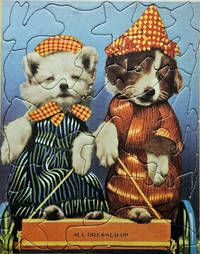
1950011366Unknown: Uncredited 1950 Circa 1950s. Pictorial board with some wear to spine and edges. Inside the upper cover are familiar Mother Goose rhymes with small illustrations in line by an unknown hand opposite the nurserhy rhymes is a simple puzzle featuring a colorized version of a photo by Harry Whittier Frees. Many of the puzzle pieces are in the shap of familiar objects. . Hard Cover. Very Good/No Jacket. Illus. by Harry Whittier Frees. 4to. Uncredited hardcover
2001MASTER356695INew Haven: Yale University Press. VG/VG Faint Wear To DJ. Pages Clean Binding Tight. DJ In Mylar Wrap. Pages: 615. 2001. 1st Printing. Hardcover. Yale University Press hardcover
1974158676N Y: Harper's Magazine Press 1974. First Edition. Hard Cover. Near Fine/Good. Full brown cloth boards. Dust jacket has tears and small holes on spine. 272 pages. Slight pencil marking. Stated First Edition. Keywords: Personal Narrative Animals Nature Seasons Outdoors Harper's Magazine Press hardcover
1964013962New York: Franklin Watts 1964. Red hardcover binding clean square and tight. Some foxing on endpapers but overall clean and tight interior. DJ price-clipped - although the $2.xx visible. Some shelfwear small chips and wrinkles along edges but still displays nicely in clean Brodart. 151 pages. Ann and Jim from Pilot The Hunter are now married and settled on a small stud farm. As they try to train their piebald gelding Pilot into a steeplechaser they have some sever setbacks. The story culminates in a triumphant account of the Grand National. Followed by Show Jumper and Dido and Rogue. Size: 8vo - over 7¾ - 9¾" tall 1st Printing Language: ENG. Illus. by Money Keith. 1st American. Hardcover. Near Very Good/Good. Franklin Watts Hardcover
1964013961New York: Franklin Watts 1964. Ex-library - Red hardcover binding clean square and tight. Back library pocket intact presentation sticker ffep some usual stamps tape marks on endpapers but overall clean and tight interior. DJ price-clipped spine sticker minimal shelfwear clean and crisp. Displays nicely in clean Brodart. 151 pages. Ann and Jim from Pilot The Hunter are now married and settled on a small stud farm. As they try to train their piebald gelding Pilot into a steeplechaser they have some sever setbacks. The story culminates in a triumphant account of the Grand National. Followed by Show Jumper and Dido and Rogue. Size: 8vo - over 7¾ - 9¾" tall 1st Printing Language: ENG. Illus. by Money Keith. 1st American. Hardcover. Good/Near Very Good. Franklin Watts Hardcover
1964013963New York: George G. Harrap & Co. 1964. Green hardcover binding with silhouette of horse and rier landing after a jump is clean square and tight. Clean bright and tight interior. DJ not price-clipped - 11/6 Net on flap. Some shelfwear small chips and wrinkles along edges but still displays nicely in clean Brodart. This is the original printing from Great Britain. 151 pages. Ann and Jim from Pilot The Hunter are now married and settled on a small stud farm. As they try to train their piebald gelding Pilot into a steeplechaser they have some sever setbacks. The story culminates in a triumphant account of the Grand National. Followed by Show Jumper and Dido and Rogue. Size: 8vo - over 7¾ - 9¾" tall 1st Printing Language: ENG. Illus. by Money Keith. 1st. Hardcover. Near Very Good/Good. George G. Harrap & Co. Hardcover
197527504T & A D Poyser 1975. First Edition. Hardcover Original Cloth. Very Good Condition/Very Good. Size: Octavo standard book size. 256 pages. Text body is clean and free from previous owner annotation underlining and highlighting. Binding is tight covers and spine fully intact. No foxing in this copy. Dust Jacket is in very good condition without tears or chips or other damage. Dust Jacket price-clipped. Edges browned slightly. Quantity Available: 1. Shipped Weight: Under 1 kilogram. Category: Science & Technology; Biology; Scotland; Animals & Birds. ISBN: 0856610119. ISBN/EAN: 9780856610110. All our pictures shown here are of the actual item not stock photos. Inventory No: 27504. . 9780856610110 T & A D Poyser hardcover
18355565Edinburgh:: WH Lizars 1835. First edition. Fine with original hand-coloring. A fine original hand-colored steel engraving with bright original hand-coloring. 6.75 x 4.25 inches 10.8 x 17.15 cm. This engraving is classified as one of the finest natural history miniatures produced during the mid-nineteenth century. A refined and intelligent work The Naturalist's Library was created for everyone with an interest in the natural world. Sir William Jardine 1800-1847 noted Scottish Ichthyologist and Ornithologist combined the talents of his colleagues; Edward Lear Prideaux John Selby William Swainson to contribute to The Naturalist's Library. The intention of the series was to create a fine yet affordable work describing and illustrating all elements of the natural world save botany. In addition several plates were engraved after noted artists: John James Audubon John Gould and Maria Sibylla Merian. The success of the publication was apparent by the production of forty subsequent volumes. The engraver of the work was William H. Lizars who at the time produced the first ten plates of John James Audubon's magnum opus the Double Elephant Folio Edition of The Birds of America. For The Naturalist's Library Lizars engraved the miniature plates in steel opposed to copper to render meticulously detailed settings for each described species. Traditionally only the major subject either bird animal insect or fish was individually painted with watercolor the background remained uncolored. This work has withstood the test of time and continues to be a fine and affordable option to the lavish engraved work of many natural history masters. WH Lizars, unknown
18637358Naples:: Napoli Presso 1863-79. First Edition. Fine. Fine original hand-colored lithograph by Raimondo Petraroja after drawing by A. di Lorenzo. Folio. Sheet: 16 3/8 x 11 3/4 inches. Image size: 10 x 9 inches. Sheet: 16 3/8 x 11 3/4 inches. Image size: 10 x 9 inches. Publisher's blind stamp lower center under caption as issued. Archivally double matted in sage green/gilt French mat sized to 16 x 20 inches. An whimsical scene displaying the reproductive habits of the female Common Surinam toad or star-fingered toad. Set on leafy shore in pursuit of a fluttering butterfly overhead multiple fully-formed toads emerge from honeycombed crevices on the mother's back. While little is known of the artist or lithographer the editor Giovanni Boschi 1863-79 biographer of the famed French Naturalist Georges Louis LeClerc Comte de Buffon was clearly inspired by Buffon's encyclopedic knowledge and imaginative presentation of the natural world as well as the work of artists such as John James Audubon in the creation of his own naturalists' compendium; a massive 8 volume popular zoological atlas; a work compiled from the most recent works of Italian and foreign zoology; all set in their native surroundings. Single sheet matted in rag board Napoli Presso, unknown
17437009London:: The College of Physicians 1743-51. First edition. Fine . Pl 124. The Greatest Bulfinch-hen. Original hand-colored copperplate engraving. Quarto 9 x 12 inches. Includes text. George Edwards London 1694-1773 was a Fellow of the Royal Society and Fellow of the Society of Antiquaries in London who rejected his early formal training and potential career in business to pursue his passion in natural history. His dedication and talent as a draftsman and naturalist was evident thus gaining the attention of Sir Hans Sloane President of the College of Physicians and the Royal Society. Sir Hans offered Edwards the post of Librarian of the Royal College of Physicians in London and enlisted him to draw the natural curiosities of Sloane's private museum. This connection became the inspiration for Edward's masterful achievements; A Natural History of Uncommon Birds Published between 1743 and 1751 and the subsequent work; Gleanings of Natural History which was produced between 1758 and 1764. These two works illustrated and documented many previously unrecorded specimens of birds reptiles and insects held in England's private collections up to the mid eighteenth century. A monumental achievement Edwards documented- in English and French- painted engraved and hand-colored every one of the fine compositions in this Pre-Linnaean natural history opus. Although not a field naturalist Edwards placed many of his birds and animals in landscaped settings which was unusual for the time. In other compositions birds are elegantly perched on stylized branches in a classic Georgian format more decorative than realistic charming nonetheless. A gracious and humble man Edwards established firm and respected alliances with naturalist pioneers Carl Linnaeus 1707-78 Mark Catesby 1683-1749 from whom he learned the art of engraving and subsequently aided Catesby in the revision of his publication; The Natural History of Carolina Florida and the Bahama Islands London c.1754 as well as William Bartram from whom he acquired several species of Pennsylvanian birds included in his volumes. As Edwards' work predates the completion of the Linnaean classification system Linnaeus was to borrow the English names of many of Edwards species for his renowned work on classification and nomenclature. Ref: Buchanan Jackson Fine Bird Books. Matted in Rag Board The College of Physicians, unknown
17437010London:: The College of Physicians 1743-51. First edition. Fine . Pl 188. The Gros-beak or Haw-finch. Original hand-colored copperplate engraving. Quarto 9 x 12 inches. Includes text. George Edwards London 1694-1773 was a Fellow of the Royal Society and Fellow of the Society of Antiquaries in London who rejected his early formal training and potential career in business to pursue his passion in natural history. His dedication and talent as a draftsman and naturalist was evident thus gaining the attention of Sir Hans Sloane President of the College of Physicians and the Royal Society. Sir Hans offered Edwards the post of Librarian of the Royal College of Physicians in London and enlisted him to draw the natural curiosities of Sloane's private museum. This connection became the inspiration for Edward's masterful achievements; A Natural History of Uncommon Birds Published between 1743 and 1751 and the subsequent work; Gleanings of Natural History which was produced between 1758 and 1764. These two works illustrated and documented many previously unrecorded specimens of birds reptiles and insects held in England's private collections up to the mid eighteenth century. A monumental achievement Edwards documented- in English and French- painted engraved and hand-colored every one of the fine compositions in this Pre-Linnaean natural history opus. Although not a field naturalist Edwards placed many of his birds and animals in landscaped settings which was unusual for the time. In other compositions birds are elegantly perched on stylized branches in a classic Georgian format more decorative than realistic charming nonetheless. A gracious and humble man Edwards established firm and respected alliances with naturalist pioneers Carl Linnaeus 1707-78 Mark Catesby 1683-1749 from whom he learned the art of engraving and subsequently aided Catesby in the revision of his publication; The Natural History of Carolina Florida and the Bahama Islands London c.1754 as well as William Bartram from whom he acquired several species of Pennsylvanian birds included in his volumes. As Edwards' work predates the completion of the Linnaean classification system Linnaeus was to borrow the English names of many of Edwards species for his renowned work on classification and nomenclature. Ref: Buchanan Jackson Fine Bird Books. Matted in Rag Board The College of Physicians, unknown
17437016London:: The College of Physicians 1743-51. second edition. Fine . Pl 203 The Great Spotted Lizard with a Forked Tail. Original hand-colored copperplate engraving. Quarto 9 x 12 inches. Includes text. This print is from a later edition printed on J Whatman Turkey Mills paper watermarked 1836. George Edwards London 1694-1773 was a Fellow of the Royal Society and Fellow of the Society of Antiquaries in London who rejected his early formal training and potential career in business to pursue his passion in natural history. His dedication and talent as a draftsman and naturalist was evident thus gaining the attention of Sir Hans Sloane President of the College of Physicians and the Royal Society. Sir Hans offered Edwards the post of Librarian of the Royal College of Physicians in London and enlisted him to draw the natural curiosities of Sloane's private museum. This connection became the inspiration for Edward's masterful achievements; A Natural History of Uncommon Birds Published between 1743 and 1751 and the subsequent work; Gleanings of Natural History which was produced between 1758 and 1764. These two works illustrated and documented many previously unrecorded specimens of birds reptiles and insects held in England's private collections up to the mid eighteenth century. A monumental achievement Edwards documented- in English and French- painted engraved and hand-colored every one of the fine compositions in this Pre-Linnaean natural history opus. Although not a field naturalist Edwards placed many of his birds and animals in landscaped settings which was unusual for the time. In other compositions birds are elegantly perched on stylized branches in a classic Georgian format more decorative than realistic charming nonetheless. A gracious and humble man Edwards established firm and respected alliances with naturalist pioneers Carl Linnaeus 1707-78 Mark Catesby 1683-1749 from whom he learned the art of engraving and subsequently aided Catesby in the revision of his publication; The Natural History of Carolina Florida and the Bahama Islands London c.1754 as well as William Bartram from whom he acquired several species of Pennsylvanian birds included in his volumes. As Edwards' work predates the completion of the Linnaean classification system Linnaeus was to borrow the English names of many of Edwards species for his renowned work on classification and nomenclature. Ref: Buchanan Jackson Fine Bird Books. Matted in Rag Board The College of Physicians, unknown
17437017London:: The College of Physicians 1743-51. First edition. Fine . Pl 206 The Sea-tortoise. Original hand-colored copperplate engraving. Quarto 9 x 12 inches. Includes text. George Edwards London 1694-1773 was a Fellow of the Royal Society and Fellow of the Society of Antiquaries in London who rejected his early formal training and potential career in business to pursue his passion in natural history. His dedication and talent as a draftsman and naturalist was evident thus gaining the attention of Sir Hans Sloane President of the College of Physicians and the Royal Society. Sir Hans offered Edwards the post of Librarian of the Royal College of Physicians in London and enlisted him to draw the natural curiosities of Sloane's private museum. This connection became the inspiration for Edward's masterful achievements; A Natural History of Uncommon Birds Published between 1743 and 1751 and the subsequent work; Gleanings of Natural History which was produced between 1758 and 1764. These two works illustrated and documented many previously unrecorded specimens of birds reptiles and insects held in England's private collections up to the mid eighteenth century. A monumental achievement Edwards documented- in English and French- painted engraved and hand-colored every one of the fine compositions in this Pre-Linnaean natural history opus. Although not a field naturalist Edwards placed many of his birds and animals in landscaped settings which was unusual for the time. In other compositions birds are elegantly perched on stylized branches in a classic Georgian format more decorative than realistic charming nonetheless. A gracious and humble man Edwards established firm and respected alliances with naturalist pioneers Carl Linnaeus 1707-78 Mark Catesby 1683-1749 from whom he learned the art of engraving and subsequently aided Catesby in the revision of his publication; The Natural History of Carolina Florida and the Bahama Islands London c.1754 as well as William Bartram from whom he acquired several species of Pennsylvanian birds included in his volumes. As Edwards' work predates the completion of the Linnaean classification system Linnaeus was to borrow the English names of many of Edwards species for his renowned work on classification and nomenclature. Ref: Buchanan Jackson Fine Bird Books. Matted in Rag Board The College of Physicians, unknown
17437015London:: The College of Physicians 1743-51. First edition. Fine . Pl 207 Double-headed Snake & The Black Butterflies. Original hand-colored copperplate engraving. Quarto 9 x 12 inches. Includes text. George Edwards London 1694-1773 was a Fellow of the Royal Society and Fellow of the Society of Antiquaries in London who rejected his early formal training and potential career in business to pursue his passion in natural history. His dedication and talent as a draftsman and naturalist was evident thus gaining the attention of Sir Hans Sloane President of the College of Physicians and the Royal Society. Sir Hans offered Edwards the post of Librarian of the Royal College of Physicians in London and enlisted him to draw the natural curiosities of Sloane's private museum. This connection became the inspiration for Edward's masterful achievements; A Natural History of Uncommon Birds Published between 1743 and 1751 and the subsequent work; Gleanings of Natural History which was produced between 1758 and 1764. These two works illustrated and documented many previously unrecorded specimens of birds reptiles and insects held in England's private collections up to the mid eighteenth century. A monumental achievement Edwards documented- in English and French- painted engraved and hand-colored every one of the fine compositions in this Pre-Linnaean natural history opus. Although not a field naturalist Edwards placed many of his birds and animals in landscaped settings which was unusual for the time. In other compositions birds are elegantly perched on stylized branches in a classic Georgian format more decorative than realistic charming nonetheless. A gracious and humble man Edwards established firm and respected alliances with naturalist pioneers Carl Linnaeus 1707-78 Mark Catesby 1683-1749 from whom he learned the art of engraving and subsequently aided Catesby in the revision of his publication; The Natural History of Carolina Florida and the Bahama Islands London c.1754 as well as William Bartram from whom he acquired several species of Pennsylvanian birds included in his volumes. As Edwards' work predates the completion of the Linnaean classification system Linnaeus was to borrow the English names of many of Edwards species for his renowned work on classification and nomenclature. Ref: Buchanan Jackson Fine Bird Books. Matted in Rag Board The College of Physicians, unknown
17437013London:: The College of Physicians 1743-51. First edition. Fine . A fine original hand-colored copperplate engraving. Quarto 9 x 12 inches. Includes text. George Edwards London 1694-1773 was a Fellow of the Royal Society and Fellow of the Society of Antiquaries in London who rejected his early formal training and potential career in business to pursue his passion in natural history. His dedication and talent as a draftsman and naturalist was evident thus gaining the attention of Sir Hans Sloane President of the College of Physicians and the Royal Society. Sir Hans offered Edwards the post of Librarian of the Royal College of Physicians in London and enlisted him to draw the natural curiosities of Sloane's private museum. This connection became the inspiration for Edward's masterful achievements; A Natural History of Uncommon Birds Published between 1743 and 1751 and the subsequent work; Gleanings of Natural History which was produced between 1758 and 1764. These two works illustrated and documented many previously unrecorded specimens of birds reptiles and insects held in England's private collections up to the mid eighteenth century. A monumental achievement Edwards documented- in English and French- painted engraved and hand-colored every one of the fine compositions in this Pre-Linnaean natural history opus. Although not a field naturalist Edwards placed many of his birds and animals in landscaped settings which was unusual for the time. In other compositions birds are elegantly perched on stylized branches in a classic Georgian format more decorative than realistic charming nonetheless. A gracious and humble man Edwards established firm and respected alliances with naturalist pioneers Carl Linnaeus 1707-78 Mark Catesby 1683-1749 from whom he learned the art of engraving and subsequently aided Catesby in the revision of his publication; The Natural History of Carolina Florida and the Bahama Islands London c.1754 as well as William Bartram from whom he acquired several species of Pennsylvanian birds included in his volumes. As Edwards' work predates the completion of the Linnaean classification system Linnaeus was to borrow the English names of many of Edwards species for his renowned work on classification and nomenclature. Ref: Buchanan Jackson Fine Bird Books. Matted in Rag Board The College of Physicians, unknown
17437014London:: The College of Physicians 1743-51. later printing. Fine . Pl 208 The Mango-fish & The Great Brown Locust. Original hand-colored copperplate engraving. Quarto 9 x 12 inches. Includes text. This print is from a later edition printed on J Whatman Turkey Mills paper watermarked 1836. George Edwards London 1694-1773 was a Fellow of the Royal Society and Fellow of the Society of Antiquaries in London who rejected his early formal training and potential career in business to pursue his passion in natural history. His dedication and talent as a draftsman and naturalist was evident thus gaining the attention of Sir Hans Sloane President of the College of Physicians and the Royal Society. Sir Hans offered Edwards the post of Librarian of the Royal College of Physicians in London and enlisted him to draw the natural curiosities of Sloane's private museum. This connection became the inspiration for Edward's masterful achievements; A Natural History of Uncommon Birds Published between 1743 and 1751 and the subsequent work; Gleanings of Natural History which was produced between 1758 and 1764. These two works illustrated and documented many previously unrecorded specimens of birds reptiles and insects held in England's private collections up to the mid eighteenth century. A monumental achievement Edwards documented- in English and French- painted engraved and hand-colored every one of the fine compositions in this Pre-Linnaean natural history opus. Although not a field naturalist Edwards placed many of his birds and animals in landscaped settings which was unusual for the time. In other compositions birds are elegantly perched on stylized branches in a classic Georgian format more decorative than realistic charming nonetheless. A gracious and humble man Edwards established firm and respected alliances with naturalist pioneers Carl Linnaeus 1707-78 Mark Catesby 1683-1749 from whom he learned the art of engraving and subsequently aided Catesby in the revision of his publication; The Natural History of Carolina Florida and the Bahama Islands London c.1754 as well as William Bartram from whom he acquired several species of Pennsylvanian birds included in his volumes. As Edwards' work predates the completion of the Linnaean classification system Linnaeus was to borrow the English names of many of Edwards species for his renowned work on classification and nomenclature. Ref: Buchanan Jackson Fine Bird Books. Matted in Rag Board The College of Physicians, unknown
17587020London:: The Royal College of Physicians 1758-1764. First edition. Fine. Pl 282 The Spur Fish & The Indian Gattorugina. Original hand-colored copperplate engraving. Quarto 9 x 12 inches. Includes text. George Edwards London 1694-1773 was a Fellow of the Royal Society and Fellow of the Society of Antiquaries in London who rejected his early formal training and potential career in business to pursue his passion in natural history. His dedication and talent as a draftsman and naturalist was evident thus gaining the attention of Sir Hans Sloane President of the College of Physicians and the Royal Society. Sir Hans offered Edwards the post of Librarian of the Royal College of Physicians in London and enlisted him to draw the natural curiosities of Sloane's private museum. This connection became the inspiration for Edward's masterful achievements; A Natural History of Uncommon Birds Published between 1743 and 1751 and the subsequent work; Gleanings of Natural History which was produced between 1758 and 1764. These two works illustrated and documented many previously unrecorded specimens of birds reptiles and insects held in England's private collections up to the mid eighteenth century. A monumental achievement Edwards documented- in English and French- painted engraved and hand-colored every one of the fine compositions in this Pre-Linnaean natural history opus. Although not a field naturalist Edwards placed many of his birds and animals in landscaped settings which was unusual for the time. In other compositions birds are elegantly perched on stylized branches in a classic Georgian format more decorative than realistic charming nonetheless. A gracious and humble man Edwards established firm and respected alliances with naturalist pioneers Carl Linnaeus 1707-78 Mark Catesby 1683-1749 from whom he learned the art of engraving and subsequently aided Catesby in the revision of his publication; The Natural History of Carolina Florida and the Bahama Islands London c.1754 as well as William Bartram from whom he acquired several species of Pennsylvanian birds included in his volumes. As Edwards' work predates the completion of the Linnaean classification system Linnaeus was to borrow the English names of many of Edwards species for his renowned work on classification and nomenclature. Ref: Buchanan Jackson Fine Bird Books. Matted in Rag Board The Royal College of Physicians, unknown
17587018London:: The Royal College of Physicians 1758-1764. First edition. Fine . Pl 283 Sea Bat & The Pyed Acarauana. Original hand-colored copperplate engraving. Quarto 9 x 12 inches. Includes text. George Edwards London 1694-1773 was a Fellow of the Royal Society and Fellow of the Society of Antiquaries in London who rejected his early formal training and potential career in business to pursue his passion in natural history. His dedication and talent as a draftsman and naturalist was evident thus gaining the attention of Sir Hans Sloane President of the College of Physicians and the Royal Society. Sir Hans offered Edwards the post of Librarian of the Royal College of Physicians in London and enlisted him to draw the natural curiosities of Sloane's private museum. This connection became the inspiration for Edward's masterful achievements; A Natural History of Uncommon Birds Published between 1743 and 1751 and the subsequent work; Gleanings of Natural History which was produced between 1758 and 1764. These two works illustrated and documented many previously unrecorded specimens of birds reptiles and insects held in England's private collections up to the mid eighteenth century. A monumental achievement Edwards documented- in English and French- painted engraved and hand-colored every one of the fine compositions in this Pre-Linnaean natural history opus. Although not a field naturalist Edwards placed many of his birds and animals in landscaped settings which was unusual for the time. In other compositions birds are elegantly perched on stylized branches in a classic Georgian format more decorative than realistic charming nonetheless. A gracious and humble man Edwards established firm and respected alliances with naturalist pioneers Carl Linnaeus 1707-78 Mark Catesby 1683-1749 from whom he learned the art of engraving and subsequently aided Catesby in the revision of his publication; The Natural History of Carolina Florida and the Bahama Islands London c.1754 as well as William Bartram from whom he acquired several species of Pennsylvanian birds included in his volumes. As Edwards' work predates the completion of the Linnaean classification system Linnaeus was to borrow the English names of many of Edwards species for his renowned work on classification and nomenclature. Ref: Buchanan Jackson Fine Bird Books. Matted in Rag Board The Royal College of Physicians, unknown
17587019London:: The Royal College of Physicians 1758-1764. First edition. Fine . Pl 288 The Prickled Dog or Hound-fish with an insect called the Walking-stick. Original hand-colored copperplate engraving. Quarto 9 x 12 inches. Includes text. George Edwards London 1694-1773 was a Fellow of the Royal Society and Fellow of the Society of Antiquaries in London who rejected his early formal training and potential career in business to pursue his passion in natural history. His dedication and talent as a draftsman and naturalist was evident thus gaining the attention of Sir Hans Sloane President of the College of Physicians and the Royal Society. Sir Hans offered Edwards the post of Librarian of the Royal College of Physicians in London and enlisted him to draw the natural curiosities of Sloane's private museum. This connection became the inspiration for Edward's masterful achievements; A Natural History of Uncommon Birds Published between 1743 and 1751 and the subsequent work; Gleanings of Natural History which was produced between 1758 and 1764. These two works illustrated and documented many previously unrecorded specimens of birds reptiles and insects held in England's private collections up to the mid eighteenth century. A monumental achievement Edwards documented- in English and French- painted engraved and hand-colored every one of the fine compositions in this Pre-Linnaean natural history opus. Although not a field naturalist Edwards placed many of his birds and animals in landscaped settings which was unusual for the time. In other compositions birds are elegantly perched on stylized branches in a classic Georgian format more decorative than realistic charming nonetheless. A gracious and humble man Edwards established firm and respected alliances with naturalist pioneers Carl Linnaeus 1707-78 Mark Catesby 1683-1749 from whom he learned the art of engraving and subsequently aided Catesby in the revision of his publication; The Natural History of Carolina Florida and the Bahama Islands London c.1754 as well as William Bartram from whom he acquired several species of Pennsylvanian birds included in his volumes. As Edwards' work predates the completion of the Linnaean classification system Linnaeus was to borrow the English names of many of Edwards species for his renowned work on classification and nomenclature. Ref: Buchanan Jackson Fine Bird Books. Matted in Rag Board The Royal College of Physicians, unknown
17437008London:: The College of Physicians 1743-51. First edition. Fine . Pl. 121 The American Nightingale & the Green Sparrow or Green Ruby-throated Hummingbird. Original hand-colored copperplate engraving. Quarto 11.5 x 9 inches. Includes text. George Edwards London 1694-1773 was a Fellow of the Royal Society and Fellow of the Society of Antiquaries in London who rejected his early formal training and potential career in business to pursue his passion in natural history. His dedication and talent as a draftsman and naturalist was evident thus gaining the attention of Sir Hans Sloane President of the College of Physicians and the Royal Society. Sir Hans offered Edwards the post of Librarian of the Royal College of Physicians in London and enlisted him to draw the natural curiosities of Sloane's private museum. This connection became the inspiration for Edward's masterful achievements; A Natural History of Uncommon Birds Published between 1743 and 1751 and the subsequent work; Gleanings of Natural History which was produced between 1758 and 1764. These two works illustrated and documented many previously unrecorded specimens of birds reptiles and insects held in England's private collections up to the mid eighteenth century. A monumental achievement Edwards documented- in English and French- painted engraved and hand-colored every one of the fine compositions in this Pre-Linnaean natural history opus. Although not a field naturalist Edwards placed many of his birds and animals in landscaped settings which was unusual for the time. In other compositions birds are elegantly perched on stylized branches in a classic Georgian format more decorative than realistic charming nonetheless. A gracious and humble man Edwards established firm and respected alliances with naturalist pioneers Carl Linnaeus 1707-78 Mark Catesby 1683-1749 from whom he learned the art of engraving and subsequently aided Catesby in the revision of his publication; The Natural History of Carolina Florida and the Bahama Islands London c.1754 as well as William Bartram from whom he acquired several species of Pennsylvanian birds included in his volumes. As Edwards' work predates the completion of the Linnaean classification system Linnaeus was to borrow the English names of many of Edwards species for his renowned work on classification and nomenclature. Ref: Buchanan Jackson Fine Bird Books. Matted in Rag Board The College of Physicians, unknown
1758699London:: The Royal College of Physicians 1758-1764. First edition. Fine. A fine original hand-colored copperplate engraving. Quarto 9 x 12 inches. George Edwards London 1694-1773 was a Fellow of the Royal Society and Fellow of the Society of Antiquaries in London who rejected his early formal training and potential career in business to pursue his passion in natural history. His dedication and talent as a draftsman and naturalist was evident thus gaining the attention of Sir Hans Sloane President of the College of Physicians and the Royal Society. Sir Hans offered Edwards the post of Librarian of the Royal College of Physicians in London and enlisted him to draw the natural curiosities of Sloane's private museum. This connection became the inspiration for Edward's masterful achievements; A Natural History of Uncommon Birds Published between 1743 and 1751 and the subsequent work; Gleanings of Natural History which was produced between 1758 and 1764. These two works illustrated and documented many previously unrecorded specimens of birds reptiles and insects held in England's private collections up to the mid eighteenth century. A monumental achievement Edwards documented- in English and French- painted engraved and hand-colored every one of the fine compositions in this Pre-Linnaean natural history opus. Although not a field naturalist Edwards placed many of his birds and animals in landscaped settings which was unusual for the time. In other compositions birds are elegantly perched on stylized branches in a classic Georgian format more decorative than realistic charming nonetheless. A gracious and humble man Edwards established firm and respected alliances with naturalist pioneers Carl Linnaeus 1707-78 Mark Catesby 1683-1749 from whom he learned the art of engraving and subsequently aided Catesby in the revision of his publication; The Natural History of Carolina Florida and the Bahama Islands London c.1754 as well as William Bartram from whom he acquired several species of Pennsylvanian birds included in his volumes. As Edwards' work predates the completion of the Linnaean classification system Linnaeus was to borrow the English names of many of Edwards species for his renowned work on classification and nomenclature. Ref: Buchanan Jackson Fine Bird Books. Matted in Rag Board The Royal College of Physicians, unknown
17546489London:: C. Marsh 1754. Second Edition. Near Fine with original hand-coloring. Original hand-colored copperplate engraving. Folio. Near Fine condition with one minute foxed mark on right edge of plate mark. Archivally framed in walnut burl 23 x 20 inches. This powerful image of the Chain-snake is decoratively surrounded by a blooming Frutex lauri a shrub native to Virginia. This second edition of Mark Catesby's renowned series was published posthumously by George Edwards; a friend and noted colleague. Archivally Framed C. Marsh, unknown