Waters, FrankBiblio.com
1 064 résultats
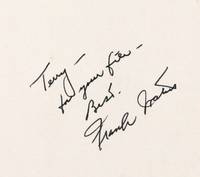
199468940Various places 1994. Frank Waters 1902-1995 was perhaps the preeminent writer of the American Southwest in the 20th century. His writings described the culture of the Southwest in all of its diversity - Anglo Hispanic and Native American. He wrote fiction history and interpretive studies. Terence A. Terry Tanner a friend of many in the book trade was a respected antiquarian book dealer and at the time of his death in 2003 was owner of the Chicago-based firm Hamill & Barker. Terry was born in Chicago in 1948 attended Knox College in Galesburg IL where he met the antiquarian book seller Clare Van Norman Sr. who introduced him to the book trade. When Terry graduated from Knox College in 1970 he moved back to Chicago where he found a job working as the office manager for Van Allen Bradley the rare book dealer and literary editor of the Chicago Daily News. Tanner next worked as an assistant to the distinguished antiquarian Kenneth Nebenzahl and in 1975 became an assistant to the well-known booksellers Frances Hamill and Margery Barker. He became the sole owner of their firm in 1987 following the death of Ms. Hamill Ms. Barker having died in 1980. Terry was introduced to the writings of Frank Waters by Morton Weisman of the Swallow Press in 1970. He continued purchasing books by Waters throughout the early and middle 1970's and near the end of that decade decide to undertake a descriptive bibliography of Waters' work. That bibliography was published by Meyerbooks of Glenwood Illinois in the late summer of 1983 as Frank Waters: A Bibliography with Relevant Selections from His Correspondence. This collection is the basis for that bibliography. The collection contains the first printing of every primary work published by Frank Waters from his first book published in 1930. Moreover every copy is present in the original dust jacket and was the product of continual upgrading. In addition the collection contains numerous later printings of all of Waters's books including some that are rarer than the first printings. For example while preparing his bibliography Terry was unable to locate a copy of the paperback printing of Diamond Head issued under the title Secret Affair. That printing finally was added to the collection. Frank Waters destroyed the manuscripts for his early books and those that exist for most of his other works are already in institutions. The Tanner collection contains the corrected carbon typescript of the manuscript for Leon Gaspard which is probably the only manuscript of Frank Waters in private hands. The Tanner collection must certainly rank among the very best collections of Frank Waters in private hands today. A detailed inventory with all the items listed according to Tanner's bibliography in chronological order is available on request. unknown
1998163H1402New York: Seven Stories Press. Very Good in Very Good dust jacket. 1998. First Printing. Hardcover. 1888363681 . Signed and inscribed by Gary Webb upon half-title page. "Shows how the L.A. crack market flourished through a breathtaking combination of government negligence greed and criminal conduct. Demonstrates that U.S. government agencies including the CIA DEA and FBI were aware of the activities of this well-connected drug network and did little or nothing to stop it. Indeed in several instances documented here the Justice Department the CIA and the secret National Security Council unit run by Oliver North took extraordinary steps to protect the ring from public exposure. In the final chapters Webb reveals the conflict that led to his newspaper's stunning repudiation of its own series - and at what cost he stood by his story." - dust jacket. xxviii 548 pages. Footnotes glossary and index. Webb was found dead in his home in 2004 with two gunshot wounds to his head. Curiously his death was ruled a suicide. Clean and unmarked with light wear. Dust jacket preserved in glossy new archival-grade mylar. A quality signed example of this heroic work.; 8vo - over 7¾" - 9¾" tall; Dark Alliance: The CIA the Contras and the Crack Cocaine Explosion Conspiracy California Los Angeles Habit Counterrevolutionaries Nicaragua United States Central Intelligence Agency Black African Americans Social Destruction Investigative Journalism; Signed by Authors . Seven Stories Press hardcover
1957154176Hollywood: Roger Corman Productions 1957. Draft script for the 1957 film. Copy belonging to actor Dick Miller who had a sizable role in the film with his name to the title page and his manuscript pencil and ink annotations throughout. <br /> <br /> The finished film runs a little over an hour so the script at 127 pages was cut down substantially in the filming and editing process leaving a remarkable amount of content for study.<br /> <br /> An alienated wealthy coed at an all-girls boarding school inflicts increasing cruelties on the other students until her manipulation goes too far. An early role for Miller who appeared in 14 films directed by legendary independent filmmaker Roger Corman between 1955 and 1961 and would continue to work with Corman throughout his career.<br /> <br /> Brown titled wrappers. Title page present undated with credits for screenwriter Ed Waters. 128 leaves with last page of text numbered 127. Mimeograph duplication rectos only. Pages and wrapper Near Fine bound internally with three silver brads. Roger Corman Productions unknown
19723806Baltimore MD: Dreamland Productions 1972. First Printing. Poster. Fine. First Printing. Poster. This is an original poster for the "Gala World Premiere" of John Water's Pink Flamingos at the Baltimore Film Festival III. Genuinely rare particularly in fine condition and far more desirable than the reasonably common general release poster. A wonderful addition to a serious Waters' collection. Pink Flamingos premiered in 1972 at the third Baltimore Film Festival held on the University of Baltimore campus where it played to sold-out audiences for three shows. Gradually relying on word-of-mouth the movie gained a following and repeat viewing in the art-house circuit. Bright and unmarred. Black printing on pink cardstock. 16x20.25 Dreamland Productions unknown
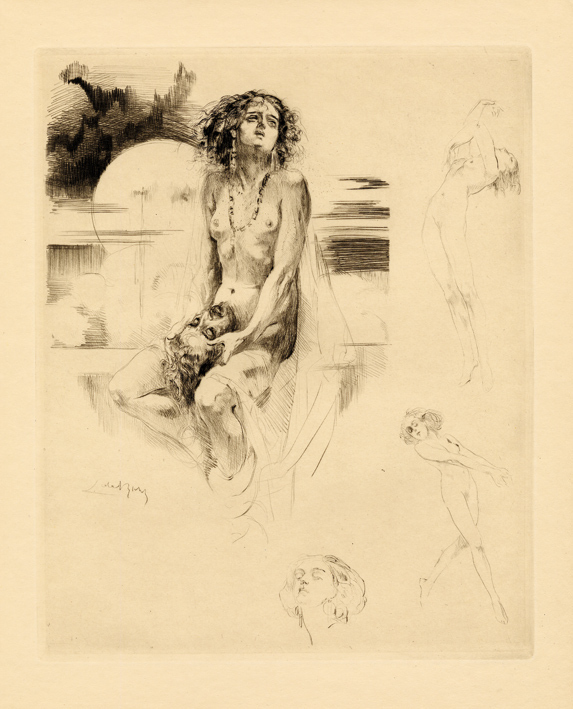
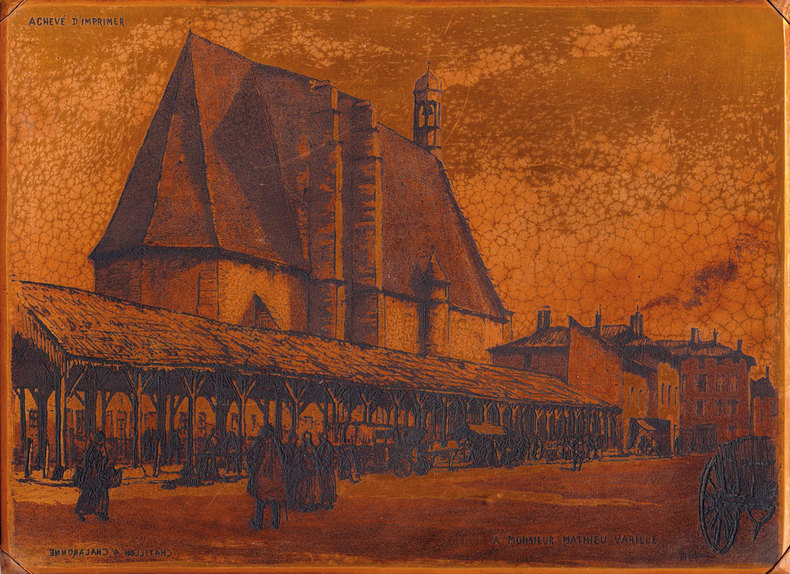
193015457Paris, Devambez, 1930 ; in-4, en ff., couverture crème rempliée, chemise demi-percaline bleue, titre doré au dos, étui avec couvercle plein chagrin brique, dos rond à nerfs, titre doré (reliure de l'éditeur) ; (4), 77, [78], (4) pp., (2) ff. bl., 20 eaux-fortes dont 17 hors-texte.
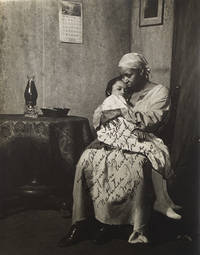
19393147771939. 8 x 10 inches. Small blemish at upper right colored-in two old mounts on verso otherwise fine. 8 x 10 inches. Inscribed photograph of African-American television theater and film pioneer Ethel Waters 1896-1977 depicting her in one of her most famous roles and inscribed: "To Alice with the same devotion Hagar has for Lissa and you have for Natalie I have for you Ethel Waters." The photograph shows Waters as Hagar in the Broadway production of Mamba's Daughters 1939 a role which was adapted specifically for her by Dorothy and Dubose Hayward from their novel of the same name; it has been cited as the first dramatic starring role for an African-American actress ANB. On June 14 1939 Waters became the first African-American to host a television program when NBC broadcast "The Ethel Waters Show" a one-hour variety program which included a scene from Mamba's Daughters. <br /> The Alice of the inscription is Alice D. Laughlin 1895-1952 muralist engraver and designer who co-founded with designer Natalie Hays Hammond 1904-1985 the Stage Alliance which produced "Six Miracle Plays" directed by and starring Martha Graham at the Guild Theater in 1933. Hammond and Laughlin together with Phyillis Connard constituted a small colony of women artists in Gloucester Massachusetts at the Hammond compound designed by architect Eleanor Raymond. <br /> Ethel Waters first made a name for herself as a blues singer on the club circuit; her stage career began when Irving Berlin cast her in As Thousands Cheer 1933 after hearing her perform "Stormy Weather" at the Cotton Club. In 1949 she became the second African-American to be nominated for an Academy Award Best Supporting Actress for her role in Pinky. WITH: Autograph letter unsigned 6 pp to Natalie Hammond unknown
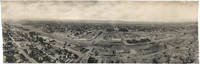
1908NL-02426<p><strong>Spectacular 1908 panoramic aerial photograph of Oakland documenting the city's rapid growth after the 1906 San Francisco earthquake.</strong></p><p>This monumental 1908 panoramic aerial photograph of Oakland California taken by R. J. Waters & Co. captures the city in the midst of its early 20th-century expansion. Shot from roughly 1000 feet in elevation the image looks northeast over downtown toward Lake Merritt and the rolling East Bay hills offering a richly detailed view of the city's grid architecture and civic growth. The intersection of 14th and Broadway dominated by the Oakland Tribune building and early department stores anchors the composition while a dense pattern of Victorian homes brick commercial blocks and broad unpaved streets extends toward the horizon.</p><p>R. J. Waters a San Francisco photographer renowned for his panoramic and aerial work produced this image at a time when such high-altitude photography was still experimental—likely achieved from a tethered balloon. The photograph's fine clarity and tonal range exemplify the studio's technical mastery and reflect Oakland's transformation into a modern metropolis in the years following the 1906 San Francisco earthquake.</p><p>By 1908 Oakland had become a key node in the post-earthquake migration and rebuilding of the Bay Area drawing residents and industry displaced from San Francisco. The city's population more than doubled between 1900 and 1910 fueled by transbay rail connections the development of the Key System and new civic projects surrounding Lake Merritt and the waterfront. This view preserves that pivotal moment—when Oakland emerged from San Francisco's shadow to define its own urban identity as the industrial and residential heart of the East Bay poised between Victorian domesticity and modern industrial ambition.</p><p><strong>Census and publication information</strong></p><p>Issued as a sepia-toned gelatin silver panorama the print bears the caption "Oakland California 1000 Ft. Elevation. Copyright 1908 by R. J. Waters & Co. 370 Market St. San Francisco." A number of US institutions hold collections of R. J. Waters' panoramas including the Library of Congress and Bancroft Library in which this photograph is likely to occur. A specific listing of this particular panorama is available in public online image repositories linked to Library of Congress cataloging OCLC no. 456374167.</p><p><strong>Context is Everything</strong></p><p>In the first decade of the twentieth century Oakland was a rapidly growing port and commercial center in the East Bay. The present photograph copyrighted 1908 captures some of this downtown growth as well as the city's integral relationship to Lake Merritt which in 1908 was already an established civic amenity within the urban fabric.</p><p>R. J. Waters was a San Francisco-based commercial and panoramic photographer active in the late 19th and early 20th centuries. His studio produced a range of these panoramic views of Californian cities specializing in aerial panoramas that were used both for commercial display pieces and as documentary records.</p><p>Panoramic photographs like this were typically stitched together from individual images taken from elevated vantage points such as balloons kites or even early aircraft. As such they constitute an essential documentation of American urbanism at the beginning of the 20th century. They were routinely used by municipal city planners rail and shipping interests and photographic studios to advertise a city's size infrastructure and civic landmarks. R. J. Waters' panoramas fit squarely within that commercial/documentary practice and are today considered critical primary sources for reconstructing turn-of-the-century urban form in California.</p><p>Cartographers:</p><p><strong>Raper James R. J. Waters</strong> 1856–1937 was a commercial photographer active in California and Nevada whose studio produced a wide range of documentary and panoramic photographs around the turn of the 20th century. Waters opened a commercial studio in San Francisco in the 1890s and became especially known for panoramic city views and commercial photographic services. His photographs are held in significant collections including those of the Library of Congress the Getty and the Metropolitan Museum among others.</p><p>Aerial photos of urban landscapes were among the most common genres of images that R. J. Waters's studio produced in the late 1910s. These include multiple aerial and panoramic images of cities like San Francisco Oakland Fresno and Sacramento. These prints were often made in large sizes for display and municipal record-keeping and now form a valuable visual record of how California cities looked before the ubiquitous transformations of the mid-20th century.</p><p>Condition Description</p><p>Scattered wear and soiling. Minor spots of loss. Lower right corner chipped.</p> R.J. Waters Company
1937140946812New York: Harper & Brothers 1937. First Edition. Very Good. First edition first printing. Bound in publisher's original green cloth with black titles blocked in gilt on upper board and spine. Very Good with heavy fading to the spine and top edge light scuffing and wear to cloth. Former owner bookplate to front pastedown offsetting to patterned endsheets contents tanned and clipped remnant from rear panel of dust jacket tipped in at rear free endpaper. The first novel from one of the more influential authors to come out of the later part of the Harlem Renaissance. Harper & Brothers unknown
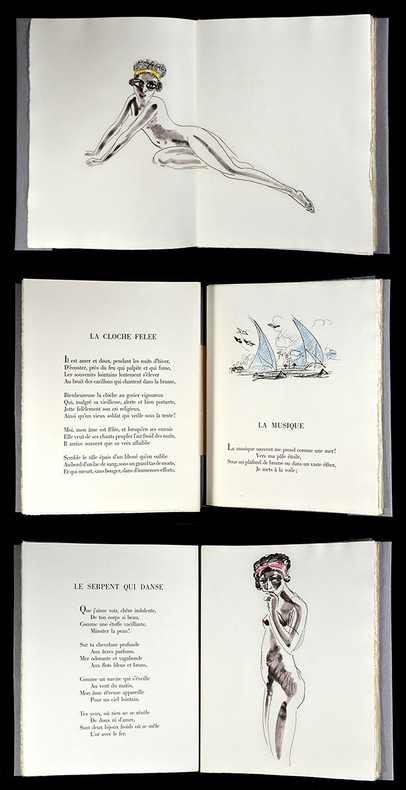
19683122Paris Pierre de Tartas 1968. 1 volume in-folio (37,5 x 28 cm), en feuilles, sous couverture papier d'Auvergne grise rempliée et coffret éditeur de toile bordeaux. Avec 15 EAUX-FORTES ORIGINALES DE VAN DONGEN DONT UN FRONTISPICE TIRÉ EN NOIR, 2 DOUBLE-PAGE, 2 HORS-TEXTE ET 10 COMPOSITIONS DANS LE TEXTE, L'ENSEMBLE EN COULEURS. - Tirage limité à 270 exemplaires, celui-ci le n° 257 sur vélin d'Arches, signé par l'artiste, l'éditeur et portant bien le cachet d'authenticité requis. Note : Cette sélection de "poèmes immortels" des Fleurs du Mal, avec une préface de Jean-Paul Sartre, constitue le dernier livre illustré par Kess Van Dongen. -- ENGLISH DESCRIPTION: Paris Pierre de Tartas 1968. 1 folio volume (37.5 x 28 cm), in loose sheets, in an Auvergne paper cover and the burgundy cloth publisher's box. With 15 ORIGINAL ETCHINGS BY VAN DONGEN INCLUDING A FRONTISPIECE PRINTED IN BLACK, 2 DOUBLE PAGES, 2 OUF-OF-TEXT AND 10 COMPOSITIONS IN THE TEXT, ALL IN COLOR. - Limited edition of 270 copies, this one number 257 on Arches paper, signed by the artist, the publisher and bearing the required stamp of authenticity. This selection of "immortal poems" from Les Fleurs du Mal, with a preface by Jean-Paul Sartre, constitutes the latest book illustrated by Kess Van Dongen. The copy offered here is in mint condition.
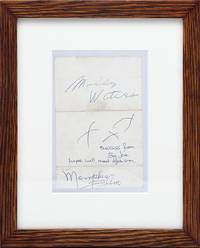
1963171122Richmond London: 1963. I'm a full-grown man/ I'm a man/ I'm a rollin' stone From the collection of Rolling Stones drummer and jazz aficionado Charlie Watts: an evocative memento signed by a trio of great blues musicians on the verso of a membership card for the legendary Crawdaddy Rhythm and Blues Club. Started in 1963 in the back room of a pub the Station Hotel in Richmond London by Georgian film-maker and music promoter Giorgio Gomelsky the club saw the first performance of the classic Rolling Stones line-up in February 1963 when the regular house band was stranded in the snow in the worst winter in over 200 years. Despite an unpromising start with Gomelsky forced to offer two for one admissions to customers in the hotel itself the word quickly spread and the club became something of a sensation. When the Stones became too big for the venue and departed on tour they were replaced by The Yardbirds featuring Eric Clapton the Crawdaddy remaining the headquarters of the burgeoning British Rhythm and Blues scene. The card is made out to a Michael Green of Ilford Essex whose membership number 1372 expiring in 1964 indicates that he evidently joined in the early days. The bluesmen were over as part of the American Blues Festival that had first toured Britain the previous year. Muddy Waters and Memphis Slim have signed in full Williams signing with three crosses with the subscribed sentiment in another hand perhaps Green's himself; "success from Big Joe hope will meet again soon". Tri-fold membership card printed in black 150 x 100 mm carrying the member's name and address membership number 1372 and expiry date 1964. Light soiling and minor creases otherwise in very good condition. unknown
199980420Rizzoli. New. 1999. Paperback. 0847822176 . FREE UPGRADE to Courier/Priority Shipping Upon Request - IN STOCK AND IMMEDIATELY AVAILABLE FOR SHIPMENT - Flawless copy brand new pristine never opened -- 224 pp. 350 illus. 150 in color 4to. -- with a bonus offer-- . Rizzoli paperback
200061257University Press of New England Distribution. New. 2000. Hardcover. 0910961115 . FREE UPGRADE to Courier/Priority Shipping Upon Request IN STOCK AND IMMEDIATELY AVAILABLE FOR SHIPMENT - Flawless copy brand new pristine never opened --COMPLETE TWO 2 VOLUME SET. Corresponds to/ Includes ISBN: 0910961115. Measures 30 x 24 cm. 622 pp. With 453 ills. 23 col. . -- with a bonus offer-- . University Press of New England (Distribution) hardcover
200061258University Press of New England Distribution. New. 2000. Hardcover. 0910961131 . FREE UPGRADE to Courier/Priority Shipping Upon Request IN STOCK AND IMMEDIATELY AVAILABLE FOR SHIPMENT - Flawless copy brand new pristine never opened --COMPLETE TWO 2 VOLUME SET. Measures 30 x 24 cm. 622 pp. With 453 ills. 23 col. . -- with a bonus offer-- . University Press of New England (Distribution) hardcover
200061256University Press of New England Distribution. New. 2000. Hardcover. 0910961107 . FREE UPGRADE to Courier/Priority Shipping Upon Request IN STOCK AND IMMEDIATELY AVAILABLE FOR SHIPMENT - Flawless copy brand new pristine never opened --COMPLETE TWO 2 VOLUME SET. Corresponds to/ Includes ISBN: 0910961107. Measures 30 x 24 cm. 622 pp. With 453 ills. 23 col. . -- with a bonus offer-- . University Press of New England (Distribution) hardcover
197965080Arts Center. As New. 1979. Paperback. FREE UPGRADE to Courier/Priority Shipping Upon Request IN STOCK AND IMMEDIATELY AVAILABLE FOR SHIPMENT - AS NEW THE TEXT BLOCK IS PRISTINE CLEAN UNMARKED AND IN EXCELLENT CONDITION - - 40 pp. With 3 text ills. And 52 ills. On 25 pls. 28 x 22 cm. -- with a bonus offer-- . Arts Center paperback
1939140946811New York: Doubleday Doran & Company 1939. First Edition. Very Good. First edition first printing. Bound in publisher's original brown cloth lacking the dust jacket. Very Good with light lean to binding fading to spine and edges foxing to cloth heaviest along top edges and light soiling to spine. Former owner bookplate to front pastedown contents tanned endsheets offset clipped panel from dust jacket tipped in to rear free endpaper. The second novel from one of the more influential authors to come out of the later part of the Harlem Renaissance which traces the progress of migratory farmers who left the South for Chicago during the depression. Doubleday, Doran & Company unknown
1910NL-02428<p><strong>1910 R.J. Waters panoramic aerial photo of Fresno California.</strong></p><p>The present photograph is a horizontal panoramic aerial view of downtown Fresno taken at the beginning of the 20th century from an elevation of approximately 1000 feet. The white-printed caption in the lower center of the photograph confirms both the place and elevation and identifies the maker as <em>R. J. Waters Aerial Photograph Co.</em></p><p>The photograph depicts Fresno's urban core downtown. From our vantage point we look north across Fresno's railroad hub and into the town proper. A central landmark is the white rotunda or dome of the old Fresno County courthouse. Around it the streets are lined with residential housing and small businesses. Important foreground features include railroads and industry. Fresno was served by multiple railroads including the iconic Southern Pacific and Santa Fe Railroads. The bottom half of the panorama is dominated by extensive trackage and a range of railroad-related buildings including warehouses freight houses train sheds and at least one passenger platform. On the right side of the panorama a large industrial area with warehouses workshops and multiple derricks sits in proximity to the tracks. Towards the middle of the image an underpass or bridge connects the two sides of the many parallel tracks. In unison these elements reflect downtown Fresno's status as a vital rail and freight hub at the time.</p><p>Beyond the rail yards we note the city's commercial core which appears as a dense cluster of low brick and masonry commercial blocks surrounding a tree-lined civic square situated slightly to the right of center. The orthogonal grid of streets is buzzing with vehicular traffic. At the north end of civic square is the splendid dome and colonnaded façade of the old Fresno County Courthouse which was built in 1875 and hailed as "<em>the grandest and noblest edifice that has ever been planned and contemplated in this valley</em>". After surveys revealed structural weaknesses in the building and a new courthouse had been constructed this California landmark was demolished in 1966. Today the spot is occupied by the aptly named Courthouse Park. Taking note of the infrastructure a major street extends between the courthouse and the railyards. This not only prompted new arrivals to approach the city center via this axis but also created the perspective of a town centered on the rule of law.</p><p><em>A cityscape reconfigured</em></p><p>During the 20th century transportation and industrial patterns in downtown Fresno underwent significant changes. Over time everything from passenger services and yard configurations to freight and production facilities moved away from the city center. The large freight depots were either moved or repurposed and new urban needs led to rail-adjacent streets altering their character in fundamental ways. This photograph captures a time when the rail yards still physically dominated the downtown zones of many California cities and towns.</p><p>Yet even though the urban fabric of Fresno has changed dramatically since this image was copyrighted in 1910 a number of visible historic structures still stand. A significant remnant of Fresno's days as a railway hub is the <em>Southern Pacific Railroad Depot</em> at Tulare and H Streets in downtown Fresno. This was completed in 1889 and was an unusual departure from the traditional Southern Pacific architectural style.</p><p>About a block to the left west of the old Courthouse the panorama includes another iconic Fresno landmark one that still survives to this day. The Old Fresno Water Tower was designed by George Washington Maher and was completed in late 1894. It ceased operation in 1963 but was maintained and has served as a visitors' center since 2001.</p><p>While time and modernization may have altered Fresno's urban landscape it remains a city defined by stunning natural beauty. Set in the lovely San Joaquin Valley Fresno is set against the spectacular profile of the Sierra Nevadas which run across the entirety of this panorama forming a distant and dramatic horizon.</p><p><strong>Census</strong></p><p>The Library of Congress holds this panorama both as an original gelatin silver print and as a digital reproduction LoC Call Number: PAN US GEOG – California no. 48; OCLC no. 451307781. It is listed as a copyright deposit dated July 5 1910.</p><p><strong>Urban aerial photography in early 20th-century America</strong></p><p>Aerial and panoramic views of towns and cities became popular documentary and commercial subjects in the late 19th and early 20th centuries as photographic technology and airborne platforms matured and merged. Early panoramic aerials were sometimes taken from tethered balloons or kites but by the early 1900s photographers and specialist companies such as R. J. Waters were producing high-resolution panoramic prints that stitched a wide field of view into a single long panorama suitable for display. The Library of Congress and other collections hold many such panoramas because they capture a combination of urban form transportation infrastructure and civic landmarks at a moment when American cities were undergoing rapid change.</p><p>Beyond novelty early aerial panoramas were also practical: they recorded rail and industrial layouts useful for planners and businesses showed street grids and property patterns for municipal records and captured iconic civic views e.g. of courthouses parks capitols etc. which cities used to promote themselves. The technical limitations film size lens coverage and platform stability encouraged the panoramic format. Multiple exposures or rotating-camera techniques were combined into long prints that emphasize the horizontal sweep of a city—precisely what we see in this Fresno image.</p><p>Cartographers:</p><p><strong>Raper James R. J. Waters</strong> 1856–1937 was a commercial photographer active in California and Nevada whose studio produced a wide range of documentary and panoramic photographs around the turn of the 20th century. Waters opened a commercial studio in San Francisco in the 1890s and became especially known for panoramic city views and commercial photographic services. His photographs are held in significant collections including those of the Library of Congress the Getty and the Metropolitan Museum among others.</p><p>Aerial photos of urban landscapes were among the most common genres of images that R. J. Waters's studio produced in the late 1910s. These include multiple aerial and panoramic images of cities like San Francisco Oakland Fresno and Sacramento. These prints were often made in large sizes for display and municipal record-keeping and now form a valuable visual record of how California cities looked before the ubiquitous transformations of the mid-20th century.</p> R.J. Waters Company
193816181Grenoble, Didier et Richard, 1938 ; in-folio, br., étui ; (18) ff., 20 grands dessins tirés en hélio et 20 eaux-fortes à pleine page par Drevet ; couv. jaune paille rempliée imprimée en rouge et noir. Préface du Général Debeney.
196315523New York: Viking Press 1963. Uncorrected Proof . Soft cover. Good. Oswald White Bear Fredericks. Uncorrected Proof housed in custom made box includes color copies of several Fredericks illustrations and copies of three b&w photograph sections. INSCRIBED by Waters on half-title page: 'For B-- I am so pleased you somehow exhumed these old proofs from my buried Hopi past. I am happy to inscribe them with my affectionate regards. Frank Waters.' Color illustrations included are: the frontispiece Male and Female Paho; Figure 36 The Naloonangomwit Eagle Panel only; Figure 37 Qaletga; Figure 55 Male and Female Paho only the illustration does not include diagram; and Figure 61 Corn Mural. B&W photograph sections are from Chapter 9: The Bow and the Arrowshaft Clans in Part Two: The Legends; Chapter 6: The Road of Life in Part 3: The Mystery Plays; and Chapter 5: The Betrayal of Lololma in Part 4: The History. Box in nf condition; illustrations and photograph sections in vg condition hot pink ink mark on bottom edge of Part 4 Chapter 5 photograph section. Uncorrected Proof: 8vo white comb binding paper covers; good first plastic comb broken off; foxing to edges and covers; covers darkening; rear cover creased with water spot; very light sporadic foxing to pages; damp stains to bottom edge of pp245-347; two water spots on top edge affects very top of pp217-47. Please be aware that shipping this item internationally will require additional postage fees. <br/> <br/> Viking Press paperback
19773833Baltimore MD: Charm City Productions 1977. First Printing. Fine. First Printing. This pair of posters were only distributed in the Baltimore area not the relatively common "rat on a plate" poster. One is "The Sneak World Premiere" poster with a yellow banner across the top announcing the Premiere and location and dates. The second is the same poster without the banner the prior owner recalls being the one who sliced the tops off for the post-premiere version. A pristine set of this extremely scarce Waters' ephemera. Bright and clean. 21.75x12.5 and 21.75x16.5. Color pictorial images. Charm City Productions unknown
190764217Seattle WA: William Lee Waters 1907. Oblong 4to. 11 x 7.25 in. 104 pp unpaginated. on thick black paper stock. With 132 silver gelatin photos mounted on the pages sized from 2 x 2 in. up to 7 x 9 in. with majority sized approx. 3 x 4 in. varying between matte finish and glossy photo stock most w/ white ink MS annotations identifying locations & subjects a couple laid-in over 25 printed photo clippings from contemporary Seattle souvenir travel brochures 2 colour-printed postcards. Contemporary flexible textured calf flexible cover binding rebacked white manuscript lettering on front cover some scuffing edgewear occasional over-exposure to about 7 photos still a VG- exemplar. This well-arranged photo album opens with a colour plate of Northwest Coast Native Americans canoeing along the sound with Mount Rainier in the background followed by several images of Native Americans basketry totem pole in downtown Seattle and outdoor adventures and scenery in Washington. Over 25 of the photographs focus on William Waters and Larrebee Waters canoeing traveling and building a cabin near Copalis Beach WA. Also featured are several photographs of Quinault Indians on the nearby reservation including group shots in front of the post office with large dog canoeing across Grays Harbor Quinault children and mother next to their beach tent and others. Other photos capture William Waters with his law office staff including 1 Japanese-American in front of the 610 Pioneer Building William next to Pioneer Square and a very nice photograph of the “Judge’s Office.†Still more photographs document a visit to the 1905 Lewis & Clark Centennial Exposition including a visit to the giant timber Forestry Building along with swimming & baseball at Brown’s Camp.Several photographs depict the fabulous salmon fishing and cooking at Colman’s Camp on Orcas Island in the Summer 1904 before the YMCA of Greater Seattle set up their famed Camp Orkila nearby in 1906. These photos show the canvas cabins excursion rowboats Mrs. Colman chaperoning the mixed bathing of young men & women and the beached steamship Mabel on the picnic beach. Summer 1905 found Waters and friends camping on Lake Washington canoeing splitting wood and even listening to the phonograph. Also featured along with a large contemporary photo of William Waters’ alma mater Harvard Law School are several photos of “Mamie†Harriet May Norton 1883-1965 whom he married in 1906. Along with photo of nicely appointed room and prominent placement of Harvard blanket and Northwest Coast Indian peaked hat hanging on the wall two of the photos capture Tsunezo Sawada b. 1885 their Japanese-American servant and cook including one view with the young couple in front of their canvas tent cabin from Seattle Tent & Awning Co. Sawada had emigrated from Japan by 1805 and would later move his family including his wife Mamoyo Sawada a medical nurse to Sacramento CA where he became a bean cake salesman supplying Japanese-American and Chinese-American restaurants cafes and hotels. Waters 1872-1956 was born in Lakeville New Brunswick Canada and later emigrated with his family to the Washington Territory in 1884. He later attended Harvard Law School and practiced law in Seattle WA until the end of the Roaring 20’s including a short stint in Yakima WA for the Northern Pacific. By 1930 he was living with his youngest son in Fullerton CA while Harriet Waters had moved in with their oldest daughter before returning to Seattle. William Lee Waters, unknown
19408001028Berlin: Internationaler Verlag 1940. Bound in red cloth stamped in gold. 205 pp. Contents: Author's Preface; The Eighth Crusade; Part I: Zionism History of Zionism; The Almighty Dollar; The Dictate of Zion; Part II: The Sanctity of Treaties The Anglo-Sheriffean Machinations Conspiracy and Secret Treaty; The Anglo-Sheriffean Machinations Continued; The Sykes-Picot Treaty; The Balfour Declaration; The Etente Refutes Its Own Duplicity; Part III: Personal Experiences The Second Battle of Megiddo; Paris 1919. An anti-Semitic text originally published by Internationaler Verlag Berlin Germany 1939 This is the Fourth Edition published five months after the first edition in the same format. Pages i-v removed but page vi is present. Exceedingly rare in this protected condition. The only flaw is the previous owner's neat name stamp on the front free end paper and the gilt is faded on the spine but still discernible. Minor bumping to bottom corner. Fourth Edition. Hard Cover. Very Good /No Dust Jacket. 12mo - over 6¾" - 7¾" tall. Internationaler Verlag Hardcover
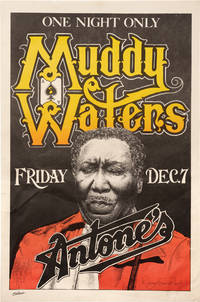
1979158453Austin TX: Antone's Nightclub 1979. Vintage poster for a performance by Muddy Waters at Antone's Nightclub in Austin Texas on Friday December 7 1979. Poster design by Austin-based illustrator Danny Garrett. Early issue with pale colors and thin paper stock. Printed by the artist. Extremely scarce.<br /> <br /> In 1979 Waters had just completed work on the third of four albums made with friend and fellow blues musician Johnny Winter "Muddy 'Mississippi' Waters Live" preceded by "Hard Again" and "I'm Ready" in 1977 and 1978. All three were Grammy Award winners.<br /> <br /> Antone's was established in 1975 by Clifford Antone. It has been an iconic blues and R&B venue in downtown Austin for over 40 years.<br /> <br /> Austin illustrator and designer Danny Garrett is best known for his work for Antone's serving as the in-house illustrator for the club's posters from 1976-2005. Garrett currently lives in New Zealand and teaches art and design at the Auckland University of Technology.<br /> <br /> 11.5 x 17.5 inches. Very Good plus with light creasing and two small closed tears to the margin otherwise bright clean and unfaded. Antone's Nightclub unknown
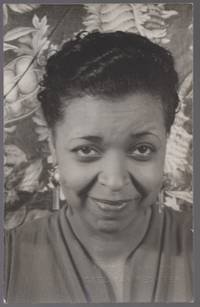
1940440884New York: Carl Van Vechten 1940. Unbound. Fine. Gelatin silver real photo postcard. Approximately 3½" x 5½". Fine. Photographer's embossed name. Captioned by Van Vechten on the verso: "Ethel Waters. 63." Bust portrait of Waters. Carl Van Vechten unknown
193316341Lyon, pour les XXX, s.d. (1933) ; in-folio en feuilles (325 x 250 mm) ; (4) ff. dont dédicace à Pierre Brisson, 205 pp., (1) f. imprimeur (Daragnès), 47 eaux-fortes originales d’André Villeboeuf dont 16 à pleine page, couverture crème, chemise dos parcheminé et plats de papier gauffré rouge y compris l’étui. Tirage à 95 exemplaires sur vélin de Rives dont 30 nominatifs.