1 103 résultats
2024mon0000186678Rare Biblio 2024T. leather_bound. Very Good. in x in x in. 1910 hardcover. sturdy binding with small chip missing in middle of spine. clean text. very light wear for age of book. preowner dedication inside cover. Rare Biblio hardcover
2009x-1430218614Apress 2009. Paperback. New. 1st edition. 400 pages. 9.00x7.00x1.00 inches. Apress paperback
2009SONG1430218614Apress 2009-03-16. 1st ed. paperback. Used: Good. 7.00x0.98x9.25. Buy with confidence. Excellent Customer Service & Return policy. Apress paperback
2008Q-157505955XTwenty-First Century Books 2008-10-01. Library Binding. New. In shrink wrap. Looks like an interesting title! Twenty-First Century Books unknown
2005Q-0976506246Limitlessness 2005-12-08. Paperback. New. In shrink wrap. Looks like an interesting title! Limitlessness paperback
2010Q-1770400966Self-Counsel Press 2012-01-01. Paperback. New. New. In shrink wrap. Looks like an interesting title! Self-Counsel Press paperback
2010Q-1770401008Self-Counsel Press 2012-01-01. CD-ROM. New. New. In shrink wrap. Looks like an interesting title! Self-Counsel Press unknown
2004019836Gottingen: Steidl Verlag 2004. Book. Very Good to Fine. Stiff Card Wraps. 1st Edition. Small octavos. Four volumes of a collaboration between Horn and four renowned artists and writers with each volume a response to Horn's choice of titles and/or phrases. Included is the scarce or at least not-always-present envelope of drawings by Carson. Volume 1 annotated by Bourgeois is NF w/a bit of scuffing to covers; Volume 2 annotated by Carson is VG-F w/lightly scuffed back cover 3/4" impression to top edge of front cover also affects the first few pages but is not severe; Volume 3 annotated by Cixous is NF w/small abrasion to top edge of front cover sunned spine title lettering legible but not as dark as it was a few splatter stains over title; Volume 4 annotated by Waters is NF w/sunned/spotted spine. All four volumes have sunning to 1/4" of top edge near binding and all are internally tight and clean. Lightly scuffed slipcase w/moderate sunning to top. Steidl Verlag Paperback
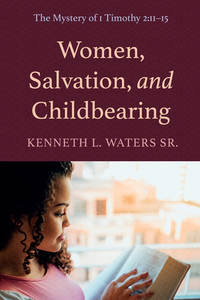
2022x-1666796743Pickwick Publications 2022. Hardcover. New. 172 pages. 5.50x0.44x8.50 inches. Pickwick Publications hardcover
2011x-0230229654Palgrave Macmillan 2011. Hardcover. New. 248 pages. 8.75x5.75x1.00 inches. Palgrave Macmillan hardcover
2011SONG0230229654MACMILLAN 2011-02-08. 2011. hardcover. Used: Good. 8.60x5.70x0.90. Buy with confidence. Excellent Customer Service & Return policy. MACMILLAN hardcover
2011DADAX0230229654MACMILLAN 2011-02-08. 2011. hardcover. New. 8.60x5.70x0.90. Buy with confidence. Excellent Customer Service & Return policy. MACMILLAN hardcover
2014x-1349310980Palgrave Macmillan 2014. Paperback. New. 243 pages. 8.50x5.51x0.58 inches. Palgrave Macmillan paperback
2010DADAX1163330744Kessinger Publishing 2010-09-10. hardcover. New. 6.00x0.94x9.00. Buy with confidence. Excellent Customer Service & Return policy. Kessinger Publishing hardcover
2007DADAX0548018790Kessinger Publishing 2007-07-25. hardcover. New. 6.00x0.94x9.00. Buy with confidence. Excellent Customer Service & Return policy. Kessinger Publishing hardcover
2013029983BalboaPress 2013. First edition. Paperback. 8vo with 122 pages. The book is in very good condition with very slight shelf wear. Interior is clean and tight. Red-Green spine/white-orange text. 1st Edition. Paperback. Very Good. 8vo. Paperback. BalboaPress Paperback
2013110977Balboa Press 2013-06-18. Paperback. Very Good. 9x6x1. Clean tight and unmarked softcover d32 Please email for photos. Balboa Press paperback
2015x-1349476641Palgrave Macmillan 2015. Paperback. New. translation edition. 233 pages. 9.02x5.98x0.55 inches. Palgrave Macmillan paperback
2015x-1137373539Palgrave Macmillan 2015. Hardcover. New. translation edition. 233 pages. 8.75x5.75x0.75 inches. Palgrave Macmillan hardcover
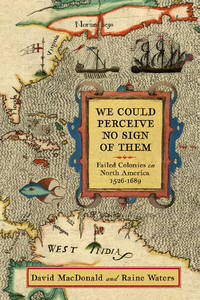
2020__1594163472Westholme Pub Llc 2020. Hardcover. New. 254 pages. 9.25x6.00x1.25 inches. Westholme Pub Llc hardcover
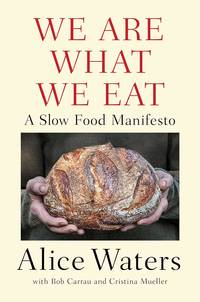
202127855<p>Food Writing Waters Alice. We are What We Eat: A Slow Food Manifesto. New York: Penguin Press 2021. First Printing of the First US Edition. A Fine tight copy in a Fine dust jacket. In We Are What We Eat Alice Waters urges us to take up the mantle of slow food culture the philosophy at the core of her life's work. When Waters first opened Chez Panisse in 1971 she did so with the intention of feeding people good food during a time of political turmoil. Over years of working with regional farmers Waters and her partners learned how geography and seasonal fluctuations affect the ingredients on the menu as well as about the dangers of pesticides the plight of fieldworkers and the social economic and environmental threats posed by industrial farming and food distribution. </p> Penguin Press, hardcover
20221147465Penguin Publishing Group 2022. Hard cover. Very good/Good. First edition and signed!<br /> <br /> Jacket is slightly dented. Book is in great condition with no visible flaws apart from some light handling wear. Binding is tight and inside is clean and unmarked. Penguin Publishing Group unknown
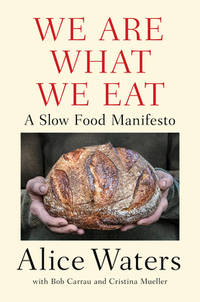
2021bsdt 0000302 89jhg op 200<p>Probable First Printing First Edition; Does not comply with McBride7 but has "1st printing" on copywrite page.</p><p>From chef and food activist Alice Waters an impassioned plea for a radical reconsideration of the way each and every one of us cooks and eats<br /><br />In We Are What We Eat Alice Waters urges us to take up the mantle of slow food culture the philosophy at the core of her life's work. When Waters first opened Chez Panisse in 1971 she did so with the intention of feeding people good food during a time of political turmoil. Customers responded to the locally sourced organic ingredients to the dishes made by hand and to the welcoming hospitality that infused the small space—human qualities that were disappearing from a country increasingly seduced by takeout frozen dinners and prepackaged ingredients. Waters came to see that the phenomenon of fast food culture which prioritized cheapness availability and speed was not only ruining our health but also dehumanizing the ways we live and relate to one another.<br /><br />Over years of working with regional farmers Waters and her partners learned how geography and seasonal fluctuations affect the ingredients on the menu as well as about the dangers of pesticides the plight of fieldworkers and the social economic and environmental threats posed by industrial farming and food distribution. So many of the serious problems we face in the world today—from illness to social unrest to economic disparity and environmental degradation—are all at their core connected to food. Fortunately there is an antidote. Waters argues that by eating in a "slow food way" each of us—like the community around her restaurant—can be empowered to prioritize and nurture a different kind of culture one that champions values such as biodiversity seasonality stewardship and pleasure in work.<br /><br />This is a declaration of action against fast food values and a working theory about what we can do to change the course. As Waters makes clear every decision we make about what we put in our mouths affects not only our bodies but also the world at large—our families our communities and our environment. We have the power to choose what we eat and we have the potential for individual and global transformation—simply by shifting our relationship to food. All it takes is a taste.</p> Penguin Press hardcover
20219780525561538-2025Penguin Press 2021. Hardcover. New/New. <p><strong>Author:</strong> Alice Waters</p><p><strong>Publisher:</strong> Penguin Press</p><p><strong>Binding:</strong> Hardcover</p><p><strong>ISBN:</strong> 9780525561538</p><p><strong>Release Date:</strong> 2021</p><p><strong>Number Of Pages:</strong> 208</p><p><strong>Details:</strong> From chef and food activist Alice Waters an impassioned plea for a radical reconsideration of the way each and every one of us cooks and eatsIn We Are What We Eat Alice Waters urges us to take up the mantle of slow food culture the philosophy at the core of her life’s work. When Waters first opened Chez Panisse in 1971 she did so with the intention of feeding people good food during a time of political turmoil. Customers responded to the locally sourced organic ingredients to the dishes made by hand and to the welcoming hospitality that infused the small space—human qualities that were disappearing from a country increasingly seduced by takeout frozen dinners and prepackaged ingredients. Waters came to see that the phenomenon of fast food culture which prioritized cheapness availability and speed was not only ruining our health but also dehumanizing the ways we live and relate to one another. Over years of working with regional farmers Waters and her partners learned how geography and seasonal fluctuations affect the ingredients on the menu as well as about the dangers of pesticides the plight of fieldworkers and the social economic and environmental threats posed by industrial farming and food distribution. So many of the serious problems we face in the world today—from illness to social unrest to economic disparity and environmental degradation—are all at their core connected to food. Fortunately there is an antidote. Waters argues that by eating in a “slow food way†each of us—like the community around her restaurant—can be empowered to prioritize and nurture a different kind of culture one that champions values such as biodiversity seasonality stewardship and pleasure in work. This is a declaration of action against fast food values and a working theory about what we can do to change the course. As Waters makes clear every decision we make about what we put in our mouths affects not only our bodies but also the world at large—our families our communities and our environment. We have the power to choose what we eat and we have the potential for individual and global transformation—simply by shifting our relationship to food. All it takes is a taste.</p> Penguin Press hardcover