PERROT (E.) - GATIN (V.)Livre Rare Book
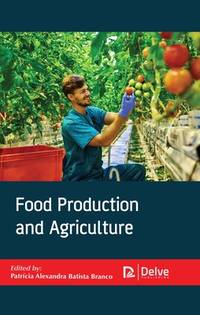
Food Production and Agriculture
2020AME_9781774072417Delve 2020. UNKNOWN. Hardcover. New/New. Delve hardcover
811 résultats
192035504132Paris, Vigot, 1920 ; plaquette in-8, brochée, couv. beige imprimée. 60 pp.Rare plaquette publiée par l’Office national des matières premières végétales. Caractères et utilisation des produits, description et répartition géographique du camphrier, industrie camphrière (au Japon, en Chine, etc.), culture, composition chimique du camphre, dosage, falsification, histoire résumée de la drogue, thérapeutique, bibliographie. Fente à une charnière sans manque de papier.
193235504136Paris, Office National des Matières Premières Végétales..., 1932 ; in-8, broché, couv. imprimée. 80 pp., 1 f. IllustrationsÉtude sur la culture et l’industrie des agrumes en Calabre et Sicile, amélioration des citronniers et bergamotiers, industrie de l’essence de bergamote.
186835504149Paris, Rothschild, 1868 ; in-12, demi-chagrin vert, dos orné. (Reliure de l’époque). XXI pp., 303 pp., 1 f. de table - illustrations in-texte.C’est la Défense et Illustration de la génération spontanée. La préface de Pouchet est une violente diatribe contre Pasteur et ses devanciers. Historique de la génération spontanée, formation de l’oeuf spontané, les prétendus incombustibles, preuves, genèse de la levure, derniers refuges des panspermistes. Les pp. 287 à 303 sont une bibliographie des ouvrages sur la génération spontanée.Caillet 8499 - Oberlé Fous littéraires 348 - Blavier Edit. des Cendres p. 755.G. Pennetier, né à Rouen en 1836 fut l’élève de Pouchet. Il a exercé comme chirurgien de l’asile des aliénés de Rouen avant d’obtenir un poste de direction au Museum d’histoire naturelle de sa ville.Bel exemplaire de la bibliothèque de Pierre Lambert (ex-libris).
38185Paris, G. Masson, 1883. "14 x 22, 551 pp., 43 figures, reliure dos cuir à 4 nerfs, décor à la roulette et filets, bon état (quelques épidermures; très peu de rousseurs)."
184735504003Paris, Vve Bouchard-Huzard, 1847 ; plaquette in-8, couv. verte muette. 16 ff. portant 32 tableaux dépliants, 14 pp.
228903 January 1923. Vancouver Canada on letterheads of the University of British Columbia. 19pp 8vo. On ten foliated leaves. On aged paper; the first leaf with slight damage and loss to corner and one edge with minor loss to text. Addressed to 'My dear Jens'. According to Elinor Barr 'Swedes in Canada: Invisible Immigrants' 2015 Boving 'developed several new strains of forage crops and grains'. The recipient Boving's brother Jens Orten Boving 1873-1959 was a hydro-electric engineer and inventor based in London responsible according to 'Who's Who in Engineering' 1922 'for a large number of water-power plants pulp mills and pumping plants in all parts of the world'. The greater part of the letter is devoted to advice on farming practices in response to enquiries from Jens. Boving begins on the subject of the recent birth of his son Per Arvid Lancelot Christoffer 1922-1999: 'Yes we are proud and happy over our little P. A. Per Peter Paul Arvid he may choose whatever he likes later on though I always call him Per; i.e. when we two are by ourselves. If he develops along the lines of Ellen and resembles his mother as much as possible he will be all right even though he may not be great as you predict. Thanks for your wellwishes on behalf of the little man.' He continues on the subject before the news that Jens has 'given up' his 'business' he would shortly set up a new company Hydrautomat 'much to Kaj's disgust. I wrote him a couple of days ago attempting to be philosophical and broadminded although unable to conceal my scepticism.' He discusses Jens's 'strenghth energy and ability' in the light of his 'ambition and progress' before turning to his 'report on the mangels' with reference to 'The Goden Tankard' and 'Yellow Intermediate'. He will let his University charge his brother 'for seed which for years I have sent out to other farmers for nothing. Incidentally I have made up my mind to charge the whole bunch of them from now on. They will value this priceless seed more if they are made to pay for it.' He turns to Jens's 'special farm problem' regarding crops and yields which he discusses at length in five numbered sections with a thirteen-entry table of recipes for 'clover grass mixtures'. The discussion continues under the headings 'The permanent Hogfield' and 'Hog Pasture'. He now turns to cows and there is a small table for two breeds before he gives a pedigree to illustrate his advice: 'Spend every pound you can reasonably afford on two or three well bred cows mated to first class herd bulls on both sides of the pedigree.' After more on the same subject he observes: 'I envy you your opportunity to work-play together with your men on the farm. You will all benefit from the experience even though it may not last for long. I ahve never been quite so happy in my activities as during these periods when I had occasion to work in experimental work or in practical farming along with the so called labourers; and in every case we established relations which I remember with great joy.' Resisting the temptation to 'ramble on' he returns to the family including the news that 'George' and his family spent Christmas with him. He discusses like a true agronomist 'the two Boving strains George's and my own' and remarks that his son is outgrowing a normal child which is 'supposed to double its weight in five months but he only used 3 months and 1 week to accomplish this most important feat'. He ends 'with special commendation to Hilma if she will graciously accept it for her proven skill in farm and garden management'. 3 January 1923. Vancouver [Canada], on letterheads of the University of British Columbia. unknown
2020AME_9781774072417Delve 2020. UNKNOWN. Hardcover. New/New. Delve hardcover
2020DBS-9781774072417Delve 2020. 1ST. Hardcover. New. Delve hardcover
2020DBS-9781774072417Delve 2020. 1ST. Hardcover. New. Delve hardcover
17653562A PARIS. CHEZ DURAND, NEVEU, LIBRAIRE. 1765. IN-12 (10,5 X 16 X 2,5 CENTIMETRES ENVIRON) DE XII + 285 ET (3) PAGES, RELIURE D'EPOQUE PLEIN VEAU BRUN, DOS LISSE ORNE DE FLEURONS DORES, TITRE MANUSCRIT SUR ETIQUETTE PAPIER COLLEE AU DOS. «L’AUTEUR, PATTULLO, A SIGNE LA DEDICACE A MME DE POMPADOUR, MAIS ELLE EST DE MARMONTEL» (BARBIER. II. 226). SANS LES 3 PLANCHES QUI MANQUENT SOUVENT, DEFAUTS EXTERIEURS, MANQUE DE PAPIER, SANS MANQUE DE TEXTE EN MARGE EXTERIEURE DE LA PAGE 1. TOUT PETIT PRIX EN FONCTION DES DEFAUTS SIGNALES.
<p>cm.18, rilegatura in piena tela con titolo e fregi in nero al piatto e la dorso; pp. 144, 70 illustrazioni nel testo, scritte coeve alla prima carta bianca, buon esemplare</p>
2 voll. in 8, pp. VIII + VIII + 472 con una cartina f.t. rip.; XII + 574 con 15 tavv. f.t. inc. all'acq. piu' volte rip. Alcune cc. si presentano brunite. Qualche taglietto alle tavv. f.t. Legatura in p. pl. coeva con tasselli ai d., tit. e caratteri oro. Rarissima edizione originale di questo importante trattato sulla coltivazione del grano e la panificazione scritto da Parmentier insieme a Rozier, Lasteyrie, Delalause. Nella prima parte dell'opera sono ricostruiti i sistemi agrari dei Romani e dei Francesi, seguono i principi generali per la coltivazione della terra, con la classificazione dei vari tipi di terra, e i sistemi per modificare quelle improduttive, l'influenza climatica. Nella seconda parte sono analizzati i vari tipi di farine (frumento, granoturco, grano saraceno, frumentone), i sistemi di panificazione, e i diversi tipi di pane e biscotti. Parmentier lavoro' nell'esercito francese in Germania come farmacista durante la guerra dei Sette anni. Si dedico' quindi all'agronomia e agli studi sulle proprieta' chimiche e nutritive della patata, della noce moscata, del grano e della farina, del latte e del ciocccolato. A lui si deve infatti la diffusione della coltivazione della patata in Francia e nel nord dell'Italia tra fine Settecento e inizi Ottocento, coltivazione prima avversata dalla medicina che riteneva che la patata causa della lebbra. Si occupo' quindi dei metodi di conservazione del grano, del granoturco, del vino, dell'aceto e della cerne e dei mezzi per rivelare le sofisticazioni alimentari. Bibliographie agronomique, 2005. Catalogo della raccolta di alimentazione e panificazione Arnaldo Luraschi, p. 60 e 90.
ill., br. In Italia l'orticoltura, in particolare quella di pien'aria, costituisce un settore produttivo molto articolato sotto il profilo delle specie, degli ambienti, delle tecniche e dei metodi utilizzati, nonché della destinazione del prodotto e dei contesti agronomici, economici e sociali nei quali è esercitata. Il libro, destinato agli studenti dei corsi di laurea di I livello, affronta tutti gli argomenti relativi alla propagazione, coltivazione, miglioramento genetico e conservazione degli ortaggi, senza tralasciare le colture protette e i sistemi di coltivazione senza suolo. Nella parte speciale sono inquadrate le principali colture orticole, raggruppate per famiglia botanica, esponendo l'inquadramento botanico, l'origine e la diffusione, il ciclo biologico, la morfologia, la biologia fiorale, la coltivazione, le tipologie varietali, le principali avversità, l'utilizzazione e la qualità dei prodotti. L'obiettivo è mettere in risalto le differenze o i tratti comuni dei gruppi di specie per avviare lo studente allo studio critico. Con lo stesso obiettivo ogni capitolo è stato corredato di riferimenti bibliografici essenziali, schede e box per approfondire aspetti rilevanti o singolari e domande di verifica basate sui punti chiave di ciascun capitolo.
Roma, 1980, 8vo stralcio con copertina posticcia muta, pp. 481/490 con 3 grafici e 2 illustrazioni fotografiche. - !! ATTENZIONE !!: Con il termine estratto (o stralcio) intendiamo riferirci ad un fascicolo contenente un articolo, completo in se, sia che esso sia stato stampato a parte utilizzando la stessa composizione sia che provenga direttamente da una rivista. Le pagine sono indicate come "da/a", ad esempio: 229/231 significa che il testo è composto da tre pagine. Quando la rivista di provenienza non viene indicata é perché ci è sconosciuta. - !! ATTENTION !!: : NOT A BOOK : “extract” or “excerpt” means simply a few pages, original nonetheless, printed in a magazine. Pages are indicated as in "from” “to", for example: 229/231 means the text comprises three pages (229, 230 and 231). If the magazine that contained the pages is not mentioned, it is because it is unknown to us.
In 8° br. fig. col. pp. 347, con ill.ni b/n, ben tenuto
35601981, Paris, Bauche, 1754; in-8, broché, entièrement non rogné, couv. marbrée de l’époque. 2 ff., 233 pp., 1 p. errata, 1 f. catalogue. Portrait de l’auteur gravé en 1754 à Paris par Maisonneuve et 28 planches gravées hors-texte par le même. Les 6 dernières planches ont été dessinées par Humblot d’après les oursins qui se trouvaient dans le cabinet de Réaumur. EDITION ORIGINALE EN FRANÇAIS.- Elle est accompagnée du texte latin original imprimé sur les pages de gauche. J. Théodore Klein ( Königsberg 1685- Dantzig 1759) avait formé un des plus riches cabinet d’histoire naturelle d’Europe. Il s’est occupé de botanique, d’ichtyologie et de presque toutes les branches de l’histoire naturelle des animaux. Sa Naturalis dispositio echinodermatum fut, jusqu’au milieu du XIX e siècle l’ouvrage le plus important sur la famille des oursins. Il a d’abord paru en 1734. Cette première traduction française est de LA CHESNAYE DES BOIS. Les 28 planches portent près de 100 sujets gravés. Cat. British Mus. Natural History II, 992.
Casale, Stab. Tip. di Carlo Cassone, 1883, in-8, brossura editoriale, pp. 704. Dorso rinforzato, mancanze alla copertina e al margine dell'ultima pagina.
Brossura, cm12x18.5, pp 22 (2), 4 figure in nero.
Trento, ANMS, 1998, 8vo stralcio con copertina posticcia muta, pp. 549/551 con una illustrazione. - !! ATTENZIONE !!: Con il termine estratto (o stralcio) intendiamo riferirci ad un fascicolo contenente un articolo di rivista, sia che esso sia stato stampato a parte utilizzando la stessa composizione sia che provenga direttamente da una rivista. Le pagine sono indicate come "da/a", ad esempio: 229/231 significa che il testo è composto da tre pagine. Quando la rivista di provenienza non viene indicata é perchè ci è sconosciuta. - !! ATTENTION !!: : NOT A BOOK : “estratto” or “stralcio” means simply a few pages, original nonetheless, printed in a magazine. Pages are indicated as in "from” “to", for example: 229/231 means the text comprises three pages (229, 230 and 231). If the magazine that contained the pages is not mentioned, it is because it is unknown to us.
189646404218Paris, Baillère, 1896 ; in-8, broché, couverture imprimée. XXVIII pp., 116 pp.Cette livraison concerne le sous-ordre des brévipennes, divisé en 3 familles : Alcidae (pingouins etc.), Fraterculinae (macareux), Podicipedidae (grèbes).Couverture un peu défraîchie, dos cassé.
99461Paris, S. Bornemann, s.d. 11 x 17, 36 pp., quelques figures, broché, bon état.
In-8°, pp. XII, 422, legat. edit. Con alcune illustrazioni b/n nel testo. Dall'indice: S. C. Salmon - O. R. Mathews - R. V. Leukel, A half century of wheat improvement in the United States; F. E. Broadbent, The soil organic fraction; L. V. Hurlbut, Progress in agricultural engineering; M. L. Jackson - G. Donald Sherman, Chemical weathering of minerals in soils; R. R. McKibbin, The changing pattern of agronomy and horticulture in Canada; O. R. Neal, Soil management for conservation and productivity.
Mm 190x280 L'Agriculture a Traverse les ages tome V. Brossura editoriale di pp. V-807. Opera in buonissime condizioni. Testo in lingua francese. SPEDIZIONE IN 24 ORE DALLA CONFERMA DELL'ORDINE. WORLDWIDE DELIVERY
190735504239Beauvais, Impr. Dumontier, 1907 ; plaquette in-8, brochée, couverture imprimée. 54 pp., 1 f.Envoi autographe de l’auteur à Pierre de La Rochère. Rousseurs sur la couverture.