159 résultats
15729Ing. 24 p. Lit: H.F. Wijnman P.J.W. de Vos en zijn Waarachtige physiologie van Amsterdam Jaarboek Amstelodanum 34 1937 p.240-242 Zeven slachtoffers van De Vos stelden een vervolging wegens laster tegen hem in. Dit waren dr. J.F. Muysken beschuldigd van overspel met mevr. Van Eyk Voorthuizen de vrouw van smid J.F. Reichardt hoerig gedrag en onzedelijk gedrag van haar dochter de kolonel der schutterij Joan Hodshon zette schutters gevangen om vrijspel bij hun vrouwen te hebben winkelier Arend Gastman schelmachtig gedrag als winkelier in galanterieën makelaar Jak. van Dokkum oplichter apotheker J.E. Stolberg hield het met de dochter van de bakker in de Barndesteeg en J. Kruyt Jzn assuradeur die gelden verduisterde. Op 19 november 1844 kwam de zaak voor. In deze Memorie . - een uiterst zeldzaam geschrift - verdedigde De Vos zich met het argument dat deze personen niet met name genoemd werden in zijn Waarachtige physiologie. De rechtbank veroordeelde hem echter toch op 4 december tot 6 maanden gevangenis en f. 1000 boete. Naar aanleiding hiervan week De Vos uit naar Hoog Elten net over de grens. unknown
182045519Paris Crochard 1820. No wrappers. Extracted from: Annales de Chimie et de Physique Par MM. Gay-Lussac et Arago." Series 2 Tome 13. Pp. 384-409 a. 1 folded engraved plate. The plate with some brownspots. <br/><br/><em>First French edition of this groundbreaking paper in microscopy and biology. The paper was first published in Italian as "De microscopi cattadiottrici memoria" Modena 1818 and here he explains how by the improved acromatic microscope he was able to observe the circulation of protoplasm in Chara cells. He thereby became immediately famous not only as an optician but also as a microscopic biologist.After improving his microscope "Amici immediately applied his instrument to the study of the circulation of sap in the Chara. The main matters that he clarified were "the dependence of this circulation on the series of chlorophyll grains that the sap flows faster in the cell wall than in the internal cell space that there is no dividing wall between the rising current and the descending current of sap and the possibility of dividing the sap current into two separate circuits by constricting the cell" H. von Mohl.Garrison & Morton: 266. </em> unknown
17890005284London: John Murray H. Hunter T. Holloway 1789 - 1798. First edition thus. Hardcover. Poor. 173 full-page engravings; 364 vignettes in the text altho the title-page boasts more than 800 engravings but that was hyperbole. Tall quartos half-titles; collated; in need of a total make-over: tidal marks warped boards defective Contents leaves vol.3 pt. 2. <br/><br/>Lavater's development of a science of Physiognomy was illustrated by his fellow theologian & countryman Henry Fuseli in its original appearance in 1775 as PHYSIOGNOMISCHE FRAGMENTE. Fuseli illustrated Boydell's magnificent Shakespeare and his art was a precursor of the Romantic Movement Sybolism and Surrealism. He was a close friend of William Blake -who engraved a handful of these plates. Blake's own treatment of the creation myth in Genesis was informed by this work by Lavater in Blake's exploration of God's exprression of his own image and likeness in the faces of contemporary mankind. Lavater's theories influenced contemporary artists the science of phrenology and Cesare Lombroso's criminology. This work is a translation from the French edition by H. Hunter : the French edition improves upon the original German because it was made from the author's revised manuscript with some revisions and enlargements. Lavater wrote of Fuseli "Spectres Demons and madmen; fantoms exterminating angels; murders and acts of violence - such are his favourite objects - as quoted by Gordon Ray THE ILLUSTRATED BOOK IN ENGLAND From 1790 to 1913 20." Brunet III 887; Lowndes 1321; Garrison-Morton 154 - "His work was very influential on portraiture." ; BIBLIOTHECA OSLERIANA 3178; ESTC T139902; Bentley and Nurmi's BLAKE BIBLIOGRAPHY 390. 173 full-page engravings; 364 vignettes in the text altho the title-page boasts more than 800 engravings but that was hyperbole. John Murray, H. Hunter, T. Holloway hardcover
1571712º: Gebonden in half leer 164 40 38 80 32 p. ill. Lit: Scheepers II 1009; Waller 1341 1342; De Kempenaer p.190; Van Doorninck p. 80; P.L. van Eck jr Physiologie van den Haag Jaarb. Die Haghe 1925/1927 p.201-232; M.J.F. Killaars De Physiologie van Den Haag scriptie Nijmegen 1982; H.R. van Biesbrock Die literarische Mode der Physiologien in Frankreich 1840-1842 Frankfurt 1978; E. Jongejan De humor-cultus der Romantiek in Nederland Zutphen 1933 p.435-440 Vijf anonieme publicaties in één band. De Physiologie van Den Haag staat op naam van dr. W.J.A. Jonckbloet 1817 - 1885 letterkundige in Den Haag later hoogleraar te Deventer en te Groningen. Vanaf 1840 waren er te Parijs een groot aantal kleine boekjes gepubliceerd die men Physiologies noemde: boekjes van ca. 150 paginas waarin allerlei beroepen typen en zaken uit het dagelijks leven - meestal in Parijs - hekelend en ironisch werden beschreven. Kennelijk besloot de in 1841met een eredoctoraat vereerde Jonckbloet om ook voor Den Haag een soortgelijk boekje te maken. Het bevat een humoristische en kritische beschrijving van stad en inwoners waarin onder andere de loterijzaal het Mauritshuis de Akademie voor Beeldende Kunsten sociëteiten en koffiehuizen het theater het Haagse Bos en Scheveningen aan de orde komen. In het hoofdstukje Letterkundige genootschappen maakte hij ook zijn eigen Oefening kweekt kennis - waar hij erelid van was - belachelijk tot grote woede van zijn medeleden. Het kwam net niet tot een royement. Het boekje maakte veel opgang en reeds in hetzelfde jaar verscheen er een tweede druk. Het Achttiende hoofdstuk staat op naam van mr. H.P. Timmers Verhoeven of W.F.G.L. François en bevat kritiek op het werk van Jonckbloet. Het Laatste hoofdstuk bevat felle kritiek op de Physiologie van Jonckbloet en zou geschreven kunnen zijn door J.J.L. ten Kate Van der Grijp Beynen S.J. van den Bergh of W.J. van Zeggelen. De Buitenman zou E.W. van Dam van Isselt zijn lid van de Tweede Kamer. Deze uit zich weer pro de Physiologie. De Monsterhekelaar tenslotte is weer contra. De auteur hiervan zou weer de auteur van het Laatste hoofdstuk zijn. Samen een bundeling van zeldzame geschriftjes met name zeldzaam omdat Jonckbloet - na de ontvangen kritiek - geprobeerd zou hebben de nog onverkochte exemplaren op te kopen en te vernietigen. R0885 unknown
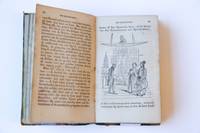
1572732 losse afleveringen = 534 p. In schuifdoos met de oorspronkelijke omslagen. Twee daarvan beschadigd en gerestaureerd. Afl. 1 en 2 in 3e druk afl. 3 in 2e druk. Bijgevoegd: derde deel blad 23 en 25 en vierde deel blad 3 Lit: H.F. Wijnman P.J.W. de Vos en zijn Waarachtige physiologie van Amsterdam Jaarboek Amstelodanum 1937 p.235-254; Waller 1343; Scheepers II 1008; M.J.F. Killaars De physiologie van Den Haag scriptie Nijmegen 1982 p.148-151 Eerste complete reeks 5-2-1844 t/m 9-9-1844 van dit Lilliputter-weekblaadje: ""een schendblaadje van gering allooi dat allerlei schandalen van menschen uit verschillende standen publiceerde""; . De redacteur tevens uitgever van het blaadje Petrus J. W. de Vos Amsterdam 1805 - was kunstschilder romanschrijver vertaler en uitgever. Eind 1844 werd hij veroordeeld wegens laster en in december 1844 week hij uit naar Duitsland. Van maart 1845 tot januari 1847 werd het tijdschriftje voortgezet door andere uitgevers. De Vos leverde hierin nog steeds bijdragen maar deze waren anders van strekking: ""vurige pleidooien voor lotsverbetering van Amsterdamse arbeiders"". Veel meer dan de naam heeft het blaadje niet te maken met bovengenoemde physiologieën maar compleetheidshalve wordt het toch hier opgenomen. unknown
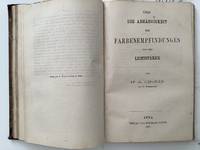
187611819AB1876. 8 parts in 1 volume Jena and Leipzig Dufft Fischer and Engelmann 1876- 1880. 225 : 15 cm. Contemporary half cloth Interesting made up volume containing three important works on colours. - 1. Preyer W. Über die Grenzen der Tonwahrnehmung.The limits of realizing tones. Jena Dufft 1876. VI 72 pages. - 2. Tollin Henri. Die Entdeckung des Blutkreislaufs durch Michael Servet 1511-1553 The discovery of the circulation of blood by Michael Servet. Jena Dufft 1876. 3 leaves 81 pages. - 3. Chodin A. Über die Abhängigkeit der Farbempfindungen von der Lichtstärke. About the dependence of the preception of colours by the intensivity of light Jena Dufft 1877. 2 leaves 66 pages. - 4. Magnus Hugo. Die Entwicklung des Farbensinnes. Jena Dufft 1877. 22 pages.The developemtn of the senses of colours. - 5. Preyer W. Elemente der reinen Empfindungslehre. Jena Dufft 18 leaves 93 pages 1 leaf. ADB LIII S. 116 ff. ausführlich über Preyer.the elemnts of pure estesiology. - 6. Magnus. Untersuchungen über den Farbensinn der Naturvölker. Jena Fischer 1880. 2 leavest 50 pages ohne den auf dem Titel angegebenen Fragebogen.Research of sense of colours of the primitive - 7. Secchi Angelo. Die Grösse der Schöpfung. Zwei Vorträge gehlaten vor der Tiberinischen Akademie zu Rom. Leipzig Bidder 1882. IV 50 Seiten 1 Blatt. - 8. Wundt W. Der Spiritismus. Eine sogenannte wissenschaftliche Frage. Offner Brief an Herrn prof. Dr. Herman Ulrici in Halle. Leipzig Engelmann 1879. 31 Seiten. Polemik gegen Ulricis Eintreten für die spiritist. Erscheinungen des amerikanischen Mediums Henry Slade in Leipzig. hardcover
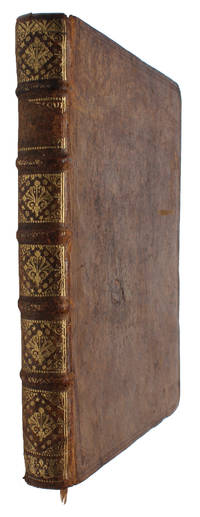
173546839A Paris Debure 1735. 4to. Contemp. full calf 5 raised bands richly gilt spine. Titlelabel gone. XVIII84082 pp. and 20 engraved plates on 10 folded sheets. A wide-margined copy clean and fine printed on good paper. <br/><br/><em>First French edition - "Vegetable Staticks" 1727 - of this milestone work in plant physiology being the first complete account of the physiology of plants including the reaction with air and the movement of the sap. Hale's also here introduced a new method of gas collection and the work greatly influenced the subsequent develpment in chemistry and contributed to the discovery of many of the most impirtent medical gases. This importent French translation by Buffon which has the famous "Préface du traductcur" in which Buffon praises the experimental method and includes Hales’s appendix of 1733 was very influential."Hale's many experiments with gases led him to demonstrate the dependence of plants on air that plants inspire and give off "air". He measured the volume of waterabsorbed and evaporated in plants and studied the movements of the sap in plants. By weighing a grown potted plant and also the loss in soil in which it grew hales proved that something material was absorbed by the plant from the air. With the use of a manometeer pressure gauge he traced the blood pressure and velocity in the veins and arteries of animals."Dibner in "herald of Science" no. 26.Parkinson "Breakthroughs" 1727 B - Milestones of Science:91 Engl. ed. - Dibner: No 26 Engl. ed. - Horblitt 45 a Engl. ed.- PMM: 189 a Engl. ed. </em> hardcover
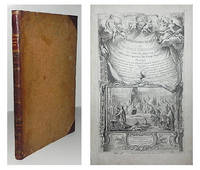
1784000285Etienne Charpentier 1784. Hardcover. See Description. Tall folio 385 mm. The entire book including the text was printed from engraved copper plates 60 plates an illustrated title page plate 29 anatomical plates and 30 calligraphic letterpress plates. Bound in a contemporary or near contemporary binding with calf spine and decorative paste paper boards - rubbed edges shelf worn old ink stain on rear cover. Both the upper portion of the spine and the tail cap are carefully restored. Board corners are neatly repaired. Interior contains an occasional minor spots of marginal foxing; a couple of tiny holes or paper defects are present on the text plate opposite plate 20. The leaves are otherwise generally clean. Francois-Michel Disdier 1708-1781 was a professor of surgery and a drawing master at the Academy of Painting in Paris. His "Tableaux anatomiques" a deluxe anatomy book for physicians was first published in 1758. Many of the plates were done by Crepy and Charpentier some after the style of Vesalius and others following Eustachi. The engraved title page designed by François Bouchet depicts students in an anatomy class studying a cadaver. The whole scene is framed in ornate baroque style. Blake NLM p. 122; Heirs of Hippocrates 894 listing 1778 edition; Hirsch II p. 190. <br/> <br/> Etienne Charpentier hardcover
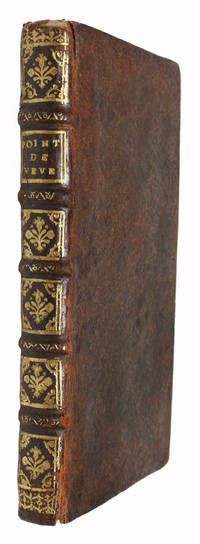
167944323Paris Thomas Jolly 1679. Small8vo. 15x9 cm. Contemp. full sprinckled calf. raisedbands richly gilt spine. Top of spine a bit worn. Edges of covers gilt. 12861 pp. Last page "Extrait du Privilege du Roy". 34 fine full-page engravings 25 copper-engraved a. 9 in woodcut. A paperflw at foot of titlepage neathly repaired no loss of paper or letters. Internally clean and fine printed on thick good paper. <br/><br/><em>Extremely scarce first edition of Leclerc's important work on binocular vision in which he finds that one of the eyes has a dominant status thus announcing the discovery of the "Master-eye" - a discovery of outmost importance in the theory of shooting and elsewhere. With use of diagrams he shows that "things that can be seen clearly are seen with but one single eye.". He records and depicts a large series of experiments with binocular vision and shows geometrically the relation to the science of perspective and points out the importance of understanding the physiology of binocular vision for perspective painting in general.Sebastien Leclerc was originally an engraver who studied physics and geometry in relation to perspective theory a field of which he became famous. In 1672 he was appointed to "l'Academie de Peinture" as professor in perspective. He was also engraver to Louis XIV and was appointed professor at "l'Ecole des Gobelins". </em> unknown