[BOTANY]. BESLER, BasiliusBiblio.com
1 500 résultats
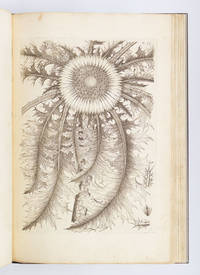
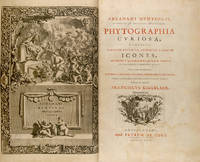
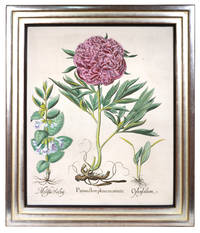
96802Nuremberg & Eichstatt 1640. . Four copper engraved plates with hand-colour; framed and glazed; plate size: 500 x 440 mm.; overall size: 512 x 603 mm.<br /> Magnificent plates from Hortus Eystettensis one of the earliest and most famous works in the field which provides a pictorial record of the flowers grown in the greatest German garden of its time that of Prince Bishop of Eichstatt Johann Conrad von Gemmingen. The garden was begun by Joachim Camerarius in 1596 and after his death in 1598 completed by Basil Besler a pharmacist from Nuremberg. A visitor Philipp Hainhofer in 1611 marvelled at the eight gardens each containing 'flowers from a different country; they varied in the beds and flowers especially in the beautiful roses lilies tulips'. The Hortus records this variety and beauty. The book is exceptional in every sense; in its variety and range of flowers in its size in its fine quality of engraving. It is also one of the earliest records of flowers from a specific documented garden.<br /><br />Besler was asked to complete the work by Gemmingen in 1606; the huge nature of the task was clear to Besler and he enlisted the help of his younger brother Hieronymus and Ludwig Jungermann a nephew of Camerarius. Printing the Hortus may have begun as early as 1607. Drawings were made in situ and from specimens sent by the Bishop to Nuremberg; the Bishop reported to Hainhofer that he had boxes of fresh flowers sent every week to Besler at Nuremberg for sketching. A team of at least 10 engravers were employed to translate the drawings to copperplates.<br /><br />The gardens along with most of the town of Eichstatt were destroyed by the invading Swedish troops under Herzog Bernhard von Weimar in 1633-4 although they were partially restored by later bishops. Many of the original drawings survive in the University Library Erlangen.<br /> Nissen 158; Pritzel 745; Hunt 430; Blunt pp 95-97; Stafleu & Cowan 497. Nuremberg & Eichstatt, 1640. unknown
15342839<p>WITH MANUSCRIPT ANNOTATIONS IN PORTUGUESE MENTIONING BRAZIL</p><p>8vo 14.4 x 9.6 cm 180 ff. with 151 large woodcut illustrations of which 149 are of plants. Bound somewhat tightly in later vellum over boards covers gilt-ruled spine gilt with morocco title pieces a.e.g. Some marginalia cropped at time of re-binding as well as 2 pages of manuscript annotations in Portuguese. Minor tear repaired at edge of title just touching woodcut border; some minor soiling but generally a fresh copy with dark strikes of the woodcuts.</p><p>Rare second Italian-language edition first 1522 of the <em>Herbarius latinus</em> important for the dissemination of botanical/medical knowledge in popular culture and particularly for the adoption of this originally German-printed Latin work for readers in the Veneto. The second section with 96 chapters includes information on laxatives aromatics fruits seeds gums and resins salts minerals goose-grease cheese honey ivory and much more. Anderson notes that this section probably contributed to the book's success: "It was concerned with the materials of medicine that were commonly available in the shops of apothecaries and spice merchants. Through the use of the <em>Herbarius</em> the average man could easily find what drugs to use and purchase them in most towns."</p><p>According to Anderson "the <em>Herbarius</em> sold as well in Italy if not better. There its second section may have contributed to its success for it was concerned with the materials of medicine that were commonly available in the shops of apothecaries and spice merchants. Through the use of the <em>Herbarius</em> the average man could easily find what drugs to use and purchase them in most towns. The second section has 96 chapters though many of them are very brief. They deal with the following: laxatives; aromatics; fruits seeds and plants of garden and orchard; gums and resins; salts; minerals and stones; and a variety of animals and their products such as goose-grease cheese honey and ivory" Anderson <em>Illustrated History of the Herbal</em> pp. 86-7. The last chapter CLI <em>de Vino e Aceto</em> is illustrated with a woodcut showing wine barels in a cellar. According to Hunt the woodcut on the title-page showing Saints Cosmos and Damian appears here for the first time.</p><p>Our copy has 2 full page and numerious marginal early 17th c. annotations in Portuguese mentioning Brazil in one case and giving the date of 1630 in another. There are two mentions of experiments in planting and cultivating cotton and ginger "brought from Brazil"--one of them dated 1643 f. aa6 r and f. Y6 r. In 1577 the Portuguese prohibited the cultivation of ginger in Bahia due to their interests in the India trade. However Bahian colonists ignored the law and continued to grow it selling it in secret to the Dutch and the English among others. The use of lead for treating bladder ulcers is also discussed f. Y6 r. Most curious is a recipe for avoiding and curing hemorroids by "Father Manoel da Anunciação Capuchino in the year 1630". The recipe involves frying small frogs in oil without salt "until the oil stops making noise. Once they are fried take them out of the oil and put the oil in a bottle and apply this liquid with your fingers on the bone and on the hemmorhoids and they will heal quickly" f. Y6 v.</p><p> Hunt I.34; Mortimer I.228 1520 Latin; Anderson <em>Illustrated History of the Herbal</em> pp. 86-7; Schwartz <em>Sovereignty and Society in Colonial Brazil</em> esp. pp. 158-9.</p> Giovanni Andrea Vavassore hardcover
165093TCL8LKTV6YNetherlands 1650. Framed. Drawings 48.8 x 28.9-29.2 cm. Black chalk drawings occasionally heightened with white chalk including some light brown watercolours on grey 17th-century handmade paper without watermark. In manuscript 'Martagon' in brown ink. In lower right corner in manuscript the number '3' in ink. We have not succeeded in identifying the artist of these beautiful drawings. We know no other drawing that is clearly from the same hand. Two artists are mentioned as possible candidates Govert Flinck Cleves 1615-1660 Amsterdam and Gerbrand van den Eeckhout 1621 - Amsterdam - 1674. The present drawings are probably made around the middle of the 17th century in Holland. The composition is similar to some papers in florilegia such as Theodor de Bry 1611/1612 to 1641 and later but they never show so many species and the flowers on a sheet. This study could be a sketch for a painting not necessarily a floral still life possibly a landscape. In fine condition.l Cf. Bernt Die niederländischen Maler und Zeichner des 17. Jahrhunderts vol. 4 nr. 209 München 1979; Schatborn 'Een toeschrijving aan Govert Flinck' in: Bulletin van het Rijksmuseum 22 nr. 2/3 1974 pp. 111-121. unknown
1785ST18172Turin: Michael Briolus 1785. FIRST EDITION. 410 x 270 mm. 16 1/8 x 10 5/8". Volume II with pp. 3-4 bound before pp. 1-2 but complete. Three volumes. <br/> INVENTIVE AND ELEGANT BROWN CRUSHED MOROCCO BY ANNIE BOIGE stamp-signed "A. Boige" on front pastedown and dated 1996 on rear pastedown upper covers cleverly encrusted with botanical specimens leaves or branches smooth spines with silver titling leather hinges watermarked light gray endpapers. Housed together in the original suede-lined brown cloth drop-back box suede-covered separators preventing contact between volumes. WITH engraved frontispiece portrait of the king of Sardinia in volume I engraved allegorical vignette on title pages and 92 FINE ENGRAVED PLATES ILLUSTRATING 237 BOTANICAL SPECIES. A Large Paper Copy. Cleveland Collections 557; Dunthorne 6; Sitwell "Great Flower Books" p. 67 69; Nissen BBI 18. ◆One plate with minor repair to fore-edge margin another with tiny rust hole not touching image half a dozen plates with insignificant smudges made during the printing process other trivial imperfections but A VERY FINE COPY clean fresh and wide-margined in a flawless binding.<br/> <br/> This is a major work of 18th century botany describing more than 2800 species of plants found in Italy's Piedmont region illustrating 237 previously unknown specimens and--crucially--classifying them all according to the new Linnean system becoming one of the first regional botanicals to use that taxonomy; as a bonus our copy comes in a particularly appropriate and charming binding with prominent botanical design elements. "Flora Pedemontana" was the chief work of Italian physician Carlo Allioni 1728-1804 professor of botany at the University of Turin and director of its natural history cabinet and botanical garden. The illustrations were drawn and engraved by the botanical garden's resident artist Francesco Peyroleri and his son Pietro. Our flora is also an important source of information on Alpine flowers. The modern binding is by an artisan who was proclaimed the "Grande Dame of French bookbinding" by the journal "Art & Métiers du Livre." Annie Boige trained at the Estienne School and at the Vésinet Applied Art Workshop before establishing her atelier in 1985. An art bookbinder she is noted for her monochrome color schemes and her use of beautiful leathers and vegetal materials a felicitous choice here. Michael Briolus unknown
99525Amsterdam Petrus de Coup 1727. . First Latin edition presumed third issue; two parts in one folio 39.2 x 25.4 cm; engraved title-page used here as a frontispiece and 245 engraved botanical plates inserted at rear with allegorical vignette on title-page and two engraved headpieces on ppiii and 25 by Goeree title-page printed in black and red lacking half-title and dedication leaf text somewhat toned frontispiece repaired at inner margin all inserted plates with small circular ink stamp of the Massachusetts Horticultural Society near the bottom their bookplate is present on the front pastedown plates twenty-five and twenty-six are trimmed smaller as most likely supplied some soiling and foxing to text and plates prominent damp staining on plates 144 to 245 plate 32 has small marginal repairs a few leaves with minor marginal worming plates 1 - 48 with neat ink captions in an unknown hand; nineteenth-century quarter calf over marbled boards spine ruled in gilt in compartments black morocco lettering piece gilt edge wear to binding especially at spine and corners upper board detached lower board loose; xxvi 47 1 blank pp.<br /> First Latin edition presumed third issue. A good copy only sold with all faults. 'The illustrations are remarkable for their elegance and originality' Oak Spring Flora 45. This is perhaps the most handsome and influential botanical of its day with its near-dreamlike depiction of plants suspended above cityscapes and other backgrounds.<br /><br />Munting 1626-1683 was a Dutch botanist and botanical artist the son of Henricus Munting 1583-1658. He studied under his father and at the universities of Franeker Utrecht and Leiden also spending two years in France where he obtained an M.D. degree in Angers. Returning to Groningen in 1651 he joined the staff at the Rijkshogeschool Groningen which eventually became the University of Groningen. Here he taught for 24 years as professor of botany and chemistry. On his father's death he assumed management of the Hortus Botanicus Groninganus from 1658 to 1683. His botanist friends sent him seeds from the Dutch East- and West Indies Africa and the Americas. His daughter Hester died after eating Deadly Nightshade from the Garden. Munting subsequently developed a particular interest in the medicinal uses of plants.<br /><br />The present work Munting's best known was first published in Dutch as Naauwkeurige Beschryving Der Aardgewassen 1696. Illustrated were trees shrubs flowers and grasses of temperate zones with some tropical and subtropical plants that had been introduced to the Netherlands.<br /> Nissen BBI 1429; Hunt 404. Amsterdam, Petrus de Coup, 1727. hardcover
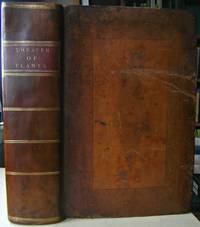
1640015181London: Thomas Cotes 1640. First edition. Large thick folio title page dedication page preface two pages author's tributes ten pages then ii 1734 but actually slightly less as there are several errors of pagination illustrated with over 2100 woodcut figures lacking the extra engraved title page the 20-page addenda at the rear and the errata leaf but otherwise complete and very sound. The contents are extremely clean and tight there is the odd crease and an occasional tiny corner missing but overall in impressive condition. The front and rear endpapers are a little browned and marked both front and rear hinges are cracked and showing a little silver-fish damage but there is no weakness at all. Full panelled calf probably eighteenth century but possibly earlier a little rubbed a little worn at the edges scuffed on the upper cover rebacked fairly recently with a leather spine and red morocco label. Blanche Henrey 286. Very heavy - extra postage will be required. John Parkinson 1567 - 1650 was both the last of the great English herbalists and one of the first of the great English botanists. He was apothecary to James I and a founding member of the Worshipful Society of Apothecaries in December 1617 and was later Royal Botanist to Charles I. The Theatrum was the most complete and beautifully presented English treatise on plants of its time. One of the most eminent gardeners of his day he kept a botanical garden at Long Acre in Covent Garden today close to Trafalgar Square and maintained close relations with other important English and Continental botanists herbalists and plantsmen. . First Edition. Full-Leather. Very Good. Thomas Cotes Hardcover
017976Taurini: Ex Regio Typographeo Three volumes 1837 - 1843. A partial set of one of the rarest of Mediterranean floras. Illustrated with 96 very fine engraved plates including 3 bis plates - XXXIII LXXVII LXXXVIII a double-page engraved map of Sardinia rather foxed quarto pp xii 606; 562. ii plates volume 96 plates of 114 remarkably clean internally contemporary half calf and cloth the spines with raised bands and black morocco labels slightly rubbed and scuffed a little wear at the corners. The engravings are by by L. Fea S. Botta H. Mil and A. Nizza after drawings by M. Lisa and J.C. Heyland; there is a presentation inscription in Latin in the first volume from the author to Sir Charles James Fox Bunbury. Lacking the final volume which was not published until 1857. The fact that the plates volume is here labelled Volume III suggests that Bunbury received these from the author in 1843 and the final volume was never presented. The author was a botanist at Cagliari then at Turin where he subsequently became Director of the Botanical Gardens. His primary investigations were on the flora of Sardinia of which this work is the first and still the most complete and detailed account. Sir Charles Bunbury was a keen botanist and geologist with a particular interest in paleobotany. He collected plant specimens on expeditions to South America in 1833 and South Africa in 1838. He also accompanied his great friend Sir Charles Lyell the geologist on an expedition to Madeira. He was elected a Fellow of the Royal Society in 1851. From Bunbury the set moved to the Leipzig collector and antiquary Oswald Weigel with his small stamp. Also in each volume is the later bookplate of Kenneth Lazenby a founding member of the Alpine Garden Society. The map is an addition to the published work and is equally rare - "Carta della Sardegna annessa alla 1a parte del viaggio in cetta Isola del Colonello A. della Marmora. 2da Edizione. Carte de la Sardaigne annexee a la 1e´re partie du voyage en cette Ile par le Colonel A. de la Marmora.". Although lacking the later volume this set remains very attractive due to its condition provenance and the additional map. First Edition. Half-Leather. Very Good. Ex Regio Typographeo Hardcover
1880WB19262Paris c. 1880. ALBUM OF ARTIFICIAL LEAVES AND FLOWERS PRE-A.I. Extraordinary album of artificial leaves and flowers. France ca 1880. 4to. Quarter gray linen and contemporary black impressed designed covers. Collation: 32pp. Cut out Flowers and Leaves of different species of flowering plants shrubs and trees some in natural green appearance but also including fantasy leaves in gilt and silver paper; and finally 2 pages for artificial flowers made in magical colors. Provenance: Ancienes Maisons J. Pezieux & Fils label on pastedown. The assembler has noted manuscript categories and numbers with stamped letters next to each specimen. <br /> <br /> <br/><br/> unknown
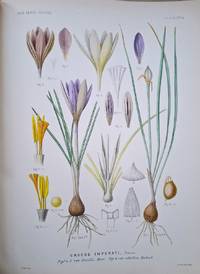
1886021464London: Dulau & Co 1886. Large thick quarto pp viii 326 xx 10 top edge gilt two double page charts and a map 4 coloured plates lettered A to D 77 coloured plates numbered 1 - 67 11 bis plates plate 17 was not published one internal hinge slightly stretched endpaper a little oxidised the half-title and the final leaf foxed the title page lightly foxed slightly age-toned internally the rear hinge a little cracked but not weak original brown beveled cloth slightly worn and rubbed the spine pulled at head and tail with rwo short tears at each a small bruise on the lower cover. The plates are very fine chromolithographs. A very attractive wood-engraved scene usually in Turkey precedes most species section; these are by the Brothers Dalziel. The book was printed by Fawcett of Driffield. With the attractive bookplate of the Scottish author and nurseryman William Cuthbertson at one time a senior partner in Dobies Nurseries. A heavy book - extra postage will be needed. "Maw was a Fellow of the Linnean Society the Society of Antiquaries and the Royal Historical Society. He became a Fellow of the Geological Society in 1864. He was a member of the RHS Scientific Committee during the 1880s and served brief terms on the Floral Committee Daffodil Committee and Library Committee. Maw made frequent plant collecting trips including to the Mediterranean and Eastern Europe. In 1871 he accompanied Sir Joseph Dalton Hooker and John Ball on a plant collecting expedition to Morocco and the Atlas Mountains and letters from Hooker to Maw give details of their preparations. A full account of the trip was published in 'Journal of a Tour in Marocco and the Atlas Mountains'. Maw wrote occasional articles for the garden press and was an accomplished artist: John Ruskin wrote of his crocus drawings that they were 'most exquisite . and quite beyond criticism'. In 1886 Maw published 'A Monograph of the Genus Crocus' the result of over ten years of collecting and research illustrated using his own watercolours. Many of the bulbs and plants he collected on his plant collecting expeditions were planted in the garden at Benthall Hall later owned by the National Trust. Correspondence between Maw and the friends and contacts who helped to collect the 67 species of Crocus detailed in his work forms a significant part of the archive. Maw retired in 1886 due to ill health and moved to live at Rangemore in Kenley Surrey changing the house name to Benthall. Frederica Mary died on 6 Feb 1894. George Maw died on the 7 Feb 1912." - British Museum. ""George Maw 1839-1912 was the industrious author and illustrator of his great 'Monograph of the Genus Crocus' 1886. A many-sided and remarkable man Maw was not a botanist by profession but a chemist and geologist a manufacturer of encaustic tiles at Broseley Staffs. His monograph the result of ten years of inquiry was the most complete work of its kind that has been published on any genus. The plates of this work are marvels of comprehensive detail and put to shame those of many more skilled draughtsmen. From a botanical point of view this work is a landmark."Blunt & Stearn". First Edition. Cloth. Good. Dulau & Co Hardcover
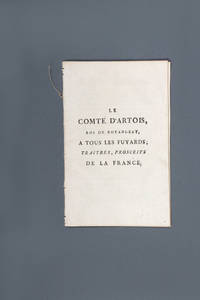
17904504805Paris 1790. Small hole to A4 affecting one word otherwise fine. Octavo 19 1 pp; disbound from a volume. <p><p>A very rare early "satire on French politics and English colonization" Ferguson. Likening those who fled the tumult of the French Revolution to the English convicts transported to Australia the author petitions them to join the future king of France in the newly established penal colony at Botany Bay: "le vaste continent des Terres Australes leur offre un pays nouveau asyle fait pour eux" "The vast continent of the Southern Lands offers them a new country a refuge made for them". The "count" continues that "c'est la Nation que vous etes dignes d'etentre c'est la Nation que je suis fait pour commander" "this is the nation that you deserve and that I am meant to command" and explains that in the Antipodes the laws are very different and virtue and vice are often upended.</p> <p>The satire evidently found an audience in Revolutionary France: a second edition was published in 1799. It appeared in the very first years of the English colonisation of Australia at a time when France had its own interests in the region and its own problems at home. La Pérouse commanding the Astrolabe and the Boussole arrived at Botany Bay on 24 January 1788 just as Arthur Phillip was moving the English settlement to Port Jackson. They spent six weeks in Australia before moving on.</p> <p>Toby R. Benis uses the pamplet to begin the introduction to his Romantic Diasporas: French Émigrés British Convicts and Jews 2009: "In 1799 a satirical pamphlet aimed at French émigrés and those inside the republic who sympathized with them appeared in England. Claiming to be produced in London the text was framed as an appeal from the Comte d'Artois Louis XVI's youngest brother calling on the 'cowards who fled France and to all those who have been banned from France-princes and valets traitors and bandits princesses and prostitutes' to join him in the British penal colony of Botany Bay: 'a new country made especially for them'. Styling d'Artois the "king of Botany Bay" the writer characterizes Australia as a de Sadian refuge for the worst elements of both Britain and the ancien regime bequeathed by the British government to the emigrant Prince and his circle to rule. A historical curiosity this document nonetheless points to a political and social dimension to exile in the Romantic period.". Romantic Diasporas focuses on how French emigrés Australian convicts and Britain's Jews embodied this state for Georgian society.</p> </p> . unknown
1817e1794Philadelphia: M Carey & Son. G: in good condition. Covers rubbed and stained. Shelf-wear. Spines worn; volume I splitting with loss at top end. Some offsetting. Foxing; sometimes heavy. Some pages and plates loosening; plate 4 entirely loose. Ex-library copy with stamping to titles and some text leaves. 1817. First Edition. Maroon leather spines with brown hardback board covers. 280mm x 220mm 11" x 9". 273pp; 243pp. 50 hand-coloured plates; 1 folding. Volume II published in 1818. Includes list of subscribers. Heavy item - shipping supplement may apply for overseas. . M Carey & Son hardcover
1823g9506Edinburgh: Maclachlan & Stewart. VG : in very good condition. Spines faded. Some Slight staining to lower margin of prelims. Occasional slight foxing. Some offsetting from plates. 1823. First Edition. Brown hardback leather cover. 240mm x 150mm 9" x 6". 800pp plates. 360 hand coloured plates. Volumes published between 1823 - 1828. Heraldic book-plate of R E Duncombe Shafto. Heavy set - extra shipping needed for overseas. . Maclachlan & Stewart hardcover
016566Fleet Street and Bride Court London: William Smith and J.M. Knott 1837 - 1840. Three volumes small quarto pp viii 96 6; iv 188; iv 188 three vignette title pages an extra hand-coloured title page in the first volume with 137 fine hand coloured plates all edges gilt bound in a Victorian half morocco and cloth the spines highly decorated in gilt a little rubbed at the joints and corners the cloth sides slightly marked and very slightly bubbled in a few small places. In Volume 3 title page and the first two plates and text are a little stained at the upper corner the subsequent three plates and text pages very faintly marked; otherwise this is a remarkably clean and bright set internally - the plates all have their protective tissues which very occasionally have a faint spot of foxing but nothing has transfered to the surface of the plate. With the book label of Carl Wendell Carlsmith 1904 - 1932 on each of the first blank pages in each volume. RARE AND EXCEPTIONALLY DIFFICULT TO FIND COMPLETE. George Beauchamp Knowles was a surgeon and Professor of Botany at Birmingham School of Medicine. Frederic Westcott was a Secretary of the Birmingham Botanical and Horticultural Society and contributed papers on the Shropshire flora to The Phytologist. First Edition. Half Leather. Very Good. William Smith and J.M. Knott Hardcover
1933k0715aLondon: Taylor & Francis / The Royal Horticultural Society. VG : in very good condition. Occasional slight foxing. 1933. Limited Edition 40. Maroon hardback leather cover. 560mm x 390mm 22" x 15". ii viii 143pp 21pp 12pp plates. 40 hand-coloured plates. Published - volume one 1933-1940; volume two 1960 - 1962. Elwes' original monograph published in 1880. . Taylor & Francis / The Royal Horticultural Society hardcover
1571015795Venetiis Venice: In Officina Valgrisiana 1571. Illustrated with many hundreds of half-page woodcuts. pp 14 922 13 the title page is laid down and has slight losses the next leaf is restored at the corner with no loss of text the preliminary index is a bit thumbed and marked a little marginal staining to the last hundred pages a little marginal staining and marking on occasional pages but overall very firm and tight and in better condition than many copies. There are very neat early manuscript notes on many pages mainly limited to the common English names. Contemporary simple lined calf rebacked and with new endpapers in the early twentieth century with the original spine laid down. An inked paper title label on the spine. The Hartland Library copy with labels and manuscript notes attached to the front endpapers. RARE. The Library was formed by Edwin Sydney Hartland and was a diverse but major collection of herbals archaeology and anthropology. It was donated to Gloucestershire County Council in 1936 and was eventually dispersed around 2010. This the first edition of a digest of Mattioli's commentaries on Dioscorides expressed in the form of an encyclopedia of plants giving synonyms classification description locale and medicinal qualities and uses. A careful student of botany he described 100 new plants and coordinated the medical botany of his time in his Discorsi "Commentaries" on the Materia Medica of Dioscorides. The first edition of Mattioli's work appeared in 1544 in Italian. In addition to identifying the plants originally described by Dioscorides Mattioli added descriptions of some plants not in Dioscorides and not of any known medical use thus marking a transition from the study of plants as a field of medicine to a study of interest in its own right. In addition the woodcuts in Mattioli's work were of a high standard allowing recognition of the plant even when the text was obscure. A noteworthy inclusion is an early variety of tomato the first documented example of the vegetable being grown and eaten in Europe. There is also an early illustration of a coconut. First Edition. Full-Leather. Good. In Officina Valgrisiana Hardcover
1747D19414London: J. Duke for J. Robinson 1747. Second Edition. Hardcover. Very Good. Decorative title page and frontispiece each delicately hand-colored; followed by 94 of 100 plates likewise handcolored. 19th century Cambridge style binding nicely gilt but with front board loose. Lovely plates. <br/><br/> J. Duke for J. Robinson hardcover
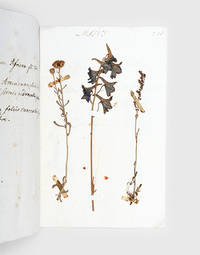
189373Germany: 18th century. A charming fragment of a methodically organized collection A scientific compilation of dried plants each annotated with a Latin binomial and many with their seasonality; this selection comprises spring and summer samples. Such herbariums began to be compiled in the 16th century and many featured in "cabinets of curiosities". They were a tool used by the most influential natural philosophers of the day including Linnaeus Rousseau and Goethe. The box lettered "gewürzpflanzen" and "gewürz" was originally intended to house spice plants. The individual gatherings are numbered and the box reads "nicht voll" not full showing that it was an evolving project that functioned as a reference tool and is likely a surviving specimen of a now-separated larger private collection. Many of the samples are also annotated with reference numbers perhaps to a printed botanical catalogue owned by the compiler or to other parts of the now-scattered collection. "A botanist who came across an unfamiliar plant might send it as a herbarium specimen to a colleague for identification. By comparing dried plants it was possible to discover duplicates of the same plant but with different names. Such uses were possible only if the herbarium sheets were kept separate rather than being bound into books which also made it easier to rearrange their order as new ideas about classification were developed and tested" Allaby p. 61. Comprising 17 booklets individually sewn at folds page size: 212 x 139 mm samples affixed with thin strips of paper or copper contents annotated in black and green ink. Paper stock watermarked with snake on staff with double knobs and star countermarked "BB" perhaps referring to Beckh paper mill Göppingen founded 1747. Housed in contemporary card case with partially-obscured paper labels lettered "No 3" "Gewurz" and "Invatio ecum bot Tom VI. 708 ad pa". First leaf of single booklet and handful of samples not present paper lightly foxed else crisp; box worn and with some worming. Overall in very good condition. Michael Allaby Plants: Food Medicine and the Green Earth 2010. unknown
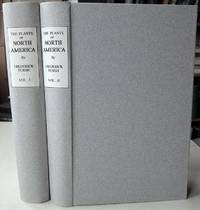
1814020092Fleet Street London: White Cochrane & co. 1814. Two volumes 1814 1813. Octavo illustrated with 24 plain stipple-engraved plates pp xxxvi 751 ivi untrimmed age-toned and with foxing heavy on some pages and plates but almost or entirely lacking on the larger parts of the volumes one page more heavily browned from the insertion of a paper at some point with the blindstamp of the Carnegie Institution on the title pages and also the tiny stamp of the Haverford College Library; the 'sold' label of Haverford is loosely inserted. Recently bound in grey boards new endpapers the paper spine labels reading "The Plants of North America". SCARCE. "The first publication on plants from all of North America above Mexico and the first to publish plants from the Pacific Coast Pursh's Flora includes more than 3000 species and 470 genera including the first descriptions of more than 100 species collected by the Lewis and Clark expedition" ANB. Sabin 66728. Pursh a German botanist came to America in 1799 as a traveler collector gardener and landscape artist. From 1803 until about 1805 he was in charge of William Hamilton's estate near Philadelphia before becoming employed in the botanizing expeditions of Benjamin Smith Barton. From 1809 to 1810 he headed Hosack's Elgin Botanic Garden in New York. In 1811 Pursh traveled to England where he produced his Flora under the patronage of A. B. Lambert to whom the work is dedicated. Pursh relied upon the Lewis and Clark specimens entrusted to M'Mahon for many of his descriptions of the Pacific coast plants; he also consulted some forty-one other botanical collections for his research. Apperently William Hooker the artist of Salisbury's Paradisus Londinensis was responsible for a good portion of both the drawings and engravings. Printing of the Flora Americae Septentrionalis was completed in late 1813 as the Linnaean Society possesses a presentation copy dated 21 December 1813. . Nissen BBI 1570; Pritzel 7370; Stafleu & Cowan TL2 8404. . First Edition. Boards. Good. White, Cochrane & co. Hardcover
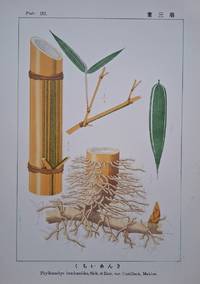
021561Gifu Loose title page in English and Japanese age-toned 80 page descriptive booklet in Japanese the front cover a little age-toned four-page folded loose index in English 109 very fine colour lithographic plates loose one plate a little foxed one plates stained in the margin one final page in Japanese age-toned; loosely tied with blue silk and contained in the original blue cloth fitted folding box rubbed secured with two ties with bamboo clasps one tie in danger of becoming detached. RARE. The first edition of this iconic book was 1914 and the second edition two years later in 1916. The title page to our copy is definitely that of the first edition - it has the misprint 'Illustraions' and no English date; whereas in the second edition the date appears and the misprint is corrected. Our copy has 109 plates which is definitely correct for the second edition; however the only copy of the first edition online is that of Jerry Stanoff's Rare Oriental Book Company which states 101 plates - now is his copy lacking or is our own copy a mixture of editions ! I can find no copy of the first edition in a library so I can't corroborate this at the moment. "Isuke Tsuboi 1843-1925 a man who devoted himself to the research of bamboo for nearly forty years and was known as "Japans foremost bamboo guru". In 1881 he set up a farm to experiment with bamboo planting. Over the many years of his hard work Tsuboi accumulated fruitful knowledge in bamboo species and their phytogeographic patterns. He also developed efficient planting methods identified the causes of withering and discovered efficient ways to fight against pests. During his years of research Tsuboi made frequent trips between Taiwan China and Japan which demonstrate the seriousness and diligence with which he pursued the study of bamboo. He was the first man to build a bamboo specimen garden in Japan a place that displayed his categorization of all native bamboo species in Japan. Botanists directors of bamboo groves and bamboo lovers of his time all came to marvel at the richness of his collection. Sadly after Tsuboi passed away the garden was abandoned and then vanished in disrepair. Tsubois Illustrations of the Japanese Species of Bamboo stands as one of the great achievements of his research. The book depicts various species and morphology of bamboo and contains intricate sketches of their inner parts. Even by todays standard this book still retains great value as a reference guide.". Loose in box. Very Good. Paperback
183010152Philadelphia: Atkinson & Alexander 1830. Hard Cover. Fair binding. Octavo. 4 xii 268; 276 pp. plates. First edition. Imperfect copy. Lacking pp. 221-224 and plate 43 from the first volume. In later sheep over boards with 20th century leather reback; ownership stamp or inscription excised from the title page with glancing loss of words and letters on approximately nine lines repaired crudely on the verso a few missing letters added in pencil; dampstaining along the bottom half of the textblock throughout; foxing; a few of the plates have had tears neatly mended with tape. <br /> <br /> Illustrated with 99 of 100 botanical woodcuts printed in green. Illustrations in the first volume are distributed throughout the text opposite the plants' descriptions; all plates in the second volume appear together after the text. This from the library of Mr. and Mrs. Chas. C. Deam of Buffington Indiana with bookplate on the front pastedown. Charles Deam 1865-1953 was an Indiana State Forester botanist and conservationist. Sabin 67457; Garrison-Morton 1849. Atkinson & Alexander unknown
1898019775Dublin and London: Sealy Bryers and Walker; David Nutt 1898. A coloured folding map frontispiece with one neat repair with archival tape octavo pp xxiv. 391i with the errata leaf tipped-in at the rear a tiny adhesion damage on the last two pages a little wear to the half-title where an early price has been erased rather too enthusiastically otherwise very bright and clean internally brown decorated cloth gilt slight pulling or fraying at the spine head the spine slightly dark otherwise a rather bright and impresive copy of one of the rarest of Irish county floras. First Edition. Cloth. Very Good. Sealy, Bryers and Walker; David Nutt Hardcover
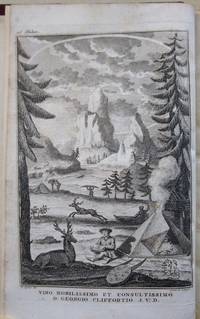
1792018826London: J. Davis for B. White et Filiorum 1792. Engraved frontispiece twelve folding plates with slight offsetting but otherwise good octavo pp l 390 16 light age-toning and occasional light foxing bound in twentieth century brown morocco with red cloth sides slight fading and very slight wear. With the bookplate of Kenneth Lazenby a founding father of the Alpine Garden Society. In the first edition of Flora Lapponica 1737 Linnaeus's ideas about nomenclature and classification were first used in a practical way making that the first proto-modern flora. This upddate by Smith cites Linnaeus as the main author and uses Linnaeus' binomial nomenclature. Second edition. Half-Leather. Very Good. J. Davis for B. White et Filiorum Hardcover
1792018827London: J. Davis for B. White et Filiorum 1792. Engraved frontispiece a little browned as is ithe title page twelve folding plates with slight offsetting and more age-toning and three with a little staining but otherwise good octavo pp l 390 16 light age-toning and occasional light foxing the hinge after the title page slightly open but absolutely no weakness quite a few interesting early neat marginal notes bound in contemporary boards a bit worn and marked a recent brown leather spine slightly scuffed. With the armorial bookplate of George Augustus Thursby; it is likely that he contributed the manuscript notes. In the first edition of Flora Lapponica 1737 Linnaeus's ideas about nomenclature and classification were first used in a practical way making that the first proto-modern flora. This upddate by Smith cites Linnaeus as the main author and uses Linnaeus' binomial nomenclature. Second edition. Quarter leather. Very Good. J. Davis for B. White et Filiorum Hardcover
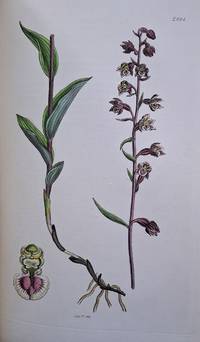
1831021666London: Sold by the Proprietor J. Sowerby or C.E. Sowerby; latterly J.W. Salter 1831. 1831 - 1849. Four volumes octavo illustrated with approximately 366 hand coloured plates four of which are folding generally in very good condition occasionally printed on slightly duller paper recently bound in a plain but qood quality brown cloth slight markings to the upper cover of one volume. Volume I - plates 2593 - 2692 extremely clean and bright. Volume II - plates 2693 - 2796 the first ten plates and text have faint fold markings otherwise very clean and bright. Volume III - plates 2798 - 2866 lacking 2797 one plate with a paper crease probably a production fault. Volume IV - is where it gets complicated. The plates and text are now bound more or less in systematic order - 2886 2908 2951 2918 2916 2955 2943 2922 2898 2944 2928 2917 2906 2934 2905 2903 2952 2900 2935 2903 2909 2892 2893 2891 2890 2895 2887 2968 2870 2930 2946 2914 2897 2958 2875 2953 2876 2877 2904 2950 2868 2949 2960 2945 2929 2915 2884 2931 2896 2910 2885 2923 2895 2924 2880 2932 2901 2887 2919 2888 2936 2878 2871 2942 2907 2925 2947 2873 2874 2957 2902 2872 2921 2912 2882 2881 2938 2937 2889 2894 2948 2913 2879 2889 2911 2940 2920 2959 2941 2954 2926 2927 2958 2939 2933. lacking 2883 & 2940 . The paper in this last volume is of poorer quality with a little age-toning occasional scattered light blemishes or foxing. RARE. A further volume was published in 1863 but is not present here but all volumes are exceedingly scarce. A vital addition to the first edition of English Botany but rarely to be found. In the advertisement to Volume I it explains that the death of Sowerby in 1822 and Smith in 1828 delayed any possibility of the publication of these new discoveries. However Sowerby's two sons were now embarking on this venture which they originally thought would be complete in two volumes. Latterly the descriptions were completed by eminent botanists such as C.C. Babington William Borer M.J. Berkeley and William Wilson. First Edition. Cloth. Very Good. Sold by the Proprietor J. Sowerby or C.E. Sowerby; latterly J.W. Salter Hardcover
1867022229Basle & Geneva 1867. First edition 1867 - 1888. Latin text. Five volumes Supplement bound in seven pp xxxiv 1017; 1159; 1033; 1276; 868; xxxiv466 5 plates and a map of Geneva several taxonomic single sheet offprints by Bornmuller on new species have been tipped in at various points pages rather age-toned a very occasional early neat annotation traces of a small old label on each front endpaper strongly bound in ribbed half leather and mottled boards a little rubbed and scuffed but very firm. A duplicate from Cambridge University Botanic Garden Library with their small stamp and withdrawn stamp on each title page but no other markings. Swiss botanist and explorer Pierre Edmond Boissier was amongst the most prolific collectors of the 19th century. Travelling through much of Europe North Africa and the Middle East he produced a vast taxonomic output. The Flora Orientalis is a monumental work with Latin descriptions of 11681 species. Despite the relegation of several of his names through synonymy his publications represent pioneering work which has been used as the baseline reference for the national floras of all the regions he visited. RARE A heavy set - extra postage will be needed. First Edition. Half Leather. Good. Hardcover