13 955 résultats
72208Coll. "Archives et documents", Paris, éd. Tête de feuilles, 1973, in-8, cartonnage souple à rabats éd., couv. texte en blanc sur fond vert éd., table des matières, index, préface de Michel Collinet, notes de Jules L. Puech, "Flora Tristan était pour la fondation d'une Union ouvrière universelle. Son tour de France, pour la propagande de l'Union ouvrière, commença le 12 avril 1844. Ses déceptions parisiennes l'avaient encouragée à rechercher dans la province des militants plus sérieux, moins phraseurs. Ce journal raconte les péripéties. Partie de Paris, elle se dirige vers Lyon et Saint-Etienne, puis à Marseille ; elle passe par Nîmes, Montpellier, Toulouse, pour s'arrêter à Bordeaux. Epuisée, elle y meurt le 14 novembre 1844 d'une fièvre typhoïde. C'est le texte intégral du journal de ce tour de France qui est publié ici. Testé inédit jusqu'en 1975, il a été édité grâce à Jules-L. Puech, qui a consacré sa vie à l'oeuvre de Flora Tristan". Pas courant Très bon état
184299648Paris, Raymond-Bocquet et Prévot, 1842, in-12, LVI-250 pp, Demi-toile grise à la bradel, pièce de titre grenat, couverture conservée [Arthur Scheller], Rare première "édition populaire", parue deux ans après l'originale : elle est dédicacée par l'autrice, la penseuse féministe franco-péruvienne Flore Célestine Tristán y Moscoso (1803-1844), "Aux classes ouvrières" : "L'horrible oppression que l'aristocratie anglaise fait peser que les peuples des Îles Britanniques (...) offre une leçon que les travailleurs de la terre entière doivent avoir constamment à la pensée" (p. V). L'ouvrage, qui dénonce "les vices du système anglais", est une invitation aux ouvriers français à en tirer la leçon, "afin que sur le continent on s'applique à les éviter" (p. XXII). Né à Paris, fille d'un aristocrate péruvien, Flora Tristan fut décrétée illégitime en raison du mariage religieux de ses parents, non reconnu en France. Elle épousa par nécessité le lithographe André Chazal, dont elle eut trois enfants : la dernière, Aline, est la mère du peintre Paul Gauguin. En 1825, elle se sépare de son mari, violent; elle change plusieurs fois de domicile afin de se soustraire à lui, mais elle ne parvient pas à l'empêcher d'enlever leur fille, à deux reprises. En 1838, elle publie les Pérégrinations d'une paria, où elle se décrit comme une femme en révolte contre son déclassement social et sa situation conjugale : exposé au ridicule, Chazal se venge en tentant de l'assassiner d'un coup de revoler qui lui perfore le poumon. Ayant survécu à sa blessure, elle ne cessera de dénoncer dans ses écrits la condition "d'esclave" des femmes, l'interdiction du divorce et les barrières de l'éducation féminine. Flora Tristan fréquentait le cercle féministe de la Gazette des femmes et les réformateurs sociaux, tels que Charles Fourier et Robert Owen : ses amitiés et son expérience lui permirent de percevoir les rapports entre la question des femmes et la question ouvrière, à l'aube de l'ère industrielle. L'exemple de l'Angleterre fut à ce titre représentatif pour elle : elle s'y rendit à trois reprises, en 1826, 1831 et 1835, et fut témoin de la misère des quartiers ouvriers, de la violence sociale, de la criminalité et de la prostitution, qu'elle révèle dans les présentes Promenades. Ex-libris manuscrit au verso de la page de titre, daté de mai 1846. Petites taches sur le dos. Quelques surcharges au crayon bleu, salissure sur la première page de texte, annotations au stylo à bille sur la première garde blanche. Susan Foley, "Tristan Flora". In Dictionnaire des féminismes (dir. Christine Bard), Paris, PUF, 2017, p. 1447 et suiv. Couverture rigide

SLIVCN-9782742746019Babel (1/2004)
2707111015.Gpaperback. Good. Access codes and supplements are not guaranteed with used items. May be an ex-library book. paperback
1294620819.Gpaperback. Good. Access codes and supplements are not guaranteed with used items. May be an ex-library book. paperback
1906393222.Gpaperback. Good. Access codes and supplements are not guaranteed with used items. May be an ex-library book. paperback
1021231177.Gpaperback. Good. Access codes and supplements are not guaranteed with used items. May be an ex-library book. paperback
1019457287.Ghardcover. Good. Access codes and supplements are not guaranteed with used items. May be an ex-library book. hardcover
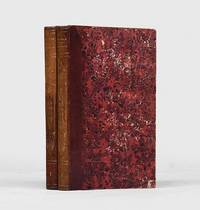
1838167701Paris: Ladvocat 1838. The most important French socialist-feminist of the 1830s and 1840s Second edition published the same year as the first of the radical philosopher's only novel vividly articulating her goal of social revolution through female emancipation. Méphis is uncommonly met with; we trace only one previous auction listing for any edition. The philosophy of Flora Tristan 1803-1844 linked the nascent socialist theories of class struggles with the contested position of women in contemporary society. Following the mixed reception of her previous political works in Méphis she employs the conventions of the novel to visualise her conception of social reform. The work centres on the titular protagonist's relationships with two aristocratic women and the tensions implicit therein - both in his proletariat origins and in the broader patriarchal conventions weighing on them. Tristan draws several "vivid evocations of feminist role models" Cross & Gray p. 2 thereby winning the novel "a secure place in French Romantic literature" Puech quoted in Cross & Gray p. 2. The work gained further notoriety due to the events surrounding its publication. In 1838 Tristan's estranged husband - a failed artist enraged by her literary success - shot her in the street in broad daylight. Miraculously she was not seriously injured and the resulting trial boosted her sales considerably. Tristan's socialist-feminist philosophy anticipates several aspects of Marx and Engels: she most notably coined the term "Workers of the world unite" a full five years before they deployed it in the Communist Manifesto. She is consequently considered "the most important French socialist-feminist of the 1830s and 1840s" Collins & Weil-Sayre p. 229. The second volume includes two of Tristan's articles on the history of western art which had formerly appeared in L'Artiste. 2 vols octavo 209 x 131 mm pp. iv vii 1 365 1; pp. iv 390 2. Wood-engraved vignette to title pages. Contemporary red quarter sheep spines lettered ruled and elaborately decorated in gilt red marbled sides marbled endpapers edges sprinkled black blue silk bookmarkers. Moderate rubbing faint sunning to spines light sporadic foxing and marginal damp staining to contents: a very good copy. Marie M. Collins and Sylvie Weil-Sayre "Flora Tristan: Forgotten Feminist and Socialist" Nineteenth-Century French Studies vol. 1 no. 4 1973; Màire Cross and Tim Gray The Feminism of Flora Tristan 1992. unknown
9588160332.Gpaperback. Good. Access codes and supplements are not guaranteed with used items. May be an ex-library book. paperback
1987Q-0807070270Beacon Pr 1987-07-01. Paperback. New. New. In shrink wrap. Looks like an interesting title! Beacon Pr paperback
45399107like new. unknown
2707109908.Gpaperback. Good. Access codes and supplements are not guaranteed with used items. May be an ex-library book. paperback
1278896945.Gpaperback. Good. Access codes and supplements are not guaranteed with used items. May be an ex-library book. paperback
1017249040.Gpaperback. Good. Access codes and supplements are not guaranteed with used items. May be an ex-library book. paperback
1017244030.Ghardcover. Good. Access codes and supplements are not guaranteed with used items. May be an ex-library book. hardcover
2011342600.Gpaperback. Good. Access codes and supplements are not guaranteed with used items. May be an ex-library book. paperback
2322424587.Gpaperback. Good. Access codes and supplements are not guaranteed with used items. May be an ex-library book. paperback
2013746202.Gpaperback. Good. Access codes and supplements are not guaranteed with used items. May be an ex-library book. paperback
2007Q-0252075293University of Illinois Press 2007-08-13. Paperback. New. In shrink wrap. Looks like an interesting title! University of Illinois Press paperback
2007DADAX0252075293University of Illinois Press 2007-08-13. paperback. New. 5.50x0.60x8.25. Buy with confidence. Excellent Customer Service & Return policy. University of Illinois Press paperback
1986Q-2721002902DES FEMMES 1986-06-04. Paperback. New. In shrink wrap. Looks like an interesting title! DES FEMMES paperback
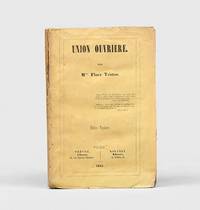
1843150437Paris: Prévot and Rouanet 1843. Coining the slogan "workers of the world unite!" five years before the Communist Manifesto First edition of the revolutionary French socialist's most famous work urging the working class to unite a call for international emancipation which appeared five years before the Communist Manifesto. Tristan is "perhaps the most celebrated of all 19th-century French feminists" Moses p. 107. Tristan's struggles as both the poverty-stricken illegitimate daughter of a Peruvian noble and as the wife of a violently abusive husband forced her to travel at various points in her life to England as a ladies' companion and Peru in the hopes of re-establishing her family ties. Upon returning to Paris in 1835 Tristan fought her husband André Chazal for custody of her two surviving children and succeeded in regards to her daughter. It was not until 1836 after Chazal shot Tristan that she was granted legal separation and the right to take back the name Tristan. Both as respite from and because of this domestic turmoil Tristan became enthusiastically involved in a number of feminist and socialist groups and activities - she published pamphlets on female immigration petitioned in favour of divorce and for the abolishment of capital punishment attended meetings of the Gazette des femmes group and engaged with the utopian socialism of the Fourierists. "In Union ouvrière Tristan rallies the French working class urging them to create a national organization that would be financed by subscriptions from the twenty-five million workers. She believed that any change among the working class must be initiated by the workers themselves: 'Now the day has come when one must act and it is up to you and only you to act in the interest of your own cause'. Despite her call to action Tristan maintained a firm stance against violence and called only for passive resistance; she believed that destructive acts would only heighten workers' problems. She tried to enlist the bourgeoisie in her plan on the basis that it would help prevent begging and theft. The second part of Tristan's crusade was her attempt to improve the position of women within the workplace and society. She argued that all classes of women should participate in the Workers' Union to lobby simultaneously for feminism and socialism. Her third chapter entitled 'Why I Mention Women' aims to establish continuity between the desires of the workers and those of women" Orlando. Unable to find a publisher willing to print the unorthodox tract she funded the book's publication herself through donations from friends acquaintances and public appeal. From these donations 14000 copies of this first edition were printed stated as "Edition populaire" which she sold for 50 centimes each. In Lyons the fundraising efforts of her working-class followers underwrote a further printing of 10000 copies. Such circulation was very high for the time: the print run of the Communist Manifesto in 1848 by contrast was 2000 copies. "Increasing scholarly attention is revealing her as a pivotal figure in the shift from early nineteenth-century utopian to Marxist economic socialism. Her insistence on the inextricability of class and gender oppression makes her a foundational socialist feminist theorist" ibid. Duodecimo. Uncut in original yellow wrappers printed in black. Housed in quarter calf chemise and slipcase. Slight split to front joint but holding wrappers and contents clean a very good well-preserved copy. Claire Goldberg Moses French Feminism in the Nineteenth Century 1984. unknown
0252009215New. Brand new and still unused unknown
R150025284LA DECOUVERTE / FM.. 1979.. In-12. Broché. Bon état, Couv. convenable, Dos satisfaisant, Intérieur frais. 276 pages. 1ère de couverture illustrée en couleurs.. . . . Classification Dewey : 840-Littératures des langues romanes. Littérature française