5 résultats
173852488Lisbon: Lisboa Occidental 1738. hardcover. very good. Breve Compendio da Vida e Mysterios de Maria. 340pp. Small 4to contemporary calf. Lisboa Occidental: Domingos Gonsalves 1738. Very Good .<br/><br/> Lisboa Occidental unknown books
17366421Sevilla: Juan Francisoc Blas de Quesada 1736. Small octavo 20ff 367pp. The imprimatur and aprobation by censor are dated 1736 in Seville but no date is given on the title page. Palau seems not to have been aware of this book but he does record a "libro segundo" printed in Madrid 1773 with Bishop Salcedo y Azcona as the author. Palau v. xviii 369. OCLC lists several copies of a Seville printing a couple by this printer but no date on any of them; there is one copy only of the Madrid 1773 printing. The title states that it was in fact published by Salcedo y Azcona but that it was written by a Juan Arana SJ 1666-1747. Salcedo y Azcona was a very prominent churchman being successively archbishop of Santiago Compostela and Seville. Neat contemporary signature on ffep. Rare. Fine copy in contemporary vellum with ties. <br/><br/> Juan Francisoc Blas de Quesada hardcover books
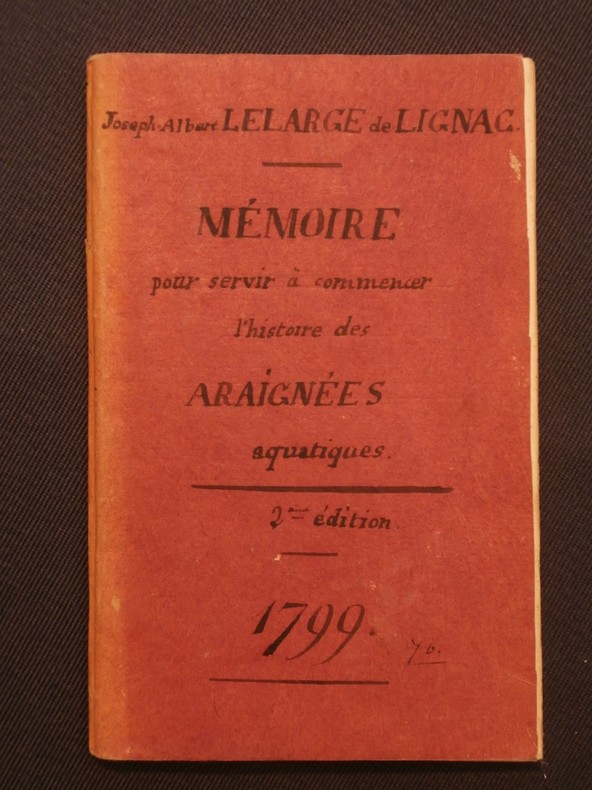
1799154051799 Chez H. Barbou libraire éditeur Broché, in12, couverture d'attente, 64p. Bon état, titre manuscrit sur la couverture.
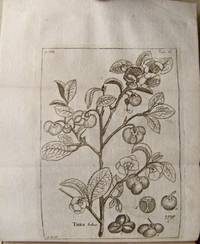
1769016541Lugduni Batavorum: Westenium 1769. Latin text throughout. Title page dedication leaf pp 506 ii with seven engraved folding plates and one folding table slight damage to the margin of the ornithological plate a little age-toning generally endpapers unevenly browned but otherwise very clean internally bound in full contemporary polished calf slight wear at the corners joints cracking slightly lacking a small piece at the head of the spine. The students whose names appear on the dissertations were not necessarily their authors; it was their function to present the dissertation and defend it in public debate but the responsibility for the content of the dissertation was largely that of the professor in this case Linnaeus. The fact that Linnaeus cited the Amoenitates as the place of publication for plant names he credited to himself indicates that he was generally the principal author of the work. At the end of this volume is a list of "Editiones operum auctoris" including the Amoenitates with the clear implication that Linnaeus is the author. Of great importance for "Potus Theae" in which Pehr Tillaeus discussed among other things the properties and benefits of tea as a medicine. Tillaeus's dissertation was the first in-depth botanical study of the tea bush and he also named parts of the plant. The tea plant had only been introduced to Sweden and Europe generally as recently as 1763. Also includes Hoffman's "Potus Chocolatae" - a botanico-medical essay on the merits of drinking chocolate flavored with vanilla. Botanical accounts are given of the cacao tree Theobroma cacao L. and of the vanilla orchid Epidendrum vanilla L. = Vanilla fragrans. The preparation of the chocolate beans and of the beverage by the Spaniards is described. Linnaeus advocated use of the beverage as a pleasant drink and for treatment of hypochrondria and hemorrhoids. Other essays include : Gahn's "Fundamenta Agrostographiae" - a classified list of grasses of economic importance preceded by a history of prior studies of grasses. Laurin's "Menthae usus" - an essay on the kinds of mints useful in medicinal preparations. Lado's "Motus polychrestus" - an essay on the importance of physical exercise as a preservative and restorative of good health. Tengborg's "Hortus Culinaris" - an essay on edible and economic plants of Sweden their culture and hardiness. Includes those then in use and others suggested. Backmann's "Fundamenta ornithologica" - an exposition of the fundamentals of Linnaeus' classification of birds. Uddman's "Lepra" - An overview of leprosy including hypotheses about causes types of leprosy possible treatments. Aphonin's "Usus historiae naturalis" - An essay on the importance of a knowledge of natural history to greater improvement of agriculture and horticulture with emphasis on those kinds of plants best suited as food for each kind of domestic animal. Osterdam's "Siren lacertina" - an account of the two-legged Siren lizard of South Carolina sometimes known as the Carolina mud iguana. Berlin's "Usus Muscorum" - an historical study of the economic uses of lichens in Sweden including Lapland. Roos' "Mundus Invisibilis" - a medico-botanical treatise on airborne spores and microorganisms some of which Linnaeus believed to be responsible for infectious diseases. Blad's "Fundamenta entomologiae" - an historical review of entomology with a list of 32 pre-Linnaean authors instructions on how to collect and preserve insects and the fundamentals of their classification. Wedenberg's "Varietas ciborum" - a medico-nutritional essay on the wide range of foodstuffs eaten by man and a classification of these foods into 10 groups and the effects of diets in which each group dominates and the diseases which might result. Linnaeus' concluding advice is "Ne quid nimis" nothing in excess ! With approximately ten other essays. LATIN TEXT THROUGHOUT. ONE OF THE MOST IMPORTANT AMOENITATES VOLUMES. RARE. Full Leather. Very Good. Westenium Hardcover
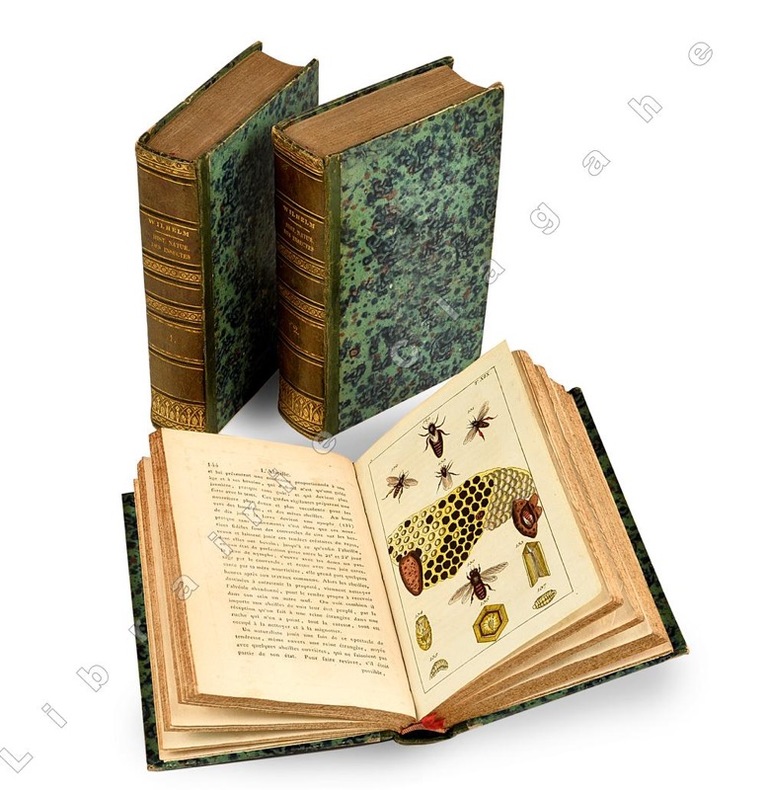
179821300Basle, Henry Haag, 1798-1804 ; 3 tomes in-8, demi veau glacé vert foncé, dos à faux nerfs de filets à froid et dorés, roulettes décoratives, plaquette à décor de cathédule en queue, titre doré (reliure de l’époque) ; LII, 397 ; 435 ; 384 pp. et trois frontispices en noir et blanc gravés par Leizelt, une planche dépliante en noir et 150 (47, 52, 52) planches hors texte soigneusement aquarellées et gommées, soit 154 planches en tout.