1 158 résultats
175742375A La Haie, 1757. 12mo. Very nice marbled full calf with richly gilt spine. Gilt title-label to spine. All edges of boards gilt (gilding a bit worn). Marbled edges. Front and back end-papers with a few later annotations. Otherwise a very nice and clean copy. VIII, 278 pp.
18217A Londres, et se trouve à Paris, Chez Dessain junior, 1767. (2), xii, 298 pp. 12mo. Contemporary marbled calf, spine gilt in compartments, label with gilt lettering, red edges, some light scratches, small repair to joint of rear cover, a fine copy. Kress 6453; Goldsmiths 10298; Einaudi 3048; INED 2349; Higgs 4197; Conlon 67:953; not in Mattioli. First (and only?) edition. The abbé Pierre Jaubert's opinions were more varied than those of Danguel and Plombaine, but similar in character. He accepted the opinion of Montesquieu, Forbonnais, and the agrarian writers that population tended to grow when men were assured the fruits of their labor and some comfort; and that failure to cultivate all available land, coupled with the great and inequitable tax burden was depressing agricultural production and retarding population growth. Therefore he advocated stimulation of the agricultural arts: protection of agriculturalists against their creditors; a redistribution of the tax burden; the use of idle urban workeers to perform the corvées; and restrictions upon the crop-destroying wild game which were raised and protected for the benefit of the nobility. He furthermore proposed that monasteries and nunneries be stripped of tax exemption and other privileges, he was critical, as were many writers, of the French hospital and penal system, he advocated an improved urban water supply, enlargement and frequent cleaning of the streets, daily filth removal, and the location of certain establishments (cemetries, tanneries, etc.) outside cities. Spengler considers his suggestions for the curtailment of celebacy and the counterbalancing of its effects, as most important. With his emphasis on agricultural arts he was in line with the Physiocrats (for a detailed analysis see: Spengler, French predecessors of Malthus, pp. 90-94). A very nice copy of a scarce and important work.
174161030(No place, nor printer), 1741. 8vo. In contemporary full mottled calf with five raised bands and gilt lettering to spine. Small paper-label pasted on to top of spine. All edges coloured in red. A nice and clean copy. (16), 367 pp.
26243A Paris, De l'Imprimerie de Sébastien Jorry, 1768. Frontispice by Jean Massard after Charles Eisen representing the young Dauphin, the future Louis XVI, running after the shadow of his father, the Dauphin Louis, who died in 1765. xxxiv, 586, (2) pp. 8vo. Contemporary marbled calf, spine richly gilt with raised bands, label with gilt lettering, marbled edges, gilt triple fillet on sides, very lightly rubbed. INED 2163 (edition 1790 in 2 volumes in 12mo); Higgs 4522; Goldsmiths 11087 (the 1774 edition); Kress S.4524; not in Mattioli; Einaudi A.348 (the 1774 edition); Lichtenberger, Le Socialisme au XVIIIe Siècle, pp. 391-393. First edition of the major work by the Abbé Gros de Besplas, the preacher of Louis XV. While property, society and religion were subjected to violent attacks in the writings of the philosophes, only very few "abbé's" introduced the subject of political economy into their sermons, some even to the point where they were called to order by the ecclesiastical authorites. Among them, the Abbé Gros de Besplas, while not believing in the utility of important and profound reform, argued that public welfare, of which religion and the monarch were the principle guards, follows from possession of the "necessary", a certain abundance, and being subjected to work. Gros de Besplas strongly condamns celibacy, mendicity and "le luxe" which, he feels, must be suppressed by means of heavy taxes, deplores the fallow land for want of instruments and machines in the hands of those who work the land, and argues for a more even distribution of land in "accord avec la justice". The subjects of the monarch, or any ruler, have four important rights: the right to life, the right to be free, the right to own property, and the right to be protected. From this Gros de Besplas arrives at a socialist theory of property: the property of land belongs to society as it can not belong to any particular man. To his politically moderate ideas Gros de Besplan attaches more radical ideas concerning property.The engraved frontispiece is preceded by a leaf which contains verso an "Explication du Frontispiece." Rare: only Higgs and Kress have the original edition.
17553Paris, Dentu, 1864. 96 pp. Small 8vo. Modern boards, original covers preserved. Against the 'associations ouvrières'. The author (of whom we could not trace any information) defends free enterprise and argues that 'Il faut laisser les patrons débattre librement le prix des salaires avec leurs ouvriers, et laisser l'ouvrier prélever, à son gré, sur son salaire, l'épargne qui sa prévoyance doit l'engager à faire ....' The workers may found small 'sociétés de secours mutuels'. As for the 'patrons': se sont eux qui, chefs d'usine, exposent leur fortune, leur personne, leur honneur même aux chances des affaires.
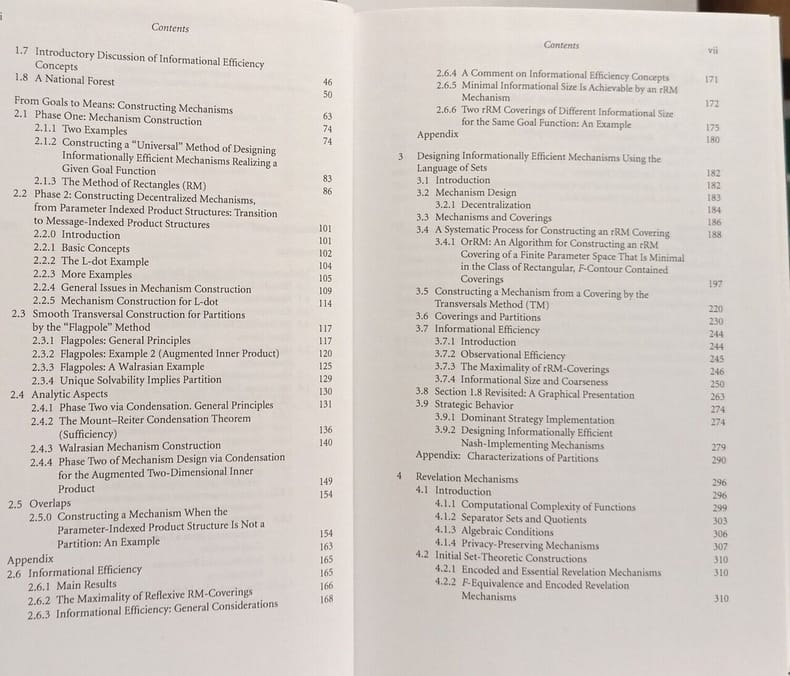
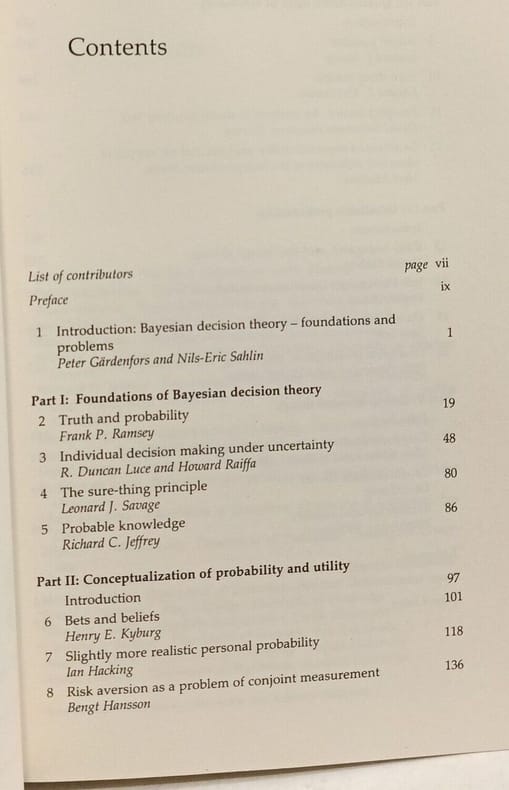
2006100138898Cambridge University Press 2006 356 pages in8. 2006. Cartonné jaquette. 356 pages.
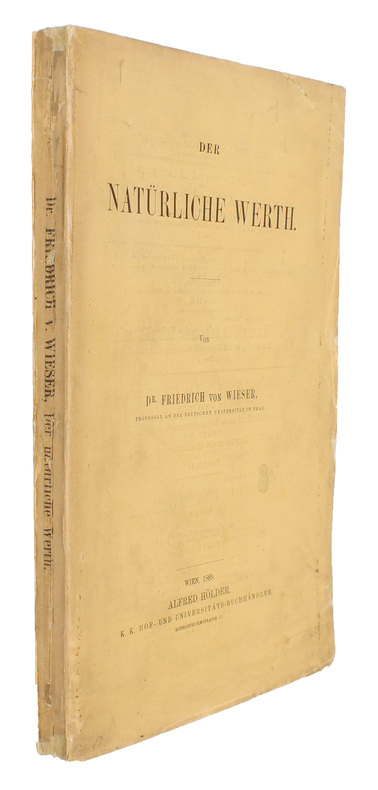
188950373Wien, Alfred Hölder, 1889. 8vo. Uncut in the original printed yellow wrappers. Light soiling and a few minor nicks to extremities. A very fine and clean copy. XVI, 239 pp.
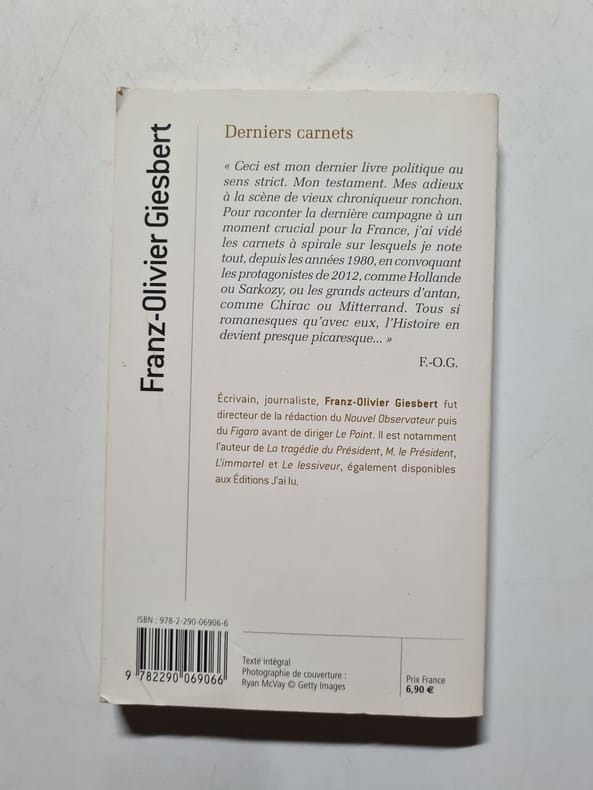
2013500281327J'ai lu 2013 224 pages 10 8x1 4x17 6cm. 2013. pocket_book. 224 pages.
191949684München und Leipzig, Duncker & Humblot, 1919. Lex8vo. 4 orig. hvellum. With many underlinings in the first half of volume one.
173661120Leipzig, 1736. 8vo. In contemporary full calf with four raised bands and richly gilt spine. Small paper-label pasted on to top of spine. A few small holes to boards, otherwise a nice and clean copy. (28), 1031, (70) pp.
184419608København., Forfatterens Forlag, 1844-53. 4 samt. hldrbd. med rygforgyldning. Lettere brugsspor. Stempel på titelblade. XII,563,705,690,976 pp. Med 2 kort, det ene håndkoloreret (Forchammers kort fra ""Danmark geognostisk beskrevet""). Indvendig frisk, få brunpletter.
184441016København., Forfatterens Forlag, 1844-53. 4 samt. hldrbd. med rygforgyldning. Rygge slidte og med krakeleringer, en ryg delvis løs. Stempel på titelblade. XII,563,705,690,976 pp. Med 2 kort, det ene håndkoloreret (Forchammers kort fra ""Danmark geognostisk beskrevet""). Indvendig udmærket, få brunpletter.
184447476København., Forfatterens Forlag, 1844-53. (vo. 4 samtidige hldrbd. med rygforgyldning. Forreste fals på bind 1 er revnet. XII,563,705,690,976 pp. Med 2 kort, det ene håndkoloreret (Forchammers kort fra ""Danmark geognostisk beskrevet""). Indvendig ren og frisk.
184031766København, Bianco Luno, 1840. Lex8vo. Samt. hldrbd. med rig rygforgyldning. Ryg med lettere brugsspor. XXIV,494,(2) pp. Indvendig frisk eksemplar.
26195(Paris), De l'Imprimerie de Georges Jouvenel, (1721). With woodcut head-piece. 12 pp. 4to. Modern boards. Not in Conlon. Printed in the upper inner margin above the head-piece "Regie de Cordier. Deuxième année" and handwritten the date and the word "Gabelles". Deals in 17 articles with these taxes, article 14, covering the pages 8-11, gives details of the bonusses to be received by the collectors of these taxes: they range from 300 to 600 livres.
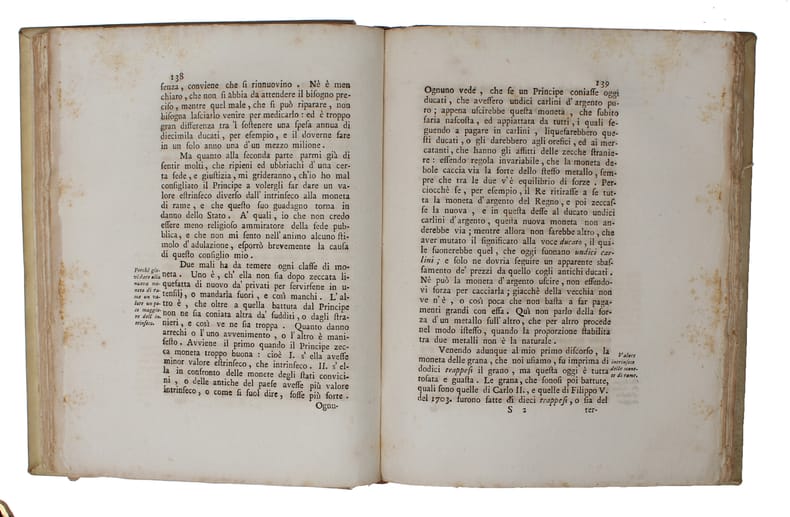
178060056Napoli, Stamperia Simoniana, 1780. 4to. In contemporary full vellum with leather title label with gilt lettering to spine. Occassionally brownspotted throughout, otherwise a good copy. (28), 416 pp.
1977100138848Institute of Economic Affairs 1977 62 pages in8. 1977. Agrafé. 62 pages.
27239Venezia, Tipografia di Antonio Curti, Presso Giustino Pasquali Q. Mario, 1797. Two works bound in one volume. viii, 207, (1) blank pp.; 68 pp. 8vo. Modern blue cloth, red label with gilt lettering to spine. First work: Sénelier 721; Dufour 169; this edition not found in RLIN or OCLC. First Italian edition of this translation, the first Italian translation (1796) was published outside Italy, in Paris. 'His fundamental thesis that government depends absolutely on the mandate of the people, and his genuine creative insight into a number of political and economic problems, gives his work an indisputable cogency. It had the most profound influence on the political thinking of the generation following its publication. It was, after all, the first great emotional plea for the equality of men in the state; others had argued that same cause theoretically but, had themselves tolerated a very different government ... it remains the crucial document of egalitarian government' (PMM).Second work: Sénelier 1470; OCLC lists copies at McGill and the Wellcome Library.First edition in Italian of Rousseau's important contribution to economics.Rousseau's article on political economy, originally written for publication in the Encyclopédie, remained his most explicit contribution to the subject. His sustained argument against luxury and conspicuous consumption of the rising European bourgeoisie implied a direct criticism and rejection of the mercantilists. His article, published well before any of the published statements of the Physiocrats, shows similarities or anticipates the physiocratic school in important issues of property and to some extent on taxation (He also cites China as an example). His Lockean discussion of the right of property and his treatment of taxation are of particular interest. Taxation is 'inevitable', and he suggests a tax on consumption, paid for by the buyer of non-essential items or services, foreshadowing modern VAT. Most importantly his single-minded opposition to economic inequality and his insistence that liberal laissez-faire was no substitute for a theory of social relations, influenced political reformers and political economists alike.Both works were translated by the Italian Niccolò Rota. - Old handwritten name on first title, light stain in upper inner margin of the first work, an uncut copy.
1988100138947Cambridge University Press 1988 462 pages in8. 1988. Broché. 462 pages.
159150430Coloniae, Ioannem Gymnicum, 1591. 4to. Bound in a very nice contemporary full calf with five raised bands, rebacked with the contemporary spine. Richly gilt spine and gilt lines to edges of boards. Contemporary handwriting to top of pasted down front free end paper. Pp. 777-798 with wormholes in margin, not affecting text. A very fine and clean copy. (76), 798 pp.(As usual with the typopgraphical errors: pp. 139, 234, 267,353, 685, 768 are numbered as 339, 202, 263, 343, 645, 778. These errors are to be found in all published copies. See Einaudi 737).
161362006Paris, Rolini Theodorici, 1613. Folio (360 x 245 mm). In contemporay full calf with six raised bands and gilt lettering to spine. Gilt ruled fillets to board and oval gilt ornamentation to front board. Binding with considerable wear, upper and lower compartment of spine with loss of leather, lower part of front board with loss of leather. Inner hinges split. Title-page with a few stains. Dampstains throughout, especially lower inner half of last leaves affected. (12), 803, (64) pp.Provenance: From the library of Valdemar's Castle, Denmark.
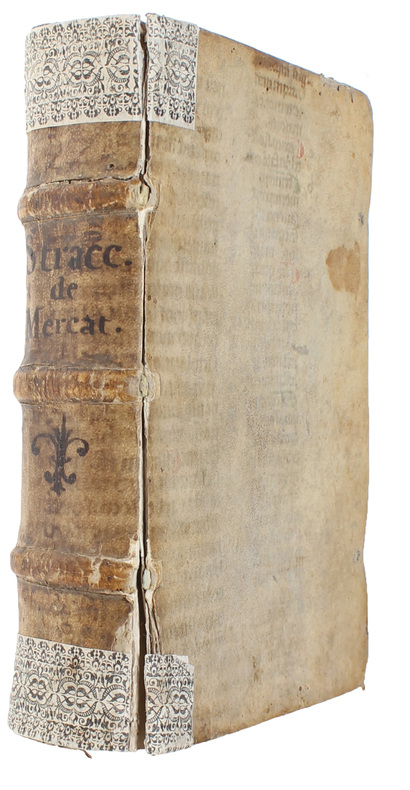
155350627Venetiis [Venice], Cum Preivilegio [Paolo Manuzio], 1553. 8vo. In a contemporary unrestored vellum binding with three raised bands. Later paper labels pasted on to upper and lower part of spine. ""Stracc. / de /Mercat."" written in contemporary hand to spine. Upper and lower part of front hinge slightly cracked. ""sum Marii D'Abbatis"" written in contemporary hand to pasted down front free end-paper. Early oval stamp on verso of title-page with monogram. Aldine woodcut device to title-page (Ahmanson-Murphy device no: B2). Occasional marginal annotations and very light occasional marginal water-staining. Tiny wormhole in blank outer margin not affecting text. A very nice, clean, and completely unrestored copy. (40), 287, (1) ff. (with the four blanks 5+6-8 and 2N8). As usual with the typopgraphical errors: ""63 '64', 85 '87', 87 '85', 102 '106', 165 '167', 174 '176', 176 '178'"". These errors are to be found in all published copies.
15622A Paris, Chez A.A. Renouard, 1822. 2 volumes. (4), 350 pp.; (4), 332 pp. 8vo. Contemporary half calf, spines gilt in compartments, gilt lettering, paper covered boards, corners. Not in Kress (cf.: 7197); not in INED (cf.: 1075); Goldsmiths 23385; Einaudi 1038. 'Chastellux's analysis of American society was both more searching and influential. A member of the French Academy, one of the founders of the social sciences, and major general on Rochambeau's staff, he was easily the foremost intellectual in the French forces in America. In ..... De la Félicité, he had sought to determine whether "society is susceptible, if not of perfection, at least amelioration," that is, of an increase in human felicity. (.....) The only possible answer was in social reform. The function of government, he posited, was to achieve "the greatest happiness of the greatest number." Man must create through the free and enlightened use of his reason a liberal government midway between the extremes of pure democracy and pure absolutism, based upon a true understanding of economic principles (Physiocracy), which would guarantee a high standard of living, adequate leisure, and the right to private property. In this work Chastellux had cited America as an example of man's ability to progress through liberty, reason, equality and agriculturism" (See at length: D. Echeverria, Mirage in the West, p. 110-14). - Somewhat paperspotted, handwritten ownership's entry "Ges. Gobin jeune" on verso front free flyleaf.
17918A Amsterdam, Chez M.-M. Rey, 1776. 2 volumes in 1. (4), xxii, 272, (2) pp.; (2), 247, (3) pp. 8vo. Contemporary marbled calf, spines gilt with raised bands. Kress 7197; Goldsmiths 11375; INED 1075; Echeverria & Wilkie 776/6; not in Sabin; not in JFBL; R. Darnton, The Corpus of Clandestine Literature in France 1769-1789, 258. Second edition, the work had been first launched in Amsterdam in 1772 before a French publisher dared to bring it on the market in France. That French publication was simultaneously with the present publication. 'Chastellux's analysis of American society was both more searching and influential. A member of the French Academy, one of the founders of the social sciences, and major general on Rochambeau's staff, he was easily the foremost intellectual in the French forces in America. In an earlier work, De la Félicité, he had sought to determine whether "society is susceptible, if not of perfection, at least amelioration," that is, of an increase in human felicity. (.....) The only possible answer was in social reform. The function of government, he posited, was to achieve "the greatest hapiness of the greatest number." Man must create through the free and enlightened use of his reason a liberal government midway between the extremes of pure democracy and pure absolutism, based upon a true understanding of economic principles (Physiocracy), which would guarantee a high standard of living, adequate leisure, and the right to private property. In this earlier work Chastellux had cited America as an example of man's ability to progress through liberty, reason, equality and agriculturism" (See at length: D. Echeverria, Mirage in the West, p. 110-14).
23848Paris, Imprimerie de Madame Veuve Bouchard-Huzard, 1865. 24 pp. 8vo. Modern boards, original green printed covers preserved. First edition. The author was 'entrepreneur de peinture' and after founding the 'Maison Leclaire' was the first in France to grant workers a share in the profits of the company. The system of Leclaire served as a model for Louis Blanc in the 4th edition of his 'Organisation du travail' (1845).The earliest example of co-partnership comes from France. In 1843 a master painter of Paris, Edme-Jean Leclaire, divided among his permanent hands (43 out of about 300 employed) the sum of 12,266 francs. The scheme met with approval and up till 1870 this " kernel," as he called it, of permanent workmen, who were members of the firm's mutual provident society, continued to take their share of the increasing profits. At no time did the members of the mutual provident society amount to more than a third of those employed. In 1870 the profitsharing was extended to all the men employed, for however short a time, and upon this basis it has continued as " Brugniot, Cros et Cie. (ancienne maison Leclaire)."