30 résultats
18930002122CROTON-ON-HUDSON WESTCHESTER COUNTY NEW YORK. Good. 1893. On offer is a super original manuscript relic of late 19th Century secret societies and fraternal organizations being an 1893 - 1895 IMPROVED ORDER OF RED MEN TRIBES Minutes Book. The book proper published specifically for the Club has printed forms for the IMPROVED ORDER OF RED MEN TRIBES. Pages on the left side of the open ledger have a Printed Heading with space for filling in information by hand. The page heading reads: "HUNTING GROUNDS OF" "WIGWAM OF" "TRIBE NO" "IMP. O.R.M." "SLEEP" and "MOON G.S.D.4" then below the heading information is printed information for the TRIBE to record Minutes Activities Events the INITIATION OF NEW MEMBERS etc. Includes such titles as: "Keeper of Wampum" "Application of Paleface" "Record of Previous Council Fire read" "Twig box was opened by" "New Business" "Council Fire was then Quenched" etc. Almost all pages are filled in with various handwritten minutes and notes about the REDMEN meetings including dates 1893-1895 place Croton-on-Hudson New York events New Member Induction Bill needing Payment Committee Reports Problem members General Problems Plans Political Stands etc. Pinned-on to one of the pages is a 2 page handwritten letter on "Improved Order of Red Men Wigwam of Kitchawau Tribe No. 237" letterhead. We cannot help but note that this book and the Society it represents predates the Washington Redskins baseball team controversy declaring the team name racist yet this fraternal organization clearly honors Native Americans and stands as an homage to their tribal attributes. Please read the Wiki article after the description. The ledger is also a treasure trove of genealogical and social history of the Westchester County area with many many names of members and their activities. The book has a leather spine and corners leather edged with gilt paper title label on front cover 8.5" x 13.5" pages printed on watermarked paper "Kenilworth" approximately 200-300 unnumbered pages. The front cover is split at its spine fold and is almost disbound. Internally a couple signatures including the first are shaky; one page is loose and is pinned-on to another page otherwise the pages are quite nice - tight bright and clean with writing that is clear and fully legible. HISTORICAL NOTES: Wiki: The Improved Order of Red Men traces its origin to certain secret patriotic societies founded before the American Revolution. They were established to promote Liberty and to defy the tyranny of the English Crown. Among the early groups were: The Sons of Liberty the Sons of St. Tammany and later the Society of Red Men. Their rituals and regalia are modeled after those used by Native Americans. The organization claimed a membership of about half a million in 1935 but has declined to less than 38000. Notable members: Theodore Roosevelt Warren G. Harding and Franklin D. Roosevelt. ; Manuscript; Folio - over 12" - 15" tall; KEYWORDS: HISTORY OF RED MEN FRATERNITY IMPROVED ORDER OF THE RED MEN KITCHAWAU TRIBE CROTON-ON-HUDSON WESTCHESTER COUNTY NEW YORK WASHINGTON REDSKINS SECRET PATRIOTIC SOCIETIES AMERICAN REVOLUTION THE SONS OF LIBERTY THE SONS OF ST. TAMMANY THE SOCIETY OF RED MEN DEGREE OF POCAHONTAS KNIGHTS OF PYTHIAS FRATERNAL ORGANIZATIONS SOCIETIES BROTHERHOODS SECRET SOCIETIES MOUND CITY LODGE PYTHIAN CASTLES PYTHIAN SISTERS DRAMATIC ORDER KNIGHTS OF KHORASSAN THE NOMADS OF AVRUDAKA PYTHIAN SUNSHINE GIRLS AND THE JUNIOR ORDER ORDER OF THE EASTERN STAR HALF CENTURY MATRONS CLUB PRINCE HALL AFFILIATION SISTERHOODS RELIGION AOKMC THE ANCIENT ORDER OF KNIGHTS OF THE MYSTIC CHAIN MASONS MASONIC FREEMASONS CHIVALRY ARCANE OCCULT AMERICANA HANDWRITTEN MANUSCRIPT AUTOGRAPHED AUTHORS DOCUMENT LETTER AUTOGRAPH KEEPSAKE WRITER HAND WRITTEN DOCUMENTS SIGNED LETTERS MANUSCRIPTS HISTORICAL HOLOGRAPH WRITERS AUTOGRAPHS PERSONAL MEMOIR MEMORIAL PERSONAL HISTORY ARCHIVE DIARY DIARIES JOURNAL LOG PRIMARY SOURCE FIRST HAND ACCOUNT SOCIAL HISTORY PERSONAL STORIES LIVING HISTORY ANTIQUITÉ CONTRAT VÉLIN DOCUMENT MANUSCRIT PAPIER ANTIKE BRIEF PERGAMENT DOKUMENT MANUSKRIPT PAPIER OGGETTO D'ANTIQUARIATO ATTO VELINA DOCUMENTO MANOSCRITTO CARTA ANTIGÜEDAD HECHO VITELA DOCUMENTO MANUSCRITO PAPEL . hardcover
186924663Boston 1869. 8vo pp. 5 self wraps uncut and unopened. Charles and 5 others ask the Commonwealth for Relief. unknown books
187912907Paris, Hachette, 1879 ; 2 tomes in-8 ; demi-chagrin rouge-cerise, fleurons décoratifs et titre dorés (reliure de l'époque) ; (12), IV, 496 ; (4), 544 pp., 2 frontispices, 9 cartes en couleurs dont 2 très grandes dépliantes en fin de chaque volume et 2 dépliantes, dont celle du fleuve Lingstone (Congo) et de ses chutes.

18872021879Washington DC : United States Senate 1887. First Edition. Hardcover. Very Good. Octavo 133 pages later red buckram; bookplate inked name on endpaper <br/><br/>Here are details on the agreement for the Chippewa tribes to locate to the White Earth Reservation - and a lot more. United States Senate hardcover
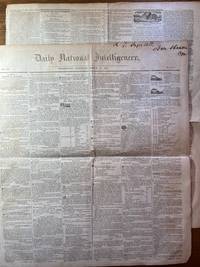
183236785Washington DC: Gales & Seaton 1832. Newspaper. Good. Newspaper. Approx. 21" x 18." 4 pages. Two folds. Sheets are detached. Newspaper has light toning. Name of R. J. Ingersoll New Haven Con" written top of issue. Possibly the same Ingersoll that served 4 terms in Congress from 1825-1833. <br /> <br /> Entire contents of page 2 concern "The Cherokee Case. Opinion of the Supreme Court delivered by Mr. Chief Justice Marshall January Term 1832. Samuel A. Worcester vs. The State of Georgia." The case is also printed on the first column of page 3. Supreme Court case of Samuel Worcester. From the Brittannica website: <br /> <br /> Worcester v. Georgia involved a group of white Christian missionaries including Samuel A. Worcester who were living in Cherokee territory in Georgia. In addition to their missionary work the men were advising the Cherokee about resisting Georgia's attempts to impose state laws on the Cherokee Nation a self-governing nation whose independence and right to its land had been guaranteed in treaties with the United States government. In an effort to stop the missionaries the state in 1830 passed an act that forbade "white persons" from living on Cherokee lands unless they obtained a license from the governor of Georgia and swore an oath of loyalty to the state. Worcester and the other missionaries had been invited by the Cherokee and were serving as missionaries under the authority of the U.S. federal government. They did not however have a license from Georgia nor did they swear a loyalty oath to that state. Georgia state authorities arrested Worcester and several other missionaries. After they were convicted at trial in 1831 and sentenced to four years of hard labour in prison Worcester appealed to the U.S. Supreme Court.<br /> <br /> Worcester argued that Georgia had no right to extend its laws to Cherokee territory. He contended that the act under which he had been convicted violated the U.S. Constitution which gives to the U.S. Congress the authority to regulate commerce with Native Americans. The Constitution also bars the states from passing laws that alter the obligations of contracts-in this case treaties. Several treaties between the Cherokee and the U.S. government recognized the independence and sovereignty of the Cherokee Nation. Furthermore Worcester argued that the Georgia laws violated an 1802 act of Congress that regulated trade and relations between the United States and the Indian tribes.<br /> <br /> The Supreme Court agreed with Worcester ruling 5 to 1 on March 3 1832 that all the Georgia laws regarding the Cherokee Nation were unconstitutional and thus void. Writing for the court Chief Justice John Marshall held that "the Indian nations had always been considered as distinct independent political communities retaining their original natural rights as the undisputed possessors of the soil." Even though Native Americans were now under the protection of the United States he wrote that "protection does not imply the destruction of the protected." Marshall concluded:<br /> The Cherokee Nation then is a distinct community occupying its own territory.in which the laws of Georgia can have no force and which the citizens of Georgia have no right to enter but with the assent of the Cherokees themselves or in conformity with treaties and with the acts of Congress. The whole intercourse between the United States and this Nation is by our Constitution and laws vested in the Government of the United States.<br /> <br /> Georgia however ignored the decision keeping Worcester and the other missionaries in prison. Eventually they were granted a pardon and were released in 1833. Pres. Andrew Jackson declined to enforce the Supreme Court's decision thus allowing states to enact further legislation damaging to the tribes. The U.S. government began forcing the Cherokee off their land in 1838. In what became known as the Trail of Tears some 15000 Cherokee were driven from their land and were marched westward on a grueling journey that caused the deaths of some 4000 of their people.<br /> <br /> The Supreme Court agreed with Worcester ruling 5 to 1 on March 3 1832 that all the Georgia laws regarding the Cherokee Nation were unconstitutional and thus void. Writing for the court Chief Justice John Marshall held that "the Indian nations had always been considered as distinct independent political communities retaining their original natural rights as the undisputed possessors of the soil." Even though Native Americans were now under the protection of the United States he wrote that "protection does not imply the destruction of the protected." Marshall concluded:<br /> The Cherokee Nation then is a distinct community occupying its own territory.in which the laws of Georgia can have no force and which the citizens of Georgia have no right to enter but with the assent of the Cherokees themselves or in conformity with treaties and with the acts of Congress. The whole intercourse between the United States and this Nation is by our Constitution and laws vested in the Government of the United States.<br /> <br /> Georgia however ignored the decision keeping Worcester and the other missionaries in prison. Eventually they were granted a pardon and were released in 1833. Pres. Andrew Jackson declined to enforce the Supreme Court's decision thus allowing states to enact further legislation damaging to the tribes. The U.S. government began forcing the Cherokee off their land in 1838. In what became known as the Trail of Tears some 15000 Cherokee were driven from their land and were marched westward on a grueling journey that caused the deaths of some 4000 of their people. Gales & Seaton unknown
18792090502128301162Oshima Katsumi 1879. Soft Cover. Fine. The book is in fine condition. Oshima Katsumi paperback
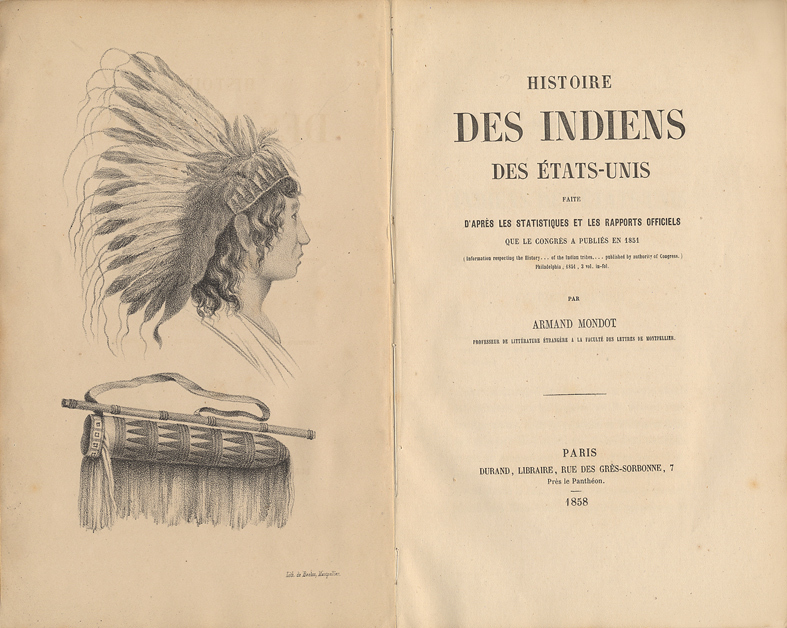
185811257Paris, Durand, 1858 ; in-8, broché ; (4), 352 pp., lithographie en frontispice, couverture imprimée.
188076162Washington:: Government Printing Office 1880. Second Edition -- With Charts. publisher's lettered cloth. Cloth worn at the spine and extremities but tight and sound; contents apart from the vertical splits mentioned above fine. . Folio. Four charts in pocket at rear of volume. Printed "Compliments" slip of Sheldon Jackson U. S. General Agent of Education in Alaska tipped onto the title page. The collectors of the materials recorded in the Schedules were E. S. Smith assisted by William J. McDonnell Winter 1892 and 1893. There are Aleutian words and phrases recorded in ms. on dozens of pages; and in addition illustrations of a side view and ground plan of a native Western Alaskan house with detailed description; drawings of characteristic features of Eastern and Western Alaskan natives snowshoes boats paddles etc. Two of these illustrated descriptive pages have neat vertical splits not affecting legibility. Government Printing Office, hardcover
1880ZB582458Washington: GPO 1880. HED 83 84 pp. newly rebound in cloth good . - If you are reading this this item is actually physically in our stock and ready for shipment once ordered. We are not bookjackers. Buyer is responsible for any additional duties taxes or fees required by recipient's country. Photos available upon request. Washington: GPO, hardcover
1888ZB518093Washington: GPO 1888. 50th Cong. 1st Sess. SED 66 4 pp. extracted from larger bound vol. good. - If you are reading this this item is actually physically in our stock and ready for shipment once ordered. We are not bookjackers. Buyer is responsible for any additional duties taxes or fees required by recipient's country. Washington: GPO unknown
1855ZB524050Washington: GPO 1855. HED 34 9 pp. paper wrappers . - If you are reading this this item is actually physically in our stock and ready for shipment once ordered. We are not bookjackers. Buyer is responsible for any additional duties taxes or fees required by recipient's country. Washington: GPO, unknown
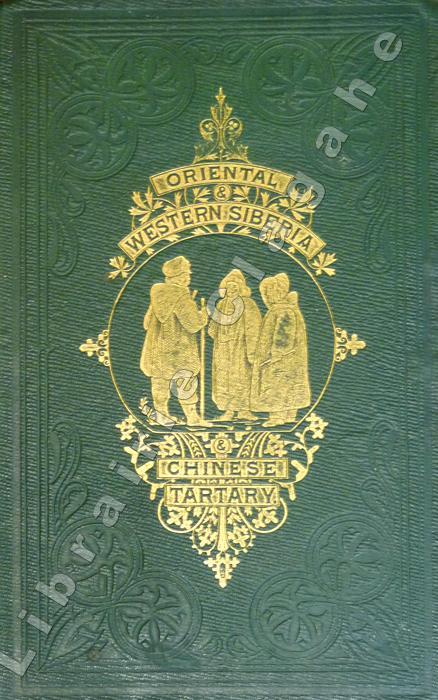
185811572Londres, Hurst and Blackett ; 1858 ; in-8, cartonnage de l’éditeur en percaline verte décorée et dorée, titre doré ; VIII, (4), 611, (1) pp., 20 planches hors-texte en chromolithographie, 32 gravures sur bois in-texte, 1 grande carte dépliante hors-texte.
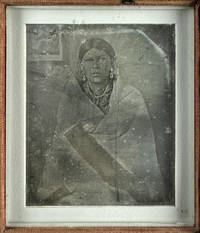
1850BB.23.009<p><em><strong>Sixth-plate daguerreotype; Accompanied by the original identification slip and research notes.</strong></em></p><p>Sixth plate daguerreotype with some slight fading and scratches professionally cleaned and recased in a modern case in 1992 with receipts for the restoration provided. Accompanied by a period inked note reading: Dwiouski / Showsky for Hannah / Ischunuongwandt / Tunangwant.</p><p>A very early image of an indigenous subject in a Hudson's Bay Company blanket. A note accompanying the photograph identifies the sitter as "Dwiousky / Showsky for Hannah / Ischunuongwandt / Tunungwant." This would identify the sitter as Seneca from the area close to the Tunungwant Creek - also known as the Tuna Creek - near the Pennsylvania / New York border in the Bradford area. The image has additional significance for its portrayal of a Hudson Bay Company blanket many of which were traded to indigenous traders in in Canada as part of the company's fur trade efforts. The Seneca traded with other tribes and it is possible the blanket was procured through intertribal trade as HBC blankets were primarily traded amongst First Nations populations to the north. Overall a very uncommon image perhaps one of the earliest photographs of an indigenous subject adorned in an HBC blanket.</p>
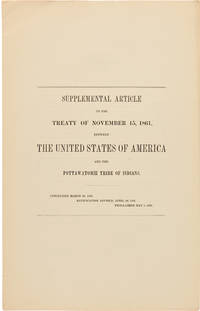
1866WRCAM50638Washington 1866. 4pp. Single folded sheet. Lightly toned. Near fine. Concluded March 29 1866 ratification advised April 26 1866 proclaimed May 5 1866. Supplement to the Treaty of 1861 which saw the Potawatomi Tribe cede more of its land in Kansas Territory. EBERSTADT 105. unknown books
182511259Paris, Parmentier ; Froment, 1825 ; in-8 ; XIX, (1), 478 pp., 2 cartes dépliantes hors-texte, couverture de relai datée de 1826 par Froment et Coste ; tome quatrième des oeuvres de Volney.
189335520Fort Smith Arkansas: Weldon & Williams Printers 1893. Hardcover. Good . Octavo. 12 272 pages. Frontispiece sketch of Ross. Dark cloth hardcover with title on the front cover. Light toning to the early pages. A few thin cracks to the hinges. Binding is sturdy and pages are clean. <br /> <br /> Howes R 462. Straight from wikipedia:<br /> <br /> William Potter Ross August 28 1820 – July 20 1891 also known as Will Ross was the Principal Chief of the Cherokee Nation 1866-1867 and 1872-1875. Born to a Scottish father and a mixed-blood Cherokee mother the sister of future chief John Ross he was raised in a bilingual home. Ross attended English-speaking schools. He attended Princeton University where he graduated first in his class in 1844.<br /> <br /> Ross served in several different roles in the Cherokee Nation. By then his uncle had been elected as principal chief. Ross became clerk of the Cherokee Senate in 1843. He became the founder and editor of the Cherokee Advocate. Later he was appointed director of the Cherokee Male and Female seminaries then served as Treasurer of the Cherokee Nation.<br /> <br /> Ross was chosen to lead the Nation by the National Council on October 19 1866 and served for several months until the election in 1867. He was later elected to succeed Lewis Downing and served from 1872 to 1875. After his term ended Ross retired to Fort Gibson where he became a merchant and practiced law. He died there on July 20 1891. Weldon & Williams Printers hardcover
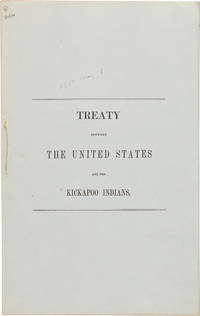
1854WRCAM50634Washington 1854. 6pp. Printed on blue paper. Folio stitched as issued. Concluded May 18 1854 proclaimed July 17 1854. Important Indian treaty accomplished during the Pierce administration in which the Kickapoo tribe ceded to the United States their lands southwest of the Missouri River in Kansas. The compensation given the Indians was $300000. It was concluded May 18 1854 and proclaimed July 17 1854. EBERSTADT 61. unknown books
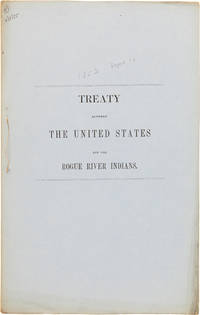
1855WRCAM50640Washington 1855. 7pp. Printed on blue paper. Folio stitched as issued. Gatherings loose. Edges toned internally clean. Very good. Concluded September 10 1853 proclaimed February 5 1855. Concluded by Joel Palmer at Table Rock in Oregon Territory. The Rogue River tribe agrees to sell their lands between Rogue River and Siskiyou Mountains in return for $60000. EBERSTADT 109. unknown books
1866WRCAM50657Washington 1866. 6pp. Folio gathered signatures. Mild soiling and toning. Very good. After the Civil War the government moved quickly to control the western Indian tribes and this treaty is one of the first actions taken. The treaty was concluded Oct. 19 1865 at Fort Sully Dakota Territory amended and proclaimed March 17 1866. The treaty calls for the Sioux's subjugation to the U.S. government the ceasing of Sioux attacks on whites and their withdrawal from overland routes made through their country. The government agrees to pay them $7000 annually for twenty years for allowing free travel on these routes. The treaty is signed in print by Brig. Gen. Sibley among others. EBERSTADT 130. unknown books
1866WRCAM50650Washington 1866. 7pp. Folio. Gathered signatures. Small loss to bottom corner of front leaf scattered foxing. Very good. Concluded Oct. 14 1865; ratification advised with amendment March 5 1866; proclaimed March 17 1866. "Stipulates a cessation of hostilities and depredations by the various bands and their withdrawal from the overland routes established or to be established through their country" - Eberstadt. EBERSTADT 130. unknown books
1866WRCAM50658AWashington 1866. 6pp. Folio gathered signatures. Small tear to outer margin light toning. Very good. Concluded October 10 1865 ratification advised with amendment March 5 1866 proclaimed March 17 1866. The Minneconjou Sioux were given $10000 annually for twenty years in exchange for vacating the land where overland routes had been established by the U.S. Government. EBERSTADT 130. unknown books
1866WRCAM50658Washington 1866. 6pp. Folio gathered signatures. Small tear to outer margin light toning. Very good. Concluded October 10 1865 ratification advised with amendment March 5 1866 proclaimed March 17 1866. The Minneconjou Sioux were given $10000 annually for twenty years in exchange for vacating the land where overland routes had been established by the U.S. Government. EBERSTADT 130. unknown books
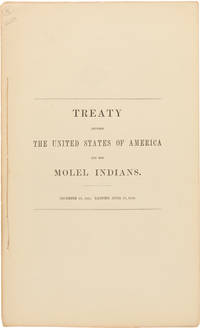
1859WRCAM50636Washington 1859. 5pp. Folio stitched as issued. Light toning to edges else very clean. Very good. Concluded December 21 1855 ratified April 27 1859. Signed at Dayton Oregon and addressing land cessions in the Cascades. EBERSTADT 76. unknown books
1866WRCAM7377AWashington 1866. 6pp. Folio. Gathered signatures. Minor toning and wear. Very good. Concluded by Newton Edmunds and Gen. H.H. Sibley at Fort Sully Dakota Territory; ratified March 5 1866; and proclaimed by President Johnson on March 17. This treaty saw the O'Gallala Sioux tribe agreeing to peace with the government and with neighboring tribes as well as the ceding of land for the sum of $10000 a year for twenty years. EBERSTADT 130. unknown books
1866WRCAM7377BWashington 1866. 6pp. Folio. Gathered signatures. Minor toning and wear. Very good. Concluded by Newton Edmunds and Gen. H.H. Sibley at Fort Sully Dakota Territory ratified March 5 1866 and proclaimed by President Johnson on March 17. This treaty saw the O'Gallala Sioux tribe agreeing to peace with the government and with neighboring tribes as well as the ceding of land for the sum of $10000 a year for twenty years. EBERSTADT 130. unknown books