The Association of Desk & Derrick ClubsBiblio.com

174 résultats
20071-159370108XPennwell Corp 2007. Paperback. New. 6th edition. 323 pages. 7.75x5.00x0.75 inches. Pennwell Corp paperback
0878144226New. paperback. New. Satisfaction Guaranteed or your money back. paperback
1897017697Washington DC: National Association Democratic Clubs; Norman T. Elliott Printer 1897. Published 1897. Program speeches and more in a long tradition of celebrating Jefferson's birthday including details of the first celebration in 1830. Includes list of subscribers to the dinner national in scope. Illustrated throughout in black and white. Green cloth printed in gilt 103 pages. Covers edgeworn and somewhat soiled hinges good text block slightly shaken foxing to endpapers and first and last several pages some edgewear to pages inscription by W. S. McKean Publisher of Ocean City News to W. J. Oetzel on front pastedown. Hard Cover. Fair. 8vo - over 7¾" - 9¾" tall. National Association Democratic Clubs; Norman T. Elliott, Printer Hardcover
1990159613San Francisco: 6th Street Rendezvous 1990. Vintage flyer for an unidentified show at The 6th Street Rendezvous also known as Chel's Rendezvous San Francisco on Monday July 23 1990. <br /> <br /> Flyer features a collage of portraits including Ronald Reagan George H.W. Bush Carly Simon Spiro Agnew Miles Davis and a Gary Panter / Big Daddy Roth-style cartoon character among others.<br /> <br /> The 6th Street Rendezvous was a short-lived nightclub on 6th Street between Market Street and Mission Street in San Francisco. Located in a decidedly unsafe block of the city in the late 1980s and early 1990s the 6th Street Rendezvous was a popular makeshift club and dive bar for local and touring experimental and art rock bands.<br /> <br /> 8.5 x 11 inches. Very Good plus with several small pinholes. 6th Street Rendezvous unknown
1905008595San Francisco: The Club Woman's Guild 1905 Paper. Near Fine. Soft cover. Tall quarto. 14x8 inches. 16pp. Publisher's tan pictorial wrappers printed in black with photographic portrait on cover by J. C. Rasmussen. List of all San Francisco clubs on inner cover. Short closed cut to upper edge of leaves. "Marked Copy" stamped in red at top of front cover. Two minor markings within text. Light vertical crease at center of leaves. A near fine copy. First edition. Volume 3 Number 7. Very scarce! Published monthly Club Life was the official organ of the California Federation of Women's Clubs and the International Sunshine Society. We suspect that most all copies of this periodical were destroyed in the 1906 San Francisco earthquake and fire. Original subscription order form laid in. At the time of this writing OCLC locates only 4 odd issues of this periodical. . The Club Woman's Guild paperback
4736s. l. et a. 'As existing on 1st January 1878.'. See 'The club of 'Nobody's Friends' 1800-2000: a memoir on its two-hundredth anniversary' by Geoffrey Rowell 2000. Four-page bifolium. Good on grubby discoloured paper with some creasing and wear at foot. Gives details of the election between 1820 and 1877 of fifty-nine Actual Members and of eighteen Honorary Members. Includes the Rev. Charles Burney the artist George Richmond and the publisher John Murray. [s. l. et a.] 'As existing on 1st January, 1878.' unknown
0933112068-11-1Mich United Conservation Club. Rev. and updated. Very Good. It's a well-cared-for item that has seen limited use. The item may show minor signs of wear. All the text is legible with all pages included. It may have slight markings and/or highlighting. Mich United Conservation Club unknown
1934100704Reynal & Hitchcock. Very Good in Very Good dust jacket. 1934. First Edition. Hardcover. Hardcover in dust jacket. Brown cloth boards clean bright and square mild age toning and shelf wear to edges. Protected price unclipped dustjacket sharp general age toning short closed tear and general shelf wear to edges. Book firm in binding 110 pages include Lists of Buildings Artists and Bibliography b&w and color plates. Previous owner's name on front free endpaper. Else -- Free of any markings not ex-library. ; 4to 11" - 13" tall; 110 pages . Reynal & Hitchcock hardcover
0875881424New. New. Satisfaction Guaranteed or your money back. unknown
23913Westley’s letter dated 17 June 1935; on his letterhead ‘City of London Piscatorial Society. / Headquarters: “Crown & Cushion†73 London Wall E.C.2.’ Printed programme for 1935-36; application form same address as letterhead from 1930s. A nice slice of London ephemera. The three items are in good condition lightly aged. They were clearly all sent together. ONE: ALS from Westley ‘W. Westley Hon. Sec.’ to unnamed recipient. 2pp 12mo. In answer to an application he is sending ‘one New Programme showing Waters &c’ pointing out that not all are ‘Trout Waters’ and that ‘about 30% of the Members only take part in competitions’. He explains that they have had good he mistakenly writes ‘few’ membership over the previous two years ‘but at the present time there are a few members’. TWO: Printed ‘C.L.P.S. / Programme 1935-36’. 10pp 16mo. Attractive little item in grey cloth covers with title printed in black on front. In good condition apart from rusty staples. Lists committee and officers fishing waters outings and meetings for season 1935-36 including sea outings regulations governing fresh water competitions prizes for 1935-6 perpetual challenge cups fish general notices. THREE: Printed ‘Application for Membership’. Not filled in. 1p 12mo. Includes questions such as ‘Has your application for membership of an Angling Club or Society ever been declined’ Westley’s letter dated 17 June 1935; on his letterhead, ‘City of London Piscatorial Society. / Headquarters: “Crown & Cush hardcover
199266610Kansas City: United Federation of Doll Clubs Inc 1992. First Edition; First Printing. Softcover. Very Good in wrappers. ; 4to - over 9¾" - 12" tall. United Federation of Doll Clubs, Inc unknown
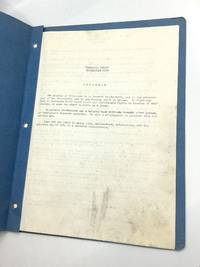
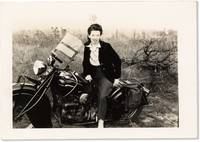
76902The charter rules of Barbaric Creed a Harley Davidson motorcycle club which likely was formed in Southern California in the 1970s. The four-page document is housed in a commercial blue cardstock folder with no date or location. There are no mentions of Barbaric Creed in newspaper reports or in references on 20th century motorcycle clubs. The date and location offered are presumed because of unrelated materials acquired along with this folder.<br /> <br /> The first page of the document is a preamble which is followed by three pages of rules concerning membership recruitment and conduct. In addition to being Harley Davidson riders only members are required to attend 2/3 of meetings and be "responsible for their prospects and their ol' ladies actions."<br /> <br /> Given the menacing name and some of the language in the rules it appears the club was in the "outlaw" camp. Members could not join other clubs or belong to law enforcement anyone who left the group was required to forfeit their colors and any "beefs" would be settled internally. The rules conclude: "This club does not condone the use or possession of drugs alcohol or any controlled substances This is just a disclaimer of responsibility. If any member or members engage in illegal activity that's your business. Don't involve the club. Don't even think about rippin off a brother - it will be your ass if you do."<br /> <br /> A unique and compelling internal document from the underground world of postwar American motorcycle clubs and gangs. unknown
19281242576New York: National Federation of Business and Professional Women's Club 1928. 1st Edition. Hardcover. Bound journal containing all 12 issues from 1928 Jan-Dec. The covers are bound in as well as the text. Very good condition. Black buckram cloth some spotting. Old mailing label on front covers else the interior is fine. Contains a wealth of articles pertinent to professional women of the Roaring 20s. National Federation of Business and Professional Women's Club hardcover
197327913red filed C: Book Committee of the Southminster and Furness Ladies Clubs 1973. Hardcover. Good. Condition good. ref ZKVQ No dust jacket Book Committee of the Southminster and Furness Ladies Clubs hardcover
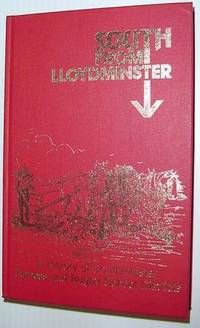
1973125a5508Saskatchewan: Book Committee of the Southminster and Furness Ladies Clubs 1973. Book. Fine. Hardcover. First Edition. 8vo - over 7¾" - 9¾" tall. 280 pages. Many reproductions of archival black and white photos. Contains considerable information about local familes. Clean bright and unmarked with lightest wear. An excellent copy. Book Committee of the Southminster and Furness Ladies Clubs Hardcover
26384Oxford. Between 1910 and 1914. 10 printed items. In aged and worn condition with seven items showing evidence of removal from an album and three items still attached to separated leaves from it. Comprising three card menus five seating plans a list of 'Resident Members' and a newspaper cutting. The Oxford New Tory Club was a university club to promote and discuss Tory principles founded in 1861. Its records are in the Bodleian Library. ONE to THREE: menus for the years 1912 1913 and 1914. Each a bifolium on card of 3pp. 12mo. The first two 1912 and 1913 are to 'The Annual Dinner of the Canning and Chatham Clubs at the Randolph Hotel Oxford and the third for 'the Canning Chatham and New Tory Clubs at the New Masonic Buildings Oxford Saturday June 6th 1914. Toasts involve Lord Robert Cecil Harry Chaplin Lord Balfour of Burleigh Viscount Woolmer. The seating plans are from 1910 1911 3 1913 and 1914. FOUR to EIGHT: Five seating plans 1910-1914. All 1p. 8vo. Item Four tipped-in onto card is headed 'Oxford Canning and Chatham Clubs Dinner Masonic Buildings High Street Oxford Friday June 17th 1910.' Guests include Sir Henry Bliss Lord Selborne and J. St Loe Strachey. Item Five is headed 'The New Tory Club Dinner Friday March 17th 1911.' W. G. Ormesby-Gore F. E. Smith Viscount Woolmer. Item Six: 'Jubilee Dinner of the Oxford Canning Club Randolph Hotel May 31st 1911' Lord Hugh Cecil; Lord Lamington Lord Curzon of Kedleston. Item Seven: 'Oxford Canning and Chatham Clubs Dinner Randolph Hotel Oxford Friday June 13th 1913.' Lord Salisbury Rev. R. A. Knox Hon. Henry Lygon. Item Eight: 'Oxford Canning Chatham and New Tory Clubs Dinner New Masonic Buildings Saturday June 6th 1914.' Count Potocki Viscount Cranborne. NINE: List headed 'Oxford Canning Club. Founded 9th of December 1861. "Sceptra fide frenis plebs eget ara metu." Resident Members Summer Term 1910.' 1p. 8vo. Margins trimmed at head and foot. Laid down on card. List in two columns cinluding officers and 'Committee of Selection' including R. A. Knox. TEN: Newspaper cutting titled 'Oxford New Tory Club. The Annual Dinner. Mr. F. E. Smith K.C. M.P. and the Unionist Party.' In three columns totalling 75 cm. laid down on card headed in manuscript: '1st Dinner given at the N.T. Club 1911'. Sub-heading's read 'Mr. Smith's Speech' 'Truncated and Inferior Constitution' and 'A United Party'. Oxford. Between 1910 and 1914. unknown
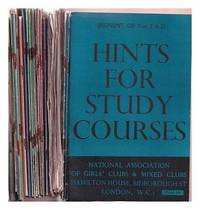
1949369156London: National Association of Girls' Clubs & Mixed Clubs 1949. First Edition. Softcover. Near fine set in the original stiff-card wrappers; edges very slightly dust-dulled and toned. Remains particularly and surprisingly well-preserved; tight bright clean and especially sharp-cornered. Physical description; 49 pamphlets. Contents; Hints for Study Courses 5 pamphlets ; Fun and Games ; Youth Leadership: careers for Men and Women series 44 ; Entertainment Films for Children: 1949 ; A Village Club ; Opportunities for Young People to Serve the Community: December 1952 ; Physical Recreation for Mixed Groups ; The Organisation of Team Games and Competitions ; What is the National Association of Girls Clubs & Mixed Clubs ; Management or Advisor Committees ; Youth Service To-Morrow: a report of a meeting arranged by King George's Jubilee Trust and held at Ashridge 27th-30th April 1951 ; In the Service of Youth: the report of a National Conference of Juvenile Organisations Committees held at Cheltenham in February 1939 ; International Education: a handbook for Teachers and Youth Leaders ; Girls' Club Journal: October 1936 ; Hours Away from Work: Boys in Mixed clubs: a study of interests ; Town and Country Planning Association 1899-1962: sixty-third annual report ; report of National Club Members' Conference: held at St. Hugh's College Oxford from Friday March 28th to Monday March 31st 1930 ; Holiday House Handbook three copies ; World Friendships three copies ; Club Girls and Their Interests ; Advisory Committees 6 copies ; Raising Money 2 copies ; A Survey of Mixed Clubs by Margaret G. Allen 2 copies ; Can We Help You: some ways in which the Oxford Federation of Girls; & Mixed Clubs can help affiliated clubs 13 copies. Subjects; National Association of Girls' Clubs & Mixed Clubs. London: National Association of Girls' Clubs & Mixed Clubs paperback
193013913New Jersey: Private 1930. First Edition Thus. Leather bound. Very good. Original album with photos ledgers scoring records and articles from various New Jersey Rifle Clubs of the 1930s including The Ridgewood Rifle Club The Jersey Rifle Association and The Garden State Rifle League. Folio 28pp 468pp. Three-quarter morocco four raised bands title in gilt on spine. Newspaper clippings of shooting competition records and wins affixed to leaves 28 unpaginated; 1-37pp of ledger. Hundreds of additional leaves with handwritten notes specifically records of car part sales to various New Jersey automotive garages. Additional items laid-in include an 8x10 photograph of the Ridgewood Rifle Club members three used card stock targets and a series of official reports from matches and game associations. Solid text block wear to covers and spine splitting to hinges. A unique piece of ephemera. Although the original compiler of this album is unknown certain names frequently appear throughout including Charlie Vanderbush and Bill Troeger. Private unknown
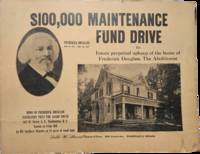
1920List3307Evansville Indiana: N.p. 1920. Poster on heavy cardstock measuring 14 x 10 ¾ inches. Wrinkling and some water stains; very good plus. A poster advertising a fundraising drive to preserve Cedar Hill the home of Frederick Douglass in Washington D.C. The drive was organized by the National Association of Colored Women’s Clubs an early civil rights group then headed by Sallie Wyatt Stewart 1881–1951. Stewart was an educator and activist from Evansville Illinois; she was president of the Indiana Federation of Colored Women and served on the executive board of the National Association of Colored Women among numerous other activities. The NACWC along with Douglass’ widow’s Frederick Douglass Memorial and Historical Association completed their restoration of Cedar Hill in 1922 and owned the property until it was taken over by the National Parks Service in 1962. N.p. unknown
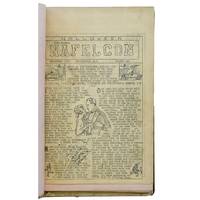
19252071<p>13-3/4 x 9 inches. Unpaginated issues approx. 300pp total. Includes a total of 27 complete issues: Vol. 1 Nos. 1-12 including two different issues of No. 10; Vol. 2 Nos. 1-12; and Vol. 3 Nos. 1-3 plus the first two leaves of No. 5. Bound in dark brown cloth with gilt lettering to front board issues mimeographed on different colored sheets mimeo illustrations throughout. Boards worn rubbed and spotted with fraying to corners; chipping to foot of endpaper and edges of Vol. 2 No. 1; newspaper clippings pasted to inside front cover and front endpaper; light soiling to endpapers; at least one leaf of Vol. 3 No. 5 roughly excised. Occasional pencil marginalia possibly in the hand of Jean Monk himself.</p><p>Bound volume of over two years of this monthly publication of the National Fellowship Club a social group for Washington's lonely hearted. Founded around 1921 as the Lonesome Club of the Wilson Normal Community Center to create social opportunities for the influx of single people over 35 to the city during WWI the group acquired Jean Monk's services as president in 1922. It briefly became the Washington Pastime Club which issued a periodical called The Lonesome Bug before being renamed the National Fellowship Club in 1924.</p><p>The club met every Thursday evening to dance and later other evenings of the week as well. Eventually the Club claimed a membership of between 3000 to 4000."There are multitudes of men and women here far from home and without friends or acquaintances" Monk is quoted as saying in the Evening Star. "This club stands ready to welcome them to invite them to spend a pleasant and profitable evening and to offer them our fellowship and assistance in meeting others who like themselves perhaps are strangers in a strange land." Evening Star Dec. 28 1924</p><p>The newspaper includes information on upcoming dances as well as a section called "Fellowship Funnies" editorials news about other social clubs illustrations of costumes for different themed dances poems short narratives and even the occasional screed by Jean Monk about patriotism the "supreme good" and other topics.</p><p>Rare. We find no record of this or <em>The Lonesome Bug</em> in OCLC or other online records.</p> Jean Monk hardcover
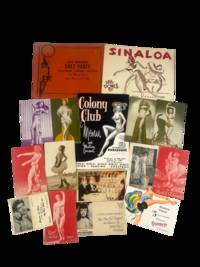
1920222911920. Promotional materials and photographs documenting burlesque and nightclub performance in the United States between the 1920s and 1950s record the visibility of women performers within commercial entertainment industries centered in cities such as San Francisco and Las Vegas. These materials identify venues including Chez Paree the Colony Club Queen Night Club Stardust and Sinaloa and present showgirls and dancers within staged social and promotional contexts providing evidence of women's participation in nightlife economies during a period of restrictive gender norms. The archive supports research into women's labor history performance culture and the development of American nightlife as a commercial and social institution.<br /> <br /> Archive consists of fifteen pieces including photographs printed menus advertising postcards and novelty correspondence materials ranging in size from postcard format to larger menu broadsides and mounted souvenir folders. Photographs depict performers in sequined and feathered costumes on stage and within nightclub interiors as well as patrons posed in social settings documenting both performance and audience environments. Printed materials include a die cut menu and showbill from the Colony Club advertising a "Battle of the Burlesque Queens" alongside dining service an illustrated promotional letter card for the same venue incorporating humorous and suggestive language and a stylized menu from Chez Paree featuring modernist figure drawings. Additional postcards and advertisements depict named or unnamed performers in dance poses pinup style imagery and cartoon illustrations often accompanied by venue addresses and promotional text with some designed for mailing as souvenirs or folded correspondence.<br /> <br /> These materials were produced during a period when burlesque and nightclub entertainment operated as significant sectors of urban leisure culture combining performance dining and social interaction within commercial venues. The prominence of showgirls in promotional imagery reflects both the marketing strategies of these establishments and the central role of female performers in attracting audiences and shaping nightlife identity. The archive documents the expansion of entertainment circuits linking cities such as San Francisco and Las Vegas and the integration of visual promotion into the business of performance. Minor toning and edge wear to some pieces with photographs remaining clear and printed materials legible; overall very good condition. This archive provides concentrated primary documentation of mid twentieth century burlesque culture and the commercial presentation of women in American nightlife. unknown
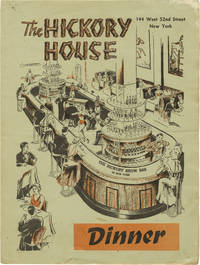
1940158584New York: The Hickory House 1940. Vintage three-color dinner menu from the renowned 52nd Street jazz club circa 1940s with a "Chef's Special" card stapled to the top outer corner of the second leaf.<br /> <br /> One of the longest running and premiere jazz clubs of "Swing Street" as 52nd Street between Fifth and Seventh Avenues was known in the 1930s through the 1950s Hickory House was opened shortly after the repeal of Prohibition in 1933 by impresario John Popkin. Featuring a huge oval music bar depicted on the cover of the menu on offer here Hickory House was both a swing venue and the spot to grab dinner and cocktails before a show. A musician's club Hickory House presented and served jazz luminaries for three decades. Among those known to perform or frequent the venue included Duke Ellington Louis Armstrong Benny Goodman Artie Shaw and Thelonious Monk among countless others many of whom were known to be found sitting in with the house band The Hickory House Trio Marian McPartland Bill Crow and Joe Morello on Sunday afternoons in the 1950s. In 1956 jazz pianist and composer Jutta Hipp released two acclaimed Blue Note albums recorded at the club "At the Hickory House Volume 1" and "At the Hickory House Volume 2." By the mid 1960s the venue was one of the last of the jazz clubs left on 52nd street and by the end of the decade closed. As noted on the back of the menu "Life! Life! From ten thirty until scrambled eggs there is always a popular swingy rhythm band to beat out tuneful and catchy syncopations in their own inimitable style."<br /> <br /> <br /> 10.75 x 14.25 inches bi-fold. Very Good plus with light soiling rubbing and edgewear overall and a faint horizontal crease. The Hickory House unknown
81167St. Louis: Ozark M.C. 1927-1942. A rich archive of original source documents for one of the earliest motorcycle clubs in the Midwest with clear precursors to the "Outlaw" clubs of the post-WW2 era. Includes minute books for the Club's primary years of activity; founding documents including draft Constitution and By-Laws; membership rolls; correspondence; printed and promotional ephemera and photographs complete inventory in note below. Condition generally Good or better with expected aging to some documents and a few in fragile condition. The archive has been removed from the decomposing ring binders in which it was originally housed and organized into manila file-folders respecting where possible the as-found order of contents. The original binders have been retained and are included with the archive. The entirety comprises sixteen file folders housed in two hinged Hollinger boxes occupying about half a linear foot.<br /> <br /> <br /> INVENTORY:<br /> <br /> BOX 1: <br /> <br /> Folder 1. By-Laws and Constitution. Ten items including five drafts in mimeograph with extensive holograph edits; one apparently final draft in typescript on lined paper; related documents including roster of charter members with addresses; suggestions for effective Presidency; directory of other regional motorcycle clubs. <br /> <br /> Folder 2. Minutes June 15 1928 - October 18th 1929. Continuous; 32 leaves used plus 12 blank<br /> <br /> Folder 3. Minutes Jan 8 1937 - December 24th 1937. 24 leaves fully used recto & verso<br /> <br /> Folder 4. Minutes Jan 7 1938 - December 30th 1938. 21 leaves fully used recto & verso<br /> <br /> Folder 5. Minutes Jan 6 1939 - March 1 1940. 26 leaves most used recto & verso plus about 20 blank leaves as found. Entry for March 1 1949 is annotated possibly at a later date: "This is last meeting." <br /> <br /> Folder 6. Membership Forms 1935 - 1939. 33 numbered completed forms plus two unnumbered completed in holograph with name date of application record of membership vote and signatures. This presumably comprises a complete list of all Club members from 1935-1939.<br /> <br /> Folder 7. Miscellaneous correpondence 1930 - 1942. Twelve pieces on various subjects including political statements apparently by Michael Verderber not related to Club activities. Envelopes laid in as found. <br /> <br /> Folder 8. Printed and promotional items. Six pieces produced by the Club and by others. <br /> <br /> Folder 9. Midwest Motorcycle Association. Two pieces documenting an attempt by Ozark M.C. members to start a rival association to the American Motorcycle Association. <br /> <br /> Folder 10. Races Meets and Competitions 1932 - 1939. Sixteen pieces including correspondence race forms sanctioning certificates and related materials relating to competitions and Club meets. <br /> <br /> Folder 11. American Motorcycle Association 1930 - 1941. Eight items including correspondence bulletins and blank forms from the American Motorcycle Association the main sanctioning body for motorcycle clubs across the U.S. <br /> <br /> Folder 12. Ephemera including event tickets pit passes business cards club receipt book for 1936. Nine unique items some present in multiples. <br /> <br /> Folder 13. Photographs. Thirty-nine vintage silver-gelatin photographs most measuring 3" x 5" or the reverse; a few smaller; also twenty-three original negatives some but not all replicating the prints above. <br /> <br /> Folder 14. Photographs. Three larger format vintage silver-gelatin photographs two measuring ca. 8" x 10"; the third 5" x 7" on card mount this image fully cracked through image at lower third; verso of board held together with masking tape. <br /> <br /> Folder 15. Michael Verderber personal. Two items relating to 1943 registration certificate for Verderber's Indian Model "4" motorcycle.<br /> <br /> Folder 16. Fragments and extraneous envelopes as found. <br /> <br /> BOX 2: Remnants of 3 original binders from which the archive was removed. <br /> <br /> -------------------------------------<br /> <br /> The original Ozark Motorcycle Club was founded in 1927 by a group of twenty St. Louis cycling enthusiasts including Mike Verderber who appears to have been the original keeper of these documents Louis Ahrens first President Fred Tremozini Vice President Hank Eiler and sixteen others. It is unclear when the group began holding formal meetings; extant minutes for this iteration of the club begin with June 15 1928 and end without warning or explanation on Oct 18 1929 leaving about twenty blank leaves in the minute book. As this last recorded meeting was held just six days before the stock market crash the cause for this cessation of club activities may be conjectured. We can find no public mention of the Club in its pre-Depression phase; the minute book included here would appear to be the only record of its existence. <br /> <br /> The Club was reconstituted on August 16 1935 in the depths of the Great Depression by Verderber and about twenty others. Included here are multiple drafts both in manuscript and mimeograph for the new Club's Constitution and By-Laws which specify that members shall be "White Male Riders and Owners of Motorcycles" emphasis in the original but "may bring their wives or such persons as they see fit to club-affairs." The earliest minutes appear to be missing but the archive's record of meetings is complete from January 1937 to March 1 1940 which appears to have been the Club's last official meeting so marked in the minute book though other evidence included in the archive suggests that the club persisted for at least a few more years perhaps more as a social group than a functioning organization. For the first two years meetings focus mostly on club events including meets tours and rallies. The availability of beer at meetings is a topic that arises with some frequency as does the matter of the American Motorcycle Association for which at least a few members express strong antipathies see our note regarding Outlaw motorcycle clubs below; at one point it appears that a club faction even attempts to launch their own regional association the Midwest Motorcycle Association to challenge the AMA's supremacy in the promotion of meets "gypsy tours" and hill climb events. Eventually the Ozark M.C. appears to have made the decision to affiliate with the A.M.A. though we mysteriouly do not find any vote for this decision in the meeting minutes just correspondence from the AMA sanctioning club events but it clearly cost the club some members: by 1938 membership had dwindled from 22 riders to no more than a dozen. In later years beginning especially around mid-1939 meetings address with increasing urgency the Club's dwindling membership and futile attempts to collect dues from the many members in arears. By early 1940 it seems the eight remaining members can agree on very little; the minutes grow sparse and by March of that year the Club appears defunct. <br /> <br /> This winding narrative is supported by the archive's many other documents including correspondence which includes several lengthy letters from club president Verderber to prominent public figures including Franklin Delano Roosevelt publicity materials and especially photographs which are remarkable: all are vernacular nearly all captioned with names and dates taken during biker events throughout the midwest evoking the rough-and-tumble nature of early cycling events and the decidedly proletarian milieu in which they took place. "Outlaw" culture was still a few years away from being fully articulated by clubs such as The Outlaws The Boozefighters The Bandidos and others; but its roots are most definitely to be found among these risk-taking beer-drinking blue-collar riders of the Great Depression.<br /> <br /> The roots of Outlaw motorcycling in America have been widely documented typically traced to the years directly after the Second World War when returnig G.I.'s out of work and deprived of the close bonds they'd formed in battle found an outlet in the rough and occasionally dangerous world of open-road cycling. "Outlaw" Clubs - those that refused to affiliate with the American Motorcycle Association a commercial trade organization founded in 1924 - developed a mostly undeserved reputation for antisocial and sometimes violent behavior cemented in the public imagination by the 1953 Marlon Brando film The Wild One and its many imitators. But as is clear from the evidence in this archive an independent and contrarian spirit prevailed even in the pre-War years and we suspect it was members of Depression-era clubs such as this one who were most active in forming the post-war Outlaw clubs. In fact Verderber in one telling line from a long letter to his girlfriend included here describes himself as an "outlaw" rider - then thinking better of it crosses the word out and replaces it with "independent." By war's end such reticence would be a thing of the past; independent bikers would begin wearing the "outlaw" label proudly and defiantly. And though the use of the term "outlaw" before the war is hardly unnown - the Outlaws M.C. of Chicago were using it as early as 1935 - documentation of these pre-War motorcycle clubs is nearly non-existent making the current archive an invaluable resource for both the study of working-class culture in the midwest and one of the earliest instantiations of a uniquely American subculture. unknown
1940169491United States: c.1940-60. A visual record of a rarely seen and poorly documented world - an accidental history An unusually extensive group of these evocative "table photographs" striking records of largely African-American audiences in the glamorous sociable and intentionally inclusive world of mid-century nightclubs. Shot by in-house photographers developed on site and sold for a dollar at the end of the evening these quick souvenirs now amount to a rare visual history of a poorly documented milieu. As Gold notes they "turn the camera round": instead of performers we see the audiences - a critical part of what Jason Moran calls the jazz "ecosystem." The collection offers a nationwide survey of venues from the extravagant to the resolutely down-home. At New York's Café Zanzibar with its spectacular floor shows and "Zanzibeauts" the audience was integrated but largely white prompting Langston Hughes's caustic observation about the seating hierarchy - an impression borne out by the image here. Detroit's Gay Bar Lounge another "black and tan" joint catered to a mostly Black clientele and offered a rougher edge: in 1947 the barkeep famously shot two stick-up artists with the.38s kept beneath the cash register. Equally compelling are the histories of Black enterprise that surface. Oakland's Athens Elks Cocktail Lounge home to Lodge 70 of the Improved Benevolent and Protective Order of Elks of the World stood at the centre of West Oakland's vibrant musical scene hosting countless jam sessions and serving as the informal checkpoint for touring African-American musicians. In Los Angeles Dootsie Williams's Dooto Music Center founded by the trumpeter-turned-entrepreneur provided one of the city's foremost Black cultural venues praised by the Los Angeles Sentinel as "the most-needed cultural and recreation center in Southern California." The photographers themselves remain surprisingly elusive though a few can be traced. In Columbus George Pierce ran a record shop and studio in Bronzeville and supplied images to the Ohio Sentinel and other regional papers; in Detroit Earl Fowler's Top Hat Photo developed into a significant presence in the Black Press with Fowler later serving as chief of the Los Angeles bureau of Now! magazine. Beyond these contexts the photographs' enduring appeal lies in the human dramas unfolding across their tabletops: the conviviality style and fleeting alliances captured in a moment of collective ease. A scene from Gamby's in Baltimore is emblematic - six convivial hat-tipping men and two young women smiling through a forest of shot glasses presided over by a portrait of Fats Waller. It is warmly enigmatic yet inviting an offhand welcome extended across time. A more detailed description and full listing is available on request. Together 66 black and white gelatin silver print photographs 62 c.127 x 178 mm; 3 approximately 178 x 254 mm around 50 are in their original plain or printed souvenir folders the balance loose. Loose photos and folders with occasional wear and mild damp-staining some annotations verso of prints and to folders prints occasionally stapled into folders overall the group remains about very good. Ronald Auther "The Oakland Larks" The Shadow Ball Express: African American Baseball Renderings and other Facts of Life online; Clora Bryant et al Central Avenue Sounds; Jazz in Los Angeles 1930s-1950s 1998; Jeff Gold Sittin' In: Jazz Clubs of the 1940s and 1950s 2020; Robert Petersen "Before Motown: L.A.'s Black-owned Music Empire" PBS SoCal online. unknown