42 032 résultats
1942005207East BAkersfield 1942 1943 1944 1945 1946 194: East Bakersfield High School 1942. First Edition . Cloth. Very Good. Six Volumes Of The High School Annual Many Inscriptions In Most Volumes. <br/> <br/> East Bakersfield High School hardcover
1943036618Cambridge: Naval Training School At Harvard / Communications 1943. 1st Edition . Hardcover. Very Good . Photographs Throughout. 58 Pp Brown Cloth Gilt. Light Rubbing At Corners. <br/> <br/> Naval Training School At Harvard / Communications) hardcover
190215800Stanford CA: Stanford University Press. Good. 1902. First Edition. Hardcover. The spine is a bit wrinkled and covers spotted. Appears to be very good to fine but someone has obviously reglued the inner hinges which dropped the book a grade. Contents are still very good to fine. ; Small 4to 9" - 11" tall; 279ads pages . Stanford University Press hardcover
2022057890The Book Club Of California 2022. 1st Edition . Hardcover. New. Hardcover.New Still In Original Shrinkwrap. <br/> <br/> The Book Club Of California hardcover
1935051448Los Angeles Ca: The University Of Southern California 1935. 1st Edition . Soft cover. Fine. 153 Xxxvi Pp. Printed Wrappers. Fine Summary Of Courses Faculty Etc. . <br/> <br/> The University Of Southern California paperback
192732032Princeton University Press. 1927. Hardcover. Silver-lettered dark-green cloth covers with only very minor shelfwear; hinges sound uncracked; endpapers clean unmarked. Pgs tight crisp clean. No DJ.103 pgs w/photos. ; . Princeton University Press, hardcover
190100006136Emporia Kansas: Kansas State Normal 1901 173 pages with light stain wear to cloth. Notes in pen on rear end pages. Kansas State Normal hardcover
1958033742San Marino: San Marino High School 1958. 1st Edition . Hardcover. Very Good . Very Light Wear At Corners Very Many Student Signatures And Inscriptions. <br/> <br/> San Marino High School hardcover
032124Book has brown boards in a landscape format with gilt lettering to front board and a design in black.Rubbing and bumping to corners edges and spine ends with some general darkening to front board. P/o inscription on inside of front board and heavey foxing to first page. Subsequent poages have occasional spotting and light foxing. A beautiful collection of images of Coventry and the surrounding areas. Please contact for images. Presumed First Edition. Hard Back. Good/No Jacket. Hardcover
191800006120Madison Wi.: Madison Wisconsin high School 1918 218 pages only signed by previous owner. Madison, Wisconsin high School hardcover
198306340Seoul Korea: Seoul National University Press 1983. Book. Very Good. Hardcover. Light bumping edge wear to jacket. Silk ribbon bookmark sewn into binding. 391 pages divided into five parts--Part I: University and Society; Part II: Equality vs. Quality; Part III: Liberal Education and Professionalism; Part IV: Governance of the Universities; and Part V: Summary and Discussions. Appendix includes scheduling information lists of participants and the organizing committee. Seoul National University Press Hardcover
1914033076Los Angeles: University Of Southern Calfornia 1914. 1st Edition . Soft cover. Very Good. 386 Pp. Extensive School And Course Descriptions With Catalog Of Students On Pp 323-381. Light Wear Browning To Spine All Lettering Strong No Names Or Marks Or Stains. Fine Summary Of Courses Faculty Etc. Written At A Time Where Course Content Was More Important For Many Than Just As An Indication Of How It Would Look In A Resume. <br/> <br/> University Of Southern Calfornia paperback
191825472Salem Mass. :: The Essex Institute. 1918. Hardcover. Tan cloth covers edgeworn with breakthrough minor fraying; spine a bit age darkened. Previous owner's bookplate on pastedown minor pencil notes on front free endpaper. Front hinge cracked but holding; rear hinge uncracked sound. Pages tight clean unmarked. Not ex-library copy. A sound serviceable copy. ; . The Essex Institute, hardcover
1893018053New York: WM. J Pell 1893. First Edition . Hardcover. Very Good. Previous onwers' names on title page minor edge wear very nice copy. <br/> <br/> WM. J Pell hardcover
189800005534New Haven: Yale University 1898 288 pages plus lots of pages of advertisements many photo illustrations nice condition with some light wear bumping to corners. Volume XXXIII Yale University hardcover
19782092902137404822Taimatsu-sha 1978. Soft Cover. Fine. Number of books: 5 Taimatsu-sha paperback
191731631Washington: Government Printing Office 1917. Illusrated. 423p. 1 vols. 4to. Grey paper wrappers part of spine lacking some nicks and chips. Overall a very good copy. Illusrated. 423p. 1 vols. 4to. <br/><br/> Government Printing Office unknown
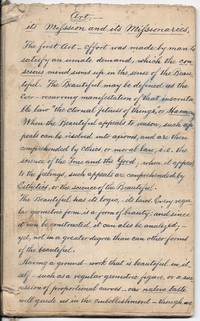
188075319N.p.: N.p. 1880-1925. This impressive and important archive consists of over 1500 manuscript pages and more than 850 hand-drawn illustrations by Rossi-Diehl between the 1880s and 1925. Included are complete manuscripts drafts of manuscripts lesson plans and notes designs teachers’ aids and miscellaneous papers relating to art education especially what Rossi-Diehl called Form – Language along with geometric designs the art of Nature for instance the Acanthus leaf and other rather esoteric art-related subjects. Rossi-Diehl often quotes Goethe and other philosophers and cites biblical references as he attempts to explain his concept of art and its meaningfulness to mankind and his belief that Nature is art’s pure form. Also included in the collection are four writings by Rossi-Diehl regarding social issues war and politics and two interesting “letters†addressed to Samuel L. Clemens and the director of the Leopold Schepp Foundation both listed below under Miscellaneous. Contents;Conrad Rossi-Diehl 1842-1933 was born in Bavaria but came to the United States as a young boy with his parents in 1848 where the family settled in Philadelphia. His artistic talents were recognized early and resulted in his studying art in Germany and Paris where he concentrated on fresco painting and elements of design. Returning to the United States around 1868 Rossi-Diehl taught at the Chicago Academy of Design and later at the St. Louis Art School. From 1879 to 1885 he taught art at the Missouri State University. He relocated to New York in 1886 where he taught at the Hebrew Technical Institute and perfected his course in freehand work. He and John Ward Stimson established the Artist Artisan Institute New-York Institute for Artist-Artisans where Rossi-Diehl directed the drawing and design classes and taught craft as an artform. He was a strong believer in the notion that manufactured products should contain an artistic nature. He prepared drafts for numerous books manuals and articles on design ornament and anatomy for artists and how to teach art. However no copies of his published work were located. Perhaps they were intended to be used at the various institutions where he taught. He also found time to obtain two patents on devices for teaching drawing. His own artwork seemed to be focused on allegorical and literary subjects such as scenes from Shakespeare. See the on-line article on Rossi-Diehl by the Graphic Arts Collection of Princeton and a biography under his name on WorthPoint.The illustrations included in the collection were drawn or cut-out for illustrating Rossi-Diehl’s various drafts of art education texts. They consist primarily of designs floral and geometric diagrams and charts. Several sketches are also included.Incidentally the only records for Conrad Rossi-Deihl to be found on OCLC are 18 original works of art. Sadly this means that all of his real contributions to art and art history and education were lost to history until this archive reared its interesting head. Perhaps there are publishable manuscripts among all of the many to be found in this archive but at the very least this archive would provide students a much clearer picture of art education and thought in the 19th century. The following is a brief listing of the various manuscripts in the Rossi-Diehl collection being offered here.ART & ART EDUCATIONAdvisement Obsolete Dic. Seven-page manuscript relating in part to “the only teachable Form-System thus far known… Geometry or that part of the Science of Learning called Mathematics…†Written on 7 x 9 inch lined paper.Art – Its Mission and its Missionaries. Twenty-seven 27 page manuscript written in ink on 5 x 8 inch pager tied together with string through two punched holes on the left side. The manuscripts ends abruptly in mid-sentence at the end of page 27. Rossi-Diehl begins this essay “The first Art – Effort was made by man to satisfy an innate demand which the conscious mind sums up in the sense of the Beautiful. The Beautiful may be defined as the ever-recurring manifestation of that inscrutable law ‘the eternal fitness of things’ or Harmony.â€Art – Industry and Manual Training. Eight-page manuscript written on 7 x 9 inch paper tied together with string. “Art – Industry is either a misleading denomination or it is an entirely meaningless compound term… Manual Training is the natural concomitant of Art – Education where discipine in the Acquirement of Skill must go hand in hand with firm grounding in Art – Knowledge.â€Art Exercises w/Drawings. Two separate multi-page art exercises with geometric drawings. totaling 15 8 pp twenty-three 23 pages.Design or Form Composition. Thirty-two 32 page manuscript including illustrations. Text written in ink on 5.5 x 9 inch paper. The manuscript starts out “All the forms of the Universe known to man enter into Design: sun moon and star; cloud wave and cristal sic; leaf flower and fruit; fish fowl and beast; and last – but not least – the human form divine. All these subjects must be studied from nature – not from Text-Books; unless this be done in order to learn what man has recorded about them. The Text-Book must be a reliable guide to the student for the study of nature… A Design is an arrangement of Forms; or of Colors; or of both Forms and Colors. It is made to be executed in hard substances such as wood stone metal &c; in pliable materials such as leather linen silk &c; or to be applied to a fabric or a surface for its embellishment.â€Divine Art as Reflected by Human Art; or Universal Form – Utterance and Human Languages Contrasted / An Appeal to the American People on behalf of their Material and Educational Interests. One-hundred-twenty-six 126 page manuscript written in Rossi-Diehl’s hand but with “By Philo Rackstone… 1911†on a cover board. We find no reference to a Philo Rackstone so this may be a non de plume Written on 7 x 9 inch paper stock.Elementary Course in the Art of Perspective – Drawing or Space – Construction without the use of Vanishing – Points. One hundred 100 page manuscript including over 30 pages with illustrations signed by Conrad Rossi-Diehl and datelined Hoboken N.J. August 8 1903. The title page has a note “This booklet is the property of Mignon / Hoboken September 7 1903â€. Written on 6 x 9 inch sheets of paper. The loose pages are inserted into an envelope titled “Elementary Course in Perspective / Original Text. 46 Cuts to be insertedâ€. A Few Words of Interest Encouragement and Assurance. Forty-one 41 page manuscript with additional writing on the back of several pages. Written on lined paper measuring approximately 8 x 10 inches tied together with string. The manuscript begins “Free-Hand Construction develops skill in the practice of those processes that are the carriers of all free handiwork whilst imparting that particular knowledge which underlies the practical performance of any useful task whatever.†Form – Construction and Geometry Compared. An Epitomized General Form – Treatise. A three-page plus title sheet treatise on 8 x 10.5 inch paper held together with string and a brass fastener.Form Language. Grammar of Design / Form – Composition 1888. Seventy-one 71 page manuscript of text and many original illustrations. Signed by Rossi-Diehl and datelined New York City October 3rd 1888. Written in ink on 8 x 9.75 inch paper with the illustrations cut out and laid down. His Introduction begins “Ornamentation is the most primitive as well as the most exalted expression of the innate sense of the Beautiful. It is that branch of the Fine Arts in which man is purely creative.â€Form Language 1895. Fifty-five 55 page manuscript with additional writing on the backs of several pages written on 8 x 12.5 inch paper tied together with string. Signed by Rossi-Diehl and date-lined New York City July 16 1895 with a note: “The drawings should be greatly enlargedâ€. The drawings referenced are not included within the tied bundle. The document contains eight parts following a one-page Introduction: Form – Study pp 2-15; The Germ – Element pp 16-21; Secondary Ellipses pp 22-24; Focal Activity in Living Mechanics – The Movement of the Arm pp 24-28; The Volute or Vital Form – Element pp 28-30; Constructive Geometry – The Circle and Hexagony pp 31-40; Geometric Facts and Operations pp 41-53; and Warped Surfaces pp 54-55.Form Language 1908. Thirty-three 33 page manuscript written in pencil on 7 x 9 inch lined paper. Signed by Rossi-Diehl and datelined Glen Ridge N.J. July 21 1908. Contains an introduction X pp; a section titled The Structural Sphere 6 pp; and Chapters 1 & 2 17 pp. This version begins “Form – Language is the Universal Utterance of Nature in whose vocabulary Man – single or collective; physically mentally and spiritually stands recorded in a single Form – Word.â€Form Language Synopsis of Contents. Ten-page table of contents for one edition of Rossi-Diehl’s Form – Language. The title sheet states “Synopsis of Contents presenting an Epitomized Generalization in the Particular of what is Comprehended by Form – Language as applied to the Arts useful and refining.†Written on 7 x 9 inch ruled paper tied at the top through two punched holes with ribbon.“Geometryâ€. Twenty-five 25 page manuscript plus four various drafts of portions of the text for a total of 47 pages. With original titled envelope.Grammar of Form – Language. For the use of Teachers and for Self-Instruction. Manuscript draft of approximately 100 pages signed by “Conrad Diehl. Columbia Mo.†held together with thread through holes on the left side margin. Rossi-Diehl states “It is the design of this work to formulate and clearly to define a system by which the Language of Form may be made comprehensible to the mind of the child so that it may learn to interpret Nature and Art for itself and thereby attain to the power of consciously performing tasks till now unconscious by performed by many who labor in the domains of Industry and Art.†Includes four additional pages pp 47-50 that differ slightly from those same pages in the draft.Illustrated Design Booklet. Twenty-four pages measuring 12 x 8.75 inches of which 13 have design illustrations laid down. The pages are numbered 1 through 24. Most likely these illustrations relate to Rossi-Diehl’s various versions of Form – Language or other writings that call for figures.Illustrated Design Booklets # 4 5 6 7 & 8 pp 21-119 1. Total of 100 pages. Arranged by Conrad Rossi-Deihl. Each booklet measures 7.75 x 10.5 inches; stiff brown paper wraps except for # 4 pages 21-40 which has no covers. Designs laid down on each page. Most likely these illustrations relate to Rossi-Diehl’s various versions of Form – Language or other writings that call for figures.Normals – Tangency. Six pages of manuscript notes written in pencil on 6 x 9 inch paper held together with a straight pin. Concerns notes on angles reflections and the like.Notes Designs & Partial Documents. Over one-hundred-twenty 120 pages of manuscript notes drawings and partial documents written and drawn by Rossi-Diehl. Some appear to be draft portions of his writings for art education classroom and art teacher use.The Portent of Human Art and Art-Forms. Supplemented by a Treatise of The Single Acanthus Leaf. Nineteen-page manuscript written on 8 x 12.5 inch lined paper tied together with string. The essay begins “Human Art-Activity is a reflex of Divine Creative Power. Thus human Art is the sum total of man’s productiveness in all that is useful and refining; or true and good beautiful and elevating.â€Refining Art: Its Nature and Essentials. One hundred-eleven pages plus 8 signed by Rossi-Diehl and datelined Glen Ridge N.J. 1914. A note on the top of an old folder cover sheet states Outgrowth of the so-called “Single Acanthus – Leafâ€. Written on 8.25 x 12.5 inch sheets of paper. Illustrations laid down throughout.The Refining Arts: Their Scope and Limitations. Eleven-page manuscript written on 7 x 9 inch paper held together with string through two holes at the top. Partial defense of manual arts as part of the whole of Art.Revised Course in Manual Training New York City Schools. Four pages outlining six years of course work including free-hand drawing imaginative drawing design constructive and cut work figure sketching modeling color shop work and drafting.The Single Acanthus Leaf in Particular and Art – Foliation in General with Due Regard to Generic Art – Forms and the All-Governing Law of Harmony. Seventy-nine 79 pages some with illustrations laid down signed by Rossi-Diehl and datelined Glen Ridge N.J. 1913. Written on 8.25 x 12.5 inch sheets of paper.The Single so-called Acanthus Leaf in Particular and Art – Foliage in General with Due Regard to the All-Governing Law of Harmony. Ninety-eight 98 pages several with illustrations laid down signed by Conrad Rossi-Diehl and datelined Glen Ridge N.J. 1913. A cover sheet has a note above the title “Translated from the Germanâ€. Written on 8 x 12.5 inch sheets of paper.Skeletal drawings Figures 5 & 6. Two 9.25 x 22 inch printed renditions of the human skeleton originally hand-drawn by Conrad Rossi-Diehl in 1887 and printed in 1888. Figure 5 has a split along the middle horizontal fold; Figure 6 has been separated along that middle horizontal fold. “Syllabusâ€. Form – Study Art Drawing: Primary Schools – Grades 1A to 8B. Forty-five 45 cursive 8 typed pages outlining Rossi-Diehl’s course of art and drawing study for young folks. With original titled envelope.Text to Course in Free-Hand Construction / A Few Words of Encouragement and Assurance. Fifty-two 52 page manuscript that was in an envelope with the penciled note on the outside “Course – Free Hand Construction / Original Text VOIDâ€. This draft most likely was updated by the 101-page manuscript in the following entry.Text to Course in Free Hand Form – Construction / A Few Words of Encouragement and Assurance. One-hundred-one 101 page manuscript with illustrations laid down throughout. Written on one side of 8 x 10 inch sheets of paper. This manuscript was housed in a brown envelope with a penciled “Text to Course in Free-Hand Form Construction 101 Pages. Complete.†written on the outside.“Treaties on Form Constructionâ€. Thirty-five 35 page handwritten manuscript with a few drawings by Rossi-Diehl datelined “X-Mas Day Glen Ridge N.J.â€. Page 1 is titled Part II Practical Requirements and starts out “Anyone who can make a lineal drawing fairly well – Freehand is in position to do the same accurately with the aid of instruments; and in this connection Mechanical Drawing is barely worthy of mention.†With original titled envelope.Untitled re Form – Study and Art. Eight handwritten pages written on 5.5 x 9 inch paper signed by Conrad Rossi-Diehl at the end with this note “These pages are dedicated to the Teacher and Student of Form-Study and Art. July 29 – 1901â€. This document is numbered IV through XI so apparently the first three pages are missing although page IV starts up with the beginning of a premise.SOCIAL ISSUES WAR & POLITICSAmerican Preparedness: Its Essential Ways and Means. Four-page manuscript written on lined 8.5 x 14 inch. paper. This essay explores the notion that “a sane mind in a sound body†is the answer to efficient preparedness and promotes the need for a properly educated populous. The Greatest of Social Evils Whose Clear Unfolding Implies its Own Remedy. Twenty-three 23 page manuscript written on 7 x 9 inch sheets of paper held together with string. The essay starts out “Self-constituted authority to Rule or Ruin based upon arbitrary standards of valuation and where hereditary nobility or titular sublimated respectability primarily rest with the power to destroy life and property and a total disregard for all that is sacred is at the bottom of all Social affliction.†The Lay of the Land. Two-page manuscript incomplete written in ink on both sides of a single 8 x 9.75 inch sheet. It begins “In the present hour of dire need where after the most fiendish atrocious and devastating war that has ever been waged by Man’s inhumanity to Man: on land and under the soil on the waters and in their depths – and even in the very air we breathe; - and where Treachery Fraud and utter Irresponsibility have fairly run riot…â€Untitled re Critical of John D. Rockefeller. Written in pencil on both sides of a 6.25 x 26 inch sample ballot for the 1916 Democratic Primary Ticket for the Borough of Glen Ridge N.J.MISCELLANYPartial Letter Addressed to the American humorist “Mr. Samuel L. Clemens†the undated “letter†consists of two handwritten pages on 8 x 12.5 inch lined paper of content that seemingly end prior to completion without any closing salutation or signature. It appears that it may never have been meant as a real letter but only Rossi-Diehl’s attempt at satire. The text refers to a youthful Stephen Crane; woman’s wile; rich men who with money made on the backs of others become benefactors; reference to “Innocents at Homeâ€; and other rather scathing remarks. The second page ends with the following “To throw our lady into a conniption fit one needs but to mention a broom a wash-dish or tub and a clothes-line; all of which in her buxom days she handledâ€. Letter to Philip Ritter Leopold Schepp Foundation Long handwritten letter written on both sides of thin paper pasted together to form an 8 x 18.5 inch single sheet addressed to “Mr. Philip Ritter Director of the Leopold Schepp Foundation 185 Madison Av. New York City†datelined “42 Hawthorne Av. Glen Ridge N.J. July 30 1925†and signed “Most Cordial Yours Conrad Rossi-Diehlâ€. The letter is in response to a newspaper article announcing that Schepp the uneducated son of German immigrants who became the “Coconut King†and one of the wealthiest men in New York City had just created a multi-million-dollar foundation to assist young students with their education based in part on the students’ life goals to benefit mankind. Rossi-Diehl’s response is one based on his own interest in education philosophy religious beliefs and art-logic.Overall the archive is in VG to VG condition. N.p. paperback
194457229New York: MacMillan 1944. reprint. Very Good. octavo. orig. cloth xix 868pp. b/w pls. text ills. diags. maps appends. glossary index Very comprehensive account of aviation technology to date. Neat ownership inscription o/w nice copy MacMillan hardcover
1598955341598. 1598. Fair. - An original holograph document attractively penned in an unknown hand on 13-1/4 inch high by 15-5/8 inch wide cream paper. Fifteen lines boldly penned with several flourishes signed "Christophorus Popel Barro a Lobcowicz" by Christoph Popel Baron of Lobkowicz who was Chief Steward of Bohemia under the Holy Roman Emperor Rudolf II. The document is further annotated with 8 lines penned across the center of the verso with an unidentified signature and another 8 lines penned vertically on the verso above the center panel also with an unidentified signature. The faint remnants and outline of a red wax seal are centered at the top and bottom edges of the verso. Folded twice vertically and four times horizontally with several tears along the folds. There is some foxing present especially at the top and bottom. Good. <p>The Chief Steward of Bohemia under Emperor Rudolf II Christoph Popel Baron of Lobkowicz 1549-1609 was a close friend of the celebrated court painter Hans von Aachen. Lobkowicz who was known for his language and diplomatic skills was tasked with welcoming visitors from within and without the Holy Roman Empire to the Emperor's Court and for negotiating alliances in the war against the Turks. Lobkowicz was responsible for the peace negotiations with the Polish King Sigismund. Lobkowicz spent considerable sums on art work for his residence and commissioned jewelry precious watches and valuable objects. He was buried in the chapel in the Prague Cathedral. [1598]. unknown
1821ST20285Edinburgh: Printed for Archibald Constable & Co.; London: Hurst Robinson & Co 1821. FIRST EDITION. 192 x 103 mm. 7 1/2 x 4 1/2". xv 1 lvii 1 59-360 pp. <br/> ORIGINAL PUBLISHER'S PAPER BOARDS paper label on spine edges untrimmed. Owner's signature of Robert Chichester dated 1827 on front pastedown. Text a shade less than bright because of inferior paper stock slight wear to the binding but AS FINE A COPY IN THE ORIGINAL BOARDS AS ONE COULD HOPE TO FIND the covers amazingly clean and smooth and with only the most minor faults internally.<br/> <br/> In its original remarkably well-preserved publisher's boards this work on education captures the spirit of reform abundant in the early 19th century including its warts. Although Spurzheim 1776-1832 was better known as an exponent of phrenology and an authority on mental illness than as an educational theorist his "View of the Elementary Principles of Education" is an important work that for the most part is sensible and progressive. Especially significant are his assertion that all influences from birth onward contribute to the physical and mental development of the child and the inference he draws from this that in addition to the conventional education of the intellect an optimal upbringing must include attention to such things as clean air proper diet and suitable exercise. He favors public education over private instruction because children will benefit by meeting a variety of people with "different manners of feeling and thinking." Spurzheim shows himself to be generally tolerant and forward thinking as he maintains that good education can improve almost anybody it would certainly reduce the number of criminals. But he sometimes disappoints as in his belief that many limitations are hereditary and must be taken into account in designing the most fitting education for an individual. He states for example that the poor ought to be prevented from reproducing as if poverty were in the genes. And in answering the claims of Mary Wollstonecraft's "Vindication of the Rights of Women" he says "I cannot perceive any arrangement of nature that can lead me to expect that women will cease to be considered as subordinate to men. Let them endeavor if they please to acquire the same degree of talent but till they have acquired it let them cherish order and exercise the virtues of their actual condition in society rather than attempt to rise into a sphere for which they are not at present fitted." Also appended here is a section on the treatment and reform of criminals in which the author calls for a better understanding of the causes of crime for the requiring of prisoners to undertake useful work and courses of instruction while in prison and for the study of the prison system instituted by William Penn at Philadelphia. While the sometimes disheartening contents approach a certain fascination it's the binding here that competes for--and perhaps wins--our attention. That its fragile construction could hold up so beautifully through two centuries of use is extraordinary. Printed for Arch[ibal]d Constable & Co.; London: Hurst, Robinson & Co unknown
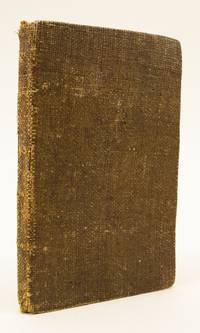
1797ST15599London: Printed for T. Longman B. Law F. & C. Rivington R. Baldwin G. & T. Wilkie and J. Walker 1797. 21st Edition. 150 x 93 mm. 5 7/8 x 3 5/8". viii 123 1 ads pp. <br/> Contemporary brown burlap flat spine. With allegorical vignette on title page and 25 half-page woodcuts illustrating items from the vocabulary lists. Pastedowns with traces of book label removal. ◆Spine slightly cocked short split to cloth on rear joint a little fraying at ends of spine but the insubstantial binding surprisingly solid. Two small stains to each pastedown where labels removed title page lightly browned leaves a shade less than bright due to paper quality other minor imperfections but an excellent copy internally clean and fresh with comfortable margins. All in all remarkably well preserved.<br/> <br/> First issued around 1711 this is the best-selling work of James Greenwood 1683-1737 an influential grammarian and a proponent of women's education. Arranged into 33 chapters the book divides vocabulary lists by topic beginning with "things" and proceeding through minerals plants animals humans and diseases to everyday items affairs of church and state the law the military and finally to the various parts of speech from verbs to conjunctions. Widely used the work was revised and reprinted until at least 1828. At about the time this work was originally issued Greenwood had founded a school in Essex where he accepted girls as well as boys as pupils; he was later recruited to serve as assistant headmaster at St. Paul's School in London. This volume is of particular interest because of its rarely seen utilitarian period binding. We would have expected it to have been worn to shreds long ago but against the odds it has withstood hard use by young pupils remarkably well and it gives us a glimpse of an important element of the English schoolroom at the turn of the 19th century. Printed for T. Longman, B. Law, F. & C. Rivington, R. Baldwin, G. & T. Wilkie, and J. Walker unknown
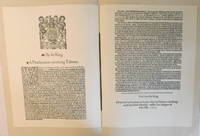
195297187Richmond VA: Virginia State Library 1952. 1952. Very good. - Folio 19-3/4 inches high by 13 inches wide. Softcover creamy tan wraps bound with black cotton cord titled in black & red on the front cover. 8 pages including the covers printed in red and black on Linweave's early American paper stock with facsimiles of the 2 pages of the original proclamation tipped-in at the center. The facsimile of the proclamation is illustrated with King Charles' crest and a decorated initial. A diagram and a decorated initial and tail-piece all printed in red enhance the text of the book. There are minor creases to the corners. Near fine. <p>"Composed printed and bound by the William Byrd Press Inc. Richmond Virginia. The plates were made by the Virginia Engraving Company also of Richmond. Text material was set in Linotype Janson with display in American Type Founders' Cloister Oldstyle and Monotype's Goudy Forum. The paper stock used for the text is Linweave's Early American. The facsimile plates of the proclamation were printed on Tovil an English hand-made stock." Quoted from the colophon.<p>Laid in is an 8 inch high by 6-1/4 inch wide broadside notice proclaiming that "A meeting of the Virginia State Library Board was held on June 20 1952 for the purpose of recording its esteem for Martha W. Hiden."<p>RARE in Commerce. Richmond, VA: Virginia State Library, 1952. paperback
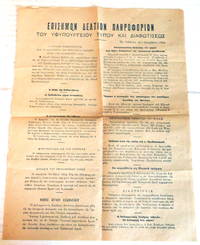
194498904Athens Greece: Deputy Ministry of Press and Information December 5 1944. 1944. Very good. - Folio a 12-3/4 inch high by 9-1/2 inch wide broadside printed on newsprint. A two-line banner title centered at the top is followed by two columns of text with the contents justified left below centered headings. The publication info and the date are printed above the second column. The broadside is toned and folded both vertically and horizontally with minor pinprick holes. Very good. <p>The text is in Greek and our translations may be subject to some corrections.<p>During the late hours of December 4 1944 and the early hours of December 5 Lieut.-General Scobie GOC British Forces in Greece proclaimed martial law in Athens and in Piraeus the port of Athens following violence on December 3rd and the declaration of a general strike. The broadside publishes Winston Churchill's statement supporting his General. "The Prime Minister wishes to make known that the announcement of the 1st December by General Scobie to the Greek people stressing the need for unity and expressing our full support for the current Greek Government was made with the knowledge and full approval of the Government of her Majesty."<p>Following this is a statement concerning order: ".General Scobie has taken all recommended measures to fully reestablish order. .English troops guard Public Facilities and simultaneously the reclamation of Police Departments has begun. The Greek people should be certain that order will be completely enforced."<p>There is a statement that "In yesterday's first court day of the Special Collaborators' Court the S.S. associate and member of the 'BUND' the infamous Giannopoulos was sentenced to death." The BUND organization and its leader Aginor Giannopoulos trained a battalion of Greek volunteers who fought in SS and Brandenburgers units. According to the broadside 200 members of ELAS in the suburb of Nea Ionia were disarmed as were 1200 near Psychiko.<p>There is a brief report on the events leading up to martial law: "In the march on the day before yesterday organized by the Communist Party protesters threw a grenade and shot at the house of the Prime Minister George Papandreou on Kifisias street. The leader of the protesters officer of ELAS and known communist Architect Provellegios was arrested."<p>Finally there is a statement on food shortages. ".due to the three-day labor strike the steamboats full of food meant to be distributed to the Greek People anchored in Piraeus harbor remains unloaded."<p>RARE. Athens, Greece: Deputy Ministry of Press and Information, December 5, 1944. unknown
19342110502150407967Aichi ken 1934. Soft Cover. Fine. Number of copies: 1 copy Aichi ken paperback