223 résultats
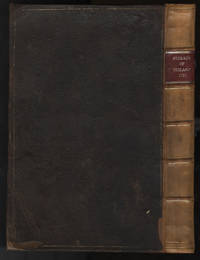
17598860089Trustees of the British Museum 1759. Volumes 1 - 2. This is an ex-library book and may have the usual library/used-book markings inside.This book has hardback covers. Book contains pen markings. In fair condition suitable as a study copy. No dust jacket. Dark blue cloth on boards. Some staining on front cover. Corners bumped. Corners and edges worn. Backstrip faded. Fairly tightly bound though some splitting inside covers. Pages age toned. Some foxing. Some notes written in ink in margins. Please note the Image in this listing is a stock photo and may not match the covers of the actual item12050grams ISBN: Trustees of the British Museum hardcover
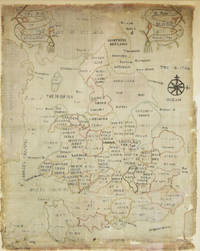
1786310835Bristol 1786. Colored silk and wool threads on linen signed "M. Hume". With compass rose and floral cartouche. 19 x 14-1/2 inches. Toning some wear around edges losses to lettering in several spots. In later frame. Colored silk and wool threads on linen signed "M. Hume". With compass rose and floral cartouche. 19 x 14-1/2 inches. A nice example of an embroidered map sampler which were an important component of girls' education in Britain and America from 1770-1840. This one meticulously labels all of the English counties the seas and channels and includes part of Scotland to the north and the east coast of Ireland and is signed by its maker one M. Hume of Bristol.<br /> <br /> "One academic subject that was consistently considered important for both boys and girls after reading writing and arithmetic was geography. Geography was considered a science at this time and . it was the first science taught to girls in the US . Many girls were taught to read but not write. With the exception of some diaries or letters or of marginalia there is little to tell us how children learned to read do arithmetic or write. Map samplers . by students are tangible examples of women's schoolwork. These were time-consuming projects normally framed and hung with pride to show a young lady's educational attainments" Tyner Stitching the World. unknown
1790CAT000091Paris: Hotel de Bouthillier 1790. First Edition. Hardcover Quarter Leather. Very Good Condition. Later 1/4 morocco over boards. light wear at corners. Slight offsetting to text otherwise quite clean internally. xxxvii 121 5 109 3. Vicaire 348-9.<br/><br/>Scarce tract on the history trade use and chemical properties of coffee. At the end is a rather charming long poem on coffee translated from the Latin of Abbé Massieu. Size: 8vo octavo. Quantity Available: 1. Shipped Weight: Under 1 kilo. Category: Cooking Wine & Dining; History. Inventory No: CAT000091. Hotel de Bouthillier hardcover
17055789117Oxford printed at the Theater 1705. Volume 1-6. This is an ex-library book and may have the usual library/used-book markings inside.This book has hardback covers. With owner's name and inscription inside cover. In fair condition suitable as a study copy. 1705-1706. Complete three volumes over six books. Small 8vo. Original calf binding with decorative tooled border mirrored on boards. Raised bands gilt decoration and gilt lettering within a red leather panel on backstrip. Vol. IIs backstrip has been refurbished with contemporary brown leather. Bumped corners and some general wear including a little chipping to backstrip ends. Front boards of vol I III V and VI detached. Front board of vol IV loose. Gilt inner dentals. Frontispiece. Hinges tender. Hinges tender in several volumes. Pages secure and unmarked save for some foxing and age toning. Inscriptions on rear flyleaf. Vol I. and III. have small ink blot on fore edge. Trimmed. Please note the Image in this listing is a stock photo and may not match the covers of the actual item3150grams ISBN: Oxford, printed at the Theater hardcover
176954520Nürnberg Joh. Andr. Endt. 1769. 8vo. Contemp. full calf. Gilt spine. Titlelabel with gilt lettering. Gilding weak. Large engraved oval vignette on first titlepage. 22315 pp. Latin & German Indexes - 2449 pp. Latin & German Indexes. Profusely illustrated with more than 300 wood-engraved illustrations in the text showing different trades industries occupations geography astronomy etc. etc. A few minor brownspots. old name on title-page J.D. Tode. <br/><br/><em>With German and Latin text by the "father of modern education". Comenius was the innovator who first introduced pictorial educational textbooks as here and written in native language. </em> unknown
1799032601London: T. Egerton 1799. A large format book with red / burgundy leather boards with gilt tooling and lettering to spine and front & rear boards. Rubbing and bumping to corners edges spine ends and hinges. Grazing to hinges. A little general darkening to boards commensurate with age. Marbled fep with p/o bookplate. Some damp marks to top corner of first 5 pages and last 4 pages. Some foxing to first couple of end pages. Some image transfer from frontispiece to first page. Map between pages 16 & 17. A really beautiful copy of an exceedingly rare book. PLease contact for images. First Edition. Leather Boards. Very Good. T. Egerton Hardcover
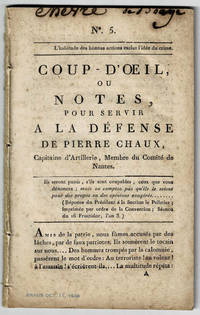
179599578<p>Angers France: De L'Imprimerie de Jahyer et Geslin imprimeurs-libraires rue Milton 1795. 1795. Very good. - Octavo 7-5/8 inches high by 4-3/4 inches wide. Softcover bound in printed self-wraps. Once likely bound with other pamphlets the book has been removed with remnants of a paper spine. There is a small purple stamp at the bottom of the front wrapper: "Kraus Oct. 11 1948". The cover page is slightly soiled & darkened with a crease to the bottom corner and a previous owner's name is penned at the top of both title pages. 88 pages including the cover pages. There is some minor faint foxing. Very good.</p><p>RARE First edition WorldCat locating only a single copy in the Bibliotheque nationale de France.</p><p>Pierre Chaux de Champeaux 1755-1817 was a member of the Revolutionary Committee of Nantes formed by Jean-Baptiste Carrier in October of 1793 during the Reign of Terror which set in motion the notorious drownings at Nantes. Chaux also played an important role in the barbaric act of sending 132 Nantais to Paris under cruel conditions. On September 3 1794 Carrier was put on trial before the Revolutionary Tribunal. He was found guilty and was executed in December. Pierre Chaux was arrested in July of 1794 for the role he played in the drownings. He appeared before the Tribunal in October 1794 and was convicted. He was the beneficiary of the amnesty of October 26 1795 decided by the Thermidorian Convention. The two pamphlets at hand were published in order to present his case to the convention. The first is signed in print by Chaux at Angers and dated September 19 1795. The second is dated September 26 1795. The pamphlets includes numerous statements by participants in the French revolution including Carrier General Lamberty Foucher and Villers Herault-Sechelles etc. At the head of No. 5 is the statement "L'habitude des bonnes actions exclut l'idee du crime." At the head of No. 6 is "Qui fit la revolution.Le Peuple les patriotes ardens; ils sonnerent le tocsin contre la tyrannie."</p> [Angers, France]: De L'Imprimerie de Jahyer et Geslin, imprimeurs-libraires, rue Milton, [1795]. paperback
1793026039London: Dilly Poultry & Johnson 1793. Five volumes dated between 1793 and 1797. The first volume has a seperated front board but it is still present and the lettering has faded from the spine. Volumes 2-5 have gilt banding and numbers to spine and black title label. Heavy rubbing and bumping to corners and extremities to all 5 books. General shelf wear appropriate to their age but all in all they are in surprisingly good condition. Light spotting to first few pages of each book but text is otherwise in pretty excellent condition again considering the age of the books. A fabulous set of books. Please contact for further details and images. First Edition. Leather Boards. Very Good . Dilly, Poultry & Johnson Hardcover
1797ST15599London: Printed for T. Longman B. Law F. & C. Rivington R. Baldwin G. & T. Wilkie and J. Walker 1797. 21st Edition. 150 x 93 mm. 5 7/8 x 3 5/8". viii 123 1 ads pp. <br/> Contemporary brown burlap flat spine. With allegorical vignette on title page and 25 half-page woodcuts illustrating items from the vocabulary lists. Pastedowns with traces of book label removal. ◆Spine slightly cocked short split to cloth on rear joint a little fraying at ends of spine but the insubstantial binding surprisingly solid. Two small stains to each pastedown where labels removed title page lightly browned leaves a shade less than bright due to paper quality other minor imperfections but an excellent copy internally clean and fresh with comfortable margins. All in all remarkably well preserved.<br/> <br/> First issued around 1711 this is the best-selling work of James Greenwood 1683-1737 an influential grammarian and a proponent of women's education. Arranged into 33 chapters the book divides vocabulary lists by topic beginning with "things" and proceeding through minerals plants animals humans and diseases to everyday items affairs of church and state the law the military and finally to the various parts of speech from verbs to conjunctions. Widely used the work was revised and reprinted until at least 1828. At about the time this work was originally issued Greenwood had founded a school in Essex where he accepted girls as well as boys as pupils; he was later recruited to serve as assistant headmaster at St. Paul's School in London. This volume is of particular interest because of its rarely seen utilitarian period binding. We would have expected it to have been worn to shreds long ago but against the odds it has withstood hard use by young pupils remarkably well and it gives us a glimpse of an important element of the English schoolroom at the turn of the 19th century. Printed for T. Longman, B. Law, F. & C. Rivington, R. Baldwin, G. & T. Wilkie, and J. Walker unknown
1791048522Boston: J. Belknap and A. Young 1791. First Edition. Hardcover Full Leather. Very Good Condition. Contemporary leather with neat repairs at the corners and spine ends old scirbbes to front blank foxing and age toning heavy in spots but not affecting legibility. The two volumes bound in one 1791 and 1792. 137pp; 138pp. Evans 24003 & 25039<br /> <br /> Abolitionist and supporter of the revolution and attended the Fête de la Fédération on the one year anniversary of the storming of the Bastille. She spent most of her later life in France and was a saloniere hosting Mary Wollstonecroft and Thomas Paine. A Girondist following the massacres of 1792 she was jailed during the terror though allowed to continue her work translating French works into English.<br /> <br /> Provenance: Hannah Lewis of Rochester note to rear endpaper Size: Octavo 8vo. Quantity Available: 1. Shipped Weight: Under 1 kilo. Category: Americana; History. Inventory No: 048522. J. Belknap and A. Young hardcover
17533186Printed for A. Millar in the Strand; London 1753 This is the first edition and the only edition published during the lifetime of Jane Collier 1714-1755. Full leather with 5 raised spine bands 7 1/2 x 4 3/4 inches 234 pp. engraved frontispiece "The Cat doth play / And after slay". Leather worn and rubbed with erosion at tips and spine ends. Spine label with gilt lettering added sometime later. Binding shaken with cracked spine but still held together via the spine cords. Slight browing/foxing endpapers. Slight browning frontispiece. Previous owner's name/inscription in neat handwriting top of title page. Small light brown stain bottom of title page 7/8 x 1/2 inch not affecting any printing. A few pencil marks page 185. Otherwise pages quite clean and crisp. Binding fair book block very good. See the Wikipendia entries on Jane Collier and An Essay on the Art of Ingeniously Tormenting. "Jane Collier's An Essay on the Art of Ingeniously Tormenting 1753 a conduct book was her first work. The Essay operates as a satirical advice book on how to nag and it was modeled after Jonathan Swift's satirical essays. The work is intended to "teach" a reader the various methods for "teasing and mortifying" one's acquaintances. It is divided into two sections that are organized for "advice" to specific groups and it is followed by "General Rules" for all people to follow. / The Essay is modeled on Jonathan Swift's satire Instructions to Servants 1746 and even mentions Swift directly. However Collier reverses the roles in Swift's satire and instead writes from a servant's perspective in the first book. / To the master and mistresses the narrator claims that "you are no true lover of the noble game of Tormenting if a good dinner or any other convenience or enjoyment can give you half the pleasure as the teasing and mortifying a good industrious servant who has done her very best to please you." / To wives she tells them to "Be out of humour when your husband brings company home: be angry if he goes abroad without you; and troublesome if he takes you with him." When speaking to friends she argues that "injuries go nearest to us that we neither deserve nor expect." Added to the work are "General Rules for plaguing all your acquaintance; with the description of a party of pleasure" along with a "Conclusion" and "A Fable". As a general rule the narrator says "By all means avoid an evenness of behaviour. Be sometimes extremely glad to see people; and at other times let your behaviour be hardly within the rules of good breeding." / Betty Rizzo described the work as the "best-known generic satire written in the eighteenth century by a woman." The Battesins stated that Collier was "an author of wit and spirit". Some critics find it interesting that Collier would "yoke" Richardson with those that he "felt especial antipathy" with: Swift and Fielding. Katherine Craik claims the work as "a courageous social satire published at a time when satires were usually written by and for men.""3214045. 1st Edition. Hardcover. Good. Printed for A. Millar, in the Strand; London hardcover
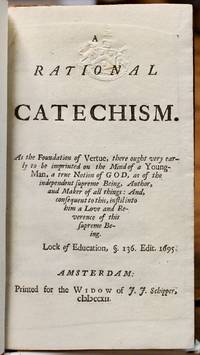
171215978<p>Amsterdam: Printed for the Widow of J.J. Schipper 1712 Second edition not so stated dedicated to the author's "dearest daughters" with a long quote from Locke's On Education on the title-page. The work is a significant distillation of the principles of toleration first published in 1687. . . Contemporary mottled calf. Gilt spine tooled in compartments yellow silk ribbon marker. . Twelvemo. Edges sprinkled red. Binding extremities slightly worn and boards a bit scratched. Front joint cracked but sound. The Macclesfield copy with the blindstamps shelf marks and the South Library bookplate. A very good copy clean copy. William Popple 1638-1708 was the nephew of Andrew Marvell and was educated under his guidance. He was a successful merchant in Hull before moving to Bordeaux where he lived from 1670 to 1688. After returning to London he met William Penn and became secretary of the Dry Club established by John Locke to debate issues of religious liberty. He also translated Locke's Letter on Toleration 1689 from the Latin. When Locke was appointed a commissioner of the Board of Trade in 1696 Popple became the board's secretary. Though this is a dialogue between a father and son the dedication to his daughters states: "I am desirous that it may be a common memorial of me unto all of you when I shall be no more I therefore make it yours also by this dedication: And for the same reason I have likewise added unto it a copy of that advice which I formerly gave him in such verse as my unpractised Muse then dictated.</p> Printed for the Widow of J.J. Schipper,
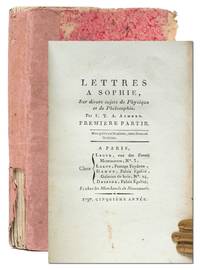
17977223Paris: Leger 1797. First edition. Octavo. xxvi 2 96 2 pp. Part one only - the planned part two was never published. Publisher's pink pastepaper wrappers with pink paper spine. Binding somewhat loose. Edges untrimmed. Very clean and fresh throughout. A Very Good copy of a rare work on physics for women unrecorded in OCLC.<br /> <br /> This guide to physics and philosophy for women is one of the many works on women's education written during the Revolutionary period in France when a stronger interest in women's education began to arise. The letters cover topics including optics velocity and magnetism. Leger unknown
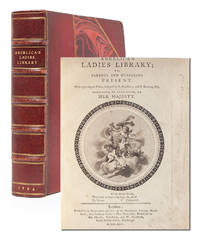
17943526London: Printed for J. Hamilton 1794. First edition. Finely bound in half morocco over marbled boards ruled in gilt. All edges brightly gilt. Marbled endpapers. Lower front corner skinned. Light offsetting to endpapers. Faint gift inscription to outer margin of title. Header of titlepage shaved close without any loss to text with textblock wide margined and clean. Pages measure approximately 190 x 150mm. Collating 2 vi 440: bound without half title else complete including engraved title and eight plates designed by Angelica Kauffman a founding member of the Royal Academy of Arts. A surprisingly unfoxed and wider-margined copy than is typically found of this compilation of early educational works designed to help usher girls into adulthood.<br /> <br /> "These sheets were penned by some of the most amiable and well informed subjects of these realms and intended as affectionate legacies of those noble and worthy persons to their amiable offspring for whom they had such tender regard.to point out whatever was desirable and just in forming and perfecting the virtues of the female character." Thus John Hamilton brings together a series of 16 pieces on women's education and etiquette by authors including Dr. Gregory Lady Pennington the Marchioness of Lambert John Dryden and Lady Ann Bothwell. Using illustrations by a well-known female artist who was cutting edge in her own time as a founding member of the Royal Academy of Arts the Ladies Library was purposely suited and adapted for the use of the Female Sex" and for their parents who might want to guide girls into responsible and intelligent womanhood.<br /> <br /> ESTC T88185. Printed for J. Hamilton unknown
1791045038Paris: Buisson 1791. First Edition. Hardcover Full Leather. Very Good Condition. 2 volumes bound in one in contemporary mottled calf; worn leather chipped at the head of the spine scattered mild foxing small stain to first title. Complete with the half titles reuniting the two parts of Paine's treatise on democracy and revolution that were published a year apart. There are two editions dated May 1791 on the title page with no clear priority between them: this copy with foux on page 162 and F.S. for the translator on the title. The first part was translated from the original English edition that was almost immediately edited and softened. Paine was a star in France an enlightenment philosopher of the first order and a frequent guest along with the likes of Franklin Jefferson and Adam Smith at the salon at the Hôtel de la Monnaie.<br /> <br /> "The government tried to suppress it but it circulated more briskly.Rights of Man can be seen for what it is: the textbook of radical thought and the clearest of all expositions of the basic principles of democracy." Printing and the Mind of Man<br /> <br /> xii 227pp; iv 16 224pp. Howe P-31 and 32 The English ed. PMM 241 the English ed.<br /> <br /> Provenance: Ex-libris of General J. Doreau Size: Octavo 8vo. Quantity Available: 1. Shipped Weight: Under 1 kilo. Category: Philosophy; History. Inventory No: 045038. Buisson hardcover
1725046782Dublin: Thomas Hume 1725. First Edition. Hardcover Full Leather. Very Good Condition. Contemporary calf rebacked one corner repaired leather a little dry but sound soiling to endpapers occasional slight foxing quite clean otherwise. Two volumes bound in one dated 1725 and 1724 respectively. 14 260pp i.e. 262pp 2 86 13pp. Extensive errata in preliminaries pages 5-6 numbered 4-4 with corresponding errors in pagination. ESTC T141098 Size: Folio. 2-volume set complete. Quantity Available: 1. Shipped Weight: 1-2 kilos. Category: History; Inventory No: 046782. Thomas Hume hardcover
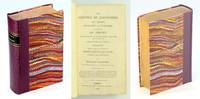
1795441j1158London: Printed for John Stockdale Piccadilly. Very Good. 1795. First Edition. Hardcover. "The following history is intended as much to show that abuse of power and disregard to public opinion brings on revolutions as to show the danger that attends them when they are brought on. Had the court of Versailles been willing to make the reforms wanted it would not have been itself reformed and destroyed. Had the nobility and the clergy been willing to sacrifice to the just claims of their fellow citizens those privileges which were useless and unjust we should not now have seen them straying loke vagabonds over the face of a strange country seeking for bread. It is impossible for a lesson to be written in more legible characters and it must be confessed that till the Parliament of England shows a disposition to crush the abuses which exist and augment in many departments of the state the mouths of those who cry out for reform will never be effectually stopped. Such would be the way effectually to crush Jacobinism." - p.21. "William Playfair 1759-1823 was a Scottish engineer and political economist who served as a secret agent on behalf of Great Britain during its war with France. He reported on the French Revolution and organized a clandestine counterfeiting operation in 1793 to collapse the French currency. He was the inventor of the pie chart bar chart and several others." - Wikipedia. 5-816 pp. Recently professionally rebound in marbled boards. Tight clean and unmarked. A high-quality example. 8.6" x 5.7"; 8vo . Printed for John Stockdale, Piccadilly hardcover
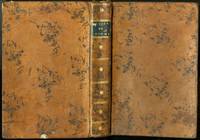
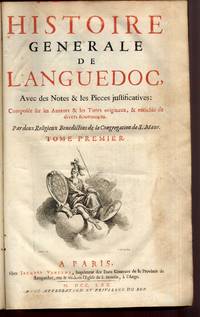
1730043619Paris: Jacques Vincent 1730. First Edition. Hardcover Full Leather. Good Condition. 5 volumes in contemporary gilt calf worn dry hinges and joints split boards attached but precariously in a few cases. Scattered browning internally and occasional creased pages spine labels bookplates and old embossed theological library stamps to title but generally clean and unmarked otherwise. 36 plates many folding and 4 maps hand colored in outline. Published 1730-1745. Size: Folio. 5-volume set complete. Quantity Available: 1. Shipped Weight: Over 3 kilos. Category: History; Antiquarian & Rare. Inventory No: 043619. Jacques Vincent hardcover
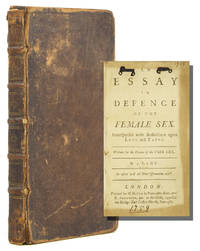
175013363London: printed for C. Hitch in Paternoster-Row and R. Akenhead jun. at the Globe opposite the Bridge-End Coffee-House Newcastle 1750. Fifth edition. 6 149 1 ad pp. 1 vols. 12mo. Contemporary calf. neatly rebacked flyleaves removed some light browning or spotting mostly marginal ink date 1759 at foot of title page a few pen or pencil marks on title and in margins. Fifth edition. 6 149 1 ad pp. 1 vols. 12mo. First published in two editions in 1696 and reprinted in 1697 1721 and the present edition ca. 1750 with changing subtitles. Variously attributed to Mary Astell Judith Drake and H. Wyatt.<br /> The present edition includes an ad for The Universal Library kept by Newcastle bookseller R. Akenhead jun. The date is conjectured from the R. Akenhead junior imprint which surfaces briefly in two other works dated 1750.<br /> A curious note on the verso of the dedication explains the lack of a subscriber's list. Apparently most of the "generous Encouragers" did not want to have their names included so "no List is printed lest Offence might be given."<br /> The author observes: "we are taught only our Mother-Tongue or perhaps French which is now very fashionable and almost as familiar amongst Women of Quality as Men; whereas the other Sex by means of a more extensive Education to the Knowledge of the Roman and Greek Languages have a vaster Field for their Imaginations to rove in and their Capacities thereby enlarged."<br /> <br /> RARE. ESTC T123106 BL NLS Smith College; Wing A 4058 printed for C. Hitch in Paternoster-Row, and R. Akenhead, jun. at the Globe, opposite the Bridge-End Coffee-House, Newcastle unknown
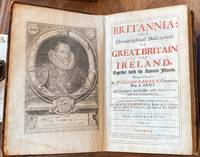
17229900002372London: James and John Knapton et al. 1722. Hardcover. Maps engravings. Folio. Two large volumes in original full leather bindings. Title pages are printed in red and black with an elegant full-page copper engraving of Camden as the frontispiece of the first volume. There are 50 double-page maps of the English counties Ireland Scotland and 'the Islands'; six of the maps are folding. There are also twelve large full-page engravings and numerous smaller engravings in the text. There is a comprehensive index and the errata page is present. A previous owner has reinforced the hinges with linen-like binding tape. The boards are quite worn and rubbed but a competent bookbinder could restore both bindings. The contents are remarkable clean with only occasional foxing and a few stained pages. The maps by the cartographer Robert Morden and which are usually removed and sold individually are all in excellent condition. Overall a good set. William Camden 1551-1623 was an English antiquary and historian who during the reign of Queen Elizabeth travelled throughout England collecting material for 'Britannia' which was first published in 1586. Initially written in Latin it is a survey of the British islands; its archaeology geography institutions monetary system and inhabitants 'chiefly intended for the instruction of foreigners' or so Gibson states in his Preface to this edition. It was first translated into English in 1610 probably under Camden's direction see Ency. Brit. 11th vol. V p. 101. Gibson's revision was first published in 1695. Our set is the undated 'Second Edition' but by comparing particulars with available bibliographical resources we believe it was published in 1722. Printing and the Mind of Man 101. James and John Knapton et al. hardcover
1797042012-EBoston Mass. USA: W. Spotswood & J. Nancrede 1797. Book. Illus. by Various Map Makers. Very Good. Full-Leather. 1st. American Edition. 1st. Edition USA 1797 . 1st. Printing Walnut brown leather with gilded letters on the spine. Volume 1 536 page book with 11 fold out maps . Both volume have been rebound with new leather and blank end papers aging and light staining on some pages and maps. Volume 2 573 page book with 5 fold out maps and errata at back page with directions to the binder for placing the charts with a list of books by the publisher Joseph Nancrede. Condition : Very Good see Image . Note no international sale. Size: 8vo - over 7¾" - 9¾" tall Size: 8vo - over 7¾ - 9¾" tall. W. Spotswood & J. Nancrede Hardcover
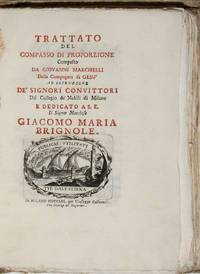
17595386Milan: Giuseppe Galeazzi 1759. Hardcover. Near Fine. 8vo 20.2 x 14.4 cm. XXII pp. 352 pp. 8 ff. with 1 large 40 x 50 cm folding plate containing 5 illustrations; title-page printed in red and black engraved device on title. Bound in contemporary publisher's binding title in ink on spine. Minor edge wear minor staining to lower cover. Quires C and E loosening internally very fresh and clean retaining deckle at fore-edge and bottom edge toning to plate marginal paper flaw and rear reinforcement of crease to plate otherwise an excellent copy. Rare first and sole edition of this treatise on the proportional compass written by the Jesuit Giovanni Marchelli. The work was expressly written for the use of Marchelli's mathematics pupils in the Jesuit College of Milan and thus provides interesting evidence for the use of scientific instruments in Jesuit education. The text offers an advanced understanding of Galileo's landmark instrument and coming from a Jesuit it is perhaps notable that Galileo's "invention" of the instrument is so candidly celebrated. The proportional compass or 'sector' in fact combines two separate instruments one for making observations by adding a quadrant to its arms the other to calculate various measures like proportion trigonometry and squares and cube roots. Its several scales permit easy and direct solutions for problems in surveying gunnery and navigation. Conceived as a universal instrument the device was adapted for a variety of pedagogical purposes far more diverse than Galileo's sector ranging from pure geometry to such practical operations as taking measurements for the architectural orders p. 11 converting currency and calculating interest p. 42 performing various 'rule-of-three' operations such as the dissolution of business partnerships p. 53 surveying passim and the construction of Napier tables p. 73. The compass scales are well illustrated and the text includes tables giving the positions of the various markings. The large folding plate provides diagrams "for constructing Galileo's quadrant" that show with great refinement exactly where the markings on the quadrant's arm and tangent are to be engraved. The final chapter deals with military problems such as the determination of the caliber of cannon balls. OCLC locates copies at Adler Planetarium Michigan Oklahoma Woodstock Theological. De Backer-Sommervogel V.525 4; Cinti 177; Carli-Favaro 128; Tomash II.M34. <br/> <br/> Giuseppe Galeazzi hardcover
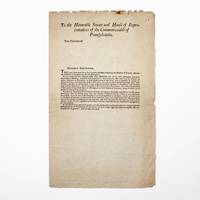
1797372917Philadelphia 1797. 1p. plus integral blank. Bifolium. Unbound. Old folds minor separations at fold repaired. Provenance: General Theological Seminary unmarked. 1p. plus integral blank. Bifolium. In 1797 the Pennsylvania Senate passed a bill related to establishing schools throughout the Commonwealth for public education. This petition here un-accomplished but designed for use by various denominational groups to collect signatures notes the passage of the legislation and argues that various religious group have already established schools that provide both secular and religious education: <br /> <br /> "We are convinced that Schools ought to be established but we are fully persuaded that their establishment should be conducted and regulated in such a manner that they may not become an injury nuisance or detriment to those good citizens of this State who as members of certain religious societies conscientiously think it their duty not only to confer useful knowledge upon their children but also to instruct them in the religious principles peculiar to themselves." <br /> <br /> The petition continues arguing that public funds earmarked for education should be provided for their denominational schools: "Should your Honourable House institute Schools according to the design expressed in the bills above mentioned then we humbly pray that our schools which are already erected or may hereafter be erected in and by any of the Congregations of our profession in this State may be endowed with a full share and portion of the monies to be raised by a Tax and of the funds to be appropriated to any of the Schools contemplated by the said bills and with this provision that such our Schools shall remain under the sold inspection and direction of persons appointed by our respective Congregations for that purpose." <br /> <br /> The petition concludes: "As the object of our petition is proper and just and founded on the principles of religious Liberty guaranteed by the Constitution of this State we have every right and reason to expect that our request will be granted: And we shall ever pray."<br /> <br /> This is the only example of this petition recorded by ESTC and we cannot locate an earlier example of a petition by a denominational group for public funding of religious education in the United States. ESTC W479053. Not in Evans or Bristol unknown