42 032 résultats
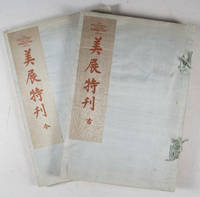
192941261上海市 Shanghai: æ£è—社 Zheng yi she 1929. Second edition. Softcover. poor to vg-. Folios. Approx. 15x10". Unpaginated. "Modern" volume with 3 preliminary pages of index and 8 pages of prologue. "Ancient" volume with 2 pages of prologue and 1 page of index at the front. Grey patterned cloth portfolio with black lettering over a white label on the front cover. Light blue-grey silk wrappers with light blue string-tied bindings. Red lettering in English and Chinese over a tan silk label on the front covers. This is the "November 1929" printing.<br /> <br /> The work is an exhibition catalog from The National Fine Arts Exhibition held in Shanghai in April of 1929 which was organized by the Ministry of Education of the Republic of China headed at the time by Cai Yuanpei. It is considered the first Chinese fine arts exhibition in modern history. The exhibition was a monumental retrospective with more than 2000 pieces of art from throughout Chinese history starting from the Five Dynasties period the 10th century up through the contemporary period. The event brought together the work of countless Chinese artists photographers and architects and also included the work of six Japanese artists. <br /> <br /> The catalog includes some 400 pieces of the artwork featured in the exhibition divided into a "modern" volume and an "ancient" volume. The artwork is printed in b/w offset photographic reproductions and collotypes. Also included in the "ancient" volume are seven works in color with both Chinese and English language titles on protective tissue guards a few of which are beautifully printed color lithographs. The "modern" volume contains a printed calligraphic prologue written in by Cai Yuanpei. The "ancient" volume includes works from some artists as The Four Wangs Wu and Yun from Qing Dynasty Four Monks of the Early Qing Dynasty Bada Shanren Shitao Hong Ren and Kun Can Lan Ying and Gong Xian. The "modern" volume contains works from Zhang Daqian Qi Baishi Wu Hufan Liu Haisu and Lin Fengmian among many others. Both volumes contains extensive indexes of the artwork. Text in Chinese.<br /> <br /> Portfolio with boards broken but present. Wrappers with some light smudges and scratches and a few minor creases. Some sunning along the top and bottom edges of the covers. Interiors with sunning to the edges and a few sporadic minor smudges. Images mostly unaffected. Portfolio in poor wrappers in good interiors in very good- condition overall. æ£è—社 (Zheng yi she) unknown
Z1-S-031-02547Higher Education Quality Council. Used - Good. Worn cover. Ships from UK in 48 hours or less usually same day. Your purchase helps support Sri Lankan Children's Charity 'The Rainbow Centre'. Ex-library so some stamps and wear but in good overall condition. 100% money back guarantee. We are a world class secondhand bookstore based in Hertfordshire United Kingdom and specialize in high quality textbooks across an enormous variety of subjects. We aim to provide a vast range of textbooks rare and collectible books at a great price. Our donations to The Rainbow Centre have helped provide an education and a safe haven to hundreds of children who live in appalling conditions. We provide a 100% money back guarantee and are dedicated to providing our customers with the highest standards of service in the bookselling industry. Higher Education Quality Council unknown
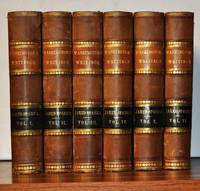
18475350002New York: Harper & Brothers Publishers 1847. Hardcover. Very Good in No Dust Jacket dust jacket. Sound bindings and hinges. Text pages slightly tanned clean. Previous owner's book plate on front pastedown. Previous owner's name on title page. Half leather binding has general light wear shallow tear at top of volume 1 spine. Extensive collection of the writings of George Washington. Each volume has engraved portrait of Washington as frontispiece. 9.5" tall. Harper & Brothers, Publishers hardcover
191959006401Washington: U.S. War Department - General Staff G-3 1919. Bound in one half brown leather over gray boards. five raised bands gilt still bright. Tabs for 93 divisions from 1917-1918 with 4-5 pp. per division. Lists no. of enlisted men officers headquarters generals casualties etc. Exceedingly rare. Approximately 400 leaves. Contains charts no maps in this volume. States Copy No. 41. First Edition. Hard Cover. Very Good /No Jacket. 4to - over 9¾" - 12" tall. U.S. War Department - General Staff G-3 Hardcover
19362279148Wishart Books Ltd 1936. This is an ex-library book and may have the usual library/used-book markings inside.This book has hardback covers. In poor condition suitable as a reading copy. No dust jacket. Please note the Image in this listing is a stock photo and may not match the covers of the actual item700grams ISBN: Wishart Books Ltd hardcover
1926ZB384839NY 1926. volumes 3 8 13 16-29 31-49 51-52 54 56-65 1926-1988; complete volumes; partly bound; price is for the lot. - If you are reading this this item is actually physically in our stock and ready for shipment once ordered. We are not bookjackers. Buyer is responsible for any additional duties taxes or fees required by recipient's country. Photos available upon request. NY unknown
19772091502135202172Hara shobo 1977. Soft Cover. Fine. Number of books: 9 Hara shobo paperback
1945ZB394207Office of Education 1945-1964. volumes 1-20. 1945-1964. partly bound library markings textually clean & tight price is for the set. - If you are reading this this item is actually physically in our stock and ready for shipment once ordered. We are not bookjackers. Buyer is responsible for any additional duties taxes or fees required by recipient's country. Photos available upon request. Office of Education unknown
20012083002117401043Matsuno Shoten Reprint Edition Popular Edition 2001. Soft Cover. Fine. The book is in fine condition. Matsuno Shoten Reprint Edition (Popular Edition) paperback
637434360The McGraw-Hill Company 11th Edition . Hardback. New. The McGraw-Hill Company hardcover
18905955Kutztown PA 1890. Quarter roan over marbled boards measuring 8 x 6.25 inches and comprised of 73 pages of manuscript text including a mixture of notes passed between friends on the verso of the final leaf and on the rear pastedown. Spine largely perished with boards and textblock held together by cords. Several leaves neatly excised towards rear. Containing notes from Fannie Hottenstein's courses in teacher training the present volumes offer researchers a range of study topics including the history of pedagogy and women's increasingly visible place in American education; the book also is a valuable resource for examining how educated young women were thinking through their own lives and roles -- as individuals and as a generation. <br /> <br /> Trained in one of the most educationally progressive states at the time Fannie Hottenstein was one of a generation of women who could more widely dream about and pursue more independent lives than their matriarchs. Historically Pennsylvania had been a vanguard for public and progressive education. "In his 1830 address to the state legislature Governor George Wold championed the cause of universal public education" as a scaffold for "the security and stability of the individual privileges we have inherited from our ancestors" Explore History. Before the decade was over "more than 1000 local school districts under a single statewide system of instruction" had been founded working to regularize "educational standards curriculum and instructional credentials" in tandem with the 1857 Normal School Act which founded "a network of ten state academies to prepare public school teachers" Explore History. Fannie attended one of these preparing for a career in education that would give her a new level of social and economic independence. <br /> <br /> Much of Fannie's notebook reflects the kind of rigorous work required to teach middle and high school students. Contents include for example three pages of facts on basic Botany; fifteen pages on the practice of Logic in writing and debate including an extensive section on presenting proper Opposition accompanied by text book page numbers; and five pages on pedagogical methods for helping students develop curiosity and drive it forward into productive study. There are additional fairly staid essay samples on topics such as Influence and Gentleness. Yet it is in the thirteen page essay We Girls that sparks of Fannie's individuality ambition and independence show. In it she reveals how much contact she has had with the period's literature on women's rights and suffrage; she shows her familiarity with anti-feminist arguments in opposition to women like her; and she powerfully expresses her hopes not only for her generation but the ones that follow.<br /> <br /> Fannie opens: "It is a recognized fact that the degree of civilization of every nation is marked by the social position of woman. Indeed one of the most prominent features of the progress of civilization is her gradual elevation in society and the clear perception and recognition of her rights. In the earlier ages of the world when the sphere of her influence was bounded by the narrow prejudices of the opposite sex her happiness as well as her mental improvement and social rank depended more on what was done for her at the hands of men than on what she could do for herself. All this is changed now." Fannie praises the hard-won changes women accomplished in accessing education and job training; and she touts how many opportunities are available for women to dream about and pursue. This does not mean she's unaware of the challenges that continue -- particularly from men. "We have to contend with the prejudice sometimes entertained against us that our highest destiny in life is to be a pretty piece of furniture in a handsome parlor. Men who entertain this notion we girls must always urge to get their furniture somewhere else." To those who accuse women of being too emotional and insufficiently intellectual she also has a response. "Our aim must be to develop and perfect our entire nature mental social and moral" she argues. Only by embracing both thinking and feeling as strengths can any individual -- man or women she contends -- succeed. Women are in a unique position to embrace both. <br /> <br /> A truly rich document which also includes brief notes among Fannie and her friends about their flirtations and recent purchases of accessories at the end gives insight into the development of a young woman who would go on to live what she preached. According to the US Census of 1900 Fannie remained single and lived in a boarding house working as an office stenographer. unknown
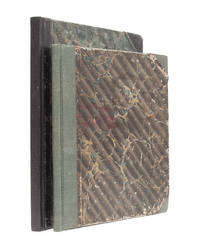
18703389United Kingdom 1870. Geography notebook of Mary Barker: Quarter black roan over marbled boards measuring 9 x 7 inches. Comprised of a calligraphic title and frontis plus 59 hand drawn-and-colored maps done by a young woman in her first three years of teacher training. Throughout Mary annotates on the margins which year and term she is in and occasionally notes that the map was drawn "From Memory"; and each map has penciled corrections and assessments. <br /> <br /> with Geography notebook of Allison Jane Gillespy: Quarter cloth over marbled boards. Calligraphic title page and 35 intricately hand drawn maps from the British Empire Europe and the Middle East. <br /> <br /> A pairing of beautiful and research-worthy notebooks documenting teacher training in the late nineteenth century as well as providing a look into how geographies changed across time and how British educators were being trained to perceive and educate the young about other parts of the world and how they connected to the British empire. With nearly 100 pages combined the notebooks offer scholars important comparative opportunities and means for better understanding the rising number of women educators and authors publishing works that engaged geography and international cultures during the Victorian era.<br /> <br /> "The Wesleyan Methodists had a school for ministers' daughters at Trinity Hall Southport.which admitted both boarders and day girls.to educate ministers daughters and train teachers" Roach. Pupil teacher programs like the one Mary Barker was enrolled in had become a popular method of producing teachers at a time when the public's access to education expanded and the demand for instructors was at a high. Such programs functioned like an apprentice system taking a senior pupil typically thirteen years old and putting her in a five year assistantship to her own instructor. Pupil teachers typically took on responsibility for teaching lower classes observing their superiors educate the more advanced students and completing their own educations. By the 1870s these programs had become standardized to ensure proper preparation for instructors Robinson. <br /> <br /> Mary's maps trace this process. As she moved from her first to her third year in this notebook the quality and care she puts into her work improves. Her handwriting and attention to detail matures. And her assessments move from Fair to Good and Very Good. Maps in the notebook include nearby locales such as Ireland Scotland and the British Isles as a whole; European nations including Sweden Norway and Prussia as well as eastern Europe and Russia. Mary also maps out "Arabia" and the "Chinese Empire" as well as "Further India" revealing a wide array of changing borders and shifting cultural attitudes. <br /> <br /> While Allison does not leave any marker of her class age or school the level of intricacy in her maps suggests she was a senior student or finished instructor. These appear to be fair copies not done from memory but prepared as examples for students or as teaching aids.<br /> <br /> Together the two provide a comparative opportunity to study the history and politics of mapping nineteenth century girls' education pedagogy and pedagogical training and geography. unknown
1924059769New York: The Devin-Adair Company 1924. 1st Edition 1st Printing. Hardcover. Very Good . Xi 472 Pp Ad At Rear. Red Cloth Gilt. First Printing With 1924 Date On Title Page. Light Usage. Hinges Tight. Inscribed By The Author To General Charles E. Daes And Dated August 1 1924. No Marks. A Most Thorough And Scholarly Analysis Not Equaled By Modern Efforts Which Tend To Pussyfoot. "The Object Of This Book . Is An Authoritative And Candid Survey Of The Corrupt Practices And Criminal Lawlessness Of A Provincial Oligarchy." The Evidence Is Massive And Convincing Regarding The Physical Or Psychological Inabilities Of Southern Whites To Govern Themselves Let Alone Others. He Quotes The Alabama Educational Commission Itself "The Constitution Of 1868 Though Enacted By A So-Called "Carpetbag" Government Dealt With The Subject Of Education In A Manner Far More Liberal And Infinitely Better Calculated To Promote General Intelligence Than Does Either The Constitution Of 1875 Or That Of 1901." Skaggs Quotes Abraham Lincoln In A Letter To Joshua F. Speed: "The Slave-Breeders And Slave-Traders Are A Small Odious And Detested Class Among You; And Yet In Politics They Dictate The Course Of All Of You And Are As Completely Your Masters As You Are The Masters Of Your Own Negroes." This Breed At The Top Poisoned Every Branch Of Government In The South. Per Wikipedia Charles Gates Dawes 1864 -1951 Was The 30Th Vice President Of The United States From 1925 To 1929 Under President Calvin Coolidge. He Was A Co-Recipient Of The Nobel Peace Prize In 1925 For His Work On The Dawes Plan For World War I Reparations And A Member Of The Republican Party. Born In Marietta Ohio Dawes Attended Cincinnati Law School Before Beginning A Legal Career In Lincoln Nebraska. After Serving As A Gas Plant Executive He Managed William Mckinley's 1896 Presidential Campaign In Illinois. After The Election Mckinley Appointed Dawes As The Comptroller Of The Currency. He Remained In That Position Until 1901 Before Forming The Central Trust Company Of Illinois. Dawes Served As A General During World War I And Was The Chairman Of The General Purchasing Board For The American Expeditionary Forces. In 1921 President Warren G. Harding Appointed Dawes As The First Director Of The Bureau Of The Budget. Dawes Served On The Allied Reparations Commission Where He Helped Formulate The Dawes Plan To Aid The Struggling German Economy. The 1924 Republican National Convention Nominated President Calvin Coolidge Without Opposition. After Former Governor Of Illinois Frank O. Lowden Declined The Vice-Presidential Nomination The Convention Chose Dawes As Coolidge's Running Mate. The Republican Ticket Won The 1924 Presidential Election And Dawes Was Sworn In As Vice President In 1925. Dawes Helped Pass The Mcnary-Haugen Farm Relief Bill In Congress But President Coolidge Vetoed It. Dawes Was A Candidate For Renomination At The 1928 Republican National Convention But Coolidge's Opposition To Dawes Helped Ensure That Charles Curtis Was Nominated Instead. In 1929 President Herbert Hoover Appointed Dawes To Be The Ambassador To The United Kingdom. Dawes Also Briefly Led The Reconstruction Finance Corporation Which Organized A Government Response To The Great Depression. He Resigned From That Position In 1932 To Return To Banking. Dawes's Brothers Were Rufus C. Dawes Beman Gates Dawes And Henry May Dawes All Prominent Businessmen Or Politicians. Dawes Was A Self-Taught Pianist Flutist And Composer. His Composition Melody In A Major Became A Well-Known Piano And Violin Piece In 1912. Melody In A Major Was Played At Many Official Functions That Dawes Attended. In 1951 Carl Sigman Added Lyrics To Melody In A Major Transforming It Into The Song "It's All In The Game". Since Then It Has Become A Pop Standard. Numerous Artists Have Recorded Versions Including Cliff Richard The Four Tops Isaac Hayes Jackie Deshannon Van Morrison Nat "King" Cole Etc. Dawes And Bob Dylan Are The Only Persons Credited With A Number-One Pop Hit To Have A Nobel Prize. <br/> <br/> The Devin-Adair Company hardcover
1953039982Chicago: University of Chicago Press 1953. First Edition 1st Printing. Blue Cloth. Very Good/Near Fine. Ix 103 Pp. Blue Cloth Gilt. First Printing. Inscribed By Robert Hutchins To A Friend "To John - With Affection Rob". Book With Light Wear Rubbing To Gilt Title On Spine Slight Crack Between Half Title And Title Pages. In Near Fine Dust Jacket With Touch Of Rubbing Along Top Edge Of Spine And At Tips. <br/> <br/> University of Chicago Press hardcover
19782092902137703714Not Available 1978. Soft Cover. Fine. The book is in fine condition. Not Available paperback
19842110502150908695Houbunkaku 1984. Soft Cover. Fine. Number of books: 14 Houbunkaku paperback
19982110502151100502Iida City Board of Education 1998. Soft Cover. Fine. Number of books: 1 Iida City Board of Education paperback
1972ZB394256Society for History Education 1972-2001. volumes 6-11; 13-22; 24-25; 27-35. 1972-2001 all complete volumespartly bound library markings textually clean & tight PRICE IS FOR THE LOT. - If you are reading this this item is actually physically in our stock and ready for shipment once ordered. We are not bookjackers. Buyer is responsible for any additional duties taxes or fees required by recipient's country. Photos available upon request. Society for History Education unknown
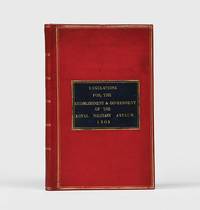
1805158331London: T. Egerton 1805. A groundbreaking school for the working class First edition of this detailed record of the founding warrant and regulations of this remarkable institution Britain's "first large-scale system for the education of working class children" Cockerill nearly 70 years before the Elementary Education Act. Instigated by the commander-in-chief Frederick duke of York the RMA offered co-educational facilities for orphans and the children of destitute enlisted men. Rare just two locations world wide British Library and Koninklijke Bibliothek. Set up in 1801 the institution was modelled on the Royal Hibernian Military School Dublin established in 1765 and at the height of the "Great War" against France 1793-1815 the RMA was caring for over 1000 boys and 500 girls in its grand purpose-built home in Chelsea now widely known as the Duke of York's Barracks and home to the Saatchi Gallery. "To govern the new Asylum the commander-in-chief formed a board of commissioners from among his most senior generals at the Horse Guards officers who had been under his command when campaigning against the revolutionary army of France in the Low Countries these included David Dundas Harry Calvert John Whitelocke and Robert Brownrigg. The RMA was intended to replace the dependence of military families on regimental depots and the charity of the officers. Alternatively destitute families of soldiers had to rely on the workhouse system which meant that families first had to travel from the regimental depot to the parish in which the father had been born. This could mean a long and arduous journey for which the Commanding Officer of the regiment in question had to provide a signed pass of safe conduct through parishes along the way to avoid being charged with vagrancy" ibid. The boys' education in reading writing and the "four rules" of arithmetic was based in Lancaster's monitorial system with older pupils relaying the lessons from one or two teachers to larger groups of younger boys. Male pupils were trained for a military career or indentured apprenticeships and the young women taught by an all female staff fitted for life in domestic service. The text sets out the terms for the acceptance of an applicant and the specific duties and remuneration of the various members of staff. The forms annexed to the volume give a diet table for pupils and for staff separate applications for boys and girls and a template for marriage birth and health certificates. In 1892 the RMA became the Duke of York's Royal Military School in 1909 moving to premises in Dover where it continues to the present day. Octavo 206 x 130 mm. Four folding specimen forms at the rear one of them double-sided. Contemporary red straight-grain morocco paired gilt rules to the spine black morocco patch label to the front board double gilt fillet panels to the boards dotted roll to the board edges scrolled roll gilt to the turn-ins finely patterned Shell marbled endpapers all edges gilt dark blue silk page marker. Spine just a touch sunned some light chafing at the extremities pale toning else very good indeed. A. W. Cockerill Duke of York's Military School history site on line. hardcover
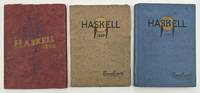
19306084Lawrence Ks: Haskell Institute 1930. Very good. Three volumes: 112; 122; 124pp. Original pictorial bindings earliest two volumes in wrappers with yapp edges the latter in blue cloth boards. Some chipping to yapp edges overall minor wear. Previous owner's signature on latter two volumes. A couple of inscriptions in latter volume. A consecutive trio of yearbooks from Haskell Institute "a United States Government Training School for Indians" still located in Lawrence Kansas and known today as Haskell Indian Nations University. The works were printed by Haskell students evidenced by the following notice printed at the front of each volume: "The contents of this book put in type and printed by apprentice students of Haskell Institute." The present annuals document the student body faculty and staff campus life and alumni information for the years 1928 through 1930. Though the student body is anything but typical the yearbooks contain information typical of traditional high school annuals including student portraits and information arranged by school class rosters and group portraits of various clubs music groups and sports teams and military groups a calendar of school events and more. The annuals also include vital information on hundreds of previous students with lists of names and addresses of the Haskell Alumni Association.<br /> <br /> These particular annuals belonged to A.A. Van Sickle evidenced by his ownership signature on the latter two volumes. Mr. Van Sickle taught religion at Haskell and is pictured along with the other religion faculty members in the 1930 annual. One of the volumes also includes a couple of inscriptions to Van Sickle from students. OCLC reports sparse holdings at just six institutions but only one location the University of Kansas holds any of these three the 1929 edition.<br /> <br /> A rare opportunity for an instant collection of Native American assimilationist yearbooks from an important government residential boarding school. Haskell Institute unknown
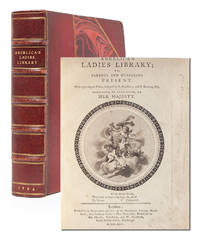
17943526London: Printed for J. Hamilton 1794. First edition. Finely bound in half morocco over marbled boards ruled in gilt. All edges brightly gilt. Marbled endpapers. Lower front corner skinned. Light offsetting to endpapers. Faint gift inscription to outer margin of title. Header of titlepage shaved close without any loss to text with textblock wide margined and clean. Pages measure approximately 190 x 150mm. Collating 2 vi 440: bound without half title else complete including engraved title and eight plates designed by Angelica Kauffman a founding member of the Royal Academy of Arts. A surprisingly unfoxed and wider-margined copy than is typically found of this compilation of early educational works designed to help usher girls into adulthood.<br /> <br /> "These sheets were penned by some of the most amiable and well informed subjects of these realms and intended as affectionate legacies of those noble and worthy persons to their amiable offspring for whom they had such tender regard.to point out whatever was desirable and just in forming and perfecting the virtues of the female character." Thus John Hamilton brings together a series of 16 pieces on women's education and etiquette by authors including Dr. Gregory Lady Pennington the Marchioness of Lambert John Dryden and Lady Ann Bothwell. Using illustrations by a well-known female artist who was cutting edge in her own time as a founding member of the Royal Academy of Arts the Ladies Library was purposely suited and adapted for the use of the Female Sex" and for their parents who might want to guide girls into responsible and intelligent womanhood.<br /> <br /> ESTC T88185. Printed for J. Hamilton unknown
18503448Great Britain 1850. Comprised of 88 manuscript pages of mathematical definitions tables methods and exercises in a single hand with the ownership signature of "Caroline Waters Age 16 yrs" to the front endpaper. Marbled paper vernacular binding measuring 8 x 12 inches and stitched at spine. Caroline's metric measurements and English currency reveal her to be a student somewhere in the UK. Though the commonness of her name and the absence of a specific date prevents us from locating her in genealogy records the manuscript she left behind reveals much about how and why girls of her age and class were being taught arithmetic.<br /> <br /> Caroline's elegant practiced hand suggests that she is a member of the rising middle class and the opening of the book suggests that she is a beginning to intermediate mathematician. At the top of the first page she defines Arithmetic as "the art of computing by numbers" which "has five principal sic rules for this purpose viz. Numeration Subtraction Addition Multiplication and Division." Using this definition she divides her notebook into a section for each providing a definition for that principle plus clear-cut examples of its use in both Simple and Compound formats. Numeration Subtraction and Addition are grouped together at the front; and after these sections conclude Caroline enters in Practical Questions in Compound Addition and Subtraction. These involve word problems involving the exchange of money and the calculation of wet and dry weights cloth measurements and time. She then mirrors this with Multiplication and Division before adding sections on Decimal Fractions more Practical Questions and sections on Federal Money and Simple Interest.<br /> <br /> The organization of the manuscript suggests that Caroline copied it out for continued reference where sections are easy to locate and problems clearly illustrate each of the principles. And the emphasis in sample problems on currency conversion monetary exchange and banking implies that her family in some way wanted her to be aware of these concepts.<br /> <br /> An exceptional and rich document Caroline's notebook is a rich resource for study including but not limited to the history of women's education middle class education women's domestic use of mathematics women in business paleography genealogy gender studies. unknown
1791045038Paris: Buisson 1791. First Edition. Hardcover Full Leather. Very Good Condition. 2 volumes bound in one in contemporary mottled calf; worn leather chipped at the head of the spine scattered mild foxing small stain to first title. Complete with the half titles reuniting the two parts of Paine's treatise on democracy and revolution that were published a year apart. There are two editions dated May 1791 on the title page with no clear priority between them: this copy with foux on page 162 and F.S. for the translator on the title. The first part was translated from the original English edition that was almost immediately edited and softened. Paine was a star in France an enlightenment philosopher of the first order and a frequent guest along with the likes of Franklin Jefferson and Adam Smith at the salon at the Hôtel de la Monnaie.<br /> <br /> "The government tried to suppress it but it circulated more briskly.Rights of Man can be seen for what it is: the textbook of radical thought and the clearest of all expositions of the basic principles of democracy." Printing and the Mind of Man<br /> <br /> xii 227pp; iv 16 224pp. Howe P-31 and 32 The English ed. PMM 241 the English ed.<br /> <br /> Provenance: Ex-libris of General J. Doreau Size: Octavo 8vo. Quantity Available: 1. Shipped Weight: Under 1 kilo. Category: Philosophy; History. Inventory No: 045038. Buisson hardcover
1684044178Madrid: Bernardo de Villa-Diego 1684. First Edition. Hardcover Full Leather. Good Condition. Later tree calf light wear at the edges quite sound and attractive. Lacking the front blank and the frontispiece title torn with significant loss at the edges and laid back down. generally mild but pervasive soiling and foxing and a number of tears with loss and repairs to the fore edge of the pages: on page 301/2 with loss of a couple of words 135/6 287/8 221/2 and 269/70 touching a few letters 187/8 touching a few letters and additionally an unrepaired tear with no loss in the gutter page 11/12 with a long unrepaired tear touching a few letters and the gloss 5/6 touching a few letters and 543/4 with a tear on the bottom corner losing a word and a few letters; last two index pages with loss at edges old notes to rear blank. Some other minor loss at the edges which may obscure some glosses scattered stains small tears etc. Otherwise complete 32-548-15 p with pagination errors of 26-27 repeated 382-3 repeated and 399-400 absent. A flawed but essentially complete copy of the first edition the only edition printed in Solís's lifetime. Sabin 86446. Palau VI 529<br /> <br /> Translated into French Italian English Danish and German the Historia was an enormously influential history of the Spanish conquest of Mexico as well as a much imitated piece of prose. <br /> <br /> Provenance: José Maria Chaves signature on final text page Size: Folio. Quantity Available: 1. Shipped Weight: 1-2 kilos. Category: History; Antiquarian & Rare. Inventory No: 044178. Bernardo de Villa-Diego hardcover
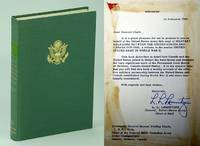
1959138G4416Washington D.C.: Office of the Chief of Military History U.S. Army 1959. Book. Very Good. Hardcover. First Edition. 4to - over 9¾" - 12" tall. 432 pages. Index. Biographical Notes. List of Abbreviations. Chart. Tables. Fourteen reproductions of black and white photos in text. Color map of Canada Alaska and Greenland stored in back pocket. Describes in detail how Canada and the United States joined to thwart the Axis threat and stresses the very significant work of the Permanent Joint Board on Defense Canada-United States. Inside front board a 9.25" x 6.25" typed presentation letter dated 16 February 1960 to Lieutenant General Samuel Findlay Clark Canadian Army is signed by L.L. Lemnitzer Chief of Staff of the United States Army. Letter was originally glued inside front board but is now loose. Yellow glue discoloration to perimeter of letter and front fixed endpaper. Light wear and no markings to this extraordinary association copy. Office of the Chief of Military History, U.S. Army Hardcover