42 032 résultats
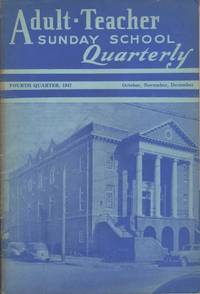
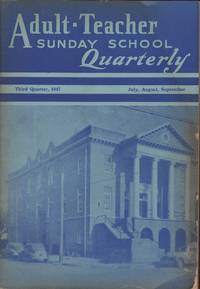
194730484Nashville: African Methodist Church 1947. Wraps. Good. Stapled pictorial wraps. 64 pages. Covers darkened and edge worn. Paper is browned. Map illustration of Bible lands printed inside the back cover. African Methodist Church unknown
194730483Nashville: A.M.E. Sunday School Union 1947. Wraps. Good. Stapled pictorial wraps. 64 pages. Covers darkened. Small tear upper spine. Light toning to the contents. A.M.E. Sunday School Union unknown
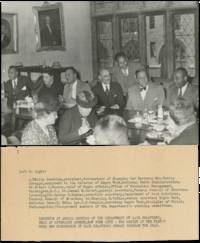
List3004United States 1964. Twenty-seven letters two typed documents totaling four pages six photographs and nine pieces of ephemera including two of Haynes’ heavily stamped passports. One of the typed documents and two of the letters belong to Olyve Jeter Haynes’ second wife. Many items affixed to loose scrapbook leaves. Near Fine. George Edmund Haynes 1800–1960 was an African American sociologist and social worker. He received a B.A. from Nashville HBCU Fiske University an M.A. from Yale and was the first African American to receive a Ph.D. from Columbia graduating in 1912. While in New York Haynes worked with the National League for the Protection of Colored Women and the Committee for Improving the Industrial Conditions of Negroes in New York and formed the Committee on Urban Conditions among Negroes with white suffragist Ruth Standish Baldwin. These three groups would merge into the National League on Urban Conditions among Negroes—shortened to the National Urban League—in 1911. He taught economics and created the sociology department at Fiske and served as director of the Division of Negro Economics under the US Secretary of Labor. He also served the Federal Council of Churches and with the Joint Committee on National Recovery which worked to ensure African Americans got their fair share of the New Deal and had a role in the formation of the State University of New York.<br /> <br /> Offered here is a collection of Haynes’ letters with several photographs and documents. The letters which are sometimes placed alongside copies of Haynes’ outgoing correspondence come from politicians and influential figures in African American higher education. Those from political figures are generally in response to Haynes sending them his thanks for their advocacy for African Americans: Herbert Hoover personally thanks him for his “fine note of friendship†in response to Haynes’ congratulations on his presidential nomination on the 1928 Republican ticket June 21 1928 Franklin D. Roosevelt’s secretary Louis Howe for his letter in appreciation of the President’s speech against lynching before the Fedral Council of Churches December 14 1933 and New York City Mayor Herbert Lehman for his letter in support of the Mayor’s mandate to desegregate CCC camps in the state April 22 1937.<br /> <br /> The letters from fellow educators are more personal and substantial. In an early letter Tuskegee president Robert Russa Moton councils Haynes on an unspecified conflict:<br /> <br /> “I can see no reason why we should not state your case before the Board. It is quite evident that Mr. Wood misunderstood you. I shall be seeing Dr. Dillard next week at which time I hope to talk over and more in detail the whole situation. . The whole thing to me is most unfortunate especially when the work in hand is so very important and there is so much need for all the forces we can summon to do the work.†July 8 1919<br /> <br /> At the time Haynes was with the Division of Negro Economics though it is not clear what misunderstanding had occurred or how it related to Tuskegee’s Board. “Dr. Dillard†is almost certainly James H. Dillard a white advocate for African American education who at the time was the director of the Negro Rural School Fund. Dillard and Haynes seem to have been personal friends as Dillard laments in a later letter that “I wonder if you and I will ever see each other again. The fates seem against it†September 24 1932.<br /> <br /> Another friend of Haynes’ Nathan B. Young writes him in 1931:<br /> <br /> “As you may have heard I am leaving the field of education in Missouri. I am casting about to find something to do. I am still young and healthy with mental powers unabated. I should like to be put into a position where I would have the leisure to ‘write up’ what I have learned by long and varied experience in the field of Negro education. . I am asking my friends to make suggestions as to the best use of the leisure immediately before me. Of course I must keep on earning in order to keep on eating for I am a poor man.†May 26 1931<br /> <br /> A newspaper clipping alongside the letter concerns Young’s unceremonious ouster from the presidency of Lincoln University an HBCU in Missouri. Young had been removed from the same post in 1927 at least in part because of his efforts to turn the school away from agricultural and industrial education and towards becoming an accredited liberal arts university.1 He returned to the post in 1929 but was fired again without a hearing in 1931; in 1933 after a few years of lecture touring Young died.<br /> <br /> Two letters from newsman Julius J. Adams concern an article that the two were writing about the founding of the National Urban League. Adams writes:<br /> <br /> “I am enclosing a copy of a memorandum supplied me by the National Urban League regarding its formation. It is of course strictly confidential but I am eager to get your version of the League’s beginning and desire to see if it coincides. . I must say that the manuscript I am working on is being held up by the printers and it is essential that I get your statement at once. I’d certainly not like to complete the work without including this particular phase of the League. What I’d probably do would be to omit or at least skirt the controversial part of the statement.†June 14 1948<br /> <br /> The attached statement which gives a brief overview of the early years and figures of the Urban League was authored by Eugene Kinckle Jones. Jones was hired as a secretary to the Committee on Urban Conditions so that Haynes could spend most of his time teaching at Fiske.2 As Jones notes in the statement “I was the first full-time employee†as Haynes “never gave full time to the organization.†It is plausible that this is the ‘controversial’ piece that Adams is worried about: Jones convinced the Committee’s board to give him a more significant role in 1916 and by 1917 became executive secretary effectively demoting Haynes who then left the League.3<br /> <br /> The photographs included in the collection date from the later era of Haynes’ career. Three are of the 1942 annual meeting of the Federal Council of Churches Department of Race Relations. The typed caption states that the subjects of the photo—besides Haynes—include labor and civil rights activist A. Philip Randolph journalist Venice Spraggs listed as “assistant to the director of Negro Work†and academic and politician Robert C. Weaver. The Race Relations commission was created in 1921 with the aim of using Christianity to aid racial relations; Haynes became secretary in 1922 and was executive secretary from 1934 to 1947. A 1948 photo shows Haynes with the Temporary Commission on the Need for a State University a New York organization that studied college admissions especially discrimination against African American and Jewish applicants. Its 1948 report which is being presented to Governor Dewey in this photograph included the recommendation to set up the SUNY system. Finally one photograph shows an event at New York City’s WLIN radio station celebrating the release of Haynes’ book Africa: Continent of the Future 1951.<br /> <br /> Later letters concern the death of Haynes’ wife Elizabeth Ross Haynes who died in 1953 with notes of condolence from figures including W.E.B. Du Bois and Adam Clayton Powell. Elizabeth Haynes a fellow social worker sociologist and Fiske graduate was a distinguished figure in her own right. One letter from “Sara†in Bronxville remembers her in some detail:<br /> <br /> “Elizabeth spent two afternoons here while in the process of revising ‘Black Boy’ and I spent a day at your house afterward. We had a child-like and easy way of picking up close communication after long intervals of separation. We never talked about Big Issues and all that — but family matters projects in hand personal expression in the arts memories; we always exchanged some disrespectful jokes about women’s organizations — both of us had felt their sticks for a long time — . I told her the first time they met I meant to get out of teaching colored students before I got helped out by the onrush of young colored teachers. She said that she was quite a lot afraid of giving up her professional work which she had under reasonable control for marriage when she felt no domestic skills and did not even want them much.†November 24 1953<br /> <br /> “Black Boy†is Elizabeth Haynes’ The Black Boy of Atlanta 1952 a biography of African American educator civil rights activist and entrepreneur Richard R. Wright.<br /> <br /> After Elizabeth Haynes’ death George Haynes married Olyve L. Jeter. Two letters are addressed to her one from NUL secretary James H. Hubert worrying about “all the lynchings and what-not†in Harlem and considering carrying a weapon June 2 1937 and one thanking her for her work with the Citizens for Eisenhower-Nixon though misspelling her name as “Alyne†November 7 1952. Also included is a review authored by Jeter of Charles A. Battle’s pamphlet “Negroes on the Island of Rhode Island†which seems to have been sent out for publication. The note to the editor states that Jeter was a staff member in the Federal Council of Churches’ Commission on Race Relations.<br /> <br /> Haynes’ career significantly impacted both Black academic sociology and employment housing and educational conditions for African Americans. Of interest to scholars of Haynes and of African American education in the early and mid century.<br /> <br /> 1 Antonio Fredrick Holland Nathan B. Young and the struggle over Black higher education Missouri University Press 2006.<br /> 2 Nancy J. Weiss The National Urban League 1910–1940 Oxford University Press 1974.<br /> 3 Edgar Allan Toppin “Haynes George Edmund†American National Biography March 27 2025 https://doi.org/10.1093/anb/9780198606697.article.1400270. unknown
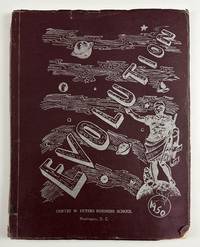
19505036Washington DC: Cortez W. Peters Business School 1950. About very good. 60pp. Original purple wrappers printed in silver. Some soiling and staining to covers minor chipping and rubbing. Small unobtrusive stain to fore-edge of text overall even toning. A seemingly-unrecorded yearbook from the Washington D.C. branch of the Cortez W. Peters Business School the first African-American-owned business school in the United States. The co-educational school was founded in 1834 in the Nation's Capital followed in the next few years by branches in Chicago and Baltimore. The founder Cortez W. Peters taught himself to type as a child and went on to become the first African-American champion of the World's Amateur Typing Contest. Peters' school was one of the first to teach typing to Black students while also offering instruction in shorthand and other clerical skills. The present yearbook begins with a message from Peters which strikes a conciliatory tone in the wake of racial tensions that followed the conclusion of the Second World War: "We naturally resent discrimination lack of opportunities oppression.But on the other hand there are many other values to be considered which should make us tolerant and willing to work out these traditional handicaps generally." This is followed by messages from the dean and class president Eva Itene Brown then portraits of students and faculty a class history a class prophecy class will class poem and twelve pages of group photographs including shots of the men's and women's basketball teams the coronation ball and images featuring students in the classroom. Many of the students both men and women have included words of advice or stated their personal goals which are printed beside their portraits "To be a good typist" "To be a stenographer" and so forth.<br /> <br /> OCLC lists a single copy of three similar yearbooks all under different titles from other years and branches of the school Washington D.C. and Chicago in 1948 and an undated yearbook from Baltimore but not this particular year at the school's home base. Cortez W. Peters Business School unknown
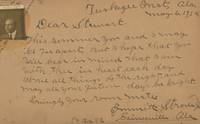
1914List2104Tuskegee 1914. Oblong 8vo decorative pebbled cloth over thin boards 8 x 5 inches. With fourteen pages of inscriptions from fellow classmates. Some pages detached wear and toning good condition. Good. An interesting book of dedicatory verse to a student in the Tuskegee Institute class of 1915 from his classmates all written in May of 1914. Stewart writes on the front pastedown “ Myb album is open come and see for you to waste a line or two upon me so when the summer days make us part I shall always remember you in my heart.†Stewart was from Taylorsville Illinois. The inscriptions from his classmates - mostly sentimental verse- are an interesting document in the Tuskegee coeducational model and more broadly shed light on the culture of the African-American student culture during the time. “Dear Stewart†his roommate Emmit Strode writes “This summer you and I may be far apart but I hope that you will bear in mind that I am with thee in heart each day avoe all things do the right and may your future days be bright.†Stewart is the only student from Illinois represented the others being from Alabama Mississippi Oklahoma Louisiana Texas and Georgia. One classmate writes “ Responsibilities gravitate to the person who can shoulder them and power flows to the man who knows how.â€. unknown
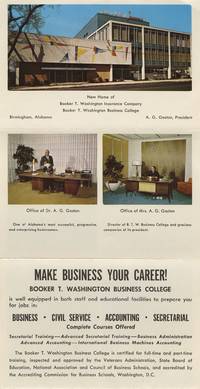
1950List3609Birmingham Alabama 1950. Folded direct mail advertisement measuring 21 x 5 ½ inches folded into six panels. Fine condition. A promotional mailer for the Booker T. Washington Business College founded by A.G. Watson in Birmingham in 1939 in response to a shortage of typists and receptionists in his insurance and funeral home businesses and open until 1988. Arthur George Gaston 1892–1996 was an Alabama businessman and civic leader who built one of the largest African American–owned business enterprises in the United States during the era of segregation. Beginning with the Booker T. Washington Burial Society he expanded into insurance funeral services banking construction broadcasting and hospitality creating employment and training opportunities within Birmingham’s Black business community. Gaston later established Citizens Federal Savings and Loan Association one of the few Black-owned financial institutions in the region and developed the A.G. Gaston Motel which served as a key meeting site for civil rights leaders during the Birmingham Campaign of 1963. This advertisement appears to be from the 1950s with pictures of students around an IBM accounting machine late 1940s production and pictures of the Gastons in their respective offices. The college offered courses in business civil service accounting and secretarial training according to the mailer. A nice survival from an important institution. unknown
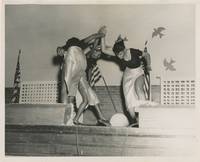
1955List3206Washington D.C. 1955. Forty-five 8 x 10 inch photographs. Some slight damage to edges and slightly curled; excellent. The Phelps Vocational High School was founded in 1912 as a trade school for African American boys located in the historically Black neighborhood of Carver Langston. In the tradition of African American industrial education the school initially specialized in printing bricklaying and carpentry. During World War II the school trained students in airplane and auto mechanics and building construction funded by the Works Progress Administration. It began accepting girls in 1942 or 1943. Phelps is still open now as the Phelps Architecture Construction and Engineering High School. <br /> <br /> Offered here is a collection of forty-five photographs from Phelps dating from around 1945 to 1955. The collection captures school life pageants sports and the school’s ROTC program. Many of the photos show students in plays dancing and participating in gymnastic cheerleading. D.C. schools would begin to integrate in 1954 the year that both Brown and the D.C.-specific Bolling v Sharpe were decided by the US Supreme Court. unknown
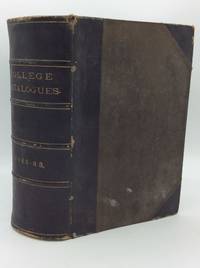
18831271969Various: Privately Printed 1883. First edition. Leather bound. Good. UNIQUE VOLUME CONTAINING TWENTY-FOUR ORIGINAL CATALOGUES FROM NORTH AMERICAN CATHOLIC COLLEGES. All catalogues are the original printings published in 1883 for the 1882-1883 school year. Catalogues in good or better condition all whole and complete with no missing majors of substantive damages. Bound in 19th century half black leather and cloth; the outer covers are slightly dampstained and soiled from having gotten wet decades ago but none of the interior catalogue pages were damaged. Several catalogues contain plates and maps of campus buildings as noted below. Old library stamp on endpaper. A fascinating source for American Catholic higher education in the 1880s. Many of the schools which were colleges then are major universities now others such as the Jesuit-run Las Vegas College founded in 1877 are long gone. The catalogues contain a wealth of information on academics student life lists of students etc. Included in the volume are St. Louis University St. Xavier College Cincinnati with one plate St. Mary's College Kansas St. Ignatius College Chicago with one plate; Marquette College Detroit College Creighton College St. Francis Institution for Boys - Osage Mission Kansas Georgetown College with one plate St. John's College Fordham with one plate Gonzaga College Washington DC Holy Cross St. Francis Xavier NYC Boston College St. Peter's College Jersey City Spring Hill College - St. Joseph's Mobile AL College of the Immaculate Conception New Orleans St. Charles College Grand Coteau LA Santa Clara College with two maps one map with small hole in center and 12 plates St. Ignatius College San Francisco Canisius College College of the Sacred Heart Prairie du Chien WI Las Vegas College and College Ste.-Marie in Montreal. Privately Printed unknown
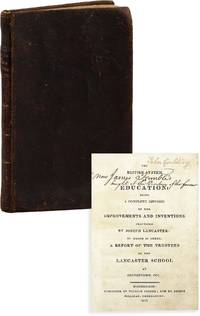
181289512Georgetown Washington D.C.: William Cooper and Joseph Milligan 1812. First American Edition. 12mo. Contemporary full sheep; xx1-130pp; frontispiece 5 leaves of plates. A complete but somewhat worn copy with typical darkening to text leaves; a few brief marginal chips including a small loss to frontispiece costing a couple of characters of the printed margin; Good and sound. Early holograph ex-libris of a John Goulding.<br /> <br /> A very early exposition of the Lancasterian method of education following by just a few years the American edition of Lancaster's own book Improvements in Education NY: 1807 and perhaps the first to delineate the application of his methods in a strictly American setting. Lancaster's method which involved strict regimentation and the use of student monitors enabled the "teaching" of hundreds of students in a single classroom. Lancasterian grammar schools were extremely popular in the early years of the Republic as they filled an urgent need to build a literate working class in a nation with a paucity of qualified profefssional teachers; by the mid-19th century the method fell out of favor in large part due to the influence of reformer Horace Mann. The "Epitome" printed here is followed by the full report of the Georgetown D.C. Lancaster School Society for the year just past to which is appended a letter from Lancaster himself praising the Society's efforts. Six wood-engraved plates illustrate aspects of the Lancasterian approach. Scarce in commerce. SHAW & SHOEMAKER 25817. William Cooper and Joseph Milligan unknown
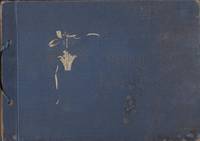
193034717Americus Georgia: C. R. Gibson and Company Publisher of the blank album 1930. Scrapbook. Fair. Oblong string tied quarto hardcover Approx. 7" x 10". 50 leaves 100 pages. Miss Annette Orr's name card on the front paste down and "Daddy's" name card on the right front flyleaf. Scrapbook with blue cloth covered boards. Gilt title "Memories of My School Days" and illustration on the front cover is faded. <br /> <br /> 39 of the 50 leaves used for 54 pasted down pictures including an old picture of the High School and one presumably of Miss Orr news articles souvenirs invitation cards programs written school poem and song several autographs name cards signed notes graduation ceremonies etc. The cloth covers are spotted and loose. Most of the leaves are intact. One leave is loose and detached. Some light damp-staining to the pages. No dates written inside. A Church periodical is dated June 1930. C. R. Gibson and Company (Publisher of the blank album) unknown
19182091502135501196Specialized Academic Affairs Bureau Ministry of Education 1918. Soft Cover. Fine. Number of pages: 4 2 173 42p Standard size: 16x23cm Specialized Academic Affairs Bureau, Ministry of Education paperback
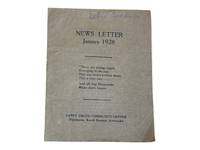
19288985Pippapass Kentucky: Printed by mountaineers In the Print Shop at the Caney Creek Community Center 1928. First edition. 18x14cm 12pp. Printed on yellow pink and beige paper with a few photos throughout. Publisher's printed self wrappers stitched with yellow yarn. Few light creases yarn split but present. Owner's name on front cover. Very good. <br /> <br /> Very scarce printing example from the early years of the Caney Creek Community Center in Eastern Kentucky. The center was founded in 1917 by Alice Lloyd 1876-1962 with her mission of providing basic social services healthcare and education for children in rural Appalachia Kentucky. Besides an educator Lloyd was a writer and editor supporting women's suffrage and the freethought movement. The CCCC was vital to community and economic development of the region and eventually expanded to include the higher education institutions of Alice Lloyd College and the June Buchanan School. <br /> <br /> OCLC cites 5 holdings for any issues of this periodical. Printed by mountaineers In the Print Shop at the Caney Creek Community Center unknown
19732080502107002237Saga Prefecture Board of Education 1973. Soft Cover. Fine. Number of pages: 33 pages Map size: 22 cm Saga Prefecture Board of Education paperback
2002022487Achievement Rewards For College Scientists Foundation / Kusak Art Chrystal 2002. Original Award . No Binding. Fine. 11 " Tall. Original Crystal Obelisk Memoralizing The 2002 Award To Beckman Made Of Kusak Art Cut Crystal. In A Presentation Lined Box. <br/> <br/> Achievement Rewards For College Scientists Foundation / Kusak Art Chrystal unknown
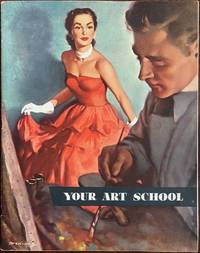
195059701Minneapolis MN: Art Instruction Inc. 500 South 4th St. 1950. Folio. 10 x 13 in. 36 pp unpaginated. printed in red blue yellow & black. Photo illustrations colour illustrations black & white text illustrations. Colour illustrated lithograph softcovers cover art by William Medcalf 1920-2005 noted pinup portrait and landscape painter perhaps best remembered for his pinup calendar art generated for Brown & Bigelow minor soiling to fore-edges of couple leaves back cover fore-edge very minor edgewear still VG bright copy. First edition of this unexpectedly scarce catalogue and promotion for the famed Art Instruction Inc. Federal School of Applied Cartooning which in 1950 featured the famed “Peanuts†cartoonist Charles M. Schulz on the faculty along with his inspiring fellow instructors Charlie Brown Linus Maurer and Frieda Rich. Founded originally in 1914 as a branch of the Bureau of Engraving to train illustrators for the print industry and for the Bureau itself the school taught correspondence courses in cartooning colour comics composition perspective graphic design art techniques photography bookbinding as well as business practices and served for decades as a key supplier to magazines and newspaper commercial advertising firms and publishers. Textbooks featured contributions from such artists as Edward Shenton Aldren Atson Cyrus LeRoya Baldridge Walter Klett Joyce Kester Beatrice Urbieta Gertrude Coffin Hugh Hutton and others. Schulz remained with the school only a few more months after the publication of this catalogue and by 1952 when the popularity of the Peanuts comic books took off hired former fellow instructors Dale Hale Jim Sasseville and Tony Pocrnich to focuson the comic books while he continued to ink the Peanuts strip. Worldcat locates 1 copy Wolfsonian; 1 other copy located at Charles M. Schulz Museum. Art Instruction, Inc., 500 South 4th St., paperback
1936145350Russell Square: Evans Brothers Ltd 1936. First Edition. Hardcover. Very Good. Russell Square Evans Brothers Ltd. 1936 and 1937. Large quarto 12 issues bound in one volume each issue comprising 40 pages extensively illustrated occasionally in colour. Early half calf and cloth lettered in gilt on the spine; leather a little rubbed and scuffed with minor wear to the corners; cloth on the rear cover a little marked and lightly stained; edges a little marked; endpapers lightly tanned at the edges; a very good copy internally in fine condition. The run comprises Volume 1 Numbers 1-3 and Volume 2 Numbers 1-9 October 1936 to September 1937. 'This new journal . has come into being to assist all teachers . They can rely upon finding in "Arts and Crafts Education" not only details of all new developments as they occur but simple methods of translating these developments into normal classroom practice' from the title page of the first issue. <p>Provenance: Arthur William Pitt South Australian school teacher later headmaster and Inspector of Schools with his small name stamp and signed gift inscription on the front flyleaf. A lengthy biographical sketch of Arthur Pitt published in 'The Register' 14 December 1922 commences thus: 'Mr. A.W. Pitt M A. B A. head master of the Port Augusta Public School was chosen an inspector Class II on probation to fill the vacancy caused by the death of Inspector West'. Evans Brothers Ltd hardcover
107039Great Britain: W.D. & H.O. Wills 1937. Cigarette card album Very good no dust jacket. Not paginated. Illustrated cover photographs illustrations. Some wear along spine. "To commemorate the Coronation of His Most Excellent Majesty George the Sixth. Book about Elizabeth--Queen Mother & George VI--King of England. Locale:. History--England Cigarette Cards Coronations Royalty. W.D. & H.O. Wills Hardcover
187032742Geneva: n/a 1870. Album. Fair. Oblong black album approx. 11" x 7" with thin leather covered boards and leather spine. Album is edge worn and creased on the front cover. Leather spine chipped with loss. Outer joints cracked. Edge wear to the covfers. Contents are shaken with a few detached leaves and many other leaves loose. Internal contents are clean. <br /> <br /> Album has 41 pages used for inscriptions and verse in various languages with several in English. 2 pages have pasted down photographs showing one a University building and the other a view of Torino. Dates for the inscriptions range from 1869-1870. Contributor's named places include Geneva Dublin Lisbon New York Cincinnati Hamburg Boston "Moskau" Barcelona Philadelphia Heidelberg Milwaukee Cartagena Murcia San Francisco and many other places. All the inscriptions are neatly written and arranged. A unique collection of International students sentiments from the University of Geneva. n/a unknown
191057187San Francisco CA: Heald’s Automobile School 425 McCallister St. 521-523-525 Van Ness Ave. 1910. 8vo. 22 2 pp. With numerous photo illustrations text illustrations diagrams. Tan colour-illustrated softcovers Arts & Crafts cover art of decorated borders surrounding scene of a young woman driving a Heald’s Brass Era auto flying a Heald’s School pennant in red black & green faint tide mark to upper fore-edge minor damage to final blank at upper margin still a VG bright copy. First edition of this well-illustrated catalogue detailing the courses in automobile maintenance and construction following the 1906 San Francisco Earthquake & Fire. Not only did the school provide instruction in the operation and maintenance of the early motor cars they also encouraged students to participate in classes fabricating and building automobiles with illustrations here showing not only finished vehicles but also occupational manufacturing classes. Heald 1843-1925 was founder and owner of the Heald’s College in 1863 as a business school and located at 24 Post St. until the 1906 Earthquake & Fire and afterwards at 425 McAllister including a Mining Engineering and Automobile School. Located only one block from the auto showroom center on Golden Gate Avenue the School thrived in that location until 1912 when it and the surrounding buildings were condemned to construct the new San Francisco Civic Center. Griffith 1861-1955 only appears to have run the Automobile School for a few years before the building was demolished in 1912 for building the Civic Center. Worldcat locates 2 copies UC Berkeley Cal State Library; See: William Kostura Heald’s Engineering and Automobile School 1101 Sutter St. State of California Dept. of Parks & Recreation October 2009. Heald’s Automobile School, 425 McCallister St., 521-523-525 Van Ness Ave., paperback
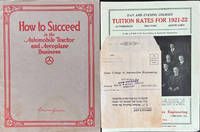
192162241Chicago IL: Greer College of Automotive Engineering 151501521 Wabash Ave. 1921. Two pieces. 4to. 9.25 x 12.25 in. 64; 8 pp. 1st w/ photo illustrations photo plates text illustrations & diagrams throughout. Gray printed & decorated softcovers red lettering front & back covers minor shelfwear rubbing very minor soiling fore-edge back cover still VG; 2nd printed on green-tinted paper in red & black with return envelope for registration affixed to front cover minor shelfwear slight creasing still G copy. First editions of these exceedingly scarce post-World War I catalogues encouraging automotive farm tractor & heavy equipment and airplane technical training for young men as a way to get ahead in these burgeoning new industries. The automotive industry at the beginning of the 1920’s and aviation were both fast growing technically advanced industries and significant training was required to train not only those building maintaining and driving vehicles farm tractors and airplanes but also instructing them in sales methods for dealerships dealership management and sales forces. Of special interest was Greer’s interest in recruiting potential women drivers mechanics and specialists to train as another occupation possibly as a result of the growth of such training during World War I. Erwin Greer 1882-1960 also operated a Chicago automotive dealership selling Maxwell’s Ford’s and other badges and had founded the college by 1902 in order to train drivers for his potential new clients as well as future automobile dealership salesmen. His technical training school later expanded by the late 1920’s to include electronics and electrical engineering students and would graduate over 80000 students by his death. The school would eventually be absorbed into the Lincoln Tech group of training schools in 1969 and still operates several different automotive and technology programs. No copies in Worldcat. Greer College of Automotive Engineering, 151501521 Wabash Ave., paperback
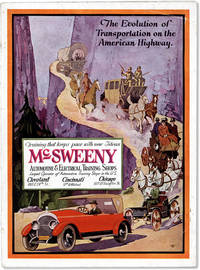
60350Cleveland: McSweeny Automotive & Electrical Training Shops 1925. Quarto. Color pictorial wrappers; 64pp; illus. Mild external wear; contents complete fresh and unmarked - a solidly Very Good copy. <br /> <br /> Elaborate and well-illustrated prospectus for the McSweeny Automotive Training Shops a chain of private training schools for would-be auto mechanics that operated at least through the early 1930s. In addition to detailed course descriptions the brochure emphasizes the growing need for mechanics due to the explosive growth of the automobile industry in the Twenties; promises that "Mac's Shop-Plan Makes the Big Pay Man." Not recorded in OCLC nor is any other publication by this company. unknown
191960735Great Lakes Chicago & Waukegan IL: Naval Aviation Training School L. Blakemore Isaack Wallenstein & Western Photo Studio Photographers ca. 1919-1921. Oblong atlas folio. 21.5 x 9 in. 43 leaves unnumbered. on thick black paper stock. With 52 original silver gelatin photos tipped-in sized from 5 x 7 in. up to 19 x 8 in. 36 panoramas sized from 18 x 3 in. up to 19 x 18 in. some w/ photographer’s imprint w/in negative at lower fore-edge some captioned all tipped-in. Contemporary Spruce plywood post-binder covers same as wood used for spars and biplane bodies in World War I rounded corners piano hinge front joint gilt decorative lettering & logo on front cover minor scuffing shelfwear still VG exemplar. This outstanding souvenir album depicts the height of the vital Naval Aviation Training School which provided essential technical expertise and training to entire generations of Naval Aviators and Naval aviation mechanics and carpenters through World War I and beyond. Founded originally in 1904 when a board appointed by President Theodore Roosevelt selected two farms of north of Lake Bluff IL as a training station which originally covered 172 acres. By Armistice Day at the end of World War I the facility had expanded to 1200 acres and over 45000 men underwent training. Of particular interest in this album are the 36 panoramic photographs documenting Naval Aviator and Naval Aviation mechanic classes for the 15th Regiment and 1st Battalion 15th Regiment from 1919-1920 as well as class rooms machine shops for aviation mechanics and Naval instructors. Others encompass the cutaway model Aviation engines with instructional charts on the surrounding wals the carpenter’s shop with aviation machinery jigs on work benches and airline bodies under construction. One photo depicts the Motor Laboratory Steam Laboratory and Equipment from the USS Eagle 25 at the Aviation Mechanics’ School a US Navy patrol boat which had sunk in a storm in June 1920 and then been raised and sold off as a hulk by Dec. 1921. Other panoramic photos capture the Riggers’ School classroom at Great lakes with full scale biplanes and seaplanes scale model dirigible the Coppersmith School classroom the Fittings classroom with airplane propellers hanging from the walls dip baths for machined parts and nickel plate coating and several of the Naval Aviation School football baseball and other sporting teams including the largest panorama of the Inter-Training Station Baseball championship team from Great Lakes. Wallenstein 1861-1958 was a longtime Chicago photographer through the first four decades of the 20th Century who operated his studio out of his 3928 N. Kenneth home and specialized in panoramic photographs. Western Photo Studio in Waukegan IL appears to have been short-lived as the Waukegan IL directories from 1918-1921 do not list the business but possibly connected with the Western Union Telegraph offices as the address was interchangeable. Volpe 1885-1950 began working in New York originally as a bookbinder before enlisting as an aviation mechanic with the US Navy in 1910 assigned originally to the newly formed ground school in Pensacola and later became Chief Warrant Officer Pilot Airman and Instructor who oversaw the Naval Aviation Training School from 1918-1921. He was also the assistant Athletic officer for baseball and tennis at the base. Naval Aviation Training School, L. Blakemore, Isaack Wallenstein, & Western Photo Studio (Photographers), unknown
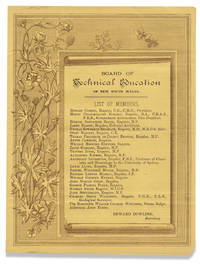
3729824<p>Sydney Australia. Batson & Company Printers. 1886–1887. Single sheet folded once to four a 4-page circular. Printed on yellow stock paper; illustrated. Two short closed tears; pale violet late 19th c. library rubber stamp Franklin Institute at bottom of final page; Very Good.</p> <p>Rare circular; notable for an excellent and large engraving showing the Technical Institute on Sussex Street Sidney. Page 1 lists all of the member of the Board of Education. Pages 2–3 lists all classes within each department Applied Mechanics Commercial Economy Chemistry Mathematics Art etc. the instructors dates and fees and other relevant information e.g. “Females may join any of the Classes.â€</p> unknown
19842082702114900357Motoyama Town Board of Education 1984. Soft Cover. Fine. Number of pages: 32 pages Size: 26cm Motoyama Town Board of Education paperback
19749900035388Brighton UK: The Harvster Press 1974. Hardcover. 8vo. Each volume bound in green buckram with gilt titles. A few volumes are lightly scuffed & some have a former owner's bookplate on the front endpaper; else in very good condition. First published in 1887 ten years after the establishment in England of a national Liberal Party this is an invaluable and comprehensive historical statistical and political publication. The volumes cover the years from 1887 to 1889 1905 to 1932 and 1934 to 1939. Each volume was reproduced from the best original copy available although the publishers Harvester Press observe in a prefatory note to the 1887 edition that 'the original in the British Museum had been tightly re-bound and this has affected the reproduction of the inner margin of some few pages. Extensive inquiries have failed to locate an alternative copy for reprinting.' Each volume typically includes complete information on the organization of the Liberal Party composition of both Houses of Parliament the various government departments a summary of legislation passed the previous year a riding-by-riding account of the previous general election or by-elections including candidates and vote counts and an enormous amount of financial and budgetary data. The Harvster Press hardcover