487 résultats
2000410762000. UCLA Law Review. Los Angeles School of Law University of California Los Angeles. Vols. 1 to 39 42 to 46 47 part 1 51 part 1 1953-2004 Together 77 books. Ex-private law firm library tan buckram very good. Special $695. unknown books
193160741bd2Sarasota: School of Fine and Applied Art of the John and Ringling Art Museum 1931. Octavo stiff printed wrappers with paper label illustration to upper cover 56 pp. Photographs. The publication is actually the initial Catalog for the Ringling School of Art with course descriptions faculty listings etc. Fine. School of Fine and Applied Art of the John and Ringling Art Museum, 1931. unknown books
191037793London: School of Archaeology in Egypt Etc. . 1910. Hard cover. Very Good. No dust jacket. ; Vii 50 p. Xlvii pl. incl. Map 32 x 25 cm. . School of Archaeology in Egypt [Etc. ] hardcover books
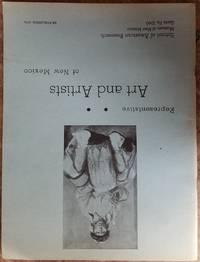
1976157556Bronx New York: Olana Gallery 1976. Softcover. VG. Wraps. 40 pp. 114 bw repros and likenesses. Introduction by Edgar L. Hewett. Reproductions of work as well as photographs of the artists themselves. Lists approx. 148 artists who either live had lived work or had worked in New Mexico. An essential reference. This particular copy is a high-quality reprint published in 1976. Includes a new preface and update biographical notes by George Schriever. Olana Gallery unknown books
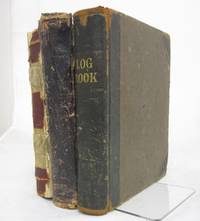
16093Education Daily or weekly handwritten reports in many hands on a school in Kent from the years 1863-1939. The logs chronicle the school's development from single gender instruction to a "mixed school" with classes of boys and girls learning together. The final pages of the log detail WWII-era preparations to train students in gas mask procedures and to prepare the school and community to begin receiving the children evacuated from London and other major cities. 9.5 x 8 in. Quarter morocco. 3 volumes each 500 pages. Original cloth boards. Marbled end papers. 2 entries from 1939: "Aug. 30. Time was spent today with fitting gas masks and gas-mask drill. The time table was to a certain extent disorganized particularly in Gps. I & III." "Sept. 1. The evacuation of London children commenced today. The school was hurriedly closed in view of the arrival of parties of children with their Teachers." In the first four days of September 1939 nearly 3000000 people were transported from places identified as vulnerable to quieter more rural sites. <br/><br/>There were opportunities for women to each and girls to learn as the school became "mixed" at the behest of teachers who believed it would be better for their students' academics. 1885: New teacher "Examined Boys in Arithmetic - about 3 passed in standards I to VII. Reading fair but "sing song" manner. Spelling bad except few boys in 1st class. My conviction is that a "mixed school" would bring better results as practically one teacher has 7 standards to teach--which cannot be well done. Average for the week 52 Boys. Discipline is bad." Includes many entries from women teachers such as this entry from July 15 1872. "Entered upon my new duties as School Mistress of the Wrotham National Infant School having been provisionally certificated on the recommendation of my late Inspector.Found the children to be very backward indeed their being several . years of age and knowing only the alphabet; and not one able to read words of one syllable without spelling. The average attendance of the Infants for the week 28.6. The elder girls from the boy's school attending the Infants school . of an afternoon to receive instruction in needlework and cutting out."<br/><br/>Depending on the principal teacher there are daily or weekly handwritten entries on school business including attendance students' progress with academic material such as spelling and Arithmetic and other notes such as interesting lessons. "School Diary or Log-Book. In every school receiving annual grants the managers must provide out of the school funds besides registers of attendance Article 17h-- a A Diary or Log-Book.The Diary or Log-book bust be stoutle bound and contain not less than 500 ruled pages.The principal teacher must maake at least once a week in the Log-book an entry which will specify ordinary progres and the facts concerning the school or its teachers such as the dates of withdrawals commencements of duty cautions illness.No reflections or opinions of a general character are to be entered in the Log-book." Includes several reports from visiting district supervisors on the progress of students. "The Mixed School.Writing-the best taught subject-is good all through the school and the papers are neat and clean generally."<br/><br/>Many issues related to attendance for holidays and seasonal harvests and notes of outbreaks of diseases and illness such as measles whooping cough and scarlet fever. 1863: "P.J. punctual. First Class commenced writing from dictation on paper. School tin as usual at this season of Hay-making. School year commended. Girls visited by Mrs. Gowland." 1877: "Many students have been migratory this quarter roaming from school to school. Leaflets of New Education Act Laws been supplied to the parents of every child attending school." Many new teachers complained on the educational level of students who attended the school. 1887: "Admitted Thos. Skinner 7 yrs old does not know his letter nor can make one average attendance.Admitted John Broad aged 6 ½ not know his letters.Many infants absent through sickness and also being a very cold stormy week of frost and snow." Covers worn on all volumes at extremities. Spine missing and worn extremities on 1901-1939 volume. Missing front end page boards detached on 1863-1901 volume. Generally clean interior. Good condition. unknown books
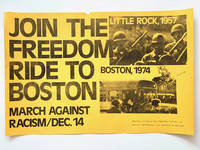
1974List923aBoston: Ad Hoc Committee for December 14 1974. Printed poster 17 x 11 inches folded. Somelight wear crease to center ownership marks to verso very good plus condition overall. With the ownership stamp of J. Wesley Miller with "J.W. Miller - duplicate" written in ink. Federal District Judge W. Arthur Garrity ruled in 1974 that Boston must integrate its school system. The group ROAR or Restore Our Alienated Rights led a broad effort against integration supported by the School Committee most members of the City Council and many teachers and police. Early efforts to block the desegregation efforts centered around South Boston High School where some parents of white students harassed and threw stones and bottles at arriving African-American students scenes repeated in some other white middle class neighborhoods. <br /> <br /> On December 14 over fifteen to twenty thousand people marched on Boston Common in support of the desegregation efforts. Offered here is a poster from the event published by the Ad Hoc Committee for Dec. 14. The poster shows an image from the Central High School desegregation efforts in 1957 above an image from Boston in 1974. No copies located though one is likely held at Miller's unprocessed as of 2021 archive at UMass-Amherst. A note on the front reads "10-11x-1974" suggesting that he found the poster over a month before the planned event. Ad Hoc Committee for December 14 unknown books
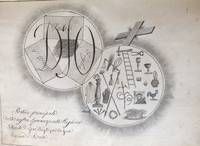
18242952Genoa 1824. <p>Manuscript on laid paper 4to 236 x 176 mm. 126 leaves foliated 3 1-3 1 4-42 1 43-51 1 52-61 1 62-103 1 104-118 complete. The numbered leaves containing one hundred and eighteen emblematic drawings all full-page explanations written on versos the unnumbered leaves containing the title 3 and 1/2-page introduction and section titles; most of the illustrations in landscape format. Calligraphic title text in brown ink in a neat cursive hand; the drawings in graphite pen-and-ink and gray wash a few with details in brown ink each within rule border with numbering at top gutter edge. Corner repairs to ff. 1-10 tears into ff. 9 and 104 a few other short marginal tears or fraying to edges ff. 100 and 101 with gutters reinforced on versos occasional minor offsetting or soiling. Late 19th-century half parchment and brown glazed paper manuscript title label on spine. <br /><br />An illustrated manuscript course of religious instruction for Deaf children by a pioneer of Deaf education in Italy using an original emblematic visual "language." <br /><br />By the early nineteenth century pre-modern misconceptions concerning the learning abilities of Deaf children had been largely exposed as false by such eighteenth-century pedagogues as the abbé Sicard and Charles-Michel de l'Epée in France each of whom founded schools for the Deaf and contributed to the development of a standardized sign language or Samuel Heinicke in Germany who implemented a different method of communication for the Deaf centered on oral speech. In Italy the most influential figure in the education of Deaf children was Ottavio Assarotti. As a young man Assarotti entered the order of the Piarists the Scuole pie. Founded in 1617 the Piarists' principal mission was and remains the provision of free education to poor and especially disabled children. After several years teaching theology and philosophy Assarotti set those disciplines aside to devote himself full-time to the development of an instructional program for Deaf children. Assarotti's method consisted in teaching the children not only reading writing and sign language but also a full range of humanist disciplines including science the arts and foreign languages. In 1805 he obtained financial support from Napoleon to found a school which after some delays was finally opened in 1811 in the former Bridgettine convent. After Napoleon's defeat the growing school received renewed support from King Vittorio Emmanuele I and its fame spread throughout Europe. <br /><br />"Assarotti made great use of sign language in his teaching . Directors of nearly all Italian institutes for deaf students flocked to learn from him and carried his method back with them. Pope Gregory XVI sent the new directors of the Rome Institute Padri Ralli and Gioazzini to study in Genoa with Assarotti. Upon their return to Rome they too used his techniques. How is it possible that a man so renowned and successful in his own time did not earn so much as one line of recognition in the historical accounts of other countries Perhaps the answer lies in the fact that Assarotti left no traces in written form of his philosophy and method. Had he done so not only would he have gained respect and notoriety outside Italy but perhaps the critical events soon to follow the subsequent dominance of "oralism" over sign language in Italy would have taken a different course ." Radutsky p. 245.<br /><br />In fact Assarotti wrote and may have published several texts for his pupils listed in DBI but not found in OCLC or ICCU. The present unpublished work was probably prepared for the use of instructors in the school. It contains a pictorial religious course of instruction using a complex but precise symbolic system to explain Christian doctrine and liturgy including the most abstract theological concepts. All the elements in the drawings are identified in captions of varying lengths and in various layouts. Names or words are often incorporated as visual elements of the emblems. While somewhat primitive the drawings' unique iconography is evocative and some have a powerful dreamlike quality.<br /><br />In the Middle Ages the Deaf were barred from the sacraments - and hence from marriage and any kind of normal life - because of the belief that they could not understand the word of God. While these strictures were loosened in 1571 thanks to Luther's influence prejudice against Deaf persons' abilities to achieve salvation subsisted partly because it was thought that they could not perform Confession. Hence the importance to early educators of the hearing-disabled of providing their pupils with comprehensive religious instruction as an essential foundation of their integration into society.<br /><br />The unnamed author of the introduction writing in the third person describes Assarotti's school and praises his religious zeal humanity and his understanding that Deaf people who had been previously "abandoned by society" are fully competent and indeed capable of the highest intellectual and spiritual attainment. The emblems the author explains will present to the Deaf student an easy transition from familiar material objects to those objects which are less material and from there to the most immaterial concepts of all. In doing so he or she will eventually absorb the entire Christian doctrine. The figures are described as Assarotti's own egli . ha inventato le figure che formano questo Libro . but whether the actual drawings are in his hand is uncertain. The introduction concludes with an explanation of the most frequently recurring emblematic figures. God is represented by a circle containing three rectangles which touch the circle and each other representing the Divine Trinity: flames emanate from the God the Father and Jesus rectangles toward the one representing the Holy Spirit a concept which is explained in the text as the reciprocal love between the two other Divine Persons. Jesus the man as opposed to his divine nature is shown by another circle helpfully inscribed "Uomo / Jesu' Cristo" and humans or human souls are represented by hearts although the meaning of the heart emblem varies throughout the manuscript. Further symbols introduced later are explained on the versos of the drawings.<br /><br />Contrasting with the approbation granted his pedagogical achievements Assarotti's religious views linked to the most mystical wing of the Ligurian Jansenists met with resistance from the church hierarchy and some of his theological writings were not approved for publication. The drawings of this manuscript provide a glimpse of an abstract mysticism which would certainly have been at odds with Catholic orthodoxy.<br /><br />The work is in five parts titled: Faith Fede ff. 4-42; Laws Legge 43-51; Prayer Preghiera 52-61; Sanctification Sanctificazione 62-103 and Virtue Vertù 104-118. The first part is a visual exposition of the Credo starting with God's attributes: his ubiquity is represented by the God and Jesus circles overlapping above a symbol of the world earth and heavens with the word DIO written repeatedly across the page; his omniscience by the God symbol at top sending down rays of light at center a man sitting under a tree and below that a well captioned "Abyss." Creation is a delightful drawing of fish in the seas flanking a mound representing the earth on top of which cavort animals under trees and within which are three large hearts linked to a central pole at the top and illustrating the three reasons that God created man: so that they might know love and enjoy him. The Church of Jesus Christ is an architectural drawing of a fortress. Heaven is a light emanating rays while Hell is a large vat whose opening is locked and barred. Virtuous souls are flaming hearts each with an open eye since they see God; sinful souls are spotted hearts with wilted stems instead of flames. These blemished hearts recur throughout the book for example behind bars in the vat of Hell; enchained by a similarly spotted Devil; in a genealogical tree descended from Adam and Eve; or clustered above Hell on Judgment Day opposite a crowd of pure haloed hearts trumpets sounding above and lightning striking the damned while divine light bathes the saved.<br /><br />The section on Laws contains various allegorical representations of the Ten Commandments. While some drawings amount to schematic tables demonstrating the relationships between theological concepts others are more pictorial. Reflecting no doubt Assarotti's personal mysticism all aspects of the divinity are abstract: there are no angels Madonnas or images of Christ. Crosses are shown but there are no Crucifixions and Christ's Passion appears as a circle containing the Arma Christi. The church hierarchy is represented by a papal tiara mitres and stoles. Human figures appear predominantly in the drawings of the sacraments and in representations of sin. In contrast with the invisibility of the divine Satin is personified as a grimacing devil and the seven deadly sins appear as animals and monsters poised above poisonous emissions from Hell's chimneys. <br /><br />That Assarotti's school used such manuscripts for teaching is supported by the existence of another manuscript very similar in content but lacking the title and two leaves offered by the Austrian antiquarian book firm Inlibris. Cf. Dizionario Biografico degli Italiani art. Antonella Dolci 4:433-4; E. Radutsky "The Education of Deaf People in Italy and the Use of Italian Sign Language" in Van Cleve ed. Deaf History Unveiled 1993 237-5; Rauthgundis Kurrer Gehörlose im Wandel der Zeit doctoral dissertation University of Munich 2013 available as a pdf online pp. 30-33.</p> unknown books
1834547Millgrove Buschkill Taunship Northampton County Pennsylvania: Gedruckt von Samuel and Solomon Siegfried's 1834. 12mo. 189 x 105 mm. 7 x 4 ¼ inches. 360 pp. . Illustrated with woodcut title-page vignette and a woodcut image of a thermometer. Contemporary leather backed marbled paper boards; scuffed and rubbed at joints; paper toned with age and some foxing; good copy. First edition text entirely in German. Scarce Millgrove imprint written by Samuel Siegfried and printed by his brother Solomon both of Northampton County. The content of the geography text is well conceived beginning with a section of geographical terms followed by a grammar of place names and vital statistics for every state territory and country in North and South America Europe Africa the Near East and the Far East. This is followed by a more detailed study of each of the place names and includes information on population manufacturing farm production major cities literary and cultural centers and religious denominations. The book is fully indexed. "Samuel Siegfried 1797-1879 started his career as a printer after his move from Easton to Millgrove in 1834. In this he published at least two books Deutsche Georgraphie and Bewährter Ratgeber and his first broadside baptismal certificate together with his brother Solomon. At the end of this year and during 1835 Samuel Siegfried printed and published three further baptismal certificates under his own name." Solomon Siegfried is best known for the printing and decorating of birth and baptismal certificates which he produced for German speaking families in Northampton County. Shoemaker Checklist of American Imprints 26774. Stopp The Printed BBC's III p. 176. Earnest Flying Leaves and One-Sheets pp. 41-42 264. Gedruckt von Samuel and Solomon Siegfried's unknown books
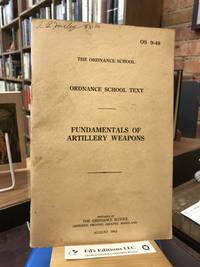
1942SKU1037615Maryland: Ordnance School Aberdeen Proving Ground 1942. PAPERBACK. Good. 1942. Paper wraps have mild wear. Has a good binding name is written on the top edge of the front cover- no other marks or notations. 82 pages. tnos Ordnance School, Aberdeen Proving Ground paperback books
18568123Boston: Dutton & Wentworth / Ticknor & Fields 1856. 1st book edition. Original dark brown cloth with covers stamped in blind & gilt spine lettering. VG sp dull/minor extremity wear/tide line at top of text block in Vol II/owner sig on tps. 2 volumes. Engraved frontis & title page in Vol I. 8vo. <br/><br/>Collected commentary by Sargent a noted Antiquary & Temperance advocate on Boston society among other things as was initially published in a series of Boston Evening Transcript articles. Per the DAB "though he showed enthusiasm for the past his efforts were generally directed towards blasting something offensive to him out of existence". OCLC records just 4 copies of this work in institutional hands. Dutton & Wentworth / Ticknor & Fields hardcover books
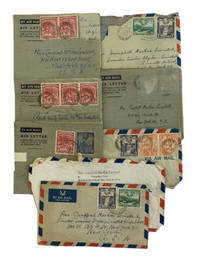
1951734561951. Paperback. Good. All appear to be written in 1951 and all were sent to Rev. Campbell MacRae Lewistall who is identified on a slip laid in one of the envelopes as Founder-teacher Blyden-Lewistall Private School at 314 West 133rd Street in New York City. Some letters are worn; all appear to be complete. Most envelopes present some with stamps. Three of the letters were from Philip Nathaniel King headmaster or head teacher of this Methodist-supported elementary school; one is from his wife; two are from his son; and two are from Mr. King's niece who was also a teacher at the school. All of the letters seem designed to establish contact with Rev. Lewistall who is addressed as Uncle. Some including the letters from King's son thank the New York Uncle for gifts such as an air rifle. It is clear from the letters that conditions at the school were far from ideal and that the Kings were hoping that their uncle in America would provide some financial support. <br/><br/> paperback books
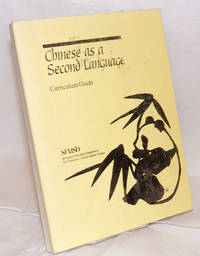
199376323San Francisco: the Department 1993. 185p. 8.5x11 inches slightly rubbed wraps. The Curruculum Guide Committee that put this book together was composed of Chinese American educators. the Department unknown books
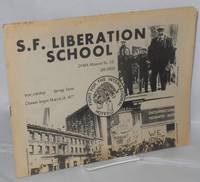
1977208009San Francisco: SF Liberation School 1977. Single large newsprint sheet folded to make an eight panel tabloid format catalog 11.5x8.75 inches folded size paper evenly browned with minor closed tears on folds front wrap lightly foxed along top edge else good condition. The school was affiliated at this time with the Northern California Alliance. Also includes a long memo "To people taking classes at San Francisco Liberation School" by the School Collective. 4p. 8.5x11 inches stapled in the upper left hand corner printed on one side only poorly on leaders abstract terminology & self-criticism. SF Liberation School unknown books
192727191San Francisco: The Senior Class of June 1927. Black flexible covers lettered in silver. Abt VG covers worn/many student signatures throughout. 112 pp. Illustrated with drawings & from photographs. 4to. <br/><br/> The Senior Class of June unknown books
192427193San Francisco: Published by the Senior Class of the High School of Commerce 1924. Green leather-style paper-wrapped binding. Overall VG many student signatures throughout. 73 51 pp. Adverts last 51 pp. Illustrated with drawings & from photographs. 1 original photograph tipped-in. 4to. <br/><br/> Published by the Senior Class of the High School of Commerce hardcover books
192627190San Francisco: The High Senior Class of the High School of Commerce 1926. Green pebbled leatherette with school visage embossed to front cover. Overall VG many student signatures throughout. 132 pp. Illustrated with drawings & from photographs. 2 original photographs tipped-in. 4to. <br/><br/> The High Senior Class of the High School of Commerce hardcover books
194427229San Francisco: Published by the Senior Class of the High School of Commerce 1944. 1st thus. Blue embossed cloth with white lettering & bulldog device. Photographic eps. Overall VG minor extremity wear/student signatures inscriptions & annotations throughout. 112 pp. Illustrated with drawings & from photographs. 4to. 11-1/4" x 8-1/4" <br/><br/> Published by the Senior Class of the High School of Commerce hardcover books
192627192San Francisco: The High Senior Class of the High School of Commerce 1926. Silver blue leatherette binding with school visage embossed to front cover. Overall VG many student signatures throughout. 132 pp. Illustrated with drawings & from photographs. 1 original photograph tipped-in. 4to. <br/><br/> The High Senior Class of the High School of Commerce hardcover books
1968181783San Francisco: SFFS 1968. 8p 5.5x8.5 inches class schedules tuition application/registration very good pamphlet in stapled peach wraps. Introduction to the then-newly established school at 414 Mason and a list of courses. SFFS unknown books
2003387532003. Rutgers Law Review. Newark NJ: Rutgers Law School. Vols. 26 no. 1 to 55 No. 2 Fall 1972-Winter 2003. 122 issues. Original paper wrappers. Ex-private law firm library very good. Special $250. unknown books
18785956New York: Royal Baking Powder Co 1878. Stapled octavo-sized booklet 23.5 x 15cm. 32 pages. Illustrated. FIRST EDITION. Front wrapper verso with product reviews dated 1878. Includes a wood engraving showing twenty figures of diverse pans used in baking. "The recipes in this book are new and formulated by one of the most experienced Professors in the art of scientific and practical cookery especially adapted for the use of "Royal" Baking Powder and "Royal" flavoring Extracts. These preparations are incomparable in strength and purity. Substituting other articles will only end in disappointment." front wrapper blurb. Included are three hundred seventy seven recipes ranging from Bread & Rolls to Pies to Puddings to Fritters & Pancakes to Meat Pies to Icings. "The Royal Baking Powder Company was one of the largest producers of baking powder in the US. It was started by both Joseph Christoffel Hoagland & William Ziegler in 1866." Wiki. General wear & soiling to wrappers; foxing throughout; a bit musty. Good or a bit better in printed gray-green wrappers. OCLC locates four copies; Axford page 352; Bitting page 410 both for the 1882 and later editions; not in Cagle. Royal Baking Powder Co unknown books
18875920New York: Royal Baking Powder Company; lithography by Schumacher & Ettlinger 1887. Stapled booklet 21 x 13 cm. 43 1 pages. Illustrated. Later printing. Front wrapper verso with facsimile of a letter from Marion Harland dated 1887. Publication date from copyright statement on front wrapper panel. Includes a wood engraving showing twenty figures of diverse pans used in baking. "The recipes in this book are new and formulated by one of the most experienced Professors in the art of scientific and practical cookery especially adapted for the use of "Royal" Baking Powder and "Royal" flavoring Extracts. These preparations are incomparable in strength and purity. Substituting other articles will only end in disappointment." front wrapper blurb. Included are three hundred seventy seven recipes ranging from Bread & Rolls to Pies to Puddings to Fritters & Pancakes to Meat Pies to Icings. "The Royal Baking Powder Company was one of the largest producers of baking powder in the US. It was started by both Joseph Christoffel Hoagland & William Ziegler in 1866." Wiki. Light spotting to a few pages; and soiling and some small edge chips to wrappers. Over the course of its publication this booklet was issued in a wide variety of wrapper designs; this one a chromolithograph with an image of a young woman holding a large tray of handsome baked goods is one of our favorites. Near very good. Scarce. OCLC locates four copies; Axford page 352; Bitting page 410 both for the 1882 and later editions; not in Cagle. Royal Baking Powder Company; [lithography by] Schumacher & Ettlinger unknown books
198137384New York: Roosevelt High School 1981. First Edition. Quarto 27cm.; publisher's blue pictorial imitation leather stamped in gilt; 168pp.; chiefly photographic illus. Some internal foxing else Very Good and sound. Inscribed and signed by the school principal Phil Smith dated 1990. Yearbook for the recently closed high school in the Bronx Roosevelt High School whose predominantly black student body suffered greatly from heroin use and gang violence during the 1970s and 1980s. Roosevelt High School unknown books
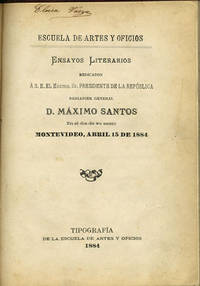
188434816Montevideo: TipografÃa de la Escuela de Artes y Oficios 1884. First edition. Blind stamped maroon cloth. Spine and boards worn scuffed some recoloring owner's name on title contents clean a good copy. 60 pp. 16mo. Thirteen essays by various writers at the School of Arts and Crafts for the birthday of Máximo Benito Santos Barbosa 1847-1889 President of Uruguay from 1882 until 1886 in an administration marked by many problems notably corruption lawlessness and heavy debts all of which forced into exile. Not located in NUC OCLC Copac or any European or South American Library catalogues. Provenance: signature of Eloisa Vaeza. Not in Palau. TipografÃa de la Escuela de Artes y Oficios hardcover books
2001235022001. Softcover. VG. White wraps. 107 pp. Numerous bw & color plates. unknown books