487 résultats
198126621Long Island NY: C.W. Post Art Gallery 1981. Softcover. VG- wear to corners edges and spine some rubbing to wraps. Red pictorial wraps. Unpaginated. 13 color plates profuse bw ills. American and European representations of womens' private and reflective moments. Essays by Joseph Yorizzo and Shari Friedman. C.W. Post Art Gallery paperback books
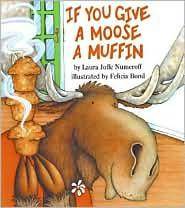
199130401NY: HarperCollins. Near Fine in Near Fine dust jacket. 1991. Hardcover. 0060244054 . Illustrated by Felicia Bond. First printing. About fine in like dust jacket. . HarperCollins hardcover books
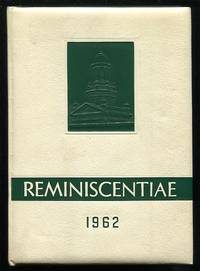
196222074South Norwalk CT: T. O'Toole & Sons. Very Good. 1962. Hardcover. padded hard covers; no dust jacket as issued light external soiling minor annotations within no autographs or inscriptions. B&W photographs Typical high school yearbook of the period with individual portrait photos of faculty staff and senior class members -- in fact it very much is the SENIOR class yearbook with the lower classfolk not even rating a mention although many of them are presumably pictured in some of the many many group photos of clubs sports teams etc. There is no personalization in this particular copy not even an ownership signature although whoever owned it was keeping track of one thing for at least a few years after graduation: written next to about 15 or so of the senior class pictures is the single annotation "Married." Also not surprisingly integration had barely gotten a toehold in Norwalk: out of the 335 senior class members depicted there are four African-American students and one Asian guy. . T. O'Toole & Sons hardcover books
193657309Ann Arbor: Edwards Brothers 1936. Hardcover. Very Good. index xvii 567p. Original cloth. 21cm. Backstrip faded. No Jacket. <br/><br/> Edwards Brothers hardcover books
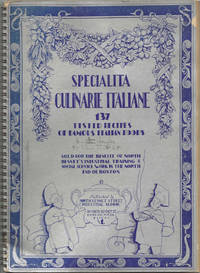
19367886Boston Mass: North Bennet Street Industrial School 1936. Wire-O metal coil binding 26 x 18.5 cm. 57 7 pages. Index is table of contents. Advertisements. Foreword printed on a separate sheet laid-in at front. Title author and publication data from cover. Date from information in second edition of 1937. FIRST EDITION. A community fundraising cookbook for the benefit of North Bennett Street Industrial School. There is no front matter title page intro etc. and the recipes are not attributed but are drawn from members of the surrounding community Boston's North End. Other fundraising efforts for the school are featured in the advertising section including The Perfection Bottle Rack "made by the unemployed" and an unnamed Spanish olive oil "sold exclusively by the North Bennett Street Industrial School". There is also a full page illustrated ad for Prince Superfine Macaroni. ~ Card stock boards printed in blue and silver; edge wear and pulls at a few wire coils. Ownership inscription "Martha Taylor 98 Chestnut Street". OCLC locates five copies and four copies of the 1937 second edition. North Bennet Street Industrial School hardcover books
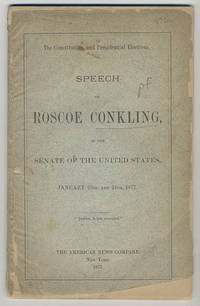
18253486New York: Pr. by D. Fanshaw 1825. 8vo. 36 pp. <br><br><br>Â Â Â Â <br>Â Â Â Â Not in Shoemaker. Removed from nonce volume sewn as issued. Foxed. Small loss of paper to lower margin of one page. Pr. by D. Fanshaw unknown books
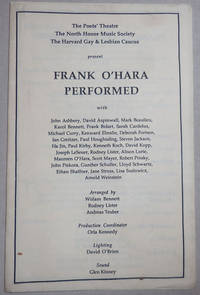
199023926Boston: The Poets' Theatre 1990. First edition. Loose Sheets. Very Good. Folded sheets. 24 pp including printed covers. A detailed program for a series of events which took place in and around Harvard Square in Boston in 1990 in honor of poet Frank O'Hara. Events produced by The Poets' Theatre The North House Music Society and The Harvard Gay & Lesbian Caucus. Participants included John Asgbery David Aspinwall Ha Jin Joseph LeSeuer Robert Pinsky and many others. This booklet includes several poems by O'Hara as well as a detailed chronology. Condition is very good with some light cover soiling and handling wear. The first copy of this piece of O'Hara ephemera that has crossed our path. The Poets' Theatre unknown books
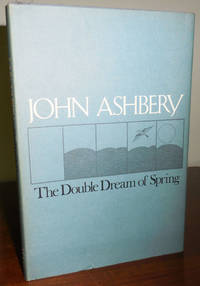
197631395New York: Ecco Press 1976. Second printing. Cloth. Near Fine/near fine. Clothbound 8vo in dustwrapper. 95 pp. Second printing of the poet's award winning collection that was originally published in 1970. Faint sunning to cloth edges else a near fine example in handsome near fine price-intact dustwrapper. Ecco Press unknown books
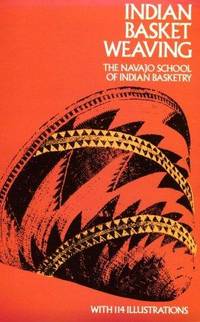
1971UNAVIND00MELDover 1971. Very Good. Navajo School of Indian Basketry. Indian Basket Weaving. New York: Dover 1971. 103pp. Illustrated. 12mo. Paperback. Book condition: Very good. Dover paperback books
196382375n.p. 1963. Paperback. Very Good. photos 64 2p. Comb binding. 26cm. Annual Session held in Kansas City Missouri. <br/><br/> paperback books
196082446n.p. 1960. Paperback. Good. photos 40p. 31cm. Relatively light soiling and wear. Held at Antioch Missionary Baptist Church in Chicago Illinois. <br/><br/> paperback books
194882608n.p. 1948. Paperback. Good. photos 40p. Original wrapper. 29cm. Moderate soiling and wear. Held at St. Stephen Baptist Church in Kansas City Missouri. <br/><br/> paperback books
1976104966San Francisco: the Committee 1976. 8p. program for the musicale with the theme "We'll sing a-glory the Committee unknown books
12222NANGA SCHOOL. In Japanese. Tokyo: 1969. Folio. Cloth dust jacket slipcase. 238 pages. First edition. Illustrated with 141 plates and 123 figures in with the Japanese text. This volume is No. 18 on a series of books on Japanese painting. Very good. unknown books
42306Portland:: Museum Art School. Near Fine. N.D. Paperback. Black and white illustrations. First edition paperback. Near fine in oblong illustrated stapled wraps. . Museum Art School, paperback books
194649433Albany Ga: Albany State College 1946. Paperback. Near Fine. photos index 73p. Wrapper. 23cm. <br/><br/> Albany State College paperback books
86003001Edo c.1700-50 n.p. Brown & silver covered boards very clean 7 double-page b.w. erotic woodblock illustrations mounted on mica flecked paper 18 x 25 cm. accordion folded illustration size: 31 x 12 cm. FIRST & ONLY UNRECORDED COPY! . . . . A VERY RARE UNRECORDED EARLY BOOK . . . A BIZARRE & UNIQUE EROTIC BOOK . . . UNSIGNED BUT CLEARLY THE WORK OF A MASTER ARTIST . BY SUKENOBU OR HIS :SCHOOL: . A unique and hitherto unfound odd and most unusual erotic book of the early-mid-18th century. One of the most bizarre erotic books ever done in Japan. . The graphically explicit work portrays men and women with genitals on their foreheads engaged in heterosexual and homosexual intercourse. There is no other book with such unusual and strange illustrations. . . THE TITLE: THE LEGEND OF AMANJAKU or AMAN NO JAKU: Chinese Title: TIAN XIE GUI YUN . THE MEANING OF AMANJAKU: Japanese Buddhist literature is abundant with variations on the theme of "Aman-No-Jaku" aka. "Amanjaku" "Manojaku" commonly understood to be a "Heavenly Evil Spirit." . This spirit or demon-like creature in Japanese folklore is usually depicted as being a male during the day and female at night. The demon is usually depicted as a kind of small Oni devil and is thought to be able to provoke a person's darkest desires and instigate him into perpetrating wicked deeds. . Amanjaku is also depicted in Chinese and Japanese mythology the AMANOJAKU is a changeling a water spirit that infiltrates the human world to play cruel tricks on people by reading their minds and twisting their requests or desires to be used against them. . The "AMANOJAKU" is also known the "Lord of the River" and in Japan serves Bishamonten one of the four Deva kings of Buddhism as a minor demon. See Wikipedia below. . In Japanese the term "Amanojaku" also refers to a person who is deliberately contradictory someone who argues for the sake of arguing or can be used in common Japanese conversation to refer to someone who is a "Perverted Demon." . THE ILLUSTRATIONS: THE BUDDHIST THEME:. This work is unusual in that the genitals of common people are located on their foreheads. A symbolist meaning can be in Buddhist concept that sex and sexual hedonism is openly on the minds of 'lay' people. The Buddha and his disciples on the other hand do not have sex organs on their foreheads meaning their organs are covered and in a different usual location. This can symbolize 'self control' over such biological energies. Devout Buddhist disregard sex as a pleasurable pastime and devote themselves to monastic focus. By contrast "lay" people are distracted with hedonistic pleasure a path away from rather than towards the Dharma or teachings of Buddhism. . In a sense this work illustrates the overwhelming force of evil or the "Amanojaku" and how it distracts people from the "Righteous Path" towards the Dharma and the ultimate goal of attaining Nirvana. It can be posited that this work is designed to give understanding to "lay" people by way of visual example of what forces direct their energies away from the Buddhist teachings in an effort to redirect them towards the "Righteous Path" and life style. . EXCEPTIONALLY RARE UNIQUE WORK: . The work is exceptionally RARE unusual and erotic there are no other example showing genitals on the foreheads of any other Japanese book cited anywhere in the bibliographic literature or record. . This work is certainly RARE in subject content and quantity. Though it was woodblock printed and unsigned which was usual for Japanese erotic works which were banned by the Shogun we have not found anything similar or recorded anywhere in the bibliography. Being woodblock printed one assumes there are other copies in existence. The average printing from woodblocks were somewhere between 100-200 copies. However in this instance no others exist. We have the strong feeling the book could have been the production of a famous Japanese illustrator and perhaps financed by a Buddhist temple again there are no known facts about this rarity. . THE EROTIC ILLUSTRATIONS: . Number 1: This work begins showing the Buddha flanked by two of his disciple monks. The title is written in four Japanese Kanji in Kambun & Chinese characters. The Buddha and his two disciples listen to two elderly Buddhist believers: one is a male he has and erect penis on his forehead. The other is a woman she has a vagina on her forehead. Neither the Buddha nor his two disciples monks show genitals on their foreheads. The couple have come to consult with the Buddha about their grievances. . Number 2: Shows a man and a woman in a Tatami matted room both wear lovely 18th century decorated Kimono. They embrace each other and are engaged in making love from their foreheads which show an erect penis and testicles inserted into the woman's forehead where her vagina is located. Adjacent to the young couple is an older woman who has become aroused by the adjacent couple's making love. The old woman uses a dildo tied to a post which she hugs while inserting the dildo into the vagina on her forehead. . Number 3: Shows a couple laying on a blanket their Kimono pulled down and opened and used as a top cover. They engage in love-making and kiss. The man has an erect penis on his forehead the woman a vagina on hers. There is some used Chirishi toilet paper just above her head on the floor used to wipe the love fluids. There is a folded package of yet unused Chirishi in readiness. Chishiri shown in Japanese Shunga erotic prints prints & paintings is an 'erotic symbol' indicative of sexual excitement with lots of love fluids flowing. Ergo the need for paper to clean up the results of erotic love-making. . Number 4 shows an adult man with an erect penis on his forehead penetrating the anus of a younger man who's smaller but erect penis is seen on his forehead as he faces his lover. The younger man has no pubic hair yet indicating his youth. . Adjacent to these two men is a woman in the next room. The door is open she is a secret voyeur of the two men. Her vagina is also on her forehead. A Shogi board and two bowls for stones is located in the front left of the illustration. Gay activities in Japanese society were accepted as a norm and were not especially unusual. However to find graphic examples in Japanese erotic books are exceptionally rare and seldom found. . Number 5: Depicts a fully clothed man on his knees he bends over a sleeping woman. He has a very large erect penis and begins to penetrate a woman with her vagina on her forehead. She is fully clothed and sleeping on a wooden "pillow" which supports her elaborate hair coiffeur. . Number 6: Depicts a lively scene of two men and a woman. One man with a very large and erect penis pulls the woman's arm toward him while she fends him off with a straight arm to his head. A second excited man also with a large and erect penis on his forehead masturbates and ejaculates in ecstasy. The woman has a vagina on her forehead. The scene is likely an intended rape of a young girl. She looks away in an effort not to allow him to pull her close enough to insert his penis into her exposed vagina. . Number 7: Illustrating a lonely old man in bed. He has an erect penis on his forehead and holds a kind of pot with a large opening. He faces down and inserts his penis into the pot for gratification. . THE TEXT: The text in Shunga erotic Japanese books & prints is often an erotic dialogue describing the erotic action. Often these words are onomatopoetic mimicking the sounds of people in orgasm or making comments about making love or the pleasure and good feelings. The size and hardness of the penis or the flavor and the juices of the vagina and its supple feelings of euphoria when engaged in love-making. All wear 18thcentury period Kimono. . MODE AND FASHION OF THE MID-18TH CENTURY: The room furnishing and Kimono of the participants in this work all wear 18th century period Kimono with period decorations. The style of Kimono and room screens reflect this period. . BINDING AND MOUNTING: Binding: The book has probably been rebound sometime after the 1750's with a more recent thin brown decorated paper with a silver chrysanthemum and a Mon family crest with gold and black on both front and rear covers. Each cover has a distinctly different kind of illustration but of the same theme. The corners and edges are a bit worn some loss to the paper as usual for a work from this period. . Mounting: At an earlier time each page was expertly mounted on a stiff Washi hand-made Japanese paper into an accordion folded book. Each illustration is bordered with a rare and stunning crushed oyster-shell powder mixed with rice-glue and overlaid on the border paper. The stunning effect is a rare shimmering pearl-like color and hue with a remarkable effect. This rare and largely unknown effect has been used for print backgrounds by some of the later masters. . This was no ordinary mounting and appropriate for an exceptionally and most unusual RARE book ! . Contents: By and large the contents are clean solid with a two old worm holes for the first 6 of 7 pages. These are small and towards the edge and does not detract from the overall quality of the illustration. On page 7 there are a few center margin old minor worm holes. All of these have been restored when the prints were laid down on the thick Washi paper creating book format. The work is otherwise solid and firm. There are a few 'rubs' on the old Washi paper which was made from very soft Kozo fibers common to any item of this period on this on handmade papers of the period. . CONDITION OF THE WOODBLOCK PRINTS: . These are very early black and white woodcut prints. Each print has an excellent and vivid impression key blocks are black and superbly printed with strong images. The paper is old and has the patina of paper from that age the usual minor mild surface rubbing or thumbing in the lower corners which is common. . We tend to be overly critical of any flaws found on our books and believe it is better to overly describe rather than avoid such discussion any imperfections. Suffice to say by and large this is an excellent item in very nice condition something that any collector or museum would be proud to own. Please review photos posted to our website. . R A R I T Y OF SUBJECT: The placement of the genitals on the forehead gives one a lot of room to theorize on the meaning of such artistic expression. In our 50 years of experience in dealing Japanese woodblock printed books and painted original art this is the first and only example with such imaginative and symbolist expression. With the beginning of the work showing the Buddha and his two disciples lacking any genitals on their foreheads one can simply assume that in a Buddhist way they have given up carnal desire as represented by common people who's foreheads display genitals perhaps meaning that sex is on their minds or they simply view others as sexual objects eager to make love and engage in carnal thoughts and activities. Obviously seeing an erect penis on some man whiles others see what he thinks and feels is an insight to his innermost thoughts and desires. In all cases in this book the men all show an erect penis. The women are a bit more difficult to fathom. Their vaginas are simply visible on their foreheads and no fluids are visible or other evidence of their carnal desire or sexually excited stated. All of the men have public hair adjacent to their sex organs while all women are lacking any pubic hair completely. This is an erotic symbolism giving full view to women's genitals. . "BANNED" or "PROHIBITED" BOOKS: Shun Pon Haru Bon: In the case of this item it is very likely that it was printed in a much smaller discreet quantity than the 200 copies possible off the blocks. Due to the "banned" nature of such books there is no date publisher nor place cited. One is simply left to determine the date and artist by stylistic analysis. It is well-known that during the Tokugawa period 1603-1868 erotic prints and books were "BANNED" or "PROHIBITED" by decree of the Shogun. One of the influencing factors was that during this period some Shoguns were changing their views and being influenced by Christians who entered Japan during this period. The Shogun did not want foreigners and Jesuit missionaries to think that Japan was a crass and base nation. Naturally foreigners soon learned that prostitution was rampant and so this strange logic from the Shogun never had much affect on the Christians and surely not on the Japanese. . The Shogun enforced severe punishments for persons involved in drawing printing carving blocks and publishing erotic books and prints. With out the "Kiwame" or censor's approval seal all such items were "Banned" outright by the Shogun decree. . While these "Prohibited" books and prints were widely circulated in an "underground" society there are ample examples of famous artists taking on commissions to produce erotic books and prints fun or profit. The record and bibliography is loaded with these examples. "Banning" such erotic works simply meant that the number printed were limited to smaller numbers and distribution was done under the table discretely circulating such books privately among collectors. During these times it was not necessary for artists to sign their such artistic creations by-and-large the population had a very good idea who the artist was by being familiar with their style and other works it was simply a "public secret" who the artist was. Often the artist poked fun at the Shogun with political jokes and assumed names to confound any chance of being discovered by the authorities. . Over the centuries this knowledge decreased and is now the domain of the art historian or scholar to identify and determine the actual artist. Stylistic analysis remains the standard method for unsigned works. . THE ARTIST/SCHOOLS: While there are no signatures or seals indicating the artist's name or even his alternate Go studio name we believe this work is part of the "Primitives and First Century of Ukiyo-e School 1660-1765" period. See Lane below. The women's coiffeur is very similar to those found in this period as well as the drawing style technique and genre. It is this cataloger's opinion that this work was likely the creation of one of the Moronobu School masters. Perhaps done by Sukenobu Yoshikiyo Morishige Sugimura Moronobu Kiyonobu Masanobu or others from this period. We believe this work was likely done from around 1710-1750. It was also likely that it was done by one of the artists listed below. . LIKELY ARTIST ATTRIBUTION: . MORONOBU SUKENOBU SCHOOL: Nishikawa Sukenobu 1671 -August 20 1750 often called simply "Sukenobu" was a Japanese printmaker from Kyoto. He was unusual for a Ukiyo-e in being based in the imperial capital of Kyoto. He did prints of actors but gained note for his works concerning women. His Hyakunin Joro Shinasadame: Appreciating 100 Women in two volumes published in 1723 depicted women of all classes from the empress to prostitutes and received favorable results His Hyakunin Joro Shinasadame: Appreciating 100 women in two volumes published in 1723 depicted women of all classes from the empress to prostitutes and received favorable results Leading members of this school were: Nishikawa Sukenobu the founder; Nishikawa Suketada; Kawashima Nobukiyo; Nishikawa Terunobu; and Takagi Sadatake. . NISHIKAWA MORONOBU SCHOOL: Nishikawa Moronobu 1618-July 25 1694 was a Japanese painter and printmaker known for his advancement of the Ukiyo-e woodcut style starting in the 1670s. Leading members of the MORONOBU school were: Nishikawa Moronobu the founder; Hishikawa Morofusa; Hishikawa Moroyoshi; Hishikawa Moronaga; Hishikawa Moroshige; Hishikawa Morohira; and Tamazaki Ryujo. . BIBLIOGRAPHY: . This title is NOT listed in any of the below resources: SHIBUI Kiyoshi. UKIYO-E NAISHI. BIBLIOGRAPHY OF JAPANESE EROTIC ILLUSTRATED WOODBLOCK PRINTED BOOKS. H. KERLEN. CATALOGUE OF PRE-MEIJI JAPANESE BOOKS & MAPS IN PUBLIC COLLECTIONS IN THE NETHERLANDS. Richard Lane: IMAGES FROM THE FLOATING WORLD THE JAPANESE PRINT; pages 28 40-60 show examples of the Ukiyo-e primitives 1660-1765 especially the Moronobu school pp.60-88 et al. . NOT LISTED IN: . KSM SHIBUI Kiyoshi: UKIYO-E NAISI. BIBLIOGRAPHY OF JAPANESE EROTIC ILLUSTRATED WOODBLOCK PRINTED BOOKS. Modern Reading: UKIYO-E NAISHI KERLEN H.: CATALOGUE OF PRE-MEIJI JAPANESE BOOKS & MAPS IN PUBLIC COLLECTIONS IN THE NETHERLANDS. Not in any other usual bibliographies on Japanese E-hon woodblock printed books. . See: WIKIPEDIA: http://en.wikipedia.org/wiki/Amanjaku . hardcover books
19395042Montevideo: Imprenta Militar 1939. Paperback. Good. folding maps 173p. Worn original wrapper. Spanish text. <br/><br/> Imprenta Militar paperback books
187029538Montgomery Alabama: John G. Stokes & Co. State Printers 1870. 7 1 blank pp. Stitched in original printed green wrappers. Light old folds wrappers lightly spotted Very Good. Contemporary inscription at head of front wrapper "Respects of G. Horton Mobile." A Bostonian who had moved to Mobile as a young man Horton was Mayor of Mobile at this time. Previously he had been an advocate of public education and had served on Mobile's school board. During the Civil War he was jailed for Unionist sympathies. During Reconstruction his advocacy of civil rights placed his life in constant danger.<br/><br/> The Report is a chapter in Alabama's bitter Reconstruction strife. It attacks Dr. N.B. Cloud State Superintendent of Public Instruction who was regarded by unreconstructed Alabamans as a Scalawag for his support of Reconstruction and the Republican Party. The Report also attacks G.L. Putnam whom Cloud had named Mobile's superintendent of education an appointment which other Mobile educators refused to recognize. Cloud brokered a compromise-- for which he lacked authority-- by making Putnam superintendent of Emerson College known as the 'Blue School' a Negro school run by the American Missionary Association. The Report accuses Cloud and Putnam of illegally diverting public funds to the support of the Blue School.<br/>Ellison 1597. OCLC locates five copies as of August 2014 under two accession numbers. John G. Stokes & Co., State Printers unknown books
187031292Montgomery 1870. 23 1 blank pp with original printed title wrappers. Text lightly dusted wrappers dirty stitched. <br/><br/> This case is a chapter in Alabama's bitter Reconstruction history. Mobile School Commissioners claimed that George L. Putnam Superintendent of the Mobile schools had mishandled funds which were supposed to be used to support the free public schools. Putnam had been appointed Superintendent by N.B. Cloud State Superintendent of Public Instruction whom unreconstructed Alabamans considered a Scalawag. Putnam used public funds as authorized by Cloud for the support of a school for Negroes. The outcome of the case turned on whether the Commissioners were properly established under the laws and Reconstruction Constitution of Alabama. This brief reviews the history of the Mobile School System and the controversy. <br/>Not located on OCLC as of July 2014. unknown books
1953583691953. Paperback. Very Good. photos portraits unpaged 16p. Wrapper. 27cm. <br/><br/> paperback books
1888253042Farmington Ct. 1888. 3pp. Folded 4to sheet. Old fold lines. Near fine. 3pp. Folded 4to sheet. Letter written by Sarah Porter founder of Miss Porter's School for Girls to a friend and possibly former student regretfully declining an invitation to her wedding. Miss Porter studied privately with Yale Professors. and her brother Noah later became President of Yale. She was an opponent of women's suffrage. <br/>She notes in this letter that affairs at the school will keep her far too busy to make the journey. Sarah Porter 1813-1900 founded her school in Farmington in 1843 setting it up as an institution at which girls could receive a well-rounded academic education. She writes in part:<br/> <br/>"My dear Mary I thank you heartily that you have desired me as one of your wedding guests and I should be very happy in being with you at this so happy moment of your life. I could not easily under any circumstances easily leave school for so long a time as a journey to Newton would require - but now Mr. Brandt's wretched health renders him unable to teach and his classes fall daily into my care so that my place is daily here. Your own and your brother's wedding at once will not only doubly crown the day but give promise to multiplied successive anniversaries. unknown books
195273596Boston:: Wilson-Hill Company. Very Good. 1952. Paperback. Over 150 recipes simplified for young cooks. First edition paperback. Uniform age toning throughout text block else very good in oversize illustrated wraps. ; 128 pages . Wilson-Hill Company, paperback books
2004102143Mill Valley: MVMS 2004. 135p. 8.5x11 inches illustrated with drawings very good in original spiral-bound pictorial wraps. Collection of poems essays art and fiction by Mill Valley students. MVMS unknown books
192820836Boston: Merrymount Press 1928. First edition. Hardcover. Orig. sandlewood cloth. Aeg. Near fine. 57 pages. 16.5 x 11.5 cm. Limited edition one of 600 published by the Merrymount Press designed by D.B. Updike. Title page and interior text printed in red and black in standard and italic type. HUTNER 93. The year 1928 was a fabled year for the Press concerned with ideas for printing `The Book of Common Prayer' There are affinities here with both trial pages for the latter work and for the prayer book itself.it is a miniature masterpiece." Double gilt front cover border panels lettered in gilt with center gilt floral motif. Faint sunning to backstrip. Merrymount Press hardcover books