487 résultats
1987036792Rome: Ãcole Française de Rome 1987. xii 155 2p. original stiff printed wrappers. Ãcole Française de Rome unknown books
1942m1550New York: Workers School 1942. 1st edition. ‘Marxist Eduction for the People.’ Octavo printed self-wrappers stapled 20 pp. Very Good. Workers School, 1942. unknown books
1984304491984. Softcover. VG- wear and scuffing to cover upper right corner bumped. White ill. stapled wraps. 48 pp. Profuse bw plates. Extensive essay by Judy Collischan Van Wagner. unknown books
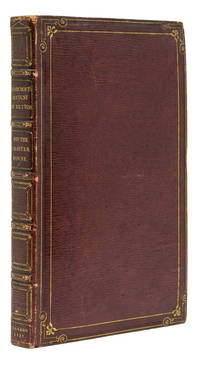
1737262745London: E. Owen 1737. First edition. Double-page engraved frontispiece of Charterhouse engraved portrait of Sutton preceding Chapter I additional engraved plate of Sutton's tomb. xvi 275 1 pp. 8vo. Early 19th-century red straight-grained morocco a.e.g. Light rubbing to joints later gift inscription on ffep. First edition. Double-page engraved frontispiece of Charterhouse engraved portrait of Sutton preceding Chapter I additional engraved plate of Sutton's tomb. xvi 275 1 pp. 8vo. A life of Thomas Sutton 1532-1611 founder of the Charterhouse School in Smithfield London. E. Owen unknown books
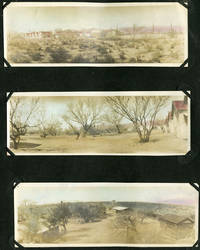
1930WRCAM52672Paradise Valley Az 1930. 220 silver gelatin photographs most 2 1/2 x 4 1/4 inches to 3 1/4 x 5 3/4 inches with a handful of larger photographs and some smaller-format panoramas. Oblong folio. Original brad-bound album. Minor dust-soiling. Overall very good. An engaging collection of original photographs from Arizona circa 1930. The album would seem to depict the early days of the Judson School a well-known boarding school which opened in Paradise Valley Arizona in 1928. It was evidently assembled by one of the students. The first photograph shows the student body of nineteen young men in coat and tie; the second shows founder and head George Judson and the three men who evidently constituted the whole faculty at the time. Since one of the photographs contains a joking reference to Prohibition it would seem to date before 1933; at the same time there are enough buildings and structures to suggest the school had been going for several years hence our dating to circa 1930. <br> <br> The school prided itself on offering a vigorous outdoor life as well as regular schooling. The students are shown in various settings: tending to a camp surveying or on horseback in the desert a few shots depicting a snow-covered desert. The young men are also depicted at leisure: reading in chairs indoors and outdoors playing baseball and tennis wrestling and roping. Also present are a good number of photographs depicting the landscape around the area captured while the boys were exploring the areas around Paradise Valley and Phoenix with numerous shots of the men preparing food while out on the desert prairies. Five photographs depict a railroad derailment and a handful capture Spanish-style buildings or Native American structures in the area with one image of a Native American family inside a makeshift tent. There is also a group of photographs in an eastern setting presumably the student back home. <br> <br> The Judson School once in a rural desert setting was eventually surrounded by the explosive growth of Phoenix. The owner of the school which was always a private for- profit endeavor sold the land to luxury real estate developers and closed the school in 2000. <br> <br> A wonderful collection of photographs depicting a famous pioneering school in Arizona. unknown books
184421438No place England: no publisher June 1844. 8vo. 24 pp. <br><br>Removed from nonce volume. Half-title detached. Page 23-24 detached. Paper age-toned. Clean copy. no publisher unknown books
1925100425New York: Rand School of Social Sciences 1925. 82p. The director of the Department was Solon De Leon and the associate Nathan Fine. Includes some foreign language publications and left publications. Rand School of Social Sciences unknown books
196992151969. Softcover. VG slight soiling to covers. Blue wraps. 48 pp. 34 bw plates. Includes a 2-page foreword by Paul Mocsanyi a catalogue of 147 drawings by 100 artists and the large bw plates. unknown books
193374633Boston:: Boston Cooking School Magazine Co. Very Good. 1933. Paperback. Black and white illustrations throughout. Original subscription slip laid in. Short edge tear to the covers at the base of the spine else very good in illustrated stapled wraps. . Boston Cooking School Magazine Co., paperback books
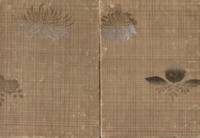
86003001Edo c.1700-50 n.p. Brown & silver covered boards very clean 7 double-page b.w. erotic woodblock illustrations mounted on mica flecked paper 18 x 25 cm. accordion folded illustration size: 31 x 12 cm. FIRST & ONLY UNRECORDED COPY! . . . . A VERY RARE UNRECORDED EARLY BOOK . . . A BIZARRE & UNIQUE EROTIC BOOK . . . UNSIGNED BUT CLEARLY THE WORK OF A MASTER ARTIST . BY SUKENOBU OR HIS :SCHOOL: . A unique and hitherto unfound odd and most unusual erotic book of the early-mid-18th century. One of the most bizarre erotic books ever done in Japan. . The graphically explicit work portrays men and women with genitals on their foreheads engaged in heterosexual and homosexual intercourse. There is no other book with such unusual and strange illustrations. . . THE TITLE: THE LEGEND OF AMANJAKU or AMAN NO JAKU: Chinese Title: TIAN XIE GUI YUN . THE MEANING OF AMANJAKU: Japanese Buddhist literature is abundant with variations on the theme of "Aman-No-Jaku" aka. "Amanjaku" "Manojaku" commonly understood to be a "Heavenly Evil Spirit." . This spirit or demon-like creature in Japanese folklore is usually depicted as being a male during the day and female at night. The demon is usually depicted as a kind of small Oni devil and is thought to be able to provoke a person's darkest desires and instigate him into perpetrating wicked deeds. . Amanjaku is also depicted in Chinese and Japanese mythology the AMANOJAKU is a changeling a water spirit that infiltrates the human world to play cruel tricks on people by reading their minds and twisting their requests or desires to be used against them. . The "AMANOJAKU" is also known the "Lord of the River" and in Japan serves Bishamonten one of the four Deva kings of Buddhism as a minor demon. See Wikipedia below. . In Japanese the term "Amanojaku" also refers to a person who is deliberately contradictory someone who argues for the sake of arguing or can be used in common Japanese conversation to refer to someone who is a "Perverted Demon." . THE ILLUSTRATIONS: THE BUDDHIST THEME:. This work is unusual in that the genitals of common people are located on their foreheads. A symbolist meaning can be in Buddhist concept that sex and sexual hedonism is openly on the minds of 'lay' people. The Buddha and his disciples on the other hand do not have sex organs on their foreheads meaning their organs are covered and in a different usual location. This can symbolize 'self control' over such biological energies. Devout Buddhist disregard sex as a pleasurable pastime and devote themselves to monastic focus. By contrast "lay" people are distracted with hedonistic pleasure a path away from rather than towards the Dharma or teachings of Buddhism. . In a sense this work illustrates the overwhelming force of evil or the "Amanojaku" and how it distracts people from the "Righteous Path" towards the Dharma and the ultimate goal of attaining Nirvana. It can be posited that this work is designed to give understanding to "lay" people by way of visual example of what forces direct their energies away from the Buddhist teachings in an effort to redirect them towards the "Righteous Path" and life style. . EXCEPTIONALLY RARE UNIQUE WORK: . The work is exceptionally RARE unusual and erotic there are no other example showing genitals on the foreheads of any other Japanese book cited anywhere in the bibliographic literature or record. . This work is certainly RARE in subject content and quantity. Though it was woodblock printed and unsigned which was usual for Japanese erotic works which were banned by the Shogun we have not found anything similar or recorded anywhere in the bibliography. Being woodblock printed one assumes there are other copies in existence. The average printing from woodblocks were somewhere between 100-200 copies. However in this instance no others exist. We have the strong feeling the book could have been the production of a famous Japanese illustrator and perhaps financed by a Buddhist temple again there are no known facts about this rarity. . THE EROTIC ILLUSTRATIONS: . Number 1: This work begins showing the Buddha flanked by two of his disciple monks. The title is written in four Japanese Kanji in Kambun & Chinese characters. The Buddha and his two disciples listen to two elderly Buddhist believers: one is a male he has and erect penis on his forehead. The other is a woman she has a vagina on her forehead. Neither the Buddha nor his two disciples monks show genitals on their foreheads. The couple have come to consult with the Buddha about their grievances. . Number 2: Shows a man and a woman in a Tatami matted room both wear lovely 18th century decorated Kimono. They embrace each other and are engaged in making love from their foreheads which show an erect penis and testicles inserted into the woman's forehead where her vagina is located. Adjacent to the young couple is an older woman who has become aroused by the adjacent couple's making love. The old woman uses a dildo tied to a post which she hugs while inserting the dildo into the vagina on her forehead. . Number 3: Shows a couple laying on a blanket their Kimono pulled down and opened and used as a top cover. They engage in love-making and kiss. The man has an erect penis on his forehead the woman a vagina on hers. There is some used Chirishi toilet paper just above her head on the floor used to wipe the love fluids. There is a folded package of yet unused Chirishi in readiness. Chishiri shown in Japanese Shunga erotic prints prints & paintings is an 'erotic symbol' indicative of sexual excitement with lots of love fluids flowing. Ergo the need for paper to clean up the results of erotic love-making. . Number 4 shows an adult man with an erect penis on his forehead penetrating the anus of a younger man who's smaller but erect penis is seen on his forehead as he faces his lover. The younger man has no pubic hair yet indicating his youth. . Adjacent to these two men is a woman in the next room. The door is open she is a secret voyeur of the two men. Her vagina is also on her forehead. A Shogi board and two bowls for stones is located in the front left of the illustration. Gay activities in Japanese society were accepted as a norm and were not especially unusual. However to find graphic examples in Japanese erotic books are exceptionally rare and seldom found. . Number 5: Depicts a fully clothed man on his knees he bends over a sleeping woman. He has a very large erect penis and begins to penetrate a woman with her vagina on her forehead. She is fully clothed and sleeping on a wooden "pillow" which supports her elaborate hair coiffeur. . Number 6: Depicts a lively scene of two men and a woman. One man with a very large and erect penis pulls the woman's arm toward him while she fends him off with a straight arm to his head. A second excited man also with a large and erect penis on his forehead masturbates and ejaculates in ecstasy. The woman has a vagina on her forehead. The scene is likely an intended rape of a young girl. She looks away in an effort not to allow him to pull her close enough to insert his penis into her exposed vagina. . Number 7: Illustrating a lonely old man in bed. He has an erect penis on his forehead and holds a kind of pot with a large opening. He faces down and inserts his penis into the pot for gratification. . THE TEXT: The text in Shunga erotic Japanese books & prints is often an erotic dialogue describing the erotic action. Often these words are onomatopoetic mimicking the sounds of people in orgasm or making comments about making love or the pleasure and good feelings. The size and hardness of the penis or the flavor and the juices of the vagina and its supple feelings of euphoria when engaged in love-making. All wear 18thcentury period Kimono. . MODE AND FASHION OF THE MID-18TH CENTURY: The room furnishing and Kimono of the participants in this work all wear 18th century period Kimono with period decorations. The style of Kimono and room screens reflect this period. . BINDING AND MOUNTING: Binding: The book has probably been rebound sometime after the 1750's with a more recent thin brown decorated paper with a silver chrysanthemum and a Mon family crest with gold and black on both front and rear covers. Each cover has a distinctly different kind of illustration but of the same theme. The corners and edges are a bit worn some loss to the paper as usual for a work from this period. . Mounting: At an earlier time each page was expertly mounted on a stiff Washi hand-made Japanese paper into an accordion folded book. Each illustration is bordered with a rare and stunning crushed oyster-shell powder mixed with rice-glue and overlaid on the border paper. The stunning effect is a rare shimmering pearl-like color and hue with a remarkable effect. This rare and largely unknown effect has been used for print backgrounds by some of the later masters. . This was no ordinary mounting and appropriate for an exceptionally and most unusual RARE book ! . Contents: By and large the contents are clean solid with a two old worm holes for the first 6 of 7 pages. These are small and towards the edge and does not detract from the overall quality of the illustration. On page 7 there are a few center margin old minor worm holes. All of these have been restored when the prints were laid down on the thick Washi paper creating book format. The work is otherwise solid and firm. There are a few 'rubs' on the old Washi paper which was made from very soft Kozo fibers common to any item of this period on this on handmade papers of the period. . CONDITION OF THE WOODBLOCK PRINTS: . These are very early black and white woodcut prints. Each print has an excellent and vivid impression key blocks are black and superbly printed with strong images. The paper is old and has the patina of paper from that age the usual minor mild surface rubbing or thumbing in the lower corners which is common. . We tend to be overly critical of any flaws found on our books and believe it is better to overly describe rather than avoid such discussion any imperfections. Suffice to say by and large this is an excellent item in very nice condition something that any collector or museum would be proud to own. Please review photos posted to our website. . R A R I T Y OF SUBJECT: The placement of the genitals on the forehead gives one a lot of room to theorize on the meaning of such artistic expression. In our 50 years of experience in dealing Japanese woodblock printed books and painted original art this is the first and only example with such imaginative and symbolist expression. With the beginning of the work showing the Buddha and his two disciples lacking any genitals on their foreheads one can simply assume that in a Buddhist way they have given up carnal desire as represented by common people who's foreheads display genitals perhaps meaning that sex is on their minds or they simply view others as sexual objects eager to make love and engage in carnal thoughts and activities. Obviously seeing an erect penis on some man whiles others see what he thinks and feels is an insight to his innermost thoughts and desires. In all cases in this book the men all show an erect penis. The women are a bit more difficult to fathom. Their vaginas are simply visible on their foreheads and no fluids are visible or other evidence of their carnal desire or sexually excited stated. All of the men have public hair adjacent to their sex organs while all women are lacking any pubic hair completely. This is an erotic symbolism giving full view to women's genitals. . "BANNED" or "PROHIBITED" BOOKS: Shun Pon Haru Bon: In the case of this item it is very likely that it was printed in a much smaller discreet quantity than the 200 copies possible off the blocks. Due to the "banned" nature of such books there is no date publisher nor place cited. One is simply left to determine the date and artist by stylistic analysis. It is well-known that during the Tokugawa period 1603-1868 erotic prints and books were "BANNED" or "PROHIBITED" by decree of the Shogun. One of the influencing factors was that during this period some Shoguns were changing their views and being influenced by Christians who entered Japan during this period. The Shogun did not want foreigners and Jesuit missionaries to think that Japan was a crass and base nation. Naturally foreigners soon learned that prostitution was rampant and so this strange logic from the Shogun never had much affect on the Christians and surely not on the Japanese. . The Shogun enforced severe punishments for persons involved in drawing printing carving blocks and publishing erotic books and prints. With out the "Kiwame" or censor's approval seal all such items were "Banned" outright by the Shogun decree. . While these "Prohibited" books and prints were widely circulated in an "underground" society there are ample examples of famous artists taking on commissions to produce erotic books and prints fun or profit. The record and bibliography is loaded with these examples. "Banning" such erotic works simply meant that the number printed were limited to smaller numbers and distribution was done under the table discretely circulating such books privately among collectors. During these times it was not necessary for artists to sign their such artistic creations by-and-large the population had a very good idea who the artist was by being familiar with their style and other works it was simply a "public secret" who the artist was. Often the artist poked fun at the Shogun with political jokes and assumed names to confound any chance of being discovered by the authorities. . Over the centuries this knowledge decreased and is now the domain of the art historian or scholar to identify and determine the actual artist. Stylistic analysis remains the standard method for unsigned works. . THE ARTIST/SCHOOLS: While there are no signatures or seals indicating the artist's name or even his alternate Go studio name we believe this work is part of the "Primitives and First Century of Ukiyo-e School 1660-1765" period. See Lane below. The women's coiffeur is very similar to those found in this period as well as the drawing style technique and genre. It is this cataloger's opinion that this work was likely the creation of one of the Moronobu School masters. Perhaps done by Sukenobu Yoshikiyo Morishige Sugimura Moronobu Kiyonobu Masanobu or others from this period. We believe this work was likely done from around 1710-1750. It was also likely that it was done by one of the artists listed below. . LIKELY ARTIST ATTRIBUTION: . MORONOBU SUKENOBU SCHOOL: Nishikawa Sukenobu 1671 -August 20 1750 often called simply "Sukenobu" was a Japanese printmaker from Kyoto. He was unusual for a Ukiyo-e in being based in the imperial capital of Kyoto. He did prints of actors but gained note for his works concerning women. His Hyakunin Joro Shinasadame: Appreciating 100 Women in two volumes published in 1723 depicted women of all classes from the empress to prostitutes and received favorable results His Hyakunin Joro Shinasadame: Appreciating 100 women in two volumes published in 1723 depicted women of all classes from the empress to prostitutes and received favorable results Leading members of this school were: Nishikawa Sukenobu the founder; Nishikawa Suketada; Kawashima Nobukiyo; Nishikawa Terunobu; and Takagi Sadatake. . NISHIKAWA MORONOBU SCHOOL: Nishikawa Moronobu 1618-July 25 1694 was a Japanese painter and printmaker known for his advancement of the Ukiyo-e woodcut style starting in the 1670s. Leading members of the MORONOBU school were: Nishikawa Moronobu the founder; Hishikawa Morofusa; Hishikawa Moroyoshi; Hishikawa Moronaga; Hishikawa Moroshige; Hishikawa Morohira; and Tamazaki Ryujo. . BIBLIOGRAPHY: . This title is NOT listed in any of the below resources: SHIBUI Kiyoshi. UKIYO-E NAISHI. BIBLIOGRAPHY OF JAPANESE EROTIC ILLUSTRATED WOODBLOCK PRINTED BOOKS. H. KERLEN. CATALOGUE OF PRE-MEIJI JAPANESE BOOKS & MAPS IN PUBLIC COLLECTIONS IN THE NETHERLANDS. Richard Lane: IMAGES FROM THE FLOATING WORLD THE JAPANESE PRINT; pages 28 40-60 show examples of the Ukiyo-e primitives 1660-1765 especially the Moronobu school pp.60-88 et al. . NOT LISTED IN: . KSM SHIBUI Kiyoshi: UKIYO-E NAISI. BIBLIOGRAPHY OF JAPANESE EROTIC ILLUSTRATED WOODBLOCK PRINTED BOOKS. Modern Reading: UKIYO-E NAISHI KERLEN H.: CATALOGUE OF PRE-MEIJI JAPANESE BOOKS & MAPS IN PUBLIC COLLECTIONS IN THE NETHERLANDS. Not in any other usual bibliographies on Japanese E-hon woodblock printed books. . See: WIKIPEDIA: http://en.wikipedia.org/wiki/Amanjaku . hardcover books
157490hardcover. The Quinquennial Catalogue. 403pp. 8vo cloth. Cambridge: Harvard Law School 1963. vg<br/><br/> unknown books
2512Rochester Kent: The School 1940. . 8vo tan cloth-covered boards spine orange cloth; printed paper spine label somewhat soiled COPAC and OCLC showing only one holding with this imprint--Cambridge University Library. Interesting piece produced by the students of the school. The whole was produced "in the clawses of the Typography Department of the Medway School.during the session 1939-40. Layout and arrangement in type by P. J. Reynolds .Set by students of the "Monotype Composition classes. Head of the Dpartment Charles L. Pickering under whose direction this book was made and finished in July 1940" Rochester, Kent: [The School], 1940. hardcover books
1959132252Paris: Ecole Estienne 1959. Softcover. Good inscribed by Krol. spine cracked dent to rear. White wraps with color illustration. 4 color and several bw plates. Text in French. Ecole Estienne paperback books
16086Edward Freeman. Autograph Letter Signed. April 2 1873 Somerleaze Wells Somerset England. 4 pages on a single sheet folded. To "My Dear Lord" possibly a Bishop About a teacher who is too talented to be a governess whose name he puts forward as a candidate for headmistress of a new girls' school.<br/><br/>Stating in part "I see your name as a "Patron of the new Girls School to be set up at Manchester." I do not know whether that word is to be taken in the ecclesiastical sense as employing that you have a voice in disposing of offices in it. If so I would venture to recommend a candidate for the place of Head Mistress which I hear that the Committee are going about to fill one whom I am sure you will find it a great gain to put at the head of the new institution. This is Miss Macarthur who has been governess in my house for nearly five years and who is just now leaving us because all my daughters are now grown up. She is in correspondence with Miss Vernon to whom Mrs. Kitchener first spoke of her and she has asked me to say what I can for her to any of the Committee. I think the best witness of my opinion of her is that I have set her to write one of my series of small histories a History of Scotland which I hope will soon be out. She is a woman of powers far above the common and I can witness that she has practiced them well in the only two departments of which I am able to judge namely those of History and language. She is really strong in both; for though she does not actually understand Latin and Greek she knows all about them their relation to French English etc. I am sure she would do credit to the place. We are most anxious to find some post for her more independent than that of a private governess."<br/><br/>Unfortunately Miss Macarthur was not appointed; there being far better qualified candidates competing for this sought after position. She was Margaret A.R. Macarthur born in Scotland in 1842 and was the author of 'History of Scotland' in Freeman's Historical Course for Schools. It would be interesting to find out what happened to her. In fine condition. unknown books
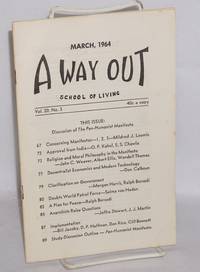
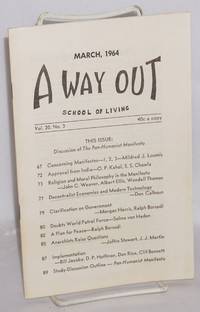
1964166286Brookville OH: The School of Living 1964. p.67-95 wraps very good condition. Anarchist magazine with contributions by Mildred J. Loomis Ralph Borsodi Bill Jacoby Don Calhoun and others. The School of Living unknown books
1964151519Brookville OH: The School of Living 1964. p.67-95 wraps. Anarchist magazine with contributions by Mildred J. Loomis Ralph Borsodi Bill Jacoby Don Calhoun and others. Minor pencil underlining on cover. The School of Living unknown books
1967140078Freeland MD: The School of Living 1967. 46p. stapled wraps 6x9 inches wraps foxed else very good condition. Decentralist pro-homesteading viewpoint. The School of Living unknown books
1967140029Brookville OH: The School of Living 1967. Magazine. 61p. wraps very good condition 6x9 inches. Anarchist magazine with contributions by Harry Elmer Barnes Laurance Labadie James J. Martin Vardis Fisher Holley Cantine and others. The School of Living unknown books
1967258255Brookville OH: The School of Living 1967. Magazine. 61p. stapled wraps 6x9 inches wraps worn and soiled a few small stains on front wrap else very good condition. Contributions by Harry Elmer Barnes Laurance Labadie James J. Martin Vardis Fisher Holley Cantine and others. The School of Living unknown books
194128133Camp Tyson Tennessee; Camp David N. C.: various 1941. First Edition. Boards. Good. First Edition. 89 leaves 11-blank 1-63 pp plate 4 1-16 pp 6 pp 26 pp. Blue cloth spine over blue card covers soiling. Mimeographed typescripts. Dampstaining to upper corner throughout. Card covers creased. Previous owner stamp "Property of Nicholas A. Parisi" on front flyleaf. Irregular printing quality. Paper browned throughout. Illustrated. Boards. This sammelband contains five items with no proper title page or index. It is a fascinating variety of material that was used for training in the Barrage Balloon School Camp Tyson Tennessee for WWII. <br/><br/>The first item contains 87 leaves plus two indices detailing ground and air based targets likely to be seen by Balloon operators. This item is maddeningly bound out of order with the indices thrown in haphazardly. Part I contains 30 leaves of ground based targets with everything from a British Infantry Tank MK III "Valentine" to the Panzerfampfwagon III a German medium tank to scout cars howitzer and armored cars. Part II contains 57 leaves identifying various aircraft. The index for this part notes this is part of a "Target Recognition Instructors Course" and lists sixty aircraft. We have not taken the time to sort out if the indices are representative of the contents but spot checks conclude a likely correlation. Each leaf contains one or two pages of commentary on the target how to identify it it's characteristics and sometimes conversational assessments of its usefulness.<br/><br/>Item two in this sammelband is titled "Rigging and Fabric Repair Revised Edition" prepared by Clarence Vladimir Capt. C. A. C. Senior Instructor. Apparently created by the Division of Enlisted Specialists Barrage Balloon School Camp David N. C. 2 63 pages plus one plate it is densely written with illustrations throughout. Much on knot construction.<br/><br/>Item three is "Rigging and Fabric Repair Barrage Ballooon Training Center 1941" 2 16 pages plus one plate and six figures plus definitions. A presumably earlier version of Item two above with less space given over to illustrations.<br/><br/>Item four is "Synopsis of Charts Logs Maps Reports" 6 pages dated on page six 9-19-41 with some hand annotations/additions. Penciled is "D. E. Aldrich 1st Lt" on first page.<br/><br/>Item five is an extensive 24 page Gossary of Barrage Balloon Terms.<br/><br/>We were unable to find any of these items listed in OCLC/Worldcat as of this writing. Rare. various unknown books
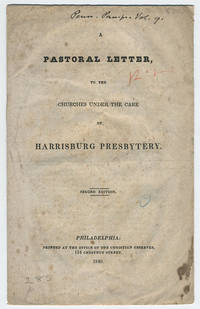
184010321Philadelphia: Pr. at the office of the Christian Observer 1840. 12mo. 12 pp. <br><br>Sewn. Light soiling; a little staining and shallow chipping not affecting text. Librarian's notations in ink and pencil. Pr. at the office of the Christian Observer unknown books
198526931985. Softcover. VG. Color wraps. 336 pp. 50 color 100s bw plates. A very comprehensive guide both to American art and other areas of specialty furniture Asian art European art antiquities textiles etc. paperback books
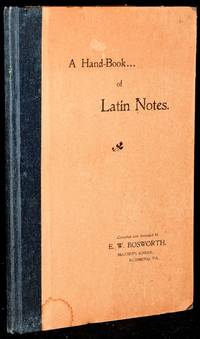
1899271407Richmond VA: Whittet & Shepperson 1899. First Edition. Hard Cover. Very Good binding. A Latin primer prepared by E. W. Bosworth of the McGuire's School in Richmond presumably for the use of the students at the school. An uncommon Richmond item. Very Good binding. Whittet & Shepperson unknown books
188033241.3Philadelphia: J. B. Lippincott & Co 1880. A later issue of the 1st edition of this important early American nursing text initially published in 1879. Cf. Cordasco 70-1507. Publisher's original green cloth binding with gilt stampd spine lettering & black stamped lettering to front board. Bevelled boards. Volume professionally recased. General wear. Feb 7th 1880 ownership isincription to a preliminary blank of one "Sarah C Robinson Bellevue Training School 426 E. 26th St. New York City.". 266 pp including Index. 8vo. 7-1/2" x 4-3/4" <br/><br/> J. B. Lippincott & Co hardcover books
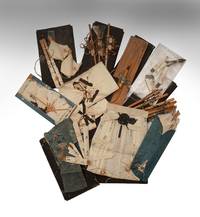
7079Various formats and sizes. Japan: ca. 1787-96. The Ogasawara School founded in the 12th century laid the foundations of etiquette for the aristocratic and samurai classes throughout Japan for many centuries. The school specialized in teaching horsemanship archery mounted archery and samurai etiquette on and off the battlefield. Over the centuries the school transitioned itself to focus on a system of courtly manners along with skills in archery for ceremonial rituals. The school continues today supervised by the 31st generation leader Kiyotada Ogasawara. The Imperial House of Japan uses Ogasawara etiquette. This fascinating collection is made up of miniature models or samples of materials and objects required and used at formal Ogasawara events in the late 18th century as well as a number of manuscript documents. We begin with ten black paper four-sided folding envelopes each labeled and containing the items below. These envelopes are constructed of thick but flexible paper with string ties. The labels describe the contents of each envelope and have seals and signatures of either "Hisanobu" or "Nobumichi": 1. a miniature paper model of a horo which is worn on the back of a samurai's armor. Our horo is made of folded paper with a silk brocade adornment. Measurements are given in manuscript. With this is a model of the bag to carry the horo; 2. miniature fabric samples of pleated trousers a man's formal kimono and vest along with samples of neatly wrapped objects elaborately tied which were to be carried. They include a sword a fan and a bolt of precious brocade; 3. three miniature tachi swords each for a specific occasion. Our sample tachi are made of wood and have thick thread attachments; 4. two kinds of miniature torches taimatsu along with their holders; 5. a most remarkable miniature wooden bow mounted on a wooden board. A quiver utsubo again made of wood and decorated in gold brocade is also mounted; 6. Six miniature examples of maku gushi poles to hold banners. They are joined by ropes here represented by fine decorative cord; 7. four samples of real hair cut off and tied during genpuku the Japanese coming-of-age ceremony; 8. a miniature target - an opened fan - mounted on a board for the hikime-no-gi the archery ritual; 9. two elaborate folded paper model sacks to protect the bow when it rains kasa yumi bukuro; and 10. seven strands of hay and 12 braided strips of paper kamioki which were used in ceremonies for two- and three-year-old aristocratic and samurai male children. These are accompanied by 69 examples of very complex ceremonial origami or origata. Origata as compared to recreational origami was developed amongst the higher class of samurai who stressed formal manners and a sense of decorum. It is a method of how to wrap gifts with very precious handmade papers used for gift-giving and ceremonies in order to maintain sound human relations. Each is folded in it own way and labeled with its intended contents for example an obi belt confectioneries a brush for calligraphy shark skin for sword handles incense wood a tooth-cleaning stick a fan Chinese silk thread hair ornaments gold dust sumi ink cake perfume belts for inner garments face powder tabi socks various sizes of fine writing paper feathers from hawks and cranes for arrows etc. Some examples of highly complex ornamental ties are also present. Finally there are about 20 contemporary letters all concerned with various aspects of Ogasawara etiquette including gastronomic matters. There is a stiff thick-paper folded cover for a gift signed "Ogasawara Taizen taifu Nagamasa." There is also a packet of miscellaneous related papers. In fine condition and a remarkable survival. unknown books