657 résultats
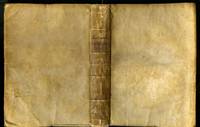
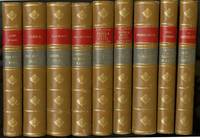
1940045372Madrid: Espasa-Calpe 1940. First Edition. Hardcover Quarter Leather. Very Good Condition. 9 volumes in quarter brown calf over pebbled brown cloth 1940-1946 - spines gilt in compartments. Light rubbing to spines and hinges a touch of edgewear and a few corners bumped slight dampstain to rear board and page edge of volume 3 - bright overall and unmarked internally. Illustrated. Vol. 1: El Victorial. Crónica de Pero Niño conde de Buelna por su alférez Gutierre Díez de Gámes. LXXXII 397 pp Vol. 2: Crónica de Álvaro de Luna Condestable de Castilla LXIV 484 pp Vol. 3: Hechos del condestable Miguel Lucas de Iranzo. Crónica del siglo XV LVI 507pp Vol. 4: Memorial de diversas hazañas. Crónica de Enrique IV ordenada por Mosén Diego de Valera XCII 413pp Vols. 5 y 6: Crónica de los Reyes Católicos por su secretario Fernando del Pulgar CLX 456pp 523 pp Vol. 7: Historia del Emperador Carlos V por Pedro Mexia XCV 618 pp Vol. 8: Crónica del Halconero de Juan II Pedro Carrillo de Huete XV 561 pp Vol. 9: Refundición de la Crónica del Halconero por Lope de Barrientos CCIII 328 pp Size: Octavo 8vo. 9-volume set complete. Quantity Available: 1. Shipped Weight: Over 3 kilos. Category: History; Inventory No: 045372. <br/><br/> Espasa-Calpe hardcover books
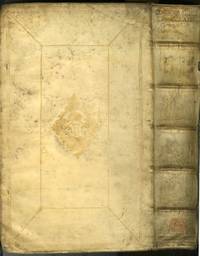
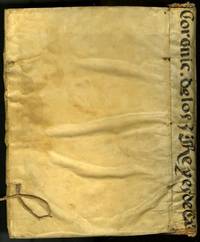
1606044957Hanau: Typis Wechelianis Apud Claudium Marnium & haeredes Ioan. Aubrii 1606. Early Edition. Hardcover Vellum. Good Condition. Full contemporary vellum with gilt decoration soiled and worn hinges split but binding sound. With two library and one earlier bookplate internally and a spine label but no other library markings; wear to endpapers. One contemporary inscription in Greek to an endpaper scattered foxing age toning to page edges a few minor paper flaws scattered pages more heavily browned mostly quite clean; printed in two columns Greek and Latin. viii 1054pp 38 1. With the printer's mark at the rear. Graesse v2 393. Cassius Dio's Roman history covered 1000 years in 80 books. The original Estienne edition 1548 collects a fragment from a 15th century manuscript that covers books 36-60. This covers 36-80 with brief remarks at the rear on the other books. Size: Folio. Quantity Available: 1. Shipped Weight: 2-3 kilos. Category: History; Antiquarian & Rare. Inventory No: 044957. <br/><br/> Typis Wechelianis, Apud Claudium Marnium & haeredes Ioan. Aubrii hardcover books
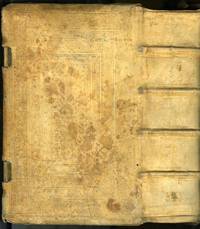
1560045018Basel: Heinrich Petri 1560. First Edition. Hardcover Vellum. Good Condition. Full contemporary rolled pigskin worn and discolored coming loose from the wooden boards lacking clasps. Cords and binding intact. Endpapers title chipped and worn first sections with some wear and discoloring scattered foxing otherwise and mostly quite clean. The first German edition of Giovio's influential Historiarum sui Temporis libri XLV first published in Latin in 1552. viii ccccxli 9; iv ccccix 1 7pp. Size: Folio. 2-volume set complete. Quantity Available: 1. Shipped Weight: 2-3 kilos. Category: History; Antiquarian & Rare. Inventory No: 045018. <br/><br/> Heinrich Petri hardcover books
16994Woman Education Photo album from student at Skidmore Women's College from 1935-1937. Filled with images from Skidmore campus in Saratoga Springs and other locations in New York Connecticut and the surrounding region. 215 original silver gelatin photographs dated from 1935-1943. Various sizes from 2 x 2 in. to 8 x 10 in. Original painted boards. 12 x 8 inches. 64 pages. Includes 6 postcards of Skidmore College and 2 Christmas greeting cards from the school. Photos of many locations around Skidmore campus including the Chapel Hathorn House and Studio Peabody Hall Scribner Library and Salisbury Dormitory. Many images have handwritten captions identifying locations. Includes photos of interior from the album owner's own dorm rooms with personal touches such as fresh flowers and a stuffed dog at 306 Skidmore Hall 414 Peabody and 310 North Hall with the caption "Ready for Spring!". Photos of friends around campus in various activities including Class Day Senior Assembly May Day Pageant Drill Team Horse Show Spring 1936 Junior Prom and a match from the school's 1937 Tennis Finals. Photos from a Nov. 7 1936 political rally where students hold signs for either Roosevelt who won in a landslide victory or Alf Landon his opponent. Other show friends friends in "ski suit" on crutches ice skating or in candid poses: "We really didn't know this was being taken." Also includes photos of "The Athletic Field" on campus and local Saratoga High School. Photos from traveling around nearby Lake George and further north to Canadian Falls Horseshoe Falls and Niagara Falls "The Mighty". Also images from a trip to the Western part of the US. Photos of flooding in California in 1938: "Flooded Orange Grove" "Long Beach Foot Bridge" "Santa Ana trees overflow". Photos of the Hoover Dam under construction in Nevada labeled "Boulder Dam" then a synonymous name for the project. Later photos show the Connecticut-area schools where the album owner went on to work as a teacher: "Roger Sherman School New Haven Jan '32" and Stratfield School dated May 1941. One of the last photos dated 1943 shows a woman's official military portrait. As WWII affected the nation more women than ever took on expanded roles in civic life and the military. Small chips to edges of first 3 pages. Very good condition. unknown books
1551046063Florence: Lorenzo Torrentino 1551. First Edition. Hardcover Half Leather. Very Good Condition. Rebound in half leather over paper boards title page soiled scattered light foxing but very clean otherwise. Attractively printed with wide margins and fine initial letters. Last 40 pages with mostly light marginal dampstaining. 340 3pp. Adams G 639 Graesse III 490 Sabin 27478 for the bio of Columbus Size: Folio. Quantity Available: 1. Shipped Weight: 2-3 kilos. Category: History; Inventory No: 046063. <br/><br/> Lorenzo Torrentino hardcover books
1556046281Basel: Henrichum Petri 1556. Second Edition. Hardcover. Very Good Condition. 18th century pastepaper boards spine and edges degraded light dampstains to first few and final pages old library stamp to title and first page some worming in the gutter - generally quite clean otherwise and with front rear and internal blanks present. 16 196 4. Printer's mark at rear.<br/><br/>First published in 1553 an early original work by the polymath physician often compared to Erasmus. Scarce rare in commerce. Size: Octavo 8vo. Quantity Available: 1. Shipped Weight: Under 1 kilo. Category: History; Antiquarian & Rare. Inventory No: 046281. Henrichum Petri hardcover books
1553045324Lyon: Guillaume Rouille 1553. First Edition. Hardcover Vellum. Very Good Condition. Contemporary vellum darkened worn at corners old inscription to front blank dampstain to upper right corner early on and lower margin towards the end modest browning and foxing crease to center of last 30 pages. 2 volumes in one each page with medallion portraits and a brief biography of celebrated figures from Adam to Henry II. viii 172 4pp; 247 8pp. Graesse V 458 Adams P2161 Bib. Lyon. IX 205. Size: Quarto 4to. Previous owner's book-plate inside front cover. Quantity Available: 1. Shipped Weight: 1-2 kilos. Category: History; Biography & Autobiography. Inventory No: 045324. <br/><br/> Guillaume Rouille hardcover books
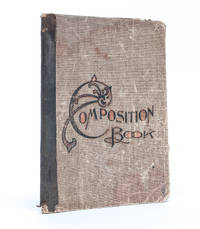
18982508N.P. 1898. Brown paper bound composition book comprised of 43 manuscript pages and 6 original crayon drawings by a young girl. First page excised. Ownership stamp of Hattie Plegge used on sheets toward the center of the book; teacher's signature Miss Sewell on nearby middle page. A fascinating and research-rich notebook in which a young girl practiced her hand in ink and pencil by copying out popular song lyrics folk ballads and poetry. <br/><br/>While the composition book of Hattie Plegge contains no overt indication of the girl's geographical location there are signs within her work that point toward the North. Poetry about General Grant and Abraham Lincoln as well as an original crayon drawing of an eagle marked "Union Forever" suggest that her community belonged to the Union during the Civil War. Additionally though she writes no date school year or age in the book her cursive and her drawings suggest that she was under the age of 12 at the time of composition. As she strives to mature her hand Hattie selects a fascinating array of works to copy out with care; and they provide valuable information about the types of music and poetry that were available to an elementary school girl. Some of the selections come from folk songs such as Billy Boy listed in the Roud Folk Song Index. Others were more widely popular tunes of the time including In the Gloaming 1877 On the Banks of the Wabash 1897 and I Guess I'll Have to Telegraph my Baby 1898. Mixed with these are also longer poems. Though Alice Cary's Suppose is listed as a recommended copybook text in Ballads for Little Folk 1874 others take a more adult political leaning as is the case with suffragist Frances Willard's work Grant is Dead copied out twice the second being more careful and Oliver Wendell Holmes' Old Ironsides. Whether the poetic works were provided by a teacher suggested by a parent or chosen by Hattie herself that give a glimpse into the social influences surrounding her. As a reminder that she is in fact a child there are 6 simple crayon drawings interspersed throughout including a Union eagle a donkey and what appears to be a schoolgirl in a cape.<br/><br/>A rich historical document with research possibilities including but not limited to paleography geography and politics in the post-Civil War era the history of education the transmission of folk songs and folk tales the history of music literature and poetry and gender studies. <br/><br/>Roud Folk Song Index 326. Ballads for Little Folk 47. unknown books
18882180Bloomsburg PA 1888. Very Good . Manuscript notebook composed by Ida Sylva Wagner a young woman training to become a teacher at the Bloomsburg State Normal School now Bloomsburg University of Pennsylvania between 1888-1889. Comprised of 88 pages in ink and pencil blending lecture and reading notes with what appear to be Ida's own drafts of analytic essays practice lesson plans and examination questions. Quarter cloth over marbled boards measuring 5.5 x 8.5 inches. Shelf-wear to extremities and hinges tender but holding. Text block overall tight with mild toning not affecting text. Wagner's ownership signature and school information on front paste-down; second ownership signature along with Wagner's later teaching location on rear paste-down. In Very Good condition overall considering its daily class use and apparent usage as a reference guide during Ida's later teaching career.<br/><br/>Established in 1869 the Bloomsburg State Normal School aimed to provide rigorous teacher training to ensure that regional educators could "teach the youth elements of classical education" Bloomsburg University. State census records show that she would have been 22 at the time of this class and that she later moved to Luzerne County to work as a teacher after graduation. This notebook rigorously documents her work in an advanced Practical Teaching course which provided pedagogical methodology as well as requiring students to put methods into practice by designing usable teaching materials. Ida's notebook is roughly divided into sections with blanks separating each; and they include practical notes including Introductory Consideration Foundations and Principles Length of Recitation Object Lessons and Plan of Lessons as well as sample content for lessons such as Primary Reading Primary Numbers and Rules of Grammar. In her hand Ida reflects on the importance of theory and practice noting "The powers of the child which demand the teacher's attention are the physical the intellectual the moral and the spiritual.before knowing can take place there must be something to know and the thing to be known must affect its appropriate sense." This guiding principle clearly shapes the class and Ida's notes show that she is being trained in the "something to know" for example the 15 pages of vocabulary pronunciations and definitions as well as the "affecting its appropriate sense" for example the 46 initial pages on methods for shaping appropriate lessons. <br/><br/>A dense resource with research possibilities including but not limited to the fields of history of pedagogy history of American higher education women's education and employment and gender studies. Very Good . unknown books
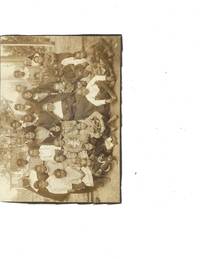
15405African-American Education Pair of photographs depicting the first Catholic elementary school that educated girls of color both free and enslaved which was located at the oldest black parish in the United States St. Augustine's Catholic Church. Circa 1840. Albumen photographs 7" x 5" inches one mounted on board and the other unmounted. The unmounted photo is captioned in cursive at the bottom edge "Catholic School Manderville La". Both photographs show African American nuns assembled with male and female students in front of the school. Religious instruction was one of the few accessible paths to an education for African-Americans in the mid-19th century. At a time when literacy was considered a dangerous advantage the Catholic School at Manderville is notable not just for educating children of color but including girls among that calculus as well as children of both the freed and the enslaved. The property on which the Catholic School of Saint Augustine Church stood was originally part of a plantation owned by Claude Treme who subdivided his estate and sold off large tracts to free blacks and others on a first-come first-serve basis; the school itself was likely founded by Henriette Delille a free woman of color and Juliette Gaudin a Cuban worshippers at St. Augustine's Church who devoted their lives to aiding slaves orphan girls the uneducated and the sick and elderly among people of color. Their particular concern for the education and care of black children aided greatly in the founding the city's early private school for the colored. <br/><br/>Widespread illiteracy among Afrcan-Americans was a cornerstone of white supremacy in the South. The objections to slave literacy were threefold: 1 Slaves did not have the mental capacity for education and would only become confused; 2 Slaves might learn to forge passes to non-slave states; and 3 Insurrection and rebellion might result from slaves reading abolitionist writings. Literacy was so loaded in fact that the new restrictions resulting from Nat Turner's 1842 slave revolt-- only two years after the Manderville Catholic School photographed here was started-- included anti-literacy laws and punishments for slaves who tried to learn to read and write. Yet many African-Americans both free and enslaved found ways around such laws to satisfy their hunger for learning. The main antebellum resource for teaching literacy was the Bible which some whites permitted because they believed the Bible would teach African-Americans about their "divine" role as servants. With the Second Great Awakening which lasted through the 1840s the opportunity for African-Americans to receive an education was greatly expanded by the religious notion that all men and women from every race were in need of salvation and that all redeemed individuals were to be "useful" in God's kingdom; thus clearing the way to a new path for literacy and education among African-Americans through the lens of religious teaching. unknown books
1870List1032Jefferson City: S. Winans Photographer 1870. Carte-de-visite photographs measuring 3 ¾ x 2 ¼ on slightly larger mounts versos with the decorative stamp of S. Winans photographer 126 High St. Jefferson City. Some fading to images else about fine quite well preserved near fine overall. Near Fine. The Lincoln Institute of Jefferson City Missouri had its roots in the educational programs set up for soldiers of the 62nd Colored Regiment during the Civil War most of whom were from Missouri. After the war with $6000 raised from donations a group led by the white abolitionist officer Richard Foster set up the Lincoln Institute in Jefferson City. The student body was entirely African-american with the faculty a mix of African-American and white. The state of Missouri provided additional funding. <br /> <br /> Collected here are four portraits of students of the institute likely taken in the founding decade before the carte-de-visite format was replaced by the cabinet card. The photographer S. Winans took the photographs likely in his Jefferson City gallery as they are all staged in a formal portrait gallery. Winans also took a well known portrait of David W. Wallace the father of Bess Wallace Truman. Quite uncommon - we find no other record of these images elsewhere. S. Winans, Photographer unknown books
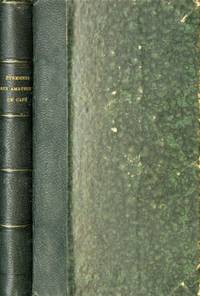
1790CAT000091Paris: Hotel de Bouthillier 1790. First Edition. Hardcover Quarter Leather. Very Good Condition. Later 1/4 morocco over boards. light wear at corners. Slight offsetting to text otherwise quite clean internally. xxxvii 121 5 109 3. Vicaire 348-9.<br/><br/>Scarce tract on the history trade use and chemical properties of coffee. At the end is a rather charming long poem on coffee translated from the Latin of Abbé Massieu. Size: 8vo octavo. Quantity Available: 1. Shipped Weight: Under 1 kilo. Category: Cooking Wine & Dining; History. Inventory No: CAT000091. Hotel de Bouthillier hardcover books
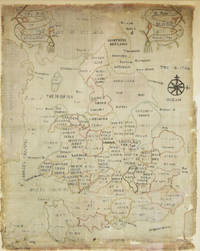
1786310835Bristol 1786. Colored silk and wool threads on linen signed "M. Hume". With compass rose and floral cartouche. 19 x 14-1/2 inches. Toning some wear around edges losses to lettering in several spots. In later frame. Colored silk and wool threads on linen signed "M. Hume". With compass rose and floral cartouche. 19 x 14-1/2 inches. A nice example of an embroidered map sampler which were an important component of girls' education in Britain and America from 1770-1840. This one meticulously labels all of the English counties the seas and channels and includes part of Scotland to the north and the east coast of Ireland and is signed by its maker one M. Hume of Bristol.<br/><br/>"One academic subject that was consistently considered important for both boys and girls after reading writing and arithmetic was geography. Geography was considered a science at this time and . it was the first science taught to girls in the US . Many girls were taught to read but not write. With the exception of some diaries or letters or of marginalia there is little to tell us how children learned to read do arithmetic or write. Map samplers . by students are tangible examples of women's schoolwork. These were time-consuming projects normally framed and hung with pride to show a young lady's educational attainments" Tyner Stitching the World. unknown books
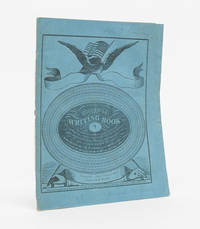
18482532Brimfield MA 1848. Columbian Writing Book #7 Designed for Use in Schools. Blue stitched paper wraps with flag and manicule motifs to front cover and general directions for proper handwriting on rear cover. Completely filled and comprised of 20 densely written manuscript pages in ink and pencil created by Ada N. Kenney of Brimfield Mass who leaves her ownership information in pencil on the front wrap. A lovely and fascinating historical document tracing both the method by which a young woman developed her hand as well as how such lessons served the additional purpose of indoctrinating her into socially-appropriate femininity.<br/><br/>Ada Kenney's copybook contains a neat and precise hand throughout which suggests that she was educated and belonged to the rising middle class. Meticulous and organized Ada breaks her book into two clear sections. The first 9 pages contain precisely copied and repeated sentences such as "Assiduity in labor produces fame and fortune" "Cherish sentiments of charity towards all men" "Discretion of speech is superior to eloquence" and "Immodest words are in all cases indefensible." As the lines get repeated 19 times each in the alphabetical order dictated by the first word it is clear that Ada is being trained in an elegant cursive. Yet the content of the lines and their repetition also serve as lessons to her about the value of female silence virtue and chastity. By the second half of the book Ada commits another 9 pages to carefully copying out poetry; and here her choices push up against the demure repetitions of the previous pages. "Long Fanny Gray" "The Troubedour" Gaily the Troubadour Touched his Guitar and "Highland Mary" are each ballads of romance and flirtation love and loss. These selections suggest a burgeoning interest in courtship and men as well as women's expressions of desire and jealousy. By the final 2 pages Ada shifts into much less organized quotations jotting down random lines of poetry in French and English alongside several names of friends and relatives. <br/><br/>A fascinating and valuable historical document with research potential including but not limited to paleography education theory and practice gender studies literature and poetry and the transmission of folk tales and folk music. unknown books
1611044067Venice: Alessandro Vecchi 1611. Early Edition. Hardcover Vellum. Good Condition. Full contemporary vellum lacking the front endpaper and inner joint cracked a few mild creases and tears light to moderate foxing scattered light damp staining to bottom margin four pages in early or contemporary manuscript apparently a printing error pages 114 115 126 and 127. 27 366 2 296pp 175 leaves. With 26 full page woodcuts with a few repeated and numerous in text woodcuts. The first book is festooned with cuts with a few in the second and smaller vignette illustrations in the third book. A very attractively illustrated work - it went through a number of editions with similar illustrations from 1604 to the late 17th century. Size: Quarto 4to. Quantity Available: 1. Shipped Weight: Under 1 kilo. Category: History; Antiquarian & Rare. Inventory No: 044067. <br/><br/> Alessandro Vecchi hardcover books
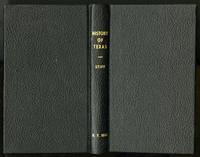
1844046060New York: Nafis & Cornish 1844. Third Edition. Hardcover. Very Good Condition. Rebound in recent black buckram front blanks retained. Old signature to endpaper occasional browning and foxing light dampstain to final 10 pages frontis trimmed to plate edge but with no loss of image"Edward Stiff" inked in on title. The frontis is the earliest view of Austin. 2 blanks frontis title vii-xxii 23-275pp. Streeter I 344 1st ed. Howes L 154 Size: Octavo 8vo. Quantity Available: 1. Shipped Weight: Under 1 kilo. Category: Americana; History. Inventory No: 046060. <br/><br/> Nafis & Cornish hardcover books
1665045383Madrid: Pablo de Val 1665. First Edition. Hardcover Vellum. Good Condition. Full contemporary vellum with remains of ties endpapers replaced title penned to spine and old pen notation to top page edge text block loose from binding title with old ink annotations and a large repair to the right edge - it is repaired by pasting an old original drawing of a villa to the verso small tear to first page of dedication with an old repair. Foxing mostly minor browning some worming in the margins with old paper repairs touching a letter or two in the bottom margin and touching the gloss in a few spots in the inner gutter but minor and contained overall one old marginal note mostly clean. 32 372pp. Nuñez de Castro was the official chronicler of Philip IV of Spain the second to last of the Castilian kings. Size: Quarto 4to. Quantity Available: 1. Shipped Weight: 1-2 kilos. Category: History; Antiquarian & Rare. Inventory No: 045383. <br/><br/> Pablo de Val hardcover books
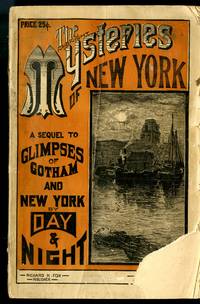
1881047104New York: Richard K. Fox Proprietor Police Gazette 1881. First Edition. Softcover. Good Condition. Browned cover and first blank lacking bottom right corner rear cover and last few pages with loss at bottom edge few bfore that with small tape repair. - minor edge chips and creasing. Scarce in libraries and commerce even though later editions claimed 95000 copies sold. 23 illustrations not including ads. 76pp with 6 pages of ads at rear.<br/><br/>A cautionary volume of sirens muggings honey pots and the myriad vagaries of street life. No doubt like many similar volumes used as a guide as well as for titillation. Size: Octavo 8vo. Quantity Available: 1. Shipped Weight: Under 1 kilo. Category: History; Inventory No: 047104. Richard K. Fox, Proprietor Police Gazette unknown books
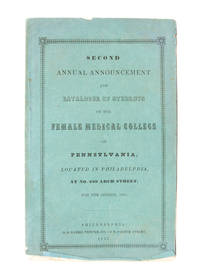
18512970Philadelphia: G.S. Harris 1851. First edition. Very Good . Original blue printed paper wraps printed to front. Some chipping and creasing to edges but overall intact and undamaged despite being quite delicate. Light scattered foxing throughout. Ownership signature of the college's original dean N.R. Mosely struck out at the top of the Faculty list on page 4; pencil ticks next to the names of several students listed in the catalogue on page 6. Exceptionally rare OCLC lists copies of this Announcement at only 2 institutions.<br/><br/>Only one year after Dr. Elizabeth Blackwell graduated valedictorian and became the first female M.D. in the U.S. the Female Medical College of Pennsylvania opened its doors. Located in Philadelphia it was the only the second school to open with the mission of training women in medicine -- having been preceded by the New England Female Medical College two years earlier in 1848. Founded by Quaker abolitionist and Underground Railroad activists who believed that women could make exceptional doctors "the college provided rare opportunities for women to teach perform research manage a medical school and with the eventual establishment of the Woman's Hospital in 1861 learn and practice in a hospital setting. It was the longest-lasting all-women medical school in the nation until it became coeducational in 1970" Mandell. The present Announcement predates these growths however showing the roots from which they emerged. One year running and the faculty remain largely male because there has yet to be an inaugural graduating class this would come in 1852; but already a female student Hannah E. Longshore is listed as a Demonstrator in Anatomy. Indeed Longshore and her sister Anna would both be part of the inaugural class of the college with the latter going on the author Discourses to Women in Medical Subjects 1897. Indeed the majority of women listed in this catalogue went on to become doctors even when it took time -- as it did for Hannah W. Ellis and Susanna H. Ellis both listed among the graduates of the 1865 class. 12 pages in all this scarce pamphlet contains Officers Corporators Faculty and Students of the school; an Announcement on the school's missions and accomplishments; information on Specialties available; Terms of enrollment; and a list of required Textbooks. It also conveys the excitement optimism and pride of those involved. "The Faculty of the Female Medical College of Pennsylvania are inspired by very different feelings from those that attended their efforts one year ago. Then they were about to enter into an untried path to engage in a great experiment.But that which was an experiment is an experiment no longer.give a woman knowledge commensurate with her natural qualifications enable her to go forth healing the sick and comforting the afflicted and she will bless the world." A rare survivor documenting that pivotal moment when women had been given the chance to prove their intellect rose to the challenge and made the future of the next female students more secure. Very Good . G.S. Harris unknown books
16962Women's Education Photo album from woman student at co-educational Williamette University 1913-1915. Images come from campus events student plays and various outdoor locations around the college's location in Salem Oregon. 53 original silver gelatin print photographs of various sizes from 1.5 x 2.5" to 3.25 x 4.25". Many of the photos include brief captions identifying the location or event. Images dated from 1913-1915. Original black leather boards. 11 x 14 in. "Photographs" on cover with gilt detail and embossed flower motif. 32 pages last 14 blank. Photo of first page shows "Williamette University" spelled out on an earthen embankment. Willamette University was founded in 1842 as a coeducational institution and its first graduate was a woman. Album is full of images of women and men students learning and working together. Unsent color postcard of Eaton Hall at Williamette University. Many of the photographs focus on women students although there are many with mixed genders. Photo of a a group of women outside with books looking for birds labeled "Ornithologists". Photos of girl classmates "Gertrude-Alice / Inseparable friends". Even though Williamette was a co-educational college there were several university rules restricting contact between men and women students outside the classroom. One of the rules from the 1870s stipulated that women and men had to maintain a one-block distance between them while walking to class. Despite this young men and women worked together to form professional and personal connections. Photo of a man and woman seated at an outdoor table with an open book in front of them: "They said they were studying Zoology". In another image 3 men and 1 woman sit together writing and studying at a table with Corvallis Oregon written on a large bulletin board behind them. Photos specifically from graduation events. "Seniors 1915 Party at Grahams" 30 figures crowd behind a round table and over half are women. Photos from commencement day. 5 women in cap and gowns line up on a sidewalk. Flanked by two smaller snapshots from "The Campus Serpentine" in which the graduating class can be seen talking in a line around the campus. <br/><br/>Photos of different social events around the school and community. "Soph-Frosh Formal Reception 1913": over 50 young men in suits and women in long gowns and gloves pose around a lighted archway. "Kloshe Kitchen Force 1914" with 3 men and 1 woman in an industrial kitchen. The Kloshe Klub was a popular spot for students at the time. "Junior Feed in Gym": around 20 figures seated on either sides of a long table. "The gym feed aftermath" shows a team 9 women and men laughing together on an outdoor veranda. "A Quartette of Folk Dancers" "A Junior Quintette". The following page shows dancers in action in "A Fancy Minuet". Performing a play outside the school with specific images labelled "Queen Mary Enthroned" "Yes here is Marie also Ann" and "In Battle Array" from different points in the production. Some of the captions contain inside jokes or references. "The Father of 'Rats'" written under a photo of 4 women falling over from laughing with 1 man all around a pile of chopped firewood. Outdoor life around the college such as at Silver Creek an Oregon State Park. "'Cooed' Life at Silver Creek" Women wash dishes at an outdoor campsite. Two figures read books: "We like canoeing but sometimes we study". Another set of photos show people crowded at an outdoor table and seated on the grassy spot with picnic plates. "A full table under the Lausanne Maples". Very good condition. unknown books
15484Bibliotheque Universelle Dames Histoire" 30 Volumes. Vols. 1--30.-1st Edition Publication dates 1785-1788- in French- Published in Paris with approval of the King rue d'Anjou. Leather Binding Hardcover binding of tawny-brown leather. Covers with gold frames spine decorated with gilt motif and and black moroco labels with gilt titles . Book edges decorated with gold lines. Flyleaves are four-colour marbled paper. All pages gilt edges . full leather bindings with gilt and black labels on spines gilt trimmed boards. Some minor flaws in some volumes All bindings remain intact with secured boards. Inside contents are consistent of a single edition the pages are clean and text unmarked. Overall in very good condition and attractive.<br/><br/>"Bibliotheque Universelle Dames Histoire" The Universal Women's Library was produced to provide an audience of upper class women general knowledge. It should be noted that the set was published in France in the years leading up to the French Revolution. Originally thsee volumes were published over a 3 year period "under the aprouval of the King". Later the collection included other subjects during the the French revolution. The slow process of education reform to include women began in the 1840s after it was acknowledged that if women were the first educators of children then they needed a solid education. This set dating form 1785 predate that time by half a century and as such is a valuable early attempt that goes beyond most simple women education books. As with other books of the period the volumes were provided unbound to subscribers of the series who would have been responsible for their own bindings. unknown books
15971Princeton University "Princeton Alumni Weekly" Princeton N.J. Sept. 24 1968. Vol. LXIX No. 1. Titled "The Education of Women at Princeton: A Special Report; On the Desirability and Feasibility of Princeton Entering Significantly into the Education of Women at the Undergraduate Level." Inscribed by the Author on cover. In 1968 amid controversy and uncertainty concerning the acceptance of women at Princeton the President and Trustees authorized this extensive study to cover all aspects of the coeducation question. Published as an entire issue of the "Princeton Alumni Weekly" the result interprets multiple examples from other schools addresses arguments and concerns and imagines a coeducational Princeton of the not-so-distant future. It also includes the virulent minority opposition of Prof. Arthur Horton who fought the presence of women well after they became a normal feature of campus life. The positive decision came just in time for the April 1969 letters when for the first time the student body was joined by 148 women. Very good condition. This copy is notably inscribed to a woman "With the complement of the author/ 16 Sept 1968/ Princeton N.J." An important historical artifact of 1960's feminist academic reform. unknown books
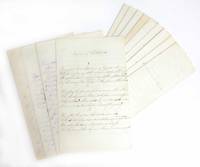
18792316Connecticut 1879. Near Fine. Archive of 13 handwritten manuscript essays composed by a Connecticut schoolgirl. Comprised of approximately 40 pages of autograph material written in ink by the same neat hand and signed "Carrie Breed." In addition to titles the majority of essays are dated and include Breed's school name and location. An exciting and interesting look into the work of a diligent young woman excited in particular about the female authors of her own time.<br/><br/>Founded in 1851 Parker Academy was a boarding school that boasted "a healthy location a tidy village an orderly community and a most beautiful valley with pleasant surroundings -- a good place for an institution of education" Historic Buildings of Connecticut. While little else is known about the school the manuscript assignments of Carrie Breed reveal a curriculum that emphasized traditional feminine skills such as polite conversation and elegant handwriting as well as more rigorous subjects including literature composition and botany. The earliest works contained in this archive are three copy exercises assigned to Carrie to practice forming her handwriting; and they speak to her own burgeoning literary interests. The first "Scenes of Childhood" is an assignment drawn from Charles Northend's The American Speaker Being a Collection of Pieces in Prose Poetry or Dialogue Designed for Exercises in School 1856. Yet the two that follow later in the academic year of 1875-76 appear to be selections chosen by Carrie herself as an instructor has added pencil notations "taken from Miss Alcott in Little Women." Published not even a decade before Alcott's novel about sisterhood and women's lives made an impact on girls across America; and here with more assertive mature penmanship Carrie copies out the long passages of "My Beth" and "In the Garrett" written by Alcott's character the aspiring author Jo. <br/><br/>The remaining essays in the archive contain Carrie's own reflections and writing as she matures as a student and thinker. Content is largely focused on moral concepts such as Influence Benevolence and Hospitality although two essays also consider the domestic work of cultivating house plants and performing house cleaning. In two essays Carrie reflects on her relationship to the seasons and to the experience of walking in the woods. The final essay as she nears the end of her time in school and likely reflects on her future as a wife and mother she writes on Filial Trust. As the months and academic years pass it is possible to see her penmanship and her thinking begin to change from those of a girl into those of a young woman with her own mind.<br/><br/>With rich research possibilities in fields including but not limited to the history of women's education paleography contemporary receptions to women's literature the history of American education and gender studies. Near Fine. unknown books
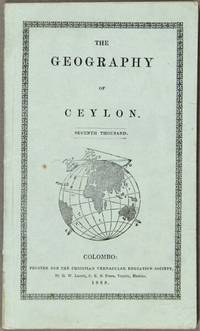
186845516Colombo: printed for the Christian Vernacular Education Society 1868. 12mo pp. 30; engraved title page; original stiff blue pictorial wrappers; spined ends cracked else very good. Despite the title this small pamphlet covers not only the geography of the island of what is now the country of Sir Lanka but also the people commerce and government. One copy in OCLC as of March 2021 at the NYPL. <br/><br/> printed for the Christian Vernacular Education Society unknown books
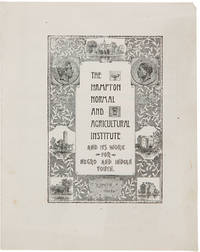
1894WRCAM55632Hampton Va.: Printed by students of the Institute 1894. 8pp. Illus. Small octavo. Original pictorial self- wrappers. Minor soiling light wear. Very good plus. A rare fundraising appeal from the illustrious Hampton Normal Institute aimed specifically at the members of the Christian Endeavor Society in 1894. The pamphlet was written by Principal Hollis B. Frissell and printed by the African American and Native American students at the institute. The pamphlet includes several photographs of the campus and the classroom along with a group shot of the "Class of '94." The purpose of the pamphlet is stated in the second paragraph of text: "This leaflet is prepared especially for the Christian Endeavor Society in hopes that with the information it gives of Hampton Institute and its needs it will arouse interest among young Christians in our work and bring our cause before you as an object worthy of your Christian charity." Frissell then expounds upon the training of the "head" "hand" and "heart" of the Hampton students before enumerating his institution's funding needs. Donations may be contributed to the institute's general fund or earmarked for the establishment of one-time or endowed scholarships or given to the missionary fund the "apparatus fund" the housekeeping fund or as a subscription to THE SOUTHERN WORKMAN. <br> <br> Hampton Institute apparently issued similar pamphlets under the same title on a regular if not an annual basis in the 1890s though whether they issued more than one per year is not known and any differences are likely only found in the text. OCLC records just seven copies of an 8pp. pamphlet from 1894 with this wrapper title which we assume is the same as the present copy though we cannot be sure. It appears that the present copy differs from at least the copies at Duke and Wisconsin which are dated in print by Frissell "September 1894." It is possible even likely that the Hampton Institute issued this appeal targeted at the Christian Endeavor Society as well as other more general fundraising pamphlets in the same year. In any case it is a rare appeal from a significant African American and Native American educational institution. OCLC 6876159. Printed by students of the Institute unknown books