Grün AnselmMareMagnum

19 643 résultats
br. Un libro, nato per rispondere alla realtà degli abbandoni del monastero tra i 40 e i 50 anni, che però contiene indicazioni, approfondimenti e proposte che non riguardano soltanto religiosi e sacerdoti, ma un pubblico ben più vasto.
1991970032Frankfurt am Main. 1991. 269 Seiten. 30,5x22cm. Zustand: Gut min. gebräunt (Innen); Einband Außen hat geringe Gebrauchsspuren; Vorderdeckel hat unten rechts in der Ecke einen sehr kleinen Knick, der sich innen max. geringfügig bemerkbar macht; Schutzumschlag (hat geringe bis leichte Gebrauchsspuren); 2. überarb. Aufl. Englisch Broschiert
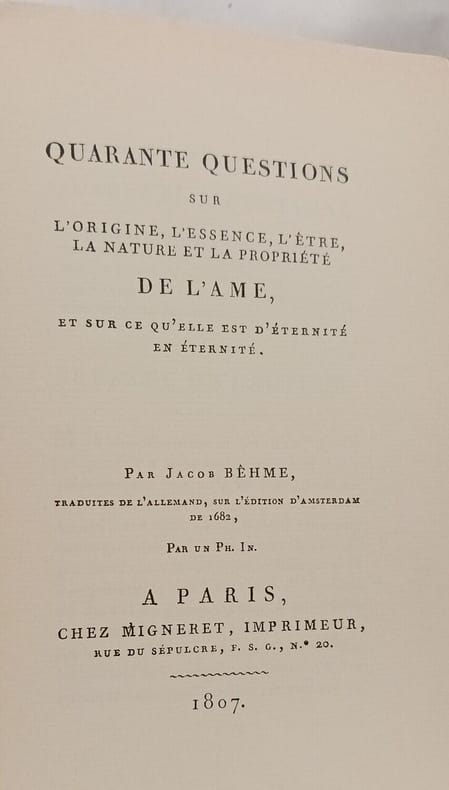
1807100152257Migneret 1807 in8. 1807. Broché.
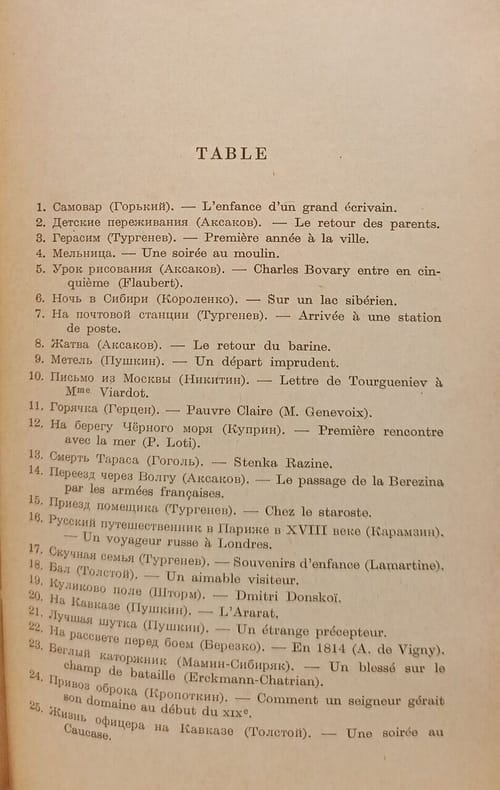
1957100154481DIDIER 1957 in8. 1957. Broché.
br. "Spero che queste pagine svolgano nell'anima di molti una funzione di forte scossa interiore, addirittura di radicale rinnovamento. Sono pagine fatte del silenzio spirituale più urlato e del grido d'amore più silenzioso. Non andrebbero quindi lette ma trasformate nella parte più intima e segreta di sé, perché ognuno ne tragga tutto il succo segreto con cui sono state scritte." (Piero Gribaudi)
br. Saper ascoltare le inquietudini di un cuore in crescita, saper vedere oltre l'indisciplina, saper fare rete con i colleghi... oltre alla responsabilità di dare voti equi, di scegliere libri di testo adeguati, di trovare le parole giuste per trattare con i genitori... davvero insegnare è molto più di un mestiere! L'autrice di queste pagine, insegnante appassionata, trasforma in preghiera ogni affanno, preoccupazione, dubbio, gioia trovando alimento e forza in Colui che ha detto: «Venite a me voi tutti che siete affaticati e oppressi e io vi darò riposo» (Mt 11,28).
br. Stupirsi e lodare per una telefonata inaspettata, cogliere la bellezza di Dio in ogni piccolo fiore, non perdere la speranza nei momenti di buio profondo, intercedere per le fatiche e le prove dei figli, gioire per gli eventi lieti di parenti e amici e scrivere auguri di vera partecipazione... in altre parole, vivere ogni istante della propria vita come occasione di preghiera. Ecco il segreto del cammino mistico dell'autrice di queste pagine, che sono una miniera di spunti per chi è alla ricerca di una spiritualità calata nel quotidiano. «La presenza di Dio è come un soffio leggero e persistente: è come l'aria che si respira senza sentirla ma senza la quale non c'è vita. La mia preghiera è quasi senza parole; non ne sento la necessità. È come se vivessi dentro la preghiera, come se io stessa fossi preghiera. Presenza di Dio; accettazione di ciò che non capisco; offerta di tutto». Prefazione Brustolon Andrea Omv (P.).
1999100118596Puf 1999 448 pages 13 6x2 4x21 4cm. 1999. Broché. 448 pages.
1989R260197164O.E.I.L.. 1989. In-8. Broché. Bon état, Couv. légèrement pliée, Dos satisfaisant, Intérieur frais. 103 pages augmentées de quleques photos en noir et blanc hors texte.. . . . Classification Dewey : 240-Théologie morale et spirituelle
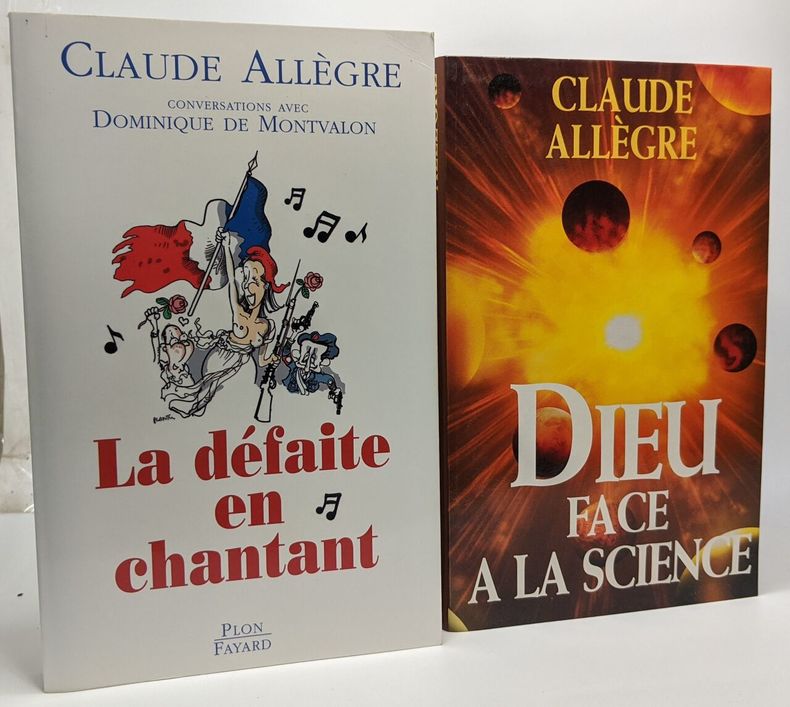
2010100061770Plon 2010 300 pages 14x22x3cm. 2010. Broché. 8 volume(s). 300 pages. 8 livres de Claude Allègre: L'imposture climatique + Un peu de science pour tout le monde + Dieu face à la science + Toute vérité est bonne à dire + Les audaces de la vérité + Vive l'école libre! + La défaite en chantant + Quand on sait tout on ne prévoit rien et quand on ne sait rien on prévoit tout
1990R260198512O.E.I.L.. 1990. In-8. Broché. Bon état, Couv. convenable, Dos satisfaisant, Intérieur frais. 182 pages augmentées de quelques photos en couleurs hors texte.. . . . Classification Dewey : 240-Théologie morale et spirituelle
Very Good English Original wrappers. Cr. 8vo. (19,5 x 13,5 cm). In English, Persian, and Ottoman script (Old Turkish with Arabic letters). 26 p. Abû-Muhammad Muslih al-Dîn bin Abdallâh Shîrâzî, (1193-1292), Persian poet and prose writer, widely recognized as one of the greatest masters of the classical literary tradition. His influence is not limited to Persian literature. He also deeply affected Turkish and Urdu literature and the Western world (Encyclopadiae Iranica). Bostan [i.e. the Orchard] and Gulistan [i.e. the Rose Garden], his famous Works, were translated into many languages and commented. Pendname is one of Sa'dî's poetical works. In this ethical-based work, ethical values such as science, justice, consenting to fate, honesty, patience, generosity, modesty, and grace are praised. Bad habits such as talking to ignorant, cruelty, lie, arrogance, and stinginess are badly criticized. The Persian text of Sa'dî's Pendname, it's an English translation, and Ottoman Turkish translation in verse were printed together in the early 20th century. The work is about some moral characteristics that are seen as "acceptable and submissive" in societies and have been recited with the idea of benefiting people. (Source: A BOOK ON ETHICAL LITERATURE: SAADI'S PENDNAME, Melek Dikmen). Major William Henry Carmichael-Smyth, (1780-1861), was a British military officer in the service of the East India Company and an orientalist. In 1797, at the age of seventeen, he was commissioned into the Bengal Artillery. In 1803, the Second Anglo-Maratha War broke out, and he was present at the battles of Aligarh, Delhi, and Laswari. Carmichael-Smyth returned to India in 1810 as a captain and served in the Invasion of Java in 1811. Thereafter he returned to Bengal and went to Callinger as a field engineer where he was mentioned in dispatches for exemplary valor in 1812. He returned to England in 1820 and was elevated to Major in 1821. Not in Özege.; OCLC 50021435, 1065323294.
Very Good Persian Original decorative dark brown full leather bdg. 44 p. Printed on a special paper with an early 18th century watermark. The Advice by Attâr includes 901 couplet in Persian. Attar Persian poet, Sufi, theoretician of mysticism, and hagiographer, born ca. 540/1145-46 at Nisapur, and died there in 618/1221. His name was Abû ?âmed Mo?ammad b. Abî Bakr Ebrâhîm or, according to Ebn al-Fowatî, b. Sa'd b. Yûsof. ?Attâr and Farîd-al-dîn were his pen-names. It seems that 'Attâr was not well known as a poet in his own lifetime, except at Nisâpûr. 'Awfî, who traveled widely, may have heard about him while staying there , or perhaps from Majd-al-dîn Bagdâdî if this Majd-al-dîn was their common Sufi mentor, though Awfî appears to have only known about Attâr's lyric poetry. Farid al-din 'Attar is one of the most famous spiritual poets of Persia. His works were the inspiration of Rumi and many other mystical poets. 'Attar, along with Sana'i were two of the greatest influences on Rumi in his Sufi views. Rumi has mentioned both of them with the highest esteem several times in his poetry. Rumi praises 'Attar as follows: "Attar roamed the seven cities of love... we are still just in one alley." 'Attar reached an age of well over 80 and died a violent death in the massacre which the Mongols inflicted on Nishapour in April 1221. The world depicted in 'Attar's works reflects the whole evolution of the Sufi movement. The starting point is the idea that the body-bound soul's awaited release and return to its source in the other world can be experienced during the present life in mystic union attainable through inward purification. In explaining his thoughts, 'Attar uses material not only from specifically Sufi sources but also from older ascetic legacies. Apart from his two famous epic masnavi poems 'The Conference of the Birds' and 'The Book of God' he composed a Divan full of powerful, enlightened ghazals and ruba'is. The Pand-nama is a small book of wise, moral advice in short poems in rhyming couplets that is practical and spiritual... (Encyclopedia Iranica & Pand-nama : (Book of Wisdom) Selections Introduction). [EARLY FIRST PERSIAN EDITION of the ADVICE by ATTAR PRINITED in the OTTOMAN EMPIRE] Pend-i Attar. Published by Fâkîr Seyhzâde Es-Seyyid Mehmed Es'ad. Only two printed copies of this edition in OCLC: 819123862.; Türkiye'de basilmis Farsça eserler çeviriler ve Iran'la ilgili yayinlar bibliyografyasi [= Bibliography of the Persian books, their translations and books on Iran published in Turkey] 721.; Mushar -.
Good Armenian Full modern leather binding. An ex-library stamp on the colophon. Small 4to. (27 x 18 cm). In Armenian. 512, [8] p., engraved plates. Richly illustrated. Stains on pages and edges. Otherwise a good copy. Extremely rare first Armenian edition of Fenelon's "Telemaque". According to Abdolonyme Ubicini's account in his La Turquie actuelle (Paris 1855), Les Aventures de Télémaque was the most popular classic among Levantines in Istanbul in the first half of the 19th century, and it was translated into many languages besides Turkish and Arabic in the Ottoman Empire. The first printed version of a Greek translation dates from the 18th century, while an Armenian version by Ambroise Calfa was published in Paris in 1860. (The Ottoman Reception of Fénelon's Télémaque.; Meral, Arzu). The translator, Ambroise Calfa Nar Bey, Guy de Lusignan, (1831-1906), was a Franco-Armenian historian and linguist from the second half of the 19th century and the beginning of the 20th century. Ambroise Calfa is one of the three sons of Kévork (Georges) -Youssouf Calfa, an Armenian trader living in Constantinople, and Sophie Cantar (or Kantaroglou), daughter of an Armenian merchant or banker from the Ottoman capital. Member of several learned societies, including the Asian Society, Ambroise Calfa published several historical or linguistic works, including an Armenian Calligraphy (Paris, 1853), a work awarded at the Universal Exhibition of 1855, and, above all, an Armenian-French Dictionary ( Paris, Hachette, 1861) dedicated to Emperor Alexander II. (Wikipedia). Les Aventures de Télémaque, fils d'Ulysse (The adventures of Telemachus, son of Ulisses) with the original title is a didactic French novel by Fénelon, Archbishop of Cambrai, who in 1689 became tutor to the seven-year-old Duc de Bourgogne (grandson of Louis XIV and second in line to the throne). It was published anonymously in 1699 and reissued in 1717 by his family. The slender plot fills out a gap in Homer's Odyssey, recounting the educational travels of Telemachus, son of Ulysses, accompanied by his tutor, Mentor, who is revealed at the end of the story to be Minerva, goddess of wisdom, in disguise. OCLC 953068302 (One institutional copy in BnF). (Utopias from the Middle East 3).
Very Good Turkish, Ottoman (1500-1928) Original 1/3 leather bdg. in a traditional Ottoman style. Foolscap 8vo. (18 x 12 cm). In Ottoman script (Old Turkish with Arabic letters). 276 p. Third Edition. Very early edition of this first translation of Fenelon's "Telemaque"; made by Yusuf Kamil Pasha (1808-1876), under the influence of the leading French writers and thinkers like La Fontaine, Racine, Voltaire, Montesquieu, Rousseau; which introduced early Ottoman / Turkish literature to the utopian city called "Salante" for the first time. Özege 20335.; TBTK 10653.; This third edition cannot be found in OCLC. (Utopias from the Middle East 15).
Very Good Turkish, Ottoman (1500-1928) Original cloth bdg. Foolscap 8vo. (18 x 12 cm). In Ottoman script (Old Turkish with Arabic letters). [16], 318 p. Lithographed Edition. Early edition of this first translation of Fenelon's "Telemaque"; made by Yusuf Kamil Pasha (1808-1876), under the influence of the leading French writers and thinkers like La Fontaine, Racine, Voltaire, Montesquieu, Rousseau; which introduced early Ottoman / Turkish literature to the utopian city called "Salante" for the first time. Özege 20335.; This edition cannot be found in OCLC. (Utopias from the Middle East 2).
Very Good Turkish, Ottoman (1500-1928) In contemporary cloth bdg. Marbled boards. Serlevha colored in purple in its contemporary period. Roy. 8vo. (24 x 17 cm). In Ottoman script. [6], 360 p. Nevâdir-i Süheylî: Acaibü'l-meâsir ve garaibü'n-nevâdir. It is a widely read work and is a corpus of prose stories written in the period of Murad IV. In the work, which includes 204 stories under thirty-one chapters, Süheylî added stories from his own time to the corpus generally chosen from the Turkish-Islamic history as well. The stories, almost all of which were instructive and exemplary, were selected from various books in Arabic, Persian and Turkish, and the lessons to be learned at the end of each were written separately, and the adaptation path was followed in the translated stories. Hegira: 1276 = Gregorian: 1860. TBTK 774.; Özege 32. Second Edition. Five copies in OCLC: 163633062. Tahir, Bursali Mehmed, Ahlâk kitaplarimiz (Books on ethics) 46.
Very Good Turkish, Ottoman (1500-1928) Original illustrated wrappers. Folio. (33 x 24 cm). In Ottoman script (Old Turkish with Arabic letters). 32 p., richly ills. First published in any form of this symbolist poem, is the manifest of the attempt to settle in New Zealand by falling into pessimism, written during Sultan Abdülhamid II's tyranny period between two Constitutionalist regimes in the Imperial Ottoman, by Servet-i Fünûn literary scene leading of Ottoman poet Tevfik Fikret and his friends like Mehmed Rauf, Hüseyin Kadri, Dr. Esad Pasa, Hüseyin Cahit, Süleyman Nesip, Ahmet Hikmet Müftüoglu. In the westernization period, there is an escape especially the Servet-i Fünuncus to New Zealand, Scotland, and Finland. This escape can be seen as both alienation and help-seeking. Historical point of view, sociological research and in-depth analysis personal sufferings of intellectuals who attempted to escape can provide true findings and information, which can light this period, about the dualism of these intellectuals and their attempts to escape. Tevfik Fikret is one of the pioneers who symbolize this escape. Fikret does not leave the homeland, but in much poetry, he attributes a mission of escape and rescue to places in his poem. Places, where this mission is the most intense, are streets, Asiyan, grave, mosque, Istanbul, the parliament, palace, garden, and village. The first utopian texts in Turkish literature were dreams written in an effort to save the declining Ottoman State. In the period of Servet-i Fünûn [i.e. The Wealth of Sciences], which was a time of crisis, some utopias such as the Yesil Yurt [i.e. Green Land]. Fikret decided to go to New Zealand (after Manisa city) with friends from his literary circle. After a while, he changed his mind and began to construct a special house for his family on the Bosphorus, which he called "Asiyan" (meaning close friends). Asiyan was finished in 1906. New Zealand carries all the characteristics of a utopian place in this poem by Tevfik Fikret. (Utopias from the Middle East 13).
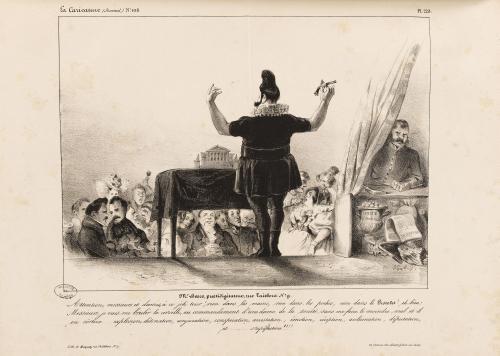
1832251051832 1832. Lithographie.[PRESTIDIGITATION]. GRANDVILLE et FOREST. Mr Bosco, prestidigitateur. Pl. 223. 250 x 225. Vic. col. 65.Planche 223 de La Caricature N° 108.La Caricature, 29 novembre 1832. Lithographie originale sur Velin blanc,un peu jaunie,plis
Very Good Turkish Original wrappers. 12mo. (16 x 12 cm). In Turkish. 16 p. First and only edition of this extremely rare pamphlet written by Turkish Islamist-Nationalist journalist Eygi, who criticizes the understanding of Islam in the 1960s, through the symbol of the first fictional utopian land and vision in Turkish literature called "Darürrahat" [i.e. The Door of Peace] in Ismail Gaspirinskiy (1851-1914)'s book "Darürrahat Müslümanlari" [i.e. The Muslims of Darrürrahat] published in 1887, in Kazan. Mehmed Sevket Eygi was a Turkish journalist, writer, columnist, and Holocaust denier. He had Islamist-nationalist views. After graduating from university in 1956, he worked as a translator at the Directorate of Religious Affairs for two years. Eygi began publishing the daily Bugün newspaper and its publishing house in 1966, where this book will also be published as the third book of the publishing house. While making this criticism, he used the first utopia text of Turkish literature called "Darürrahat Muslims" by Gaspirinskiy as a symbol. Ismail Gaspirinskiy (or Gaspirali) was an ideologist, author, journalist, publisher, educator, and major. Gaspirali's work called Muslims of Darurrahat (Comfortable Country) was published in 1891 after the first issuance in Tercuman Newspaper as the continuation of Letters of Frengistan. Cannot be found in any data as well as OCLC. (Utopias from the Middle East 1).
1840R260228732FR. SEGUIN. 1840. In-8. Relié demi-cuir. Etat d'usage, Coins frottés, Dos frotté, Quelques rousseurs. XII+251 pages - étiquette de bibliothèque en page de titre et sur le dos - dos à nerfs - auteur doré sur le dos - épidermure - plats jaspés - quelques annotations au crayon de papier. . . . Classification Dewey : 240-Théologie morale et spirituelle
1985904446.Ghardcover. Good. Access codes and supplements are not guaranteed with used items. May be an ex-library book. hardcover
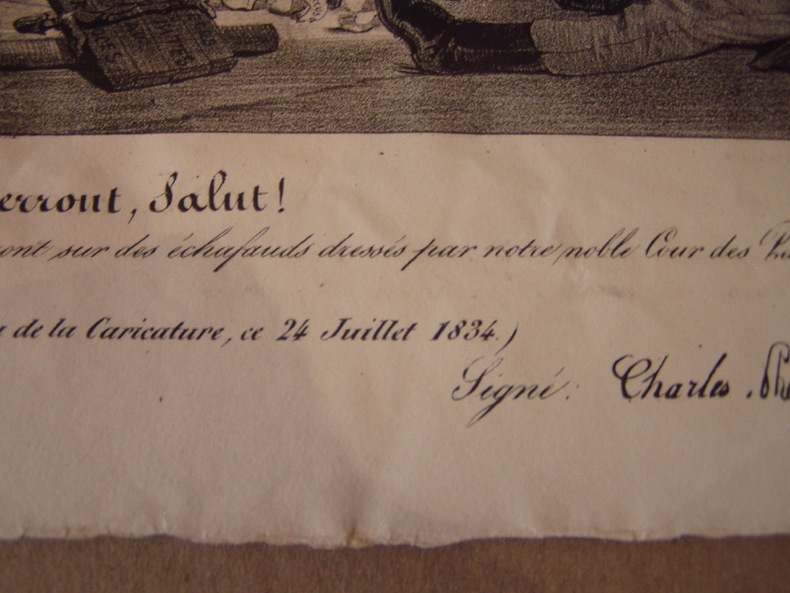
1834251501834 La Caricature politique, morale, littéraire et scénique, volume 8, 24 juillet 1834 -Planche double n°406-407 ,taches dans la planche - Titre en bas au centre : « A ceux qui ces présentes verront, Salut ! » ; légende plus bas au centre : « En commémoration des journées révolutionnaires de 1830, les révolutionnaires de 1834 figureront sur des échafauds dressés par notre noble Cour des Pairs // et toutes nos cours Royales du Royaume. // (Octroyé en notre Château de la Caricature, ce 24 Juillet 1834.) »- Dans la lettre : « Au bureau, chez Aubert, pass. Véro-Dodat. » [éditeur], « Lith : Delaunois, rue du Bouloy, 19 » [imprimeur], « Signé : Charles. Philip… » [Charles Philipon, auteur du modèle] ; dans l’image, en bas à gche, signature : « G. D » [Jean-Jacques Grandville, dessinateur, et Auguste Desperet, lithographe]
2005RO80259155Trajectoire. 2005. In-8. Broché. Bon état, Couv. légèrement pliée, Dos satisfaisant, Intérieur frais. 141 pages.. . . . Classification Dewey : 240-Théologie morale et spirituelle
ill., br. Libretto tascabile che contiene le preghiere di base per ogni cristiano, le preghiere per la Santa Comunione, l'esame di coscienza e il Santo Rosario. Il piccolo catechismo è un utile pro-memoria sulle verità principali della nostra fede.