2 112 résultats
19142111902160201098Ima Furudo shoten 1914. Soft Cover. Fine. Volume: 1 Ima Furudo shoten paperback
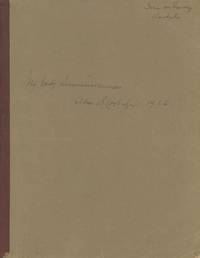
1926List3141Quincy Massachusetts: unpublished 1926. 201 pp cardstock wraps. Normal wear to wraps; overall Near Fine. Alice Brackett White Coolidge 1864–1927 was a Boston socialite of the prominent Richardson family; her grandfather was merchant and Massachusetts State Legislator Jeffrey Richardson. Coolidge was also the author of three children’s books: The Bunnies of Evergreen Village 1917 The Refugees in Evergreen Village 1918 and Evergreen Village to the Rescue 1922. Offered here is Coolidge’s unpublished memoir of her early life written in 1926 titled My Early Reminiscences.<br /> <br /> The memoir recalls Coolidge’s childhood and teen years spent mainly in Massachusetts New Hampshire and Maine. Her recollections typically involve extensive descriptions of the houses at which her family stayed the scenery around them and the various families they met and visited with. Given her position in society her acquaintances are sometimes quite influential people: Princeton president John Grier Hibben enjoys Coolidge’s fishcakes; Trinity Church rector Phillips Brooks gives her grandfather an “excellent pew†in the newly-finished church; pioneering doctor Alfred Worcester mistakes red pepper for mercury in a scientific demonstration at her school; and she recalls brief correspondences with John Greenleaf Whittier and William James.<br /> <br /> Coolidge also took dance lessons from Augustus Papanti whom she describes as “one of the thinnest men I ever saw†who was “very melancholy. I hardly remember his ever smilingâ€; and remembers Judge Charles Devens for “his great stature his charming face his courtliness of manner and his really boyish simplicity in entering into our evening games†including a game of “mind reading†which Devens played “with zest.â€<br /> <br /> One of her longtime friends was Rear Admiral John E. Pillsbury. She recalls:<br /> <br /> “Mr. Pillsbury as a young naval man a brother-in-law of my uncle Dr. Richardson used to take me out in the swan-boats on the Public Garden Pond. Later he went through all the ranks up to being retired as a Rear Admiral but time and circumstances never changed him. We always met at Thanksgiving and Christmas dinners and always talked at great length. . He was a wonderfully interesting lovable man and very modest and unassuming and shy. I always considered him one of my best friends though older by many years than I.â€<br /> <br /> Another interesting New England figure Coolidge encountered was Joseph Lee. She describes Lee’s hotel in Newton:<br /> <br /> “The house where we stayed was kept by a remarkable man named Joseph Lee. He was a mulatto much above many of his kind and his wife was a handsome woman partly Indian. They did the cooking and he waited on table with a colored maid to help him. In fact there were no white women in the house. The cooking was delicious.â€<br /> <br /> Lee was born enslaved in South Carolina freed in 1865 and went on to invent the automatic bread kneading and bread crumbing machines.<br /> <br /> Though nearly all of her childhood was spent in New England she also remembers being invited to visit Charles Joseph Bonaparte in Baltimore:<br /> <br /> “We had never been so far south except to Washington and I felt a curious feeling of being in a different atmosphere from any I had known. . We were met at the station by Mrs. Bonaparte in a large roomy covered vehicle with two horses. The coachman and footman were in the Bonaparte colors -- a deep wine color. The footman I well remember. He was a light-colored young negro very handsome and smiling and excited over having young ladies from the North. . All the servants were colored and lived in cabins near the house. . I never knew Mr. Bonaparte in public life so my memories of him are quite intimate and I fancy I saw much of his real self. . His mind was very active. He used to talk or listen as he walked and he moved his head in a curious way from one side to the other with a slightly rolling motion which was distinctly individual. . I never saw him irritated or excited and he was always very simple. In the group picture we had taken at the Maplewood he sat down cross-legged on the piazza floor like a boy. That was in about 1887. I suppose in public life or in law he was different but he was very equable and charming as we met him in his home and at the mountains. Most of all I admired his sweet tender ways with his flower-like wife.â€<br /> <br /> This was not too long after the end of Reconstruction and Coolidge remarks on the tense atmosphere:<br /> <br /> “Mrs. Bonaparte had warned me to be careful about questions regarding the North and South as the ‘feeling’ had not yet died away. I was so glad she had warned me. A gentleman slipped in and sat down beside me to watch a parade and whispered in my ear as the bands had been playing ‘Dixie’ how glad he was to meet a Northerner. I was glad to meet him too although I remember neither his name nor face but I felt I breathed freer in his sympathetic locality. . I had no idea that this feeling still remained as far North as Baltimore and of course I remembered how our Massachusetts troops had been fired upon in Baltimore at the outset of the war but I was admonished and very wise and only returned my unremembered neighbor’s greeting with a sympathetic word and look.â€<br /> <br /> Besides individuals Coolidge does cover a few historical events including the Great Boston Fire of 1872:<br /> <br /> “Oh! a horrible sight met our eyes. Back of the opposite houses in Park Square was a background of sheets of red flames and heavy black smoke rising high into the air. . On the Parade Ground all was in confusion and the sight was very sad and never-to-be-forgotten. It was literally covered with boxes and bales of furniture and sad forlorn desperate looking people crouching or sitting or standing amidst what they had saved from their homes . At night . the whole city was in darkness as there was no gas.â€<br /> <br /> The family also frequently stayed at hotels in the White Mountains of New Hampshire and Coolidge recalls the “overwhelmingly tragic†effects of the 1867 sale of this land to logging companies; she writes that looking out from the Flume House in Franconia “all about were brown scarred places marking the woodchoppers’ work which was cutting away our beautiful trees for lumberâ€.<br /> <br /> In this memoir Coolidge supplies detailed remembrances of the private personalities of influential figures of Gilded Age New England. We find two copies of My Early Reminiscences on OCLC. Of interest to historians of the era especially as told through the perspective of a young woman. unpublished unknown
1906010223Paris Grande Imprimerie de Montrouge, H. Belleville, 1906 plaquette in-8 En feuilles
1996RO30101281DE LA REUNION DES MISEES NATIONAUX. NOVEMBRE 1996. In-8. Broché. Bon état, Couv. convenable, Dos satisfaisant, Intérieur frais. 94 pages. Nombreuses photos, illustrations et plans en noir et blanc ainsi qu'en couleurs dans le texte et hors texte. Couverture rempliée.. . . A l'italienne. Classification Dewey : 900-GEOGRAPHIE, HISTOIRE, SCIENCES AUXILIAIRES DE L'HISTOIRE
1915647011 vol. in-4 reliure de l'époque bradel demi-vélin blanc, couverture conservée, Imprimeries Gounouilhou, Paris, 1915 [et 1916 ], 12 pp. avec portrait et 2 pp. avec portrait, enrichi de 2 L.A.S. de Paul Courteault (deux courriers relatifs à la publication du premier article dans le numéro de Septembre 1915 de la "Revue historique de Bordeaux" ; dans la seconde lettre, Paul Courteault demande quelques corrections des épreuves), avec 2 portraits ajoutés (Théodore Dauberval et Jean-Bercher Dauberval, avec notes manuscrites au crayon au verso, ces deux portraits provenant de la vente de la collection d'Ernest Labadie, comme Meaude de Lapouyade le précise au crayon dans la dernière L.A.S.), un portrait ajouté (Madame Dauberval, miniature peinte par Magol), le manuscrit autographe (3 pp. in-4) de "Une miniature de Mme Dauberval par Magol" (article qui paraîtra en 1929 dans la même revue), une L.A.S. d'Ernest Labadie et un L.A.S. de Georges Lafargue intitulée "Un cinquième Portrait !" évoquant dans la collection Jules Delpit un portrait à l'eau forte de Théodore Dauberval.
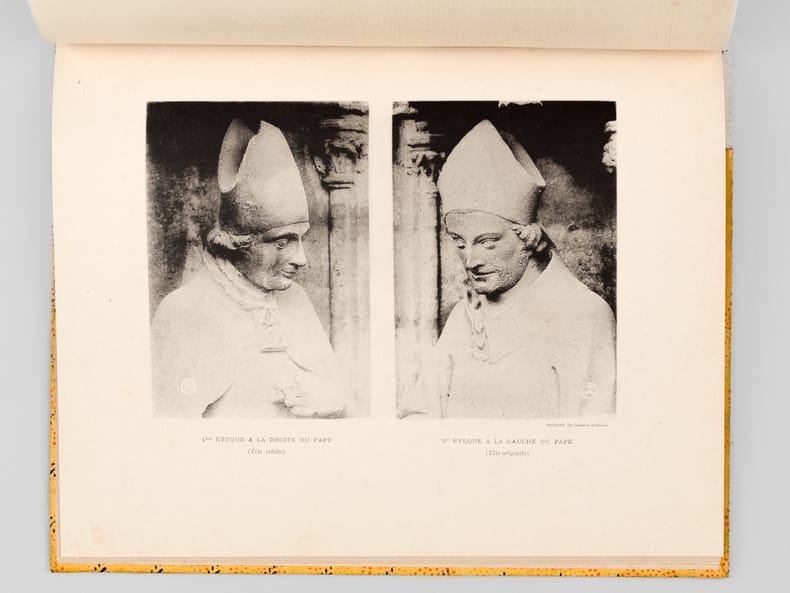
191264702Tiré à 25 exemplaires, 1 vol. in-4 reliure de l'époque bradel demi-vélin blanc, couverture conservée, De l'Imprimerie G. Gounouilhou, Paris, 1912, 7 pp. avec 3 planches hors texte, 1 L.A.S. de Camille Jullian datée de mars 1912 : "Avec mes plus amicaux remerciements pour votre travail [...] si bien observé. Je l'avais déjà lu et j'avais été très étonné d'y être cité, ayant complètement oublié cette enquête", et 1 L.A.S. d'Emile Mâle datée d'avril 1913 : "Je vous remercie de l'excellent article que vous avez eu l'obligeance de m'envoyer. Vous avez clos une interminable discussion. Grâce à vous, il est désormais établi que deux têtes ont été refaites. On ne parlera plus du portrait de Clément V. A-t-on même le droit de parler de Clément V ? Pour moi, le pape [...] au trumeau n'a jamais été Clément V. Les doutes que vous émettez à ce sujet sont tout à fait légitimes. J'avoue que l'article publié récemment par M. Leroux ne m'a pas convaincu [ ... ]"
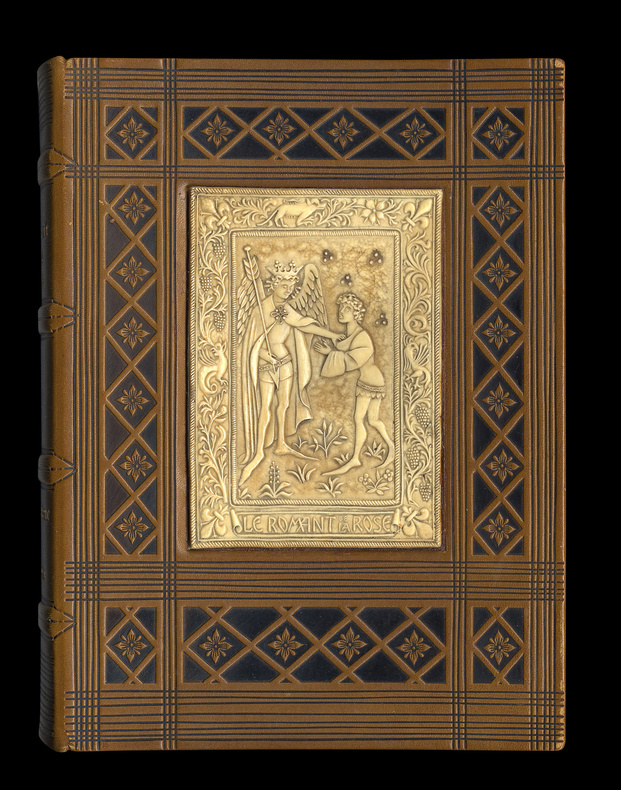
1981CCC-264mb. Les Editions de l'Ibis 1981, un des 12 exemplaires sur velin fil d arche , hommage de l'illustrateur signé par Mincet, reliure plein cuir moderne glacé havane, premier plat orné d'une magnifique miniature à la médiévale repoussée à froid décorée d'un blason encadré de personnages et d'animaux.... Edition complete en deux volumes , réalisée sur les presses de Jean Paul VIBERT à Grosrouvre. Texte encadré dans son intégralité d'une dentelle florale en couleurs et imprimé sur deux colonnes sur le second volume. Traduction du texte en français moderne datant de 1878 par Pierre MARTEAU. Ouvrages décorés de superbes miniatures en couleurs dans et hors texte dont une en double page dans le premier volume, mises en couleurs à la main dans l'atelier d'enluminure d'art au pochoir. Certificat d'authenticité des Editions de l'Ibis signé par Mincet dans le second volume. Puis dans deux emboitages il y a les suites: dans le premier: romans de la rose par Meung les originaux, suites en couleurs sur arches et suites en bistre sur arches , dans le deuxieme : romans de la rose par Lorris suites en couleurs sur arches et suites en bistre sur arches, photos possibles
1972904574BG[1972]. 2 Blätter, Blattmaß je: 31,5 x 40,5 cm (quer). [2 Warenabbildungen]
192253307Beaver Dam WI: Malleable Iron Range Co. 1922-23. Three works in one. Oblong 4to. 38; 3-24; 34 pp. 35-39A leaves 39-66 i.e. 68 pp. 1st -- Colour-illustrated title in gray black orange & light blue printed and illustrated throughout with each black & white illustration of stove w/ orange & gray border; 2nd -- numerous plates in black & white black printed borders text illustrations diagrams; 3rd -- illustrated title numerous plates 5 linen-backed colour-tinted photographs w/ linen hinges text illustrations. Tan softcovers bound w/ two brass screw-posts at upper margin w/ Monarch Malleable range instructions cooking times and thermometer instructions preserved in original printed envelope laid-in minor shelfwear very minor thumbing rubbing still VG copy w/ ownership stamp of J.ohn Y. Hicks b. 1881 Malleable Iron Range sales rep who worked as railroad messenger and then machinist and salesman following World War I. First edition thus of these nicely illustrated salesman sample catalogues of Jazz Age electric stove appliances with electric cook tops insulating blocks an electric appliance plug-in on the side as well as automatic timer and temperature controls. These beautiful stoves could be purchased with enamel finish and as one oven cabinet ranges two oven cabinet ranges one oven square ranges one oven H type cabinet range with built-in kitchen heaters and more. The nicely executed colour-tinted linen-backed photographs showing Malleable stoves provide excellent contemporary visual documentation of the actual colours of the popular stoves folloowing World War I. Malleable Iron Range Company existed from 1896-1985 and at its height after World War I employed over 1200 employees producing a variety of stove and oven appliances which were coal & wood burning electric and gas. No copies located in Worldcat. Malleable Iron Range Co., paperback
192453221New York: The Charles William Stores Inc. 1924-1925. Two vols. 4to. 548 8; 518 8 pp. With numerous colour plates colour-tinted text illustrations over 1000 black & white text illustrations diagrams. Colour-illustrated softcovers minor soiling wear slight sunning front cover of vol. 1 creasing to spine; minor creasing shelfwear vol. 2 light uniform interior toning as usual still VG- set. First edition of the complete year of Jazz Age catalogues from the Charles William Stores which offered a treasure trove of everyday fashions work clothes and household and consumer goods during the Roaring 20s offering the glamour and style of New York to the rest of the country. Their fashions were intended for the average American with emphasis on the more “endowed†woman and “stout†man during the Jazz Age emphasizing chic styles and well-woven fabrics. These catalogues detail the high grade work pants riding breeches denim jeans corduroy work pants along with triple-sewed work denim overalls and coats which could be purchased as well as those made out of Wabash Stripe Stifel denim cloth noted for its durability. No copies located in Worldcat of Spring & Summer 1925; 3 copies located of Fall & Winter 1925 Henry Ford Harvard American Textile History Museum. The Charles William Stores, Inc., paperback
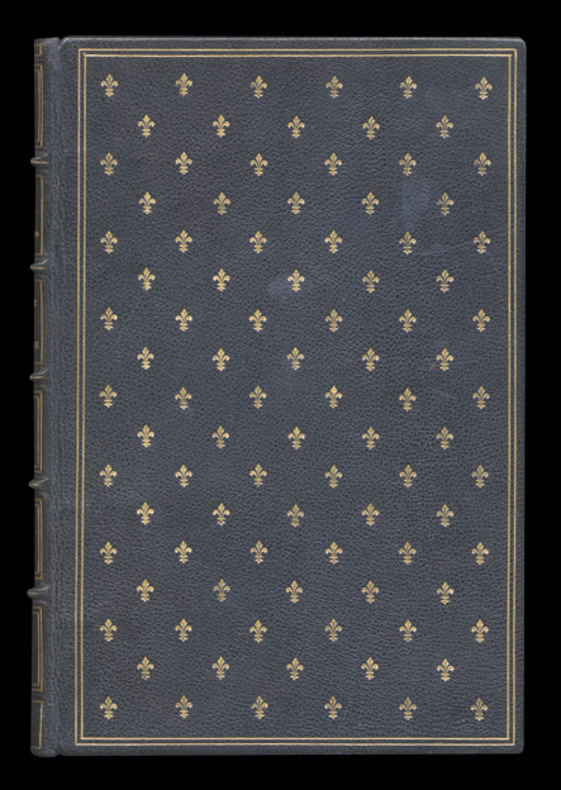
19071263Paris, Plon-Nourrit et Cie, 1907, in-8 ; plein chagrin bleu outre-mer ; dos à nerfs soulignés d'un pointillé doré, caissons ornés de fleurs de lys mosaïquées beige encadrées d'un double filet doré ; plats décorés d'un semis de fleurs de lys dans un double encadrement de filet doré ; double filet doré sur les coupes ; large dentelle dorée d'encadrement intérieur avec, au milieu et en garde, un brocard de soie moire beige et or ; toutes tranches dorées, couverture vert pâle conservée (Larthe, de Nancy) ; (4) ff., 281 pp., (1) f. et un frontispice portrait de Louise de Savoie.
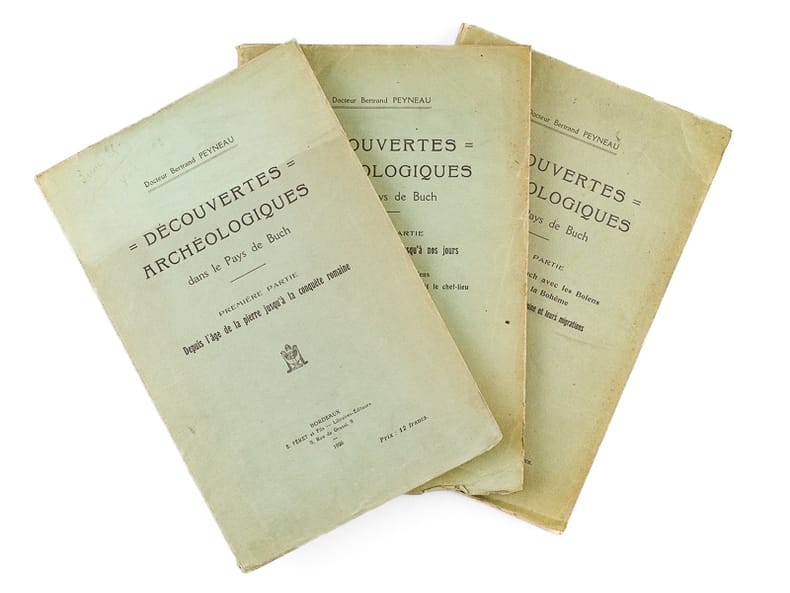
1926627683 vol. in-8 br., E. Féret et Fils, Bordeaux, 1926, 207 ; 235 ; 212 pp.
194376693Los Angeles: New Age Press 1943-47. Edited by Corinne Heline. Monthly and later quarterly. Twelvemo. 50 disparate issues with the last seven being quarterlies. A few stains and dog-ears but overall in very good condition. OCLC locates no copies.This potpourri of New Age occult and Alt-Biblical articles was the work predominantly of Corinne Dunklee Heline. Born in 1875 or 1882 she was an enthusiast of matters outre quite early and even before the first World War was communicating with “Inner Plane Immortals†with the Virgin Mary being amongst them. Sometime before 1900 Corinne moved to Southern California and became a follower of Max Heindel 1865-1919 at his Rosicrucian Fellowship in Oceanside California. She met her husband John Theodore Heline there in the 30s and they moved to New York City and together they ran the Three-Eleven Rosicrucian Fellowship on West 80th in New York City while he was editing Rays for the Rosy Cross for Heindel's widow. After they returned to Los Angeles John started the New Age Press in 1936 and published a number of pamphlets presenting an occult view of America’s role in the world. Together they ran New Age Interpreter for many decades covering the whole panoply of New Age subjects. Corinne Heline is best remembered for her “Occult Anatomy and the Bible†and much of it was excerpted in this periodical. She died in 1975. Complete list of issues available. New Age Press unknown
1918015792Grenoble Gérant M.- A. Chardon 1918 In-8 Agrafé
1966ZB3929521966-1981. Volumes 1-17 1966-1981 an uninterrupted run of complete volumes partly bound library markings textually clean & tight price is for the lot. - If you are reading this this item is actually physically in our stock and ready for shipment once ordered. We are not bookjackers. Buyer is responsible for any additional duties taxes or fees required by recipient's country. Photos available upon request. unknown
192554342Philadelphia PA: Otto F. Schumann Philadelphia Textile School ca. 1925. Small 4to. 8.25 x 9.2 in. 75 leaves unnumbered including 32 leaves with detailed colour charts on weave formations producing various kinds of cloth 3 tipped-in textile samples together w/ weaving instructions in manuscript. Original limp leather 3-ring binder gilt lettering stamped on front cover ink lettering & association of Otto F. Schumann on front cover some soiling dustsoiling edgewear still VG exemplar. This Jazz Age weaving manuscript notebook complete with weave formation design plates fabric samples and instructions offer a remarkable and invaluable artifact of how a young American textile designer and weaver received training at the famed Philadelphia Textile School now Philadelphia University during the 1920s. These course books were judged on completeness and the aspiring weaver’s skill in presenting the details about the instruction as well as their abilities in running the machinery required to produce the cloth. This manuscript notebook includes Schumann’s detailed plates and notes on producing color effect on the plain weave creating Broken Twills Crowfoot Satins Checked & Figured Broken Twills Entwining Twills Basket Weaves and Broken Satins. The extensive manuscript notes detail the loom instructions how many lines are required composition and more in producing the assorted effects. Because of the poor quality of United States textiles exhibited at the Centennial Exhibition in 1876 the Philadelphia Textile Manufacturers pushed for a formalized vocational school to train weavers designers and textile workers. In 1884 it became part of the Pennsylvania Museum and School of Industrial Art with 81 students enrolled by 1885 and by 1894 the School of Textiles added a Department of Wool Carding & Spinning and a Department of Cloth Finishing and Design. By the 1920s the Philadelphia Textile School was offering extensive three-year textile courses chemistry and dyeing courses as well as design courses in cottons woolens worsteds silks Jacquard design and more. Schumann 1906-1967 was the son of Hugo Schumann founder and owner of the Maid Hosiery Mills in Reading PA through the opening decades of the 20th century for whom he worked with until after World War II as designer and sales executive. Otto F. Schumann, Philadelphia Textile School, hardcover
198353527Union Latine d’éditions 1983 DCXXXIII / M. éditions à tirage limité à 1 000 exemplaires sur papier pur fil Dame Blanche. 8 volumes. In-8. Reliure de l’éditeur pleine basane verte sous étui bordé, dos à 4 nerfs doubles premier plat orné, au centre, d’un motif médiéval et de quatre écoinçons rouge et or tête dorée. Illustré de compositions par Michel Ciry Romans courtois et Fontanarosa Poèmes épiques. 221 - 131 - 165 - 197 - 145 - 229 - 249 - 181 pp. état impeccable.
19652226Paris, Editions de l'Ibis, 1965 ; in-4 sous emboîtage de l'éditeur crème, titre doré ; pleine-basane marron, dos à huit nerfs, filets décoratifs noirs, plaque décorative ciselée imitation ivoire sur le premier plat, plats décorés, titre doré, tête dorée ; (114) ff. + un cahier broché in-4 de 28 ff. (Le Roman de la Rose, traduction de Pierre Marteau. Orléans, 1878) ; quelques illustrations in-texte et chaque feuillet est décoré de compositions en couleurs de fleurs, de fruits et de papillons autour du texte.
1937001462Paris 1937 Un ff. in-8 plié en deux En feuilles Ed. originale
1924GIT014e5Paris Paul Geuthner 1924. In-8 broché couverture illustrée en couleurs rempliée XV 502pp. Orné de 24 photographies regroupées sur 12 planches hors texte et 11 dessins hors texte d'après des miniatures arabes dont 2 en couleurs. Envoi du traducteur sur sa carte de visite, appliquée en tête de la page de faux-titre.
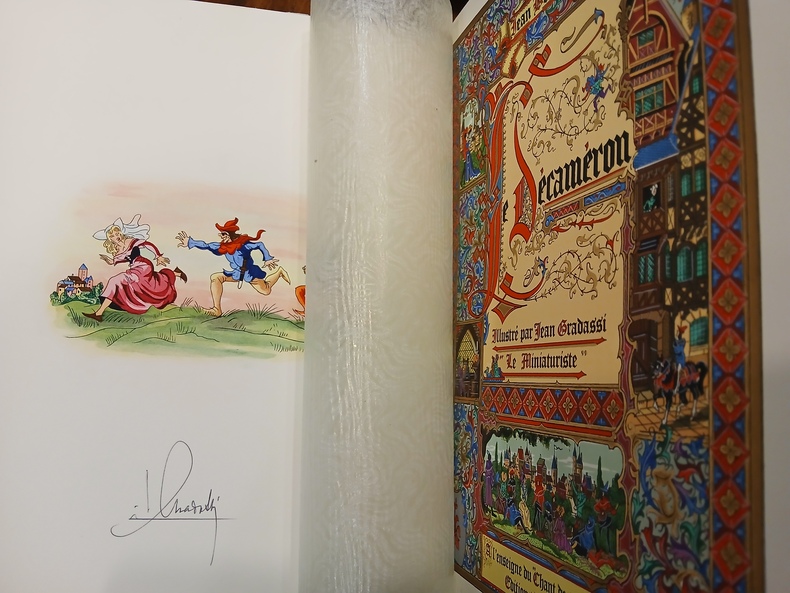
19761831A Nice, Le Chant des Sphères Éditions Sefer, 1976-1978.
190180591901 1 Ex-libris gravé de Lucien Dorbon. Envoi autographe signé "à Monsieur Durel, souvenir amical du graveur et éditeur" A. Romagnol. Paris, Romagnol, 1901, gd in-4° carré de 222 pages relié demi-maroquin rouge à coins, titre or sur dos lisse joliment orné, date or en pied, couvertures et dos conservés (reliure signée de René Kieffer).
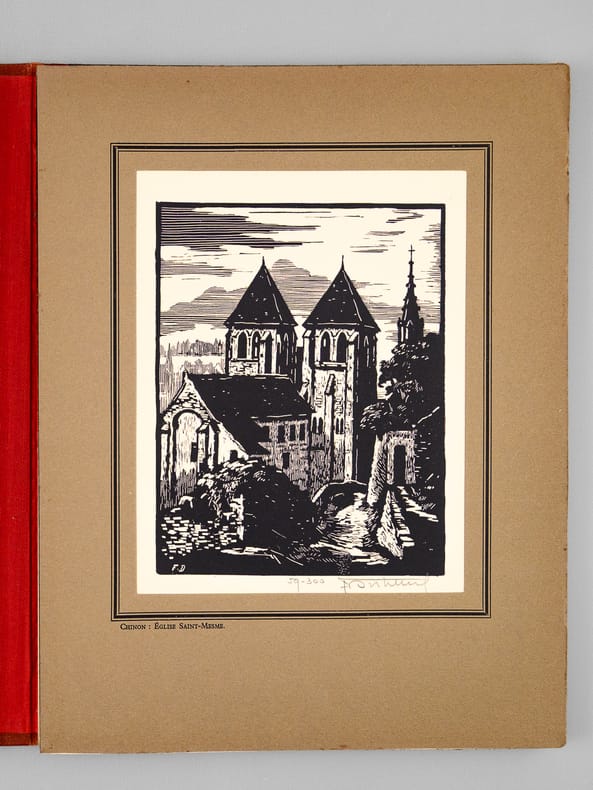
193568495Un des 260 exemplaires sur papier Chatélio crème Montgolfier frères numérotés (n° 59), Lettre-Préface de George Berr, 1 vol. in-4 en feuillets sous chemise (sans étui), Sur les Presses du Maître-Imprimeur Albert Arrault, Tours, 1935, 1 f. de titre, 1 f. double (réclame pour la souscription), 5 ff. (préface) et 25 planches numérotées et signées par l'auteur, 4 ff. dont un double (achevé d'imprimer, liste des souscripteurs, table),
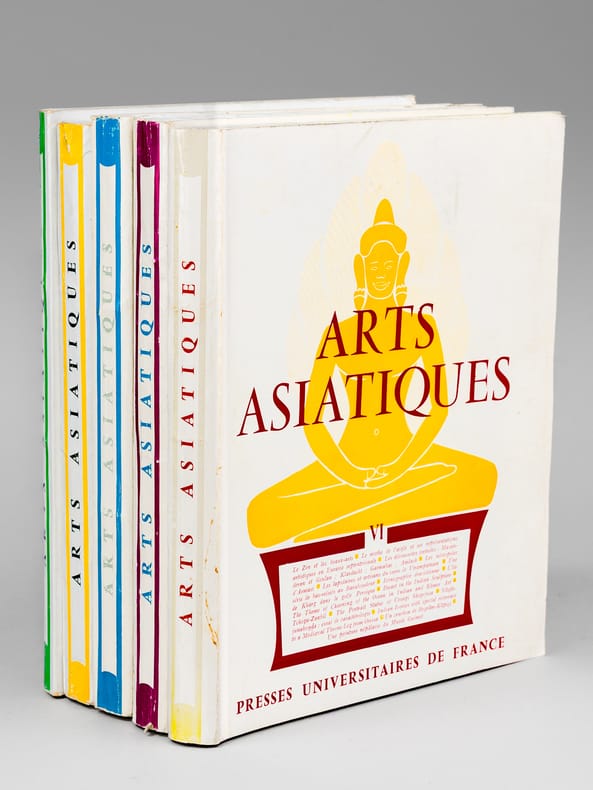
1959677736 tomes en 9 vol. in-4 br., Presses Universitaires de France, Paris, 1954, 1955, 1956, 1957, 1958, 1959
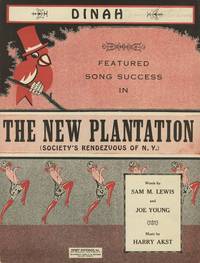
1925List3672New York City: Henry Waterson Inc 1925. Folio illustrated wraps. 5 pp. Fine condition. A striking Jazz Age sheet music issue and likely first edition for “Dinah†the widely popular song composed by Harry Akst with lyrics by Sam M. Lewis and Joe Young here promoted as a “Featured Song Success†from The New Plantation Society’s Rendezvous of N.Y. a Harlem revue-style theatrical production. The revue was advertised as an all-Black production reopening the Plantation Cabaret at 50th Street and Broadway featuring prominent performers including blues singer Ethel Waters alongside Will Vodery’s Parisian Orchestra Josephine Baker Bessie Allison Leonard Harper Jimmy Ferguson and the Plantation beauty chorus.1 “Dinah†would go on to become one of the most enduring standards of the decade. Multiple versions were published in 1925 this one in June and though we are not able to establish definitive priority we guess that this is the first edition. Very scarce with three copies found institutionally at the Francis G. Spencer collection at Baylor University BYU and the British Library reference collection. <br /> <br /> 1 “Ethel Waters Is Featured In New Plantation Revue†The New York Age June 20 1925 6. Henry Waterson, Inc unknown