53 résultats
180752195Altona J.F. Hammerich 1807. Contemp. hcalf. Gilt spine titlelabel in leather letters worn. Light wear to top of spine and corners. Spine rubbed. Some wear to edges of covers. A stamp on title-page. XVI 368; VIII 358 2 pp. A few leaves in the first quire disbound. Scattered brownspots and a few marginal underlinings on the first 20 leaves. <br/><br/><em>Rare first German edition of this political and economic classic which constitutes Malthus' first major publication and his main work because of which he is considered the father of demography and one of the main sources of inspiration for Darwin and Wallace. It is the first translation of the "Principle on Population" into any language and it influenced German politics tremendously.The first edition was printed anonymously in London in 1798 and in 1803 the second edition which also according to Malthus himself can be said to constitute a new work appeared; -the great quarto edition from 1803 is thoroughly revised and much enlarged the title has been changed and Malthus' name appears on the title-page for the first time it is on this edition that all the preceding editions are based and in consequence also the early translations. All the later editions were minor revisions of the second one. In 1806 the third edition appeared and as soon as 1807 the first German one which is translated from the revised third edition "Die gegenwärtige Uebersetzung ist nach der dritten Ausgabe Oktav London 1806. Die Quartausgabe ist minder vollständig" Vorwort p. V. New revisions of the text kept appearing till the sixth edition in 1826. The book then as now is considered highly controversial and it has influenced all demographers ever since as well as being of immense importance to the study of economic theory and genetic inheritance. "The "Essay" was highly influential in the progress of thought in the early nineteenth-century Europe. "Parson" Malthus as Cobbett dubbed him was for many a monster and his views were often grossly misinterpreted. But his influence on social policy whether for good or evil was considerable. The Malthusian theory of population came at the right time to harden the existing feeling against the Poor Laws and Malthus was a leading spirit behind the Poor Law Amendment Act of 1834." PMM 251.Thomas Robert Malthus 1766-1834 called the "enfant terrible" of the economists was an English demographer statistician and political economist who is best known for his groundbreaking views on population growth presented in his "Essays on the Principle of Population" which is based on his own prediction that population would outrun food supply causing poverty and starvation. Among other things this caused the legislation which lowered the population of the poor in England. Malthus actually turned political economic and social thought upside down with this work which has caused him to be considered one of the 100 most influential persons in history Hart The 100: A Ranking of the most Influential Persons in History 1978. Of course he was condemned by Marx and Engels and opposed by the socialists universally but the work was of immense impact on not only politics economics social sciences etc but also on natural sciences. "Later in the "Origin of Species" he Darwin wrote that the struggle for existence "is the doctrine of Malthus applied with manifold force to the whole animal and vegetable kingdoms; for in this case there can be no artificial increase of food and no prudential restraint from marriage" p. 63. Alfred Russel Wallace who arrived at a worked-out formulation of the theory of evolution at almost precisely the same time as Darwin acknowledged that "perhaps the most important book I read was Malthus's "Principles of Population" My Life p. 232. Although there were four decennial censuses before Malthus' death he did not himself analyze the data although he did influence Lambert Quetelet and Pierre Verhulst who made precise statistical studies on growth of populations in developed countries and showed how the early exponential growth changed to an S curve." DSB IX p. 69. As Malthus realized that his theories were not satisfactorily presented or sufficiently demonstrated in the first edition from 1798 he travelled for three years through Europe gleaning statistics and then published the second edition in 1803. Among other places he travelled through Northern Germany and his detailed diaries of these journeys provided him with some of the evidence necessary for the development of his theory on population growth. The observational information that he gathered on his travels in Europe were crucial to the development of his theories which also means that the work is of great interest for other European countries and not only Britain. "In 1819 the Royal Society elected Malthus to a fellowship. He was also a member of the French Institute and the Berlin Academy and a founding member of the Statistical Society 1834." DSB IX p. 67. Printing and the Mind of Man 251 first edition. </em> hardcover
180752195Altona, J.F. Hammerich, 1807. Contemp. hcalf. Gilt spine, titlelabel in leather (letters worn). Light wear to top of spine and corners. Spine rubbed. Some wear to edges of covers. A stamp on title-page. XVI, 368" VIII, 358, (2) pp. A few leaves in the first quire disbound. Scattered brownspots and a few marginal underlinings on the first 20 leaves.
1824000022Paris Demoraine et Compagnie 1824
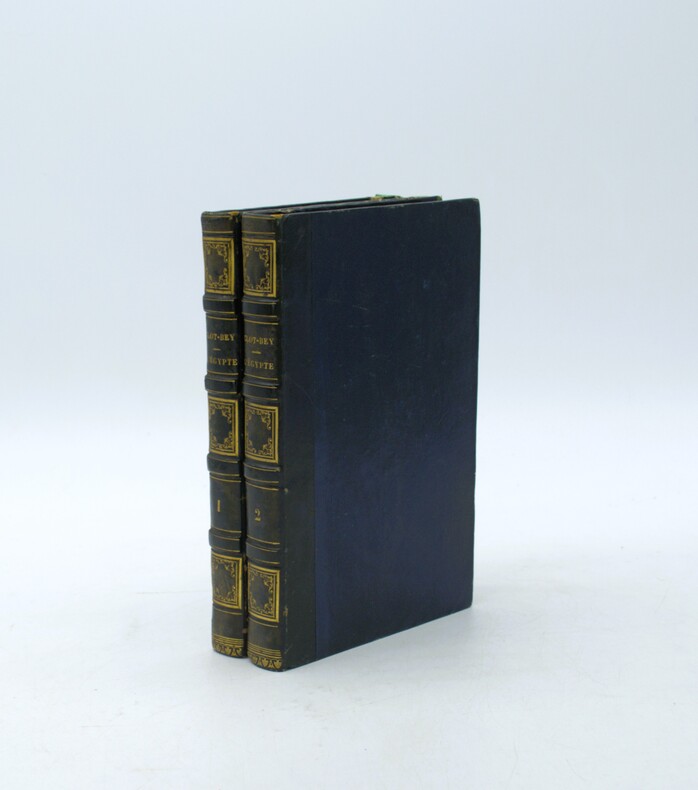
184913354Paris, Mandeville, (1849) ; 2 tomes reliés en un volume in-4 ; demi-chagrin à coins vert foncé, caissons décorés et dorés, titre doré (reliure de l'époque) ; (8), XX, 68 pp. ; (4), VI, 102 pp. et en tout 64 gravures hors-texte en taille douce sur acier.
18952310270175xbvkParis, Société d'Éditions Scientifiques, 1895(!). III, 599 pages; some - few (multiple-)folded - statistical maps, tables and graphs. - Strong half-vellum binding of the period with ochre-and-brown (and a little bit of red) marbled panels and large vellum corners, ornamental and flower-decorated titled spine mentioning the Italian bookinders name 'Roddolo'*; large-8vo.(ca. 24 x 18 x 4 cm; ca. 1,3 kg.).
189612070Paris, Librairie Hachette et Cie, 1896 ; in-4, demi-chagrin maroquiné havane à coins, dos à nerfs, titre doré (reliure de l'époque) ; (4), VIII, 350 pp., 154 illustrations dont 9 à pleine page, 2 cartes dont 1 dépliante hors-texte en couleurs.
1840PHO-2219Paris, Fortin, Masson et Cie, 1840 ; 2 volumes in-8 demi-veau, dos à nerfs avec auteur, titre et tomaison, frottements aux plats, 2 coins dénudés, quelques rousseurs.
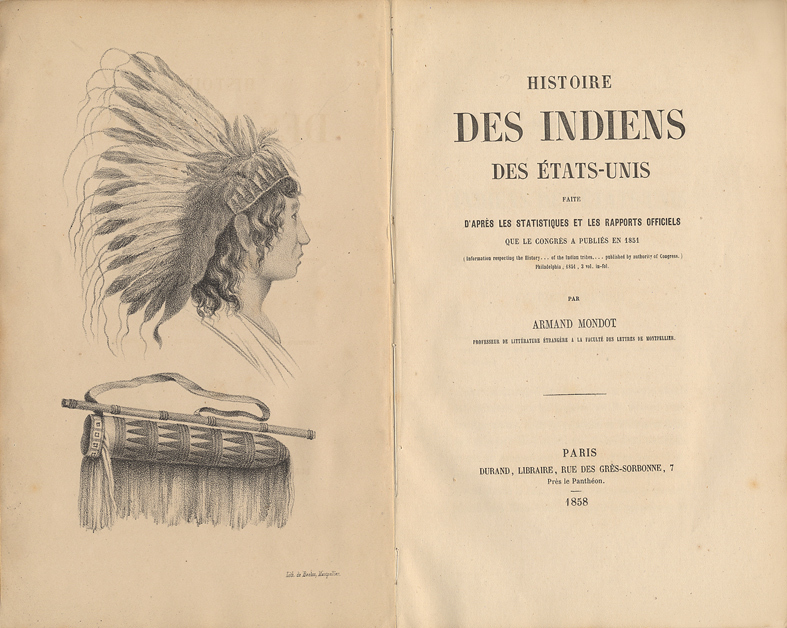
185811257Paris, Durand, 1858 ; in-8, broché ; (4), 352 pp., lithographie en frontispice, couverture imprimée.
188312345Paris, E. Plon et Cie, 1883 ; in-4, demi-chagrin maroquiné rouge cerise à coins, dos à nerfs soulignés de filets à froid et dorés, caissons richement décorés et dorés, titre doré, doubles filets dorés sur les plats, tête dorée, non rogné (reliure de l’époque) ; (6), 412 pp. ; 10 planches en héliogravure et 1 carte dépliante en couleurs hors-texte, très nombreuses illustrations in-texte, 17 à pleine page.
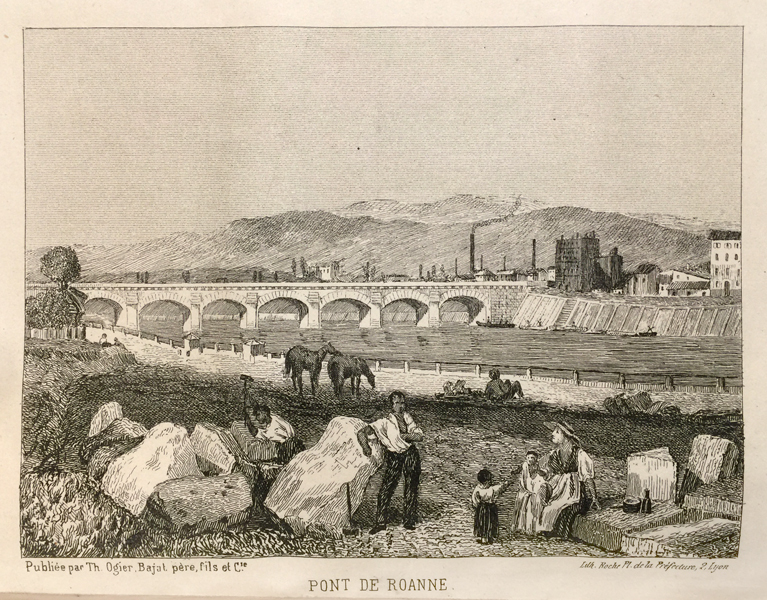
185610941Lyon, Bajat Fils, sans date (1856) ; 3 tomes in-8 ; demi-veau glacé aubergine, faux-nerfs et titres dorés (reliure de l'époque) ; (4), 528 ; (4), 516 ; (4), pp.[517]-944 pp. et en tout 6 planches hors-texte et 25 cartes dépliantes illustrées et lithographiées (imprimeries ou lithographies de Mlle Boyer ; Roche ; Pinsard à Saint-Etienne ; Ferlay à Roanne ; Vve Ayné, Honoré Brunet et Bajat à Lyon).
182126960Paris J.-P. Aillaud, Libraire 1821 2 volumes In-8 traduit de l'anglais par F-S Constancio, XIV - 416 + 473 pp, ex-Libris Henry Delpech. C'est surtout le dos du tome 1( dos détaché avec manques ) qui a souffert, l'intérieur des deux volumes et en bon état. Einaudi, 2635. première édition Française
1840PHO-2181Paris, Fortin, Masson et Cie, 1840 ; 2 volumes in-8 demi-basane de l'époque, dos lisse avec auteur, titre et tomaison, frottements aux plats, rousseurs, mouillure en marge sur une vingtaine de feuillets tome 1.
1840PHO-624Paris, Fortin, Masson et Cie, 1840 ; 2 volumes in-8 demi-basane rouge de l'époque, dos à nerfs ornés de caissons dorés, petit éclat à une coiffe, têtes dorées. Édition originale. Portrait lithographié et 3 cartes relevées de couleurs dont une à double page et une repliée. Blackmer en annonce 7.Mouillure aux marges extérieures du tome I et à la marge inférieure de quelques feuillets du tome II.
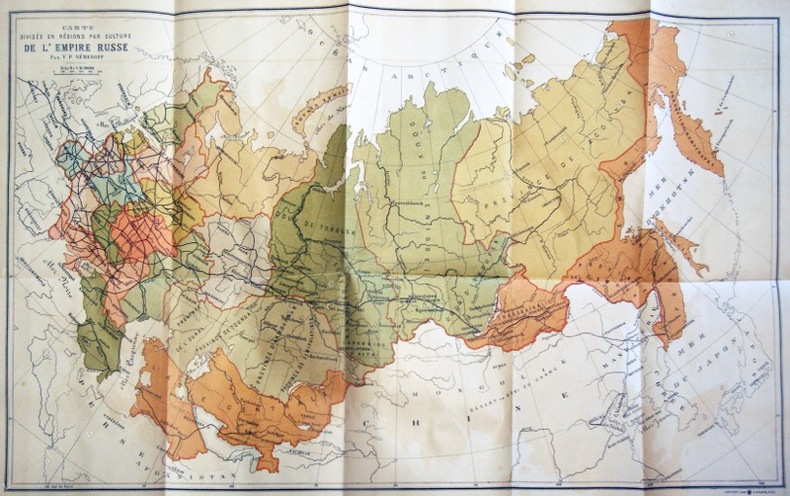
190020199Paris, Paul Dupont ; Guillaumin, 1900 ; fort in-8, broché ; 989 pp., [1]f. d'Errata, 22 planches hors-texte lithographiées en couleurs (cartes, tableau et graphiques, dont une grande carte dépliante de Russie).
185612111Paris, Michel Lévy Frères, 1856 ; in-8, demi-basane réglisse, dos lisse, faux nerfs dorés, fleurons décoratifs dorés, titre doré (reliure de l'époque) ; (4), 284, (2) pp.
184617761Paris, Guillaumin, 1846. IX, 359 pages. In-8°, toile originale avec piéce titre dorée.
1892102055Hachette Feret 1892 Paris, Librairie Hachette & Cie / Bordeaux, Librairie Feret & Fils, 1892, 4 volume dont 1 album, brochés, 576-568-574 pp + 28 planches (album complet), environ 28x24cm, couvertures en mauvais état (dont dos fendus), à relier, intérieurs bien propres.
18532104130207xbvkÀ Rouen, chez tous les Libraires, 1853. 47 untrimmed pages. - Publisher's light blue titled an ornamented paper-wrapper, bound in gilt-tiled brown halfleather-binding of later 19th century with orange-brown marbled panels, decoratively marbled stronger endpapers loose blue marker-ribbon; 8vo.(ca. 22 x 14 cm).
187012108Paris, Armand-Aubrée, sans date (circa 1870) ; in-8, demi-veau glacé havane, dos lisse, faux nerfs dorés, fleurons décoratifs, titre doré ; (2), 451, (1) pp., 1 gravure aquarellée en frontispice.
18586760Paris, Firmin-Didot, 1858 ; in-8 ; demi-chagrin vert foncé, dos à nerfs, caissons décorés et dorés, titre doré, tête dorée (reliure de l'époque) ; 82 pp.
1845359231845 Grand in-8, demi-chagrin de l'époque, dos lisse orné, lx, 684, (1) p., rousseurs, cachets, portrait frontispice. Paris, Guillaumin, 1845.
183812376Lyon, Imprimerie de Pélagaud, Lesne et Crozet, 1838 ; in-8, cartonnage rigide de papier marbré, pièce de titre bordeaux en long (reliure moderne) ; 24 pp.
183011981Bourg, Bottier ; Paris, Tourneux, 1830 ; in-8, broché ; (4), IV, 40 pp.
18975045Paris, V. Giard & E. Briere (Bibliothèque Sociologique Internationale N°VII), 1897 ; in-8, pleine reliure aubergine de l’éditeur, auteur, éditeur et titre dorés sur le premier plat et au dos ; 4 ff. , XII pp. , 364 pp.
18549596Lyon, Imprimerie F. Dumoulin, 1854 ; in-4, broché ; 70 pp., couverture rose édulcorée.