180 résultats
1830M11919Philadelphia:: L. Johnson 1830. 1830. "4th improved edition." 8vo. 385-90 381 pp. Foxed throughout not hindering legibility. Original red cloth spine paper title label; front cover detached but present ffe loose extremities worn spine chipped. Rear free endpaper early ownership signature. As is. RARE. The first volume of a pioneer American health journal published from 1829-33. It features a selection of fascinating perspectives on medicine including analyses of the effects on health of headwear wine and malt liquor consumption mealtimes and water drinking among other things as well as considerations of race and longevity quacks mothering and more. On tobacco: "'A Victim of the Weed' is desirous of knowing whether he can at once abandon his pipe and segars or must part company in a gradual manner. Our advice is to desist immediately and entirely from the use of tobacco in every form and in any quantity however small" 220. On race: "The differences in this respect are primitive in the different races; the mucous body or varnish which constitutes the layer between the true skin beneath and the outer covering or cuticle being white or nearly so in the European or Caucasian races; yellowish in the Mongul or African; and black in the African" 146. On the education of girls: "Under twelve years of age it should be an invariable rule that the hours of close application should never exceed those of amusement and exercise" 267. Contains nos. 1-24: September 9 1829 through August 25 1830. L. Johnson, 1830. hardcover books
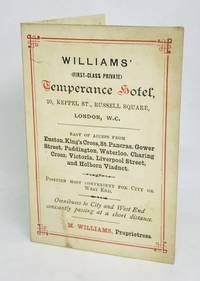
18802455London: Williams' M. Proprietress c. 1880's. Cards. Cream cards red and black ink. Good. 11.5 x 7.75 cm. Folded cream cards. Small menu featuring prices for Breakfast Dinners and Apartments. Temperance Hotels followed the spread of the temperance movement in the late 1830's - providing a place for the traveling teetotaler. Here a person could eat and drink as well as transact business read the papers and enjoy social interaction. Cards foxed. <br/><br/> Williams', M. Proprietress unknown books
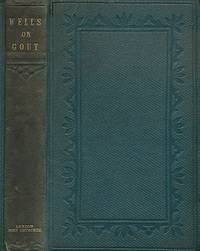
1854e2752London: John Churchill. G : in Good condition. Fep missing. Some occasional pencil underlining to text. Ex Royal College of Surgeons Ireland Library. 1854. First Edition. Green/gilt hardback cloth cover. 180mm x 110mm 7" x 4". xv 288pp. . John Churchill hardcover
1853050271Philadelphia: Edmond Barrington and Geo. D. Haswell 1853 Book. Fair. Leather. First Edition. Boards are detached but present; moderate edgewear being significant to the top of the spine; minor age-marks. Very rare copy of this mid-19th century "Obstetric Catechism Containing Two Thousand Three Hundred and Forty-Seven Questions and Answers on Obstetrics Proper". With one hundred and fifty illustrations. Edmond Barrington and Geo. D. Haswell hardcover
1869059013Berlin: Verlag Von August Hirschwald 1869 Book. Good. Hardcover. Believed First. Interior is VG; cover has significant wear along the spine strip moderate edgewear and part of the cloth on the front cover is removed. Scarce copy of this late 19th century German work on tuberculosis "nach historischen und experimentellen studien". Discusses "Geschichtliche Entwicklung der Lehre von der Tuberculose und der Lungenschwindsucht" "Die gegenwartige Grundlage der Lehre von der Tuberculose der Lungenschwindsucht und der Scrofulose" "Experimente zur Erzeugung der Tuberculose" "Allgemeine Ergebnisse der experimentellen Untersuchungen" and "Anwendung der durch die Experimente an Thieren gewonen Resultate auf die Tuberculose und die Lungenschwindsucht des Menschen". Verlag Von August Hirschwald hardcover
1893053524Philadelphia & London: The F. A. Davis Co. Publishers 1893 Book. Good. Hardcover. Believed First. Cover has light wear/marks darkened area on rear cover minor dampstain on title page. Covers the "history symptoms prevention and treatment of the disease" of cholera 107 pages. "Offered to the public with the hope that it will enable the reader to obtain a clear and comprehensive idea of a disease which. . . will appear this summer in our own country" written in 1893. The F. A. Davis Co., Publishers hardcover
1874094089NY: William Wood & Co. 1874 Ex-Library. Good. Hardcover. First American Edition. Binding is faded and has light edge wear scuff marks on endpapers where stickers have been removed. Scarce copy of this late 19th century work on the acute infectious diseases of typhoid fever relapsing fever typhus fever cholera the plague the black death yellow fever dysentery and epidemic diphtheria. 708 pages. William Wood & Co. hardcover
1875094088NY: William Wood & Co. 1875 Ex-Library. Good. Leather. First American Edition. Text is in very good condition; leather binding is quite worn; end papers have moderate foxing. Scarce copy of Volume II of this late 19th century work on the acute infectious diseases of varicella measles rubeola scarlet fever small-pox erysipelas miliary fever dengue influenza hay fever malaria and epidemic cerebro-spinal meningitis. 751 pages. William Wood & Co. hardcover
1879064878NY: William Wood & Co. 1879 Ex-Library. Very Good -. Hardcover. First Edition. Rubmarks on the spine strip; inner hinges starting to crack; scuff mark on front pastedown. SCARCE copy of this post Civil War work which focuses on Occupation: the hygiene of occupation hygiene of camps hygiene of the naval and merchant marine hygiene of coal-mines hygiene of metal-mines; and Public Health: infant mortality vital statistics adulteration of food public nuisances quarantine - seaport towns and inland small-pox and other contagious diseases the hygiene of syphilis disinfectants village sanitary associations and school hygiene. Illustrated; 657 pages. William Wood & Co. hardcover
1896023046Paris: A. Maloine 1896. 419pp 213 bw figures in text. Contemporary marbled boards with leather spine quarter leather. Some minor rubbing marginal notes in ink on several pages and further underlinign and notes in pencil. Number label on spine signature stamp on title page a little minor foxing. Late 19th century text on the eye. Text in French/en francais. First Edition. Hard Cover. Very Good. 8vo. A. Maloine Hardcover
186232097Paris, E. Dentu 1862. -Première édition. In-12 relié demi-chagrin marron, titre et fleurons dorés sur le dos, 283 pages, table des matières.- Quelques rousseurs, très bon état.- 400g.- Pierre Véron (Paris 1831-1900), fut rédacteur en chef du Charivari, du Journal amusant, chroniqueur attitré de journaux tels que L'Illustration, Le Petit Journal, Le Journal illustré, L'Avenir national, L'Opinion nationale, Le Nain jaune et La Petite Presse. Il est aussi l'auteur de très nombreuses uvres d'esprit boulevardier, recueils d'articles et récits humoristiques de murs parisiennes.-
1877800664New York: J.B. Ford & Company 1877. Best known as a leader in American homeopathy the Italian physician Tullio Suzzara Verdi writes here about female physiology health hygiene and development as a sort of guide to mothers raising their daughters. The volume reflects distinctly 19th-century attitudes about health and hygiene promoting the curative values of sea and mountain air and warning of the dangers of excessive exercise during menstruation. It is a scarce volume. This copy is in Good condition overall with some foxing and cover soil. 287 pages including index plus advertisements; approx. 5"x8". Hard Cover. Good/No Jacket. J.B. Ford & Company Hardcover
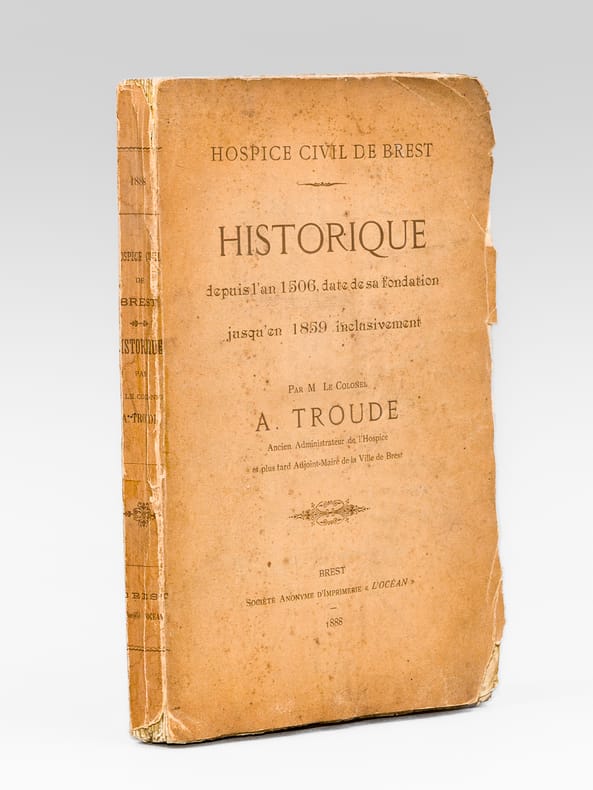
1888686301 vol. in-8 br., Société Anonyme d'Imprimerie "L'Océan", Brest, 1888, 2 ff., 213 pp. avec grand plan dépliant en couleurs
1898038291NY: D. Appleton and Co. 1898 Book. Good. Hardcover. First American Edition. Interiors are VG to VG; exteriors are VG- to good with wear to edges and few marks; light endpaper foxing. RARE First American Edition of this noted late nineteenth century Textbook of Surgery translated from the Third and Fourth German Editions by John Rogers MD and Benjamin T. Tilton MD; edited by Lewis A. Stimson MD. Volume I translated from the Third German Edition covers the principles of surgery and surgical pathology also discussing general rules governing operations and the application of dressings and has four hundred and forty-one illustrations. Volume II from the Fourth German Edition discusses Regional Surgery and has four hundred and seventeen illustrations; and Volume III from the Fourth German Edition continues the discussion of Regional Surgery and has five hundred and twenty illustrations. From Appleton's Medical Library series. D. Appleton and Co. hardcover
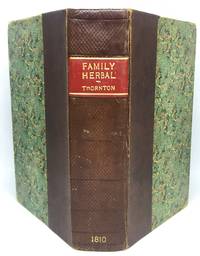
18102525London: Richard Phillips 1810. Hardcover. 19th Centruy diced leather spine over marbled boards newer label. Very good. 901 pages. 22 x 13.5 cm. 261 engravings. Although Thornton studied medicine his passion was botany. Thornton was best known for the unique collection of illustrations of the sexual system of Carolus von Linnaeus - titled the Temple of flora. Lacks 1/2 title page and portrait present in some copies. Rebound in boards and half leather. Some foxing and toning but overall clean - images are generally not foxed. <br /> Richard Phillips hardcover books
1900000208<p>19 p. Ottoman Turkish text. Official report of the hajj and health quarantine law in 1889-1900. Consists of 20 articles. The Anglo-ottoman Hajj policy conflict. Rare.</p> Osmaniye press paperback
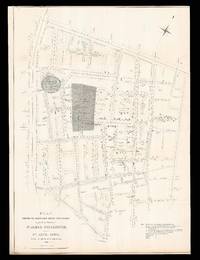
185516264London: HMSO 1855. 810 by 580mm. 32 by 22.75 inches. Folding lithograph plan. Rare epidemiological plan of Soho that accompanied the General Board of Health's exhaustive report into the 1854 Broad Street cholera outbreak. Cholera is a contagious disease caused by the bacterium vibrio cholerae. The bacteria lives in warm salty stagnant waters and is contracted when an individual ingests water or food contaminated with the bacteria. In the most severe strains the bacteria multiplies dramatically within the individual's gut causing the intestine to release increasing amounts of water leading to severe diarrhoea vomiting and rapid loss of the fluids and can if untreated lead to death within 24 hours. The majority of epidemics are caused when the faecal matter of an infected individual contaminates the water supply. It has been estimated that since the beginning of the nineteenth century cholera has been responsible for some 50 million deaths and although relatively simple rehydration treatments are now readily available according to the World Health Organisation some 120000 people a year still die from the disease. The Broad Street outbreak The London epidemic of 1853-54 was part of the larger 1846-1860 cholera pandemic - the third such pandemic to occur since 1817 - and the second time that the disease had spread to British shores. The Broad Street outbreak which was to be traced by Dr John Snow to a contaminated water pump outside number 40 Broad Street was a particularly virulent strain and would result in the deaths of 500 people over a period of just ten days; by the end of the outbreak a total of 619 people would have succumbed to cholera leading the Observer newspaper to note that "such mortality in so short a time is almost unparalleled in this country". The Broad Street outbreak led to the publication of two reports and a monograph: The General Board of Health BoH The Report on the Cholera Epidemic of 1854 1855; The Cholera Inquiry Committee 1855 set up by the Parish of St James's; and Doctor John Snow On the Mode and Communication of Cholera 2nd edition 1855. Although Snow's work is now seen as one of the foundation stones of epidemiology its argument - that cholera was a waterborne disease - was not widely held by the Victorian medical establishment with prominent people such as Edwin Chadwick head of the first General Board of Health expounding the view that cholera was an airborne disease brought about by foul odours caused by unsanitary conditions. Although Snow was to prove that the airborne hypothesis was erroneous the 'miasmatic' theory with its instance that "all smell is disease" would be the catalyst for many of the great municipal sanitary improvements - such as Bazalgette's great sewer - carried out during the Victorian era. Formation of the General Board of Health In 1848 Parliament passed the Public Health Act which instituted the Board of Health for a period of five years with powers to sanction expenditure for sanitary improvements requested by local government and in the event of an epidemic to provide guidance to the government's response. The board was headed by and was the brainchild of Edwin Chadwick whose 1842 General report on the Sanitary condition of the Labouring Population of Great Britain has been called the "fundamental document on modern public health" Rosen. "The creation of the Board of Health was a high point of the great Victorian enterprise of sanitary reform whose central idea was that environmental circumstances particularly pollution of the air and water defective sanitation dampness filth and overcrowding were causes of disease particularly epidemic disease and these diseases often killed the wage earners left poor working families impoverished pushed widows and orphans into workhouses and undermined the moral fibre of the working classes" Paneth. Although the Board was successful in enacting a great many sanitary improvements over the next five years Chadwick's brusque and arrogant manner led to the board's charter not being renewed by Parliament and on 31st July 1854 the members of the board were dismissed. Unfortunately for the government the disbanding of the board coincided with a sharp increase in the number of cholera cases in London from 1 a week to 133 a week during the month of July. On Augsut 1st Parliament instituted another but much weaker Board of Health: its charter had to be renewed annually and consisted of only one board member which had to be filled by a sitting Member of Parliament. The MP chosen was Sir Benjamin Hall who by dint of not being Chadwick was deemed eminently qualified for the job; by the time he assumed his role on the 12th August cases of cholera in London had increased to 644 a week. The Board of Health's Cholera Investigation On the 13th August Hall met with his advisory council which he had rapidly put together the council consisted of some of the most eminent medical practitioners of the day including: John Ayrton Paris and James Alderson president and treasurer respectively of the Royal College of Physicians; William Lawrence vice-president of the Royal College of Surgeons; James Clark physician ordinary to the Queen; Benjamin Babington founder and president of the London Epidemiological Society; and William Farr compiler of the Weekly Returns which included among other statistics deaths and cause of death - a resource that greatly aided Snow in his research. The council divided itself into three sub committees: Committee for Scientific Inquiries CSI which would be responsible for the majority of the cholera report; the Committee for Treatments; and the Committee for Foreign Correspondence. The work of the CSI started on the 5th September 1854 when Drs Fraser Hughes and Ludlow began house to house investigations of the Golden Square area around the same time that Snow was also commencing his investigations; and three days before St James's parish would remove the handle from the water pump on Broad Street on the advice of Snow. The report details some 800 houses listing their inhabitants any deaths from cholera and the sanitary state of the premises which was often terrible and included the condition of any cesspools "bad-smells from water-closets" and untrapped drains. The house to house investigations were supplemented by the scientific report. Hall employed three men to carry out investigations for the committee: James Glaisher superintendent of the magnetic and meteorological department at Greenwich and a founder of the British Meteorological Society; Richard Dundas Thomson professor of chemistry at St. Thomas Hospital; and Arthur Hill Hassall author of the first textbook of microscopic anatomy in English 1846 and famed for his revelations through microscopy of the extraordinarily frequent contamination of food and water in London by adulterants and animalcules Paneth. Although Chadwick was no longer in charge a brief look at the committee's make up clearly shows that the sanitarians still dominated. Their belief that the atmosphere was critical in the spread of disease is demonstrated by the fact that almost a third of the scientific report contains the investigations of meteorologist James Glashier. The Map The map that accompanies the report is a great deal larger and includes much more information than the map that Snow produced for his monograph. Based on the map produced by the Metropolitan Commission of Sewers which was also published in the report carried out by the St James's Parish it covers a much greater area and marks not only cholera deaths and pump locations but also: house numbers new and old sewers sewer grates trapped and untrapped side entrances and ventilators. The map has been updated with the number of cholera deaths in the area tracing people who were hospitalised and those that worked or visited the area. To the upper left are two shaded areas. The first a circle which bisects Little Marlborough Street titled: The erroneously supposed position of the ancient plague pit shewn in the map of the Commissioners of Sewers and the second a rectangle titled: Extent of Craven Estate corresponding with site of pest-field three acres two chains which covers much of Marshall Street and houses either side and ends just west of the water pump on Broad Street - the epicentre of the outbreak. Both sites mark supposed burial pits dug during the Great Plague of 1665. Many had argued that the disturbance of the pits when new sewers where dug in the 1840s and 1850s was responsible for the severity of the Golden Square outbreak. However this theory is conclusively dismissed in the report stating that no burial remains were encountered when the sewers were dug. A comparison of the maps that accompany Snow's monogram and the BoH's report clearly illustrates the authors' varying approach to the epidemic. Snow's map is narrowly focused on the centre of the outbreak and marks only the individual deaths marked by black coffin like lines to each house together with the position of the water pumps; Snow clearly wanting the viewer to draw the causal link between the Broad Street pump and its proximity to a large number of cholera deaths. The BoH's map on the other hand shows a much great area and contains much more information sewers drains plague pits etc. Snow's correlation just like the report that this map accompanied is lost under a mass of miasmic information. In hindsight the report just like the present map can be seen as too large and unwieldy the miasma theory at its heart "predicted to much and therefor was difficult to contradict or falsify"Paneth. In contrast Snow's economy of purpose his monograph at just 162 pages is almost a third the length of the BoH report shines through. "The strength of Snow's hypothesis lies in its exclusion of other alternatives; by insisting on the singular mode of transmission i.e. water Snow was able to imagine circumstances that would invalidate his hypothesis" Paneth. For example the exclusion of both the Broad Street Brewery works and the local Poor House from the cholera epidemic led Snow to investigate their water supply both drew them from independent sources; as did the death of a widow from cholera in faraway Hampstead who was so fond of the Broad Street water that she had her nephews send her bottles of it. Snow is keen to challenge his hypothesis where ever possible alas the BoH report contains no such challenges with the authors suffering from a large degree of confirmation bias. Although the BoH report is now largely forgotten and its hypothesis discredited it was favourably received at the time and would be the catalyst for the creation of The Metropolitan Board of Works arguably the body whose policies would make the greatest impact on the health and wellbeing of Londoners in the nineteenth century. Setup by the head of the BoH Joseph Hall in 1855 it would be responsible for among other things the clearing of slums the creation of London's numerous parks and Bazalgette's great sewerage works. Rarity We are unaware of individual examples of the plan appearing on the market in the last fifty years. HMSO, unknown
187297828452233441872, J.-B. Baillière et fils, in-8 demi-cuir marron, plats marbrés, couverture conservée (en fin d'ouvrage), 15 fac-similé d'écritures d'aliénés | Etat : bon état (Ref.: ref96105)
1871BN030572Boston: Wright & Potter State Printers 1871. First Edition. Paperback. Very Good. Octavo. 8vo size original printed stiff blue wrappers xii preliminary pages and 433 pages of text followed by 2 blank leaves. Errata at end of the alphabetical index Sections include The Causes of Typhoid Fever Health of Towns Homes for the Poor The sewage Question and Analyisis of the Mortality of the City of Boston. Illustrated including a large foldout plan Imroved Homes for the People. Laid in is a large folded detailed map "Health Disctricts of the City of Boston" the map being once tipped in at page 368. Also illustrated with 6 full-pag plans/printed drawings showing among other things the plan of a small country school-house for fifty-six scholars. There is also a foldout map showing the regions drained by Mystic Pond. Text is complete some pages at the front loose but present. Some edge chipping to wrappers. The text is clean and not brittle. There is varied material on typhoid. A rare book on American medical history. Wright & Potter, State Printers paperback
18922963State Board of Health; New Hampshire; circa 1892. 1892 Stapled wraps printed front cover 8 7/8 x 5 13/16 inches 23 pp. Fair front cover nearly detached; some chipping corners and edges with no loss of text; modest uniform browning of paper; minor creasing. Rare no OCLC library holdings. Contents: Precautionary Measures; Practical Suggestions Relative to Cholera; The German Government Suggestions Relative to Cholera "The following excellent circular embodies the most recent suggestions of the health authorities of the German government relative to Cholera. The State Board of Health of New Hampshire has deemed it of sufficient importance to publish the following translation in connection with their own circular upon the subject: Berlin July 28 1892. 3214018. 1st Edition. Soft cover. Fair. State Board of Health; New Hampshire; (circa 1892). paperback
1892011864Bristol: John Wright & Co. 1892. xi 143pp appendix bw ills. Or blue cloth with title in gold to front and spine. Bears stamps of San Diego Society of Natural History and O'Rourke Zoological Institute as well as previous owners label on front pastedown several news clippings laid on to endpapers slight rubbing at head and foot of spine some light toning to pages edges. Investigation of the occurence of nystagmus in coal miners under varying forms of illumination and working positions. Includes a section specifically of the Cornish mines. Nystagmus in a few other occupations is very briefly discussed. Quite a bit of information on various mining lamps pit mining seam mining etc. Quite early consideration of ergonomics. First Edition. Hard Cover. Very Good. 8vo. John Wright & Co. Hardcover
1895040244London: Charles Griffin and Co Ltd. 1895. xvi 333pp 32pp publishers catalogue at rear cold fronts bw ills index appendix. Or maroon cloth. Light rubbing to cloth small bookseller label on front pastedown prev owner bookplate and nameon title page underlining/margin marks on 3 papges some toning to page edges. First Edition. Hard Cover. Very Good. 8vo. Charles Griffin and Co Ltd. Hardcover
1855073909Philadelphia: Lippincott Grambo & Co. 1855 Book. Very Good -. Hardcover. Second Edition. Nicely rebound with gilt-embossed black pebble cloth; new endpapers. Some light foxing within the text and on the plates. Very RARE copy of this mid-19th century text on operative surgery this being Volume II of the two-volume work. "With a bibliographical index and historical record of many of their operations during a period of two hundred and thirty-four years" - an important work in the history of American surgery and medicine. This 2nd edition is "with numerous additions in both the text and illustrations". Illustrated with 43 plates each containing 4 to 12 figures of "engravings on steel". 488 pages. Lippincott, Grambo & Co. hardcover
1843B99061Louvain, chez Dusart et Vandenbroeck 1843-1844 311pp., édition originale de 1843), reliure moderne cart. avec titre doré au dos, brochure originale conservée et reliée, très bon état, rare, B99061
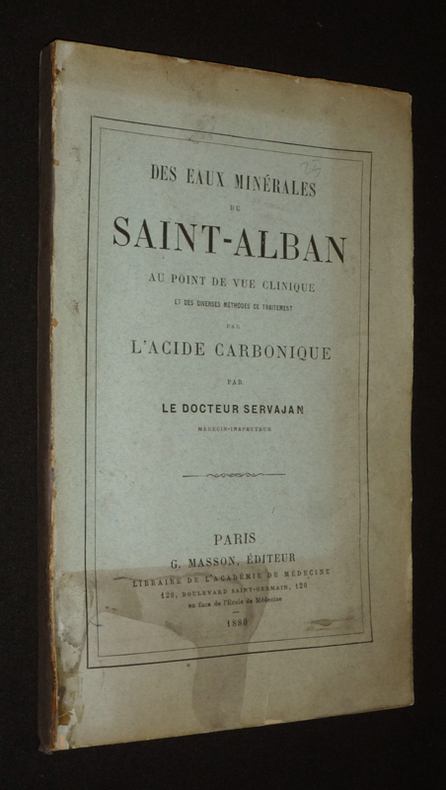
1880qa1427Paris, G. Masson, éditeur Broché 1880 In-8 (13,8 x 22,2 cm), broché, 114 pages, non coupé ; dos et quatrième plat manquants remplacés par une feuille cartonnée, traces au premier plat, en l'état. Livraison a domicile (La Poste) ou en Mondial Relay sur simple demande.