907 résultats
Vittorino Andreoli, Filippo Maffei, Giovanni Tamburino Morfina, eroina, methadoneI. l ciclo della droga. Aspetti medici e giuridici. , Mondatori 1978, Condizioni discrete: copertina sporca, dorso con segni di usura, tagli con macchie, pagine ingiallite dal tempo ma di buona fruibilità, frontespizio con scritta a penna Buono (Good) . <br> <br> <br> 271<br>
Black octavo in blue DJ, 291 pages ; 22 cm. Liquors, Distillation. || Incribed and signed by author. || In By the Smoke & the Smell, spirits expert Thad Vogler takes readers around the world, celebrating the vivid characters who produce hand-made spirits like rum, scotch, cognac, and mezcal. From the mountains of Mexico and the forbidden distilleries of Havana, to the wilds of Scotland and the pastoral corners of France and beyond, this adventure will change how you think about your drink. Thad Vogler, owner of San Francisco's acclaimed Bar Agricole and Trou Normand, is one of the most important people in the beverage industry today. He's a man on a mission to bring "grower spirits"--Spirits with provenance, made in the traditional way by individuals rather than by mass conglomerates-to the public eye, before they disappear completely. We care so much about the food we eat: how it is made, by whom, and where. Yet we are far less careful about the spirits we drink, often allowing the biggest brands with the most marketing dollars to control the narrative. In By the Smoke and the Smell, Vogler is here to set the record straight. This remarkable memoir is the first book to ask the tough questions about the booze industry: where our spirits come from, who makes them, and at what cost. By the Smoke and the Smell is also a celebration of the people and places behind the most singular, life-changing spirits on earth. Vogler takes us to Normandy, where we drink calvados with lovable Vikings; to Cuba, a country where Vogler lived for a time, and that has so much more to offer than cigars, classic cars, and mojitos; to the jagged cliffs and crystal-clear lochs of Scotland; to Northern Ireland, Oaxaca, Armagnac, Cognac, Kentucky, and California. Alternately hilarious and heartfelt, Vogler's memoir will open your eyes to the rich world of traditional, small-scale distilling-and in the process, it will completely change the way you think about and buy spirits. || Contents: pt. 1. A category of human experience is becoming extinct and it is cause for tears. Calvados : the right way to be French ; Cognac : they'll hire the guy who fucked your wife ; Armagnac : all thosde moments are lost in time, like tears in rain -- pt. 2. Ammunition?! this is no time for ammunition! Cuba, part I : the reality of cultural capital ; Cuba, part II : unbutton your trousers ... this is how we do it, man -- pt. 3. Gin a body meet a body / comin thro' the grain. Scotland, part I : haloo, Grigalach! ; Northern Ireland : but I was young and foolish ; Scotland, part II : gin a body kiss a body / need a body cry? -- pt. 4. A category of human experience is becoming extinct and it is cause for celebration. Oaxaca, part I : a stop on the Hippie Highway ; Oaxaca, part II : Pinche teachers ; Kentucky : the rare old mountain dew.
530158me année - n° 379 - 24 juin 1938 - in-4 broché - revue illustrée
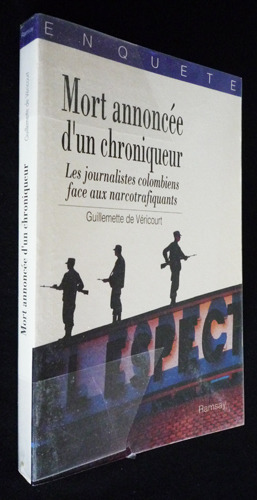
1992da1201Editions Ramsay Documents et essais Dos carré collé 1992 In-8 (15 x 24 cm), dos carré collé, 223 pages ; très bon état. Livraison a domicile (La Poste) ou en Mondial Relay sur simple demande.
1970231661970. Narcotics raids arrests rehabilitation scenes and evidence displays across Florida in press photographs and magazine pages. Photograph archive spanning Miami Fort Lauderdale Pasco County and related Florida sites from 1970 to the early 1990s establishing how drug control operated through police action newspaper circulation and treatment institutions during the War on Drugs. Produced for press use by newspaper staff photographers wire services and law enforcement publicity channels the group shows the public face of narcotics enforcement at the point when South Florida had become a major corridor in the national drug economy and anti drug policy was being made newly visible through staged photographs official briefings and widely circulated arrest imagery. Named figures included such as Bob Gladden Larry Csonka Jim Kiick Admiral Rickover Carl Mingo and several rehab subjects identified by hand on the versos. The photographs depict suspects detained searched paraded identified displayed beside seized contraband and in other cases shown within rehabilitation settings revealing how law enforcement courts newsrooms and treatment programs handled the same crisis through different institutional forms.<br /> <br /> Photo archive of 18 press photographs including 16 silver gelatin press photographs and 2 wire photos approximately 8 x 10 inches Florida 1970 to early 1990s. The core images show narcotics policing in action: a helmeted officer beside a paddy wagon crowded with detainees; a bench filled with young men under detention in an interior holding space; two handcuffed men led from a courthouse or station entrance; a police-released mugshot with typed caption identifying former New England Patriots running back Bob Gladden after arrest in Fort Lauderdale on a marijuana charge; and a street arrest with an armed officer escorting a suspect between parked cars. Several photographs center on the staged display of evidence including tables covered with packets of drugs stacked currency pistols taped "cookie sheets" and open suitcases packed with bricks or cutting materials. One image shows a narcotics dog inspecting rows of luggage; another shows officials at microphones before a sign for the Vice President's National Narcotics Border Interdiction System; another records cocaine seized from a concealed boat compartment. The group also includes rehabilitation scenes with young adults identified en verso in cursive extending the archive beyond arrest photography into treatment culture. Versos carry a dense record of press handling and editorial use including Miami Herald staff photo stamps dated Dec. 15 1970 and Jan. 5 1971 a St. Petersburg Times credit and clipping backing for a Pasco County drug ring case dated May 29 1974 typed bureau captions circled editorial notations such as "cocaine" "marijuana" "drug raid" and "Operation Crackdown" plus handwritten shot descriptions and date-used stamps.<br /> <br /> The earliest prints fall at the threshold of the modern War on Drugs while later additions carry the record forward into the crack era and the more theatrical seizure photography of the 1980s and early 1990s. Florida is central to that story not only as a site of smuggling and interdiction but as a place where narcotics enforcement became highly visual with press conferences celebrity linked arrests tactical raids canine inspections and rehabilitation coverage all translated into newspaper images for public consumption. The present grouping combines an earlier core of related press photographs with later additions and it preserves a strong visual record of how narcotics control was communicated to the public through local papers wire distribution and agency captioning. Light surface wear minor edge and corner handling editorial markings and stamps to versos scattered adhesive residue and toning; overall very good condition. A concentrated Florida press record of the machinery publicity and human management of drug enforcement across two decades. unknown
In-8, brossura, pp. 233-(7). Volume della collana: I Nuovi Testi n. 132. In buono stato (good copy).
Parma, Guanda, 1997, 8vo brossura con copertina illustrata a colori, pp. 295.
in-8, 361 pp., broche, couverture illustree. Plastification de la couverture usagee sinon bon etat. [AZ-13]
A clean, unmarked copy with a tight binding. 466 pages. Small liquid stain to side page ends.
405507249579unknown
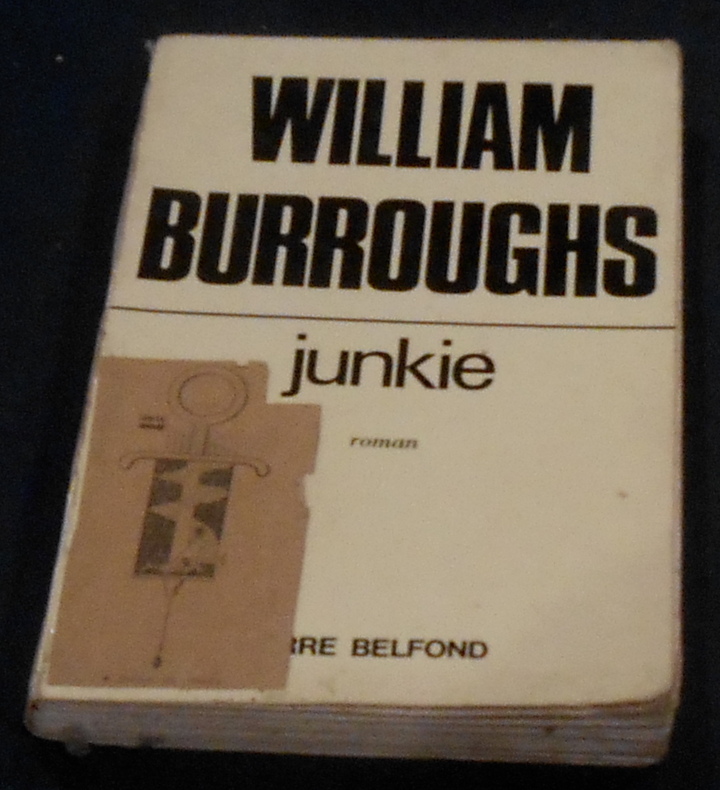
197222723Paris, Éditions Pierre Belfond, 1972, édition originale française Broché, 13,5 cm x 21 cm, 187 pages. Texte de William Burroughs, traduction de Catherine Cullaz et Jean-René Major. Vignette de Plantu collée sur la couverture représentant un homme, à genoux, s ‘apprêtant à gravir un escalier situé dans une seringue ; en haut de l’escalier et de la seringue, un panneau, avec une flêche »sortie ». Etat d’usage
196721925Paris, Éditions L’Herne, collection "Les Livres Noirs", 1967, édition originale française. Broché, couverture à rabat, 14 cm x 21 cm, 77 pages. Lettres de William Burroughs et Allen Ginsberg, traduction de Mary Beach, adaptation de Claude Pélieu. Bon état
191122113Paris, Éditions Albin Michel, sans date (1911), édition originale sur papier d’édition. Broché, 12 cm x 19 cm, 316 pages. Texte de Willy, couverture illustrée de Raphaël Kirchner. Bon état
br. Un libro più che mai attuale, in grado di fornire una panoramica ampia e dettagliata sulle interconnessioni - positive e negative - tra sesso, droghe e pratiche esoteriche, sugli usi (e abusi) tradizionali e moderni di questa triade e sulle reazioni evergreen delle istituzioni governative di fronte al desiderio umano di scoprire ciò che è oltre la realtà ordinaria. Una trattazione senz'altro "dotta", stando alla puntualità e precisione dei contenuti e delle informazioni, ma che si rivela pirotecnica e avvolgente grazie allo stile di Wilson, ricco di humor, cinismo, stupore e sagacia. Un libro divertente e arricchente per chiunque voglia conoscere i sentieri proibiti - gratificanti ma non scevri da pericoli - che conducono alla trascendenza. Lasciarsi avvolgere e - perché no? - sconvolgere da queste pagine, che "vanno giù" come nettare degli Dèi dissetando il nostro bisogno di sapere, significa intraprendere un viaggio alla scoperta di luci e ombre del connubio esistente tra sesso, droghe e magia. Prefazione di Stefano Bollani.
1527893634New. Brand new and still unused unknown
024389936X.Gpaperback. Good. Access codes and supplements are not guaranteed with used items. May be an ex-library book. paperback
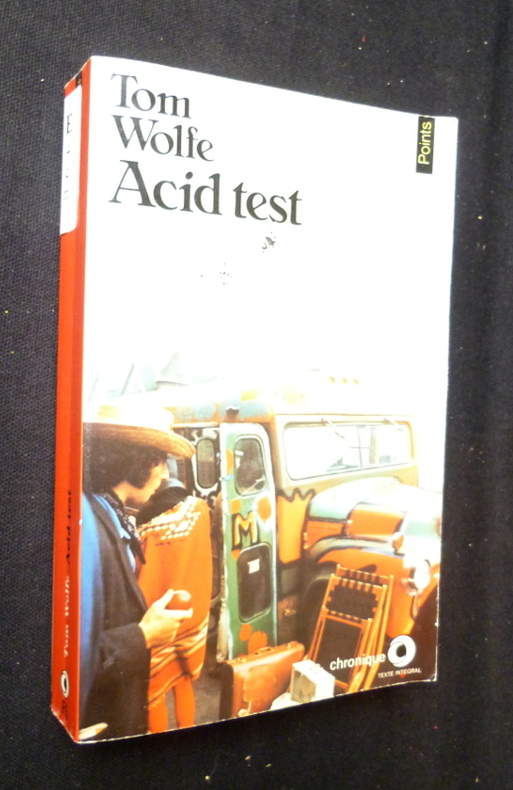
1980cv2486Editions du Seuil Points Dos carré collé 1980 In-12 (11,5 x 18 cm.), dos carré collé, couverture illustrée, 408 pages ; une étiquette courant sur le haut du 4e plat et du dos, dos légèrement plissé et incurvé, menus incidents aux plats, assez bon état. Livraison a domicile (La Poste) ou en Mondial Relay sur simple demande.
74Edition américaine, BANTAM BOOKS (1972), format poche, 372 pages, bon état
Perugia, Savelli, 1980. In 16°, PP 143n. Brossura originale. Introduzione di Marco Lombardo-Radice. Illustrazioni in nero nel testo.
(Collection de Medecine Legale et de Toxicologie Medicale).<BR>8°, pp. 159 (1). Br. edit.
Broché. 220 pages.
La stima dei profitti derivanti dalla vendita della droga è di circa trecento miliardi di dollari l'anno. Questa somma strabiliante spiega la grande potenza di cui possono disporre i "signori della droga", i quali non sono sempre quelli che la stampa mondiale ci propina in continuazione. Il potere della droga è in alcuni casi diventato un vero e proprio Stato nello Stato. Anche i partiti politici, consciamente o no, hanno in passato approfittato e forse ancora oggi approfittano di questa manna caduta dal cielo. Naturalmente non senza una contropartita politica... Il denaro sporco prodotto dalla droga non trasuda più attraverso gli interstizi del sistema, ora lo inonda letteralmente. Come ben scriveva Jean-Michel Helvig su "Liberation" del 28 agosto 1989: "Come avviene per i petrodollari, anche i narcodollari hanno un peso rilevante sui mercati finanziari mondiali e nessuna frontiera può loro sbarrare la strada. E nessuna banca, anche se nazionalizzata, può essere sicura in modo assoluto di non detenere denaro sporco." Autori: Yann Moncomble. Traduttori: L. Garofoli.
br. L'erba buona? Non muore mai, ma non solo: è destinata ad avere lunga vita. Parola di Stefano Zanchetta, coltivatore in grande stile di marijuana sulle pendici del monte Grappa nonché singolare protagonista-narratore di questo libro. Quando lo incontra per la prima volta, Alessandro Zaltron capisce subito di aver scoperto un personaggio, uno di quegli avventurieri che sembrano usciti dalla penna di un Wilbur Smith o forse di un Daniel Defoe, rotti a qualunque esperienza purché estrema e capaci di raccontarla con un'impudenza e una vivacità di linguaggio istintive. Orchestrando con sagacia l'affabulazione di Zanchetta, Zaltron ce ne presenta le molteplici e contrastanti identità: ex chierichetto, para della Folgore, guardiano di una miniera di rubini in Tanzania, turista non per caso in Centroamerica, testimone di alcun grandi segreti di Stato. E inoltre: mistico a Pantelleria, filosofo naturale, raffinato sommelier, ristoratore e, al momento, tenutario di una fattoria modello, ovviamente ecologica. Una vita spericolata, quella di Zanchetta, costantemente appesa a un filo - meglio se di canapa. Perché "Viva maria!" è soprattutto la storia di un'ossessione quasi amorosa per la pianta di canapa e i suoi utilizzi leciti e illeciti, e insieme un tentativo di padroneggiare quest'ossessione, di considerarla da un punto di vista narrativo. Ne è venuto fuori un libro di avventura e di riflessione dominato dalla figura sconcertante di un bucaniere della profonda provincia veneta.
195070493Stuttgart. Kosmos Gesellschaft der Naturfreunde. Franckh'sche Verlagshandlung. 1950. 304, (4) Seiten. Mit 16 Kunstdrucktafeln u. einigen Abbildungen im Text. Illustrierter Original-Halbleinwand-Einband und farbig illustrierter Original-Schutzumschlag. (Schutzumschlag teils mit Gebrauchsspuren an den Rändern. Ansonsten gutes Exemplar). 20x14 cm