5 352 résultats
2012002577Common Press 2012 Title: The Philadelphia Negro Reconsidered: Suite of 18 Silkcreen Prints. Artist: Terry Adkins after W.E.B. Du Bois. Publisher: Common Press University of Pennsylvania School of Design Department of Fine Arts. Place: Philadelphia Pennsylvania. Date: 2012. Special characteristics: Original copy of a ltd. ed. 1/18 one of only two copies signed by the artist. Description: 2012. Fo. 18 unpaginated plates a series of multilayer silkscreens from Du Bois hand-drawn maps and color-coded tabs each separated by wax paper in a black hardcover slipcase with color title and illustration stamped/embossed on the front cover. Measures: 16 W x 25 L x 2 H inches. About the artist: Terry Adkins 1953 2014 created the portfolio The Philadelphia Negro Reconsidered in collaboration with The Common Press at the University of Pennsylvania which is directed by Matt Neff. The portfolio was inspired by The Philadelphia Negro - W.E.B. Du Bois pioneering demographic study of Philadelphia s original 7th Ward. Terry Adkins s art is in the collections of the Hirshhorn Museum and Sculpture Garden the Metropolitan Museum of Art the Museum of Modern Art Pérez Art Museum Miami and Tate Modern among others and has been exhibited around the world. About the publisher: The Common Press is the letterpress printing studio at the University of Pennsylvania. The press is a collaboration of interests at Penn including writing Kelly Writers House print culture the Rare Book & Manuscript Library and visual arts and design the School of Design. The facility provides a mixed media environment where students can move between digital and manual image making collaborating with writers printmakers and others in the book arts. The Common Press exists to assist in teaching design and to facilitate collaborative projects across the university. It was founded on January 17 2006 the 300th anniversary of Benjamin Franklin s birth. Provenance: Arthur E. McFarlane II W.E.B. Du Bois great grandson. On Friday February 12 2012 the whole portfolio was presented to Arthur by Terry Adkins personally when the UPenn Board of Trustees gave his Grandpa an honorary doctorate of which he received the original along with a proclamation by the Philadelphia City Council and Mayor Nutter. About the work: Neff the manager of Penn s Common Press and Print Shop along with PennDesign s Marc Blumthal and Ivanco Talevski worked closely with Adkins on the portfolio which was inspired by W.E.B. Du Bois The Philadelphia Negro the 1899 demographic study of black people living in Philadelphia s original Seventh Ward. The area covered Spruce to South streets and Seventh Street to the Schuylkill River. Terry is not just rethinking Du Bois as an artist and a practitioner he s reconsidering the visual work says Neff. He wanted to recast Du Bois as one of the first modernist painters predating Piet Mondrian paintings of urban landscapes. In the original research conducted for Penn in 1896 and 1897 Du Bois went from house to house interviewing heads of households to gather information such as profession and socio-economic status as well as whether they were affected by social problems such as poverty and crime. To create the screen prints Adkins who joined the Penn faculty in 2000 used Du Bois hand-drawn maps of the neighborhood with its color-coded bar graphs of Du Bois findings and Adkins had Du Bois maps layered to produce the prints. The maps are layered visually but the content conceptually are super-layered says Neff. There's a lot happening behind those images. What contemporary art does is it shows you something that you can take on the surface as what you re seeing but if you look into it there's much more embedded in it. Adkins 18 prints in the portfolio were created in 2012 to commemorate the appointment of Du Bois as an honorar. Signed by Illustrators. 1st Edition. Hardcover. Near Fine/No Jacket. Common Press hardcover
1922140943853Boston: B. J. Brimmer Company 1922. First Edition. Near Fine. First edition first printing. Signed by Georgia Douglas Johnson on the front free endpaper and inscribed to author and playwright Kenneth Phillips Britton. iv 101 pp. Bound in publisher's brown cloth with paper title label; one of two variants of undetermined priority. <p>Near Fine with light rubbing to cloth at corners and spine ends light spotting to top of top edge of textblock paper spine label and pages toned hinge following front free endpaper is slightly exposed. Scarce.<br /> <p>The second book of poetry by the influential Harlem Renaissance figure and one of the earliest female African American playwrights in which she explores motherhood and being a woman of color. Johnson's husband did not approve of her literary ambitions and insisted she focus on domestic affairs. He died three years after the publication of this book; Johnson was left a widow at age 45 struggling to support two teenage boys. She wrote an estimated 28 plays most of which were unpublished during her lifetime due to her gender and race as well as her refusal to give the plays what she considered unrealistically happy endings. B. J. Brimmer Company unknown
1928596394New York: Harcourt Brace and Company 1928. Hardcover. Fine/Fine. First edition. A little rubbing along the edges of the boards else a fine and bright copy in a fine example of the rare dust jacket with the slightest of age-toning and an old faint pencil price on the spine. One of two novels written by Du Bois this one about an African-American medical doctor who can't secure an internship because of his color. "In passionate revolt he flees from America. One day in Berlin. he meets the Dark Princess an exquisite Indian woman of noble birth. Through her he is made aware of a movement among the dark races for self-expression and self-determination and becomes involved in an adventure of such magnitude that it absorbs his energies on his return to America." Only the third jacketed copy we've seen in 40 years. Harcourt, Brace and Company hardcover
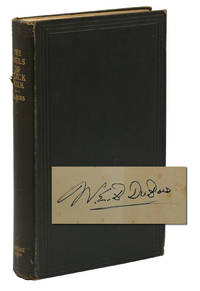
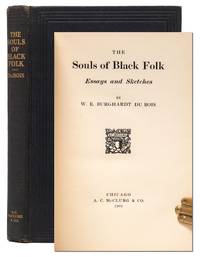
1903140945367New York: A. C. McClurg & Co 1903. First Edition. First edition first printing. x 265 pp. Bound in publisher's original black cloth ruled in blind and lettered in gilt. Fine with bright gilt and well-defined blind stamping; clean and bright contents. Evidence of bookplate removal to paste down subtle bowing to front board. A superb copy of a cornerstone of African American literature.<p>In an effort to portray the genius and humanity of the black race Du Bois published The Souls of Black Folk a collection of 14 essays. James Weldon Johnson said the book's effect on African Americans was comparable to that of Uncle Tom's Cabin. The introduction famously proclaimed that "the problem of the Twentieth Century is the problem of the color line". Each chapter begins with two epigraphs – one from a white poet and one from a black spiritual – to demonstrate intellectual and cultural parity between black and white cultures. <p>A major theme of the work was the double consciousness faced by African Americans: being both American and black. This was a unique identity which according to Du Bois had been a handicap in the past but could be a strength in the future: "Henceforth the destiny of the race could be conceived as leading neither to assimilation nor separatism but to proud enduring hyphenation. A. C. McClurg & Co unknown
1934140944379London: Nancy Cunard at Wishart & Co 1934. First Edition. First edition first printing. viii 856 pp. Bound in publisher's black cloth stamped in red no headcap and edges unstained issued without a dust jacket. Very Good with rubbing to cloth along edges worn at head and tail small bookplate to front free endpaper a few spots of foxing to edges vertical creases and two tiny tape mends to title page.<p>An ambitious compilation all aspects of history and culture of the African in Africa or the diaspora featuring contributions from an impressive array of leading lights of the Harlem Renaissance such as Langston Hughes Zora Neale Hurston Arthur A. Schomberg W.E.B. Du Bois Walter White Countee Cullen and many others. A definitive work on the growth and development of Black culture of the early 20th century. One-thousand copies were originally printed though many remained unsold and were destroyed when the warehouse they were stored in was bombed during the Blitz. Nancy Cunard at Wishart & Co unknown
1905140940092London: Archibald Constable & Co 1905. First British Edition. Very Good. First British edition first printing. Signed by W.E.B. Du Bois on the front free endpaper. Bound in publisher's black cloth ruled in blind and lettered in gilt on the spine. Very Good with gouge to spine affecting title rubbing to cloth at extremities. Toning to pages with foxing at preliminary and terminal leaves and light offsetting to front and rear free endpapers. A seminal work in the history of sociology and a cornerstone of African American literature in which Du Bois discusses "double consciousness"--the idea that African Americans have two fields of vision one how they see themselves and the other how others view them. Archibald Constable & Co unknown books
1905140940092London: Archibald Constable & Co 1905. First British Edition. Very Good. First British edition first printing. Signed by W.E.B. Du Bois on the front free endpaper. Bound in publisher's black cloth ruled in blind and lettered in gilt on the spine. Very Good with gouge to spine affecting title rubbing to cloth at extremities. Toning to pages with foxing at preliminary and terminal leaves and light offsetting to front and rear free endpapers. A seminal work in the history of sociology and a cornerstone of African American literature in which Du Bois discusses "double consciousness"--the idea that African Americans have two fields of vision one how they see themselves and the other how others view them. Archibald Constable & Co unknown
1903140944679New York: A. C. McClurg & Co 1903. First Edition. Near Fine. First edition first printing. Bound in publisher's original black cloth ruled in blind and lettered in gilt. Near Fine with a large but faint stain to the front cover visible in raking light light fading to spine and light wear to cloth. Hinges at the half-title page and endsheets are exposed leaving binding a little tender. Former owner name to front pastedown and effaced marking to front free endpaper. Faint stain to bottom textblock edge slightly intruding into the margins. A lovely copy housed in a custom chemise case.<p>In an effort to portray the genius and humanity of the black race Du Bois published The Souls of Black Folk a collection of 14 essays. James Weldon Johnson said the book's effect on African Americans was comparable to that of Uncle Tom's Cabin. The introduction famously proclaimed that "the problem of the Twentieth Century is the problem of the color line". Each chapter begins with two epigraphs - one from a white poet and one from a black spiritual - to demonstrate intellectual and cultural parity between black and white cultures. <p>A major theme of the work was the double consciousness faced by African Americans: being both American and black. This was a unique identity which according to Du Bois had been a handicap in the past but could be a strength in the future: "Henceforth the destiny of the race could be conceived as leading neither to assimilation nor separatism but to proud enduring hyphenation. A. C. McClurg & Co unknown
172551291725. Four vols. 8vo cont. vellum over boards covers of Vol. I lightly stained spines dust-soiled lightly foxed throughout as usual. The Hague: J. Swart & P. de Hondt 1725.<br/> <br/> With its almost 30000 lots this was the largest sale ever held in any country up to 1725 a record not broken until the Thott sale Copenhagen: 1789-1795 and the Heber sales of the 1830s. The Du Bois sale lasted for nearly two months. <br/> <br/> This extraordinary library was the creation of the Abbé Jean-Paul Bignon 1662-1743 who was for many years secretary of the Académie des Sciences. When in 1718 he was appointed Bibliothécaire du Roi a position he occupied until 1741 he sold his library of approximately 50000 volumes in order to avoid a conflict of interest. The buyer was the financier John Law 1671-1729 of “Mississippi Bubble†fame. Financial reversals caused Law to almost immediately resell the library for 50000 livres to Cardinal Du Bois 1656-1723 the immensely rich but ill-famed first minister during the minority and under the reign of Louis XV his misdeeds may have been exaggerated by the Duc de Saint-Simon who hated him. Guigard and others state that Law’s sale of the library took place in 1723 but it cannot have been later than December 1720 when Law secretly left France after the Mississippi Bubble had burst. <br/> <br/> Following Du Bois’s death the library was sold for 65000 livres to “the booksellers of Paris†who immediately sold it to one “Guiton†who in turn sent it to The Hague for auction. <br/> <br/> This library contained many famous rarities including editiones principes of Aristophanes Homer and Pliny incunabula printed on vellum Spanish romances of chivalry and illuminated manuscripts. <br/> <br/> Many of the finest books and manuscripts were acquired by a collector named Milsoneau. The Marquis de Paulmy acquired them from Milsoneau and today they are the foundation of the library of the Arsenal. <br/> <br/> Fine set and priced throughout. <br/> <br/> ⧠Guigard I pp. 238-39 & 270-71. Peignot p. 96. Taylor Book Catalogues pp. 18 102 108 113 129 207 228 & 239. unknown
5129Four vols. 8vo cont. vellum over boards covers of Vol. I lightly stained spines dust-soiled lightly foxed throughout as usual. The Hague: J. Swart & P. de Hondt 1725. With its almost 30000 lots this was the largest sale ever held in any country up to 1725 a record not broken until the Thott sale Copenhagen: 1789-1795 and the Heber sales of the 1830s. The Du Bois sale lasted for nearly two months. This extraordinary library was the creation of the Abbé Jean-Paul Bignon 1662-1743 who was for many years secretary of the Académie des Sciences. When in 1718 he was appointed Bibliothécaire du Roi a position he occupied until 1741 he sold his library of approximately 50000 volumes in order to avoid a conflict of interest. The buyer was the financier John Law 1671-1729 of "Mississippi Bubble" fame. Financial reversals caused Law to almost immediately resell the library for 50000 livres to Cardinal Du Bois 1656-1723 the immensely rich but ill-famed first minister during the minority and under the reign of Louis XV his misdeeds may have been exaggerated by the Duc de Saint-Simon who hated him. Guigard and others state that Law's sale of the library took place in 1723 but it cannot have been later than December 1720 when Law secretly left France after the Mississippi Bubble had burst. Following Du Bois's death the library was sold for 65000 livres to "the booksellers of Paris" who immediately sold it to one "Guiton" who in turn sent it to The Hague for auction. This library contained many famous rarities including editiones principes of Aristophanes Homer and Pliny incunabula printed on vellum Spanish romances of chivalry and illuminated manuscripts. Many of the finest books and manuscripts were acquired by a collector named Milsoneau. The Marquis de Paulmy acquired them from Milsoneau and today they are the foundation of the library of the Arsenal. Fine set and priced throughout. ❧ Guigard I pp. 238-39 & 270-71. Peignot p. 96. Taylor Book Catalogues pp. 18 102 108 113 129 207 228 & 239. hardcover books
19037798Chicago: A.C. McClurg & Co 1903. First edition. Near Fine. A clean Near Fine copy of W.E.B. DuBois' first book. A bit of fraying to head and tail of spine and a subtle blemish to upper board. An excellent copy overall.<br /> <br /> The Souls of Black Folk was Du Bois' first and most famous book a "monumental" work "filled with spirituality and with spontaneity" that represented a turning point both in the field of sociology Blockson Commented Bibliography 52. Notably the book coined the framework of "double consciousness" in regards to Black people's self-perception capturing the notion that Black people by necessity viewed themselves and the world through their own perspective while simultaneously anticipating the perspective of other non-Black people. Du Bois already an established writer and sociologist had previously published several studies of Black life in the United States including The Philadelphia Negro 1899 as well as a study of Black people in business but The Souls of Black Folk went further: Du Bois' "conceptions were historical and global his methodology empirical and intuitive his values and commitments involving both mobilization of an elite vanguard to address the issues of racism and the conscious cultivation of the values to be drawn from African-American folk culture" ANB. The result was a revolutionary work of sociology that shapes conversations on race community and identity to this day. The importance of The Souls of Black Folk cannot be overstated.<br /> <br /> Also see Blockson 4028 third edition. Near Fine. A.C. McClurg & Co unknown
192118541Paris, Éditions de la Galerie Simon, 1921. Grand in-4, demi-reliure moderne, étui.
1899140948958Philadelphia: University of Philadelphia 1899. First Edition. Near Fine. First edition first printing. xx 520 viii pp. with eight advertising pages at rear. Illustrated with 2 foldout maps depicting Seventh Ward one in color. Bound in later black buckram titled in gilt on spine corrective label over date top edge marbled. Near Fine with light wear to covers and several white marks to rear board. Short repaired tear to upper edge of first 6 leaves several small waterstains and smudges to same. Short splits and misfold to center foldline of color map. Ownership signature of sociologist Adelaide M. Cromwell to front free endpaper. <br /> <br /> <p>The first edition of the first sociological study of a black community in the United States. W.E.B. Du Bois spent months interviewing members of 2500 households in Philadelphia's Seventh Ward and synthesized his research into a monumental work as impassioned as it was methodical. Du Bois was assisted in his work by Isabel Eaton who focused on women in domestic service. This copy was owned by Adelaide M. Cromwell also an influential sociologist and professor. She was the first Black teacher at Smith College and went on to teach at Boston University for more than 30 years. University of Philadelphia unknown
1920136790New York: Harcourt Brace and Howe 1920. First edition of the first of Du Bois' three autobiographies. Octavo original cloth. Near fine in the rare original dust jacket with some wear to the extremities. Exceptionally rare with only one example in the original dust jacket appearing at auction in the last 90 years. Written when he was 50 Darkwater is the first of Du Bois's three autobiographies and was followed by Dusk of Dawn: An Autobiography of a Race Concept and The Autobiography of W. E. B. Du Bois: A Soliloquy on Viewing My Life from the Last Decade of its First Century. This work incorporates autobiographical information as well as essays spirituals and poems Harcourt, Brace and Howe hardcover
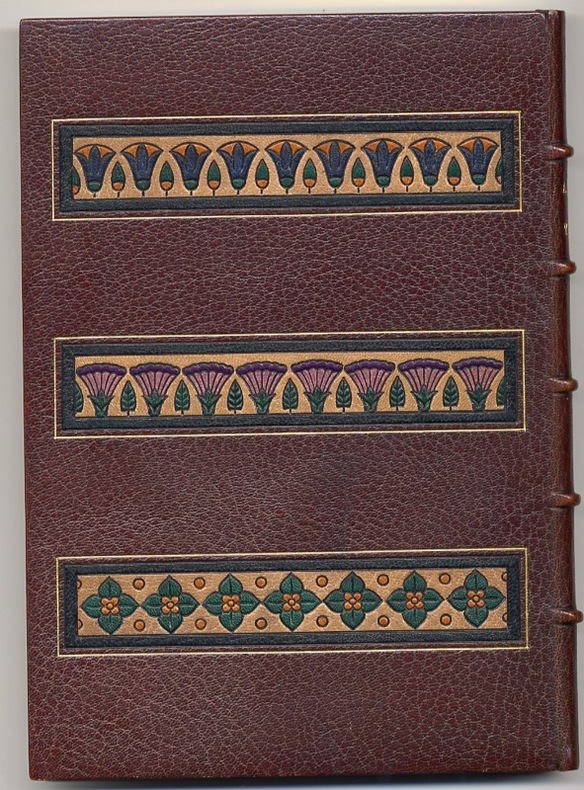
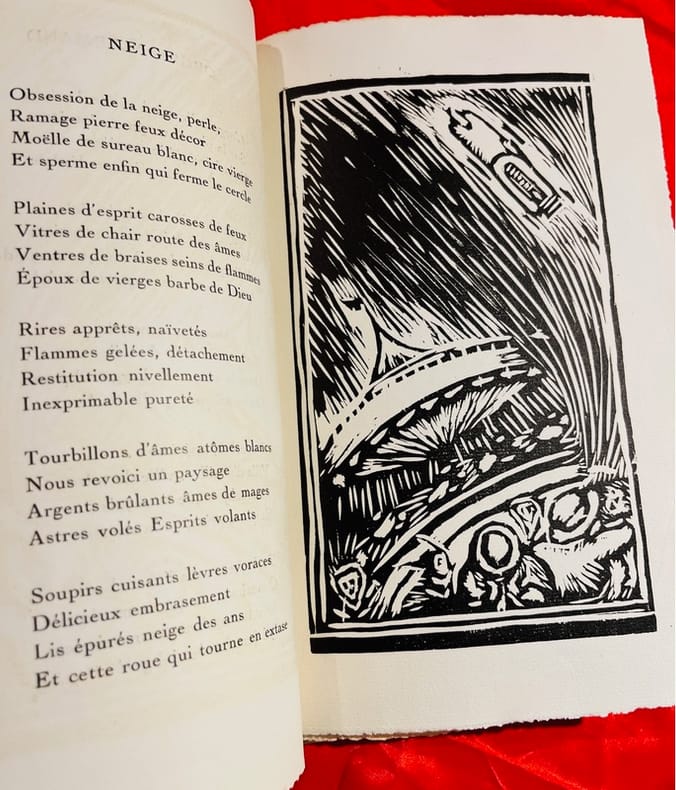
19248546Paris, Les Cent Bibliophiles, 1924 ; in-4 ; plein maroquin aubergine, dos à cinq nerfs, plats décorés et mosaïqués de trois larges compositions horizontales de fleurs stylisées "à l'égyptienne" : celle du haut, sur fond de maroquin mastic, succession de petites et grandes fleurs de maroquin mandarine, bleu-nuit et vert-sapin encadrée d'un listel vert foncé et d'un filet doré ; celle du milieu, alternance de fleurs et feuilles de couleurs violet, parme et vert-sapin, interrompue en son centre par un grand cercle de maroquin mastic dans lequel sont mosaïquées les lettres du titre en vert foncé, qui se chevauchent, le tout entouré d'un listel vert foncé et filet doré ; enfin, celle du bas présente une série de fleurs et feuilles à plat, soulignée d'une double rangée de points mandarine, toujours sur le même fond mastic et encadrée du même listel vert foncé et filet doré.Le décor du second plat, à l'identique mais sans le cercle-titre ; double filet doré sur les coupes, tranches ébarbées et dorées ; contreplats doublés de maroquin havane orné, en encadrement, d'un listel de maroquin aubergine entrecoupé de carrés dorés, triple filet doré, gardes de brocard de soie pourpre, couverture et dos conservés, étui bordé (reliure de Noulhac d'après une maquette de Madeleine Noulhac) ; (8) ff. (3 blancs, justification du tirage, faux-titre au verso frontispice, titre, faux-titre au verso, gravure hors-texte, gravure hors-texte), 215 pp., (8) ff. (table, achevé d'imprimer, Les Cent Bibliophiles, 2 bl.). ; 147 bois dessinés et gravés en couleurs de Louis Jou dont 9 hors-texte et 3 lettrines.
1935140943735New York: Harcourt Brace and Company 1935. First Edition. First edition. Review copy with publisher's stamp on front free endpaper with publication date and price in very rare possible review version of the dust jacket without price. viii 746 pp. Bound in publisher's black cloth with gilt spine lettering. Very tiny wormhole in front gutter cloth else Fine in a Near Fine dust jacket spine panel dulled worn at head a few paint flecks on back panel. Scarce in jacket. <p>One of Du Bois' major works a revisiting of the reconstruction period as a critical time of Black advancement in American society and a near-revolution of anti-racism and societal change. In portraying the period in this way he was clashing with the academic orthodoxy and popular conceptions of the time. In the 21st century it has been given renewed attention and called "the foundational text of revisionist African American historiography. Harcourt, Brace and Company unknown
1899623962Philadelphia: Published for the University 1899. Hardcover. Very Good. First edition. Quarto. 520 viii ads pp. Diagrams two folding charts. Bound in later full black buckram titled in gilt on the spine. Some light rubbing at the corners a few light spots confined to the last couple of leaves of ads and a repaired split else near fine. A considerably better copy than usual the book was originally issued in both wrappers and cloth this was likely a wrappered issue re-bound when the text block inevitably began to fail as they almost always did. Du Bois's monumental study of the social conditions in which the Negroes of the Seventh Ward of Philadelphia lived and one of the first scientific sociological studies ever conducted. Du Bois's method a house-by-house canvass of the Ward had a lasting impact on him and revealed to him the true state of urban dwelling African-Americans. The effect of the study impressed Horace Bumstead the President of Atlanta University enough to offer Du Bois an appointment in Sociology and directorship of the newly formed conferences that resulted in the Atlanta University Studies of the Negro Problem and which eventually resulted in his ascension to national prominence. Copies of the first edition of The Philadelphia Negro in any condition are very scarce. Blockson 101 #48. Published for the University hardcover
1850100093Philadelphia 1850. 60 1 pp. plus plate of gold coinage. Frontispiece. 8vo. Original printed boards gilt-lettered cover with illustrations of gold coins expertly rebacked in matching paper a.e.g. Covers slightly rubbed. Very good. In a cloth clamshell case leather label. 60 1 pp. plus plate of gold coinage. Frontispiece. 8vo. Original Sample of California Gold. Included as illustrative material is a sample of genuine gold from the California mines as well as an inserted leaf illustrating California and Mormon coins in gilt. The authors were the official assayers for the Philadelphia Mint at the time of this work's publication and the book was intended as a guide for those unfamiliar with recent advances in coinage and assaying. The text includes much data regarding the recent strikes in California and devotes an entire chapter to the analysis of the quality of ore coming from California. The sample is included so that the novice can discriminate between alloyed and unalloyed gold. There is also a discussion of the coinage of various countries of the world including the TONG TSIEN of China a "trashy coin.extremely convenient for alms-giving a single piece being the usual quietus for a beggar." ".An extraordinary and colorful souvenir of the Gold Rush" - Wheat. WHEAT GOLD RUSH 67. HOWELL 50:74. STREETER SALE 2629. KURUTZ 217a. COWAN p.76 unknown books
192318543Paris, Éditions de la Galerie Simon, 1923. In-8 broché, couverture imprimée. Chemise en demi-box noir, étui (Honegger).
192118540Paris, Éditions de la Galerie Simon, 1921. In-4 broche, couverture illustree.
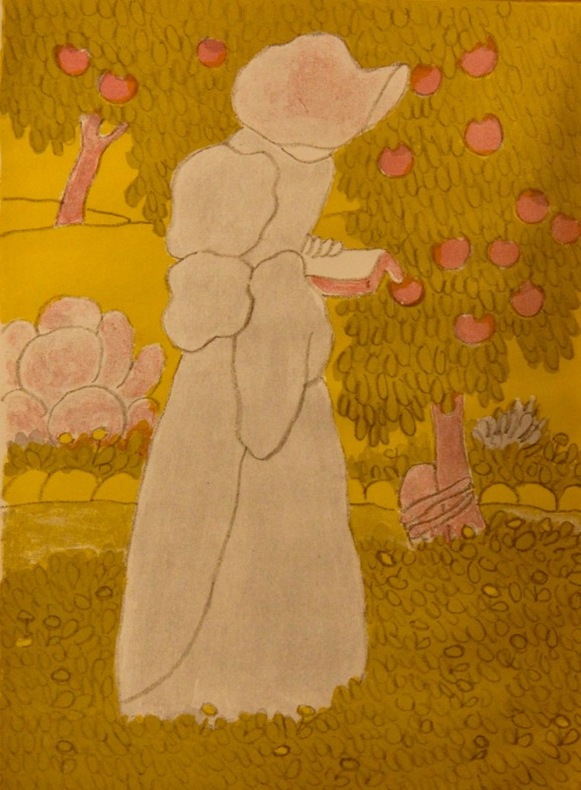
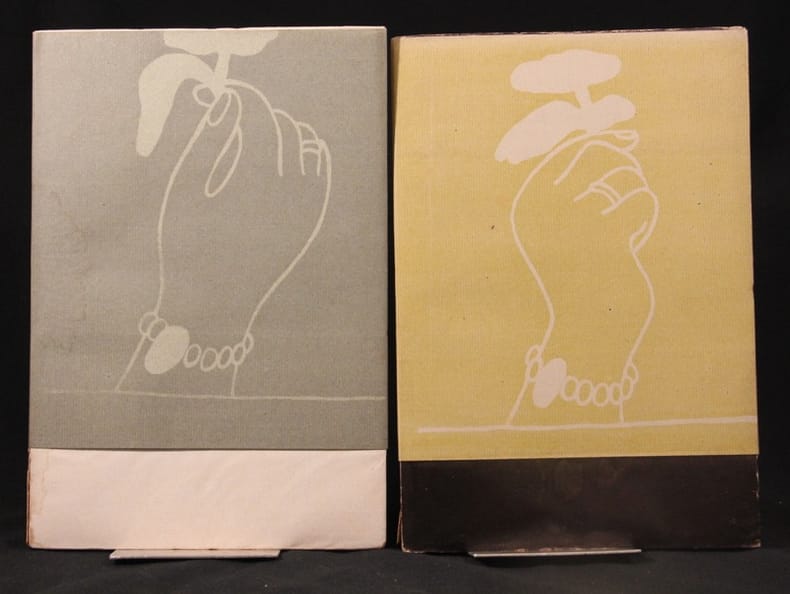
18955238Paris, S. Bing, Noël 1895. Broché, 24 pages, couverture muette de papier moiré blanc, recouverte d'une large bande de papier gris vert rempliée, illustrée d'un bois tiré en blanc. Les Tombeaux : broché, 28 pages, couverture muette de papier moiré noir, recouverte d'une large bande de papier vert-jaune rempliée illustrée d'un bois tiré en rose (passé). Sous chemise étui maroquin noir de Jean-Luc Honegger.
1693ABC_50139Cologne 1693. Ad 1: ca. 96 x 75 cm; ad 2 and 3: ca. 136 x 76.5 cm. Johann Wilhelm Friessem junior Each broadside is printed on 2 sheets divided in 8 ad 1 or 12 ads 2 and 3 columns and includes 2 decorated woodcut initials and an ornamental border between the columns. 3 broadsides. Exceptionally rare set of three anti-Jansenist broadsides of which we have not been able to find any other copies in either institutions or on the market. Although they were also published as books in the same year each text was newly typeset for the present broadsides. Despite being anti-Jansenist the works were quite controversial in their own time and even placed onto the Index in 1694 which is likely part of the reason for the extreme scarcity of both the books and broadsides today.The three works were intended as a series as the preface of ad 2 states that it was written because ad 1 had not yet reached its goal of convincing everyone of the heresy of Jansenism. Each work explains in various "gradus" or steps how Jansenism extinguishes the love for God destroys the hierarchy of the Church and turns Catholics away from the Sacraments. Each step then gives a list of Jansenist dogmas and explains why they are heretical. This is followed by a source list at the bottom of the broadside detailing in which Jansenist texts these dogmas can be found. Although the works are extremely scarce today they were known in their own time as they provoked both court trials and/or refutational publications in the very years after publication including Troisième piece du procés de Calomnie contre les auteurs & approbateurs du placard intitulé: Jansenismus omnem destruens religionem 1693 by the famous Jansenist Antoine Arnauld and Responsio . ad accusationes contra se allegatas in libello cui titulus . Jansenismus omnem destruens religionem item Jansenismus plurimas haereses &c. et Jansenismus exotice &c. 1694 by Gommarus Huygens.Although the works were published anonymously the censor mentioned at the bottom of each broadside Nicolas du Bois 1620-1696 was most likely also the author. He studied theology at the University of Leuven and held the position of royal professor of sacred scriptures from 1654 until his death. At the end of the 17th century the Faculty of Theology at Leuven was an important crossroad of both Jansenist and anti-Jansenist ideas. As the head of an anti-Jansenist society Du Bois was a zealous member of the second camp. In 1679 his society sent an agent to Rome with a list of 238 Jansenistic propositions they wanted the Pope to condemn. After a thorough theological examination the list was reduced to 31 propositions which were condemned in 1690. The original list included the source of each entry and a brief commentary in the marginal notes. The present work is presented in a similar way. As such it may have been an attempt by Du Bois and his society to garner support for the condemnation of more propositions.The broadsides are reversibly framed. They have been folded in the past and are unevenly browned lacking the left side of the frame of ad 1 ads 2 and 3 with a restored loss affecting some text. Otherwise in good condition.l Cf. Ad 1 in book form: STCN 357571819 1 copy; USTC 1836890 1 copy; WorldCat 782115147 10 copies; not in VD17; Ad 2 in book form: VD17 12:110728Z; WorldCat 655993701531644237 3 copies; not in the USTC; Ad 3 in book form: STCN 357571959 1 copy; USTC 1836904 1 copy; VD17 12:110726K; WorldCat 782114376 3 copies; Sylvano P. "Historical notes concerning ten of the thirty-one rigoristic propositions condemned by Alexander VIII" in: Fransiscan Studies vol. 20 1/2 1960-03 pp. 19-95. unknown
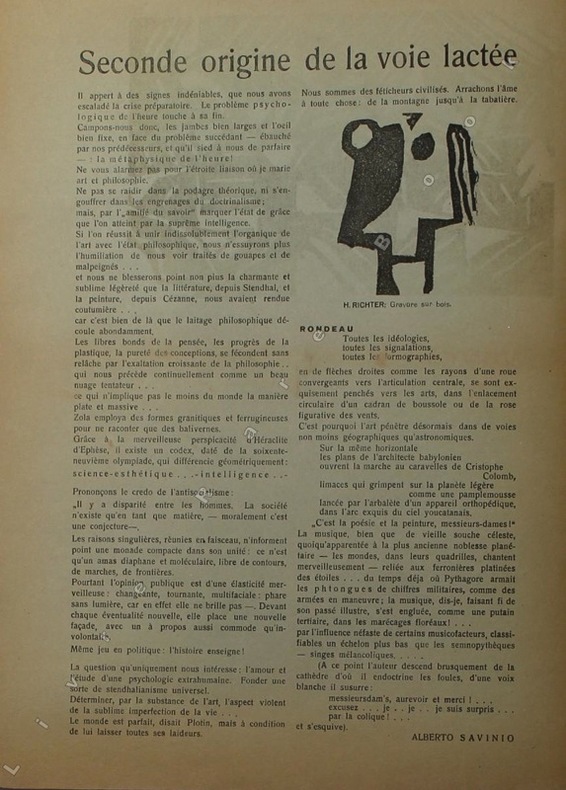
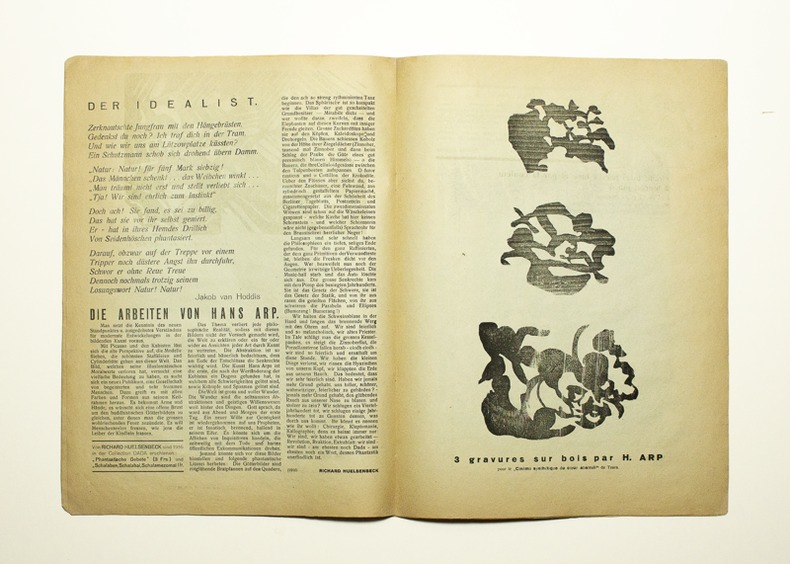
191810918Zürich, Mouvement Dada, Zeltweg 83, Imprimerie Jul. Heuberger, Décembre 1918. In-folio de [16] pages, agrafées, couverture illustrée d’un bois de Marcel Janco. Etui, chemise dos lisse en maroquin noir (Honegger). Inscription à l'encre sur la couverture, et quelques discrets numéros inscrits p. 7.
191810923Zürich, Mouvement Dada, Zeltweg 83, Imprimerie Jul. Heuberger, Décembre 1918. In-folio de [16] pages, agrafées, couverture illustrée d’un bois de Marcel Janco. Etui, chemise dos lisse en maroquin noir (Honegger).
18954681Paris, S. Bing, Noël 1895. 2 volumes brochés: Les Vierges, 24 pages, couverture muette de papier moiré blanc, recouverte d'une large bande de papier gris vert rempliée, illustrée d'un bois tiré en blanc. Les Tombeaux: broché, 28 pages, couverture muette de papier moiré noir, recouverte d'une large bande de papier vert-jaune rempliée illustrée d'un bois tiré en rose (passé).2 volumes: Les Vierges 24 pages, blank cover of white shimmering paper, covered with a wide band of grey-green paper wrapped, illustrated with a woodcut printed in white. Les Tombeaux: 28 pages, blank cover of black shimmering paper, covered with a wide band of green-yellow paper wrapped, illustrated with a woodcut printed in pink (faded).