749 résultats
1943RO20052697COMPAGNIE FRANCAISE DES ARTS GRAPHIQUES. 1943. In-4. Broché. Bon état, Couv. convenable, Dos satisfaisant, Intérieur bon état. 140 pages. Nombreux dessins et lithographies en couleurs dans le texte et en planches hors-texte. Couverture contre-pliée. Exemplaire n°3796 / 4100. Quelques rares rousseurs dans le texte.. . . . Classification Dewey : 763-Lithographies
196515795Paris à la Galerie 1965 1 Une affiche sur papier fort de 52 x 74 cm; lithographie de Mourlot.
197214786Paris, Maeght, 1972. In-folio de 28 pages, en feuilles sous couverture lithographiée.
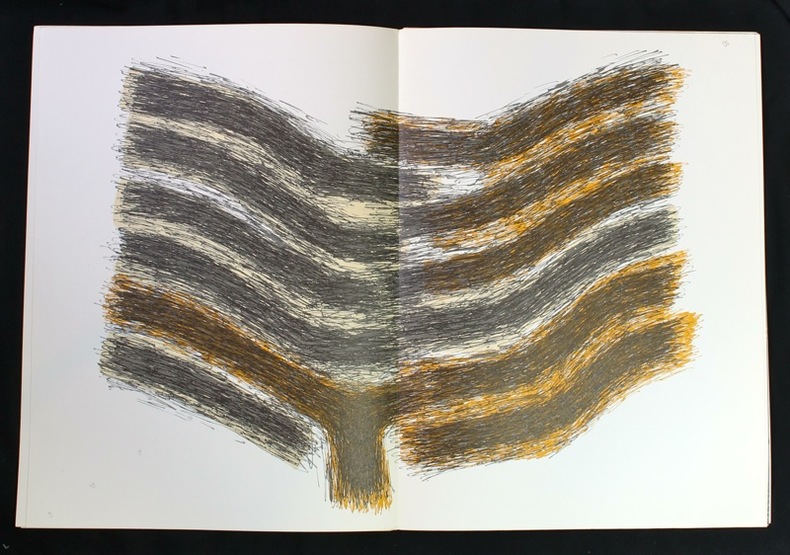
195814789Paris, Maeght, 1958. In-folio de [12] pages, en feuilles sous couverture lithographiée.
197917684Paris, Maeght, 1979. In-folio de 24 pages, en feuilles, sous couverture illustrée.
197216942Montpellier, Fata Morgana, 1972. In-8 de [48] pages en feuilles (non paginé), sous couverture verte à rabats imprimée en deux tons.
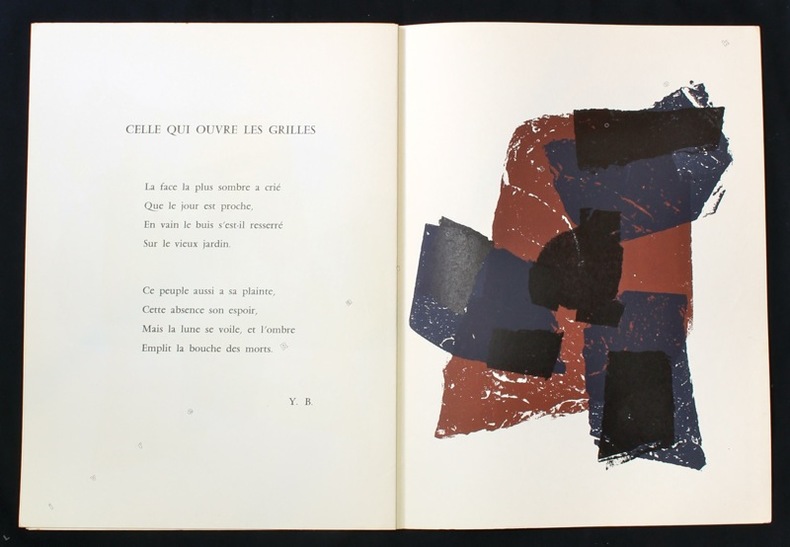
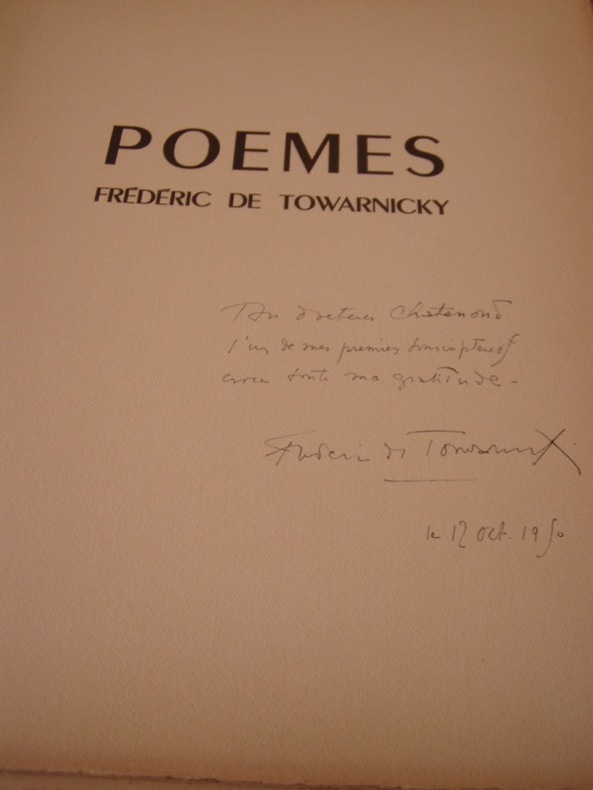
1950250581950 [Paris] : J. Pons, 1950.Ecole Nationale Supérieure des Beaux-arts, atelier de lithographie Rene Jaudon - in folio en feuilles sous chemise imprimée,Unbound in portfolio, as issued.66 pages, 14 unnumbered leaves of plates : illustrations ; 39 cm,dos couverture defraichi,texte frais.A collection of poems by Federico Towarnicki, poet, journalist and philosopher illustrated with lithographs, unbound in portfolio, as issued. This is a scarce collection, most others having been sold as original individual lithographs.
194630875Monaco, à la Voile Latine, 1946. Grand in-4 sous couverture illustrée en couleurs et rempliée (33 x 25,5 cm), illustré par Roger CHASTEL de 14 lithographies originales hors-texte + la couverture en couleurs à double-page. Il a été tiré 300 exemplaires numérotés, celui-ci l'un des 200 ex. sur pur fil Johannot (n° 146).- 1990g.- Sans emboitage, intérieur très frais, très bel état de la superbe couverture.
1976112778Points Cardinaux 1976 Editions les Points Cardinaux, Grenoble, 1976, 12 lithographies signées d'Antonio Totero sous chemise toilée verte, environ 59x39cm. Cette suite accompagnait l'un des 57 premiers exemplaires numérotés du Vieil Homme et la Mer d'Hemingway sur les 280 imprimés. Chemise un peu salie, bon état néanmoins, lithographies en très bon état.
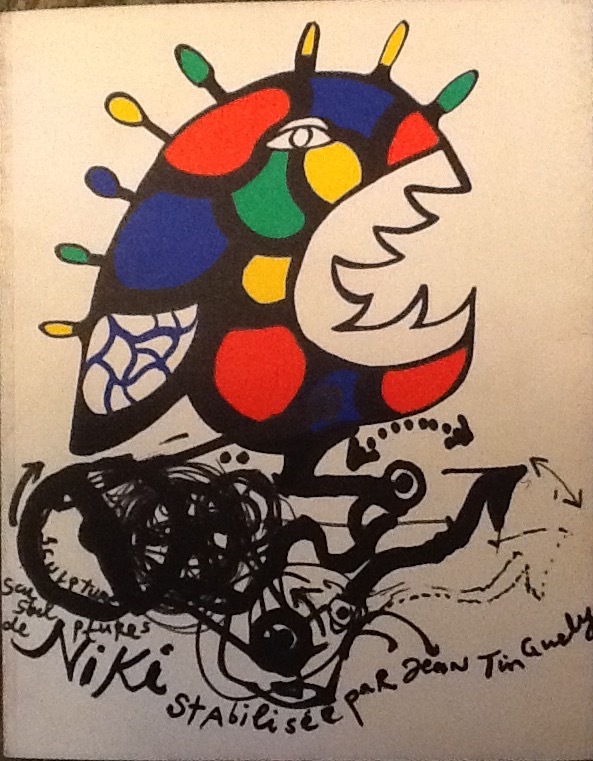
1989CCC-575185. Catalogue de l'exposition organisée en mai juin 1989. En couverture, LITHOGRAPHIIE originale en couleurs de Niki de Saint-Phalle et Jean Tinguely. Niki de Saint-Phalle et Jean Tinguely. Texte des deux artistes. Préface de Pontus Hulten en français et en anglais et poème de Pierre Restany. Nombreuses illustrations en noir et en couleurs. Bio bibliographie in fine. Bel exemplaire. Photos complementaire sur demande
1945104045Couverture souple. 28 pages. En feuillets. Couverture défraîchie.
197033453New Mexico State University: Keith Wilson & Thomas Rose 1970. First Edition. Hardcover. Very Good. 4to - over 9¾" - 12" tall. Signed. Copy #14 of one hundred signed copies of this limited edition signed by both Rose and Wilson in black ink on dedication pages nice tight clean unmarked copy text nice elegant small square gold bookplate of former owner in center of first endpaper undamaged boards show light soiling at top front tip and a bit of wear on top tip on back approx. 11 3/4" x 11 3/4" Very Good or better. Keith Wilson & Thomas Rose hardcover
1984016318Paris Galerie Jeanne Bucher 1984 In-8 carré Broché, couverture illustreé
19772023Annecy, Gardet, 1977. Portfolio à rabats de 15 pages de texte et 51 planches. Pleine toile bordeaux.
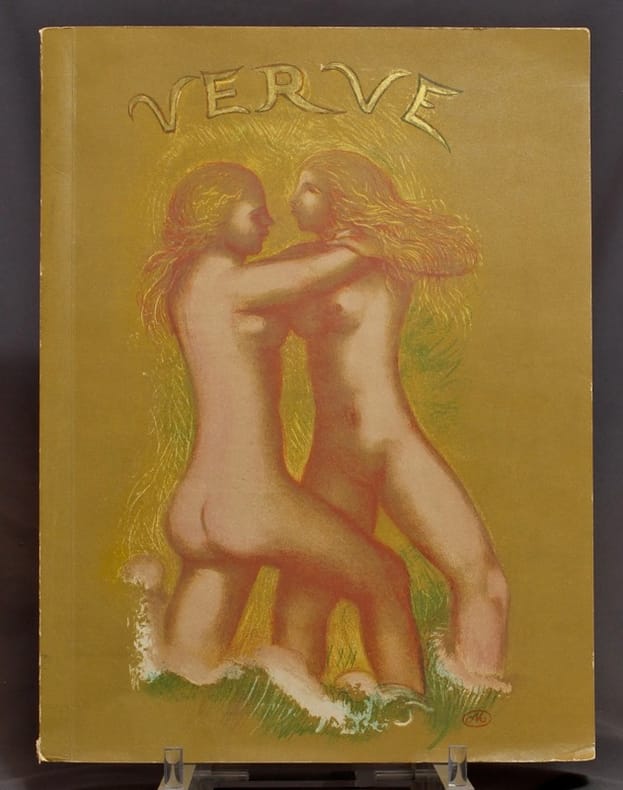
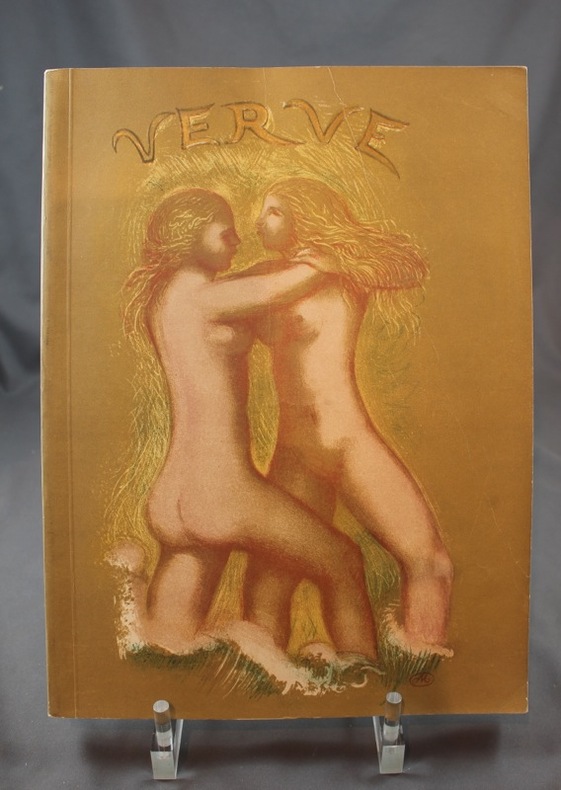
193914292Paris, éditions de la revue Verve, 1939. In-4 de 134-[44] pages, couverture illustrée couleurs et or par Maillol.
19397077Paris, éditions de la revue Verve, 1939. In-4 de 134-[44] pages, couverture illustrée couleurs et or par Maillol. Pli central au premier plat, autrement en très belle condition.
193914810Paris, éditions de la revue Verve, 1939. Grand in-4 de 112-[1] pages, couverture illlustrée par Matisse.
1945013914Paris Editions du Pré aux Clercs 1945 En feuilles, couverture rempliée, chemise et étui éditeur
193418524Paris, librairie Gallimard, 1934. In-8 de 59-[2] pages, cartonnage illustré d'éditeur, dos de toile bleue, gardes rouges décorées.
19793901Bièvres en Essonne, Moulin de Vaoboyen, 1979. 1 vol. (242 x 318) de 75-[6] pages, plein maroquin noir, 1er plat orné d’un décor doré orné d’un serpent, sous étui cartonnage brun bordé de maroquin noir. Très belle condition.
19694718Barcelona, Sala Gaspar, 1969. In-8 broché de [28]ff., et une double planche volante. Petit pli au coin supérieur du premier plat.
1957004552Toulon Vacance 1957 In-8 Broché Edition originale
1974YRG-24Editions G. de BUSSAC, Clermont-Ferrand - collection le bibliophile en auvergne. Ouvrage tiré à 1600 exemplaires outre les HC dont le présent ouvrage.
197214767Paris, Maeght, 1972. In-folio de 22-[8] pages, en feuilles, sous couverture lithographiée couleurs.
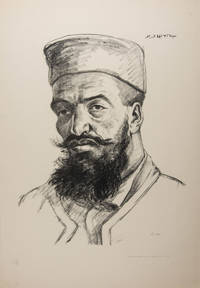
191643931Berlin: Dietrich Reimer Ernst Vohsen 1916. Limited First edition. Hardcover. g- to vg. 1/50. Folio 19 1/2 x 13 1/2". 6 28pp Booklet 100 loose leaves Plates as issued. Original full vellum portfolio with lettering and publisher's logo in gilt to front cover. Booklet's front cover gold-lettered numbered and hand-signed by the artist Hermann Struck. The plates are housed in their stiff paper chemise as issued with printed title to front cover.<br /> <br /> In this spectacular monograph artist Hermann Struck who was serving in the Imperial German army as a translator liaison officer and military artist sketched the faces of one hundred prisoners of war in the German camps. <br /> <br /> Among the French British Belgian and Russian inmates were also included soldiers from the British Empire mostly from India as well as the French Empire Algeria Tunisia Morocco and Senegal.<br /> <br /> The prisoners' age range from 12 Anton Matyszewski a volunteer from Lomza Russian Poland to 56 Mohammed ben Ahmed Spahi from Djelfa French Algeria. <br /> <br /> It is interesting to note that the Jewish prisoners were identified first by their religion then by the place they came from exemple: Chacus Krasikow Jew from Lubin Russian Poland; Isaak Chotoran Jew from Kiev Ukraine; Bomblatt David Polish Jew from Warsaw etc. Bomblatt David is sketched twice: After Struck drew his face he added a second sketch depicting the prisoner reading the Talmud. <br /> <br /> Each plate is handsigned in pencil by the artist.<br /> <br /> The booklet contains a foreword and an essay on ethnology in the World War by Prof. Dr. Felix von Luschan 1854-1924 an Austrian doctor anthropologist explorer archaeologist and ethnographer who joined the German Society for Racial Hygiene in 1908. The society was an eugenic organization whose goal was "for society to return to a healthy and blooming strong and beautiful life." As Alfred Ploetz its founder put it the Nordic race was supposed to regain its "purity" through selective reproduction and sterilization. The society ceased to exist after WWI.<br /> <br /> One of 50 numbered copies of which this is No. 30.<br /> <br /> Some foxing to portfolio with strings missing. Minor age-toning and foxing to wrappers of booklet. 5" closed tear at lower front joint of chemise. Only plates 4 and 5 are foxed along edges not affecting illustrations. Text in German Gothic script Booklet captions of plates in German. Portfolio in overall fair to good booklet in very good chemise in fair to good- plates in very good condition. Hermann Struck 1876-1944 was a German Jewish artist known for his etchings. A fervent Zionist and Jewish activist Struck visited the Land of Israel in 1903 displayed his art at the Fifth Zionist Congress and was a founder of the Mizrachi Religious Zionist movement. At the same time he was a German patriot and volunteered for military service in World War I serving as a translator liaison officer and military artist. Hermann Struck was awarded the Iron Cross 1st Class and promoted to an officer for bravery in 1917 he became the referent for Jewish affairs at the German Eastern Front High Command. Struck immigrated to Palestine in 1922 taught at Bezalel Academy and helped establish the Tel Aviv Museum of Art. He visited Berlin every summer until the Nazis rose to power.<br /> <br /> From the beginning of the war the German authorities found themselves confronted with an unexpected influx of prisoners. In September 1914 125050 French soldiers and 94000 Russian ones were held captive. Before 1915 conditions of detention in Germany were very harsh and marked by temporary lodging and the absence of infrastructure. The prisoners slept in hangars or tents where they dug holes to keep warm. The humid forts requisitioned to serve as places of detention led to numerous cases of pulmonary illness. The German authorities also commandeered schools barns and various other types of shelters. Camps were established in the countryside as well as near the towns which had consequences when epidemics of cholera or typhus threatened to spread to the civilian population. Not all the camps were situated on German territory; a certain number were built in occupied territories notably in northern and eastern France. They began to be developed starting in 1915 when the number of prisoners being held captive in Germany reached 652000. According to official directives each prisoner had to have use of 26.9 square foot 2.5 m². The camps mixed a large number of nationalities sharing the same quarters: French Russian British American Canadian Belgian Italian Romanian Serbian Montenegrin Portuguese and Japanese prisoners were found there as well as Greeks and Brazilians. Equally soldiers of various social origins rubbed elbows: workers peasants bureaucrats and intellectuals were among those held. The number of prisoners rose very quickly. From February to August 1915 it went from 652000 to 1045232. In August 1916 it reached 1625000 jumping to 2415000 by October 1918. For more information see: Uta Hinz's "Gefangen im Großen Krieg: Kriegsgefangenschaft in Deutschland 1914-1921" in German. Essen Klartext Verlag 2006. Dietrich Reimer (Ernst Vohsen) hardcover