744 résultats
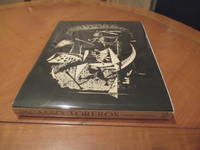
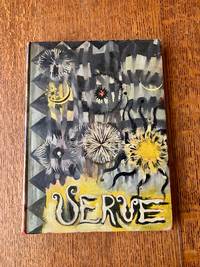
193811642<p>Verve. Paris. 1938 1939. FOLIO. 14.1 x 10.4 inches. Two issues bound in one hardback volume. Fully illustrated throughout with drawings paintings and photographs these 2 numbers contain original full colour lithographs by Chagall Miro Rattner Klee Matisse & Derain. The two issues have been bound into one hardbound volume and the binding has been beautifully hand painted in acrylic and oils with an abstract design including the volume title to both the boards and the spine by noted Neo-Expressionist American painter Gaylen Hansen. There is some rubbing to the edges and one small split to the outer edge of the front board without loss which has been strengthened to the inside with clear tape but generally the book is in very good condition. Included with the volume is a fine hardback copy of the fully illustrated book issued in 2007 to accompany the retrospective exhibition "Gaylen Hansen: Three decades of Paintings" at the Seattle Art Museum October 2007 - January 2008 and Salt Lake City Art Center February - April 2008.</p> Verve. Paris. 1938 1939 hardcover
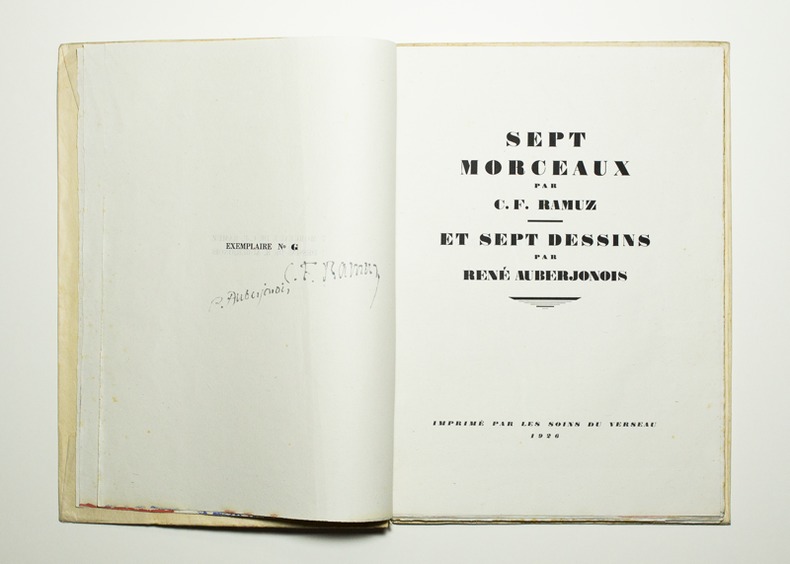
192615064[Lausanne], Mermod, 1926. In-folio broché de [116] pages, belle couverture imprimée en vert et noir.
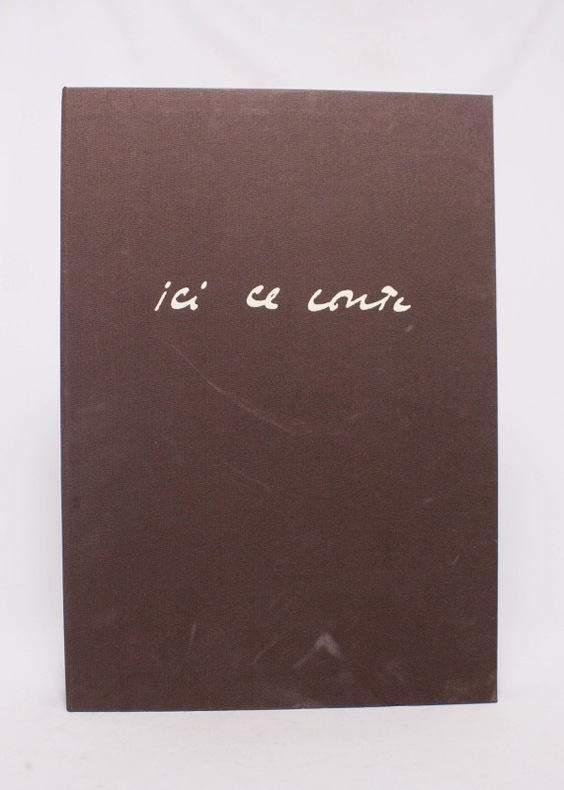
199712096Lausanne, Edition Raynald Métraux, 1997. In-folio de 28 pages, en feuilles sous chemise blanche et emboîtage pleine toile marron, titre en blanc au premier plat.
1944013801Paris (Seghers), Editions Poésie 44 1944 In-4 Reliure Dédicacé par l'auteur
193611780Lausanne, Au Verseau, 1936. In-4 broché de [8]-25-[7] pages, couverture rempliée imprimée en deux tons. Second plat à peine insolé, pour le reste en belle condition.
1933028506New York: John Becker / Merle Armitage / Will And Lynton R. Kistler 1933. 1st Edition 1st Printing. Soft cover. Fine/Very Good Dust Jacket. #243 Of 500 Copies Signed By Armitage Kistler And Charlot With 32 Original Lithographs By Charlot Signed In Color On The Plates And A Dj By Charlot. True Lithographs Drawn By Charlot Directly On 34" X 44" Zinc Plates In A Color Separation Process That Charlot Had Learned From Ben Shahn. Text Hand-Set By Kistler In Castellon Old Style With Heads In Bodoni Ultra-Bold. A Fine As New Example No Wear Or Damage No Browning Or Fraying. With The Original Light Brown Dust Jacket Lettered And Illustrated In Red On Front And Rear Covers And On Spine With Unprinted Upper And Lower Flaps On Front Panel Side Flap On Rear Panel; The Dust Jacket Has Light Edge Wear And Spine Wear With Very Short Tears At Corners And A 1/8" X 1/16" And Another 1/8" X 1/4" Light Brown Stain Or Mark At Lower Front Spine Corner Otherwise Very Clean And Unfaded. An Exceptional Example. With The Four Page Prospectus For The Book With Another Original Zinc Lithograph By Charlot Signed In Pencil #25 In The Book But With A Completely Different Color Scheme From That In The Book; The Prospectus Had A Small Printing For Circulation Amongst Printers In Los Angeles And Is Rare No Institutional Holdings Identified In Worldcat. <br/> <br/> John Becker / Merle Armitage / Will And Lynton R. Kistler paperback
1961055142New York / Monte Carlo: George Braziller / Andre Sauret 1961. 1st Edition 1st Printing. Hardcover. Fine/Fine. 153 Pp. Red Cloth Stamped In Black. First Edition. Printed In France. With Three Original B/W Lithographs By Picasso Dated In The Plate And One Color Lithograph Dated Twice The Second Date Being The Date Picasso Added Colors. Fine In Fine Black And White Dust Jacket With Price $17.50 With Slight Tanning To Spine Panel. <br/> <br/> George Braziller / Andre Sauret hardcover
1959118735Heures claires 1959-1963 6 Paris, Editions d'Art Les Heures Claires, 1959-1963, 3 parties en 6 volumes in-folio de 345x280 mm environ, en feuillets libres sous couvertures rempliées, chemise et emboîtages décorés de l'éditeur. Un des 3900 exemplaires numérotés sur vélin pur chiffon de Rives, complet des 100 compositions de Salvador Dali gravées sur bois en couleurs par Raymond Jacquet, bien complet du "Catalogue des 100 illustrations [...]" rarement présent habituellement. L'Enfer, Tome I. 183 pages, 17 planches - Tome II. 189 pages, 17 planches - Le Purgatoire, Tome I. 182 pages, 16 planches - Tome II. 204 pages, 17 planches - Le Paradis, tome I. 188 pages, 16 planches - Tome II. 193 pages, 17 planches. Quelques discrets frottements sur les étuis, petites taches sur trois feuillets, rares rousseurs, sinon intérieur frais, bon état général, bel ensemble.
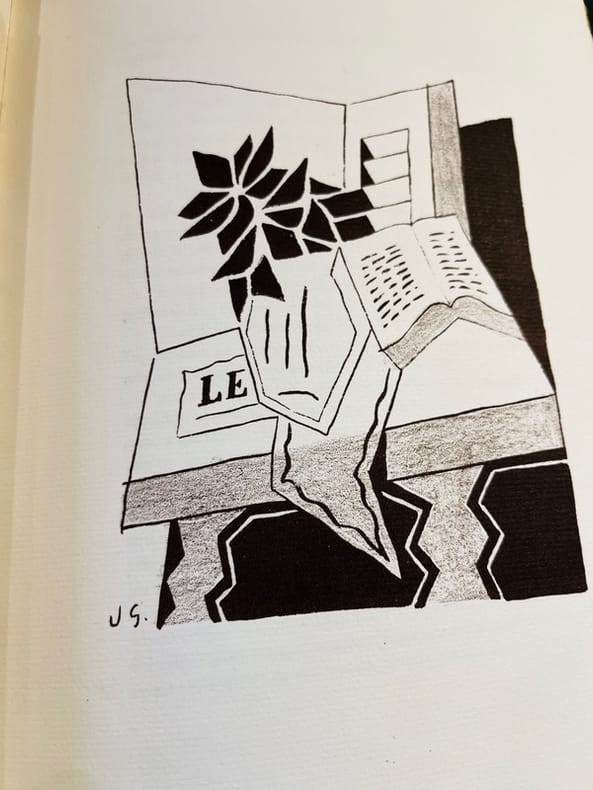
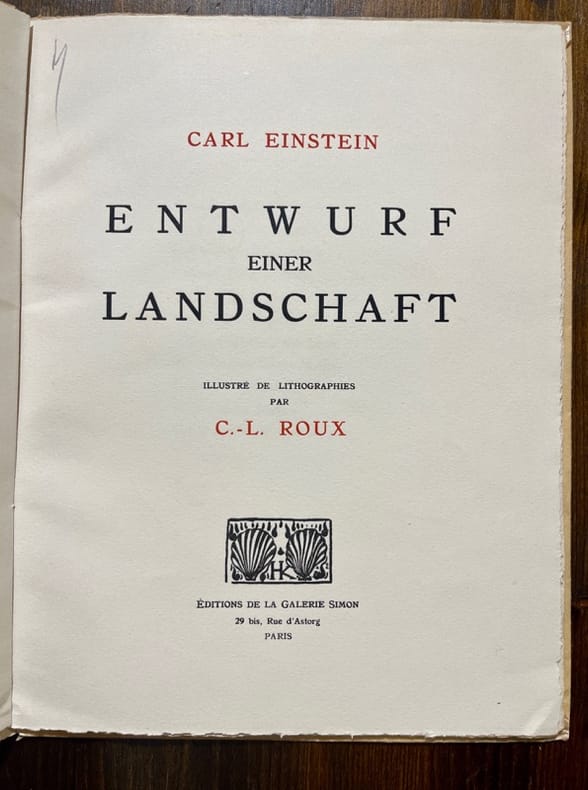
192618544Paris, Éditions de la Galerie Simon, 1926. In-8 broché, couverture imprimée. Chemise en demi-box noir, étui (Honegger).
19300599041930. Original Art Works . No Binding. Fine/Slipcase. A Suite Of Illustrations Unbound Ten Groups Of 13-20 Loose Lithographs Wrapped And Sealed In Glassine Enclosed In A Slipcase. Printed In Color Or B/W No Publisher Or Date Indicated Anywhere Many Signed In The Plate By Early 20Th Century Illustrators Fine Paper 9" X 6 5/8". All Enclosed In A Simple Open Three-Panel Folder Paper With Cloth Edges With Morocco Label "Octave Mirbeau / Suite Des Hors-Textes" And In A Matching Cloth Slipcase With Gray Paper Sides And Cloth Edges. The Illustrators' Artistic Histories And Life Spans Indicate These Were Likely Done In 1920'S-1930'S For An Intended But Unpublished Limited Edition Of Octave Mirbeau's Works Possibly For A Nascent Firm That Failed In The Early 1930'S. One Set By Edy Legrand Is Clearly For "The Torture Garden" By Mirbeau The Other Sets For Nine Of His Other Books. Altogether Two Sets By Legrand One By Jean Launois 1898-1942 One By Berthold Mahn 1893-1975 Three Other Sets Signed But With Illegible Signature Other Sets Not Signed. <br/> <br/> unknown
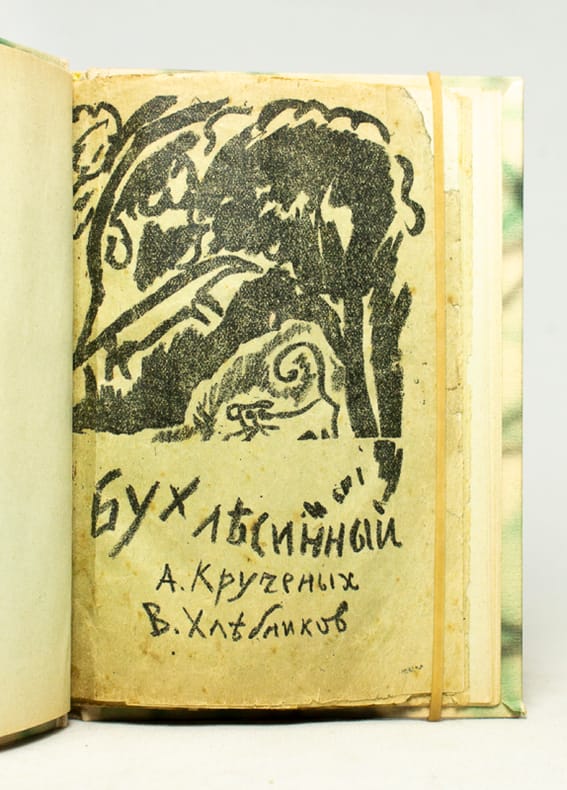
19135633St. Petersbourg, 1913. In-16 de 22 feuillets aux dimensions irrégulières, couvertures illustrées conservées, relié en papier décoré de traits verts et noirs, dos en toile grise (reliure moderne).
1955008624Paris Tériade 1955 in folio En feuilles, couverture rempliée, chemise et étui éditeur
1952015764Paris Pierre Seghers 1952 In-4 Broché à la japonaise Signé par l'auteur
19624566Genève, aux Editions Forces-Vives, [1962].
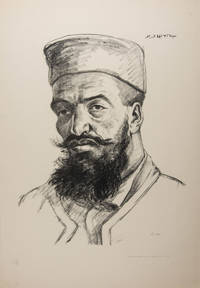
191643931Berlin: Dietrich Reimer Ernst Vohsen 1916. Limited First edition. Hardcover. g- to vg. 1/50. Folio 19 1/2 x 13 1/2". 6 28pp Booklet 100 loose leaves Plates as issued. Original full vellum portfolio with lettering and publisher's logo in gilt to front cover. Booklet's front cover gold-lettered numbered and hand-signed by the artist Hermann Struck. The plates are housed in their stiff paper chemise as issued with printed title to front cover.<br /> <br /> In this spectacular monograph artist Hermann Struck who was serving in the Imperial German army as a translator liaison officer and military artist sketched the faces of one hundred prisoners of war in the German camps. <br /> <br /> Among the French British Belgian and Russian inmates were also included soldiers from the British Empire mostly from India as well as the French Empire Algeria Tunisia Morocco and Senegal.<br /> <br /> The prisoners' age range from 12 Anton Matyszewski a volunteer from Lomza Russian Poland to 56 Mohammed ben Ahmed Spahi from Djelfa French Algeria. <br /> <br /> It is interesting to note that the Jewish prisoners were identified first by their religion then by the place they came from exemple: Chacus Krasikow Jew from Lubin Russian Poland; Isaak Chotoran Jew from Kiev Ukraine; Bomblatt David Polish Jew from Warsaw etc. Bomblatt David is sketched twice: After Struck drew his face he added a second sketch depicting the prisoner reading the Talmud. <br /> <br /> Each plate is handsigned in pencil by the artist.<br /> <br /> The booklet contains a foreword and an essay on ethnology in the World War by Prof. Dr. Felix von Luschan 1854-1924 an Austrian doctor anthropologist explorer archaeologist and ethnographer who joined the German Society for Racial Hygiene in 1908. The society was an eugenic organization whose goal was "for society to return to a healthy and blooming strong and beautiful life." As Alfred Ploetz its founder put it the Nordic race was supposed to regain its "purity" through selective reproduction and sterilization. The society ceased to exist after WWI.<br /> <br /> One of 50 numbered copies of which this is No. 30.<br /> <br /> Some foxing to portfolio with strings missing. Minor age-toning and foxing to wrappers of booklet. 5" closed tear at lower front joint of chemise. Only plates 4 and 5 are foxed along edges not affecting illustrations. Text in German Gothic script Booklet captions of plates in German. Portfolio in overall fair to good booklet in very good chemise in fair to good- plates in very good condition. Hermann Struck 1876-1944 was a German Jewish artist known for his etchings. A fervent Zionist and Jewish activist Struck visited the Land of Israel in 1903 displayed his art at the Fifth Zionist Congress and was a founder of the Mizrachi Religious Zionist movement. At the same time he was a German patriot and volunteered for military service in World War I serving as a translator liaison officer and military artist. Hermann Struck was awarded the Iron Cross 1st Class and promoted to an officer for bravery in 1917 he became the referent for Jewish affairs at the German Eastern Front High Command. Struck immigrated to Palestine in 1922 taught at Bezalel Academy and helped establish the Tel Aviv Museum of Art. He visited Berlin every summer until the Nazis rose to power.<br /> <br /> From the beginning of the war the German authorities found themselves confronted with an unexpected influx of prisoners. In September 1914 125050 French soldiers and 94000 Russian ones were held captive. Before 1915 conditions of detention in Germany were very harsh and marked by temporary lodging and the absence of infrastructure. The prisoners slept in hangars or tents where they dug holes to keep warm. The humid forts requisitioned to serve as places of detention led to numerous cases of pulmonary illness. The German authorities also commandeered schools barns and various other types of shelters. Camps were established in the countryside as well as near the towns which had consequences when epidemics of cholera or typhus threatened to spread to the civilian population. Not all the camps were situated on German territory; a certain number were built in occupied territories notably in northern and eastern France. They began to be developed starting in 1915 when the number of prisoners being held captive in Germany reached 652000. According to official directives each prisoner had to have use of 26.9 square foot 2.5 m². The camps mixed a large number of nationalities sharing the same quarters: French Russian British American Canadian Belgian Italian Romanian Serbian Montenegrin Portuguese and Japanese prisoners were found there as well as Greeks and Brazilians. Equally soldiers of various social origins rubbed elbows: workers peasants bureaucrats and intellectuals were among those held. The number of prisoners rose very quickly. From February to August 1915 it went from 652000 to 1045232. In August 1916 it reached 1625000 jumping to 2415000 by October 1918. For more information see: Uta Hinz's "Gefangen im Großen Krieg: Kriegsgefangenschaft in Deutschland 1914-1921" in German. Essen Klartext Verlag 2006. Dietrich Reimer (Ernst Vohsen) hardcover
1955960Paris, les Bibliophiles de l’Union française, 1955. In-folio (33,5 x 44,5 cm) reliure de l’époque maroquin bleu nuit, sur les plats importante composition mosaïquée et vernie de papiers de reliure noir, marbré gris rose, vert à fond vermiculé en découpe de formes aiguës, dos lisse, titre à la chinoise, tête dorée, couverture et dos conservés, étui bordé de même maroquin. Reliure signée de René et Michel Kieffer.
198516488Paris, Arnaud de Vesgre, 1985 ; grand in-plano (coffret 67 x 48 cm), en feuilles sous couverture blanche à rabats et coffret de tissu orange, titre doré au dos et sur le plat (coffret d’éditeur).
193018547Paris, Éditions de la Galerie Simon, 1930. Grand in-4 broché, couverture imprimée. Chemise en demi-box noir, étui (Honegger).
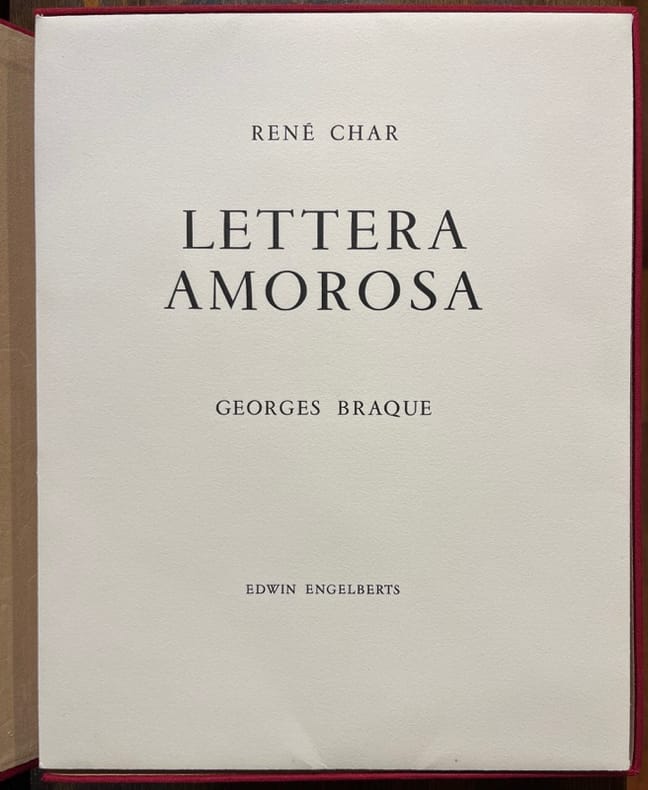
196320173Genève, Edwin Engelberts, 1963. Un volume in-folio (325x250 mm.) sous couverture d'éditeur à rabats, sous emboîtage de toile rouge, titre au dos, sur une large pièce de maroquin rouge.