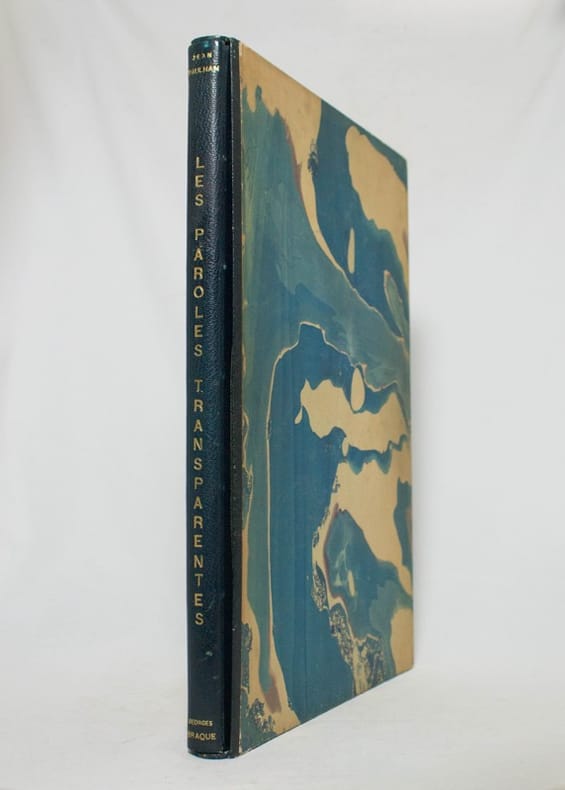
CHAR René; BRAQUE Georges:Livre Rare Book
3 226 résultats
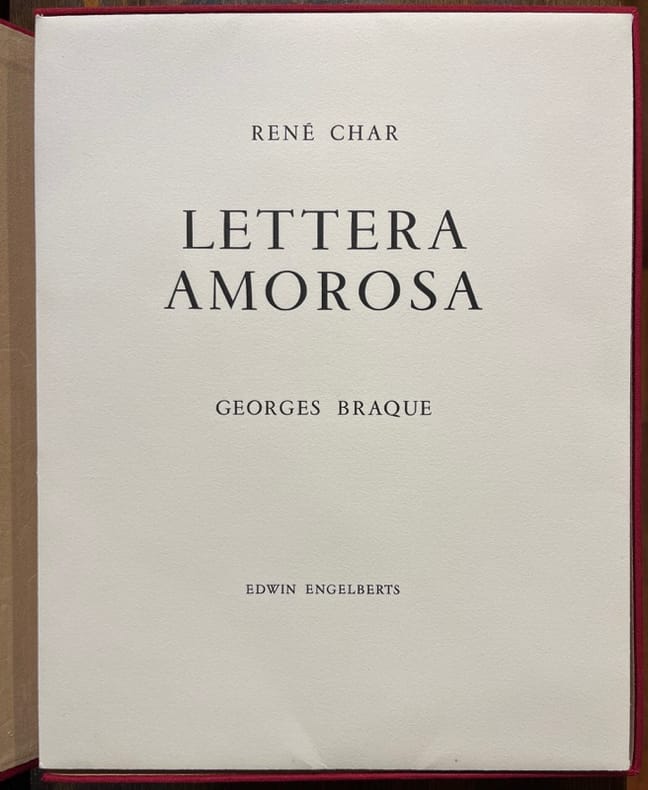
196320173Genève, Edwin Engelberts, 1963. Un volume in-folio (325x250 mm.) sous couverture d'éditeur à rabats, sous emboîtage de toile rouge, titre au dos, sur une large pièce de maroquin rouge.
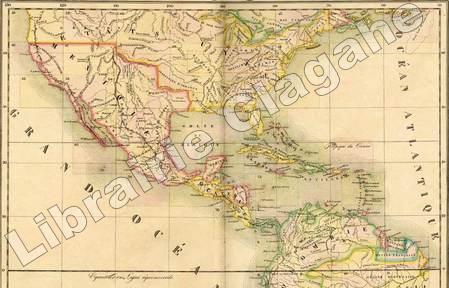
18279452Bruxelles, PMG Vandermaelen éditeur, 1827 ; cinq tomes (Europe, Asie, Afrique, Amérique Septentrionale, Amérique Méridionale), in-folio atlantique (52,5 x 36 cm) ; demi-veau havane à petits coins verts, dos à faux-nerfs dorés, palette décorative dorée en tête et en pied, titre doré, tranches marbrées (reliure uniforme de l'époque) ; 1- Europe : (4), 43 pp., (1) p., tableau comparatif des principales hauteurs du globe (illustré en couleurs), carte d'assemblage de l'Europe et 29 cartes doubles. 2- Asie : (6) pp., carte d'assemblage de l'Asie et 111 cartes doubles. 3- Afrique : (4) pp., tableau d'assemblage de l'Afrique et 60 cartes doubles. 4- Amérique Septentrionale : (4), tableau d'assemblage et tableau provisoire d'assemblage d'une partie de l'Amérique Seple et d'une partie de l'Amérique Méridionale et 77 cartes doubles. 5- Amérique Méridionale : (4), carte d'assemblage d'Amérique Méridionale et 44 cartes doubles. Toutes les cartes sont en couleurs à quelques rares exceptions près et montées sur onglets.
188787352s. d. [1887] | 20.50 x 30.50 cm | une feuille
In-folio, cartella originale rigida, che contiene in fogli sciolti il frontespizio della serie, le 12 litografie a colori, tutte numerate, con timbro a secco “La margherita” firmate dall’autore e con l’indicazione del soggetto; tiratura limitata. Ottimo esemplare.
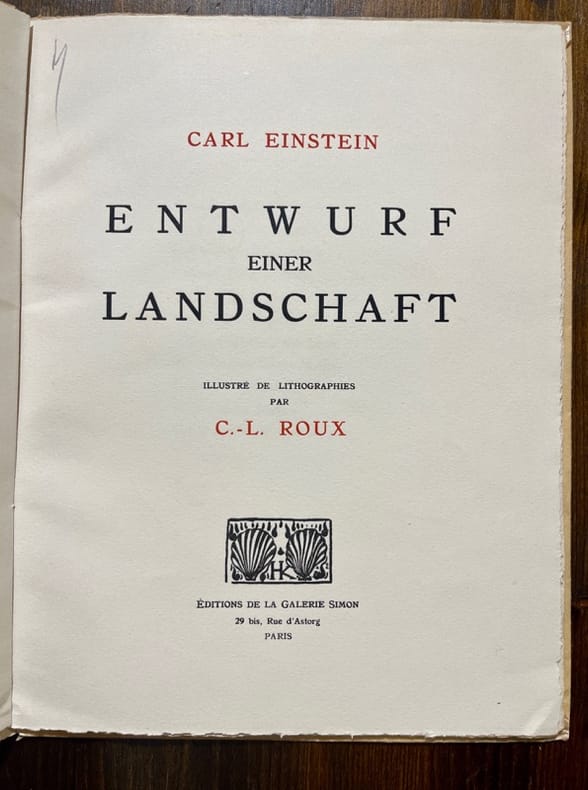
193018547Paris, Éditions de la Galerie Simon, 1930. Grand in-4 broché, couverture imprimée. Chemise en demi-box noir, étui (Honegger).
38003aaf1826, gr. 8vo (23 cm), 1 feuille de titre + 125 p. + 25 planches de vues montées, (dont 3 gravures et 22 lithographies), protégées de serpentes, gardes en papier marbré, petit feuillet de 115 x 65 mm avec envoi ms. ‘à mon ami Theodor Bettinger de la part de l’auteur (signé) E. Scribe’ monté sur la première feuille de garde blanche, reliure en demi-maroquin olive à faux-nerfs, dos orné de caissons, de filets et du titre dorés, légers frottements aux bords, un coin du plat derrière lég. brisé. Bel exemplaire.
198516488Paris, Arnaud de Vesgre, 1985 ; grand in-plano (coffret 67 x 48 cm), en feuilles sous couverture blanche à rabats et coffret de tissu orange, titre doré au dos et sur le plat (coffret d’éditeur).
- Aubert et Cie, Paris s.d. (1840), 27x34cm, 52 lithographies reliées en un volume. - Fourberies de femmes Aubert et Cie | Paris [1840] | 27 x 34 cm 52 lithographs bound together in half shagreen Full sets of 52 original lithographs enhanced by hand with colour and varnish, first printing. These engravings were initially published in La Caricature. Contemporary binding in half brown shagreen, spine lightly faded and decorated with gilt fillets and fleurons, black morocco library label at the foot, glued paper endpapers, the first with a title label framed with a double gilt fillet, caillouté marbled endpapers. Upper corners lightly damaged, margins and spine ends a little rubbed. Some discreet foxing mainly on the first board. A worm hole filled with a piece of paper on the lower margin of the twenty-first print. Plate 38 is little shorter than the others on the external margin. [FRENCH VERSION FOLLOWS] Série complète de 52 lithographies originales rehaussées en couleurs et gommées, toutes en premier tirage. Ces gravures sont primitivement parues dans La Caricature. Reliure de l'époque en demi chagrin marron, dos lisse légèrement éclairci orné de filets et fleurons dorés, étiquette de bibliothèque de maroquin noir en queue, plats de papier à la colle, le premier comportant une étiquette de titre encadrée d'un double filet doré, gardes et contreplats de papier caillouté. Coins supérieurs légèrement accidentés, coupes et coiffes un peu frottées. Quelques discrètes rousseurs essentiellement sur la première planche. Une galerie de ver comblée à l'aide d'une pièce de papier en marge basse de la vingt-et-unième estampe. La planche 38 est un peu plus courte que les autres en marge extérieure.
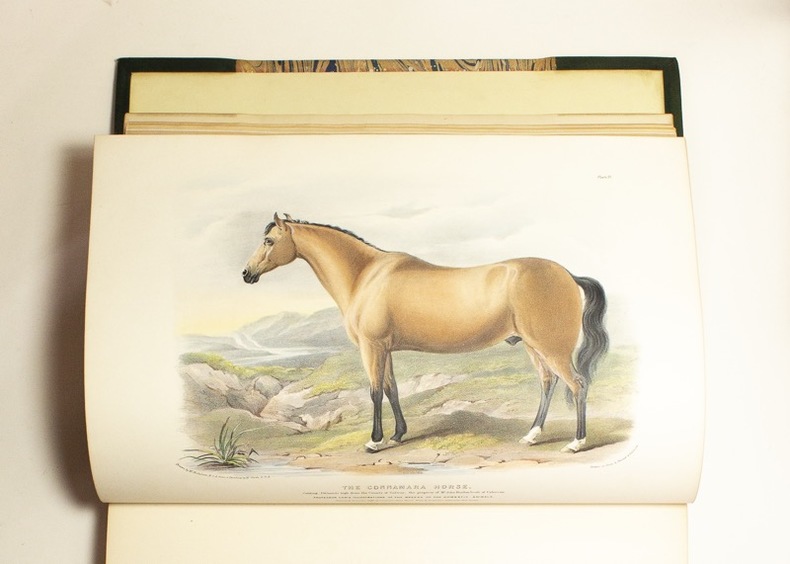
184016561London, Longman, Orme, Brown, Green and Longmans, [1840]- 1842. 2 tomes en 1 volume in-folio de [2]-XXII-46-XXII-55-[1]; [2]-V-[1]-72; 8-18 pages, demi-maroquin à coins verts, dos à nerfs très richement orné, pièce de titre beige, tranches dorées. Reliure signée J. Wright.
1955960Paris, les Bibliophiles de l’Union française, 1955. In-folio (33,5 x 44,5 cm) reliure de l’époque maroquin bleu nuit, sur les plats importante composition mosaïquée et vernie de papiers de reliure noir, marbré gris rose, vert à fond vermiculé en découpe de formes aiguës, dos lisse, titre à la chinoise, tête dorée, couverture et dos conservés, étui bordé de même maroquin. Reliure signée de René et Michel Kieffer.
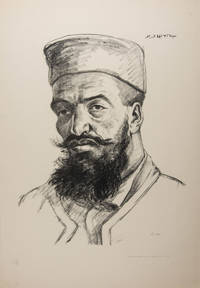
191643931Berlin: Dietrich Reimer Ernst Vohsen 1916. Limited First edition. Hardcover. g- to vg. 1/50. Folio 19 1/2 x 13 1/2". 6 28pp Booklet 100 loose leaves Plates as issued. Original full vellum portfolio with lettering and publisher's logo in gilt to front cover. Booklet's front cover gold-lettered numbered and hand-signed by the artist Hermann Struck. The plates are housed in their stiff paper chemise as issued with printed title to front cover.<br /> <br /> In this spectacular monograph artist Hermann Struck who was serving in the Imperial German army as a translator liaison officer and military artist sketched the faces of one hundred prisoners of war in the German camps. <br /> <br /> Among the French British Belgian and Russian inmates were also included soldiers from the British Empire mostly from India as well as the French Empire Algeria Tunisia Morocco and Senegal.<br /> <br /> The prisoners' age range from 12 Anton Matyszewski a volunteer from Lomza Russian Poland to 56 Mohammed ben Ahmed Spahi from Djelfa French Algeria. <br /> <br /> It is interesting to note that the Jewish prisoners were identified first by their religion then by the place they came from exemple: Chacus Krasikow Jew from Lubin Russian Poland; Isaak Chotoran Jew from Kiev Ukraine; Bomblatt David Polish Jew from Warsaw etc. Bomblatt David is sketched twice: After Struck drew his face he added a second sketch depicting the prisoner reading the Talmud. <br /> <br /> Each plate is handsigned in pencil by the artist.<br /> <br /> The booklet contains a foreword and an essay on ethnology in the World War by Prof. Dr. Felix von Luschan 1854-1924 an Austrian doctor anthropologist explorer archaeologist and ethnographer who joined the German Society for Racial Hygiene in 1908. The society was an eugenic organization whose goal was "for society to return to a healthy and blooming strong and beautiful life." As Alfred Ploetz its founder put it the Nordic race was supposed to regain its "purity" through selective reproduction and sterilization. The society ceased to exist after WWI.<br /> <br /> One of 50 numbered copies of which this is No. 30.<br /> <br /> Some foxing to portfolio with strings missing. Minor age-toning and foxing to wrappers of booklet. 5" closed tear at lower front joint of chemise. Only plates 4 and 5 are foxed along edges not affecting illustrations. Text in German Gothic script Booklet captions of plates in German. Portfolio in overall fair to good booklet in very good chemise in fair to good- plates in very good condition. Hermann Struck 1876-1944 was a German Jewish artist known for his etchings. A fervent Zionist and Jewish activist Struck visited the Land of Israel in 1903 displayed his art at the Fifth Zionist Congress and was a founder of the Mizrachi Religious Zionist movement. At the same time he was a German patriot and volunteered for military service in World War I serving as a translator liaison officer and military artist. Hermann Struck was awarded the Iron Cross 1st Class and promoted to an officer for bravery in 1917 he became the referent for Jewish affairs at the German Eastern Front High Command. Struck immigrated to Palestine in 1922 taught at Bezalel Academy and helped establish the Tel Aviv Museum of Art. He visited Berlin every summer until the Nazis rose to power.<br /> <br /> From the beginning of the war the German authorities found themselves confronted with an unexpected influx of prisoners. In September 1914 125050 French soldiers and 94000 Russian ones were held captive. Before 1915 conditions of detention in Germany were very harsh and marked by temporary lodging and the absence of infrastructure. The prisoners slept in hangars or tents where they dug holes to keep warm. The humid forts requisitioned to serve as places of detention led to numerous cases of pulmonary illness. The German authorities also commandeered schools barns and various other types of shelters. Camps were established in the countryside as well as near the towns which had consequences when epidemics of cholera or typhus threatened to spread to the civilian population. Not all the camps were situated on German territory; a certain number were built in occupied territories notably in northern and eastern France. They began to be developed starting in 1915 when the number of prisoners being held captive in Germany reached 652000. According to official directives each prisoner had to have use of 26.9 square foot 2.5 m². The camps mixed a large number of nationalities sharing the same quarters: French Russian British American Canadian Belgian Italian Romanian Serbian Montenegrin Portuguese and Japanese prisoners were found there as well as Greeks and Brazilians. Equally soldiers of various social origins rubbed elbows: workers peasants bureaucrats and intellectuals were among those held. The number of prisoners rose very quickly. From February to August 1915 it went from 652000 to 1045232. In August 1916 it reached 1625000 jumping to 2415000 by October 1918. For more information see: Uta Hinz's "Gefangen im Großen Krieg: Kriegsgefangenschaft in Deutschland 1914-1921" in German. Essen Klartext Verlag 2006. Dietrich Reimer (Ernst Vohsen) hardcover
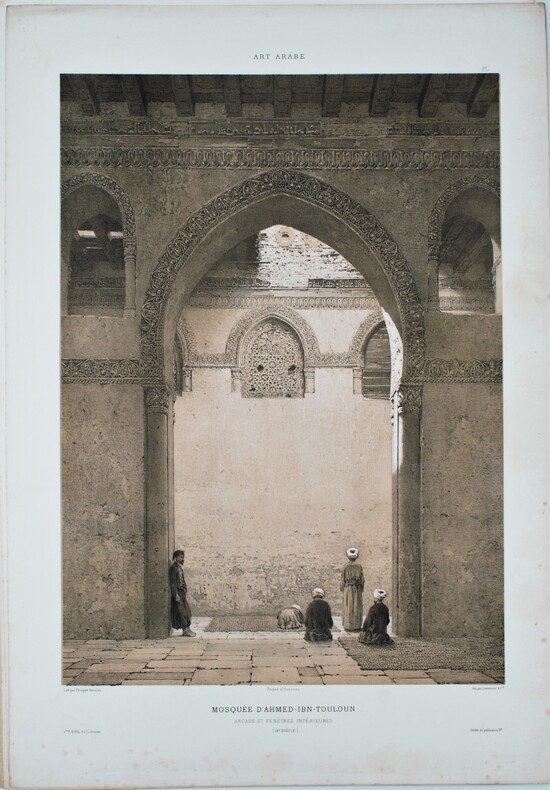
1877PHO-2147Paris, Morel, 1877, 4 volumes, 3 volumes de gravures in-folio et 1 volume de texte in-4 Texte ; VIII-296pp, illustré de 34 gravures h.t. et de nombreuse dans le texte, demi basane époque, dos lisse avec titre, frottements, rousseurs éparses. Atlas ; 3 volumes in-folio en feuilles, sous emboîtages moderne. Comprenant pages de titre et tables des planches, complets des 199 (sur 200) planches (22 gravées et 177 lithographiées dont 39 vues teintées et 130 chromolithographies, plusieurs rehaussées d'or), lithographiées ou gravées, parfois en couleurs et certaines d'après Girault de Prangey, l'un des tout premiers voyageurs français à photographier Le Caire et Jérusalem. Les planches représentent des vues de vestiges, de nombreux détails d'ornementations (portes, heurtoirs, flambeaux, plats, etc.) ainsi que des meubles, des textiles, des céramiques, des boiseries, des carrelages, des armes et des armures, des verres et des émaux, des tapis, des manuscrits et des corans, une planche déchirée sans manque. Édition originale de l'ouvrage le plus important du XIXe siècle entièrement consacré à l'art arabe.
LANDAU'S RAREST AND MOST IMPORTANT GRAPHIC SERIES. This is a suite of 10 haunting and enigmatic original lithographs by Jacob Landau, each one justified and signed in pencil by the artist. From an edition of 20 sets printed on fine BFK Rives wove paper, this is set 20/20. Additionally signed by Landau in the colophon. Furthermore, this is an outstanding association copy, with Landau's signed presentation inscription to Sylvan and Lilyan Cole. Sylvan Cole (1918-2005) was the most important dealer in American prints of his (or any) generation, and as director of Associated American Artists he published and sold many of Landau's prints. Lilyan was his second wife. *** "I did a suite of lithographs called CharadesÖ I associated the name Charades with what Goya had called Caprichos, Öriddles, puzzles. He also did a series called Proverbs, where he picked up on sayings that were common in the land, but dealt with them in mysterious, puzzling ways. And, I dealt with what came out of my obsessions, things that I did not fully understand. Fear of death, for instance, and a sort of frustrated feeling of love. These are obsessions that manifest themselves in various ways and images. The reason they seem to appeal to others is because apparently other people share some of the same obsessions. Thatís where the archetypal aspect comes in." --Jacob Landau. *** Folio. FINE AND BRIGHT WITH NO DEFECTS. Housed in the original cloth folding case, by Schuberth Bookbindery of San Francisco. An outstanding item. Since all of the lithographs are signed, most sets have been broken up. This set, however, was in Sylvan Cole's private collection from the day it was presented to him by the artist until his death in June, 2005. IMPORTANT NOTE: During March, 2006, hundreds of prints represented as being from "the Sylvan Cole collection" were sold at public auction. In fact, ALL of these items were from his leftover gallery inventory, not his private collection. As far as I know, the few items I offer from Sylvan's collection are the ONLY items anywhere on the market which are actually from his private collection (which he kept in his apartment, not his gallery). I acquired them all directly from Sylvan (my uncle), mainly in spring, 2005.
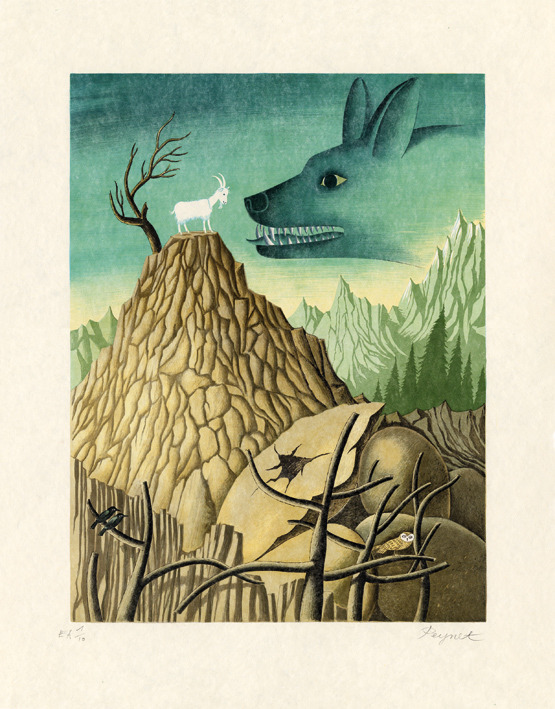
19624566Genève, aux Editions Forces-Vives, [1962].
In-folio, cartella originale rigida, che contiene in fogli sciolti il frontespizio della serie, le 10 litografie, tutte numerate, firmate dall’autore e con l’indicazione del soggetto, e un ultimo foglio con indicazioni sulla stampa e la tiratura; tiratura limitata, dopo la stampa le matrici furono distrutte. Litografo Igino Alessandrini. Ottimo esemplare.
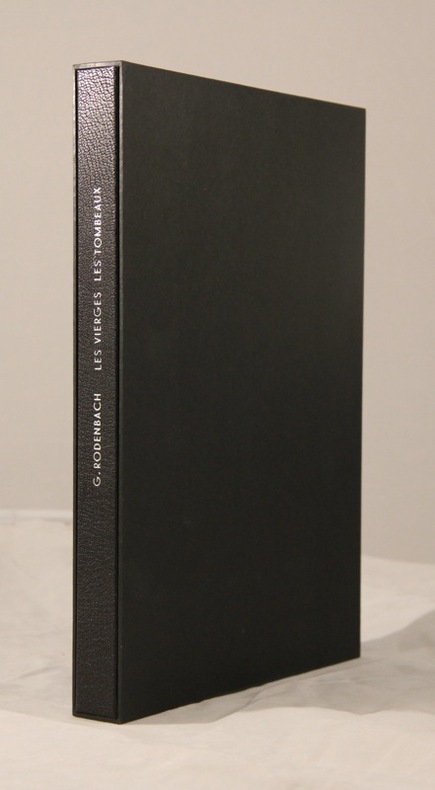
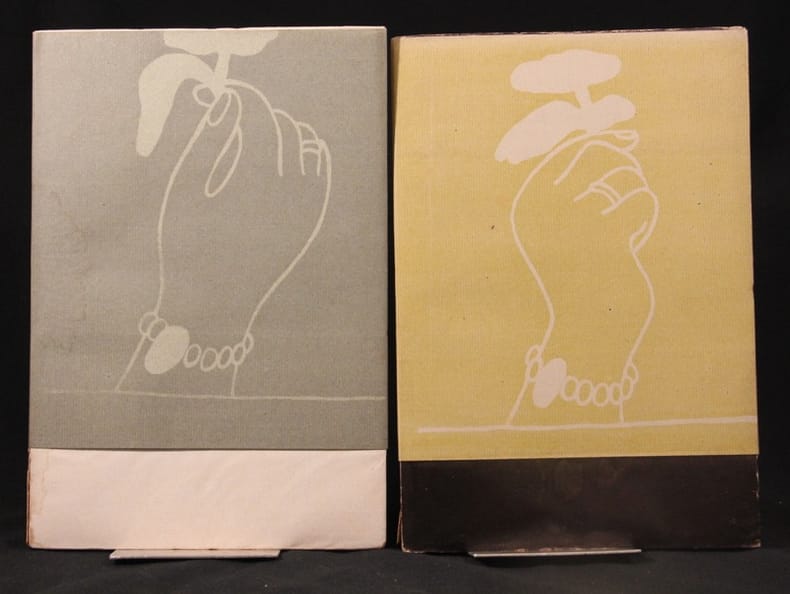
18955238Paris, S. Bing, Noël 1895. Broché, 24 pages, couverture muette de papier moiré blanc, recouverte d'une large bande de papier gris vert rempliée, illustrée d'un bois tiré en blanc. Les Tombeaux : broché, 28 pages, couverture muette de papier moiré noir, recouverte d'une large bande de papier vert-jaune rempliée illustrée d'un bois tiré en rose (passé). Sous chemise étui maroquin noir de Jean-Luc Honegger.
1952015764Paris Pierre Seghers 1952 In-4 Broché à la japonaise Signé par l'auteur
Cartella originale, in folio, contenente 12 fogli sciolti: il frontespizio, 10 litografie numerate e firmate a matita dall’autore, un testo in fac-simile con le note sulla stampa e sulla tiratura; la cartella fa parte della collana di cartelle litografiche diretta da Libero de Libero per lo studio di Villa Giulia; il litografo è Igino Alessandrini; esemplare 12 di 80. La copertina è di Mino Maccari. Le tavole del “Romanzo nero” riportano alla memoria l’episodio di cronaca della prostituta assassinata e fatta a pezzi nella pineta del Tombolo.
- L'Estampe Moderne, Imprimerie Champenois pour CH. Masson & H. Piazza, Paris s.d. (Mai 1897), sujet : 22x38cm, planche : 40,8x55cm, une feuille et une serpente. - "L'incantation" (Salammbô) - Original lithograph on Japan paper - L'Estampe Moderne L'Estampe Moderne, Imprimerie Champenois for C H Masson & H Piazza | Paris (june 1897) | subject: 23.5 x 33 cm, plate: 40.8 x 55 cm | one leaf and one guard Rare original color lithograph heightened in gold by Alphonse Mucha for L'Estampe Moderne, 'The free first prize reserved to subscribers to a whole annual run of L'Estampe Moderne'. One of 50 grand luxe proofs printed on Japan paper with wide margins, signed by the artist in the plate, publisher's embossed stamp showing a child in profile to lower margin, numbered stamp of the de luxe printing to verso, upper margin of proof slightly sunned; the print itself preceded by a silk paper guard with the name of the artist, the title of the work and an extract from itlateral tear without loss, not touching text. A lithograph inspired by Gustave Flaubert's Salammbô, an excerpt from which is reproduced on the guard sheet of the print: "[And Salammbô went out onto the balcony of his palace]". A magnificent monthly French publication that appeared between May 1897 and April 1899, L'Estampe moderne comprised unpublished chromolithographs that, unlike those in other magazines like Les Maîtres de l'Affiche and as is stipulated on the guard sheets, were specially made by each artist for the magazine. There are thus 100 prints that appeared in total, covering the major artistic currents of the late 19th Century: Symbolism, Art Nouveau, the Pre-Raphaelites, Orientalists and the Belle époque. Each fascicule of four prints was printed in 2,000 copies and sold for 3.50F, with 100 on Japan paper sold at 10F. Henri Piazza also planned a very luxurious secret printing of 50 copies on Japan paper with wide margins and 50 in black and white on China paper at the considerable price of 30F. This well-sized print is superbly printed in colors on the most prestigious of papers: Japan. Thick, creamy, satin and with a nice sheen, it contributes to making each page a work of art in itself. Its absorptive qualities for ink and its affinity for colors make it the ideal support for these lovely lithographs. The interest of French collectors for artistic posters grew from the beginning of the 1890s. Octave Uzanne invented a term for this growing interest: affichomanie, or poster mania. The poster, originally not rare and posted up in the streets of the capital, thus became a work of art and its ephemeral background became precious and essential for conservation. Piazza decided to extract the poster from its advertising role and to elevate it to a form of art, similarly to luxury illustrated artists' books. He thus put together a prestigious collection of entirely original works by the most fashionable European artists of the age: Georges de Feure, Eugène Grasset, Henri Detouche, Emile Berchmans, Louis Rhead, Gaston de Latenay, Lucien Lévy-Dhurmer, Gustave-Max Stevens, Charles Doudelet, Hans Christiansen, Henri Fantin-Latour, Steinlen, Ibels, Engels, Willette, Henri Meunier, Evenepoël, Bellery-Desfontaines, Charles Léandre, etc. He also included in this project a Czech artist freshly arrived in Paris, Alfonse Mucha "who has only recently become active in France but who has immediately carved out for himself the affection of the public. Like in his posters, which everyone knows and covets, he shows us here the varied resources of his multifaceted talents as accomplished draughstman, decorator and colorist" (from the notes printed on the guard for Salomé). The two first special numbers of the review were in fact dedicated to him, and were given to "all the subscribers for all twelve annual numbers of L'Estampe moderne" as well as the famous illustration of the covers. A fine signed plate by the master of Art nouveau. [FRENCH VERSION FOLLOWS] Rare lithographie ori
- L'Estampe Moderne, Imprimerie Champenois pour CH. Masson & H. Piazza, Paris s.d. (Juin 1897), sujet : 23,5x33cm, planche : 40,8x55cm, une feuille et une serpente. - "Salomé" - Original lithograph on Japan paper - L'Estampe Moderne L'Estampe Moderne | Imprimerie Champenois for C. H. Masson & H. Piazza | Paris [june 1897] | subject: 23.5 x 33 cm | plate: 40.8 x 55 cm | one leaf and one guard Rare color lithograph heightened in gold by Alphonse Mucha for L'Estampe Moderne, series number 2, published in June 1897. One of 50 grand luxe proofs printed on Japan paper with wide margins, signed by the artist in the stone, publisher's embossed stamp showing a child in profile to lower margin, numbered stamp of the de luxe printing to verso, upper margin of proof slightly sunned; the print itself preceded by a silk paper guard with the name of the artist, the title of the work and an introduction to the work as well as a blank guard leaf. A magnificent monthly French publication that appeared between May 1897 and April 1899, L'Estampe moderne comprised unpublished chromolithographs that, unlike those in other magazines like Les Maîtres de l'Affiche and as is stipulated on the guard sheets, were specially made by each artist for the magazine. There are thus 100 prints that appeared in total, covering the major artistic currents of the late 19th Century: Symbolism, Art Nouveau, the Pre-Raphaelites, Orientalists and the Belle époque. Each fascicule of four prints was printed in 2,000 copies and sold for 3.50F, with 100 on Japan paper sold at 10F. Henri Piazza also planned a very luxurious secret printing of 50 copies on Japan paper with wide margins and 50 in black and white on China paper at the considerable price of 30F. This well-sized print is superbly printed in colors on the most prestigious of papers: Japan. Thick, creamy, satin and with a nice sheen, it contributes to making each page a work of art in itself. Its absorptive qualities for ink and its affinity for colors make it the ideal support for these lovely lithographs. The interest of French collectors for artistic posters grew from the beginning of the 1890s. Octave Uzanne invented a term for this growing interest: affichomanie, or poster mania. The poster, originally not rare and posted up in the streets of the capital, thus became a work of art and its ephemeral background became precious and essential for conservation. Piazza decided to extract the poster from its advertising role and to elevate it to a form of art, similarly to luxury illustrated artists' books. He thus put together a prestigious collection of entirely original works by the most fashionable European artists of the age: Georges de Feure, Eugène Grasset, Henri Detouche, Emile Berchmans, Louis Rhead, Gaston de Latenay, Lucien Lévy-Dhurmer, Gustave-Max Stevens, Charles Doudelet, Hans Christiansen, Henri Fantin-Latour, Steinlen, Ibels, Engels, Willette, Henri Meunier, Evenepoël, Bellery-Desfontaines, Charles Léandre, etc. He also included in this project a Czech artist freshly arrived in Paris, Alfonse Mucha "who has only recently become active in France but who has immediately carved out for himself the affection of the public. Like in his posters, which everyone knows and covets, he shows us here the varied resources of his multifaceted talents as accomplished draughstman, decorator and colorist" (from the notes printed on the guard for Salomé). The two first special numbers of the review were in fact dedicated to him, and were given to "all the subscribers for all twelve annual numbers of L'Estampe moderne" as well as the famous illustration of the covers. A fine signed plate by the master of Art nouveau. [FRENCH VERSION FOLLOWS] Rare lithographie originale en couleurs réhaussée à l'or, exécutée par Alphons Mucha pour L'Estampe Moderne, série numéro 2 publiée en juin 1897. Une des 50 épreuves de grand luxe tirées sur Japon à grandes marges, signature de l'artiste dans la planche, timbre à sec de l'é
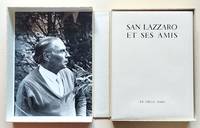
003004Paris: XXe Siecle 1975. Book. Fine. Hardcover. 1st Edition. Published as a tribute to Gualtieri di San Lazzaro the founder of the magazine XXe Siecle. Loose sheets as issued. In original wrappers and cloth clamshell box with the portrait of Gualtieri di San Lazzaro mounted on the inside. With 15 lithographs by Max Bill Alexander Calder Marc Chagall Max Ernst Hans Hartung Joan Miro Henry Moore Graham Sutherland Georges Braque Lucio Fontana Rene Magritte Pablo Picasso Serge Poliakoff and Alberto Magnelli. All but one Chagall printed in color. Text by Gualtieri di San Lazzaro Pierre Volboudt Nina Kandinsky Marc Chagall Andre Verdet Marino Marini and others. This is number 310 of a limited edition of 575 copies all printed on Velin d'Arches by Fernand Mourlot l'Imprimerie Arte Pierre Chave Les Ateliers Bellini and Curwen Studio London. 141vii pp. 38 x 288 x 55 cm. Except from the inevitable offsetting from the lithographs to the facing text pages this is a very fine almost mint copy in collectors condition. . XXe Siecle Hardcover
18954681Paris, S. Bing, Noël 1895. 2 volumes brochés: Les Vierges, 24 pages, couverture muette de papier moiré blanc, recouverte d'une large bande de papier gris vert rempliée, illustrée d'un bois tiré en blanc. Les Tombeaux: broché, 28 pages, couverture muette de papier moiré noir, recouverte d'une large bande de papier vert-jaune rempliée illustrée d'un bois tiré en rose (passé).2 volumes: Les Vierges 24 pages, blank cover of white shimmering paper, covered with a wide band of grey-green paper wrapped, illustrated with a woodcut printed in white. Les Tombeaux: 28 pages, blank cover of black shimmering paper, covered with a wide band of green-yellow paper wrapped, illustrated with a woodcut printed in pink (faded).
9272Moulins, Imprimerie de P.A. Desrosiers, 1843 - 1847 ; cinq tomes grand in-folio (47 x 31) dont un Atlas ; demi-chagrin vert foncé, dos à nerfs, caissons à froid, titre doré en caractères gothiques, tête dorée (reliure de l'époque) ; (4), XXVIII, 448 ; 484, (2) ; VI, 264, (4) ; (4), 338 (mal chiffrées 336) ; atlas de 144 planches (complet) lithographiées dont 6 en chromolithographie, dessinées par V. Beauce, E. Tudot, H. Durand, E. Sagot, E. Thibaud, A. Dauvergne, Ch. Vallet, etc., gravées par Bayot, Mathieu, V. Petit, Meusson, Monthelier, Ph. Benoist, Berthet, Schaal, etc. ; certaines sont tirées en camaïeu avec un fond beige ; les quatre tomes de texte sont illustrés de 20 bandeaux, 86 lettrines, 50 vignettes ou culs-de-lampe, 6 reproductions de monnaies et 3 plans ou carte par E. Sagot (en majorité), Chenavard, Tony Johannot, etc., gravés sur bois, la vignette de titre est identique pour les quatre volumes.
COMPLETE SIX VOLUME SET BOUND IN THREE. RARE elaborate and vast series of detailed lithograph prints of Egypt and the Near East by the eminent Scottish painter David Roberts (1796-1864), which he produced from sketches he had made during long tours of the region (1838-1840). These and his large oil paintings of similar subjects made him a prominent Orientalist painter, and he was elected as a Royal Academician in 1841. [ALL VOLUMES]: 300x220mm. Unpaginated. Half-leather gilt Hardcover with gilt ribbed spine. Text block edges gilt. Marbled endpaper. Cover and spine rubbed and slightly scratched. Cover slightly stained. Cover corners bumped and worn. Cover edges slightly bumped. Spine edges and hinges rubbed. Whitepages and few other pages age-stained. Some pages and plates slightly age-stained (otherwise the plates are in very good condition). Pages slightly yellowing. [VOLS.I-II]: Cover corner and spine upper edge peeling. [VOLS.III-IV]: Two bump-marks on spine rear hinge. [VOLS.III-IV & V-VI]: Front cover somewhat lumpy. [SUMMARY]: This extremely rare precious set of classic 19th-century Orientalist lithographs by the foremost artist in this genre is good condition. PLEASE NOTE: This item is overweight. We may ask for extra shipping costs.
189773887Imprimerie Champenois pour CH. Masson H. Piazza | Paris s. d. [Mai 1897] | 22 x 38 cm | une feuille et une serpente