210 résultats
180926520Imprimerie Impériale | Paris 1809-1829 | 71 x 54 cm | une feuille
180926522Imprimerie Impériale | Paris 1809-1829 | 71 x 54 cm | une feuille
180926525Imprimerie Impériale | Paris 1809-1829 | 54 x 71 cm | une feuille
180932820Imprimerie Impériale | Paris 1809-1829 | 71 x 53.50 cm | une feuille
185733859Paris: Labe 1857. Labe unknown books
180926496Paris: Imprimerie Impériale 1809. Fine. Imprimerie Impériale Paris 1809-1829 71 x 54 cm une feuille Original unshaved full-page etching from the Imperial edition of the Description de l'Égypte or Recueil des observations et recherches faites en Égypte pendant l'expédition française publié par les ordres de Sa Majesté l'Empereur Napoléon le Grand A Collection of the observations and research carried out in Egypt during the French expedition published on the orders of his Majesty the Emperor Napoleon the Great'.Produced between February 1802 and 1830 on the orders of Naopleon Bonaparte and published between 1809 and 1828 1000 copies were printed and distributed to institutions on vergé paper with an 'Égypte ancienne et moderne' watermark visible when held up to the light. Light marginal spotting not touching image otherwise in very fresh fine condition. An engraving from the Description de l'Egypte one of the masterpieces of French printing and the birth of a new field: Egyptology. A gigantic survey of Egypt at the time of Bonaparte's conquests in 1798 and 1799 the work is divided into 13 volumes of engravings making up 892 plates of which 72 colored as well as presenting the splendors of the Egypt of the Pharaohs in 9 volumes. The other volumes discuss natural history and present a fascinating portrait of Coptic and Islamic Egypt as it was seen by Bonaparte's Eastern Armies. The Egyptian campaign' militarily a disaster demonstrates through the engravings of the Description d'Egypte the scientific success it nonetheless became thanks to the 167 expert members of the Commission of the Sciences and Arts of the Institut d'Egypte Egyptian Institute who followed Napoleon's army. The Institut gathered together in Egypt the mathematician Monge the chemist Berthollet the naturalist Geoffroy Saint-Hilaire as well as numerous artists engineers architects and doctors. They were tasked with re-discovering modern and ancient Egypt and displaying its natural treasures as well as the know-how of its inhabitants.This edition the so-called Imperial edition of the plates for the Description de l'Egypte was printed in four large formats two of which were specially created for it and christened Moyen-Egypte and Grand-Egypte. A special press was built to print it the process extending over 20 years from 1809 to 1829. The Imperial edition proved so popular that a second edition this time in black and white and without the Egypte ancienne et moderne watermark known as the Royal Edition was published during the Restoration by the printing house of C.-L.-F. Panckoucke Paris.The engravings of the Description d'Egypte owe a great deal to Baron Dominique-Vivant Denon illustrator diplomat collector and later Director of the Musée Napoléon the Louvre. His exploration of the South of Egypt gave Bonaparte the idea of sending the experts of the Institut there thus creating a faithful and complete portrait of the area. This was the research gathered together from 1802 in the mammoth Description de L'Egypte.Denon embarked on this story of archeological exploration at the age of 51 reaching first Alexandria and then Cairo before exploring Upper Egypt. Along with the members of the Institut d'Egypte the Natural History Museum's painter H.J. Redouté brother of Pierre-Joseph Redouté author of Roses the mineralogist Dolomiue and the draughtsman Joly Denon then explored the Nile Delta and Lower Egypt. When however he joined the 21st Light Infantry Regiment as it marched across Upper Egypt in pursuit of the retreating Mameluks in November 1798 he found himself the only civilian. In the very midst of the battle itself he reeled off sketches of the works of art that peppered his path right up to the threshold of the Sudan. He said that he had crossed a country that is apart from its name entirely unknown to Europeans and therefore everything was worth describing Voyages dans la Basse et la Haute Egypte pendant les campagnes de Imprimerie Impériale unknown
180925896Paris: Imprimerie Impériale 1809. Fine. Imprimerie Impériale Paris 1809-1829 71 x 54 cm une feuille Original unshaved full-page etching from the Imperial edition of the Description de l'Égypte or Recueil des observations et recherches faites en Égypte pendant l'expédition française publié par les ordres de Sa Majesté l'Empereur Napoléon le Grand A Collection of the observations and research carried out in Egypt during the French expedition published on the orders of his Majesty the Emperor Napoleon the Great'.Produced between February 1802 and 1830 on the orders of Naopleon Bonaparte and published between 1809 and 1828 1000 copies were printed and distributed to institutions on vergé paper with an 'Égypte ancienne et moderne' watermark visible when held up to the light. Light marginal spotting not touching image otherwise in very fresh fine condition. An engraving from the Description de l'Egypte one of the masterpieces of French printing and the birth of a new field: Egyptology. A gigantic survey of Egypt at the time of Bonaparte's conquests in 1798 and 1799 the work is divided into 13 volumes of engravings making up 892 plates of which 72 colored as well as presenting the splendors of the Egypt of the Pharaohs in 9 volumes. The other volumes discuss natural history and present a fascinating portrait of Coptic and Islamic Egypt as it was seen by Bonaparte's Eastern Armies. The Egyptian campaign' militarily a disaster demonstrates through the engravings of the Description d'Egypte the scientific success it nonetheless became thanks to the 167 expert members of the Commission of the Sciences and Arts of the Institut d'Egypte Egyptian Institute who followed Napoleon's army. The Institut gathered together in Egypt the mathematician Monge the chemist Berthollet the naturalist Geoffroy Saint-Hilaire as well as numerous artists engineers architects and doctors. They were tasked with re-discovering modern and ancient Egypt and displaying its natural treasures as well as the know-how of its inhabitants.This edition the so-called Imperial edition of the plates for the Description de l'Egypte was printed in four large formats two of which were specially created for it and christened Moyen-Egypte and Grand-Egypte. A special press was built to print it the process extending over 20 years from 1809 to 1829. The Imperial edition proved so popular that a second edition this time in black and white and without the Egypte ancienne et moderne watermark known as the Royal Edition was published during the Restoration by the printing house of C.-L.-F. Panckoucke Paris.The engravings of the Description d'Egypte owe a great deal to Baron Dominique-Vivant Denon illustrator diplomat collector and later Director of the Musée Napoléon the Louvre. His exploration of the South of Egypt gave Bonaparte the idea of sending the experts of the Institut there thus creating a faithful and complete portrait of the area. This was the research gathered together from 1802 in the mammoth Description de L'Egypte.Denon embarked on this story of archeological exploration at the age of 51 reaching first Alexandria and then Cairo before exploring Upper Egypt. Along with the members of the Institut d'Egypte the Natural History Museum's painter H.J. Redouté brother of Pierre-Joseph Redouté author of Roses the mineralogist Dolomiue and the draughtsman Joly Denon then explored the Nile Delta and Lower Egypt. When however he joined the 21st Light Infantry Regiment as it marched across Upper Egypt in pursuit of the retreating Mameluks in November 1798 he found himself the only civilian. In the very midst of the battle itself he reeled off sketches of the works of art that peppered his path right up to the threshold of the Sudan. He said that he had crossed a country that is apart from its name entirely unknown to Europeans and therefore everything was worth describing Voyages dans la Basse et la Haute Egypte pendant les campagnes de Imprimerie Impériale unknown
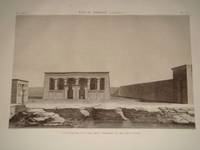
180926522Paris: Imprimerie Impériale 1809. Fine. Imprimerie Impériale Paris 1809-1829 71 x 54 cm une feuille Original unshaved full-page etching from the Imperial edition of the Description de l'Égypte or Recueil des observations et recherches faites en Égypte pendant l'expédition française publié par les ordres de Sa Majesté l'Empereur Napoléon le Grand A Collection of the observations and research carried out in Egypt during the French expedition published on the orders of his Majesty the Emperor Napoleon the Great'.Produced between February 1802 and 1830 on the orders of Naopleon Bonaparte and published between 1809 and 1828 1000 copies were printed and distributed to institutions on vergé paper with an 'Égypte ancienne et moderne' watermark visible when held up to the light. Light marginal spotting not touching image otherwise in very fresh fine condition. An engraving from the Description de l'Egypte one of the masterpieces of French printing and the birth of a new field: Egyptology. A gigantic survey of Egypt at the time of Bonaparte's conquests in 1798 and 1799 the work is divided into 13 volumes of engravings making up 892 plates of which 72 colored as well as presenting the splendors of the Egypt of the Pharaohs in 9 volumes. The other volumes discuss natural history and present a fascinating portrait of Coptic and Islamic Egypt as it was seen by Bonaparte's Eastern Armies. The Egyptian campaign' militarily a disaster demonstrates through the engravings of the Description d'Egypte the scientific success it nonetheless became thanks to the 167 expert members of the Commission of the Sciences and Arts of the Institut d'Egypte Egyptian Institute who followed Napoleon's army. The Institut gathered together in Egypt the mathematician Monge the chemist Berthollet the naturalist Geoffroy Saint-Hilaire as well as numerous artists engineers architects and doctors. They were tasked with re-discovering modern and ancient Egypt and displaying its natural treasures as well as the know-how of its inhabitants.This edition the so-called Imperial edition of the plates for the Description de l'Egypte was printed in four large formats two of which were specially created for it and christened Moyen-Egypte and Grand-Egypte. A special press was built to print it the process extending over 20 years from 1809 to 1829. The Imperial edition proved so popular that a second edition this time in black and white and without the Egypte ancienne et moderne watermark known as the Royal Edition was published during the Restoration by the printing house of C.-L.-F. Panckoucke Paris.The engravings of the Description d'Egypte owe a great deal to Baron Dominique-Vivant Denon illustrator diplomat collector and later Director of the Musée Napoléon the Louvre. His exploration of the South of Egypt gave Bonaparte the idea of sending the experts of the Institut there thus creating a faithful and complete portrait of the area. This was the research gathered together from 1802 in the mammoth Description de L'Egypte.Denon embarked on this story of archeological exploration at the age of 51 reaching first Alexandria and then Cairo before exploring Upper Egypt. Along with the members of the Institut d'Egypte the Natural History Museum's painter H.J. Redouté brother of Pierre-Joseph Redouté author of Roses the mineralogist Dolomiue and the draughtsman Joly Denon then explored the Nile Delta and Lower Egypt. When however he joined the 21st Light Infantry Regiment as it marched across Upper Egypt in pursuit of the retreating Mameluks in November 1798 he found himself the only civilian. In the very midst of the battle itself he reeled off sketches of the works of art that peppered his path right up to the threshold of the Sudan. He said that he had crossed a country that is apart from its name entirely unknown to Europeans and therefore everything was worth describing Voyages dans la Basse et la Haute Egypte pendant les campagnes de Imprimerie Impériale unknown
180926525Paris: Imprimerie Impériale 1809. Fine. Imprimerie Impériale Paris 1809-1829 54 x 71 cm une feuille Original unshaved full-page etching from the Imperial edition of the Description de l'Égypte or Recueil des observations et recherches faites en Égypte pendant l'expédition française publié par les ordres de Sa Majesté l'Empereur Napoléon le Grand A Collection of the observations and research carried out in Egypt during the French expedition published on the orders of his Majesty the Emperor Napoleon the Great'.Produced between February 1802 and 1830 on the orders of Naopleon Bonaparte and published between 1809 and 1828 1000 copies were printed and distributed to institutions on vergé paper with an 'Égypte ancienne et moderne' watermark visible when held up to the light. Light marginal spotting not touching image otherwise in very fresh fine condition. An engraving from the Description de l'Egypte one of the masterpieces of French printing and the birth of a new field: Egyptology. A gigantic survey of Egypt at the time of Bonaparte's conquests in 1798 and 1799 the work is divided into 13 volumes of engravings making up 892 plates of which 72 colored as well as presenting the splendors of the Egypt of the Pharaohs in 9 volumes. The other volumes discuss natural history and present a fascinating portrait of Coptic and Islamic Egypt as it was seen by Bonaparte's Eastern Armies. The Egyptian campaign' militarily a disaster demonstrates through the engravings of the Description d'Egypte the scientific success it nonetheless became thanks to the 167 expert members of the Commission of the Sciences and Arts of the Institut d'Egypte Egyptian Institute who followed Napoleon's army. The Institut gathered together in Egypt the mathematician Monge the chemist Berthollet the naturalist Geoffroy Saint-Hilaire as well as numerous artists engineers architects and doctors. They were tasked with re-discovering modern and ancient Egypt and displaying its natural treasures as well as the know-how of its inhabitants.This edition the so-called Imperial edition of the plates for the Description de l'Egypte was printed in four large formats two of which were specially created for it and christened Moyen-Egypte and Grand-Egypte. A special press was built to print it the process extending over 20 years from 1809 to 1829. The Imperial edition proved so popular that a second edition this time in black and white and without the Egypte ancienne et moderne watermark known as the Royal Edition was published during the Restoration by the printing house of C.-L.-F. Panckoucke Paris.The engravings of the Description d'Egypte owe a great deal to Baron Dominique-Vivant Denon illustrator diplomat collector and later Director of the Musée Napoléon the Louvre. His exploration of the South of Egypt gave Bonaparte the idea of sending the experts of the Institut there thus creating a faithful and complete portrait of the area. This was the research gathered together from 1802 in the mammoth Description de L'Egypte.Denon embarked on this story of archeological exploration at the age of 51 reaching first Alexandria and then Cairo before exploring Upper Egypt. Along with the members of the Institut d'Egypte the Natural History Museum's painter H.J. Redouté brother of Pierre-Joseph Redouté author of Roses the mineralogist Dolomiue and the draughtsman Joly Denon then explored the Nile Delta and Lower Egypt. When however he joined the 21st Light Infantry Regiment as it marched across Upper Egypt in pursuit of the retreating Mameluks in November 1798 he found himself the only civilian. In the very midst of the battle itself he reeled off sketches of the works of art that peppered his path right up to the threshold of the Sudan. He said that he had crossed a country that is apart from its name entirely unknown to Europeans and therefore everything was worth describing Voyages dans la Basse et la Haute Egypte pendant les campagnes de Imprimerie Impériale unknown
180926520Paris: Imprimerie Impériale 1809. Fine. Imprimerie Impériale Paris 1809-1829 71 x 54 cm une feuille Original unshaved full-page etching from the Imperial edition of the Description de l'Égypte or Recueil des observations et recherches faites en Égypte pendant l'expédition française publié par les ordres de Sa Majesté l'Empereur Napoléon le Grand A Collection of the observations and research carried out in Egypt during the French expedition published on the orders of his Majesty the Emperor Napoleon the Great'.Produced between February 1802 and 1830 on the orders of Naopleon Bonaparte and published between 1809 and 1828 1000 copies were printed and distributed to institutions on vergé paper with an 'Égypte ancienne et moderne' watermark visible when held up to the light. Light marginal spotting not touching image otherwise in very fresh fine condition. An engraving from the Description de l'Egypte one of the masterpieces of French printing and the birth of a new field: Egyptology. A gigantic survey of Egypt at the time of Bonaparte's conquests in 1798 and 1799 the work is divided into 13 volumes of engravings making up 892 plates of which 72 colored as well as presenting the splendors of the Egypt of the Pharaohs in 9 volumes. The other volumes discuss natural history and present a fascinating portrait of Coptic and Islamic Egypt as it was seen by Bonaparte's Eastern Armies. The Egyptian campaign' militarily a disaster demonstrates through the engravings of the Description d'Egypte the scientific success it nonetheless became thanks to the 167 expert members of the Commission of the Sciences and Arts of the Institut d'Egypte Egyptian Institute who followed Napoleon's army. The Institut gathered together in Egypt the mathematician Monge the chemist Berthollet the naturalist Geoffroy Saint-Hilaire as well as numerous artists engineers architects and doctors. They were tasked with re-discovering modern and ancient Egypt and displaying its natural treasures as well as the know-how of its inhabitants.This edition the so-called Imperial edition of the plates for the Description de l'Egypte was printed in four large formats two of which were specially created for it and christened Moyen-Egypte and Grand-Egypte. A special press was built to print it the process extending over 20 years from 1809 to 1829. The Imperial edition proved so popular that a second edition this time in black and white and without the Egypte ancienne et moderne watermark known as the Royal Edition was published during the Restoration by the printing house of C.-L.-F. Panckoucke Paris.The engravings of the Description d'Egypte owe a great deal to Baron Dominique-Vivant Denon illustrator diplomat collector and later Director of the Musée Napoléon the Louvre. His exploration of the South of Egypt gave Bonaparte the idea of sending the experts of the Institut there thus creating a faithful and complete portrait of the area. This was the research gathered together from 1802 in the mammoth Description de L'Egypte.Denon embarked on this story of archeological exploration at the age of 51 reaching first Alexandria and then Cairo before exploring Upper Egypt. Along with the members of the Institut d'Egypte the Natural History Museum's painter H.J. Redouté brother of Pierre-Joseph Redouté author of Roses the mineralogist Dolomiue and the draughtsman Joly Denon then explored the Nile Delta and Lower Egypt. When however he joined the 21st Light Infantry Regiment as it marched across Upper Egypt in pursuit of the retreating Mameluks in November 1798 he found himself the only civilian. In the very midst of the battle itself he reeled off sketches of the works of art that peppered his path right up to the threshold of the Sudan. He said that he had crossed a country that is apart from its name entirely unknown to Europeans and therefore everything was worth describing Voyages dans la Basse et la Haute Egypte pendant les campagnes de Imprimerie Impériale unknown
180932820Paris: Imprimerie Impériale 1809. Fine. Imprimerie Impériale Paris 1809-1829 71 x 53.50 cm une feuille Original unshaved full-page etching from the Imperial edition of the Description de l'Égypte or Recueil des observations et recherches faites en Égypte pendant l'expédition française publié par les ordres de Sa Majesté l'Empereur Napoléon le Grand A Collection of the observations and research carried out in Egypt during the French expedition published on the orders of his Majesty the Emperor Napoleon the Great'.Produced between February 1802 and 1830 on the orders of Naopleon Bonaparte and published between 1809 and 1828 1000 copies were printed and distributed to institutions on vergé paper with an 'Égypte ancienne et moderne' watermark visible when held up to the light. Light marginal spotting not touching image otherwise in very fresh fine condition. An engraving from the Description de l'Egypte one of the masterpieces of French printing and the birth of a new field: Egyptology. A gigantic survey of Egypt at the time of Bonaparte's conquests in 1798 and 1799 the work is divided into 13 volumes of engravings making up 892 plates of which 72 colored as well as presenting the splendors of the Egypt of the Pharaohs in 9 volumes. The other volumes discuss natural history and present a fascinating portrait of Coptic and Islamic Egypt as it was seen by Bonaparte's Eastern Armies. The Egyptian campaign' militarily a disaster demonstrates through the engravings of the Description d'Egypte the scientific success it nonetheless became thanks to the 167 expert members of the Commission of the Sciences and Arts of the Institut d'Egypte Egyptian Institute who followed Napoleon's army. The Institut gathered together in Egypt the mathematician Monge the chemist Berthollet the naturalist Geoffroy Saint-Hilaire as well as numerous artists engineers architects and doctors. They were tasked with re-discovering modern and ancient Egypt and displaying its natural treasures as well as the know-how of its inhabitants.This edition the so-called Imperial edition of the plates for the Description de l'Egypte was printed in four large formats two of which were specially created for it and christened Moyen-Egypte and Grand-Egypte. A special press was built to print it the process extending over 20 years from 1809 to 1829. The Imperial edition proved so popular that a second edition this time in black and white and without the Egypte ancienne et moderne watermark known as the Royal Edition was published during the Restoration by the printing house of C.-L.-F. Panckoucke Paris.The engravings of the Description d'Egypte owe a great deal to Baron Dominique-Vivant Denon illustrator diplomat collector and later Director of the Musée Napoléon the Louvre. His exploration of the South of Egypt gave Bonaparte the idea of sending the experts of the Institut there thus creating a faithful and complete portrait of the area. This was the research gathered together from 1802 in the mammoth Description de L'Egypte.Denon embarked on this story of archeological exploration at the age of 51 reaching first Alexandria and then Cairo before exploring Upper Egypt. Along with the members of the Institut d'Egypte the Natural History Museum's painter H.J. Redouté brother of Pierre-Joseph Redouté author of Roses the mineralogist Dolomiue and the draughtsman Joly Denon then explored the Nile Delta and Lower Egypt. When however he joined the 21st Light Infantry Regiment as it marched across Upper Egypt in pursuit of the retreating Mameluks in November 1798 he found himself the only civilian. In the very midst of the battle itself he reeled off sketches of the works of art that peppered his path right up to the threshold of the Sudan. He said that he had crossed a country that is apart from its name entirely unknown to Europeans and therefore everything was worth describing Voyages dans la Basse et la Haute Egypte pendant les campagnes Imprimerie Impériale unknown
180926502Paris: Imprimerie Impériale 1809. Fine. Imprimerie Impériale Paris 1809-1829 71 x 54 cm une feuille Original unshaved full-page etching from the Imperial edition of the Description de l'Égypte or Recueil des observations et recherches faites en Égypte pendant l'expédition française publié par les ordres de Sa Majesté l'Empereur Napoléon le Grand A Collection of the observations and research carried out in Egypt during the French expedition published on the orders of his Majesty the Emperor Napoleon the Great'.Produced between February 1802 and 1830 on the orders of Naopleon Bonaparte and published between 1809 and 1828 1000 copies were printed and distributed to institutions on vergé paper with an 'Égypte ancienne et moderne' watermark visible when held up to the light. Light marginal spotting not touching image otherwise in very fresh fine condition. An engraving from the Description de l'Egypte one of the masterpieces of French printing and the birth of a new field: Egyptology. A gigantic survey of Egypt at the time of Bonaparte's conquests in 1798 and 1799 the work is divided into 13 volumes of engravings making up 892 plates of which 72 colored as well as presenting the splendors of the Egypt of the Pharaohs in 9 volumes. The other volumes discuss natural history and present a fascinating portrait of Coptic and Islamic Egypt as it was seen by Bonaparte's Eastern Armies. The Egyptian campaign' militarily a disaster demonstrates through the engravings of the Description d'Egypte the scientific success it nonetheless became thanks to the 167 expert members of the Commission of the Sciences and Arts of the Institut d'Egypte Egyptian Institute who followed Napoleon's army. The Institut gathered together in Egypt the mathematician Monge the chemist Berthollet the naturalist Geoffroy Saint-Hilaire as well as numerous artists engineers architects and doctors. They were tasked with re-discovering modern and ancient Egypt and displaying its natural treasures as well as the know-how of its inhabitants.This edition the so-called Imperial edition of the plates for the Description de l'Egypte was printed in four large formats two of which were specially created for it and christened Moyen-Egypte and Grand-Egypte. A special press was built to print it the process extending over 20 years from 1809 to 1829. The Imperial edition proved so popular that a second edition this time in black and white and without the Egypte ancienne et moderne watermark known as the Royal Edition was published during the Restoration by the printing house of C.-L.-F. Panckoucke Paris.The engravings of the Description d'Egypte owe a great deal to Baron Dominique-Vivant Denon illustrator diplomat collector and later Director of the Musée Napoléon the Louvre. His exploration of the South of Egypt gave Bonaparte the idea of sending the experts of the Institut there thus creating a faithful and complete portrait of the area. This was the research gathered together from 1802 in the mammoth Description de L'Egypte.Denon embarked on this story of archeological exploration at the age of 51 reaching first Alexandria and then Cairo before exploring Upper Egypt. Along with the members of the Institut d'Egypte the Natural History Museum's painter H.J. Redouté brother of Pierre-Joseph Redouté author of Roses the mineralogist Dolomiue and the draughtsman Joly Denon then explored the Nile Delta and Lower Egypt. When however he joined the 21st Light Infantry Regiment as it marched across Upper Egypt in pursuit of the retreating Mameluks in November 1798 he found himself the only civilian. In the very midst of the battle itself he reeled off sketches of the works of art that peppered his path right up to the threshold of the Sudan. He said that he had crossed a country that is apart from its name entirely unknown to Europeans and therefore everything was worth describing Voyages dans la Basse et la Haute Egypte pendant les campagnes de Imprimerie Impériale unknown
180926505Paris: Imprimerie Impériale 1809. Fine. Imprimerie Impériale Paris 1809-1829 54 x 71 cm une feuille Original unshaved full-page etching from the Imperial edition of the Description de l'Égypte or Recueil des observations et recherches faites en Égypte pendant l'expédition française publié par les ordres de Sa Majesté l'Empereur Napoléon le Grand A Collection of the observations and research carried out in Egypt during the French expedition published on the orders of his Majesty the Emperor Napoleon the Great'.Produced between February 1802 and 1830 on the orders of Naopleon Bonaparte and published between 1809 and 1828 1000 copies were printed and distributed to institutions on vergé paper with an 'Égypte ancienne et moderne' watermark visible when held up to the light. Light marginal spotting not touching image otherwise in very fresh fine condition. An engraving from the Description de l'Egypte one of the masterpieces of French printing and the birth of a new field: Egyptology. A gigantic survey of Egypt at the time of Bonaparte's conquests in 1798 and 1799 the work is divided into 13 volumes of engravings making up 892 plates of which 72 colored as well as presenting the splendors of the Egypt of the Pharaohs in 9 volumes. The other volumes discuss natural history and present a fascinating portrait of Coptic and Islamic Egypt as it was seen by Bonaparte's Eastern Armies. The Egyptian campaign' militarily a disaster demonstrates through the engravings of the Description d'Egypte the scientific success it nonetheless became thanks to the 167 expert members of the Commission of the Sciences and Arts of the Institut d'Egypte Egyptian Institute who followed Napoleon's army. The Institut gathered together in Egypt the mathematician Monge the chemist Berthollet the naturalist Geoffroy Saint-Hilaire as well as numerous artists engineers architects and doctors. They were tasked with re-discovering modern and ancient Egypt and displaying its natural treasures as well as the know-how of its inhabitants.This edition the so-called Imperial edition of the plates for the Description de l'Egypte was printed in four large formats two of which were specially created for it and christened Moyen-Egypte and Grand-Egypte. A special press was built to print it the process extending over 20 years from 1809 to 1829. The Imperial edition proved so popular that a second edition this time in black and white and without the Egypte ancienne et moderne watermark known as the Royal Edition was published during the Restoration by the printing house of C.-L.-F. Panckoucke Paris.The engravings of the Description d'Egypte owe a great deal to Baron Dominique-Vivant Denon illustrator diplomat collector and later Director of the Musée Napoléon the Louvre. His exploration of the South of Egypt gave Bonaparte the idea of sending the experts of the Institut there thus creating a faithful and complete portrait of the area. This was the research gathered together from 1802 in the mammoth Description de L'Egypte.Denon embarked on this story of archeological exploration at the age of 51 reaching first Alexandria and then Cairo before exploring Upper Egypt. Along with the members of the Institut d'Egypte the Natural History Museum's painter H.J. Redouté brother of Pierre-Joseph Redouté author of Roses the mineralogist Dolomiue and the draughtsman Joly Denon then explored the Nile Delta and Lower Egypt. When however he joined the 21st Light Infantry Regiment as it marched across Upper Egypt in pursuit of the retreating Mameluks in November 1798 he found himself the only civilian. In the very midst of the battle itself he reeled off sketches of the works of art that peppered his path right up to the threshold of the Sudan. He said that he had crossed a country that is apart from its name entirely unknown to Europeans and therefore everything was worth describing Voyages dans la Basse et la Haute Egypte pendant les campagnes de Imprimerie Impériale unknown
180926516Paris: Imprimerie Impériale 1809. Fine. Imprimerie Impériale Paris 1809-1829 54 x 71 cm une feuille Original unshaved full-page etching from the Imperial edition of the Description de l'Égypte or Recueil des observations et recherches faites en Égypte pendant l'expédition française publié par les ordres de Sa Majesté l'Empereur Napoléon le Grand A Collection of the observations and research carried out in Egypt during the French expedition published on the orders of his Majesty the Emperor Napoleon the Great'.Produced between February 1802 and 1830 on the orders of Naopleon Bonaparte and published between 1809 and 1828 1000 copies were printed and distributed to institutions on vergé paper with an 'Égypte ancienne et moderne' watermark visible when held up to the light. Light marginal spotting not touching image otherwise in very fresh fine condition. An engraving from the Description de l'Egypte one of the masterpieces of French printing and the birth of a new field: Egyptology. A gigantic survey of Egypt at the time of Bonaparte's conquests in 1798 and 1799 the work is divided into 13 volumes of engravings making up 892 plates of which 72 colored as well as presenting the splendors of the Egypt of the Pharaohs in 9 volumes. The other volumes discuss natural history and present a fascinating portrait of Coptic and Islamic Egypt as it was seen by Bonaparte's Eastern Armies. The Egyptian campaign' militarily a disaster demonstrates through the engravings of the Description d'Egypte the scientific success it nonetheless became thanks to the 167 expert members of the Commission of the Sciences and Arts of the Institut d'Egypte Egyptian Institute who followed Napoleon's army. The Institut gathered together in Egypt the mathematician Monge the chemist Berthollet the naturalist Geoffroy Saint-Hilaire as well as numerous artists engineers architects and doctors. They were tasked with re-discovering modern and ancient Egypt and displaying its natural treasures as well as the know-how of its inhabitants.This edition the so-called Imperial edition of the plates for the Description de l'Egypte was printed in four large formats two of which were specially created for it and christened Moyen-Egypte and Grand-Egypte. A special press was built to print it the process extending over 20 years from 1809 to 1829. The Imperial edition proved so popular that a second edition this time in black and white and without the Egypte ancienne et moderne watermark known as the Royal Edition was published during the Restoration by the printing house of C.-L.-F. Panckoucke Paris.The engravings of the Description d'Egypte owe a great deal to Baron Dominique-Vivant Denon illustrator diplomat collector and later Director of the Musée Napoléon the Louvre. His exploration of the South of Egypt gave Bonaparte the idea of sending the experts of the Institut there thus creating a faithful and complete portrait of the area. This was the research gathered together from 1802 in the mammoth Description de L'Egypte.Denon embarked on this story of archeological exploration at the age of 51 reaching first Alexandria and then Cairo before exploring Upper Egypt. Along with the members of the Institut d'Egypte the Natural History Museum's painter H.J. Redouté brother of Pierre-Joseph Redouté author of Roses the mineralogist Dolomiue and the draughtsman Joly Denon then explored the Nile Delta and Lower Egypt. When however he joined the 21st Light Infantry Regiment as it marched across Upper Egypt in pursuit of the retreating Mameluks in November 1798 he found himself the only civilian. In the very midst of the battle itself he reeled off sketches of the works of art that peppered his path right up to the threshold of the Sudan. He said that he had crossed a country that is apart from its name entirely unknown to Europeans and therefore everything was worth describing Voyages dans la Basse et la Haute Egypte pendant les campagnes de Imprimerie Impériale unknown
180926494Paris: Imprimerie Impériale 1809. Fine. Imprimerie Impériale Paris 1809-1829 71 x 54 cm une feuille Original unshaved full-page etching from the Imperial edition of the Description de l'Égypte or Recueil des observations et recherches faites en Égypte pendant l'expédition française publié par les ordres de Sa Majesté l'Empereur Napoléon le Grand A Collection of the observations and research carried out in Egypt during the French expedition published on the orders of his Majesty the Emperor Napoleon the Great'.Produced between February 1802 and 1830 on the orders of Naopleon Bonaparte and published between 1809 and 1828 1000 copies were printed and distributed to institutions on vergé paper with an 'Égypte ancienne et moderne' watermark visible when held up to the light. Light marginal spotting not touching image otherwise in very fresh fine condition. An engraving from the Description de l'Egypte one of the masterpieces of French printing and the birth of a new field: Egyptology. A gigantic survey of Egypt at the time of Bonaparte's conquests in 1798 and 1799 the work is divided into 13 volumes of engravings making up 892 plates of which 72 colored as well as presenting the splendors of the Egypt of the Pharaohs in 9 volumes. The other volumes discuss natural history and present a fascinating portrait of Coptic and Islamic Egypt as it was seen by Bonaparte's Eastern Armies. The Egyptian campaign' militarily a disaster demonstrates through the engravings of the Description d'Egypte the scientific success it nonetheless became thanks to the 167 expert members of the Commission of the Sciences and Arts of the Institut d'Egypte Egyptian Institute who followed Napoleon's army. The Institut gathered together in Egypt the mathematician Monge the chemist Berthollet the naturalist Geoffroy Saint-Hilaire as well as numerous artists engineers architects and doctors. They were tasked with re-discovering modern and ancient Egypt and displaying its natural treasures as well as the know-how of its inhabitants.This edition the so-called Imperial edition of the plates for the Description de l'Egypte was printed in four large formats two of which were specially created for it and christened Moyen-Egypte and Grand-Egypte. A special press was built to print it the process extending over 20 years from 1809 to 1829. The Imperial edition proved so popular that a second edition this time in black and white and without the Egypte ancienne et moderne watermark known as the Royal Edition was published during the Restoration by the printing house of C.-L.-F. Panckoucke Paris.The engravings of the Description d'Egypte owe a great deal to Baron Dominique-Vivant Denon illustrator diplomat collector and later Director of the Musée Napoléon the Louvre. His exploration of the South of Egypt gave Bonaparte the idea of sending the experts of the Institut there thus creating a faithful and complete portrait of the area. This was the research gathered together from 1802 in the mammoth Description de L'Egypte.Denon embarked on this story of archeological exploration at the age of 51 reaching first Alexandria and then Cairo before exploring Upper Egypt. Along with the members of the Institut d'Egypte the Natural History Museum's painter H.J. Redouté brother of Pierre-Joseph Redouté author of Roses the mineralogist Dolomiue and the draughtsman Joly Denon then explored the Nile Delta and Lower Egypt. When however he joined the 21st Light Infantry Regiment as it marched across Upper Egypt in pursuit of the retreating Mameluks in November 1798 he found himself the only civilian. In the very midst of the battle itself he reeled off sketches of the works of art that peppered his path right up to the threshold of the Sudan. He said that he had crossed a country that is apart from its name entirely unknown to Europeans and therefore everything was worth describing Voyages dans la Basse et la Haute Egypte pendant les campagnes de Imprimerie Impériale unknown
180926514Paris: Imprimerie Impériale 1809. Fine. Imprimerie Impériale Paris 1809-1829 71 x 54 cm une feuille Original unshaved full-page etching from the Imperial edition of the Description de l'Égypte or Recueil des observations et recherches faites en Égypte pendant l'expédition française publié par les ordres de Sa Majesté l'Empereur Napoléon le Grand A Collection of the observations and research carried out in Egypt during the French expedition published on the orders of his Majesty the Emperor Napoleon the Great'.Produced between February 1802 and 1830 on the orders of Naopleon Bonaparte and published between 1809 and 1828 1000 copies were printed and distributed to institutions on vergé paper with an 'Égypte ancienne et moderne' watermark visible when held up to the light. Light marginal spotting not touching image otherwise in very fresh fine condition. An engraving from the Description de l'Egypte one of the masterpieces of French printing and the birth of a new field: Egyptology. A gigantic survey of Egypt at the time of Bonaparte's conquests in 1798 and 1799 the work is divided into 13 volumes of engravings making up 892 plates of which 72 colored as well as presenting the splendors of the Egypt of the Pharaohs in 9 volumes. The other volumes discuss natural history and present a fascinating portrait of Coptic and Islamic Egypt as it was seen by Bonaparte's Eastern Armies. The Egyptian campaign' militarily a disaster demonstrates through the engravings of the Description d'Egypte the scientific success it nonetheless became thanks to the 167 expert members of the Commission of the Sciences and Arts of the Institut d'Egypte Egyptian Institute who followed Napoleon's army. The Institut gathered together in Egypt the mathematician Monge the chemist Berthollet the naturalist Geoffroy Saint-Hilaire as well as numerous artists engineers architects and doctors. They were tasked with re-discovering modern and ancient Egypt and displaying its natural treasures as well as the know-how of its inhabitants.This edition the so-called Imperial edition of the plates for the Description de l'Egypte was printed in four large formats two of which were specially created for it and christened Moyen-Egypte and Grand-Egypte. A special press was built to print it the process extending over 20 years from 1809 to 1829. The Imperial edition proved so popular that a second edition this time in black and white and without the Egypte ancienne et moderne watermark known as the Royal Edition was published during the Restoration by the printing house of C.-L.-F. Panckoucke Paris.The engravings of the Description d'Egypte owe a great deal to Baron Dominique-Vivant Denon illustrator diplomat collector and later Director of the Musée Napoléon the Louvre. His exploration of the South of Egypt gave Bonaparte the idea of sending the experts of the Institut there thus creating a faithful and complete portrait of the area. This was the research gathered together from 1802 in the mammoth Description de L'Egypte.Denon embarked on this story of archeological exploration at the age of 51 reaching first Alexandria and then Cairo before exploring Upper Egypt. Along with the members of the Institut d'Egypte the Natural History Museum's painter H.J. Redouté brother of Pierre-Joseph Redouté author of Roses the mineralogist Dolomiue and the draughtsman Joly Denon then explored the Nile Delta and Lower Egypt. When however he joined the 21st Light Infantry Regiment as it marched across Upper Egypt in pursuit of the retreating Mameluks in November 1798 he found himself the only civilian. In the very midst of the battle itself he reeled off sketches of the works of art that peppered his path right up to the threshold of the Sudan. He said that he had crossed a country that is apart from its name entirely unknown to Europeans and therefore everything was worth describing Voyages dans la Basse et la Haute Egypte pendant les campagnes de Imprimerie Impériale unknown
180926497Paris: Imprimerie Impériale 1809. Fine. Imprimerie Impériale Paris 1809-1829 54 x 71 cm une feuille Original unshaved full-page etching from the Imperial edition of the Description de l'Égypte or Recueil des observations et recherches faites en Égypte pendant l'expédition française publié par les ordres de Sa Majesté l'Empereur Napoléon le Grand A Collection of the observations and research carried out in Egypt during the French expedition published on the orders of his Majesty the Emperor Napoleon the Great'.Produced between February 1802 and 1830 on the orders of Naopleon Bonaparte and published between 1809 and 1828 1000 copies were printed and distributed to institutions on vergé paper with an 'Égypte ancienne et moderne' watermark visible when held up to the light. Light marginal spotting not touching image otherwise in very fresh fine condition. An engraving from the Description de l'Egypte one of the masterpieces of French printing and the birth of a new field: Egyptology. A gigantic survey of Egypt at the time of Bonaparte's conquests in 1798 and 1799 the work is divided into 13 volumes of engravings making up 892 plates of which 72 colored as well as presenting the splendors of the Egypt of the Pharaohs in 9 volumes. The other volumes discuss natural history and present a fascinating portrait of Coptic and Islamic Egypt as it was seen by Bonaparte's Eastern Armies. The Egyptian campaign' militarily a disaster demonstrates through the engravings of the Description d'Egypte the scientific success it nonetheless became thanks to the 167 expert members of the Commission of the Sciences and Arts of the Institut d'Egypte Egyptian Institute who followed Napoleon's army. The Institut gathered together in Egypt the mathematician Monge the chemist Berthollet the naturalist Geoffroy Saint-Hilaire as well as numerous artists engineers architects and doctors. They were tasked with re-discovering modern and ancient Egypt and displaying its natural treasures as well as the know-how of its inhabitants.This edition the so-called Imperial edition of the plates for the Description de l'Egypte was printed in four large formats two of which were specially created for it and christened Moyen-Egypte and Grand-Egypte. A special press was built to print it the process extending over 20 years from 1809 to 1829. The Imperial edition proved so popular that a second edition this time in black and white and without the Egypte ancienne et moderne watermark known as the Royal Edition was published during the Restoration by the printing house of C.-L.-F. Panckoucke Paris.The engravings of the Description d'Egypte owe a great deal to Baron Dominique-Vivant Denon illustrator diplomat collector and later Director of the Musée Napoléon the Louvre. His exploration of the South of Egypt gave Bonaparte the idea of sending the experts of the Institut there thus creating a faithful and complete portrait of the area. This was the research gathered together from 1802 in the mammoth Description de L'Egypte.Denon embarked on this story of archeological exploration at the age of 51 reaching first Alexandria and then Cairo before exploring Upper Egypt. Along with the members of the Institut d'Egypte the Natural History Museum's painter H.J. Redouté brother of Pierre-Joseph Redouté author of Roses the mineralogist Dolomiue and the draughtsman Joly Denon then explored the Nile Delta and Lower Egypt. When however he joined the 21st Light Infantry Regiment as it marched across Upper Egypt in pursuit of the retreating Mameluks in November 1798 he found himself the only civilian. In the very midst of the battle itself he reeled off sketches of the works of art that peppered his path right up to the threshold of the Sudan. He said that he had crossed a country that is apart from its name entirely unknown to Europeans and therefore everything was worth describing Voyages dans la Basse et la Haute Egypte pendant les campagnes de Imprimerie Impériale unknown
180925828Paris: Imprimerie Impériale 1809. Fine. Imprimerie Impériale Paris 1809-1829 71 x 54 cm une feuille Original unshaved full-page etching from the Imperial edition of the Description de l'Égypte or Recueil des observations et recherches faites en Égypte pendant l'expédition française publié par les ordres de Sa Majesté l'Empereur Napoléon le Grand A Collection of the observations and research carried out in Egypt during the French expedition published on the orders of his Majesty the Emperor Napoleon the Great'.Produced between February 1802 and 1830 on the orders of Naopleon Bonaparte and published between 1809 and 1828 1000 copies were printed and distributed to institutions on vergé paper with an 'Égypte ancienne et moderne' watermark visible when held up to the light. Light marginal spotting not touching image otherwise in very fresh fine condition. An engraving from the Description de l'Egypte one of the masterpieces of French printing and the birth of a new field: Egyptology. A gigantic survey of Egypt at the time of Bonaparte's conquests in 1798 and 1799 the work is divided into 13 volumes of engravings making up 892 plates of which 72 colored as well as presenting the splendors of the Egypt of the Pharaohs in 9 volumes. The other volumes discuss natural history and present a fascinating portrait of Coptic and Islamic Egypt as it was seen by Bonaparte's Eastern Armies. The Egyptian campaign' militarily a disaster demonstrates through the engravings of the Description d'Egypte the scientific success it nonetheless became thanks to the 167 expert members of the Commission of the Sciences and Arts of the Institut d'Egypte Egyptian Institute who followed Napoleon's army. The Institut gathered together in Egypt the mathematician Monge the chemist Berthollet the naturalist Geoffroy Saint-Hilaire as well as numerous artists engineers architects and doctors. They were tasked with re-discovering modern and ancient Egypt and displaying its natural treasures as well as the know-how of its inhabitants.This edition the so-called Imperial edition of the plates for the Description de l'Egypte was printed in four large formats two of which were specially created for it and christened Moyen-Egypte and Grand-Egypte. A special press was built to print it the process extending over 20 years from 1809 to 1829. The Imperial edition proved so popular that a second edition this time in black and white and without the Egypte ancienne et moderne watermark known as the Royal Edition was published during the Restoration by the printing house of C.-L.-F. Panckoucke Paris.The engravings of the Description d'Egypte owe a great deal to Baron Dominique-Vivant Denon illustrator diplomat collector and later Director of the Musée Napoléon the Louvre. His exploration of the South of Egypt gave Bonaparte the idea of sending the experts of the Institut there thus creating a faithful and complete portrait of the area. This was the research gathered together from 1802 in the mammoth Description de L'Egypte.Denon embarked on this story of archeological exploration at the age of 51 reaching first Alexandria and then Cairo before exploring Upper Egypt. Along with the members of the Institut d'Egypte the Natural History Museum's painter H.J. Redouté brother of Pierre-Joseph Redouté author of Roses the mineralogist Dolomiue and the draughtsman Joly Denon then explored the Nile Delta and Lower Egypt. When however he joined the 21st Light Infantry Regiment as it marched across Upper Egypt in pursuit of the retreating Mameluks in November 1798 he found himself the only civilian. In the very midst of the battle itself he reeled off sketches of the works of art that peppered his path right up to the threshold of the Sudan. He said that he had crossed a country that is apart from its name entirely unknown to Europeans and therefore everything was worth describing Voyages dans la Basse et la Haute Egypte pendant les campagnes de Imprimerie Impériale unknown
180925831Imprimerie Impériale | Paris 1809-1829 | 71 x 54 cm | une feuille
595182Paris, Imprimerie Impériale, 1813. In-folio broché, couv. d'attente, étiquette de titre au dos, 335 pp.
180925937Imprimerie Impériale | Paris 1809-1829 | 71 x 54 cm | une feuille
180925831Paris: Imprimerie Impériale 1809. Fine. Imprimerie Impériale Paris 1809-1829 71 x 54 cm une feuille Original unshaved full-page etching from the Imperial edition of the Description de l'Égypte or Recueil des observations et recherches faites en Égypte pendant l'expédition française publié par les ordres de Sa Majesté l'Empereur Napoléon le Grand A Collection of the observations and research carried out in Egypt during the French expedition published on the orders of his Majesty the Emperor Napoleon the Great'.Produced between February 1802 and 1830 on the orders of Naopleon Bonaparte and published between 1809 and 1828 1000 copies were printed and distributed to institutions on vergé paper with an 'Égypte ancienne et moderne' watermark visible when held up to the light. Light marginal spotting not touching image otherwise in very fresh fine condition. An engraving from the Description de l'Egypte one of the masterpieces of French printing and the birth of a new field: Egyptology. A gigantic survey of Egypt at the time of Bonaparte's conquests in 1798 and 1799 the work is divided into 13 volumes of engravings making up 892 plates of which 72 colored as well as presenting the splendors of the Egypt of the Pharaohs in 9 volumes. The other volumes discuss natural history and present a fascinating portrait of Coptic and Islamic Egypt as it was seen by Bonaparte's Eastern Armies. The Egyptian campaign' militarily a disaster demonstrates through the engravings of the Description d'Egypte the scientific success it nonetheless became thanks to the 167 expert members of the Commission of the Sciences and Arts of the Institut d'Egypte Egyptian Institute who followed Napoleon's army. The Institut gathered together in Egypt the mathematician Monge the chemist Berthollet the naturalist Geoffroy Saint-Hilaire as well as numerous artists engineers architects and doctors. They were tasked with re-discovering modern and ancient Egypt and displaying its natural treasures as well as the know-how of its inhabitants.This edition the so-called Imperial edition of the plates for the Description de l'Egypte was printed in four large formats two of which were specially created for it and christened Moyen-Egypte and Grand-Egypte. A special press was built to print it the process extending over 20 years from 1809 to 1829. The Imperial edition proved so popular that a second edition this time in black and white and without the Egypte ancienne et moderne watermark known as the Royal Edition was published during the Restoration by the printing house of C.-L.-F. Panckoucke Paris.The engravings of the Description d'Egypte owe a great deal to Baron Dominique-Vivant Denon illustrator diplomat collector and later Director of the Musée Napoléon the Louvre. His exploration of the South of Egypt gave Bonaparte the idea of sending the experts of the Institut there thus creating a faithful and complete portrait of the area. This was the research gathered together from 1802 in the mammoth Description de L'Egypte.Denon embarked on this story of archeological exploration at the age of 51 reaching first Alexandria and then Cairo before exploring Upper Egypt. Along with the members of the Institut d'Egypte the Natural History Museum's painter H.J. Redouté brother of Pierre-Joseph Redouté author of Roses the mineralogist Dolomiue and the draughtsman Joly Denon then explored the Nile Delta and Lower Egypt. When however he joined the 21st Light Infantry Regiment as it marched across Upper Egypt in pursuit of the retreating Mameluks in November 1798 he found himself the only civilian. In the very midst of the battle itself he reeled off sketches of the works of art that peppered his path right up to the threshold of the Sudan. He said that he had crossed a country that is apart from its name entirely unknown to Europeans and therefore everything was worth describing Voyages dans la Basse et la Haute Egypte pendant les campagnes de Imprimerie Impériale unknown
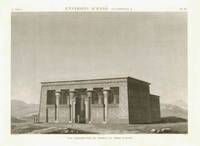
182021861820. Line engraving. 430mm by 600mm platemark 540mm by 710mm sheet. 'Vue perspective du temple au nord d'Esnee'<br /> View of the temple to the north of Esne. From Napoleon's Description de l'Egypte published after the expedition to colonize Egypt in 1798. Napoleon included a number of artists in his army who were instructed to record Egyptian society. The resulting works formed an important historical account of Egypt at that time with detailed and accurate images including monuments and cities. CONDITION : Toning at the edges of the sheet. Discolouration on left edge of the sheet. Some faint discolouration in the title area. unknown
180925937Paris: Imprimerie Impériale 1809. Fine. Imprimerie Impériale Paris 1809-1829 71 x 54 cm une feuille Original unshaved full-page etching from the Imperial edition of the Description de l'Égypte or Recueil des observations et recherches faites en Égypte pendant l'expédition française publié par les ordres de Sa Majesté l'Empereur Napoléon le Grand A Collection of the observations and research carried out in Egypt during the French expedition published on the orders of his Majesty the Emperor Napoleon the Great'.Produced between February 1802 and 1830 on the orders of Naopleon Bonaparte and published between 1809 and 1828 1000 copies were printed and distributed to institutions on vergé paper with an 'Égypte ancienne et moderne' watermark visible when held up to the light. Light marginal spotting not touching image otherwise in very fresh fine condition. An engraving from the Description de l'Egypte one of the masterpieces of French printing and the birth of a new field: Egyptology. A gigantic survey of Egypt at the time of Bonaparte's conquests in 1798 and 1799 the work is divided into 13 volumes of engravings making up 892 plates of which 72 colored as well as presenting the splendors of the Egypt of the Pharaohs in 9 volumes. The other volumes discuss natural history and present a fascinating portrait of Coptic and Islamic Egypt as it was seen by Bonaparte's Eastern Armies. The Egyptian campaign' militarily a disaster demonstrates through the engravings of the Description d'Egypte the scientific success it nonetheless became thanks to the 167 expert members of the Commission of the Sciences and Arts of the Institut d'Egypte Egyptian Institute who followed Napoleon's army. The Institut gathered together in Egypt the mathematician Monge the chemist Berthollet the naturalist Geoffroy Saint-Hilaire as well as numerous artists engineers architects and doctors. They were tasked with re-discovering modern and ancient Egypt and displaying its natural treasures as well as the know-how of its inhabitants.This edition the so-called Imperial edition of the plates for the Description de l'Egypte was printed in four large formats two of which were specially created for it and christened Moyen-Egypte and Grand-Egypte. A special press was built to print it the process extending over 20 years from 1809 to 1829. The Imperial edition proved so popular that a second edition this time in black and white and without the Egypte ancienne et moderne watermark known as the Royal Edition was published during the Restoration by the printing house of C.-L.-F. Panckoucke Paris.The engravings of the Description d'Egypte owe a great deal to Baron Dominique-Vivant Denon illustrator diplomat collector and later Director of the Musée Napoléon the Louvre. His exploration of the South of Egypt gave Bonaparte the idea of sending the experts of the Institut there thus creating a faithful and complete portrait of the area. This was the research gathered together from 1802 in the mammoth Description de L'Egypte.Denon embarked on this story of archeological exploration at the age of 51 reaching first Alexandria and then Cairo before exploring Upper Egypt. Along with the members of the Institut d'Egypte the Natural History Museum's painter H.J. Redouté brother of Pierre-Joseph Redouté author of Roses the mineralogist Dolomiue and the draughtsman Joly Denon then explored the Nile Delta and Lower Egypt. When however he joined the 21st Light Infantry Regiment as it marched across Upper Egypt in pursuit of the retreating Mameluks in November 1798 he found himself the only civilian. In the very midst of the battle itself he reeled off sketches of the works of art that peppered his path right up to the threshold of the Sudan. He said that he had crossed a country that is apart from its name entirely unknown to Europeans and therefore everything was worth describing Voyages dans la Basse et la Haute Egypte pendant les campagnes de Imprimerie Impériale unknown
100098245in8. Sans date. Broché. 7 volume(s). iconographie en noir et blanc /// fasc.1: Thorikos and the Laurion in archaic and classical times fasc.2: Technological studies 1979 fasc. 3: Bibliographical repertory of the hellenistic and roman pottery from attic and corinthian sites fasc. 4: four early mycenaean wells from the south slope of the acropolis at Athens fasc. 5: studies in South Attica I fasc. 7: A fisherman's tale fasc. 8: An archaic and Classical votive deposit from a Mycenaean tomb at Thorikos