HAHNEMANN (S.) - OROSZKO (J.-A. d’)Livre Rare Book
846 résultats
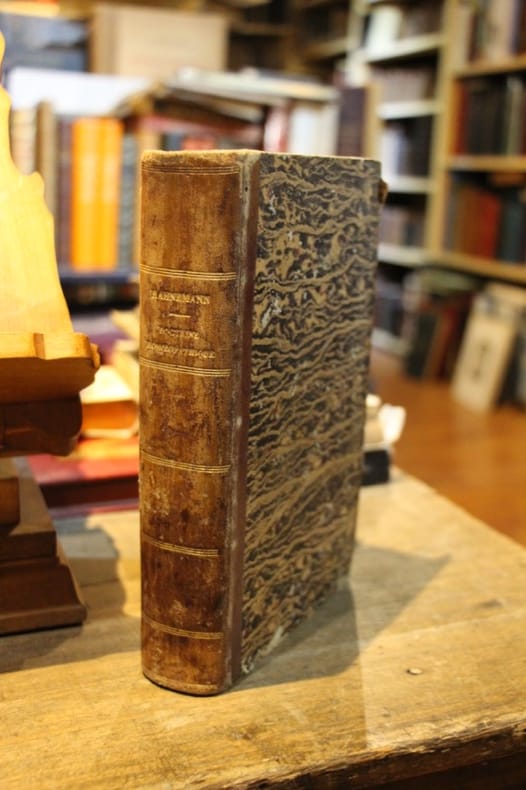
183952767J.-B. Baillière, 1832 ; Desforges et Cie 1839 2 titres en 1volume in-8, demi-basane marron, dos lisse orné de filets dorés, 524 - IV- 321 pp. Fortes mouillures marginales, quelques rousseurs. En l’état.
1847WOC-1092Application Pratique des principes et des moyens de cette Doctrine au Traitement des Maladies. Avec portrait de Samuel Hanneman en frontispice dans le tome 1er. Paris & Londres, J.-B.Baillière,1847.2 volumes in-8 (21x14cm)reliés demi basane d'époque, dos ornés de filets dorés, petites éraflures sur le morspeau du tome premier et petite fente dans une charnière. XV,ff,d'errata,643pp.+716pp.
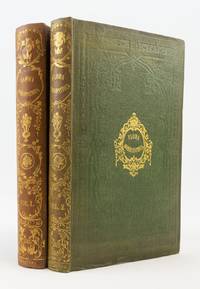
1832SB-20287Paris, J.-B. Baillière, 1832. X S., 1 Bl., 568; 681 S., 1 Bl. Grüne Halblederbände der Zeit mit goldgeprägten Rückentiteln und goldgeprägter Ornamentik; Buchdeckel mit schwarz-grünen Marmorbezügen; dreiseitiger, marmorierter Blauschnitt. Standardwerk des Begründers der Lehre der Homöopathie, Samuel Hahnemann (1755 - 1843), ins Französische übersetzt von A.-J.-L- Jourdan. Hahnemann verbrachte seine letzten Lebensjahre 1835 bis 1843 als praktizierender Arzt in Paris, wo er unter anderem den Geiger Niccolò Paganini und den Schriftsteller Eugène Sue zu seinen Patienten zählte. Ouvrage standard du fondateur de l'enseignement de l'homéopathie, Samuel Hahnemann (1755 - 1843), traduit en français par A.-J.-L-Jourdan. Hahnemann a passé les dernières années de sa vie de 1835 à 1843 en tant que médecin praticien à Paris, où il a traité le violoniste Niccolò Paganini et l'écrivain Eugène, entre autres.
1847784821847 Paris et Londres, Baillière, 1847, 2 volumes in 8° brochés, XV-643 et 716 pages ; quelques rousseurs éparses ; envoi autographe signé sur la couverture du tome premier.
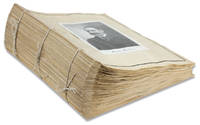
3725344<p>New York 1902–1904. 158ff. 12½ x 9½ inches. Album filled with tipped on or pasted in letters ephemera calling cards. Disbound lacking covers secured with recent cord tie; original black bordered leaves reinforced on left edge with cloth lining. Overall Very Good.</p> <p>A useful and packed album providing fine insight into the life of the German-American homeopathic physician Martin Deschere 1848–1902 of New York City. </p> <p>Deschere’s widow Olga Deschere assembled this archive after Martin Deschere’s passing. It reveals a constellation of physicians and medical institutions who were in his orbit. The bulk of the matter comprises: 200 pages of handwritten letters of condolences and tributes —from New York City medical organizations leading homeopaths and other physicians; 70 obituaries from newspapers and medical journals; and over 150 mourning calling cards almost all with a brief autograph sentiment. Some letters refer to Deschere’s homeopathic practice to Dr. Samuel Hahnemann 1755–1843 the founder of homeopathy and even to the “peculiar system†of homeopathy.</p> <p>Martin Deschere was a native of Hamburg Germany. Homeopath Dr. Samuel Lilienthal 1815–1891 also a German-American guided his early career. In 1875 he graduated from the New York Homoeopathic Medical College and Hospital. In 1881 Deschere was appointed Professor of Pediatrics at his alma mater holding this position for many years. Deschere served as a staff physician at New York’s Flower Hospital and the Laura Franklin Free Hospital for Children. He was an editor of the North American Journal of Homoeopathy a member and president of the Homoeopathic Medical Society of the State of New York the founder of the Materia Medica Society and a founder of a pediatric medical society.</p> <p>Colleagues offering tribute to Dr. Deschere were Willard Ide Pierce of the New York Medical Club and author of Plain Talks on Materia Medica with Comparisons Philadelphia 1911; Henry M. Dearborn 1846–1904 professor at the New York College and Hospital for Women and New York Homœopathic Medical College and Hospital; Frederick M. Dearborn b.1876 lecturer at the New York Homœopathic Medical College and Hospital and the New York College and Hospital for Women; Willis A. Dewey b.1858 an anatomy professor at Hahnemann Medical College of the Pacific and editor of the California Homoeopath and The Medical Century; and Loomis L. Danforth b.1849 professor of obstetrics New York Homœopathic Medical College and Hospital and chief of maternity staff at Hahnemann Hospital.</p> <p>Other memorialists included George W. Roberts b.1866 professor of surgery at the New York Medical College and Hospital for Women; John W. Dowling b.1837 Registrar of the New York Homœopathic Medical College and a founder of its surgical hospital; H. Everett Russell b.1863 graduate of the New York Homœopathic Medical College and Hospital and member of American Institute of Homœopathy and the National Society of Electro-Therapeutists; Walter Sands Mills b.1865 physician to the department of the heart and lungs New York Homœopathic Medical College Dispensary; and C.A. Weirick of Chicago co-editor of the Journal of Orificial Surgery and official of the the American Institute of Homœopathy.</p> <p>Dr. William Francis Honan recalled Deschere as a professor:</p> <p>"It was my good fortune to come under his personal instruction in 1889 & subsequently to enjoy a continued acquaintanceship with him. I’ve soon learned to admire the steadfast character of the man and appreciate his very unusual scientific attainments. Your loss will be that of the entire medical profession and suffering humanity an earnest self sacrificing worker. f59 July 23 1902"</p> <p>Byron George Clark b.1847 a member of the American Institute of Homœopathy wrote:</p> <p>"I have not called upon the Doctor for some time chiefly because he always wanted I should go carefully over his case and seemed disappointed at my not offering suggestions when I felt he was under better care than I could give him. … I feel I have lost a friend that will be hard to replace. We were in close sympathy in our ideas of homeopathy and our faith in its work that we felt an honesty that was healthful in each others work and as I have been expecting to move downtown further for some time…I have anticipated quite some pleasure in being near him that we could work together more; but a greater power has decided otherwise and we must bow to his will however hard. f60 July 24 1902"</p> <p>Two manuscript resolutions within honored Dr. Deschere. For example:</p> <p>"At the regular Annual Meeting of the Staff of the Laura Franklin Free Hospital for Children held October 29th 1902 the following resolution was read and unanimously adopted — Whereas: — From the time of its foundation and until his ill-health and death prevented this Hospital has enjoyed the devoted labors of Dr. Martin Deschere and Whereas: — The bountiful store of his professional learning keen observation and innate genius has been freely imparted to the ailing young in this Hospital and elsewhere… be it Resolved: — That the Medical Staff of the Laura Franklin Free Hospital for Children feels deeply the loss of an associate whom we loved; a consultant whose advice we valued; and a consistent and steadfast Homoeopath whose example we would emulate."</p> <p>A retained copy of Dr. Deschere’s letter —to the Alumni Association of the New York Homoeopathic Medical College and Hospital— written on the occasion of the twenty-fifth anniversary of his graduation remarks</p> <p>"It is a sore disappointment to me that I am prevented by illness from appearing before you to-night and addressing you as my pleasant duty demands. … Although unable to address you personally I am with you heart and soul and in this spirit of congeniality I desire to express to you my ideas of how our Association may work to the best interests of our College. …Let us always remember that as graduates of the N. Y. Hom. Med. Coll. & Hosp. we remain thoroughly homoeopathic in our professional work no matter what special field this may cover. The more thoroughly we understand the philosophy of the Law of Similars the closer we adhere to it in our professional duties the more logically we practice according to it at the bedside the more satisfactory will be our results and consequently the higher will be our standard is homoeopathic physicians and the higher will that school be valued that has educated such men. … All our pioneers from Samuel Hahnemann down had added a knowledge of homoeopathic therapeutics to their general knowledge of medicine but only the utilization over this knowledge in their practice stamped them homoeopathic physicians. … Again I know of physicians who have made special studies of homoeopathic therapeutics partly out of curiosity and partly for their own instruction to a degree that they become well versed in that field of science but they never thought of becoming or being considered homoeopathic physicians even though they utilized some of this acquired knowledge in their practice. Therefore I herewith openly protest again the definition of a homoeopathic physician as accepted by the American Institute for if we shall be judged by our works we can only by be judged as homoeopathic physicians by working as such. May 1900"</p> <p>A useful archive. A dense concentration of biographical information reveals the life of a little-known nineteenth-century American homeopathist while contextualizing the relationships and connections he shared with like-minded colleagues.</p> <p>Ref. Cleave Biographical Cyclopaedia of Homeopathic Physicians and Surgeons Philadelphia 1873.</p> unknown
185577001855 P., Chez J.-B. Baillière, 1855, 2 vol. in-8 (223 x 140 mm) brochés, couvertures imprimées, de (1) f. (catalogue de l'éditeur) - (4) ff. (faux-titre, titre, avertissement et table) - 632 pp. ; VI - 516 pp. Dos légèrement insolés, rares rousseurs (concentrées sur quelques cahiers), exemplaire en très grande partie non coupé, rare dans cet état.
ORD-16852Paris. Baillière. Nantes. Chez tous les Libraires. 1846-1847. In-8 (138 x 222mm) plein chagrin noir, dos lisse, titre et chevrons dorés, filets d'encadrement sur les plats, Hommage et Souvenir, accompagné d'un chevron sur le 1er plat, 4ff., VI, (2), 120 pp. (La vérité en médecine), 96 pp. (Physiologie générale), 32 pp. (Hygiène générale, signé Isid. M.), 63 pp. (Thérapeutique, signé Dr. F. P.), 48 pp. (Clinique interne et externe, non signé), 48 pp. (Variétés) et 2 pages de table. Portraits de Samuel Hahnemann et du Comte S. des Guidi hors texte. Bel envoi de l'auteur à un dédicataire non identifié, belle reliure d'offrande. Exemplaire malheureusement taché fortement de brun en bas de pages sans toutefois toucher au texte et s'amenuisant jusqu'à disparaître en fin d'ouvrage. Rare.
ORD-4912Suivie d'opuscules de l'auteur comprenant: 1°Des formules en médecine; 2°Les effets du café; 3°La médecine de l'expérience; 4°Esculape dans la balance; 5°Urgence d'une réforme de la médecine; 6°Valeur des systèmes en médecine; 7°Conseils à un aspirant au doctorat; 8°Trois méthodes accréditées de traiter les maladies; 9°L'allopathie; 10°Les obstacles à la certitude et à la simplicité de la médecine pratique sont-ils insurmontables; 11°La belladone, préservatif de la scarlatine. Traduit de l'allemand sur la dernière édition, par le Dr A. J. L. JOURDAN. Troisième édition, augmentée, précédée d'une notice sur la vie, les travaux et la doctrine de l'auteur par le Dr Léon SIMON. Paris. Baillière. 1845. In-8 (140 x 221mm) dos lisse veau beige, frises et filets or, plats marbrés, LX, 560 pages, portrait de l'auteur en frontispice. Fortes rousseurs par endroits comme souvent. Ex Libris Lucien Cornil. Peu courant.
1927002893Paris, René Kieffer, Relieur-Editeur (Ducros & Colas Maîtres-Imprimeurs), 1927
100700Paris, Londres, chez J.-P. Baillière, Paris et Londres, 1847, 2 volumes in-8 de 215x135 mm environ, xv-643 et 716 pages, demi chagrin rouge postérieur, couvertures conservés. Avec un portrait de Samuel Hahnemann, gravé sur cuivre, en frontispice du premier volume. des mouillures claires sur les 2 volumes, sinon . Envoi d'Auguste Rapou sur la couverture conservée du tome I.
ORD-13789Troisième édition. Enrichie des préfaces des traducteurs de cette lettre, des biographies et portraits de S. Hahnemann et de S. des Guidi et de plusieurs lettres importantes par le docteur F. Perrussel. Paris. Baillière. 1852. In-8 (152 x 230mm) dos chagrin orange brûlée à 5 nerfs, armoiries de Louis de La Saussaye, en queue, plats mouchetés, gardes marbrées, 144 pages, les XXI premières numérotées en chiffres romains, portraits gravés de Hahnemann et de Des Guidi. Bel envoi autographe du Dr Des Guidi à Monsieur de La Saussaye. Verso du fx-titre marqué par les lettres trop grasses de l'envoi écrit au recto, sinon très bel exemplaire. Rare.
74992J.-B. Baillière, Libraire de l'Académie Royale de Medecine, 1834, 3 volumes de 13x21 cm environ,(1) f., lx pp., 615 pages - (1) f., 1 faux-titre, 1 titre, 570 pp., (1) f., - (1) faux-titre, 1 titre, 779 pp., (1) f., demi-reliure en veau fauve et cartonnage marbré, dos lisse portant titres et motifs dorés, motifs à froid aux entre-nerfs, gardes marbrées. Tampons d'appartenance, frottements sur les plats, rousseurs et quelques taches d'encre anciennes, bon état pour le reste.
Baillière, Paris, 1847. 2 volumes in/8 reliure demi-basane, dos lisse à filets et titres dorés, 643 & 716 pages. Ouvrages en bon état.
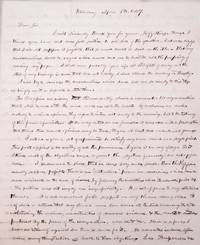
1847323890Waterbury CT 1847. 4pp. Folded 4to sheet. Usual folds. 4pp. Folded 4to sheet. ".The Profession are willing that Homeopathy should be examined but only on condition that it shall be done with the mind made up as to the result. If conclusions are reached contract to received opinions they refuse to listen not merely to the reasoning but to the testimony of their former associates . I entered upon a set of experiments to satisfy my own mind on a single point. This point appears to me worthy of all the prominence I gave it in my essay. To it I think most of the objections urged against the system generally are not applicable. I endeavored to show that in doses very much smaller than the Profession usually suppose possible there is an alternative power in medicines which can be made available in the cure of disease."<br /> <br /> Rodman would publish his paper on the subject in 1851 titled An Examination of the Evidence in Regard to Infinitesimal Doses. unknown
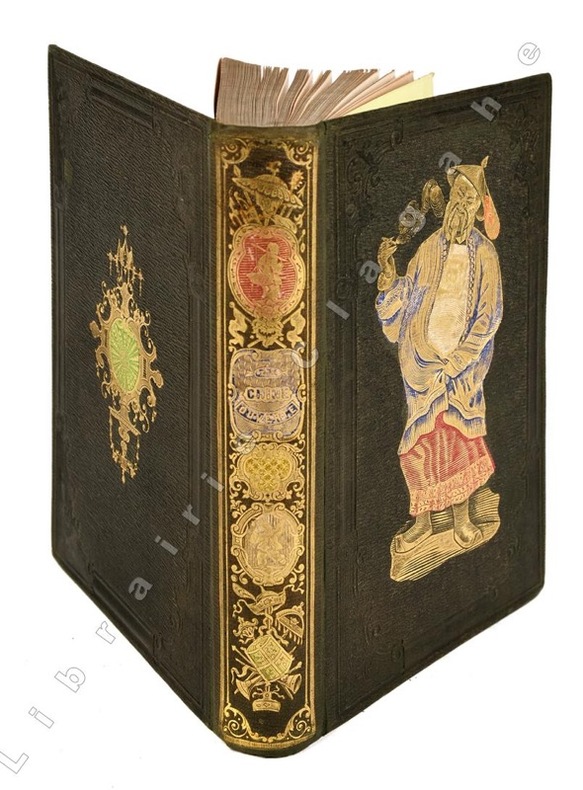
184511299Paris, H. Fournier, 1845 ; cartonnage polychrome à fond noir représentant un personnage chinois fumant, en habit traditionnel doré rehaussé de rouge, bleu et blanc, fond décoré de scènes et objets symboliques, second plat à grand décor doré et vert, tranches dorées ; VI, (2), 396 pp., 50 planches hors-texte, nombreuses illustrations in-texte de tous formats, dessins de Auguste Borget.
mn1250Groupement Hahnemannien Revue "In-8 (16 x 23 cm), dos agrafé, lot de 95 numéros des ""Cahiers du Groupement Hahnemannien du Docteur P. Schmidt"" + table des matières pour 6 années : Année 1985 : n°9 et 10 // Année 1986 : du n°1-2-3 au n°10 (année complète) // Année 1987 : n°1 et 2 // Année 1992 : n°2 à 10 // Année 1993 : n°1 à 10 (année complète) // Année 1994 : n°1 à 10 (année complète) // Année 1995 : n°1 à 10 (année complète) // Année 1996 : n°1 à 10 (année complète) // Année 1997 : n°1 à 10 (année complète) // Année 1998 : n°1 à 10 (année complète) // Année 1999 : n°1 à 10 (année complète) // Année 2000 : n°1 à 4 ; dos un peu frottés, n°1 de 1994 en partie insolé, dos des numéros de 1985, 1986 et 1987 brunis, pliure au dos du n°1-2-3 de 1986, par ailleurs bel état général. Livraison a domicile (La Poste) ou en Mondial Relay sur simple demande."
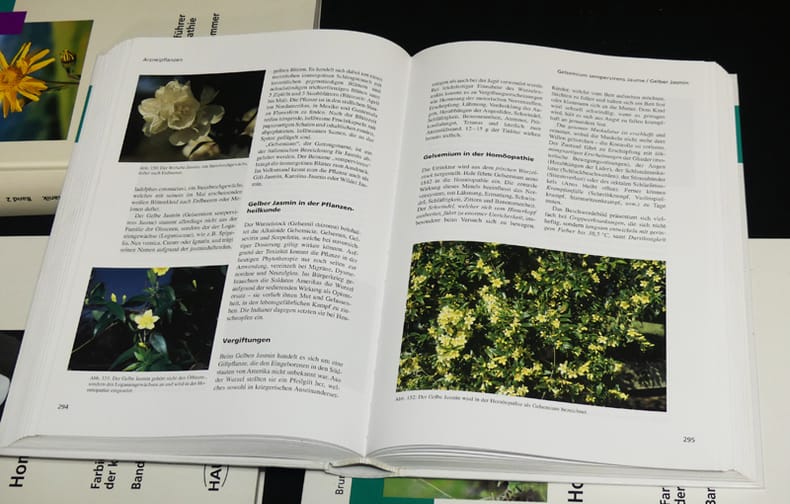
1996wc1856Haug Cartonné 1996 Quatre volumes in-4 (19 x 27.5 cm), cartonnés, couvertures illustrées en couleurs, 286 pages (tome 1, édité en 1996), 602pages (tome 2, édité en 1999), 264 pages (tome 3, édité en 1997) et 612 pages (tome 4, édité en 2001), illustrations et photographies en couleurs in et hors-texte ; légères taches d'usage aux plats, étiquettes de prix au 4ème plat des tomes 2 et 3, petites marques au 1er plat du tome 3, bel état. Livraison a domicile (La Poste) ou en Mondial Relay sur simple demande.
BIGEL Gerard Joseph Marie. Esame teoretico pratico sulla Omiopatia del Dottor Bigel. Traduzione dal francese fatta sull'edizione di Varsavia da Nicolò Vincenzo Laraja. Napoli, dalla Tipografia Tramater, 1846. In 8vo; pp.XVIII, 380. Firma autografa del traduttore. Fior. Mezza pelle coeva, titolo e fregi in oro al dorso. Dall'introduzione: "Fra i tanti assennati, che l'han fatto le migliori accoglienze, ed i maggiori ossequi va annoverato il rinomato Dott. Bigel di nazione francese. Costui è quegli che con questa sua opera, e con altre di egual merito ha saputo così ben esporre la nuova dottrina medica di Hahnemann (fondatore della Omiopatia), illustrarla con fatti incontrastabili, con saggi ragionamenti dimostrare la ragionevolezza dei suoi principi fondamentali, e della pratica al letto dell'infermo, che ne fa toccare con mani la verità, la chiarezza, l'utilità, la facilità, non risparmiando studi, e sperimenti. Può chiamarsi l'apologista per eccellenza dell'omiopatia, imparziale, giusto, eloquente più che ogni altro. Il traduttore colla versione ha inteso di secondare gli umani disegni di Hahnemann, le benefiche mire di Bigel, lo zelo pietoso della lunga classe dei proseliti omiopatici, affinchè non rimanga mezzo, e via, a diffondere in tutti, e da per tutto il salutare metodo curativo, l'Anemanniano favore". Il dottor Gerard Joseph Marie Bigel (1764-1832) nato in Francia, studiò presso l'École de Médecine di Strasburgo, venne a conoscenza e adottò il nuovo metodo curativo durante un viaggio in Germania al seguito del Granduca Costantino di Russia. Successivamente praticò l'omeopatia a San Pietroburgo e a Varsavia dove nel 1827 pubblicò per la prima volta un'opera in tre volumi in francese sulle teorie e i metodi del dottor Hahnemann.
[2]-XXIV-884 p., 25 pl veau granité de l'époque, dos à nerfs et fleuronné, pièce de titre grenat, tranches rouges 1760, 1760, in-4, [2]-XXIV-884 p, 25 pl, veau granité de l'époque, dos à nerfs et fleuronné, pièce de titre grenat, tranches rouges, 25 planches gravées sur cuivre, représentant 400 figures de végétaux et une planche d'animaux qui entrent dans la composition des médicaments. Ce recueil alphabétique, publié pour la première fois en 1698, constitue la suite de la Pharmacopée universelle, parue un an auparavant. Il fut souvent réimprimé et se présente aussi parfois avec le titre de Traité universel des drogues simples. Bel exemplaire bien relié. Plusieurs ex-libris anciens à l'encre brune. Balke, p. 264. Wellcome III, 488
1852ST19516London: H. Baillière 1852-53. FIRST EDITION. 263 x 165 mm. 10 3/8 x 6 1/2". Two volumes. <br/> Publisher's olive green cloth covers decorated in gilt and blind spine attractively gilt the volumes very expertly recased with new appropriate endpapers. WITH 66 VERY ATTRACTIVE HAND-COLORED PLATES lithographed by H. Sowerby. Harvard Arnold Arboretium p. 314; Nissen BBI 778. ◆Spines faded to brown a few minor signs of use but the bindings solid and definitely appealing. Occasional minor foxing one plate with a small spray of black dots from printing process but a fine copy internally the text clean and fresh and the plates bright with pleasing colors.<br/> <br/> This work promotes the efficacy of homeopathic remedies through the use of detailed botanical illustrations and thorough descriptions of 66 plants--from benign specimens such as chamomile and coffee to hazardous species such as poison ivy and ergot. The descriptions of each plant include their botanical characteristics history means of identification geographical distribution physiological effects in humans and animals parts of the plant used and methods of preparation and their general use in homeopathy as well as numerous case studies and clinical observations that supposedly prove the effectiveness of homeopathic remedies in the treatment of various physical and mental diseases. Edward Hamilton 1815-1903 was a member of the British Homeopathic Society and a Physician to the London Homeopathic Hospital founded in 1849. In addition to providing a useful reference for practitioners of homeopathy Hamilton attempts in the present work to elevate and legitimize the practice in the eyes of the public and the larger medical community. The origins of homeopathy go back to the end of the 18th century but the approach became especially popular in the 19th century as an alternative to conventional Western medicine--often referred to by homeopaths as "allopathy"--whose methods at the time could be ineffectual or even dangerous to the health of the patient for example bloodletting and purging. Practitioners of homeopathy operate under the belief that "like cures like." In the words of the National Library of Medicine this means that "Practitioners select a drug that would if given to a healthy volunteer cause the presenting symptoms of the patient. For example the homoeopathic remedy Allium cepa is derived from the common onion. Contact with raw onions typically causes lacrimation stinging and irritation around the eyes and nose and clear nasal discharge. Allium cepa might be prescribed to patients with hay fever especially if both nose and eyes are affected." Crucially homeopathic remedies are harmless to the patient because they are diluted many times over--to the point that the active ingredient is an infinitesimal part of the solution. For example when taken this way the fatal Atropa Belladonna commonly known as Deadly Nightshade which "produces phenomena of inflammation in the peripheral tissues" is especially successful at treating ailments related to inflammation. The author notes that it was even administered as a prophylaxis against scarlet fever dubious studies of which are discussed here at length. Other surprising recommendations in the book include Henbane for nymphomania Bitter Cucumber for dysentery and Cannabis for a range of maladies that include tetanus acne and gonorrhea. Our copy is in remarkably good condition for a work that was intended to be referred to again and again with the hand-colored plates being unusually bright and especially well preserved. There are very few early homeopathic books with significant illustrations and none approaching the level of detail and artistry seen in the present work. H. Baillière unknown
18873836<p>Madrid: Se vende en la Farmacia Homeopática…. De la Señora Viuda del doctor Somolinos Real Academia Nacional de Medicina 1873</p><p>Octavo: 13 x 8 cm. i-v vi-viii 9-328 p.</p><p>FIFTH EDITION of the booklet 1st ed. 1864. All editions are extremely rare.</p><p>Bound in a contemporary wallet binding modified to hold medicine. A rare complete set comprising a Spanish homeopathy handbook for families together with homeopathic remedies prepared by the Somolinos pharmacy of Madrid the first homeopathic pharmacy in Spain. </p><p>A fascinating witness to the diffusion and implementation of Hahnemann's theories. Inside the front board there is a carrier for 23 glass vials. A separate related box also issued by the Somolinos pharmacy with a wooden carrier for 45 additional vials is included. <i>Almost all of the small glass vials still contain homeopathic substances.</i></p><p>The inventor of homeopathic theory was the German doctor Samuel Hahnemann 1756-1843 who according to the principle of 'similia similibus curantur' held that the agent that <i>causes </i>an ailment should be administered in heavily diluted form to patients who suffered from that ailment.</p><p>Homeopathy did not take root on a large scale in Spain where there were very few homeopathic doctors or pharmacists. Among the pharmacists who did prepare homeopathic medicines was Cesáreo MartÃn Somolinos 1827-1878 who set up his shop at 26 Calle Infantas in Madrid. Somolinos also made up and sold pocket homeopathic kits of the kind offered here some of which are preserved in the Museo de La Farmacia Hispana in Madrid. The author of the manual Jaime Pizá Rosselló. was director and chief pharmacist of the Somolinos pharmacy.</p><p>See Alfonso Galán "Cesáreo MartÃn Somolinos: homeopathic pharmacist: his activities in the Hahnemann Society of Madrid" in Boletin de la Sociedad Espanola de Historia de la Farmacia 39 154-155</p> Se vende en la Farmacia Homeopática…. De la Señora Viuda del doctor Somolinos Real Academia Nacional de Medicina, books