(HOMEOPATHY). HAMILTON, EDWARDBiblio.com
110 résultats
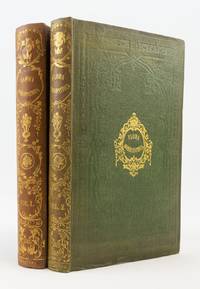
1852ST19516London: H. Baillière 1852-53. FIRST EDITION. 263 x 165 mm. 10 3/8 x 6 1/2". Two volumes. <br/> Publisher's olive green cloth covers decorated in gilt and blind spine attractively gilt the volumes very expertly recased with new appropriate endpapers. WITH 66 VERY ATTRACTIVE HAND-COLORED PLATES lithographed by H. Sowerby. Harvard Arnold Arboretium p. 314; Nissen BBI 778. ◆Spines faded to brown a few minor signs of use but the bindings solid and definitely appealing. Occasional minor foxing one plate with a small spray of black dots from printing process but a fine copy internally the text clean and fresh and the plates bright with pleasing colors.<br/> <br/> This work promotes the efficacy of homeopathic remedies through the use of detailed botanical illustrations and thorough descriptions of 66 plants--from benign specimens such as chamomile and coffee to hazardous species such as poison ivy and ergot. The descriptions of each plant include their botanical characteristics history means of identification geographical distribution physiological effects in humans and animals parts of the plant used and methods of preparation and their general use in homeopathy as well as numerous case studies and clinical observations that supposedly prove the effectiveness of homeopathic remedies in the treatment of various physical and mental diseases. Edward Hamilton 1815-1903 was a member of the British Homeopathic Society and a Physician to the London Homeopathic Hospital founded in 1849. In addition to providing a useful reference for practitioners of homeopathy Hamilton attempts in the present work to elevate and legitimize the practice in the eyes of the public and the larger medical community. The origins of homeopathy go back to the end of the 18th century but the approach became especially popular in the 19th century as an alternative to conventional Western medicine--often referred to by homeopaths as "allopathy"--whose methods at the time could be ineffectual or even dangerous to the health of the patient for example bloodletting and purging. Practitioners of homeopathy operate under the belief that "like cures like." In the words of the National Library of Medicine this means that "Practitioners select a drug that would if given to a healthy volunteer cause the presenting symptoms of the patient. For example the homoeopathic remedy Allium cepa is derived from the common onion. Contact with raw onions typically causes lacrimation stinging and irritation around the eyes and nose and clear nasal discharge. Allium cepa might be prescribed to patients with hay fever especially if both nose and eyes are affected." Crucially homeopathic remedies are harmless to the patient because they are diluted many times over--to the point that the active ingredient is an infinitesimal part of the solution. For example when taken this way the fatal Atropa Belladonna commonly known as Deadly Nightshade which "produces phenomena of inflammation in the peripheral tissues" is especially successful at treating ailments related to inflammation. The author notes that it was even administered as a prophylaxis against scarlet fever dubious studies of which are discussed here at length. Other surprising recommendations in the book include Henbane for nymphomania Bitter Cucumber for dysentery and Cannabis for a range of maladies that include tetanus acne and gonorrhea. Our copy is in remarkably good condition for a work that was intended to be referred to again and again with the hand-colored plates being unusually bright and especially well preserved. There are very few early homeopathic books with significant illustrations and none approaching the level of detail and artistry seen in the present work. H. Baillière unknown
0331111470.Ghardcover. Good. Access codes and supplements are not guaranteed with used items. May be an ex-library book. hardcover
0331077051.Ghardcover. Good. Access codes and supplements are not guaranteed with used items. May be an ex-library book. hardcover
0260251496.Gpaperback. Good. Access codes and supplements are not guaranteed with used items. May be an ex-library book. paperback
1910088264NY: B. W. Huebsch 1910 Book. Very Good -. Hardcover. First Edition. Early 20th century 310 page work on how to be and stay healthy. Minor exterior marks on back cover previous owner's name on front endpaper fading on front endpapers. B. W. Huebsch hardcover
2013657vg083021c7x2Educatief Centrum voor Homeopathie 2013-01-01. First Edition. Hardcover. VERY GOOD. 8x6x1. First Edition. 2013 Educatief. Volume 2. Unmarked interior no highlighting underlining or writing. Brown leather cover in very good condition clean light signs of edge/shelf wear. 2013. Binding Solid & Square. Classical Homeopathy Evidence Based Medicine Volume 2 is the second volume in Dutch homeopath Erik van Woensel's series on classical homeopathic practice. Ships from USA quickly & with care. Educatief Centrum voor Homeopathie hardcover
2000BN8885International School for Classical Homeopathy 2000. 2000. Softcover. Dr. Alfons Geukens und Ärzte aus verschiedenene Ländern die alle im Clinical Training Center für Classical Homeopathy ausgebildet wurden stellen besondere Fälle vor. Typische Bilder kleinerer Mittel wie Crocus Rhus toxicodendron Gambogia Theridion Lyssinum Aethusa Alumina phosphorica Sabadilla und Hydrogenium werden ausführlich besprochen und differtialdiagnostische Überlegungen dargelegt. VERZEICHNIS DER VERWENDETEN ARZNEIMITTEL1. Depression Frau 26 Jahre Dr. Alfons Geukens2. Herzbeschwerden Mann 63 Jahre Dr. Alfons Geukens 3. Blasenkrebs Mann 70 Jahre Dr. Alfons Geukens 4. Durchfall Mann 70 Jahre Dr. Alfons Geukens 5. Meniere Frau 49 Jahre Dr. Stefanie Erharde 6. Psychose Mann 63 Jahre Dr. Michael Hajek 7. Sinusitis Frau 34 Jahre Dr. Michael Hajek 8. Anämie Frau 54 Jahre Dr. Michael Hajek 9. Lebensmittelallergie Mann 40 Jahre Dr. Roberto Petrucci Crocus Rhus toxicodendron Gambogia Gambogia Theridion Lyssinum Aethusa Alumina phosphorica SabadillaI. S. for C. H. Hrsg. Besondere Klinische Fälle Teil 1. Hechtel 2000. <br/><br/>Dr. Alfons Geukens und Ärzte aus verschiedenene Ländern die alle im Clinical Training Center für Classical Homeopathy ausgebildet wurden stellen besondere Fälle vor. Typische Bilder kleinerer Mittel wie Crocus Rhus toxicodendron Gambogia Theridion Lyssinum Aethusa Alumina phosphorica Sabadilla und Hydrogenium werden ausführlich besprochen und differtialdiagnostische Überlegungen dargelegt. VERZEICHNIS DER VERWENDETEN ARZNEIMITTEL1. Depression Frau 26 Jahre Dr. Alfons Geukens2. Herzbeschwerden Mann 63 Jahre Dr. Alfons Geukens 3. Blasenkrebs Mann 70 Jahre Dr. Alfons Geukens 4. Durchfall Mann 70 Jahre Dr. Alfons Geukens 5. Meniere Frau 49 Jahre Dr. Stefanie Erharde 6. Psychose Mann 63 Jahre Dr. Michael Hajek 7. Sinusitis Frau 34 Jahre Dr. Michael Hajek 8. Anämie Frau 54 Jahre Dr. Michael Hajek 9. Lebensmittelallergie Mann 40 Jahre Dr. Roberto Petrucci Crocus Rhus toxicodendron Gambogia Gambogia Theridion Lyssinum Aethusa Alumina phosphorica SabadillaI. S. for C. H. Hrsg. Besondere Klinische Fälle Teil 1. Hechtel 2000. International School for Classical Homeopathy paperback
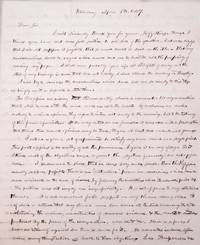
1847323890Waterbury CT 1847. 4pp. Folded 4to sheet. Usual folds. 4pp. Folded 4to sheet. ".The Profession are willing that Homeopathy should be examined but only on condition that it shall be done with the mind made up as to the result. If conclusions are reached contract to received opinions they refuse to listen not merely to the reasoning but to the testimony of their former associates . I entered upon a set of experiments to satisfy my own mind on a single point. This point appears to me worthy of all the prominence I gave it in my essay. To it I think most of the objections urged against the system generally are not applicable. I endeavored to show that in doses very much smaller than the Profession usually suppose possible there is an alternative power in medicines which can be made available in the cure of disease."<br /> <br /> Rodman would publish his paper on the subject in 1851 titled An Examination of the Evidence in Regard to Infinitesimal Doses. unknown
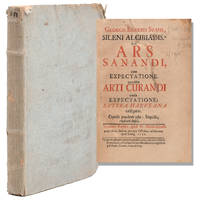
173035811Paris: apud Fr. Horth-hemels 1730. Frontispiece. 8 246 pp. 1 vols. 8vo. Plain drab blue wrappers uncut Fine copy. Frontispiece. 8 246 pp. 1 vols. 8vo. "Stahl German chemist and physician.received his medical degree at Jena.he was the personal physician to Frederick I of Prussia.he was among those who bridged the gap between alchemy and medecine.The present work is Stahl's commentary on Gideon Harvey's "the art of curing diseases by expectation".Stahl's work is biting and satirical commentary on Harvey." Heirs to Hippocrates. Heirs to Hippocrates 701; Cushing S383; Osler 2907; Waller 4082; Blake 430; Wellcome III p. 219 apud Fr. Horth-hemels unknown
1989600064Self Published 1989. Bound with black plastic comb. Front cover is clear plastic of which was bent and cracked. Illustrated with drawings. Scarce title. Soft Cover. Good/No Jacket. Illus. by Drawings. 9"x11". Self Published Paperback