LavarenneMareMagnum

846 résultats
Librairie J. B. Baillière & Fils / Editions Magnard 1958, petit in/4 broché, 230 pages. Ouvrage à l'usage du corps médical et du grand public.
About The Book : Hahnemann wrote this book in order to document his new system of medicine, "Homoeopathy". In 1796, some six years after Hahnemann first experienced the effect of Peruvian Bark Cinchona in 1790 he published an article under the title "Essay on a New Principle".After conducting personal observations and experiments, Hahnemann published his new account of homoeopathy in book form in 1810. The original title of the book was Organon of Rational Art of Healing. In 1819, the second edition was published, with the revised title Organon of Healing Art. The third edition (1824) and fourth edition (1829) kept this new title, while the latter introduced Hahnemann's "Theory of Chronic Diseases".The fifth edition was published in 1833, and included the doctrine of vital force and drug-dynamization. The sixth edition, written in 1842, a year before his death, was retitled Organon of Medicine and not published until 1921. About The Author : Samuel Hahnemann, in full Christian Friedrich Samuel Hahnemann, (1755-1843), German physician, founder of the system of therapeutics known as homeopathy. Hahnemann was dissatisfied with the state of medicine in his time, and particularly objected to practices such as bloodletting. He claimed that the medicine he had been taught to practice sometimes did the patient more harm than good: After giving up his practice around 1784, Hahnemann made his living chiefly as a writer and translator, while resolving also to investigate the causes of medicine's alleged errors. While translating William Cullen's A Treatise on the Materia Medica, Hahnemann encountered the claim that cinchona, the bark of a Peruvian tree, was effective in treating malaria because of its astringency. Hahnemann believed that other astringent substances are not effective against malaria and began to research cinchona's effect on the human body by self-application. Noting that the drug induced malaria-like symptoms in himself, he concluded that it would do so in any healthy individual. This led him to postulate a healing principle: "that which can produce a set of symptoms in a healthy individual, can treat a sick individual who is manifesting a similar set of symptoms." This principle, like cures like, became the basis for an approach to medicine which he gave the name homeopathy. He first used the term homeopathy in his essay Indications of the Homeopathic Employment of Medicines in Ordinary Practice, published in Hufeland's Journal in 1807. This translation brings about new and original expressions of Dr. Hahnemann's original work. The expressions, figures of speech and even the tautological style of the original book has been retained by Dr. C. Wesselhoeft during this translation. The Title 'ORGANON OF THE ART OF HEALING written/authored/edited by SAMUEL HAHNEMANN, C. Wesselhoeft', published in the year 2022. The ISBN 9788121267007 is assigned to the Hardcover version of this title. This book has total of pp. 252 (Pages). The publisher of this title is Gyan Publishing House. This Book is in English. The subject of this book is HOMEOPATHY . Size of the book is 14.34 x 22.59 cms Vol:-
About The Book : Hahnemann wrote this book in order to document his new system of medicine, "Homoeopathy". In 1796, some six years after Hahnemann first experienced the effect of Peruvian Bark Cinchona in 1790 he published an article under the title "Essay on a New Principle".After conducting personal observations and experiments, Hahnemann published his new account of homoeopathy in book form in 1810. The original title of the book was Organon of Rational Art of Healing. In 1819, the second edition was published, with the revised title Organon of Healing Art. The third edition (1824) and fourth edition (1829) kept this new title, while the latter introduced Hahnemann's "Theory of Chronic Diseases".The fifth edition was published in 1833, and included the doctrine of vital force and drug-dynamization. The sixth edition, written in 1842, a year before his death, was retitled Organon of Medicine and not published until 1921. About The Author : Samuel Hahnemann, in full Christian Friedrich Samuel Hahnemann, (1755-1843), German physician, founder of the system of therapeutics known as homeopathy. Hahnemann was dissatisfied with the state of medicine in his time, and particularly objected to practices such as bloodletting. He claimed that the medicine he had been taught to practice sometimes did the patient more harm than good: After giving up his practice around 1784, Hahnemann made his living chiefly as a writer and translator, while resolving also to investigate the causes of medicine's alleged errors. While translating William Cullen's A Treatise on the Materia Medica, Hahnemann encountered the claim that cinchona, the bark of a Peruvian tree, was effective in treating malaria because of its astringency. Hahnemann believed that other astringent substances are not effective against malaria and began to research cinchona's effect on the human body by self-application. Noting that the drug induced malaria-like symptoms in himself, he concluded that it would do so in any healthy individual. This led him to postulate a healing principle: "that which can produce a set of symptoms in a healthy individual, can treat a sick individual who is manifesting a similar set of symptoms." This principle, like cures like, became the basis for an approach to medicine which he gave the name homeopathy. He first used the term homeopathy in his essay Indications of the Homeopathic Employment of Medicines in Ordinary Practice, published in Hufeland's Journal in 1807. This translation brings about new and original expressions of Dr. Hahnemann's original work. The expressions, figures of speech and even the tautological style of the original book has been retained by Dr. C. Wesselhoeft during this translation. The Title 'ORGANON OF THE ART OF HEALING written/authored/edited by SAMUEL HAHNEMANN, C. Wesselhoeft', published in the year 2022. The ISBN 9788121266994 is assigned to the Paperback version of this title. This book has total of pp. 252 (Pages). The publisher of this title is Gyan Publishing House. This Book is in English. The subject of this book is HOMEOPATHY . Size of the book is 13.34 x 21.59 cms Vol:-
182472961824 Réédition de l édition de Dresde 1824 4eme trimestre 1975 In8 reliure éditeur dos lisse fleurons piéces de titre 274 pages - tirage limité
26321aafSpringfield Illinois, Charles C. Thomas, 1967, in-8°, XVI + 239 p., with 42 ill., hw. dedication signed ‘chubby’ (the author), original cloth with original jacket.
Carl Gester, médécin, homéopathe, fut également un acteur du Vormärz et des révolutions de 1848-1849.
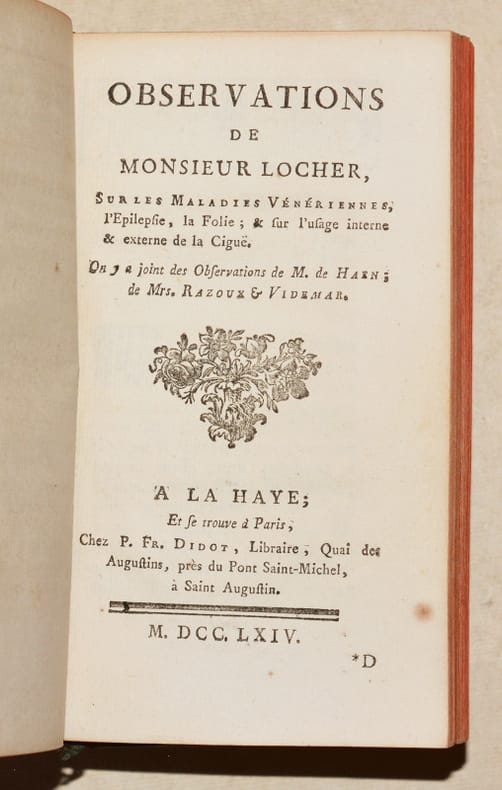
17640054561764 La Haye et Paris, Didot, 1764. Deux parties en un volume in-12 (104 X 173 mm) veau fauve marbré, dos lisse cloisonné et orné, pièce de titre maroquin grenat, tranches rouges (Reliure de l'époque) ; (2) ff., LXXI pp., (2) ff. de préface, 1 planche, 70 pages, (1) f. blanc, 71-254 pages, (1) f. de table. Ex-libris manuscrit « Jacob Gelien » en regard du titre.
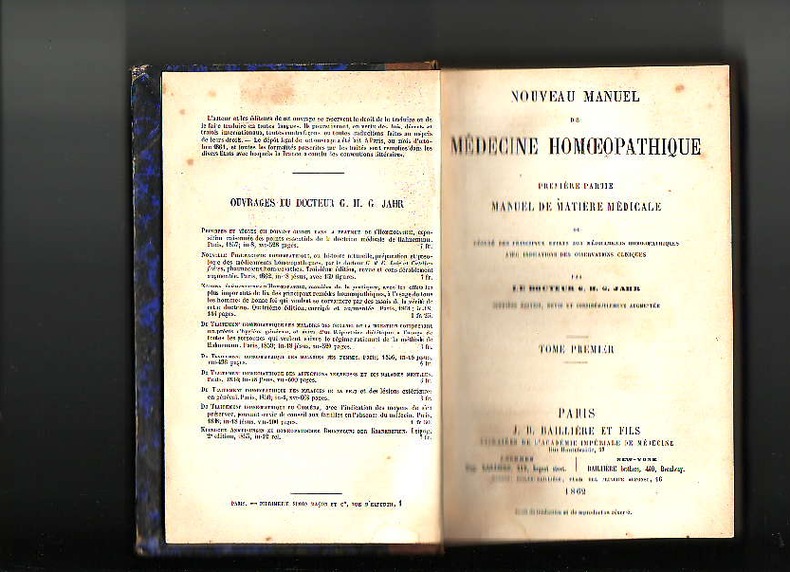
ORD-17534Troisième édition, revue et considérablement augmentée avec 144 figures dans le texte. Paris. Baillière. 1862. In-12 (120 x 186 mm) dos à 5 nerfs et coins maroquin rouge, plats peignés, gardes de papier Canson vert tendre, VIII, 436 pages (les VIII premières pages reliées en désordre). Des rousseurs comme souvent mais bon exemplaire. très bien relié (reliure moderne).
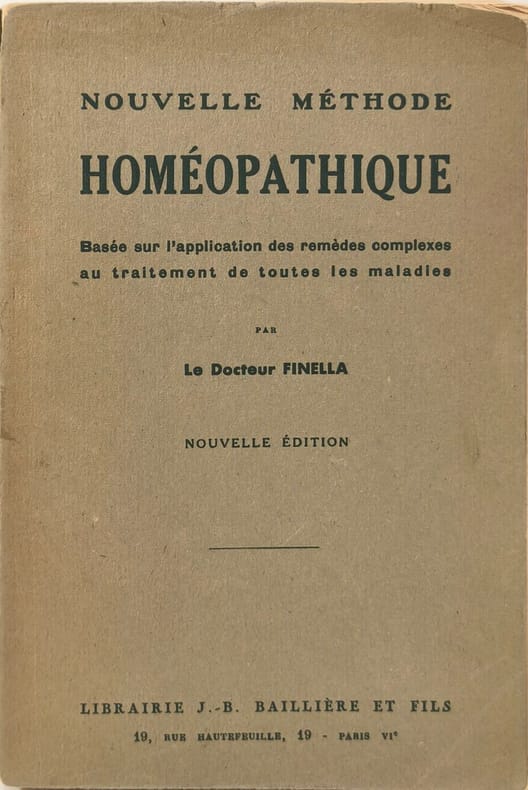
19505023Librairie J.-B. Baillière et Fils 1950 392 pages in8. 1950. broché. 392 pages. Ouvrage médical présentant une nouvelle approche méthodologique de l'homéopathie rédigé par le Docteur Finella et publié par la Librairie Bailli Fils. Le livre propose probablement des principes techniques ou protocoles innovants dans la pratique homéopathique
1950111957Baillère et fils 1950 In-8 broché 19,5 cm sur 13,5. 392 pages. Couverture légèrement passée, plis de lecture au dos, premier plat fendillé, petit manque au second plat, intérieur très propre. Etat correct d’occasion.
100115A Paris, chez J.-B. Baillière, Librairie de l'Académie Royale de Médecine, à Londres chez H. Baillière, 1845, 1 volume in-8 de 210x130 mm environ, vii-304 pages, demi-basane brune, titres dorés sur dos lisse, orné de caissons à froid, gardes marbrées. Des rousseurs, rares passages soulignés dans la marge au crayon de couleur rouge, trace d'adhésif sur le bas du dos, légers frottements d'usage sur les mors et coins, sinon bon état.
116379Mercure Dauphinois Mercure Dauphinois, 2014, 219 p., broché, bon état.
ORD-13449A l'usage des vétérinaires, des propriétaires ruraux, des fermiers, des officiers de cavalerie et de toutes les personnes chargées du soin des animaux domestiques. Traduit de l'allemand sur la 3e édition par P. J. MARTIN. Paris. Baillière. 1846. In-8 (144 x 220mm) dos veau violet à fx-nerfs, titre, frise et filets or, plats et gardes marbrés, 1f., 455 pages. Quelques pages déchirées et plus ou moins adroitement réparées sans perte de texte, rousseurs éparses mais assez bon exemplaire de cet ouvrage peu courant.
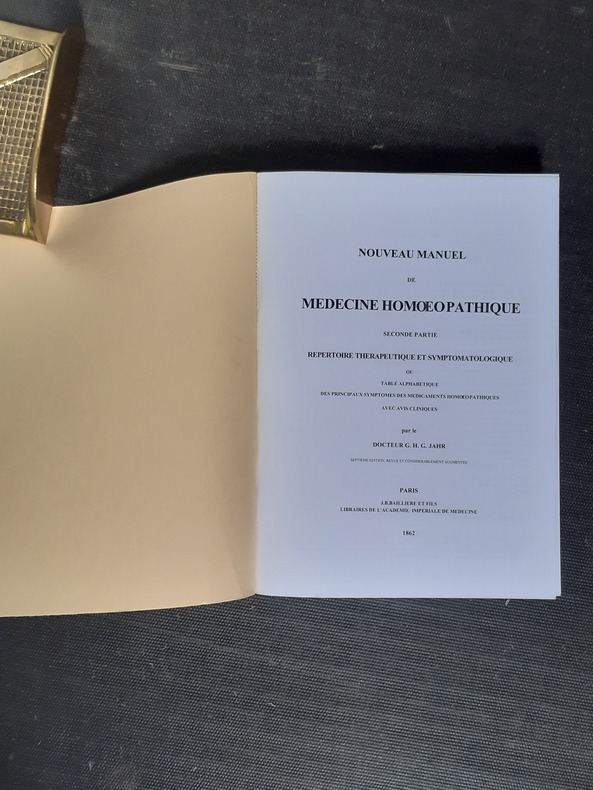
QWA-18393Editions Joulin-Capdeillayre, 1997, 2 vol. in-8 br., 569 p. - 588 p., traduit de l'allemand, reproduction en fac-similé de l'édition de 1862 (Baillière et fils, 7ème ed. revue et considérablement augmentée), très bon état.
1862MEDECINE951113Paris, J. B. Baillière et Fils, 1862, 12 x 18, 828 pages en deux volumes, sous une reliure demi-basane, avec dos à nerfs titré. "Septième édition revue et considérablement augmentée".
339Chez J. B. Baillière, Paris, 1850.
1997za2297Edition Joulin-Capdeillayre Dos carré collé 1997 Deux volumes in-8 (17,5 x 24 cm), dos carré collé, 570 et 588 pages ; très bon état. Livraison a domicile (La Poste) ou en Mondial Relay sur simple demande.
ORD-163258e édition revue et considérablemetn augmentée. Baillière. 1872. 2 tomes en 1 volume fort in-12 (124 x 183mm) dos chagrin vert à 4 nerfs, titre et fleurons dorés, gardes marbrées, XVIII, 816 pages (pagination continue) et 32 pages de catalogue. Traces de scotch sur la 1re garde, qq. rousseurs mais bon exemplaire.
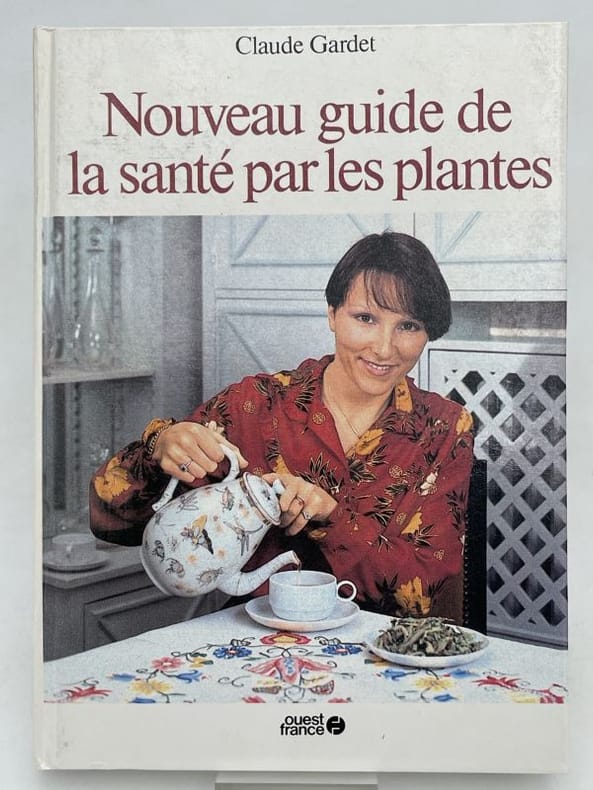
Ouest France 1983, In-8 relié cartonnage éditeur, 158 pages avec planches couleurs. Très bon état
1983187809Ouest France Ouest France,1983. In-8 relié cartonnage éditeur de 158 pages avec planches couleurs. Très bon état
grand in-8°, 96 pages, broche, couverture illustree. Bel exemplaire. [CA27-4]
Laboratoires Boiron 1977, In/4 reliure éditeur, 418 pages.
Reliure toile de l'éditeur. 418 pages.
1983148295Couverture rigide. Reliure toile de l'éditeur. Titres en partie effacés. 418 pages.
Laboratoires Boiron 1975, trois volumes. In/4 reliure éditeur. 157, 143 et 158 pages.