Kent RockwellABAA

33 721 résultats
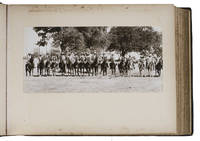
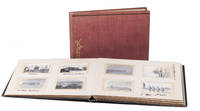
1960WRCLIT69684Various Places 1960. Thirty-one 7.5" x 6" leatherette albums categorized and identified by spine labels captioned in ink in Kent's hand containing 1125 individual original matte and glossy black & white 7" x 5" gelatin silver prints. Slight surface variations characteristic of ferrotyping and some spotting scratches and other blemishes in the negatives are evident in the prints; some are printed slightly askew; some oxidation fading or other signs of the amateur processing is evident on occasion otherwise remarkably good. Until his death Rockwell Kent maintained this collection of thirty-one albums of prints of his own photographs as well as some photographs taken by others in his company on certain occasions all arranged identified and labeled according to locations and subjects. Apart from their categorization by placement in the notebooks some occasional prints are identified by Kent in ink or bear his stamp. Kent frequently recorded scenes people and settings via photographs during his voyages and travels many of which he utilized as reference material and are identifiable as such in the production of his illustrations prints and paintings made during and after his journeys. Kent made three trips to Greenland first in 1929 and then in 1931-2 and 1934-5 and photographs from these three trips constitute the largest single subject element in the archive. The subjects break down generally as follow: 1 Greenland. 16 albums including 549 images. 2 Asgaard. 8 albums including 293 images. 3 Alaska. 1 album including 46 images. 4 Monhegan Island. 2 albums including 84 images. 5 Arizona Colorado California. 1 album including 28 images. 6 Puerto Rico. 1 album including 51 images. 7 Denmark. 1 album including 43 images. 8 Hillsboro and Richmond. 1 album including 31 images. Although obviously best known for his book illustrations works on paper and paintings Kent was sufficiently renowned as a photographer during the 1930s that some of his photographs were reproduced in photogravure in a portfolio MODERN MASTERS OF PHOTOGRAPHY SERIES 1 PICTORIALISTS published by the Galleon Press. While those photogravures turn up separately with some frequency - usually well outside of their original context in the portfolio - individual original prints from negatives of Kent's photographs are scarce. We note as reference the appearance of a single Greenland print also represented by a print in this archive and in the same format with Kent's ink rubber stamp on the verso: Swann Galleries 15 May 2008 Lot 341 $1300. Further details about the archive are available upon request. hardcover books
1902000110<p><strong>29 × 20 cm. Comprising 158 text plates including 95 photographs produced by the committee of which 42 photographs appear on separate plates measuring approximately 23 × 15 cm.</strong></p><p>The work documents the Photography Committee's journey from Istanbul to MaÊ¿Än in Transjordan. The accompanying text was compiled from articles originally published without illustrations in various issues of the newspaper <em>Vakit</em> "Time" in 1902.</p><p>This is a unique work prepared for publication with photographs taken by a private committee that included prominent figures such as the German general Karl Auler Pasha who served as an adviser on Hejaz affairs until the fall of Medina in 1918.</p> hardcover
190757913ca.1907-2003 | 30 x 32 cm
1910J1NH6Y7HYA75France/Belgium 1910. Contemporary black cloth with the title "H. Rabier - peines - supplices" on the spine. 4to 23.5 x 20 cm. Album containing 24 small contact prints 2.5 x 25 cm and 153 albumen or gelatin silver prints 65 x 8 cm both mostly numbered and captioned in French on the photograph 16 photographic reproductions of paintings or drawings 17.5 x 13 cm 2 albumen prints of nudes and 17 silver gelatin prints of sadomasochistic scenes 10.5 x 15 cm. Captivating erotic photo album containing both original photographs and reproductions on the themes of "punishment and penance" which in most cases means flagellation. This specific album was probably compiled by a certain Hector Rabier whose name is inscribed on the spine and was possibly a young Belgian. Among the reproductions of prints in this album can be found various images with an erotic nature showing the flagellation of women by men and women and non-erotic images of the torture and punishment of female heretics and witches including reproductions of artworks. A few series do not involve women and show various types of corporal punishment in the French colonies of Algeria and Indochina and flogging in the British army. A series of 27 images though not explicitly showing scenes of corporal punishment shows life in the Parisian women's prison of Saint Lazare which also doubled as a hospital for the city's prostitutes. 12 photographs show wood engravings of the cruel murder and torture of nude women by Cossacks most including the pins used to hold the engravings in place. Of the original photographs two "academic nudes" show a woman from behind kneeling on top of a chair or hanging face down over a chair or cabinet. The other 17 photographs show a semi-nude woman being bound or tortured by "oriental" men or monks. A montage of small images suggests that the woman-and-monk photographs probably suggesting a witch or heretic being tortured by the inquisition formed part of a larger collection on this subject. Although these photographs were obviously intended as pornographic images they are hardly more explicit than contemporary historical paintings at the Salon or the images in popular histories.With the spine somewhat worn and discoloured the pages of the album very lightly foxed some of the photographs partly detached from the page and some of the larger photographs slightly worn and discoloured at the edges; overall both album and photographs are in good condition. hardcover
1970153176Los Angeles: Warner Brothers Records 1970. Original photographic artwork assemblage for Van Morrison's classic 1970 album with original double exposure photograph by David Gahr designed by Janet Planet and used by Warner Brothers Records as shooting artwork for the album cover.<br /> <br /> Production annotations in manuscript marker and pencil at bottom of board below the image. Annotations on verso noting "Van Morrison 'Cover' 1884" in manuscript marker with the "1884" being the album catalogue number and "the band street choir" just below in manuscript pencil.<br /> <br /> Gahr was a preeminent photographer of folk blues jazz and rock musicians for over four decades whose subjects include the likes of Bob Dylan John Lennon Miles Davis Bruce Springsteen Janis Joplin Peter Seeger and many many others. His work was regularly featured in the seminal rock magazine "Crawdaddy."<br /> <br /> Building on the critical successes of "Astral Weeks" 1968 and "Moondance" 1970 Morrison's fourth studio LP featured the highest charting single of his career "Domino." Originally titled "Virgo's Fool Street Choir" the LP was renamed prior to release without Morrison's consent by Warner Brothers.<br /> <br /> Photograph mounted on board with a clear acrylic overlay. Original black paper overlay included but not attached.<br /> <br /> Photograph 13 x 19 inches mounted to board as created measuring 15.5 x 24 inches. Near Fine. Warner Brothers Records unknown
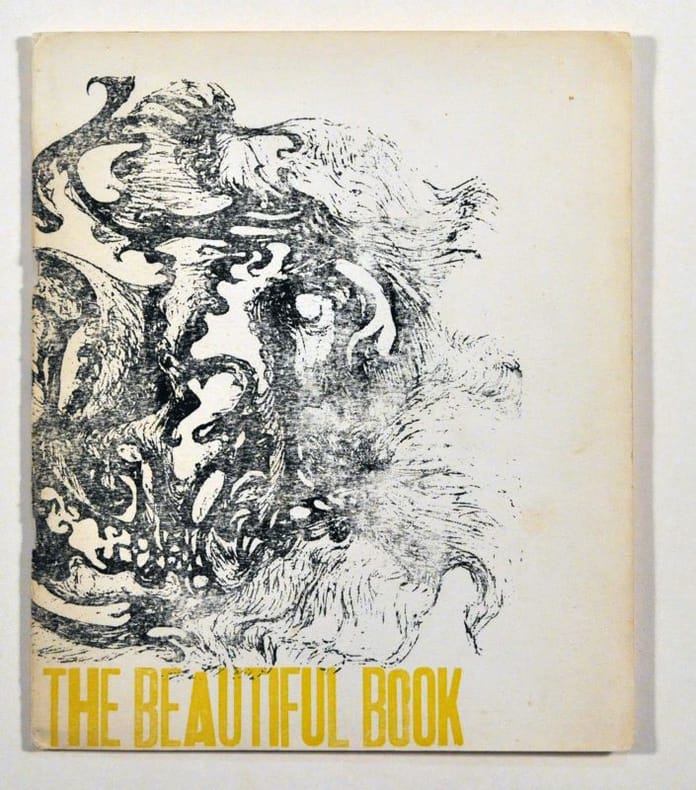
19621041511962 Sans lieu ni date (New York, Dead Language Press/Piero Heliczer, vers 1962) 20 pages non paginées 225x188mm, sous couverture en papier fort, agrafé ; 19 tirages argentiques originaux 55x55mm, obtenus par contact à partir des négatifs, sont collés sur les pages 1 à 11, 13 à 19, et sur le troisième de couverture.Couverture en sérigraphie en deux couleurs d’après un dessin de Marian Zazeela, une des artistes apparaissant dans les mises en scène photographiques.Etui et chemise (Devauchelle)Jack Smith a traversé comme une comète l’underground new-yorkais des années 60 à 80 marquant de sa royale estampille l’expression d’une génération d’artistes parmi lesquels Andy Warhol, Nan Goldin, Robert Wilson ; son œuvre cinématographique majeure, Flaming Creatures, réalisée en même temps que le Beautiful Book, fut pourchassée durant trente années par toutes les censures du monde, pour entrer, après la mort de l’artiste, au panthéon des cinémathèques.Les exemplaires du Beautiful Book (probablement pas plus d’une centaine), assemblés à la main et vendus dans le milieu du Lower East Side new-yorkais de l’époque, n’ont guère résisté à l’épreuve du temps.Edition originale, très bel exemplaire.Flaming Creatures PS 1 1997, entièrement reproduit dans le catalogue. Söhm p. 25, reproduit. Hasselblad 190-191(104151)
1940169491United States: c.1940-60. A visual record of a rarely seen and poorly documented world - an accidental history An unusually extensive group of these evocative "table photographs" striking records of largely African-American audiences in the glamorous sociable and intentionally inclusive world of mid-century nightclubs. Shot by in-house photographers developed on site and sold for a dollar at the end of the evening these quick souvenirs now amount to a rare visual history of a poorly documented milieu. As Gold notes they "turn the camera round": instead of performers we see the audiences - a critical part of what Jason Moran calls the jazz "ecosystem." The collection offers a nationwide survey of venues from the extravagant to the resolutely down-home. At New York's Café Zanzibar with its spectacular floor shows and "Zanzibeauts" the audience was integrated but largely white prompting Langston Hughes's caustic observation about the seating hierarchy - an impression borne out by the image here. Detroit's Gay Bar Lounge another "black and tan" joint catered to a mostly Black clientele and offered a rougher edge: in 1947 the barkeep famously shot two stick-up artists with the.38s kept beneath the cash register. Equally compelling are the histories of Black enterprise that surface. Oakland's Athens Elks Cocktail Lounge home to Lodge 70 of the Improved Benevolent and Protective Order of Elks of the World stood at the centre of West Oakland's vibrant musical scene hosting countless jam sessions and serving as the informal checkpoint for touring African-American musicians. In Los Angeles Dootsie Williams's Dooto Music Center founded by the trumpeter-turned-entrepreneur provided one of the city's foremost Black cultural venues praised by the Los Angeles Sentinel as "the most-needed cultural and recreation center in Southern California." The photographers themselves remain surprisingly elusive though a few can be traced. In Columbus George Pierce ran a record shop and studio in Bronzeville and supplied images to the Ohio Sentinel and other regional papers; in Detroit Earl Fowler's Top Hat Photo developed into a significant presence in the Black Press with Fowler later serving as chief of the Los Angeles bureau of Now! magazine. Beyond these contexts the photographs' enduring appeal lies in the human dramas unfolding across their tabletops: the conviviality style and fleeting alliances captured in a moment of collective ease. A scene from Gamby's in Baltimore is emblematic - six convivial hat-tipping men and two young women smiling through a forest of shot glasses presided over by a portrait of Fats Waller. It is warmly enigmatic yet inviting an offhand welcome extended across time. A more detailed description and full listing is available on request. Together 66 black and white gelatin silver print photographs 62 c.127 x 178 mm; 3 approximately 178 x 254 mm around 50 are in their original plain or printed souvenir folders the balance loose. Loose photos and folders with occasional wear and mild damp-staining some annotations verso of prints and to folders prints occasionally stapled into folders overall the group remains about very good. Ronald Auther "The Oakland Larks" The Shadow Ball Express: African American Baseball Renderings and other Facts of Life online; Clora Bryant et al Central Avenue Sounds; Jazz in Los Angeles 1930s-1950s 1998; Jeff Gold Sittin' In: Jazz Clubs of the 1940s and 1950s 2020; Robert Petersen "Before Motown: L.A.'s Black-owned Music Empire" PBS SoCal online. unknown
1928ABC_50475Iran 1928. Oblong album 24.5 x 29.6 cm. Mid-19th-century bright blue faux-leather the front board features a pictorial on-lay within a rectangular frame the illustration depicts a young woman in traditional costume holding a large ceramic vessel. The joints are laced through onto 2 supports. With 19 black and white photographs ca. 23.1 x 17.1 cm on thick dark blue/black paper. 9 ll. Collection of 19 engineering photographs taken in Iran dating from ca. 1928 to 1930 CE. The majority of the images are annotated with the year 1308 AH 1929-1930 CE while only photograph 7 is dated 1307 AH 1928-1929 CE.The album documents large-scale engineering works and urban modernisation in Iran during the early years of the Pahlavi dynasty 1925-1941 under Reza Shah Pahlavi 1878-1944. In this period cities such as Tabriz underwent significant restructuring and infrastructural development as part of broader state-led reforms.The photographs depict surveying activities including measuring instruments mounted on tripods uniformed officials and extensive reconstruction works. Several photographs are identifiable as views of Tabriz including the development of the Gaji Gate Darb-e Gajil in December 1929 Ahrap Ahrab Street and Munjam Street under construction. Other views show street levelling and widening works illustrating the transformation of older urban quarters into broader modern thoroughfares.Further noteworthy subjects include railway works and one photograph taken in Jafarabad shows several men wearing a combination of traditional clothing including papakha-style headgear and Western clothing reflecting the broader cultural transition of the period. The present work therefore stands as an informative visual record of early 20th-century Iranian engineering urban renewal and state modernisation.With some glue staining to the dark blue paper on several pages. A few photographs show minor marginal wear not affecting the images themselves. The final photograph is not mounted on the album paper but on a separate piece of card and is loosely inserted. Otherwise in good condition.l Cf. Tofigh Kouzehkanani & Zelef "Towards extroverted urbanism: Haussmannization and building a new urban identity in Tabriz 1925-1942" ITU AZ 22 3 2025 pp. 559-577 hardcover
1930WRCAM56103Various locations in Oregon and Alaska 1930. Approximately 325 photographs twenty postcards and real photo postcards a linen- backed map of Alaska and a few assorted ephemeral items all housed in a contemporary leather satchel. Generally minor wear some chipping to about twenty photographs. Overall very good. A treasure house of silent cinema photography from the Pacific Northwest and Alaska featuring over 300 images from THE CHECHAHCOS and other films produced in the orbit of the film's director Lewis H. Moomaw all retained by one of his crewmen Guerney William Hays. <br> <br> THE CHECHAHCOS released in 1924 was the first feature film shot in Alaska. "Cheechako" is a native word referring to a "greenhorn" or someone newly arrived in the mining districts of Alaska or northwestern Canada. A melodramatic tale of the Klondike Gold Rush the was directed by Lewis H. Moomaw of the Alaska Moving Pictures Corporation. The story was based in part on the experiences of the film's producer Austin E. Lathrop known as "Alaska's first home-grown millionaire." The film has been preserved in the National Film Registry and can easily be viewed on the internet. Offered here is a large collection of photographs and other ephemera once belonging to a CHECHAHCOS crew member named Guerney William Hays 1880-1952 including film stills snapshots from the set and other images of Alaska scenery. Many of the images match up with scenes from the completed film. The subject matter includes all that might be expected from a film produced in and about Alaska: glaciers dogsleds saloons archvillains and damsels in distress along with shots of the crew and technology that made the film possible. <br> <br> The largest and most professionally-produced photographs in the collection are eighty 8-x- 10-inch prints almost all of them clearly from the CHECHAHCOS shoot with twenty-one stamped on the verso by the Alaska Moving Pictures Corporation and with either a printed or manuscript title written along with the stamp reading "The Chechakos" the spelling of which was later tweaked to its release title. One of the stills shows the entire company of the Alaska Moving Pictures Corporation about 150 people in the snow beside their Pullman cars; two banners for the film company hang outside the rail cars. A separate shot of the film company shows their train at the entrance to McKinley Park with a banner hanging on the train reading "Private Car Alaska Moving Pictures Corporation Entrance to McKinley Park on the Alaska Railroad." Other stills show scenes from the film shots of the cast and crew preparing to start scenes posed scenes clearly intended for use as publicity stills cast group pictures behind-the-scenes shots of the cameramen and other crew with various equipment photographs of empty interiors perhaps to be used for continuity a few featuring the dog sled teams and more. In addition to documenting the production these images also present a rare view of Alaska in the early-20th century. <br> <br> The remaining 240 images most of which measure approximately 3 x 5 inches were likely not formally produced by the film company for use as publicity but are in fact production photographs and still stand as valuable visual documentation of the early filmmaking process. While some of these photos are more of the vernacular sort the great majority of the images show a mixture of preproduction production and set-related photographs from the film company's time in Alaska shooting THE CHECHAHCOS and from other production's attached to the career of Lewis H. Moomaw the film's director. A great number of these images were likely produced as working production photographs - executed for the use of the company during the shooting process scouting for locations documenting costumes set continuity set construction what might today be called craft services suggesting or documenting potential camera set-ups or as studies for potential publicity stills and more. While not created as traditional publicity products these images capture the early filmmaking process both in front of and behind the camera presenting a quite uncommon slice of film production history. The fact that they were produced during the production of a film in Alaska make them an even more valuable source of information on the filmmaking process in the 1920s in a most unusual place. Production stills are produced in very small quantities compared to publicity stills are often unique or close to unique records of a production have a much lower survival rate and are keenly sought after as historical records of the filmmaking process. <br> <br> One of the few captioned photographs shows four wives of the CHECHAHCOS cast and crew on a fishing expedition including Moomaw's wife and Mrs. Guerney Hays. A few other photographs show an actress posing with crude dummies that were apparently about to be sent to their doom in a canoe scene in the Alaskan wilderness. Other production photographs from Alaska feature scenes on glaciers one of which shows the exact spot from a moment in the opening minute of the film a young girl with a giant Alaskan crab who is also pictured in the larger professional images and is in the film film crews poised on icy ground dog sled teams identified locations in Skagway and more. <br> <br> One of the other films pictured here is likely CALL OF THE ROCKIES 1929. This western was filmed in Oregon the usual home of the filmmakers involved in the Alaska Moving Pictures Corporation with Moomaw as supervising producer. CALL OF THE ROCKIES was directed by Raymond K. Johnson one of the cinematographers on THE CHECHAHCOS and features two actors identified in pencil captions on the verso of photographs present here: Russell Simpson and Jim Mason. There are numerous photographs featuring a western wagon train and other images of the traditional western which either appeared in CALL OF THE ROCKIES or perhaps one of Moomaw's other films produced in Oregon in the 1920s - UNDER THE ROUGE 1925 or FLAMES 1926 the latter of which climaxed in a raging forest fire and featured an early screen appearance by Boris Karloff. <br> <br> All of the postcards feature Alaskan scenes or subjects and were most likely acquired while the film company was shooting in Alaska or produced for them while they were there. This is the case for at least one of the postcards - a Christmas greeting with the banner at bottom reading "Compliments of the Alaska Moving Pictures Corporation." The final item of note here is a folding linen- backed map of Alaska issued by the Alaska Steamship Company. The map measures about 21 x 30 inches and was issued in 1917. It was almost certainly taken along to Alaska by Hays for the filming of THE CHECHAHCOS linen- backed either before-hand or while in Alaska to prevent damage from over-use. The entire collection of photographs and ephemera is housed in a period leather satchel. <br> <br> These photographs were collected and retained by Guerney or Gernie William Hays 1880-1952 who spent a career in the early film industry mostly in Oregon. Some pieces of ephemera bear his name and some of the larger stills are annotated "Hays" on the verso. His 1918 draft registration lists him as a motion picture operator in Portland and his obituary lists him as a member of the International Alliance of Stage Employees. His only film credit in the Internet Movie Database is for THE CHECHAHCOS for which he is credited with "sets and lighting" and also an uncredited supporting role on screen. One of the larger-format photographs features a crew member in a cramped equipment room with dozens of lights and mounds of cables; this is almost certainly Hays himself or perhaps one of his assistants. One of the photo developer's envelopes bears the name of Hobart H. Brownell the cinematographer of THE CHECHAHCOS. Two of the photographs here are inscribed to Hays - one from the actor Bert Sprotte in 1919 and the other from banjo player Eddie Peabody who has inscribed his portrait to Hays writing that "No finer stage manager I ever worked with." Another photograph shows Peabody's elaborate stage show. <br> <br> THE CHECHAHCOS remains an important early film for its authentic depiction of Alaskan life. Movies about the great white north were popular with early film audiences but were usually filmed in California. When Lewis H. Moomaw proposed to shoot a film entirely in Alaska about the days of the Klondike Gold Rush in the territory locals in Alaska jumped at the chance to find him funding. Upon arrival in Anchorage fully half of the town showed up to greet the film company. The cast and crew would spend three months filming in and around Anchorage the small mining town of Girdwood on Childs Glacier Abercrombie Rapids and Eyak Lake. The film premiered in the Empress Theatre in Anchorage on December 11 1923 and played to packed houses across Alaska the next year. Sadly the film never found a large audience in the continental United States playing occasionally over the next two years before falling into obscurity. The film was essentially lost until the year 2000 when a print was restored by archivists at the University of Alaska Fairbanks. Three years later the film was selected for preservation by the National Film Registry. <br> <br> The Library of Congress's press release when they selected THE CHECHAHCOS to the National Film Registry describes the film as such: "This independent regional film was the first feature film produced in Alaska and is renowned for its spectacular location footage of the lonely and unfathomable Alaskan wilderness frenzied dogsled pursuits and life-and-death struggles on the glaciers." <br> <br> A wonderful collection of great historical interest for early film scholars and of the history of Alaskan cinema. hardcover books
1930105402BBStuttgart, Zaugg & Co., (1930). 111, (1 w.) S. mit 140 Abb., teils in Orangerot u. Schwarz gedruckt u. 1 Bl. (Errata). OLn. (Vorderdeckel aus durchsichtigem Zelluloid).
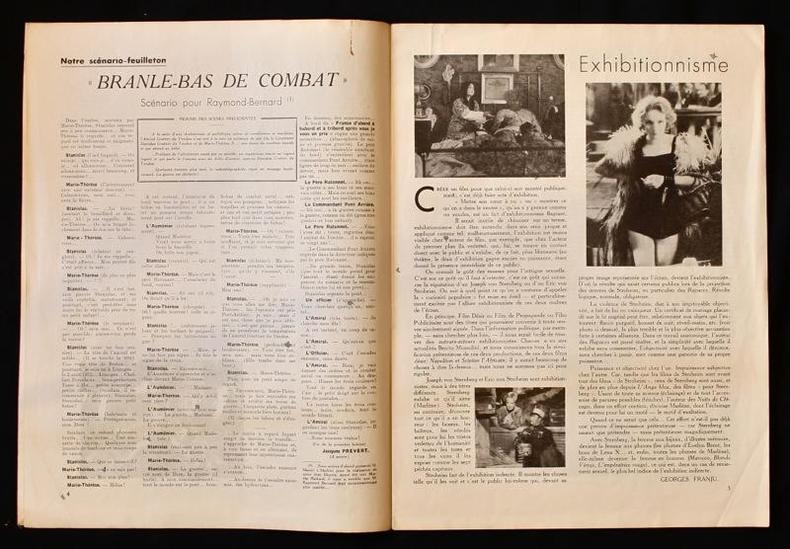
193758431937. Branle-bas de combat , 9 feuillets manuscrits autographes (27,1 x 21 cm. ) comportant de nombreuses ratures, d’un seul mot à un paragraphe entier. Quatre paragraphes sont ainsi biffés, et non repris dans la version publiée dans la revue le CINEMAtographe. On joint à ce manuscrit les deux seuls numéros de la revue CINEMAtographe, parus en mars et mai 1937, in-folio de 16p. chacun. Le texte des 9 feuillets autographes présentés ici correspond à la seconde partie, qui occupe la p. 4 de la revue. On joint un papillon annonçant les projections du tout jeune Cercle du Cinéma qui deviendra en 1936 la Cinémathèque française.
194712735[Lausanne], [Association des écrivains vaudois - AEV], [1947]. In-4 de [106] pages, plein parchemin muet, orné au premier plat d'une composition originale du peintre Jean-Jacques Mennet. Sous emboîtage avec dos toilé muet. La maison Mayer & Soutter à Lausanne a soigné la reliure de ces pages autographes.
191778126Paris 1917 | 6.30 x 8.60 cm | une photographie
191678127Paris 12 août 1916 | 6.30 x 8.60 cm | une feuille
194556982Un des 700 exemplaires numérotés (n° 312 imprimé pour Henri de S...), préface de Maurice Garçon, 1 vol. in-folio en feuilles sous emboîtage éditeur rigide, Ateliers d'Impressions et de Cartonnages d'Art, s.d. [ 1945 ], 3 ff. et 20 planches en héliogravure
1933ABC_45905Cambridge Mumbai New Delhi: Scott & Wilkinson Clifton & Co Hamilton Studios and Kinsey Bros. 1933. Oblong half morocco photograph album by W. Johnson & sons London. With 105 photographs mounted in the album ranging from 16 x 28 cm to 4 x 6 cm 2 photographs loosely inserted and a watercolour mounted at the back 11.5 x 21 cm. Unique photograph album showcasing the vigorous "fox" hunting scene in British India in the early 1930s particularly around Delhi. Most of the photographs show members of the British upper class in India often mounted on horses or posing for a group photograph and accompanied by hounds. The album contains no titles captions or inscriptions and the photographs do not seem to figure recurring individuals which suggests that it was probably compiled to commemorate the hunting and or riding club and its activities in the early 1930s. Numerous photographs show groups of mostly men posing with hounds at lunches and possibly a hunt ball or mounted on horses at jumping events and even a few cup trophies. The very first photograph is by Scott & Wilkinson in Cambridge active before 1933 and was therefore probably taken in England. The other inscribed photographs are by Clifton & Co. and Hamilton Studios from Bombay and Kinsey Bros. which started in New Delhi in 1935.British life in India mirrored life in native Britain and included popular equestrian activities such as hunting. Starting in the second half of the 19th century foxhounds were imported from Britain and subsequently bred in India. Regiments and brigades kept their own packs but at the beginning of the 20th century these had morphed into local hunts. Hounds were kept at over 12 hunting clubs which included Delhi Meerut Narbuda Vale Jaora Poona Bombay Bangalore Ooty Madras Lahore Quetta Peshawar and Karachi. Although the Indian silver fox was sometimes hunted the most common prey was the golden jackal.A different type of hunting popular in India was pig sticking: the chase of a wild boar on horseback with the spear. Several photographs in the album show pig sticking parties either posing or in action and sometimes accompanied by spectators on elephants. In contrast to the jackal-hunt parties the pigstick groups are composed of more military looking men and also include Indian men as opposed to the British-only hound groups.Most photographs show the area around Delhi and include a hunt near Shah Alam's Tomb. A photograph of this event is loosely inserted in the album and dated 1933/34 on the back. Other photographs show the Rashtrapati Bhavan one group shows the Earl later Marquess of Willingdon India's Governor-General from 1931 to 1936. Two images show the monumental Gateway of India completed in 1924 in Bombay Mumbai which can also be seen in an aerial photograph. Several photographs show what is probably the airfield at Karachi as it shows two airplanes loading mail on apparently the first voyage of the Indian Transcontinental Airways. Imperial Airways liner "Hanno" departing from Croydon had left for Karachi on 1 July 1933 via Bahrain and Sharjah. In Karachi the cargo was transferred to the Transcontinental airliner "Arethusa" as can be seen on the photographs.It is unclear why only half of the album was used. It is possible the compiler transferred to Kut in British Mesopotamia Kut al-Imara in modern Iraq. A watercolour on the final page of the album is captioned "A river bank north of Kut".Binding slightly rubbed and worn at the edges. Album leaves foxed throughout but most of the photographs in very good condition. The paper of the large photograph of the group near Shah Alam's Tomb is heavily damaged at the top and left side but the image itself is undamaged. A unique collection of British-Indian hunting photographs in very good condition.l Cf. Hamid "Riding with the Peshawar Vale hunt" thefridaytimes.com; Hunt "Delhi" in: Ten cities that made an empire; "1933 Eastwards: Karachi to Calcutta" indianairmails.com; Lucas Hunt and working terriers pp. 116-120; Mitter et al. The artful pose. Scott & Wilkinson, Clifton & Co, Hamilton Studios and Kinsey Bros., unknown
1917ABC_48426Iran and Iraq 1917. Contemporary cloth one album in in red and one in grey with 'Kodak' lettered in gold on the front board and a black classical meander border tooled near the foot. The albums are kept together by a black ribbon. Oblong 8vo ca. 15.5 x 20 cm. With 191 resp. 95 and 96 gelatin silver prints all ca. 4 x 6 cm. 2 volumes. Remarkable set of Kodak photo albums with nearly 200 photographs of military life and the oil industry in Iran and Iraq in the early 20th century. The photographs were most likely taken by the compiler of the albums and show scenes from his daily life. Most of them are captioned. Included are images of Persian oil fields Abu Zenema Sinai coast Port Sudan Bushehr Basra various locations along the Tigris Euphrate and Shatt al-Arab rivers Ashwaz and Shush. The photographs also show locals involved in various activities including races shark hunting and selling wares. The compiler of the album was likely a British soldier who was stationed in Basra and other locations in Iran and Iraq after the First World War.The edges and corners of both albums are slightly scuffed with a few light stains on the back board of the red album. The paper on which the photographs are mounted is slightly browned ten of the photos have either creased corners or a damaged surface some photographs a little loose within their windows missing a photo on the final page of the red album. Otherwise in good condition. hardcover
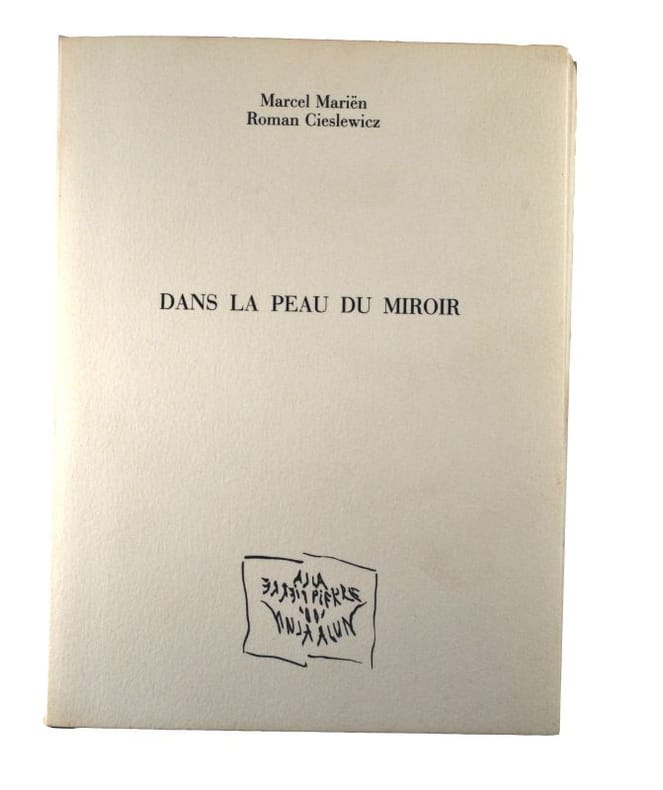
19881040951988 Bruxelles, La Pierre d’Alun, 1988, 224x166mm, 84pp., en feuilles sous couverture imprimée.Le texte de Marcel Mariën est illustré de 10 photomontages originaux de Roman Cieslewicz.Exemplaire 15/50 réservés aux amis de « La Pierre d’Alun » signés par les auteurs et comportant en frontispice une sérigraphie originale signée et numérotée de Roman Cieslewicz.Exemplaire unique comprenant les dix photomontages originaux, 360x265mm, portant tous au dos le cachet de la vente de l’atelier, l'ensemble contenu dans une boîte spécialement conçue et réalisée par l'Atelier Devauchelle.Roman Cieslewicz commence sa carrière cher « Elle » en 1963 ou il est rapidement nommé directeur artistique ; puis il dirige l’agence M.A.F.I.A. ou il conçoit des campagnes pour Prisunic, Woolmark, 3 Suisses ou Lancaster ; puis il crée la revue « Opus International », la revue « Kitsch » avec Topor et Sternberg, puis commence une longue collaboration avec le Centre Pompidou pour lequel il crée de nombreuses affiches et catalogues. Dans cette collaboration avec Marcel Mariën on reconnait l’influence du surréalisme belge.Provenance des photomontages : vente atelier Cieslewicz, Paris,19 mars 2006 , lot 238.(104095)
192718838ABParis, Arts et métiers graphiquees, 1927 - 1939. 31 : 24 cm. Mit vielen, teils farbigen, teils montierten Tafeln und Abbildungen. Farbig illustrierte Origiginal Umschläge, in Leinendecken und Leinen-Schubern. Nummer 1 - 68 (alles) in 11 Schubern.
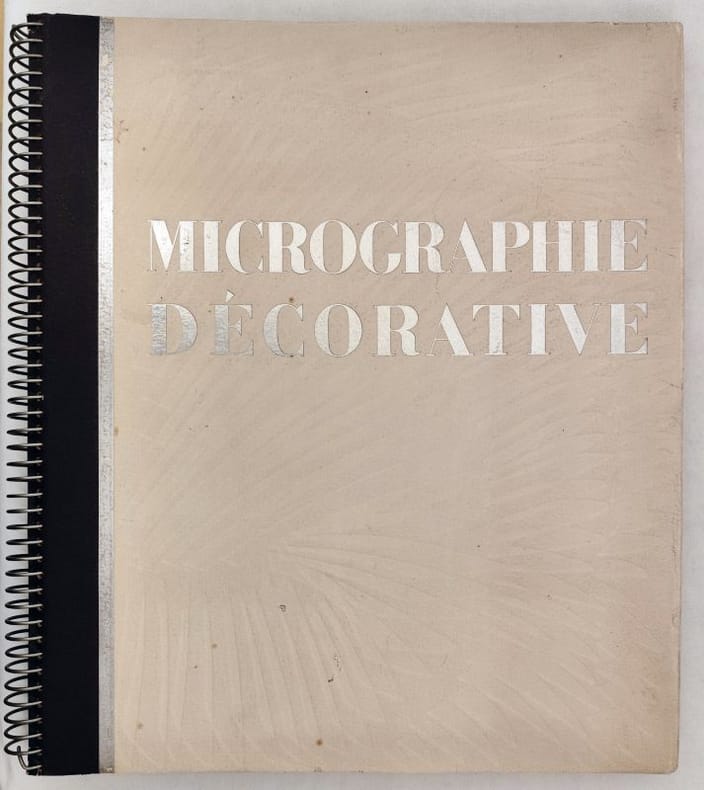
1931105687Paris chez l'Auteur 1931 425x380mm, 10 pages non paginées, 20 planches numérotées en chiffres romains et leurs serpentes, 4 pages non paginées. Reliure spirale, couvertures en carton fort recouvertes de papier gaufré évoquant les reliefs d'une cristallisation, frappé argent sur le plat.
196548080Arnsberg and Dortmund Germany: Arbeitsgemeinschaft Gestaltendes Handwerk 1965. First edition. Hardcover. Near fine condition. Duodecimo 6 1/8 x 8 1/2". Unpaginated app. 100 leaves each three volumes. Original screw-bolted brown cloth with gray lettering on spines. Text printed to handmade paper in variant colors: black brown gray blue cream yellow green burnt Sienna and umbra photographs printed to glossy white paper. With lists of full and associate members of the workshop at front printed in white on black paper.<br /> <br /> Complete catalog of "Werkstattporträt Workshop Portrait" in three volumes a joint venture of the Project Group Creative Crafts for the Districts of Arnsberg and Dortmund Germany from 1961 to 1965. Participants of this project included craftsmen and women from the fields of pottery weaving embroidery bookbinding lathe work carpentry photography painting and sculpting. An extraordinary project presenting a state-of-the-art view of craftsmanship and art in Eastern Westfalia in the 1960s illustrated with 309 b/w photographs.<br /> <br /> Albert Renger-Patzsch participated in this project not only as a photographer see portrait 10 but provided one-hundred and forty-five of the three hundred and eleven photographs of works of other participants including portrait photographs for the catalogs "Werkstattportrait." Renger-Patzsch had worked as press photographer for the Chicago Tribune before publishing his title 'Crassula" with the Auriga-Verlag in the series 'Die Welt der Planze' in 1924. He had his first museum exhibition in 1927. His second book "Die Welt ist schön" became his best-known publication. During the 1930s he remained in Germany and made photographs for the German industy and in advertising. His archive was destroyed during W.W.II. In 1944 he moved to Wamel North Rhine-Westfalia and lived there for the rest of his life.<br /> <br /> The catalog is structured in twenty-nine chapters 0-271 introducing artists and craftsmen and women including one introductory chapter with eight photographs and a final chapter with six photographs. The object of the project was to further the exchange of knowledge and experience collaboration in research shared leisure time and visits of the workshops and studios of participants. Regional and national exhibitions and publications were arranged to help find buyers for the created work. The introductory chapter includes lists of full members and associate members.<br /> <br /> Each of the twenty-seven workshop portraits includes an introductory leaf for the respective participant describing the workshop or studio and the career including particulars about the techniques and material used by the artist with captions on the objects captured in eight b/w offset reproductions of photographs by Albert Renger-Patzsch and others on verso. Each set of photographs includes a portrait of the respective artist. Following each set of photographs a page with contact information of the artist and photo-credits for the work displayed.<br /> <br /> The final chapter is entitled "Workshop Portrait." It includes a brief description of the workshop taking place from April 1961 to December 1965 six b/w photographs of workshop exhibits and a list of all participants with contact information. The last page of this chapter an address by Walter Römhildt states the conclusion of this project and announces the continuation of publications of the series "werkstattforum" at his new office the "Beratungsstelle für Handwerksform bei der Handwerkskammer Hannover." Participants of the project "werkstattportait" will automatically receive those publications. <br /> <br /> Content with participating artists:<br /> <br /> portrait 0: Introduction of the project with photos by Renger-Patzsch 9 <br /> portrait 1: Hildegard Bäumer weaver Siegen photos by Renger-Patzsch 6 and Foto-Besser Siegen 3<br /> portrait 2: Ignatius Geitel Glass painter Bochum with Klischees by Titze & Lorenz Gelsenkirchen 9<br /> portrait 3: Karl Josef Hoffmann sculptor Attendorn with photos by Renger-Patzsch 9<br /> portrait 4: Anneliese Kretschmer photographer Dortmund photos by Anneliese Kretschmer 9<br /> portrait 5: Udo Dickerhoff carpenter Bochum photos by Renger-Patzsch 8 Sabine Renger 1 and Christian Bathe Münster 1; with two transparencies.<br /> portrait 6: Ingeborg and Bruno Asshoff potters Bochum photos by Renger-Patzsch 10 Dagmar Korn Düsseldorf 2 and Helmut Hering Dortmund 2<br /> portrait 7: Martha Wurm embroider Wattenscheid photos by Photo-Soeding J. Müller Soest 11<br /> portrait 8: Otto Pickhan turner Mollseifen photos by Renger-Patzsch 9<br /> portrait 9: Irmgard Timmermann weaver Soest photos by Photo-Soeding J. Müller Soest 9 H. Musmann Lage 1 and Renger-Patzsch 1<br /> portrait 10: Albert Renger-Patzsch photographer Wamel photos by Sabine Renger Wamel 1 Renger-Patzsch 11 Klischees by Titze & Lorenz Gelsenkirchen; <br /> portrait 11: Andrea Böhm picture weaver Lüdenscheid w/o photo-credits 10<br /> portrait 12: Päule Jelich goldsmith Iserlohn photos by Schmidt Lueg Iserlohn 11 and Foto Melchers Herne 1 <br /> portrait 13: Wolfgang Kruse turner Hamm photos by Schmidt Lueg Iserlohn 10<br /> portrait 14: Wolfgang Kreutter sculptor Dödesberg photos by Bert Brösel Siegen 1 Heidersberger Wolfsburg 2 Schmidt Lueg Iserlohn 9 <br /> portrait 15: Marianne Proll bookbinder Hagen photos by A. Bach Hagen 6 Renger-Patzsch 8 <br /> portrait 16: Heinz Abendroth metal smith Dortmund photos by Rolf Schmieding Dortmund 9 Dinstühler Dortmund 1; <br /> portrait 17: Liesel Bellmann sculptor Dortmund photos by Gerd Schlitzer Dortmund 4 W. von Frankenberg Dortmund 1 Rolf Schmieding Dortmund 3 and Heller Telgte 1 w/o credit 3<br /> portrait 18: Karl Jlling metal smith Mallar photos by Renger-Patzsch 10 <br /> portrait 19:Dieter Pieper goldsmithLüdenscheid photos by Werkstätten Carl Golderer Pforzheim 24 <br /> portrait 20: Marieluise Quade painter and graphic designer Lüdenscheid photos by Carl Huth Lüdenscheid 2 w/o credits 7<br /> portrait 21: Waldemar Wien sculptor Kierape 1 photos by Renger-Patzsch 13<br /> portrait 22: Christel Humpert potter Bochum photos by Renger-Patzsch10<br /> portrait 23: W. K. A. Weisheit carpenter Plettenberg-Oesterau photos by Renger-Patzsch 9<br /> portrait 24: Günter Hülshoff potter Rosemarie Hülshoff batik both Wangern photos by Renger-Patzsch 14<br /> portrait 25: Josef Severin metal smith Anröchte/Krs. Lippstadt photos by Renger-Patzsch 6 and Sabine Renger 4 <br /> portrait 26: Gisela Lohse weaver Hagen photos by Renger-Patzsch 11 <br /> portrait 27: Johannes Scharfenstein carpenter Meschede photos by Renger-Patzsch 10 and Foto-Zwietasch Kornwestheim 1<br /> "werkstattportrait" with Klischees by Tietze & Lorenz Gelsenkirchen 6<br /> <br /> Text in German. Minor wear overall with some red underlining of text in Römhildt address on last page. Translation of werkstattportrait 10: <br /> <br /> "Albert Renger-Patzsch born on June 22m 1897 graduated at the Humanistic Gymnasium studied chemistry until the preliminary examination after that he became the head of the photography department of the Folkwang Publisher in Hagen and Darmstadt. Since 1925 independent photographer in Bad Harzburg; first exhibition at Kestner-Gesellschaft in Hannover in 1925; first publication: "Die Halligen" in 1927 worked from 1929–1944 in Essen after that in Wamel near Soest. Following his title "Die Welt ist schön" he published monographs of cities and architecture books on marked-off landscapes and other topics. Renger=Patzsch works are in the collections of the MOMA New York the Eastman House in Rochester the Gernsheim Collection in London the Copper-Engraving Collection of the National Library in Paris and the Photo-Museum in Dresden. He was awarded the David Octavius Hill Medal of the G.D.L. in 1957 the Culture-Award of the German Society for Photography Cologne in 1960 and the Golden Society Medal of the Vienna Photographic Society in 1961. Renger-Patzsch is seen as the father of "Neue Sachlichkeit" in photography. In his book "Die Welt ist schön" he introduces a program with the goal to deter photography from engaging in a race with painting and reflect on its own medium. His notion that photography based on its mechanical structure is better suited to do justice to an object portrait it as an artistic individual pertains to large fields of photography today. Arbeitsgemeinschaft Gestaltendes Handwerk hardcover
190777332s. l. (Paris) s. d. [1907] | 28.70 x 20.40 cm | une photographie contrecollée sur carton
192958921ABMünchen, Transmare und Kurt Wolff, 1929. 4to. 17 S., 1 Bl. Mit 60 photogr. Tafeln. Orig.-Leinwand mit Orig.-Umschlag.
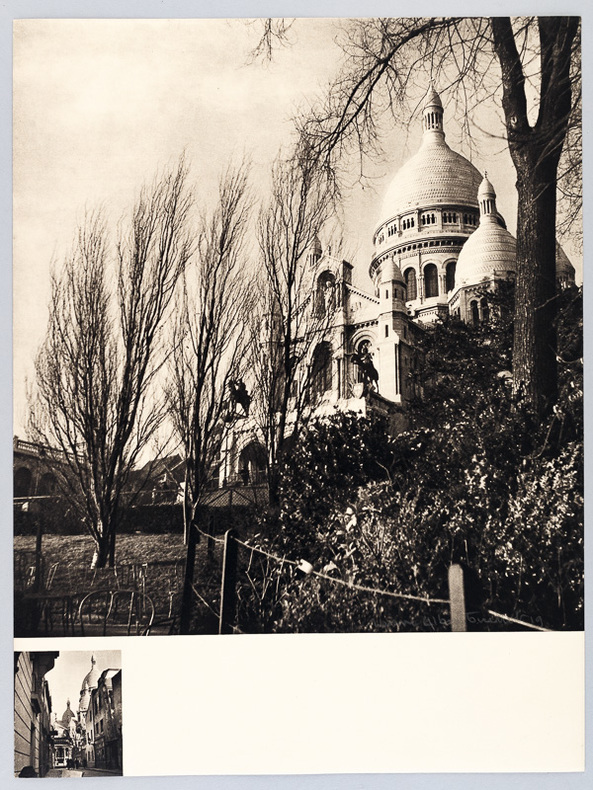
1908063640Paris: F. Contet 1908-1937. Various. Hardcover. Very Good/No Jacket as Issued. Complete 22-Volume Set. Very rare to find the entire series. Volume 1-3 descriptions presumably by F. Contet. Volume 4-16 descriptions by J. Vacquier. Volume 17-22 descriptions by Paul Jarry. Volume 1-47912-22 first editions 17 out 22 volumes. Titles and dates are as follows - Volume 1: Le Temple et le Marais Tome I 1908. Volume 2: Le Temple et le Marais Tome II 1909. Volume 3: Le Faubourges Saint-Germaine Tome I 1910. Volume 4: Le Faubourges Saint-Germaine Tome II 1910. Volume 5: Le Ministere de la Marine; Ancien Garde-Meuble de la Couronne 4th Edition 1922. Volume 6: Le Faubourg Saint-Honore Tome I 3rd Edition 1920. Volume 7: Le Farbourges Saint-Germain Tome III 1912. Volume 8: L'Hotel Lambert 3rd Edition 1921. Volume 9: La Place Vendome 1913. Volume 10: Le Quartier Saint Paul 2nd Edition 1920. Volume 11: Le Faubourg Saint-Honore Tome II 1923. Volume 12: Le Faubourg Saint-Germain Tome IV 1920. Volume 13: Le Faubourg Saint-Germain Tome V 1921. Volume 14: La Nouvelle-France Ou Le Faubourg Poissonniere 1922. Volume 15: Le Quartier Saint-Avoye 1923. Volume 16: Le Faubourg Saint-Germain Tome VI 1924. Volume 17: Le Quartier du Palais-Royal 1926. Volume 18: Les Porcherons ou le Faubourg Montmartre 1928. Volume 19: Le Quartier Saint-Antoine 1929. Volume 20: Le Temple et le Marais Tome III 1930. Volume 21: Le Quartier de Luxembourg 1934. Volume 22: L'lle Saint-Louis 1937. Marbled boards with quarter cloth bindings. 3 dual cloth ribbon ties on each folio. Loose-leaf. B&W plates photographs. Stickers cover original titles on volume 22. Volume 17 20 21 are ex-library on and inside front covers as well as on first few pages. Volume 1 and 2 have titles handwritten on their spines. Volume 18 21 and 22 have new bindings as well as titles handwritten on spines. Volume 6 and 8 have a ribbon torn along fore-edge. Multiple boards have spots of fading and/or rubbing. Several spines have minor fraying tears to cloth and some staining. Many of the inner spines are cracked or broken but still holding together. Age-toning in multiple books. Overall the set is in very good condition. Due to this series's size and/or weight additional shipping may be needed. No international shipping. A highly collectible series filled with attractive photographs! Full refund if not satisfied. F. Contet hardcover
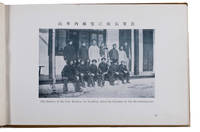
1912ABC_47646Shanghai: Commercial Press Limited 1912. Original publisher's orange-brown pictorial cloth marbled endpapers. Oblong 8vo 15 x 22.5 cm. 160 black-and-white photographic illustrations all protected by tissue paper guards. First and only edition of a very rare work with photographic illustrations of the Chinese Revolution of 1911 with captions in Chinese and English. It was published specifically for circulation in the West and consists of 14 parts. The present work contains the first 4. However any volume in this series is exceptionally rare as we have not been able to find another copy in sales records of the past 100 years.The Chinese Revolution of 1911 is an important event in Chinese history as it resulted in the establishment of the Republic of China. The Revolution was preceded by decade of revolts since Chinese citizens had already been dissatisfied with the rule of the Qing dynasty 1636-1912 for some time. The Revolution started in October 1911 with the Wuchang Uprising after which similar revolts broke out across the country. The Qing court then initiated negotiations with the revolutionaries. Both parties came to the agreement that the emperor who was just 6-years old had to abdicate in February 1912. Revolutionary statesman Sun Yat-Sen 1866-1925 became the first provisional president.The present work offers an authentic pictorial record of the first revolts. The work contains numerous portraits of important leaders of the Revolution and members of the Qing court grim photographic illustrations of the battlefields in Wuchang now the Wuchang District of Wuhan and Hankow or Hankou and images of the attack on Nanking now Nanjing including the preparations and the aftermath.The binding shows very slight signs of wear the gutters of the front and back endpapers are weakened causing the binding to be wobbly but the boards are still attached. The tissue paper between the photographic illustrations has browned throughout. Otherwise in very good condition.l WorldCat 891342401 2 copies. Commercial Press, Limited, hardcover