Kent RockwellABAA

108 920 résultats
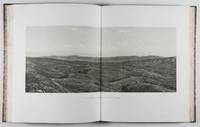
1960WRCLIT69684Various Places 1960. Thirty-one 7.5" x 6" leatherette albums categorized and identified by spine labels captioned in ink in Kent's hand containing 1125 individual original matte and glossy black & white 7" x 5" gelatin silver prints. Slight surface variations characteristic of ferrotyping and some spotting scratches and other blemishes in the negatives are evident in the prints; some are printed slightly askew; some oxidation fading or other signs of the amateur processing is evident on occasion otherwise remarkably good. Until his death Rockwell Kent maintained this collection of thirty-one albums of prints of his own photographs as well as some photographs taken by others in his company on certain occasions all arranged identified and labeled according to locations and subjects. Apart from their categorization by placement in the notebooks some occasional prints are identified by Kent in ink or bear his stamp. Kent frequently recorded scenes people and settings via photographs during his voyages and travels many of which he utilized as reference material and are identifiable as such in the production of his illustrations prints and paintings made during and after his journeys. Kent made three trips to Greenland first in 1929 and then in 1931-2 and 1934-5 and photographs from these three trips constitute the largest single subject element in the archive. The subjects break down generally as follow: 1 Greenland. 16 albums including 549 images. 2 Asgaard. 8 albums including 293 images. 3 Alaska. 1 album including 46 images. 4 Monhegan Island. 2 albums including 84 images. 5 Arizona Colorado California. 1 album including 28 images. 6 Puerto Rico. 1 album including 51 images. 7 Denmark. 1 album including 43 images. 8 Hillsboro and Richmond. 1 album including 31 images. Although obviously best known for his book illustrations works on paper and paintings Kent was sufficiently renowned as a photographer during the 1930s that some of his photographs were reproduced in photogravure in a portfolio MODERN MASTERS OF PHOTOGRAPHY SERIES 1 PICTORIALISTS published by the Galleon Press. While those photogravures turn up separately with some frequency - usually well outside of their original context in the portfolio - individual original prints from negatives of Kent's photographs are scarce. We note as reference the appearance of a single Greenland print also represented by a print in this archive and in the same format with Kent's ink rubber stamp on the verso: Swann Galleries 15 May 2008 Lot 341 $1300. Further details about the archive are available upon request. hardcover books
1902000110<p><strong>29 × 20 cm. Comprising 158 text plates including 95 photographs produced by the committee of which 42 photographs appear on separate plates measuring approximately 23 × 15 cm.</strong></p><p>The work documents the Photography Committee's journey from Istanbul to MaÊ¿Än in Transjordan. The accompanying text was compiled from articles originally published without illustrations in various issues of the newspaper <em>Vakit</em> "Time" in 1902.</p><p>This is a unique work prepared for publication with photographs taken by a private committee that included prominent figures such as the German general Karl Auler Pasha who served as an adviser on Hejaz affairs until the fall of Medina in 1918.</p> hardcover
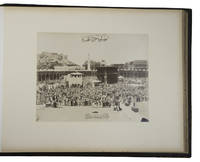
1890ABC_46444Tunis: Photographie Garrigues 1890. Half black leather red buckram sides blind-stamped boards and gold-stamped spine title in gold lettering on front board marbled endpapers. Oblong album 32 x 41 cm. Album with 50 photographic prints of various sizes 13.5 x 9.5 to 29 x 21.5 cm each pasted on thick paperboard. Album with 50 late-nineteenth-century photographic probably albumen prints of scenes in Algeria and Tunisia made by an unknown photographer. Most of the photographs have a caption naming the place photographed but only 5 indicate place of production or publication of the photos. These were all produced in Tunis at least some by the French photographer J. Garrigues printed and published at his studio. Notable photographs in this album are the first showing a veiled woman a barber at work in the streets riders on their horses camels with riders and luggage the Notre Dame d'Afrique in Algiers. Other subjects include city views fairly candid photos of people in the streets landscapes and the exterior and interior of a mosque.The most remarkable print in this album actually does not fit in with the other images of places in North Africa. It is a photograph of pilgrims before the Great Mosque and Kaaba in Mecca modern day Saudi Arabia with a caption in Arabic. This photograph was taken by the first Arab photographer Al-Sayyid Abd al-Gaffar ca. 1887 making it one of the first photographs of Mecca. The present album contains this picture in its original form including the Arabic caption. An edited version of the photograph in which remnants of the Arabic caption are visible can be found in Hurgronje's Bilder aus Mekka.With a small Antwerp booksellers ticket on the front paste-down". The binding shows some signs of wear slight foxing/browning of the outer edges of the paper boards not affecting the photographic prints some prints have slightly faded edges which does not interfere with the actual image. This album with photographic prints of Algeria Tunisia and remarkably 1 of the Great Mosque and Kaaba in Mecca is overall in good condition. Photographie Garrigues, hardcover
190757913ca.1907-2003 | 30 x 32 cm
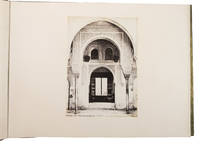
1870ABC_47963Madrid 1870. Contemporary gold- and blind-stamped green leather with the intials "M.L.B." blind-stamped on the front board gold-tooled turn-ins green watered silk endpapers gilt edges. Oblong folio 62 x 46.5 cm. With 72 large size albumen photographic prints with architectural views including numerous views of Spanish and Western Islamic architectural treasures ca. 33.5 x 24.5 cm 3 large composite photographic panoramas the Alhambra and Granada Cordoba and San Sebastian and 5 photographs of people 3 handcoloured photographs of Spanish costumes and 2 portraits of a woman. 58 of the 72 photographs contain the name of photographer title and number of the image in the negative. An exceptional album with fine views of Sevilla Granada Cordoba San Sebastian and many more. The photographer Jean Laurent was born in France but opened a photo studio in Madrid in 1856. In 1858 the Spanish government commissioned him to photograph the construction of the railroad line from Madrid to Alicante. The results were published and exhibited in many places which brought him considerable success. From 1861-68 Laurent held the title of "Fotógrafo de S. M. la Reina" and produced photos of members of the Spanish royal family. His photo studio in Madrid became one of the best-known from his time which allowed him to open gallery in Paris where he exhibited and sold premium-quality prints from his work in Spain. Although he was interested in industrialisation and intended to convey the image of a modern and economically flourishing country his photographs of the more picturesque aspects of Spain became more popular. The present album contains 34 views of Western Islamic architectural structures and a large 4-part folding panorama of the Alhambra and Granada. Furthermore it contains two examples of photographs on leptographic paper a collodio-chloride printing paper which was sold ready to use. Its manufacture was perfected by Laurent in collaboration with Martínez-Sánchez in 1866.With some slight signs of wear around the spine and the corners of the boards the panorama views are mounted on grey cloth which is somewhat foxed not affecting the actual photograph the album leaves are very slightly browned. Overall in very good condition.l Hannavy Encyclopedia of Nineteenth-Century Photography II 829/830. hardcover
000535Cairo Photographic Image. Very Good. No Binding. The photographs are a part of Naum Shoucair's collection has been published except tow un known photographs in this collection in his book Tarikh Sina al Qadim wa al Hadith wa Jografiyyatuha The history of Sinai and Arabs. Al Ma'arif press Cairo 1916 inventory no. 000456. 11 photographs are mounted on cards not included in the measurements mentioned of which four are signed. 1 Sir Lee Stack Pasha royal secretary to the Sudanese government and former director of the intelligence agent and one other un known and un published both signed in 1913. 21.5 x 14 cm. 2 Colone G. F. Clayton director of the intelligence agency and rep. of the Sudanese government signed. Photogrpah by Hughes & Mullins Ryde. 15 x 10.5 cm. 3 Captain A W Weymouth commander of Minerva signed. 15 x 10 cm. Photo by Symonds & Co. Portsmouth 4 Rudolph Slatin Pasha signed in 24-6-1895. Photo by Zangaki Cairo. 22.5 x 16.5 cm. 5 Lord Kitchener. 27 x 17 cm. 6 Beamish bey former governor of the Sinai. Photo. Lekegian Cairo. 14 x 9.5 cm. 7 Captain Phipps Hornby vommander of Diana. Photo. Russell & Sons southsea. 14.5 x 10 cm. 8 A. C. Parker governor of Sinai. Photo. H. Walter. Barnett India- London. 13 x 9 cm. 9 Liutenant W. E. J. Bramly director inspector of Sinai. Photo Lekegian Cairo. 10 x 10 cm. 10 Lord Edward Cecil chancelor of the exchequer Egypt and former director of the intelligence/ information agency. Un mounted. 20 x 14 cm. 11 Un known and un published. 22 x 16 cm. 12 Un known and un published. Photo. P. Dittrich successor to J. Heyman Cairo. 18.5 x 13 cm. Naum Shoucair 1863-1919 intelligence officer and historian was educated at Beirut university and in 1886 came to Egypt where he joined the Intelligence Department of the Egyptian Army. In 1900 he was transferred to the Sudan Government and was appointed Director of the Historical Section. He served under Lord Kitchener and Sir Reginald Wingate and assisted in the arrangements for the escape of Slatin Pasha from Omdurman in 1895 for which he was decorated by the Emperor Francis Joseph. He became a well known expert on Sinai and due to his intimate knowledge he was sent to Sinai in 1905 on several important missions accompanying Captain Phipps-Hornby of HMS Diana on a mission to Akaba in 1906 and later he served as a member of the Sinai Boundary Commission. Shoucair wrote his History of the Sudan in 1903 History of Sinai in 1916 and at the time of his death was completing a history of Arabia. 0.
188545686ABSt. Petersburg, (J. Dazario), um 1885. Bildgröße meist ca. 21:27 cm. Auf 20 Trägerkartons (62:42 cm) mit gedruckten Bildunterschriften. In reich verzierter, zeitgenössischer Holzkassette (77:57:15 cm), mit gusseisernen Beschlägen und Emaillearbeiten verziert, im Deckel eingelassen eine Glasplatte mit gefassten Kanten, darunter ein kalligraphiertes Widmungsblatt.
1900ABC_495491900. Contemporary gold- and blind-tooled burgundy buckram with the title and volume number lettered in gold on the front and spine a double fillet border on both boards blind-tooled turn-ins gold and burgundy floral end papers gilt edges. Folio. With 50 photographic reproductions in black and white mounted onto thick passe-partout leaves separated by thinner leaves onto which typed descriptions are mounted. 2 volumes. Remarkable photographic album beautifully reproducing the paintings from the Shah Jahan Album also known as the Kevorkian Album. The album compiled by the Mughal emperor Jahangir 1569-1627 and his son Shah Jahan 1592-1666 contains miniatures from the best painters of the Mughal era such as Govardhan Mansur Daulat Payag and Chitarman with calligraphic text by famous calligraphers such as Mir' Ali Haravi. The 50 exquisite photographs accurately reproduce the details of the original miniatures highlighting the iconographic and stylistic richness of Mughal art.Mughal albums also known as muraqqa usually included existing works in the patrons collection as well as works created specifically for the album such as paintings and drawings folios from preparatory pattern books and calligraphy specimens. They were not bought ready-made but compiled over a longer period of time by its owners. Emperor Jahangir commissioned the first folios for the Shah Jahan Album around 1620 and his son continued after his death. Shah Jahan's additions are stylistically different from Jahangir's with more portraits and illumination and the inclusion of calligraphy pages. After his death the muraqqa now with 39 miniatures passed onto his son Aurangzeb 1618-1707 who did not commission any more folios. The muraqqa left the royal library in the early 19th century and was likely acquired by an art dealer from Delhi who added 11 miniatures around 1820. These were made in the 19th century but imitated the 17th-century style of the others. In the 20th century the muraqqa was bought by the New York art dealer Hagop Kevorkian who sold 9 folios to the Freer Gallery of Art in Washington and the remaining 41 to the Metropolitan Museum of Art in New York where they still reside.The spectacular Shah Jahan Album is a collection of 50 single-page paintings which include intimate nature studies and portraits of the royal family and various dignitaries framed by a beautiful floral border. Each painting is faced by a single page of illuminated calligraphy made by renowned calligraphers. The photographs in the present work each mounted in a passepartout carefully reproduce the single-page paintings and three of the four calligraphic pages that open the collection. They are accompanied by a foreword and a short description of each painting which appear to be taken from an auction catalogue and were likely added later. A valuable testament to the interest in Mughal art in the 20th century this collection constitutes a seemingly unique iconographic resource as we have not been able to find another copy. There is no mention of a publisher or photographer but the quality of the prints suggests careful production intended for and commissioned by a scholar or collector specialising in Indian art. The present copy was part of the collection of Dr Ebadollah Bahari 1929-2018 noted historian of Persian art author of Bihzad master of Persian painting 1996 and benefactor of the Bahari Curatorship of Persian Collections at the Bodleian Libraries University of Oxford.The boards have been rubbed with minor loss of material on the back board of both volumes the joints are slightly weakened but the structural integrity of the bindings is still intact. Some of the mounted descriptions are lightly foxed. Otherwise in good condition. hardcover
185964885London, James S. Virtue, (1858-1859). Gr.-Fol. (45 x 33 cm). Mit zus. 76 auf Untersatzkartons mont. Orig.-Fotografien (Albumin) von Francis Frith u. 82 nn. Bll. Text. HLdr.-Bde. d. Zt. m. goldgepr. Rückentiteln u. marmor. Schnitt.
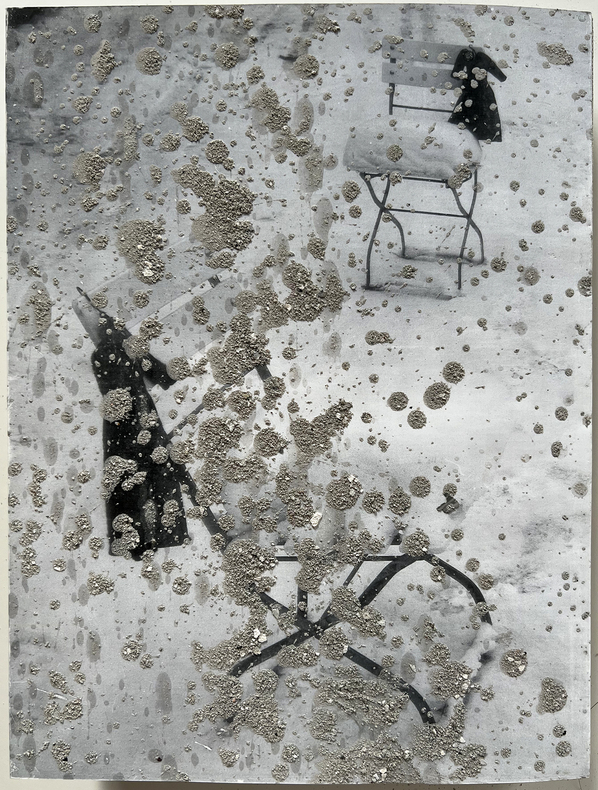
20022124Paris, Yvon Lambert, Coll. « Une rêverie émanée de mes loisirs, VIII », 2002. Un vol. in-4 (30,5 x 23 cm), broché, couverture illustrée, dos toilé titré, boîte d’acier brossé de l'éditeur. ÉDITION ORIGINALE. Collages de cendres et de plomb sur 18 photographies numériques par Anselm Kiefer. Chaque exemplaire composé à la main est sensiblement différent l’un de l’autre. Tirage à 150 exemplaires (N° 48/108 justifié et signé au crayon par l'artiste. Note : Les livres ne se contentent pas d'accompagner la création d'Anselm Kiefer, comme une production secondaire ou un commentaire. Ils y occupent une place centrale en constituant à la fois un lieu d'entrecroisement pour ses autres réalisations (installations et performances, sculptures et gravures, etc.), le creuset d'œuvres à venir ou l'aboutissement de réalisations antérieures. En tant que tels, ils sont un élément essentiel de son travail, un des plus significatifs et des plus fascinants. Bibliographie : Arasse, Anselm Kiefer, p. 47 ; […], Anselm Kiefer. L’alchimie du livre, BNF, 2015. Exemplaire bien signé à l’état de neuf, aucun défaut, les collages de cet exemplaire nominatif sont particulièrement soignés. — (ENGLISH DESCRIPTION) DIE UNGEBORENEN. (Paris, Yvon Lambert 2002). Anselm Kiefer's photographic book / multiple 'Die Ungeborenen': the complete illustrated portfolio of eighteen digital prints with ash and lead collage. Self-wrappered leporello with grey cloth spine, preserved in the original metal box prepared by Christian Chopinaud, with the colophon leaf mounted to the interior of the lid (as issued). Anselm Kiefer's photographic book / multiple 'Die Ungeborenen'. Edition: 150 ex. numbered and signed in pencil by Anselm Kiefer (with a further 20 hors commerce numbered I-XX, ten artist copies numbered 48/108 and signed with pencil by the artist, ten unnumbered nominatives copies, and ten copies from an édition de tête). Justification sheet is pasted to interior of lid. 305 x 230 mm. Printer: Eric Seydoux, Paris (Colophon) Fabricator: Emmanuel Ardant, Paris, Christian Chopinaud (Fabricator of Metal Case). - About the work: 'Die Ungeborenen' (The Unborn) has been a motif in Kiefer's work since the 1970s. Encompassing all of the artist's oeuvre, from painting to sculpture to books (as here), Kiefer has explored the idea of potential in all its forms: potential, i.e. unborn, people, ideas and creative possibilities. To this end, Kiefer has explored a vast mythos including German folklore, philosophy, literature, Jewish myth, Lilith, the first woman, characterised by patriarchy as a demoness and so on. As so often in Kiefer's work, he makes use of lead and ash in this book, applying them directly to his photographs. 'It’s the other aspect of the unborn, the desire of not wanting to be born. Cry of the prophets, the revolt of Job. It would have been better if you had never been born! Everything happens as if it would have been preferable to not be born. The retrograde movement of creation. Theodicy, the accident of creation, God’s regret to have fathered this ungrateful being, this outlaw, who does not abide to the contract.' (Anselm Kiefer). - About the artist: Anselm Kiefer (born in 1945) has established himself as one of the most important post-war German artists. In his works, paintings, sculptures, and installations Kiefer draws from German culture, making more or less explicit references to recent history, literature, philosophy and art. Kiefer’s Die Ungeborenen combines figurative motives with an abstract background. The artist uses narrative elements—the dresses, numbers, and branches—to evocate the demon Lilith, a figure from Jewish folklore, who was believed to kidnap newborn children. The dresses without bodies, and the adjacent numbers, are also a reminder of the Holocaust. In his work, Kiefer frequently offers a reading of recent history through mythological or classic figures, in this case Lilith. He uses the abstraction of the background not per se, but to demonstrate the universality of his approach; the unborn and the ones who lost their lives are like stars in the infinite sky, countless, yet always on our mind. (Literature: Daniel Arasse, Anselm Kiefer (New York: Harry N. Abrams, Inc., 2001), 16-17, 19, ill). More pictures on request.
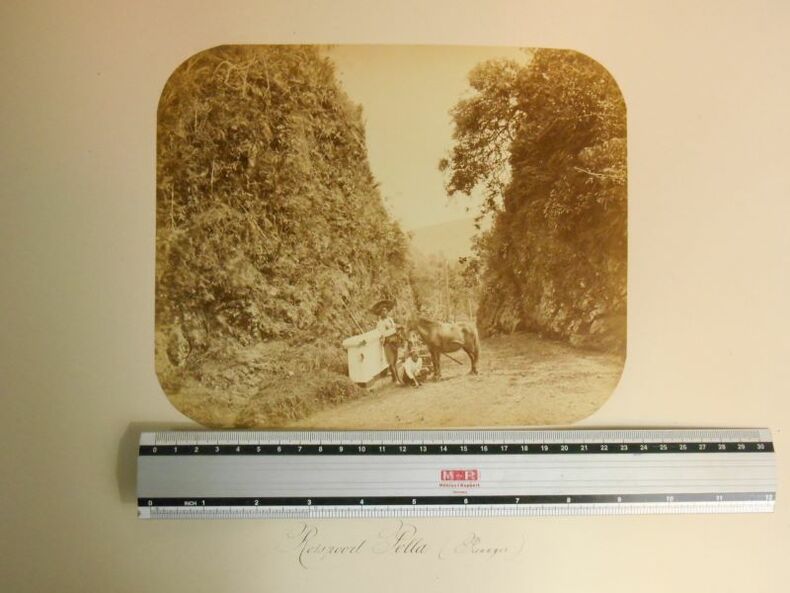
272574 photographies ((+/- 23,5 x 19 cm) contrecollées et 3 planches avec de nombreuses petites photos (voir nos photos), non signées mais assurément de Walter Bentley Woodbury.Photos de Java (Indonésie) que nous datons d'avant 1861.Les photos sont dans un modeste dossier à rabats titrés dorés et l'ensemble est en bon état.Les photos sont titrés ainsi :1.Yang-tse Stoomship der Messageries Maritimes. 2. Boshparty by Felaga Petagan. 3. Gericht wit het Hôtel Bellevue (Buitenrorg). 4. Missigit van Fjandjoer nade aardbeving5 Allée van kanarieboomen by de Boro Boedeer. 6. Museum Koningspleen (Batavia). 7. Kampement (Salatiga). 8. Huis van een particulier, Molenvliet (Batavia). 9. Indische vruchten. 10. Gamelang11. Inlandsche Typen. 12. Inlandsche Typen. 13.Sans titre. 14. Solo-rivier. 15. Maspada by Garoet (Preanger). 16. Mayang koelit. 17. Gamelang. 18. Bedoyes van der Regent van Bandong19. Huys van M. Kleyin gang Chaulan (Batavia). 20. Missigit van Fjandjoer. 21. Residentie-huis (Bandong). 22. Rytuig van den Keizer van Solo. 23. Shuttery op het Koningsplein (Batavia).24. Felaga Merna (Preanger). 25. Moeder van den Keizer van Solo. 26. Krader van den Papandajan (Preanger). 27. Huis van den Regent (Bandong). 28. Paleis van den Gouverneur Generaal (Buitenzorg).29. Fjoerock Mahi by Bardong. 30. Paleis van den Gouverneur Generaal (Buitenzorg). 31. Residentie huis (Samarang). 32. Rosspoort Polla (Preanger). 33. Avenue in het Park van den Gouverneur Generaal (Buitenzorg). 34. Allee in de bovenstad (Batavia). 35. Krader van den Fangkoeban Prahoc. 36. Fessari. 37. Residentie huis (Djokjokarta). 37. Basrelief van de Boro Boedoer. 38. Chineesch kamp (Batavia).39. Felaga Petangan (Preanger). 40. Chineesch huis, Molenvliet (Batavia). 41. Koningsplein (Batavia). 42. Huis van den Kommandant (Salatiga). 43. Felaga Petangan (Preanger). 44. Afgodsbeeld by Malang.45. Inlandsche hoofden. 46. Fort rn solo. 47. Kawah Fji Boeni by Felaga Pelangan. 48. Soerabaja rivier. 49. Landshap by Poerworedjo (Bagelen). 50. Inlandsche Typen. 51. Prins Mangko Negoro. 52. Keiser van Solo. 53. Gebergte by de Boro Boedoer. 54. Afgodsbeeld by Malang. 55. Fopeng le Batavia. 56. Fop van den Boro Boeder. 57. Felaga Badas (Preanger). 58. Felaga Petangan (Preanger). 59. Chineesch graf (Samarang). 60. Huis van den Gouverneur Gneraal (Tjipanas). 61. Krader van den Fangkoeban Prahoc by Bandong. 62. Allee in de Bovenstad (Batavia). 63. Keizerin van Solo.64. pendoppo van Mangko Negoro. 65. Gericht van de bungalow te Mackivelle (Point de Gallo). 66. Meerenstraat (Solo). 67. Ryswijk (Batavia). 68. Fjoeroek Fjikapoendang by Bandong.69. Zijde van ein der omgangen. 70. Residientie huis (Soerabaya). 71. Maspada by Garoet 5Pranger). 72. Boro Boeder (Kedoe). 73. Tempel van Mendoet (Kedoe). 74. Missigit van Demak (Samarang). 75. Rooden brug (Soerabaja). 76. Kali Besar (Batavia). 77. Ingang van den Kraton (Djokjokarta).
272574 photographies ((+/- 23,5 x 19 cm) contrecollées et 3 planches avec de nombreuses petites photos (voir nos photos), non signées mais assurément de Walter Bentley Woodbury.Photos de Java (Indonésie) que nous datons d'avant 1861.Les photos sont dans un modeste dossier à rabats titrés dorés et l'ensemble est en bon état.Les photos sont titrés ainsi :1.Yang-tse Stoomship der Messageries Maritimes. 2. Boshparty by Felaga Petagan. 3. Gericht wit het Hôtel Bellevue (Buitenrorg). 4. Missigit van Fjandjoer nade aardbeving5 Allée van kanarieboomen by de Boro Boedeer. 6. Museum Koningspleen (Batavia). 7. Kampement (Salatiga). 8. Huis van een particulier, Molenvliet (Batavia). 9. Indische vruchten. 10. Gamelang11. Inlandsche Typen. 12. Inlandsche Typen. 13.Sans titre. 14. Solo-rivier. 15. Maspada by Garoet (Preanger). 16. Mayang koelit. 17. Gamelang. 18. Bedoyes van der Regent van Bandong19. Huys van M. Kleyin gang Chaulan (Batavia). 20. Missigit van Fjandjoer. 21. Residentie-huis (Bandong). 22. Rytuig van den Keizer van Solo. 23. Shuttery op het Koningsplein (Batavia).24. Felaga Merna (Preanger). 25. Moeder van den Keizer van Solo. 26. Krader van den Papandajan (Preanger). 27. Huis van den Regent (Bandong). 28. Paleis van den Gouverneur Generaal (Buitenzorg).29. Fjoerock Mahi by Bardong. 30. Paleis van den Gouverneur Generaal (Buitenzorg). 31. Residentie huis (Samarang). 32. Rosspoort Polla (Preanger). 33. Avenue in het Park van den Gouverneur Generaal (Buitenzorg). 34. Allee in de bovenstad (Batavia). 35. Krader van den Fangkoeban Prahoc. 36. Fessari. 37. Residentie huis (Djokjokarta). 37. Basrelief van de Boro Boedoer. 38. Chineesch kamp (Batavia).39. Felaga Petangan (Preanger). 40. Chineesch huis, Molenvliet (Batavia). 41. Koningsplein (Batavia). 42. Huis van den Kommandant (Salatiga). 43. Felaga Petangan (Preanger). 44. Afgodsbeeld by Malang.45. Inlandsche hoofden. 46. Fort rn solo. 47. Kawah Fji Boeni by Felaga Pelangan. 48. Soerabaja rivier. 49. Landshap by Poerworedjo (Bagelen). 50. Inlandsche Typen. 51. Prins Mangko Negoro. 52. Keiser van Solo. 53. Gebergte by de Boro Boedoer. 54. Afgodsbeeld by Malang. 55. Fopeng le Batavia. 56. Fop van den Boro Boeder. 57. Felaga Badas (Preanger). 58. Felaga Petangan (Preanger). 59. Chineesch graf (Samarang). 60. Huis van den Gouverneur Gneraal (Tjipanas). 61. Krader van den Fangkoeban Prahoc by Bandong. 62. Allee in de Bovenstad (Batavia). 63. Keizerin van Solo.64. pendoppo van Mangko Negoro. 65. Gericht van de bungalow te Mackivelle (Point de Gallo). 66. Meerenstraat (Solo). 67. Ryswijk (Batavia). 68. Fjoeroek Fjikapoendang by Bandong.69. Zijde van ein der omgangen. 70. Residientie huis (Soerabaya). 71. Maspada by Garoet 5Pranger). 72. Boro Boeder (Kedoe). 73. Tempel van Mendoet (Kedoe). 74. Missigit van Demak (Samarang). 75. Rooden brug (Soerabaja). 76. Kali Besar (Batavia). 77. Ingang van den Kraton (Djokjokarta).
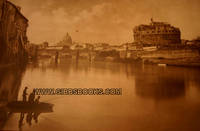
1870053004-KItaly 1870. Book. Illus. by Giacomo Brogi. Very Fine. No Binding. Albumen Mammoth Print c. 1870's By Giacomo Brogi 1822- 1881 Italian. Very rare photographic image by this artist in the original restored frame . This is not one of the standard tourist pictures that you find but a true work of art by this master photographer. Both Brogi and the Alinari Brothers worked as photographers and took the standard architecture ruins photos in Italy most being small 8"x10" Albumen prints but they did art photography also and to find one is a rare treat . This piece shows three men in a row boat on the Tiber River with Castel Saint`Angelo Mausoleum of Adrian on the right the Saint`Angelo bridge to the castle in the middle in the far distance you can see St. Peter's Dome . Looking around the photo the men in the boat you can see their reflection in the water. With sheep on the right shore and the clouds rolling by above it all this is a very importain photographic image by this artist . Please call for more information on this and other works of art. Size: 32 x 23. unknown
188641580Paris, , 1886-1932. 224 photographies glissées sous pochettes transparentes dans une boîte classeur grand in-4 (31 x 35 cm) de 65 feuilles, feuillets noirs intercalés, demi-maroquin brun, dos lisse orné et titré (Elbel libro).
1910J1NH6Y7HYA75France/Belgium 1910. Contemporary black cloth with the title "H. Rabier - peines - supplices" on the spine. 4to 23.5 x 20 cm. Album containing 24 small contact prints 2.5 x 25 cm and 153 albumen or gelatin silver prints 65 x 8 cm both mostly numbered and captioned in French on the photograph 16 photographic reproductions of paintings or drawings 17.5 x 13 cm 2 albumen prints of nudes and 17 silver gelatin prints of sadomasochistic scenes 10.5 x 15 cm. Captivating erotic photo album containing both original photographs and reproductions on the themes of "punishment and penance" which in most cases means flagellation. This specific album was probably compiled by a certain Hector Rabier whose name is inscribed on the spine and was possibly a young Belgian. Among the reproductions of prints in this album can be found various images with an erotic nature showing the flagellation of women by men and women and non-erotic images of the torture and punishment of female heretics and witches including reproductions of artworks. A few series do not involve women and show various types of corporal punishment in the French colonies of Algeria and Indochina and flogging in the British army. A series of 27 images though not explicitly showing scenes of corporal punishment shows life in the Parisian women's prison of Saint Lazare which also doubled as a hospital for the city's prostitutes. 12 photographs show wood engravings of the cruel murder and torture of nude women by Cossacks most including the pins used to hold the engravings in place. Of the original photographs two "academic nudes" show a woman from behind kneeling on top of a chair or hanging face down over a chair or cabinet. The other 17 photographs show a semi-nude woman being bound or tortured by "oriental" men or monks. A montage of small images suggests that the woman-and-monk photographs probably suggesting a witch or heretic being tortured by the inquisition formed part of a larger collection on this subject. Although these photographs were obviously intended as pornographic images they are hardly more explicit than contemporary historical paintings at the Salon or the images in popular histories.With the spine somewhat worn and discoloured the pages of the album very lightly foxed some of the photographs partly detached from the page and some of the larger photographs slightly worn and discoloured at the edges; overall both album and photographs are in good condition. hardcover
1970153176Los Angeles: Warner Brothers Records 1970. Original photographic artwork assemblage for Van Morrison's classic 1970 album with original double exposure photograph by David Gahr designed by Janet Planet and used by Warner Brothers Records as shooting artwork for the album cover.<br /> <br /> Production annotations in manuscript marker and pencil at bottom of board below the image. Annotations on verso noting "Van Morrison 'Cover' 1884" in manuscript marker with the "1884" being the album catalogue number and "the band street choir" just below in manuscript pencil.<br /> <br /> Gahr was a preeminent photographer of folk blues jazz and rock musicians for over four decades whose subjects include the likes of Bob Dylan John Lennon Miles Davis Bruce Springsteen Janis Joplin Peter Seeger and many many others. His work was regularly featured in the seminal rock magazine "Crawdaddy."<br /> <br /> Building on the critical successes of "Astral Weeks" 1968 and "Moondance" 1970 Morrison's fourth studio LP featured the highest charting single of his career "Domino." Originally titled "Virgo's Fool Street Choir" the LP was renamed prior to release without Morrison's consent by Warner Brothers.<br /> <br /> Photograph mounted on board with a clear acrylic overlay. Original black paper overlay included but not attached.<br /> <br /> Photograph 13 x 19 inches mounted to board as created measuring 15.5 x 24 inches. Near Fine. Warner Brothers Records unknown
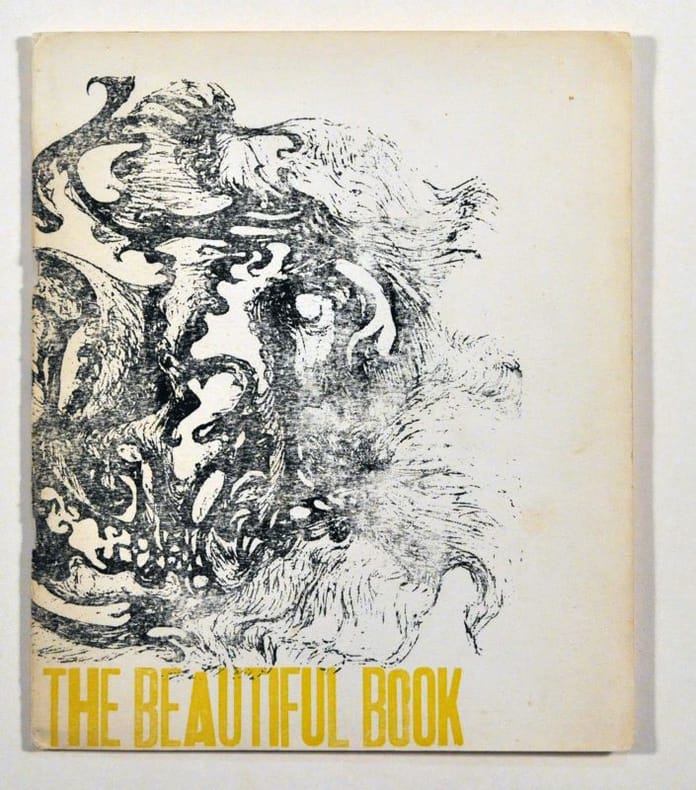
19621041511962 Sans lieu ni date (New York, Dead Language Press/Piero Heliczer, vers 1962) 20 pages non paginées 225x188mm, sous couverture en papier fort, agrafé ; 19 tirages argentiques originaux 55x55mm, obtenus par contact à partir des négatifs, sont collés sur les pages 1 à 11, 13 à 19, et sur le troisième de couverture.Couverture en sérigraphie en deux couleurs d’après un dessin de Marian Zazeela, une des artistes apparaissant dans les mises en scène photographiques.Etui et chemise (Devauchelle)Jack Smith a traversé comme une comète l’underground new-yorkais des années 60 à 80 marquant de sa royale estampille l’expression d’une génération d’artistes parmi lesquels Andy Warhol, Nan Goldin, Robert Wilson ; son œuvre cinématographique majeure, Flaming Creatures, réalisée en même temps que le Beautiful Book, fut pourchassée durant trente années par toutes les censures du monde, pour entrer, après la mort de l’artiste, au panthéon des cinémathèques.Les exemplaires du Beautiful Book (probablement pas plus d’une centaine), assemblés à la main et vendus dans le milieu du Lower East Side new-yorkais de l’époque, n’ont guère résisté à l’épreuve du temps.Edition originale, très bel exemplaire.Flaming Creatures PS 1 1997, entièrement reproduit dans le catalogue. Söhm p. 25, reproduit. Hasselblad 190-191(104151)
1940169491United States: c.1940-60. A visual record of a rarely seen and poorly documented world - an accidental history An unusually extensive group of these evocative "table photographs" striking records of largely African-American audiences in the glamorous sociable and intentionally inclusive world of mid-century nightclubs. Shot by in-house photographers developed on site and sold for a dollar at the end of the evening these quick souvenirs now amount to a rare visual history of a poorly documented milieu. As Gold notes they "turn the camera round": instead of performers we see the audiences - a critical part of what Jason Moran calls the jazz "ecosystem." The collection offers a nationwide survey of venues from the extravagant to the resolutely down-home. At New York's Café Zanzibar with its spectacular floor shows and "Zanzibeauts" the audience was integrated but largely white prompting Langston Hughes's caustic observation about the seating hierarchy - an impression borne out by the image here. Detroit's Gay Bar Lounge another "black and tan" joint catered to a mostly Black clientele and offered a rougher edge: in 1947 the barkeep famously shot two stick-up artists with the.38s kept beneath the cash register. Equally compelling are the histories of Black enterprise that surface. Oakland's Athens Elks Cocktail Lounge home to Lodge 70 of the Improved Benevolent and Protective Order of Elks of the World stood at the centre of West Oakland's vibrant musical scene hosting countless jam sessions and serving as the informal checkpoint for touring African-American musicians. In Los Angeles Dootsie Williams's Dooto Music Center founded by the trumpeter-turned-entrepreneur provided one of the city's foremost Black cultural venues praised by the Los Angeles Sentinel as "the most-needed cultural and recreation center in Southern California." The photographers themselves remain surprisingly elusive though a few can be traced. In Columbus George Pierce ran a record shop and studio in Bronzeville and supplied images to the Ohio Sentinel and other regional papers; in Detroit Earl Fowler's Top Hat Photo developed into a significant presence in the Black Press with Fowler later serving as chief of the Los Angeles bureau of Now! magazine. Beyond these contexts the photographs' enduring appeal lies in the human dramas unfolding across their tabletops: the conviviality style and fleeting alliances captured in a moment of collective ease. A scene from Gamby's in Baltimore is emblematic - six convivial hat-tipping men and two young women smiling through a forest of shot glasses presided over by a portrait of Fats Waller. It is warmly enigmatic yet inviting an offhand welcome extended across time. A more detailed description and full listing is available on request. Together 66 black and white gelatin silver print photographs 62 c.127 x 178 mm; 3 approximately 178 x 254 mm around 50 are in their original plain or printed souvenir folders the balance loose. Loose photos and folders with occasional wear and mild damp-staining some annotations verso of prints and to folders prints occasionally stapled into folders overall the group remains about very good. Ronald Auther "The Oakland Larks" The Shadow Ball Express: African American Baseball Renderings and other Facts of Life online; Clora Bryant et al Central Avenue Sounds; Jazz in Los Angeles 1930s-1950s 1998; Jeff Gold Sittin' In: Jazz Clubs of the 1940s and 1950s 2020; Robert Petersen "Before Motown: L.A.'s Black-owned Music Empire" PBS SoCal online. unknown
187454520Paris: Arthus Bertrand 1874. First edition. Hardcover. Very good. Four volumes folio 36 by 27 cm text volumes 36.2 by 28.6 cm atlas. Complete with a total of 99 plates in various media. Text in French; copious transcriptions of Arabic inscriptions in the second volume. 4 IV 388 pp. in-text illustrations throughout; 6 222 6 pp; 4 VI 326 pp.14 plates numbered I-XIV: 2 double-suite chromolithographic maps 2 double-suite chromolithograpic arrays of geologic sections; 2 steel-engraved arrays of geologic sections; 8 full-page lithographic specimen plates; Atlas: 4 pp; 67 plates documenting the journey of the Duc de Luynes: 3 unnumbered steel-engraved plates - 1 large folding map colored 1 folding itinerary colored 1 double-suite plan of the iron sailing vessel; numbered I-LXIV - 64 hand-pulled b/w photogravures on steel 1 double-suite by Charles Nègre after photos by Jardin and Louis Vignes; 18 plates documenting the journey of Christophe Mauss numbered I-XVIII: 1 double-suite steel-engraved itinerary 3 steel engraved site plans 1 colored 14 tinted lithographs by Eugène Ciceri after photographs by Henri Sauvaire 8 mistakenly attributed to Louis Vignes.<br /> <br /> Later half light brown morocco over marbled boards gilt spine with raised bands; marbled endleaves; original blue printed wrappers preserved along with the backstrips the three text volumes. Text leaves intermittently foxed throughout often in light-moderately toned large blotches. Plates clean and fresh with only occasional touches of soiling or faint foxing almost exclusively confined to the margins; large folding map and folding itinerary in the Atlas with more notable light foxing. A very good set with fine plates.<br /> <br /> First edition of this comprehensive report on one of the most important scientific and archaeological missions of the nineteenth century the 1864 expedition to the Dead Sea undertaken by the visionary art collector archaeologist and scientist Honoré Paul Joseph d'Albert duc de Luynes 1802-1867. Along with an atlas containing 78 reproductions of photographs by Louis Vignes 1831-1896 Jardin fl. 1864 and Henri Joseph Sauvaire 1831-1896 this work documents "the first systematic attempt to survey and photograph the geological features and cities of the Dead Sea basin in present-day Jordan. In addition to mapping the Dead Sea area the expedition made significant contributions to the geological and paleontological knowledge of the region and also to an understanding of the chemical composition of the lake's waters" GRI. Louis Vignes a lieutenent-commander in the French navy and director since 1860 of the port in Beirut was chosen by de Luynes as photographer for the expedition because of his knowledge of the Levant. "Vignes began to photograph immediately upon arrival in Beirut and continued to do so during the ride south throughout Sidon Tyre Nablus and Jerusalem. From March 14 until May 29 the party sailed the entire Dead Sea on a special iron vessel designed by Vignes to be dismantled for easy trasportation" Perez.<br /> <br /> A preliminary account edited by Vignes appeared as Extrait des notes d'un voyage d'exploration à la mer Morte dans le Wady Arabah sur la rive gauche du Jourdain et dans le désert de Palmyre Paris: H. Plon 1865. This work essentially comprised a key to the two maps drawn by Vignes with assistance from Dr. Gustave Combe. The larger of the two maps charted the Jordan Rift Valley from the southern end of the Dead Sea to the Gulf of Akabah; the second map depicts the Dead Sea and its immediate vicinity. "In addition to tracing the expedition's routes place names elevations vegetation land conditions natural features and many other geomorphic and climatic details are recorded on the maps" GRI. In the Atlas volume of the Voyage these two maps have been combined into a single map printed surface: 69.7 by 28.8 cm. In 1866 de Luynes made a second expedition to the region accompanied by the archaeologist Christophe Edouard Mauss and Henri Sauvaire; their account was published the following year in the Bulletin de la Société de Géographie as "De Karak à Chaubak. Extrait d'un Journal de voyage."<br /> <br /> De Luynes' full account of the expedition is found in the first volume of the present report. The two parts of the second volume comprise Louis Vignes' account of the journey from Petra Jordan to Palmyra Syria along with the account of the 1866 journey from Jerusalem to the Crusader castles in Jordan at Kerak and Shoubak Montréal written by Mauss and Sauvaire. The third volume contains the report prepared by the noted geologist Louis Lartet 1840-1899 who would go on to discover the first Cro-Magnon skeletons. It is accompanied by chromolithographic maps and arrays of geological and paleontological elevations along with finely detailed lithographic specimen plates. The entire production was posthumously edited by Melchior marquis de Vogüé 1829-1916.<br /> <br /> A member of the Académie des inscriptions et belles-lettres de Luynes was a philanthropist with enormous inherited wealth and deep interdisciplinary interests many of which are on display in the present work: the study and collection of Greco-Roman antiquities notably from Phoenicia and Palestine and the pursuit of scientific interests in chemistry geology and photography. In 1856 de Luynes initiated a competitionin in conjunction with the Societé Française de Photographie to find the best method of photomechanical reproduction. Two people were short-listed for the prize: the chemist and photographer Alphonse Louis Poitevin for his method of photolithography; and the pioneering photographer Charles Nègre 1820-1880 whose photogravure method "produced beautiful prints but was even more complicated and unwieldy in practice the Poitevin's method" Parr & Badger. Although Poitevin was finally awared the prize in 1867 de Luynes chose Nègre to process the 64 reproductions which appear in the first suite of images in the Atlas. "The Duc's decision was clearly based on aesthetics" as Nègre's photogravure process actually improved upon the albumen prints by Vignes "which tended to be high in contrast and lacking shadow detail" Parr & Badger. These 64 photogravures are arranged according to the expedition itinerary starting at Beirut and concluding with a view of the source of the Hasbany River. These images along with views of Nablus the ruins of Araq el-Emir the fortified hilltop palace Machaerus the rock-cut architecture of Petra the Greco-Roman ruins of Gerasa and views of the tributaries and source of the Jordan River are "among the earliest photomechanical reproductions of photographs from the Holy Land" Nir. Along with John Thomson's Illustrations of China and its People 1874 Voyage d'exploration à la mer Morte 1868-1874 is a "key work" in the early development of the photobook. "Amongst the best early French photographers" Charles Nègre "was a leading figure in the development and employment of photomechanical processes. These early methods were still labour-intenseive and could be termed hand-craft processes but they represent another significant step in the industrialization of the photographic process -- a step towards the halftone block and the photobook as we know it today" Parr & Badger.<br /> <br /> A note on the dating of this work: Title-pages undated; the publisher's avertissement in the first volume dated "Constantinople août 1874." N.B.: Rohricht dates the work 1871-1876; the Bibliotèque national de France dates the Atlas 1871; The Getty Research institute dates the entire production 1875; several libraries date the geological survey volume 1877. References: P. Foliot "Louis Vignes and Henry Sauvaire Photographers of the Expedition of the Duc de Luynes" History of Photography 1990 vol. 14 no. 3 pp. 233-250; Getty Research Institute "Duc de Luynes Archive and Related Photographs by Henri Sauvaire" via website; Hannavy Encyclopedia of Nineteenth-Century Photography I pp. 982-5 Nègre; Y. Nir The Bible and the Image 1985 p. 89; Parr & Badger I pp. 19 33; N. Perez Focus East Early Photography in the Near East 1988 pp. 180 Jardin 229 Vignes; Rohricht 2824.<br /> <br /> Full title and imprint: Voyage d'Exploration a la mer Morte a Petra et sur la rive gauche du Jourdain par M. le Duc de Luynes. Oeuvre posthume publiée par ses petits-fils sous la direction de M. le Comte de Vogüé. Relation du Voyage. Paris: Arthus Bertrand Éditeur Libraire de la Société de Géographie 21 rue Hautefeuille 21 Tome deuxième De Petra a Palmyre par M. Vignes. Voyage de Jérusalem a Karak et a Chaubak par MM. Mauss et Sauvaire; Tome troisième Géologie par M. Louis Lartet; Atlas. Arthus Bertrand hardcover
1928ABC_50475Iran 1928. Oblong album 24.5 x 29.6 cm. Mid-19th-century bright blue faux-leather the front board features a pictorial on-lay within a rectangular frame the illustration depicts a young woman in traditional costume holding a large ceramic vessel. The joints are laced through onto 2 supports. With 19 black and white photographs ca. 23.1 x 17.1 cm on thick dark blue/black paper. 9 ll. Collection of 19 engineering photographs taken in Iran dating from ca. 1928 to 1930 CE. The majority of the images are annotated with the year 1308 AH 1929-1930 CE while only photograph 7 is dated 1307 AH 1928-1929 CE.The album documents large-scale engineering works and urban modernisation in Iran during the early years of the Pahlavi dynasty 1925-1941 under Reza Shah Pahlavi 1878-1944. In this period cities such as Tabriz underwent significant restructuring and infrastructural development as part of broader state-led reforms.The photographs depict surveying activities including measuring instruments mounted on tripods uniformed officials and extensive reconstruction works. Several photographs are identifiable as views of Tabriz including the development of the Gaji Gate Darb-e Gajil in December 1929 Ahrap Ahrab Street and Munjam Street under construction. Other views show street levelling and widening works illustrating the transformation of older urban quarters into broader modern thoroughfares.Further noteworthy subjects include railway works and one photograph taken in Jafarabad shows several men wearing a combination of traditional clothing including papakha-style headgear and Western clothing reflecting the broader cultural transition of the period. The present work therefore stands as an informative visual record of early 20th-century Iranian engineering urban renewal and state modernisation.With some glue staining to the dark blue paper on several pages. A few photographs show minor marginal wear not affecting the images themselves. The final photograph is not mounted on the album paper but on a separate piece of card and is loosely inserted. Otherwise in good condition.l Cf. Tofigh Kouzehkanani & Zelef "Towards extroverted urbanism: Haussmannization and building a new urban identity in Tabriz 1925-1942" ITU AZ 22 3 2025 pp. 559-577 hardcover
Un des 700 exemplaires numérotés (n° 312 imprimé pour Henri de S...), préface de Maurice Garçon, 1 vol. in-folio en feuilles sous emboîtage éditeur rigide, Ateliers d'Impressions et de Cartonnages d'Art, s.d. [ 1945 ], 3 ff. et 20 planches en héliogravure Remarquable exemplaire, dans un étui certes très usagé, mais enrichi d'un bel envoi de la photographe Laure Albin-Guillot ("avec les sentiments admiratifs et infiniment reconnaissants de Laure Albin-Guillot, 26 janvier 1946") et surtout dont chacune des 20 héliogravures a été signée au crayon par la photographe (et numérotée, de 1 à 20) ! Nos recherches ne nous ont pas permis de découvrir d'exemplaire comparable, les planches n'étant habituellement pas signées par l'artiste. Etui fort. usagé avec manques, rouss. au premier ff., les héliogravures sont en très bon état. - A very scarce copy, enriched with a beautiful handwritten dedication by the famous photographer Laure Albin-Guillot ("avec les sentiments admiratifs et infiniment reconnaissants de Laure Albin-Guillot, 26 janvier 1946" [ "with the admiring and infinitely grateful feelings of Laure Albin-Guillot, January 26th, 1946" ] ) ; Most importantly, it must be pointed out that each of the 20 heliogravures was signed with a pencil by the photographer (and numbered, from 1 to 20) ! Despite a thorough research, we could not find any record of another copy with such features, i.e.with all the plates that are signed by the artist. Slipcase of this copy is very damaged and with lacks). Foxings can be seen on first sheet, as well. Nevertheless, the prints are in very good condition. Français
1930WRCAM56103Various locations in Oregon and Alaska 1930. Approximately 325 photographs twenty postcards and real photo postcards a linen- backed map of Alaska and a few assorted ephemeral items all housed in a contemporary leather satchel. Generally minor wear some chipping to about twenty photographs. Overall very good. A treasure house of silent cinema photography from the Pacific Northwest and Alaska featuring over 300 images from THE CHECHAHCOS and other films produced in the orbit of the film's director Lewis H. Moomaw all retained by one of his crewmen Guerney William Hays. <br> <br> THE CHECHAHCOS released in 1924 was the first feature film shot in Alaska. "Cheechako" is a native word referring to a "greenhorn" or someone newly arrived in the mining districts of Alaska or northwestern Canada. A melodramatic tale of the Klondike Gold Rush the was directed by Lewis H. Moomaw of the Alaska Moving Pictures Corporation. The story was based in part on the experiences of the film's producer Austin E. Lathrop known as "Alaska's first home-grown millionaire." The film has been preserved in the National Film Registry and can easily be viewed on the internet. Offered here is a large collection of photographs and other ephemera once belonging to a CHECHAHCOS crew member named Guerney William Hays 1880-1952 including film stills snapshots from the set and other images of Alaska scenery. Many of the images match up with scenes from the completed film. The subject matter includes all that might be expected from a film produced in and about Alaska: glaciers dogsleds saloons archvillains and damsels in distress along with shots of the crew and technology that made the film possible. <br> <br> The largest and most professionally-produced photographs in the collection are eighty 8-x- 10-inch prints almost all of them clearly from the CHECHAHCOS shoot with twenty-one stamped on the verso by the Alaska Moving Pictures Corporation and with either a printed or manuscript title written along with the stamp reading "The Chechakos" the spelling of which was later tweaked to its release title. One of the stills shows the entire company of the Alaska Moving Pictures Corporation about 150 people in the snow beside their Pullman cars; two banners for the film company hang outside the rail cars. A separate shot of the film company shows their train at the entrance to McKinley Park with a banner hanging on the train reading "Private Car Alaska Moving Pictures Corporation Entrance to McKinley Park on the Alaska Railroad." Other stills show scenes from the film shots of the cast and crew preparing to start scenes posed scenes clearly intended for use as publicity stills cast group pictures behind-the-scenes shots of the cameramen and other crew with various equipment photographs of empty interiors perhaps to be used for continuity a few featuring the dog sled teams and more. In addition to documenting the production these images also present a rare view of Alaska in the early-20th century. <br> <br> The remaining 240 images most of which measure approximately 3 x 5 inches were likely not formally produced by the film company for use as publicity but are in fact production photographs and still stand as valuable visual documentation of the early filmmaking process. While some of these photos are more of the vernacular sort the great majority of the images show a mixture of preproduction production and set-related photographs from the film company's time in Alaska shooting THE CHECHAHCOS and from other production's attached to the career of Lewis H. Moomaw the film's director. A great number of these images were likely produced as working production photographs - executed for the use of the company during the shooting process scouting for locations documenting costumes set continuity set construction what might today be called craft services suggesting or documenting potential camera set-ups or as studies for potential publicity stills and more. While not created as traditional publicity products these images capture the early filmmaking process both in front of and behind the camera presenting a quite uncommon slice of film production history. The fact that they were produced during the production of a film in Alaska make them an even more valuable source of information on the filmmaking process in the 1920s in a most unusual place. Production stills are produced in very small quantities compared to publicity stills are often unique or close to unique records of a production have a much lower survival rate and are keenly sought after as historical records of the filmmaking process. <br> <br> One of the few captioned photographs shows four wives of the CHECHAHCOS cast and crew on a fishing expedition including Moomaw's wife and Mrs. Guerney Hays. A few other photographs show an actress posing with crude dummies that were apparently about to be sent to their doom in a canoe scene in the Alaskan wilderness. Other production photographs from Alaska feature scenes on glaciers one of which shows the exact spot from a moment in the opening minute of the film a young girl with a giant Alaskan crab who is also pictured in the larger professional images and is in the film film crews poised on icy ground dog sled teams identified locations in Skagway and more. <br> <br> One of the other films pictured here is likely CALL OF THE ROCKIES 1929. This western was filmed in Oregon the usual home of the filmmakers involved in the Alaska Moving Pictures Corporation with Moomaw as supervising producer. CALL OF THE ROCKIES was directed by Raymond K. Johnson one of the cinematographers on THE CHECHAHCOS and features two actors identified in pencil captions on the verso of photographs present here: Russell Simpson and Jim Mason. There are numerous photographs featuring a western wagon train and other images of the traditional western which either appeared in CALL OF THE ROCKIES or perhaps one of Moomaw's other films produced in Oregon in the 1920s - UNDER THE ROUGE 1925 or FLAMES 1926 the latter of which climaxed in a raging forest fire and featured an early screen appearance by Boris Karloff. <br> <br> All of the postcards feature Alaskan scenes or subjects and were most likely acquired while the film company was shooting in Alaska or produced for them while they were there. This is the case for at least one of the postcards - a Christmas greeting with the banner at bottom reading "Compliments of the Alaska Moving Pictures Corporation." The final item of note here is a folding linen- backed map of Alaska issued by the Alaska Steamship Company. The map measures about 21 x 30 inches and was issued in 1917. It was almost certainly taken along to Alaska by Hays for the filming of THE CHECHAHCOS linen- backed either before-hand or while in Alaska to prevent damage from over-use. The entire collection of photographs and ephemera is housed in a period leather satchel. <br> <br> These photographs were collected and retained by Guerney or Gernie William Hays 1880-1952 who spent a career in the early film industry mostly in Oregon. Some pieces of ephemera bear his name and some of the larger stills are annotated "Hays" on the verso. His 1918 draft registration lists him as a motion picture operator in Portland and his obituary lists him as a member of the International Alliance of Stage Employees. His only film credit in the Internet Movie Database is for THE CHECHAHCOS for which he is credited with "sets and lighting" and also an uncredited supporting role on screen. One of the larger-format photographs features a crew member in a cramped equipment room with dozens of lights and mounds of cables; this is almost certainly Hays himself or perhaps one of his assistants. One of the photo developer's envelopes bears the name of Hobart H. Brownell the cinematographer of THE CHECHAHCOS. Two of the photographs here are inscribed to Hays - one from the actor Bert Sprotte in 1919 and the other from banjo player Eddie Peabody who has inscribed his portrait to Hays writing that "No finer stage manager I ever worked with." Another photograph shows Peabody's elaborate stage show. <br> <br> THE CHECHAHCOS remains an important early film for its authentic depiction of Alaskan life. Movies about the great white north were popular with early film audiences but were usually filmed in California. When Lewis H. Moomaw proposed to shoot a film entirely in Alaska about the days of the Klondike Gold Rush in the territory locals in Alaska jumped at the chance to find him funding. Upon arrival in Anchorage fully half of the town showed up to greet the film company. The cast and crew would spend three months filming in and around Anchorage the small mining town of Girdwood on Childs Glacier Abercrombie Rapids and Eyak Lake. The film premiered in the Empress Theatre in Anchorage on December 11 1923 and played to packed houses across Alaska the next year. Sadly the film never found a large audience in the continental United States playing occasionally over the next two years before falling into obscurity. The film was essentially lost until the year 2000 when a print was restored by archivists at the University of Alaska Fairbanks. Three years later the film was selected for preservation by the National Film Registry. <br> <br> The Library of Congress's press release when they selected THE CHECHAHCOS to the National Film Registry describes the film as such: "This independent regional film was the first feature film produced in Alaska and is renowned for its spectacular location footage of the lonely and unfathomable Alaskan wilderness frenzied dogsled pursuits and life-and-death struggles on the glaciers." <br> <br> A wonderful collection of great historical interest for early film scholars and of the history of Alaskan cinema. hardcover books
1930105402BBStuttgart, Zaugg & Co., (1930). 111, (1 w.) S. mit 140 Abb., teils in Orangerot u. Schwarz gedruckt u. 1 Bl. (Errata). OLn. (Vorderdeckel aus durchsichtigem Zelluloid).
24761Dimensions : 23,5 x 18 cm (montage carton); 15,5 x 10,8 cm (épreuve). Tirage argentique de l’époque portant un envoi autographe signé de Gabriele D’Annunzio à Romaine BROOKS sur le montage « A Romaine l’Ailé borgne Gabriele (1916) ». Romaine Brooks rencontra Gabriele D’Annunzio en 1909 et ils eurent une relation passionnée trente ans durant jusqu’à la mort du poète en 1938. D'Annunzio, dès le début de la première guerre mondiale, est engagé volontaire dans l'aviation, et il perdra un oeil dans un accident de vol en 1916. C’est à Venise, où elle louait un atelier, dans le Zattere, qu’elle peindra le portrait du Commandante avec son hydravion en arrière-fond. Le tableau resté la propriété de son modèle est conservé avec les lettres de Romaine et d’autres reliques au Vittoriale, son ancienne résidence sur les bords du lac de Garde. Un autre portrait, *Le Poète en exil* fut réalisé en 1912. Petit accroc sur le côté droit de l’image. Pièce exceptionnelle.
- Paris 1917, 6,3x8,6cm, une photographie. - Original photograph, likely unique and unpublished, of Pablo Picasso at the Casa di Marco Lucrezio, Pompeii spring 1917 Paris 1917 | 6,3 x 8,6 cm | one photograph Original photograph depicting Pablo Picasso in the spring of 1917 at the Casa di Marco Lucrezio in Pompeii, holding a twig, in front of a wall on which there is a Pompeian fresco. Contemporary silver print, perhaps unique, from Jean Cocteau's personal archives then the Maurice Sachs collection. Exceptional almost undiscovered and probably unpublished photograph taken by Jean Cocteau during the stay. On 16 April 1917, Picasso visits Pompeii accompanied by Jean Cocteau and Léonide Massine to prepare the ballet Parade, the first work described as "surrealist" by Guillaume Apollinaire, for the new season of Serge de Diaghilev's Ballets Russes. On his return, this initiatory journey inspired his monumental painting: the Parade stage curtain, a real visual signature of the ballet, marking the beginnings of Picasso's neo-classical period, and today preserved at the Musée national d'Art Moderne Georges Pompidou. Pierre Daix, in his bibliography dedicated to the painter, recounts the aesthetic shock caused by the discovery of the Pompeian frescoes: "Giovanni Carandente, to whom we owe the best studies on this trip, highlights that Picasso "was strongly struck by the animation and the sensuality that the cataclysm of the year 79 AD had brutally destroyed. If it is true, as he wrote to Gertrude Stein, that he immediately drew "many Pompeian fantasies which are a little daring", attracted as he was by the erotic elation that emerges from these licentious paintings, [...] these memories settled in him to emerge with force thereafter. [...] Everything that had made up the Pompeian universe was preserved on the site as well as in the National Archaeological Museum of Naples [...]. In its singularity, this universe contributed to enriching Picasso's cultural heritage with something more alive, more trembling than he had gained from his museum visits until then. He particularly loved the conciseness of the paintings: two or three years later, the impressions felt in Pompeii were to translate into a real creative explosion, a series of paintings which all bore traces of these never buried memories. This source was to remain alive until La Danse of 1925." (Pierre Daix, Picasso). Unique and early original photograph of Picasso, taken and printed by his friend Jean Cocteau, in a mythical place that will influence his aesthetic for the long-term. Provenance: Jean Cocteau's personal archives then the Maurice Sachs collection and Max-Philippe Delatte. [FRENCH VERSION FOLLOWS] Photographie originale, représentant Pablo Picasso au printemps 1917 à la Casa di Marco Lucrezio à Pompéi, une brindille à la main, devant un mur sur lequel apparaît une fresque pompéïenne. Tirage argentique d'époque, peut-être unique, provenant des archives personnelles de Jean Cocteau puis du fonds Maurice Sachs. Exceptionnelle photographie inédite prise par Jean Cocteau lors de son séjour pompéien avec Picasso. Le 16 avril 1917, Picasso visite Pompéi en compagnie de Jean Cocteau et Léonide Massine afin de préparer le ballet Parade, première uvre qualifiée de sur-réaliste par Guillaume Apollinaire, pour la nouvelle saison des Ballets russes de Serge de Diaghilev. Ce voyage initiatique lui inspire, dès son retour, une peinture monumentale?: le rideau de scène de Parade, véritable signature visuelle du ballet, marquant les débuts de la période néo-classique de Picasso, et aujourd'hui conservé au Musée national d'Art Moderne Georges Pompidou. Pierre Daix, dans sa biographie consacrée au peintre, relate le choc esthétique engendré par la découverte des fresques pompéiennes?: «?Giovanni Carandente, à qui l'on doit les meilleures études sur ce voyage, souligne que Picasso "fut fortement frappé par l'animation et la sensualité que le cataclysme de l'an 79