[Early Photography – Novelty]Biblio.com
430 résultats
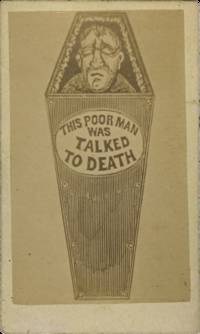
1870List3651N.p. 1870. Carte-de-visite novelty card. Albumen print illustration mounted on standard CDV card approximately 2.5 x 4 inches. Very good condition with light toning and minor surface wear. A macabre humorous novelty carte-de-visite showing a coffin containing the caricatured head of a deceased man beneath the caption “THIS POOR MAN WAS TALKED TO DEATH.†The image parodies the visual language of Victorian mourning culture—coffins memorial imagery and epitaphs—while transforming it into a comic vignette. The joke plays on the familiar nineteenth-century phrase “talked to death†a hyperbolic expression suggesting that someone has been overwhelmed by excessive conversation advice or gossip. The phrase circulated in popular folklore and humor of the period and was sometimes linked to the Victorian medical diagnosis of “prostration†a condition describing physical collapse from stress or agitation. Comic and satirical CDVs formed a lively subgenre during the height of the carte-de-visite craze of the 1860s and 1870s. Publishers produced novelty cards featuring visual puns mock memorial imagery and caricature intended for display in photograph albums alongside conventional portraits. The playful use of coffin imagery reflects a broader Victorian taste for humorous memento mori motifs within popular graphic culture. unknown
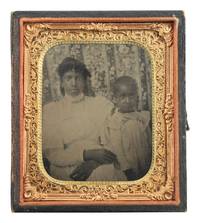
1860215051860. African American Sixth plate tintype featuring a young African American woman and an African American girl likely mother and daughter posed before a wall covered with floral wallpaper. Both of them wear light cotton dresses the woman dons an updo hair style with ringlet bangs the young girl's hair scalp length. Measures 3.25" x 4". Housed in a half pressed paper case. These portraits come from a time just after emancipation when African Americans were creating new lives for themselves. Photography was one way to commemorate freedom and memorialize prosperity the formerly impossible made possible. Overall very good condition. unknown
189361864Chicago IL & St. Louis MO: Union News Company Agents; Engraved and printed by Woodward & Tiernan Printing Co. 1893. 12mo. 6.4 x 5 in. 80 leaves unnumbered. including printed title 79 photo plates. Gray-blue cloth-backed cyanotype-illust. w/ illustrations minor edgewear slight dustsoiling minor wear to couple corners age-toning to back cover still VG copy w/ former ownership markings dated 1893 on ffep. First edition of this well-illustrated photographic souvenir of a visit to the Columbian Exposition by Todd 1858-1926 who at the time was a photographer for the British Columbia Dept. of Agriculture based in Victoria BC. He includes images of many of the buildings & halls the fountain attractions lighting at night the Midway Plaisance with view of the Ferris Wheel and other attractions as well as photos of most of the State buildings. See: Dybwad & Bliss Annotated Bibliography: World’s Columbian Exposition Chicago 1893 1992 1676 revised & interchanged with other photos in bigger and smaller formats sometimes in cloth. Union News Company, Agents; Engraved and printed by Woodward & Tiernan Printing Co., hardcover
1895171321895-1930. Hardcover. Very good end paper name stamps some pages lightly toned. The title on the spine is descriptive only and was added by the binder. A unique book in dark green boards with gilt spine lettering containing articles bulletins etc. 700 pages total. The contents are from 1895 to 1930. A list of contents handwritten on the pastedown. Contents are The technology of New York State Timbers; Timber: An Elementary Discussion of the Characteristics and Properties of Wood; The Identification of Furniture Woods; The Identification of Important North American Oaks; Guidebook for the Identification of Woods used for Ties and Timbers; Mechanical Properties of Woods Grown in the U. S. ; Utilization of Black Locust. A heavy book additional postage may be required. ; Photographs graphs charts drawings. . hardcover
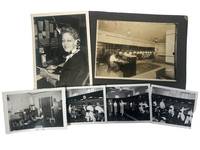
1900200911900. Telephone operator photo archive circa 1900 to 1958 documents women's labor within telephone exchange systems showing how urban communications depended on trained female operators seated at switchboards connecting calls handling information and maintaining the human infrastructure behind early and mid twentieth century telephone service. The material documents telephone communication labor through photographs of switchboard rooms operators wearing headsets plug boards supervisory presence and grouped clerical activity revealing how connection work operated in practice before automated dialing fully displaced manual exchange work. The archive supports research into women's wage labor communications history gendered office work New York telephone service and the disciplined workplace culture that positioned young women as the public voice and operational center of the telephone network.<br /> The archive consists of six black-and-white photographs including five silver gelatin photographs and one early albumen photograph with images measuring from approximately 3.5 x 4.25 inches to 7 x 9 inches. The date range appears to extend from the early twentieth century to 1958 based on the later dated images. Several photographs show women seated in tight rows facing large switchboards wearing heavy headsets with horn mouthpieces and working among dense arrangements of cords and plugs. The early albumen photograph shows a row of women facing the switchboards while a female supervisor watches over the room indicating both the gendered hierarchy and procedural discipline of the exchange floor. One image shows an operator turning toward the camera with a plug in hand smiling while gesturing toward the board. Four smaller photographs dated 1958 show teams of women moving between boards and a small group with paperwork behind the operating area; pencil inscriptions on the versos identify the location as New York.<br /> The photographs are valuable because they make visible the labor system behind telephone service: rows of operators standardized equipment supervisors paperwork and the coordinated manual routing of calls. They also record the gendered character of communications work in which women's voices posture speed and manner were made part of the service itself. Light handling wear minor edge wear and expected age toning; images remain crisp with equipment and personnel details clearly visible; overall very good. Strong women's labor and communications history archive documenting the human operation of telephone exchange systems across the first half of the twentieth century and into the postwar period. unknown
1887DEMO009147INew York: Edw. L. Wilson 1887. First edition. Hardcover. Very Good. 386 woodcuts. 8vo 528 pages original brown pebbled cloth bevelled ediges <br/><br/>Wilson edited "The Philadelphia Photographer". "Much of what they gave us has become covered up and forgotten. For the past two years I have been engaged in a process of recovery selection filtration and condensation the result of which goes out now in the book - Preface." Until 1872 Wilson's was the only firm devoted principally to photographic publishing. 386 woodcuts. Edw. L. Wilson hardcover
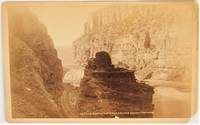
1886189521886. Colorado Photography Western Americana Original albumen photograph of a Glenwood Canyon rock formation identified as the Portals in Garfield County Colorado. The scenery is presented as "840. The Portals of Grand River Canon. D&R.G.RR" on the lower margin. 1886. 7" x 4.5". Presents a captivating view of a Glenwood Canyon's vast sedimentary rocks housing the path of the Denver and Rio Grande Western Railroad. Notable American Photographer William Henry Jackson captures a serene moment as the Colorado sunlight beams onto one section of the canyon. In the foreground he captures a glimpse of the Denver and Rio Grande Western Railroad adjacent to the Colorado River. An official photography stamp reads "W.H. Jackson & Co. Photographers of Rocky Mountain Scenery Denver Colorado." on the verso. William Henry Jackson established established a studio in Denver Colorado and produced a huge inventory of national and international views. He incorporated himself as W.H. Jackson Photograph and Publishing Company in 1883. Missing part of bottom right corner not affecting text or photo. In very good condition. unknown
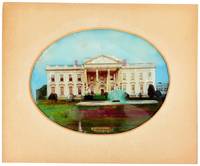
187032758Washington DC 1870. Very Good. Washington DC: ca. 1870s. Original oval glass photograph of the White House ca. 14.5x19.5cm rather crudely affixed to card mount. Mount toned else an excellent example.<br /> <br /> Early glass photograph of the White House the verso painted with broad strokes and glued mica to give the impression of a blue sky a green and purple lawn and water spraying from the fountain out front. The mica shows through on the pillars flecking them with pearly gold while the window arches have been hand-painted with gilt. An unusual and somewhat childish example though the effect is striking. Accompanied by a piece of cardboard on which a previous owner or dealer has written "The White House reverse painting on glass." To which another owner or dealer has corrected "Actually an early photograph on glass then colored by paint and mica c. 1875. unknown
189027844Legroce photo 1890. Very good condition. A color photo of hot springs in Whakarewarewa in Rotorua New Zealand with active steam vents surrounded by houses and laundry.<br /> <br /> Pencil caption on the verso is 'Boiling Springs in volcanic region N.Z. " Image 8.25 x 6" on board 12 x 9.75" Legroce photo unknown
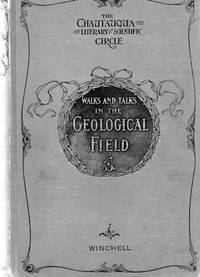
1894BOOKS026501IMeadville/New York: Chautauqua-Century. Very Good/Deco Cover. 1894. Revised 1st ed. Hardcover. 8vo Volume in Chautuqua Reading Circle Literature. Covers are mildly rubbed rear cover has a stain from a beverage ring. Selling books professionally since 1991. There is ALWAYS something old that is new at the Odd Volume Bookstore. Our photo is our actual book. No stock images to confuse. Quick shipping usually 24-hours from purchase time or less! Free on-line tracking! Your satisfaction is our concern. We are happy only when you are happy . Chautauqua-Century hardcover
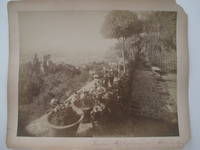
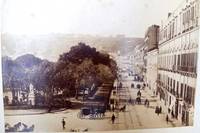
189014324AB1890. Grenade ca. 1890. 215 : 27 cm. Fotografia montado sobre cartoné. Preciosa fotografia que da una vista a la cuidad de Granada desde los muros de la Alhambra. unknown
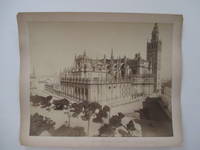
189014327AB1890. ca. 1890. 215 : 27 cm. Fotografia montado sobre cartoné. Preciosa fotografia de la cathedral de Sevilla. unknown
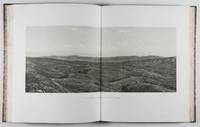
187454520Paris: Arthus Bertrand 1874. First edition. Hardcover. Very good. Four volumes folio 36 by 27 cm text volumes 36.2 by 28.6 cm atlas. Complete with a total of 99 plates in various media. Text in French; copious transcriptions of Arabic inscriptions in the second volume. 4 IV 388 pp. in-text illustrations throughout; 6 222 6 pp; 4 VI 326 pp.14 plates numbered I-XIV: 2 double-suite chromolithographic maps 2 double-suite chromolithograpic arrays of geologic sections; 2 steel-engraved arrays of geologic sections; 8 full-page lithographic specimen plates; Atlas: 4 pp; 67 plates documenting the journey of the Duc de Luynes: 3 unnumbered steel-engraved plates - 1 large folding map colored 1 folding itinerary colored 1 double-suite plan of the iron sailing vessel; numbered I-LXIV - 64 hand-pulled b/w photogravures on steel 1 double-suite by Charles Nègre after photos by Jardin and Louis Vignes; 18 plates documenting the journey of Christophe Mauss numbered I-XVIII: 1 double-suite steel-engraved itinerary 3 steel engraved site plans 1 colored 14 tinted lithographs by Eugène Ciceri after photographs by Henri Sauvaire 8 mistakenly attributed to Louis Vignes.<br /> <br /> Later half light brown morocco over marbled boards gilt spine with raised bands; marbled endleaves; original blue printed wrappers preserved along with the backstrips the three text volumes. Text leaves intermittently foxed throughout often in light-moderately toned large blotches. Plates clean and fresh with only occasional touches of soiling or faint foxing almost exclusively confined to the margins; large folding map and folding itinerary in the Atlas with more notable light foxing. A very good set with fine plates.<br /> <br /> First edition of this comprehensive report on one of the most important scientific and archaeological missions of the nineteenth century the 1864 expedition to the Dead Sea undertaken by the visionary art collector archaeologist and scientist Honoré Paul Joseph d'Albert duc de Luynes 1802-1867. Along with an atlas containing 78 reproductions of photographs by Louis Vignes 1831-1896 Jardin fl. 1864 and Henri Joseph Sauvaire 1831-1896 this work documents "the first systematic attempt to survey and photograph the geological features and cities of the Dead Sea basin in present-day Jordan. In addition to mapping the Dead Sea area the expedition made significant contributions to the geological and paleontological knowledge of the region and also to an understanding of the chemical composition of the lake's waters" GRI. Louis Vignes a lieutenent-commander in the French navy and director since 1860 of the port in Beirut was chosen by de Luynes as photographer for the expedition because of his knowledge of the Levant. "Vignes began to photograph immediately upon arrival in Beirut and continued to do so during the ride south throughout Sidon Tyre Nablus and Jerusalem. From March 14 until May 29 the party sailed the entire Dead Sea on a special iron vessel designed by Vignes to be dismantled for easy trasportation" Perez.<br /> <br /> A preliminary account edited by Vignes appeared as Extrait des notes d'un voyage d'exploration à la mer Morte dans le Wady Arabah sur la rive gauche du Jourdain et dans le désert de Palmyre Paris: H. Plon 1865. This work essentially comprised a key to the two maps drawn by Vignes with assistance from Dr. Gustave Combe. The larger of the two maps charted the Jordan Rift Valley from the southern end of the Dead Sea to the Gulf of Akabah; the second map depicts the Dead Sea and its immediate vicinity. "In addition to tracing the expedition's routes place names elevations vegetation land conditions natural features and many other geomorphic and climatic details are recorded on the maps" GRI. In the Atlas volume of the Voyage these two maps have been combined into a single map printed surface: 69.7 by 28.8 cm. In 1866 de Luynes made a second expedition to the region accompanied by the archaeologist Christophe Edouard Mauss and Henri Sauvaire; their account was published the following year in the Bulletin de la Société de Géographie as "De Karak à Chaubak. Extrait d'un Journal de voyage."<br /> <br /> De Luynes' full account of the expedition is found in the first volume of the present report. The two parts of the second volume comprise Louis Vignes' account of the journey from Petra Jordan to Palmyra Syria along with the account of the 1866 journey from Jerusalem to the Crusader castles in Jordan at Kerak and Shoubak Montréal written by Mauss and Sauvaire. The third volume contains the report prepared by the noted geologist Louis Lartet 1840-1899 who would go on to discover the first Cro-Magnon skeletons. It is accompanied by chromolithographic maps and arrays of geological and paleontological elevations along with finely detailed lithographic specimen plates. The entire production was posthumously edited by Melchior marquis de Vogüé 1829-1916.<br /> <br /> A member of the Académie des inscriptions et belles-lettres de Luynes was a philanthropist with enormous inherited wealth and deep interdisciplinary interests many of which are on display in the present work: the study and collection of Greco-Roman antiquities notably from Phoenicia and Palestine and the pursuit of scientific interests in chemistry geology and photography. In 1856 de Luynes initiated a competitionin in conjunction with the Societé Française de Photographie to find the best method of photomechanical reproduction. Two people were short-listed for the prize: the chemist and photographer Alphonse Louis Poitevin for his method of photolithography; and the pioneering photographer Charles Nègre 1820-1880 whose photogravure method "produced beautiful prints but was even more complicated and unwieldy in practice the Poitevin's method" Parr & Badger. Although Poitevin was finally awared the prize in 1867 de Luynes chose Nègre to process the 64 reproductions which appear in the first suite of images in the Atlas. "The Duc's decision was clearly based on aesthetics" as Nègre's photogravure process actually improved upon the albumen prints by Vignes "which tended to be high in contrast and lacking shadow detail" Parr & Badger. These 64 photogravures are arranged according to the expedition itinerary starting at Beirut and concluding with a view of the source of the Hasbany River. These images along with views of Nablus the ruins of Araq el-Emir the fortified hilltop palace Machaerus the rock-cut architecture of Petra the Greco-Roman ruins of Gerasa and views of the tributaries and source of the Jordan River are "among the earliest photomechanical reproductions of photographs from the Holy Land" Nir. Along with John Thomson's Illustrations of China and its People 1874 Voyage d'exploration à la mer Morte 1868-1874 is a "key work" in the early development of the photobook. "Amongst the best early French photographers" Charles Nègre "was a leading figure in the development and employment of photomechanical processes. These early methods were still labour-intenseive and could be termed hand-craft processes but they represent another significant step in the industrialization of the photographic process -- a step towards the halftone block and the photobook as we know it today" Parr & Badger.<br /> <br /> A note on the dating of this work: Title-pages undated; the publisher's avertissement in the first volume dated "Constantinople août 1874." N.B.: Rohricht dates the work 1871-1876; the Bibliotèque national de France dates the Atlas 1871; The Getty Research institute dates the entire production 1875; several libraries date the geological survey volume 1877. References: P. Foliot "Louis Vignes and Henry Sauvaire Photographers of the Expedition of the Duc de Luynes" History of Photography 1990 vol. 14 no. 3 pp. 233-250; Getty Research Institute "Duc de Luynes Archive and Related Photographs by Henri Sauvaire" via website; Hannavy Encyclopedia of Nineteenth-Century Photography I pp. 982-5 Nègre; Y. Nir The Bible and the Image 1985 p. 89; Parr & Badger I pp. 19 33; N. Perez Focus East Early Photography in the Near East 1988 pp. 180 Jardin 229 Vignes; Rohricht 2824.<br /> <br /> Full title and imprint: Voyage d'Exploration a la mer Morte a Petra et sur la rive gauche du Jourdain par M. le Duc de Luynes. Oeuvre posthume publiée par ses petits-fils sous la direction de M. le Comte de Vogüé. Relation du Voyage. Paris: Arthus Bertrand Éditeur Libraire de la Société de Géographie 21 rue Hautefeuille 21 Tome deuxième De Petra a Palmyre par M. Vignes. Voyage de Jérusalem a Karak et a Chaubak par MM. Mauss et Sauvaire; Tome troisième Géologie par M. Louis Lartet; Atlas. Arthus Bertrand hardcover
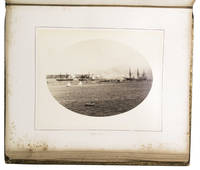
1885ABC_49517Australia 1885. Folio ca. 44 x 36.5 cm. Contemporary gold-tooled black morocco with the title lettered in gold on the front gold-tooled turn-ins gilt edges watered-silk end papers. With 65 albumen prints. 29 ll. Late 19th-century photo album with views of New South Wales. The album contains 65 albumen prints of highlights in the region primarily in Sydney and the Blue Mountains. It was bought by the civil engineer Clément van de Velde dates unknown who was born in Belgium and moved to Australia in 1884 where he attempted to set up a sugar-beet industry. He also served as the vice-consul for Belgium. He gifted the album to his friend Cobus in 1885 possibly as a keepsake for a trip they undertook together.At least a third of the photographs show important buildings and other landmarks in Sydney including the Government House the Town Hall the General Post Office the Australian Museum the different colleges of the University of Sydney the Department of Lands building and the public library in Bent Street that has been demolished in 1967. Most of these buildings were relatively new at the time these photographs were taken. Also included are photographs of Hyde park and the Captain Cook monument the Man O'War steps Argyle cut Mrs Macquarie's Chair and the botanic gardens. The other photographs in the album show the towns and nature surrounding Sydney such as the Katoomba Falls the Three Sisters Govetts Leap and Mount Victoria in the Blue Mountains the Zig Zag railway the Fitzroy Falls Fort Denison Broken Bay various views of the Nepean River as well as four portraits of Australian Aboriginals.With a contemporary French inscription on the verso of the first flyleaf "Mon cher Cobus Je prie de vouloir accepter cet album en souvenir de nos bons rapporte. Votre dévote Clément van de Velde. Sydney 10 may 1885.". The binding has been professionally restored the boards are somewhat scratched and dented. The leaves are warped and foxed the lower corners of some of the leaves are torn without affecting the photographs the photographs have somewhat discoloured. Otherwise in good condition.l Cf. McLennan N. T. "Henri van de Velde 1878-1947" in: Australian Dictionary of Biography 16 2002. hardcover
1890g1331London: James Graham Collection. Worn condition.Cover heavily rubbed and marked with loss to spine. Some foxing. Page-edge browning and wear. 1890. First Edition. Maroon hardback leather cover with heavy bevelled boards. 320mm x 420mm 13" x 17". 26pp. 26 mounted sepia photographs each photograph 7" x 9.5" mounted on heavy white boards 12" x 16". Early photographs of Naples and Pompei 1858 - 1880. Heavy item - shipping supplement may apply for overseas. . [James Graham Collection] hardcover
1890101519-ZNew York: A.D.F. Randolph And Co. 1890. Book. Illus. by Author. Very Fine. Hardcover. 1890 Translated from the twelfth edition by Mrs. Wilson Two tone cloth hard cover in the very scarce red cloth dust jacket 371 page book . Illustrated with 17 tipped in black & white albumen photos . Size: 8vo - over 7¾ - 9¾" tall. A.D.F. Randolph And Co. Hardcover
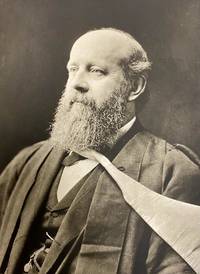
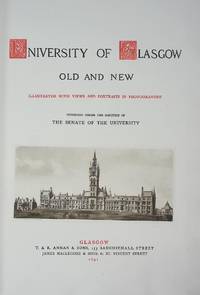
1891annn07Glasgow: T & R Annan & Sons. VG : in Very Good condition without dust jacket. Rebacked. Cover rubbed with light shelf-wear. Inner hinges cracked. Front endpaper creased. Some marginal edge-tears. Teg. 1891. Limited Edition 350. Black/gilt hardback cloth cover. 410mm x 320mm 16" x 13". xxxiii 146pp plates. 77 photogravure plates: 35 Views and 42 Portraits with tissue-guards. Heavy book extra shipping needed for overseas. Published under the sanction of The Senate of the University. Thomas Annan had studios in Glasgow from 1855 and in Hamilton before moving to Edinburgh. He worked first with the calotype process and later with the collodion process then the gravure process. His work included copies of famous paintings portraits of Glasgow University professors and a documentary series of photographs of old closes of Glasgow. His son James joined the firm in 1877 before taking over the business on the death of his father Thomas in 1887. James Annan was a pioneer of the photogravure technique travelling to Vienna in 1883 to learn the process from it's inventor Karl Klic. . T & R Annan & Sons hardcover
1891annn07aGlasgow: T & R Annan & Sons. VG : in very good condition. Cover rubbed. 1891. Limited Edition 138/350. Black hardback cloth cover. 410mm x 320mm 16" x 13". xxxiii 146pp plates. 77 photogravure plates: 35 Views and 42 Portraits with tissue-guards. Heavy book extra shipping needed for overseas. Published under the sanction of The Senate of the University. Thomas Annan had studios in Glasgow from 1855 and in Hamilton before moving to Edinburgh. He worked first with the calotype process and later with the collodion process then the gravure process. His work included copies of famous paintings portraits of Glasgow University professors and a documentary series of photographs of old closes of Glasgow. His son James joined the firm in 1877 before taking over the business on the death of his father Thomas in 1887. James Annan was a pioneer of the photogravure technique travelling to Vienna in 1883 to learn the process from it's inventor Karl Klic. . T & R Annan & Sons hardcover
18970200301897. Original Photographs . No Binding. Very Good. One Box Of Family Photographs Ephemera Family Letters Etc. Free To Anyone Who Can Establish A Close Family Relationship To Rudolph Forster Or A Public Archive That Will Maintain Them. <br/> <br/> unknown
1900D11287Brooklyn c. 1900. Hardcover. Near Fine. Contemporary bright green morocco gilt-stamped lettering and ornament in spine compartments 5 raised bands; 2 volumes 12mo 128 x 183 mm; volume 1 contains 15 portraits of a husband and wife and their baby volume 2 contains 8 portraits of a mustachioed man in a 3-piece suit. No duplicates. Poses differ as do the tightness of the portrait from headshot to full-body. Tissue-guarded silver prints 97 x 139 mm mounted to recto only of grey heavy cardstock leaves with studio's name stamped in the bottom margin. Some very light scuffing at spine tips and corners otherwise bindings are fine. Off-setting of photograph onto tissue-guards creating some wonderful ghosts. The family photographs are particularly sweet. <br/><br/> hardcover
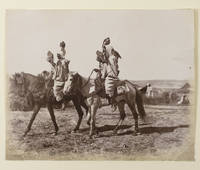
1880ABC_487221880. Tipped onto a stiff paper mount ca. 40 x 30 cm. Kept in a clear plastic sleeve. One albumen print ca. 22 x 27.5 cm. Striking large photograph of two Bedouins on horseback carrying large birds of prey for hunting. Bedouins have a long history of falconry as it was difficult for them to catch live prey in the desert otherwise. They typically captured the falcons trained them for a few months then released them back into the wild before breeding season. This tradition no longer exists in this manner as hunting is now forbidden throughout most of the Arabian Peninsula. As such the present photograph offers a unique insight into 19th-century falconry in the Arabian Desert.The edges are somewhat discoloured and the corners are creased from a past mounting method. Otherwise in very good condition. ABE CAT Falconry & Hunting ABE CAT Middle East Arabian Peninsula unknown
18853348N.p. likely Groton SD: October 1885. Very good. Two mounted albumen photographs 5.5 x 8.25 inches on 8-x-10-inch plain cardstock. Small chip to bottom edge of each mount some edge wear dust-soiling and rubbing. A highly-informative pair of original photographs of two different areas of Groton South Dakota just four years after its founding each identified in the lower margin both taken in October 1885 both from a slight elevation and each with numerous manuscript captions in the margins identifying various locations in the images. The first photograph pictures "Central Part of Groton. October 1885." Manuscript captions point to the bank post office "Trinity Church" the Presbyterian Church "Presbyterian Parsonage" and an "X" on the Brunswick Hotel identifying "Will's room formerly at the hotel." The second photograph is titled "Northern Part of Groton Dakota. In Oct. 1885." Among the buildings identified here are "Will's home" "School house" "New College Buildings" "Bank Building" and the location of Main Street. Each photograph pictures many more buildings than are identified through the captions and juxtapose the town's collection of buildings against a wide and empty prairie beyond. Together the photographs provide a rare and early city view of the still-remote city of Groton located in the north-eastern part of South Dakota and numbering just 1380 residents as of the 2020 census. October unknown
189073084V.p.: N.p. ca. 1890. A fine grouping of 23 original albumen photographs of the American West. All cabinet photographs 4 x 7 inches mounted to original album leaves 9 3/4 x 7 inches with canvas stubs. The most represented photographer is William Henry Jackson with a total of seven albumens; including Rainbow Falls Canyon of the Grand River Seven Falls/Cheyenne Canyon Hercules Pillar Royal Gorge and others. There are six albumens by William Edward Hook all with photographer's imprint in the negative; Three Graces Balanced Rock Garden of the Gods and the Dutch Parliament Monument. There are three images of Los Angeles by Park & Co. and three images of Los Angeles by Maude. There are an additional four uncredited photographs all similar in size and wear featuring images of Southern California including the Hotel Del Coronado in San Diego and the residence of A.K. Smiley in Redlands. N.p. unknown
186574829New Bedford MA: C. Taylor & Co. ca. 1865. Twenty thick cards 4 1/2 x 7 inches. Each card bears a poem often of a religious nature with an actual albumen photograph at the top. The photographs generally measure 2 /14 x 2 /12 inches and they are all photographs of famous paintings. One cars with a corner excised some general toning but overall in very good condition. We can find no other copies in institutions.This family-ran company started in 1841 as a stationer and bookstore but soon moved into manufacturing. A leader in art industries Charles Taylor and Co. was a huge concern by the 1880s. They had five buildings 50000 sq. ft. of work space and employed over 300 people. It was was the pioneer in the industry of art manufacturing in this country and was then the largest of its kind the annual product aggregating nearly a half million dollars in value. The firm moved into art photography in 1860 and soon its artotypes and ambrotypes made the company famous. It began with a woman Elizabeth Fry an English member of the Society of Friends. She was one of the first worldwide celebrities due to her numerous appearances on Taber products. The Taber artotypes are relatively easy to find. It is likely these inspirational cards were only produced for a couple of years. In the collection offered here one of the cards is dated 1865 and as they came as a group it seems reasonable to ascribe that year for them all.Louis Prang first introduced fancy holiday cards to America. In 1892 his company merged with Charles Taber & Co. to create the Taber Prang Art Co. C. Taylor & Co. unknown
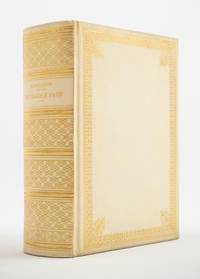
1860ST20736Leipzig: Bernhard Tauchnitz 1860. First Tauchnitz Edition Todd & Bowden's fourth setting published the same year as First American and English Editions. 165 x 123 mm. 6 1/2 x 4 7/8". xii 292; vi 280 pp. Two volumes in one. <br/> Original vellum-like paper boards covers with gilt lacy borders smooth spine heavily gilt and with gilt lettering all edges gilt. Apparently IN THE ORIGINAL maroon pebbled paper DUST JACKET. With a total of 60 photographs including frontispiece mounted on stiff paper. Clark p. 252; Todd & Bowden 515 Db. Back board with a small stain near the bottom inexpensive paper faintly browned; jacket a little dampstained splitting repaired with white tape along the joints on the inner side. Even with defects a notable survival.<br/> <br/> Attractively bound and enhanced with photographs of Italian art and architecture this is the first Tauchnitz printing of Hawthorne's "The Marble Faun" as it is called in various American printings or "The Romance of Monte Beni" as it is titled in the Tauchnitz and early London editions. The work was Hawthorne's last completed novel the principal fictive product of the author's European residence from 1853-60 and probably the most brooding Romantic and distinctive major work in the Hawthorne canon. The present edition is part of an important continental publishing phenomenon that flourished for more than a century. The descendant from a line of two previous printer-publishers Christian Bernhard Freiherr von Tauchnitz 1816-95 founded in Leipzig in 1837 the printing and publishing firm of Bernhard Tauchnitz which became famous for its inexpensive reprints of English language books. Tauchnitz began his "Collection of British Authors" in 1841 and two years later he negotiated the sole rights to publish English books in Germany; among those authors whose work he issued were Ainsworth Dickens Disraeli and Thackeray. As is obvious from the present item Tauchnitz published American authors as well. His inexpensive paperbound editions a precursor to mass-market paperbacks eventually numbered more than 4000 and the business was continued by the Tauchnitz family until being destroyed by bombing in World War II. There are often a number of different Tauchnitz editions or impressions of any particular work; in the present case the bindings differ significantly and the number of photographic plates varies widely from copy to copy. According to Clark "The absence presence or sequence of inserted photographs has no significance in determining textual priority." The presence of the original dust jacket from the 1860s--which has done so much to protect the nearly virginal white binding--represents a remarkable survival. Bernhard Tauchnitz unknown