187 résultats
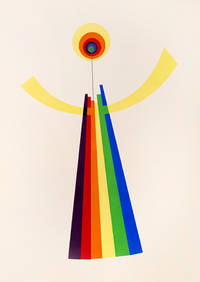
19261696841926. MAN RAY. Revolving Doors. Comprised of 10 pochoir plates ca. 580 x 380 mm. Folio loose in original publisher's black portfolio with ties laid into a new folding box. Paris: Editions Surréalistes 1926. A fine copy of this legendary Surrealist publication. Between 1916 and 1917 the artist and photographer Man Ray created a series of collages he called "Revolving Doors." He included the series in his third solo exhibition at the Daniel Gallery in New York in 1919. The collages whose geometric shapes combine machine-like and anthropomorphic forms were framed and installed on a rotating pole that the viewer could spin. The original collages were destroyed but he later reproduced them in this series of pochoir prints published by Éditions Surréalistes in Paris. This publication represents an important contribution to avant-garde art and together with Jazz and the Prose du Transsibérien comprise the Holy Trinity of great pochoir books of the twentieth century. Complete sets in fine condition are extremely rare. One of 105 copies signed on the colophon by Man Ray. Reynolds 71. unknown
193154654Paris: Compagnie Parisienne de Distribution d'Électricité 1931. First edition. Ray Man. Folio two unbound folded sheets to make 6 pp. text with 10 photogravure plates 8 1/16 x 10 1/4 inches 20.48 x 26.03 cm tipped to a stiff art paper mount 10 7/8 x14 3/4 inches 27.62 x 37.46 each with a titled protective vellum wrapper. The text and prints are laid-in a blank vellum folder which is mildly creased and laid-in the four-point printed paper portfolio. This copy has the complimentary slip from the CPDE which is seldom included.<br /> Each plate bears the signature of Man Ray which was signed in the original negative. This is copy number 409 from a total edition of 500 copies. A fine near new copy.<br /> <br /> Aside from a slight bit of toning to the printed four-point paper folder this is a fine near new copy contained in a custom-made gilt titled leather-backed cloth over boards chemise with matching cloth slipcase. In 1931 the Paris electric company CPDE commissioned Man Ray to produce a series of images promoting the various uses of electricity. The resulting portfolio of ten Rayogrammes was issued in 500 copies which were distributed to the CPDE's best and prospective clients and not commercially offered for sale. The photogravure prints made from original Rayograms are titled: Electricité La Ville Salle de Bain La Maison Lingerie Salle a Manger Cuisine Le Souffle Electricité Le Monde.<br /> <br /> In 2014 the Metropolitan Museum of Art Curator in Charge Department of Photographs Jeff R. Rosenheim stated: "This remarkably seductive album of photogravures is an exquisite example of his legacy as America's greatest Surrealist photographer." "Man Ray's ÉLECTRICITÉ is not only one of the most ravishing and sought-after of company photobooks but it contains a cogent suite of photographs that the leading American Dadaist and commercial photographer himself never bettered." Parr and Badger The Photobook: A History. Volume II p.183. Compagnie Parisienne de Distribution d'Électricité unknown
107426Turin Luciano Anselmino 1972. . Limited edition one of 100 copies on Velin d'Arches signed and numbered by the artist on the justification; large folio 63.5 x 45 cm; title-page justification and table of contents 10 pochoir prints in colour after Man Ray loose as issued and unbound in plain wrappers minor spotting to wrapper; in the original black cloth solander box with 'Man Ray' on the spine some minor wear to box otherwise a fine example.<br /> The complete portfolio of 10 pochoir prints signed by the artist on the justification. Man Ray created a series of collages of geometric shapes titled 'Revolving Doors' between 1916 and 1917. They were included in his third solo show at the Daniel Gallery in New York and were installed on a rotating pole that the viewer could spin bringing the machine-like anthropomorphic forms to life. The original collages were destroyed but he later reproduced them in this series of pochoirs also including the explicative text which originally accompanied each work.<br /> Turin, Luciano Anselmino, 1972. hardcover
3038Paris. Vintage photo. Stamp on the back. 2 the. corners are restored. Vintage photo. Stamp on the back. 10 x 15 cm. Vintage print of the iconic image. unknown
196691822Paris: Jean Petithory 1966. Fine. Man Ray shoots Surrealist Mannequins Jean Petithory Paris 1966 26.5 x 30.2 cm Relié sous étui First edition one of 37 numbered copies ours one of a few hors commerce copies for collaborators and friends signed by Man Ray on the justification. 15 photographs on watermarked vélin Montgolfier mounted on guards each bearing Man Rays printed studio stamp Épreuve originale atelier Man Ray Paris. The copy exceptionally contains the original subscription prospectus and an invitation to the book launch exhibition opening night organised by Simone Loliée. Publishers binding by the renowned bookbinder Mercher bearing his signature in the negative of the photographic paper on each endpaper and pastedown flat black shagreen spine title author and date stamped in gilt lengthwise photographic boards with gilt background after an original composition by Man Ray specially designed for this work original wrappers preserved black paper slipcase. Illustrated with 15 original photographic prints of the mannequins photographed by Man Ray at the 1938 International Exhibition of Surrealism. The mannequins had been transformed by Man Ray himself Salvador Dalí Oscar Dominguez Marcel Duchamp Max Ernst Espinoza Maurice Henry Marcel Jean Léo Malet André Masson Sonia Mossé Joan Miró Wolfgang Paalen Kurt Seligmann and Yves Tanguy. They were presented within a Surrealist staging by Marcel Duchamp and lighting designed by Man Ray himself. During the 1930s the European Surrealists had a fetishistic interest in simulated woman-female mannequins that they transformed into playful sculptural works of art. In 1938 Man Ray photographed a series of their work at the Exposition Internationale du Surréalisme presented in the unsettling half-light of the Galerie des Beaux-Arts on the rue du Faubourg Saint-Honoré. Visitors walking down a corridor on the Rue Surréaliste saw a series of dressmakers mannequins inhabitants of a dreamlike Paris scantily clad or adorned with a jumble of incongruous objects and flanked by street signs bearing highly symbolic names: some real such as the Rue des Vieilles Lanternes where Gérard de Nerval took his own life or the Rue Vivienne where Lautréamont once lived alongside invented ones such as the Rue aux Lèvres the Rue de Tous-les-Diables and the Rue de la Transfusion-de-Sang. The installations of this first international Parisian Surrealist exhibition organised by André Breton and Éluard marked a decisive moment in the history of the movement. For the first time the event dispensed with a straightforward retrospective of individual artists in favour of a series of phantasmagorical stagings live performances and ephemeral artworks prefiguring the modern concepts of installation and happening. Nearly 3000 visitors are said to have thronged to this 1938 Paris exhibition by the light of electric torches: One has the feeling of leaning over certain exhumed walls and of being the first to decipher their signs. Jean Fraysse Le Figaro littéraire 29 January 1938. From Hausmanns sculpture and de Chiricos paintings to the works of Hans Bellmer the mannequin had long occupied a central place in the Dada and Surrealist artistic vocabulary and was cited in Bretons 1924 Manifeste. These woman-objects staged in the spirit of the Musée Grévin offered infinite possibilities for the transformation of the body and the exploration of the unconscious. Some have remained enduringly celebrated such as Le Bâillon vert à bouche de pensée André Massons mannequin enclosed in a birdcage or Duchamps considered the only three-dimensional version of his alter ego Rrose Sélavy taking the form of a man cross-dressed as a woman in the style of Claude Cahun. The mannequin of lesbian artist Sonia Mossé friend of Artaud and photographed by Man Ray with Nusch is her only known artwork and the sole mannequin in the installation created by a woman artist. Man Ray had incorporated Jean Petithory hardcover
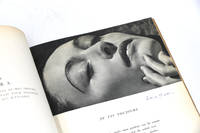
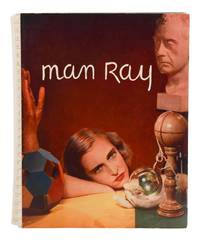
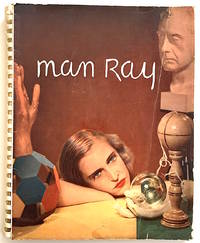
193448711Hartford CT: James Thrall Soby 1934. Near fine. Association copy first edition second issue of Man Ray's extraordinary first monograph - inscribed to friend and muse Joella Bayer whose portrait appears in the book. Man Ray's photobook of "sensuous often dreamlike" photographs and rayographs inscribed to Joella Bayer daughter of poet and artist Mina Loy and wife of designer and photographer Herbert Bayer whose signature and thumbprint are also present. Joella Bayer knew Ray most of his life having been introduced to the artist by her mother in Paris in the 1920s and then growing closer through her first husband the gallerist Julien Levy who frequently exhibited Ray. Ray portrayed or photographed Joella Bayer a number of times during his life most famously in this book where her solarized portrait appears as plate 47. <br /> <br /> Arranged in five thematic sections PHOTOGRAPHS includes laudatory essays and poems from Ray's surrealist contemporaries André Breton Paul Éluard Rrose Sélavy Marcel Duchamp and Tristan Tzara marking the divisions. Stated "Second Edition" as almost all copies are; in fact it is the second issue of the first edition mislabeled in an attempt "to generate demand where none existed by suggesting the edition had sold out. After replacing the title pages of these copies with one stating second edition the publisher returned them for sale" Roth 80. <br /> <br /> Uncommon in this condition scarce signed and rare with so strong an association: a remarkable copy of this fragile and important book. 12.25'' x 9''. Text in English and French. Original color photographic wrappers with plastic comb binding. Frontispiece portrait of Man Ray by Picasso. 104 heliogravures. Inscribed by Ray to Joella Bayer on the inside of the front cover: "For Joella / Man Ray." Additionally signed below by her husband Herbert Bayer with his thumbprint. Touches of shelfwear rubbing. Else bright and sound with comb binding entirely intact. James Thrall Soby unknown
194791779Paris: Editions Cahier d'art 1947. Fine. Dora Maar Signs Her Own Work Editions Cahier d'art Paris 1947 18.50 x 24.50 cm broché First edition which supposedly had an issue of 500 numbered copies. Gallimard donated the paper required for the production of this book but only 258 copies could be printed rather than the 500 announced in the justification from a note by Paul Éluard. A slight crease to the covers slight marginal sunning primarily affecting the rear cover. Illustrated with 11 photographs of Nusch Éluard by Man Ray and Dora Maar. Le temps déborde is a collection of eleven poems published in 1947 a few months after the sudden and unexpected death of Paul Éluards wife Nusch. A poignant ode to their seventeen years of life together the work is illustrated with striking portraits of Nusch. This exceptional copy is signed by Dora Maar beneath or directly on each of her five photographs. We are aware of only one other copy signed by the photographer and none signed by Man Ray. A rare and beautiful copy. In 1965 paying tribute to his friend Aragon recalled his discovery of this masterpiece: He signed it with an invented name Didier Desroches because he had killed Paul Éluard. I let him talk. What he had shown me of Didier was of a confounding beauty. This slender book which was to appear as the work of an unknown to say merely that in my eyes it surpasses everything Éluard ever signed with his own name is to say too little. I thought so then and I think so today. The attribution of each photograph in the collection to either Man Ray or Dora Maar has long been a source of confusion. Strangely the question seems to attract little scholarly attention: as Mary Ann Caws notes Dora Maars portraits of the Surrealists muse were originally attributed to Man Ray since they were so clearly superb in their construction and realization These photographing women: The scandal of genius Angels of anarchy: women artists and surrealism 2009. This misattribution was also a consequence of the systematic erasure of Dora Maars photographic work which she abandoned at Picassos request. The two series by Dora Maar and Man Ray are further entwined by their shared style and by both artists fascination with Nusch. Audacious framing and subtle interplay of shadow and light reflect the two Surrealist photographers formal innovation. Beyond aesthetic alchemy the three of them were very close at the time of these photographs 1935-1938. For several years they all took part with their partners Ady Fidelin and Paul Eluard in late-summer gatherings in the rustic village of Mougins overlooking Cannes at the invitation of Picasso where they indulged in role play identity and couple exchanges Alicia Ortiz Dujovne Dora Maar. Some of the collections illustrations are well known: Man Rays Nusch with mirror his diptych with her eyes closed and open and the celebrated portrait by Dora Maar illustrating the poem LExtase with her carefully lit face floating in darkness supported only with her fingers an elusive expression in her eyes. In one unforgettable version of the same image Les années vous guettent The years lie in wait. Maar superimposes a silvery spiders web over Nuschs features Louise Baring Dora Maar: Paris in the time of Man Ray Jean Cocteau and Picasso. The resonance of the photograph is all the more powerful since Nusch died early of a heart attack just on the day she was to lunch with Dora Maar for whom it was an irreparable loss. Mary Ann Caws For other photographs attribution had remained uncertain notably the portrait of Nusch bare-breasted and draped in foliage illustrating En vertu de lamour: the absence of a signature supports the attribution to Man Ray. A sublime poetic and artistic tribute featuring the finest portraits of Nusch central figure in Man Ray and Éluards shared imagery and graceful model for Dora Maars most accomplished portraits at last restored to their right Editions Cahier d'art unknown
1934140948952Hartford CT: James Thrall Soby 1934. First Edition. Fine. A superlative example of the first edition first issue of May Ray's first monograph. 104 pp. with frontispiece portrait of Man Ray by Pablo Picasso the original title page and gravure plates after photographs by Man Ray with text in English and French. Bound in publisher's comb-bound pictorial card wraps. Light wear to wraps with faint marginal soiling to contents else Fine unusual in such nice condition and with spirals intact.<p>Initial sales were so dismal that the publisher recalled most copies of the first printing and replaced the title page with two different fictitious ones claiming "second edition" and "deuxieme edition" in efforts to stoke demand. Copies like this one with the original title page are therefore rare. A fantastic copy of this pioneering work. James Thrall Soby unknown
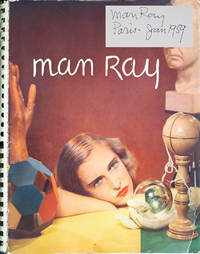
1934311706Hartford Connecticut; Paris; New York: James Thrall Soby; Cahiers d'Art; Random House 1934. First edition second issue with cancel title with fictitious "Deuxième édition" designation. 101 gravure plates after photographs by Man Ray. 1 vols. 4to. Original spiral-bound photographically illustrated wrappers. Spiral spine split some creasing to covers and light edgewear to textblock. Gift inscription on verso of front wrapper beneath Man Ray inscription. In a custom half black morocco-backed slipcase and chemise. First edition second issue with cancel title with fictitious "Deuxième édition" designation. 101 gravure plates after photographs by Man Ray. 1 vols. 4to. Inscribed first edition of the definitive contemporary collection of Man Ray's photographs with 101 gravure reproductions of photographs and "rayographs" and essays by his contemporaries leading figures of the Dada and Surrealist movements of Paris and New York including Breton Eluard Duchamp written in German under the pseudonym "Rrose Selavy" and Tristan Tzara. With large inscription on the verso of the front wrapper "Man Ray / Paris - Jan 1959." <br /> A work almost always encountered in its second issue with the fictitious statement "Deuxième édition" on the title an attempt "to generate demand where none existed by suggesting the edition had sold out.Copies with the original title page are exceedingly rare" Roth.<br /> Beneath Man Ray's inscription is a gift inscription to Judy and Julius Rosenwald II. "Dooley" as he was known was the son of the celebrated collector Lessing Rosenwald and the grandson of Julius Rosenwald part owner of Sears Roebuck. Roth 101 p. 80 James Thrall Soby; Cahiers d'Art; Random House unknown
19342198Hartford: James Thrall Soby 1934. First edition. Publisher's plastic comb binding stiff wrappers. Minor vertical crease to front cover light chipping to outer edge. Upper and lower portions of the front cover coming loose from the binding but the cover is still held firmly. Internally clean and bright. Now housed in a custom clamshell box.<br /> <br /> The very rare first issue. As Roth describes the publisher "attempted to generate demand where none existed by suggesting the edition had sold out. After replacing the title pages of these copies- presumably a healthy percentage of the run whose sales had in fact been slow to none- with one stating 'deuxième edition' second edition he returned them for sale. Copies with the original title page are exceedingly rare."<br /> <br /> Man Ray's first monograph with texts in English and French by Duchamp Tzara Eluard Breton and Man Ray himself. Frontispiece portrait of Man Ray by Picasso. Contains 104 heliogravure images. "Part art part illustration the book was meant to be an inventory of his work a kind of grand promotional catalogue. Man Ray's album was a virtuoso presentation of modern European-style photography. Close-up views distorted angles double exposures night photography negative prints rayographs still lifes nudes portraits fashion photographs and even a painting. were reproduced. Intended for an American more than a European audience the album was Man Ray's means of presenting his career to a homeland that had rarely seen his work." Perpetual Motif: The Art of Man Ray pp. 35-39 Roth pp. 80-81. James Thrall Soby unknown
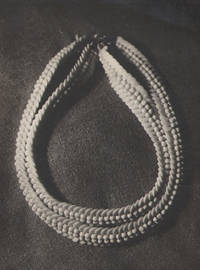
192801_0722<p>An original vintage gelatin silver print framed of Schiaparelli Aspirin Necklace photographed by Man Ray for Elsa Triolet jewelry designer and companion to Louis Aragon French surrealist poet and one of the leading voices in the French surrealist movement. Titled in pencil on verso. Image measures 3 1/4" x 2 1/2" frame measures 15" x 12". Excellent condition.</p><p>From 1928 to 1930 the Russian writer Elsa Triolet designed necklaces that her companion Louis Aragon co-founder of the surrealist magazine <i>Littérature</i> proposed to Elsa Schiaparelli. Man Ray photographed the most famous of these pieces the aspirin necklace composed of porcelain beads with a shape similar to that of aspirin tablets. Read more at: https://www.schiaparelli.com/en/21-place-vendome/schiaparelli-and-the-artists/elsa-triolet/schiaparelli-aspirin-necklace/</p><p><b> Price includes discount </b><br /></p>
19354171Paris: GLM 1935 Quarto 24.5x18 cm. wrappers 201pp. loose as issued. No. 791 of 1000 copies on velin of 1220 overall. A very successful collaboration of poet and photographer with extraordinary sensuous photos of Eluards wife Nusch coupled with page design incorporating the poetry cycle therein. It is rightly acclaimed as one of the greatest surrealist publications. This is a fine crisp copy in custom clambshell box bearing hand-tooled leather spine. Paris: GLM paperback
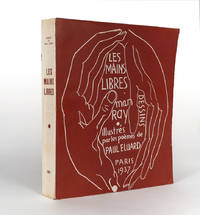
19371704521937. MAN RAY. Les Mains Libres. By Paul Eluard. 208 pp. with 66 reproductions of drawings by Man Ray. 4to 280 x 225 mm. bound in the original illustrated wrappers in a new slipcase with morocco backed chemise. Paris: Editions Jeanne Bucher 1937. A pristine copy of this celebrated collaboration between Man Ray and Paul Eluard inscribed by Man Ray to Souzouki. Man Ray had moved to Paris in 1921 and in the 1930s was one of André Breton's surrealist circles. Unlike most illustrated books where the pictures illustrate the text this book uses the poems to illustrate the drawings which are important documents of Man Ray's non-photographic output. One of 650 printed on Chester Vergé of a total edition of 675 copies. From Manet to Hockney 104. unknown
29081Paris circa 1950. 1 tirage sur carte d'après-guerre signé « Man Ray » à la mine de plombe en angle inférieur droit. . L'épreuve est signée Man Ray à la mine de plomb en angle inférieur droit et contient au dos la mention de la main de Char « René Crevel ». Ce tirage constitue l'un de ceux que Man Ray a fourni dans les années 50-60 à ses amis proches. Un tirage figurait dans la vente Breton 2003 n° 5106 identique à celui-ci – sans être signé. C'est la seule épreuve signée connue : ce tirage constitue l'un de ceux que Man Ray a fourni dans les années 1950-1960 à ses amis proches. Un tirage figurait dans la vente Breton 2003 n° 5106 identique à celui-ci - mais non signé. Notre épreuve est celle de René Char avec une note au verso de la main du poète. Le suicide de Crevel le frappa douloureusement. Des années plus tard il avouera : « Je n'ai pu depuis la mort de ce frère précieux relire un seul de ses ouvrages. C'est dire combien je m'ennuie de lui de l'éclat de sa présence des conquêtes de sa pensée dont il était prodigue. C'est l'homme parmi ceux que j'ai connus qui donnait le mieux et le plus vite l'or de sa nature. Il ne partageait pas il donnait. » Toutes les autres épreuves recensées de ce portrait iconique sont vierges de la signature de Man Ray et souvent dans des tirages tardifs réalisés par Gassman. Lorsque Pierre Paraf le directeur de La République rend hommage à René Crevel dont le suicide vient d'être découvert il évoque un artiste « dont les généreuses indignations étaient servies par un âpre talent satirique ». L'écrivain et poète surréaliste de la première heure mais exclu du mouvement en 1935 et membre critique du Parti communiste depuis 1922 s'est donné la mort à son domicile ne laissant qu'une note pour sa maîtresse la comtesse argentine Tota Cuevas de Vera : « Prière de m'incinérer. Dégoût. » Peut-être celui d'une France bourgeoise et parlementaire de la IIIe République qu'il méprisait l'une et l'autre telle qu'il la décrivait avant sa mort dans les colonnes de Comoedia : « Vice en pantoufle adultères rondouillards mesquinerie lésine sourire faussement bonhomme au fond positivisme insensible jusqu'à la minute catastrophique où alors la terreur pousse les esprits soi-disant libres à remettre Dieu à la mode à s'en tirer par une assurance sur la vie et sur la mort. Tous ces symptômes d'ailleurs accusent une maladie qui pour être celle de la Troisième République ne date point d'hier. » René Crevel consacre un article à Man Ray dès 1925 qu'il présente comme l'auteur d'une chasse miraculeuse et comme un sorcier un « chasseur du mystère » Crevel « Le Miroir aux objets » L'Art vivant n° 14 15 août 1925. Man Ray tire ce portait sept ans plus tard. Il sera utilisé bien plus tard pour la couverture de la biographie de Michel Carassou et également par Claude Courtot pour le frontispice de son René Crevel aux « Poètes d'aujourd'hui » chez Seghers 1969 une image dont Marie Laurencin témoigna de son extraordinaire justesse avec ses « cheveux jamais pareils et son visage changeant d'adolescent rieur et malheureux ». Jean-Claude Vrain dans son catalogue de Portraits d'écrivains datait ce portrait de 1932 : « Ce très beau portrait tranche avec la plupart des photographies de René Crevel que nous possédons. L'écrivain y fait moins dandy sa mise est moins élégante. Il apparaît ici sous un aspect beaucoup plus ‘terrien' en bras de chemise le col déboutonné. Son visage moins angélique que d'habitude mais toujours d'un aspect poupin exprime une détermination et une force que l'on retrouve dans certains de ses textes les plus virulents comme Le Clavecin de Diderot » n° 307 du catalogue. La version proposée non signée était également un tirage tardif des années 1970 par Pierre Gassman. Le Centre Pompidou conserve le négatif de la photo qui a servi à ce recadrage sous la cote AM 1995-281 524. Provenance : René Char [Paris, circa 1950]. 1 tirage sur carte, d'après-guerre, signé « Man Ray » à la mine de plombe en angle inférieur droit. unknown
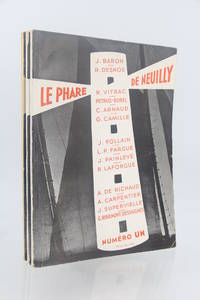
193388275Neuilly-sur-Seine: Le Phare de Neuilly 1933. Fine. One of the rarest and most iconic Surrealist magazines Le Phare de Neuilly Neuilly-sur-Seine S.d. 1933 18.20 x 25.10 cm 3 volumes brochés First edition of this important and very rare magazine complete with 4 issues in 3 volumes. Complete collection of this luxurious Surrealist magazine edited and funded by Lise Deharme and characterized by its emphasis on photography. Covers illustrated by Man Ray illustrations in black. Contributions by Salvador Dali Hans Arp Dora Maar Oscar Dominguez Brassaï Lee Miller Jacques Lacan James Joyce Georges Ribemont-Dessaignes Ilarie Voronca Nathalie Barney Benjamin Fondane Pierre Drieu La Rochelle Alejo Carpentier Eugène Jolas Lise Hirtz Lise Deharme Raymond Queneau Claude Sernet Roger Vitrac Robert Desnos Jean Follain Léon-Paul Fargue Pierre Keffer Jacques Baron Gottried Benn Céline Arnauld Monny de Boully Georgette Camille André de Richaud Jules Supervielle Claire Goll Paul Laforgue David Herbert Lawrence Marcel Jouhandeau Paul Dermée Jean Painlevé Nadar Pétrus Borel and Stendhal. Sunned spine on the No. 3/4 issue. Spine-ends and corners slightly rubbed otherwise a wonderfully preserved copy. A very fine example of this rare avant-garde magazine which ""came into being over the course of a few dinners that brought together the dissidents of Surrealism and other poets in this hospitable abode of Lise Deharme. Robert Desnos provided the title. Georges Ribemont-Dessaignes was the editor. Man Ray had designed the cover: a silhouette of a lighthouse against a photographic background of sailing boats. . It contains curiosities: a tale by Petrus Borel a photo by Nadar popular songs an investigation into the neurosis of war epitaphs taken from a cemetery of animals. Among other curiosities a sonnet by the famous psychoanalyst Jacques Lacan. It is entitled Hiatus irrationalis."" Jacques Baron Cahiers de l'Herne Raymond Queneau p. 333. Le Phare de Neuilly unknown
192148774Paris.: Au Sans Pareil. 1921 12 Janvier. Folio. 277 x 212 mm. Drop-head title and printed text recto and verso in French with typical dada typography manicules and type variation imprint and list of signatories at foot of verso. A very fine example never folded of this scarce iconoclastic and blasphemous dada manifesto an excellent specimen of dada typography.Tzara's 1921 restatement of dada had a very serious purpose: to reinvigorate and revitalise dada. Tzara was to some extent successful and dada continued albeit with the same troubles that prompted the issue of this manifesto. The document is an outstanding example of the typographical caprice and linguistic inventiveness that made dada so intriguing and appealing. The use of various other schools of art Cubism Expressionism Simultaneism Futurism Unanism Neo-Claissicism Ultraism Creationism Vorticism and Imagism to underline dada's point or rather its lack thereof is classic. Tzara's most iconoclastic and blasphemous slogans were taken up by Van Doesburg for his own later dada poster produced in conjunction with Schwitters 'kleine dada soirée': 'DADA EXISTE DEPUIS TOUJOURS / LA SAINTE VUERGE DÉJÀ FUT DADAÎSTE!'This manifesto was truly international as noted at the head of the sheet: 'Les Signataires de ce manifeste habitent la France l'Amérique l'Espagne l'Allemagne l'Italie la Suisse la Belgique etc. mais n'ont aucune nationalité.'The signatories as listed were: 'E. Varèse Tr. Tzara Ph. Soupault Soubeyran J. Rigaut G. Ribemont-Dessaignes M. Ray sic F. Picabia B. Péret C. Pansaers R. Huelsenbeck J. Evola M. Ernst P. Eluard Suz. Duchamp M. Duchamp Crotti G. Cantarelli Marg. Buffet Gab. Buffet A. Breton Baargeld Arp W. C. Aresnberg L. Aragon.''In 1921 Tristan Tzara found himself battling to sustain Dada's declining popularity. Aesthetic political and social differences among the movement's most prominenet members shook Dada at the doundation. In line with Dada's emphasis on easy distribution Tzara created this one-page flyer presenting a condensed more direct iteration of the Dada Manifesto . The text's inconsistent typefaces orientation and size embody the disorientation and randomness at the heart of the Dadaist philosophy.' From the catalogue of the Art Institute of Chicago.'Dada fait ici le choix d'une composition graphique et d'une typographie affranchies des traditions use de termes saugrenus n'ayant aucun lien logique entre eux recourt aux antonymes «oui = non» aux répétitions «jamais jamais jamais» s'autointerroge «Que fait DADA» affirme et se contredit dans le même temps . La mise en page les différentes tailles de caractères et les polices d'écriture confèrent à l'ensemble un rythme singulier fait d'accélérations de ralentissements de pauses autant d'éléments qui construisent un parcours de lecture heurté discontinu à l'issue duquel renaîtra peut-être un «homme nouveau» purgé de tout espèce de culture.' Anne Delebaree writing in 'Petits Papiers des Avant-Gardes: La Collection Paul Desrtribats'.Destribats Tracts 132 / 133; Ades 8.45; Pompidou 326 / 327. Au Sans Pareil. unknown
19372467<p>Paris Éditions GLM 1937. MAN RAY. La Photographie n'est pas L'Art. Paris: Éditions GLM 1937. Slim octavo 17 loose leaves in original flexible blue cloth portfolio original black die-cut wrapper. First edition of this landmark treatise with 12 full-page halftones of Man Ray's distinctive photographs 'regarded by some as amongst the greatest of the 20th century' Parr & Badger. Jean Cocteau called him 'the poet of the darkroom.' 'It was with Man Ray's arrival in Paris in the summer of 1921 when Dada was at its height that photographic experimentation temporarily leaderless after the disastrous war took a decisive new direction' Frizot 442. 'Man Ray's work introduced a particular note to Dadaism since he used photography and recognized early on that this medium could reproduce the effects of object-based art in two-dimensional form. Photography was in a position to preserve the ordinary and to unleash surreal effects' Icons of Photography 26. 'Although he incorporated photography into his Dadaist practice much of his photographic activity was given over to conventional portrait and fashion commissions. This rankled with him and 'photography is not an art' was a constant theme in his work. La Photographie n'est pas L'Art is one of the most enigmatic yet advanced of all his books. It can be taken as a summation of his experiments in photography and might be said to be his photographic swansong' Parr & Badger 108-09. With text by André Breton. See Roth 80-81 86-87. Interior and images fine. Only light sunning to cover through aperture in wrapper. A fine copy. Scarce. Bauman quote In a contemporary clam shell box in blue cloth.</p> GLM
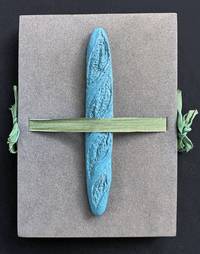
A-71923-2<p>Accordion fold artist's book featuring one multiple by Man Ray a blue baguette bread on the front cover held by a green ribbon to close the book. Also included on the book ten silkscreen after the artist Revolving Doors installation in colors three reproductions in colors and a three folded poster in colors. This artist's book was published by Galerie Alexandre Iolas in Paris as an exhibition catalogue for the exhibition Man Ray in 1973-1974. The blue baguette depicted on the cover was an original piece that Man Ray made in 1958 using stale bread painted blue. He later replaced it with a plaster version as the original was eaten by mice.</p> Galerie Alexandre Iolas
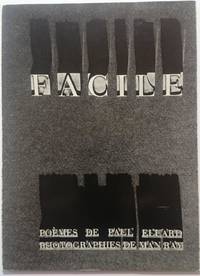
19351730881935. MAN RAY. Facile. With poetry by Paul Eluard. Illustrated with photographs by Man Ray. 8vo. original printed wrappers in a new cloth folding box Paris: Edition G.L.M. 1935. One of Man Ray and Eluard most successful collaborations. Facile is illustrated with Man Ray's splendid photographs of nudes which have been sensuously interwoven into the text. This is arguably one of the loveliest photographically illustrated livres de peintres and despite the large edition 1225 copies is now quite scarce. A Century of Artists Books 183. hardcover
196948795Vence.: Galerie Alphonse Chave. 1969. Loose as issued in original publisher's printed thick paper wrappers with flaps colour titles to front cover. 4to. 280 x 230 mm. Half-title title with monochrome lithograph of a 1914 Man Ray self-portrait as frontispiece verso leaf with introductory text by Man Ray and reproductions of original works by Man Ray including four further monochrome lithographs and six tipped-in illustrations in colour final leaf with justification and achevé d'imprimer.Original collage by Man Ray of an original signed and numbered photograph tipped onto sandpaper 6 tipped-in colour images and 3 monochrome images. A presentation copy of the deluxe issue of Man Ray's catalogue with the original signed collage.From the edition limited to 500 copies with this one of 50 on 'beau papier' a smooth laid paper signed and numbered by Man Ray to the justification; also included inserted loose is the original collage signed and numbered from the edition of 50 in black ink.Man Ray's presentation is in pencil to the half-title: 'au Dr. Marcel Zara / bien cordialement / Man Ray'.Man Ray's original collage features an original monochrome photograph 138 x 100 mm with a small stamp at lower left mounted to a sheet of fine sandpaper 239 x 178 mm; the photograph is signed by Man Ray at lower right in black ink and the stamp is numbered also in black ink from the edition of 50 copies.'LES INVENDABLES. Pourquoi Car c'est le nom qui est à vendre. San la signature le tableau ne vaut rien. Il faut prendre l'un et l'autre . Il y a ceux qui retournent le tableau pour voir si c'est de la bonne toile de lin fin . Le peintre tient son bâton à poils comme le barbier son blaireau le musicien son archet le soldat sa mitraillette c;est ainsi qu'ils tiennent leur sexe pour faire pipi ou pour faire l'amour . La vérité Il n'y a plus subversif que la vérité . Man Ray'. Man Ray's introductory text. Galerie Alphonse Chave. unknown
193721205811937. Paris: Jeanne Bucher 1937 4to. Original pictorial red and white wrappers lettered in red to spine; pp. 176 30 with pictorial title and 66 full-page illustrations by Man Ray; pages partially uncut; very minor creasing to lower corners and spine a little frayed otherwise near fine copy; author's presentation inscription to half-title 'a Georges Mouton tres amicalement Paul Eluard' see below.First edition number 319 of 650 copies printed on Chester verge of a total edition of 675 copies presented by Eluard to the Surrealist writer Georges Mouton. Les mains libres is the second collaborative work between Man Ray a pioneer of the Surrealist movement and Paul Eluard poet and one of the movement's founders. During the 1930s Man Ray made numerous drawings in Paris and the South of France. He shared them with Eluard who requested to keep them temporarily. Adhering to the Surrealist tradition the poet 'illustrates' the images not the opposite: upon Man Ray's return Eluard had paired each drawing with a poem. This collaboration resulted in the publication of Les mains libres featuring fifty-four illustrations by Man Ray facing as many poems by Eluard and three appendices 'Sade' 'Portraits' and 'Details' which include Man Ray's portraits of Pablo Picasso Andre Breton and Eluard. Provenance: This copy was presented by Eluard to the writer Goerge Mouton. Connected to Surrealist circles in the 1930s Mouton was a member of the Contre-Attaque group led by Georges Bataille and Andre Breton during 1935-1936. unknown
197391173Luciano Anselmino; Studio Marconi. As New. 1973. Hardcover. FREE UPGRADE to Courier/Priority Shipping Upon Request - IN STOCK AND IMMEDIATELY AVAILABLE FOR SHIPMENT - AS NEW THE TEXT BLOCK IS PRISTINE CLEAN UNMARKED AND IN EXCELLENT CONDITION - - TWO 2 VOLUME SET. Corresponds to ASIN: B0007AR7RW. Volume 1 has 152 pages; Volume 2 has 108 pages. I II One 1 Catalogue Raisonne Catalog Raisonné Complete Works Catalogo Ragionato Catalogo delle Opere L'Opera Completa Raisonnee Emmanuel Radnitzky Luciano Anselmino; Studio Marconi hardcover
1973102496Luciano Anselmino; Studio Marconi. As New. 1973. Hardcover. FREE UPGRADE to Courier/Priority Shipping Upon Request - IN STOCK AND IMMEDIATELY AVAILABLE FOR SHIPMENT - AS NEW THE TEXT BLOCK IS PRISTINE CLEAN UNMARKED AND IN EXCELLENT CONDITION - - VOLUME 1 ONE OF TWO 2 VOLUME SET. Corresponds to first volume of ASIN: B0007AR7RW. Volume 1 has 152 pages; Volume 2 has 108 pages. I II One 1 Catalogue Raisonne Catalog Raisonné Complete Works Catalogo Ragionato Catalogo delle Opere L'Opera Completa Raisonnee Emmanuel Radnitzky Luciano Anselmino; Studio Marconi hardcover
1973102497Luciano Anselmino; Studio Marconi. As New. 1973. Hardcover. FREE UPGRADE to Courier/Priority Shipping Upon Request - IN STOCK AND IMMEDIATELY AVAILABLE FOR SHIPMENT - AS NEW THE TEXT BLOCK IS PRISTINE CLEAN UNMARKED AND IN EXCELLENT CONDITION - - VOLUME 2 TWO OF 2 VOLUMES. Corresponds to second volume of ASIN: B0007AR7RW. Volume 1 has 152 pages; Volume 2 has 108 pages. I II One 1 Catalogue Raisonne Catalog Raisonné Complete Works Catalogo Ragionato Catalogo delle Opere L'Opera Completa Raisonnee Emmanuel Radnitzky -- with a bonus offer . Luciano Anselmino; Studio Marconi hardcover
193424841Hartford and New York: James Thrall Soby Random House / Paris: Cahiers d'Art 1934. Subtle area of residue to a section of the spiral-binding else near fine in distinctive photo-illustrated wrappers with all spirals intact; a fresh copy. Second Edition with the replaced title page. Spiral-bound quarto. Text in French and English. Illustrated with 104 photographs printed in a lush gravure divided into five sections and comprising many of Man Ray's iconic images with nineteen rayographs. Roth 80–81. Hartford and New York: James Thrall Soby (Random House) / Paris: Cahiers d'Art unknown