2 278 résultats
in-8 (20x13), 420 pages, photographies hors texte, broche, couverture illustree. Bon etat. [MI-12]
in-8°, 182 pp., illustrations en noir, relie cartonnage editeur, jaquette illustree. Tres bel exemplaire. [HA-1] Les perdreaux d"Espagne, les grouses d"Ecosse, le gros gibier.
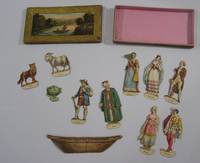
182518320French: n.p. 1825. Very good. 11 engraved cut-out figures or objects including ferryman three couples wolf goat cabbage and boat to be slotted into boat original box with engraved pictorial label colored by hand A rare children's game possibly printed by the Parisian publisher Nepveau. Contained in the box measuring 14cm x 7cm x 1cm is a complete set of figures for the two river crossing puzzles known as the 'Jealous Husbands Problem' and 'Goat Wolf and Cabbage'. The earliest account of these puzzles is in the 9th century manuscript "Propositionnes ad Acuendos Juvenes" Problems to Sharpen the Young attributed to Alcuin. In both puzzles there are only two places in the boat. In the Jealous Husbands Problem no woman can be with another man unless also accompanied by her husband. In Goat Wolf and Cabbage the wolf will eat the goat and the goat will eat the cabbage unless they are guarded by the boatman. <br /> Originally accompanied by counters and an instruction sheet now lost. The box is lightly worn else in very good condition; the figures are in fine condition except the boat which has been repaired and the cabbage which lacks the lower part of its insertion tab and one female figure lacks a hand. Rare. n.p. unknown
177228703Paris: Chez Debure l'aîne 1772. 1 vols. 8vo. Contemporary stained calf citron morocco label spine gilt. Some rubbing surface worming on lower cover else very good. 1 vols. 8vo. Commentary on the environmental and game laws. Chez Debure l'aîne unknown
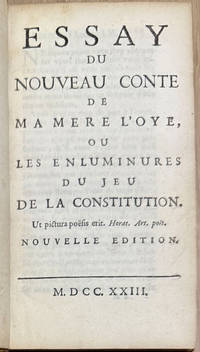
1723Debonnaire1723<p>GAME OF THE GOOSE Essay du nouveau conte de ma Mère l'Oye ou les enluminures du jeu de la Constitution by Louis Debonnaire. No imprint 1723. 8vo xiii xviii 176pp; early leather boards with original spine laid down.</p><p>Despite the claim that this is a new edition it is nonetheless an UNCOMMON IMITATION of the traditional "Game of the Goose" a rhymed pastiche as if spoken by Mother Goose written by a Jansenist priest Abbot wherein one must win the formation of a new Council here referred to as a Constitution. It introduced what became a familiar catchphrase "LIBERTY EQUALITY FRATERNITY" condemned in 1725 as anti-Rome. Barber III 880</p> No imprint hardcover
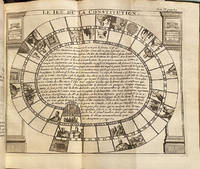
1724BB_88102Game of the Goose<br /><b><i>Poesies sur la Constitution Unigenitus</i></b>. Recueillies par le Chevalier de G. Officier de Regiment de Champagne. Villefranche i.e. Amsterdam: Chez Philalete Belhumeur 1724. Two volumes. Illustrated with duplicate frontispieces title-vignettes and many decorative woodcut head- and tail-pieces. 8vo. i i xxiv 317 pp. – i i 389 pp.; uniform polished tree-calf extra-gilt all edges gilt covers with armorial gilt stamp.<br />First edition thus greatly revised and expanded from an earlier version with essays letters poems reviews and songs with political Constitution religious Pope Clement XI and literary interest. Most important this work includes an essay titled <i>"Essai du Nouveau Conte de Ma Mere L'Oye"</i> NewTales of Mother Goose showing the influence of Perrault's tales barely twenty years after his death AND a handsome folding-out engraved board game titled <i><b>"Le Jeu de la Constitution" </b></i>designed in a race-game format.<br /><p>As a notable compilation of pro-Jansenist writings of an often satirical nature with the aforementioned board game and its five pages of rules on a folding plate. Selections include: "Les 101 propositions de la constitution Unigenitus exprimées en cent et un couplets"; "Ode pindarique sur la destruction du monastère de Port-Royal-des-Champs"; "Adieu d'une dame janséniste qui se refugie en Hollande". Brunet 4: 755. Weller 2: 88. Willaert 2: 9370. For the game see Phillippa Plock & Adrian Seville "Rothschild Collection of Printed Board Games at Waddesdon Manor" in: Of Boards and Men: Board Games Investigated Proceedings of the XIIIth Board Game Studies Colloquium Paris 14-17 April 2010 pp. 101-103: "B3 2669.2.25 Le Jeu de la Constitution - 1721/22 or to give its the full title Le Jeu / De la Constitution / Sur l'air du branle de Mets sic is <b>one of the most controversial games ever devised on the pattern of the game of Goose and perhaps may be regarded as the first polemical variant </b>Girard and Quétel 1982: 58 and 73. It dates from about 1721 but is associated with a book that appeared a year later the Essay Essai du Nouveau Conte de ma Mère l'Oye ou Les Enluminures de la Constitution. This book contains a folding plate of the game in smaller format and with some omission of text. It also contains 18 enluminures in rhymed couplets which explain the game in detail. The claimed author is given in the subtitle: 'Poesies sur la Constitution Unigenitus recuellies par le Chevalier de G. Officier du Regiment de Champagne'. The publisher is given as Philalete Belhumeur "Good Humour" Villefranche. These publication details are of course wholly fictitious as is the claimed author who in reality was the Abbe é Louis de Bonnaire 1680-1752; the book was published in Amsterdam the full-sheet game probably in Paris. De Bonnaire was a supporter of the Jansenist heresy named for Cornelius Jansen 1585-1638: this theology emphasised a particular reading of Augustine's idea of efficacious grace which stressed that only a certain portion of humanity were predestined to be saved. Though the Jansenists were strongly Catholic Jesuits and the papacy were suspicious of their beliefs which seemed to limit free will and the ability to choose to do good or evil. Despite condemnation by Pope Innocent X in 1655 the movement gained strong support in the Church. The Jansenist position as included in 101 of the propositions of Pasquier Quesnel Jansenist theologian b1634 d1719 in his Épitomé des Morales des Évangélistes of 1671 was finally condemned by Pope Clement XI's Unigenitus bull of 1713 but even this condemnation did little to diminish the enthusiasm of adherents. Indeed in 1717 four French Bishops attempted to appeal Unigenitus to a General Council a move that received considerable support from other clergy and the parlements though the majority of clergy stood by the Pope: Clement responded in the next year by excommunicating all those who had called for a General Council. Even so it was not until 1728 that the death of Jansenism was marked by the submission to the Pope's authority of Cardinal Noailles Archbishop of Paris who had originally approved Quesnel's book and was reluctant to support Unigenitus arguing that many of the 101 propositions were in fact orthodox.<br /><br />The point of the game and of De Bonnaire's book is to challenge and mock the authority of the Church and in particular that of the Pope and of his bull. For example the columns on either side are each headed by a cartoon depicting the Pope in council all present being represented by geese wearing mitres. Below the lefthand cartoon is the Latin phrase "Non ego cum Gruibus simul Anseribusque sedebo in Synodis - S. Greg. Nazianz Carm. 10" I shall not sit in Synod with cranes and geese. This refers to a dictum of Gregory of Nazianzus c329-390 Archbishop of Constantinople who compared the rowdy Council of Constantinople 381 AD to the loud cackling of a flock of geese.<br /><br />The 'good' spaces show the Apostles 'equal in number to that of the geese which they replace': there are thirteen including St Paul and they occupy the traditional spaces. The traditional hazards are likewise replaced or given special significance and others are added. The usual entry arch appears as Noah's Ark at space 1 symbolising the Church as it is tossed about on the waters of Unigenitus. The bridge of explanations at the expected space 6 shows bishops falling into the water marking their error in taking the wrong sense of the 101 propositions: it leads to space 12 acceptance where a young woman blindfolded is shown as accepting Unigenitus through ignorance. At space 15 there is the torn robe symbolising schism of the Church. The labyrinth here at space 16 symbolises error into which fall those who subscribe to the condemnation of the 101 propositions. The inn at space 19 is here the cabaret and represents the 'accommodation' accommodement or submission of the Jansenists to the bull. The Tower of Babel at space 24 represents the confusion of language into which the bull has fallen. At space 26 is the first appeal of 1717 represented by a notice on the Vatican door. At space 33 we find the avertissemens or pronouncements of the Archbishop of Soissons Jean-Joseph Languet de Gergy 1677-1753 a notorious anti-Jansenist and vehement defender of Unigenitus. He has an oboe a horn and a trumpet the three instruments symbolising 'his three avertissements and their different tones': a special rule refers to moving forward with the 'small dice' and with 'the other' when going back. Next is the prison at space 40 where the player must wait until a throw of 5 which multiplied by 3 will lead to Louis XV and deliverance. The well space 49 symbolises the body of doctrine in which the truth is hidden. At space 51 are the re-appealing Bishops the second appeal being at space 53. At space 55 is the portrait of Louis XV - enluminere XV in the book makes clear that he was seen as a force for change and re-unifying the Church. The death space at 58 shows the skeleton of Pope Clement XI sitting in an armchair wearing his papal tiara and raising his bony hand to bless an infant at his feet which represents the Unigenitus bull. Cardinal Noailles appears at the penultimate space 62 from which point 'one may only go backward'. The explanatory text in the centre of the game claims that it 'presages the day that the constitution of the Church will no longer be nothing but un Conte de ma Mère l'Oye' - a Mother Goose tale here used as a figure of speech for something unbelievable and ridiculous. The winning space at 63 shows that this result is to be achieved by a General Council in reference to that called for in 1717. De Bonnaire's book was condemned at Arras in 1726. Although his anonymity as author seems to have been effective in protecting him the publishers father and son were thrown into the Bastille. Even today the game has the power to shock by the force of its imagery.</p> Philalete Belhumeur hardcover
231114Paris: Collection J. Hertzel & Cie. 1 vols. 8vo. Faux Red publisher's cloth binding marbled edges opening to marbled interior. About fine. 1 vols. 8vo. Collection J. Hertzel & Cie unknown
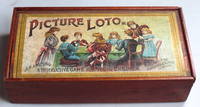
188040199London: J. Jaques & Son c.1880. Twelve cards showing 18 pictures each - a total of 216 pictures plus 207 tiles with the names of the pictures in both English and French - so lacking 9 and with some handwritten replacements included. Original wooden box with a pictorial sliding lid not fitting well but otherwise sound. Scarce. The price includes VAT in the UK. Please contact us if you are elsewhere. London: J. Jaques & Son unknown
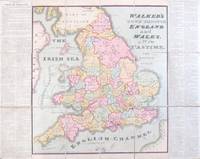
180950306London: Publisher for the Author. by W. & T. Darton 1809. Folding game 54 x 66 cm the map portion 49 x 43 cm not including margins dissected and backed on linen. Attractive contemporary hand colouring panels either side mostly in double column containing the instructions and a list of the places featuring in the game with brief descriptions. Some minor creasing to the edge of a few sections some soiling to the reverse. Original marbled case with a printed label a little rubbed overall a well preserved example. Whitehouse p.13. London: Publisher for the Author... by W. & T. Darton unknown
187537921Paris: M.J. & Cie 1875. 10 1/4 x 10 1/4 x 5 inches. Some minor wear. 10 1/4 x 10 1/4 x 5 inches. M.J. & Cie unknown
1802207728Lond. W. & T.Darton. 1802. Large folding hand-coloured map of England & Wales. 550x530cm when unfolded. Has 118 place markers on which counters can move when a totum is thrown. The counters can be purchased separately. The players commence in Maidstone no.1. and end in London No.118. Contained in a rubbed card case. Good copy. Scarce. The directions for playing s printed on the sides of the map. Lond. W. & T.Darton. unknown
42797Boston: Rust Craft n.y. Heavy stock 6" X 3½" printed envelope that opens to reveal two pockets one containing 16 heavy stock 5" X 3" printed cards and the other containing a single heavy stock bifold 6" X 5" printed card. Very good. Printed envelope faintly age toned and lightly edgeworn with small discreet archival mends along couple of weakened folds; cards near fine with the occasional small foxing. This pioneering greeting card company was founded in Boston by Fred Rust in 1906 and their product line also included packets such as this noted as product number "599". Each of the 16 cards contains several clever word play questions such as #1 "When did the fly fly" and the last #49 "When was beef the highest" The bifold "Answers to Conundrums" card lists all answers "1. When the spider spied her" and "49. When the cow jumped over the moon". Undated although the typeface and style suggest perhaps 1920s vintage. The charming printed envelope front actually appears hand colored and shows a young man and young woman facing each other in front of a large window; "Conundrums" title below includes the rhyming explanatory stanza: "Each conundrum here will show / How quick we are -- perhaps how slow! / If slow there are surely others too / Just as slow as me and you!" Quaint and complete -- and also scarce. Rust Craft unknown
19802110502150414531elementary school 1980. Soft Cover. Fine. Volume: 1 elementary school paperback
Scatolina cm. 6x6 contenente 24 cartoncini di cm. 3x6 rappresentanti un paesaggio settecentesco continuo che possono essere combinati assieme per un totale di 1.686.553.615.927.922.354.187.720 volte. Ottimo e raro (7720/ GIOCHI - COMBINAZIONI - PASSATEMPO - SPIEL - ZEITVERTREIB - JOEU - PASSE-TEMPS - GAME- PASTIME)
19363Circa 1814 the certificates being 'for the Year commencing the 5th of April 1815' following 'an Act passed in the 54th Year of the Reign of His present Majesty'. Benjamin Wright and Co. Printers 31 Little Queen-street Holborn London. Crisply printed with the long s on one side of a piece of 37.5 x 25 cm. thick laid paper. In fair condition aged and worn having been used to wrap up items and with the following in manuscript on reverse: 'No. 1. Vouchers recd. of Mr. Gabell'. The text begins: 'Notice is hereby given that by the Acts of 48 Geo. III. Cap. 55. and 52 Geo. III. Cap. 93. every Person who intends to use or shall use any Dog Gun Net or other Engine for the Purpose of taking or killing any Game whatever or any Woodcock Snipe Quail or Landrail or any Conies or shall take or kill or shall assist in the taking or killing any Game or any Woodcock Snipe Quail or Landrail or any Conies must before he shall so take or kill or assist in the taking or killing the same subject to the Provisions in an Act passed in the 54th Year of the Reign of His present Majesty Cap. 141 annually pay the Duties imposed by the said Acts to one of the Collectors of the Assessed Taxes for the Parish in which he resides who will give a printed Receipt for the same which Receipt is to be exchanged for a Certificate to be signed by the Clerk to the Commissioners for the District.' A space has been left blank for the details of 'the Clerk to the Commissioners of this District'. Details of the duties in four instances are given. From the papers of the Harington baronets of Ridlington. Circa 1814 (the certificates being 'for the Year commencing the 5th of April 1815', following 'an Act passed in the 54th Year of unknown
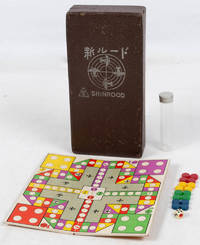
1930216904Japan. Circa 1930. Folding coloured board game 12.6 x 12.9cm small tube with a metal lid containing a dice and 4 playing pieces each in 4 colours original box 15 x 7.5 x 2.6cm rules of the game in Japanese text laid down inside lid. Signs of light use but overall very good. A compact miniature Ludo game set neatly packed in a small box. The game rules are printed inside the lid. It is described as a "new" version of Ludo likely due to the inclusion of aeroplanes in the illustrations. The board features English captions. . unknown
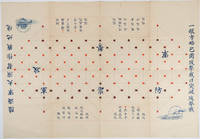
214048Early 20th Century. Colour folding game sheet some light browning and a few small holes at folds but overall a good and attractive game. 54 x 80cm. The title of this board game sheet indicates that the game is designed for two opposing sides with one side acting as the attackers and the other as the defenders. The defending side possesses more naval power compared to the attacking side. Although specific playing instructions are not provided information on the right-hand side suggests that offensive tactics should involve either seizing or charging. <br> <br>At the top and bottom there are lists of rear force units for both sides including docks for housing captured enemy boats and sunken boats Red Cross field hospitals and facilities for casualties. Additionally in the corners two small illustrations of warships are printed in blue ink. . unknown
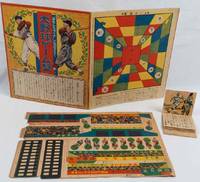
1952218517東京. Tokyo.: 集英社. Shūeisha. Showa 27 1952. Folding colour game board 37.7 x 20cm with accompanying sheet of cut-outs of players and for constructing the stadium 19 x 27.2cm additional small picturebook of 早慶優勝戦. Sōkei yūshōsen. Some light browning but otherwise very good. This collection comprises three items: a baseball board game a cut-out sheet and a miniature picture book. The board game was distributed as a supplement to Omoshiro Bukku おもしろブック issued in March 1952. Included is a coloured sheet depicting a baseball field with an additional game on the reverse; a cut-out sheet featuring players spectators scoreboards and advertising panels for assembling a miniature stadium; and a small picture book narrating the final game between the university rivals Waseda and Keio. <br> <br>Baseball had become one of Japan’s most popular sports since its introduction in 1873 by Horace Wilson an American teacher in Tokyo. Rivalries in both the professional league—most famously between the Giants and the Tigers—and in the Tokyo University League particularly between Waseda and Keio were legendary and are reflected in this set. The illustrated players are shown in the uniforms of those teams while the booklet recreates the excitement of a Waseda–Keio match in the style of a live radio broadcast. The cut-outs for the stadium are particularly detailed with spectators animatedly cheering and advertising boards promoting Shueisha’s children’s magazines. . 集英社. [Shūeisha]. hardcover
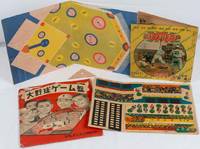
1952214222Tokyo.: 集英社. Shūeisha. Showa 27 1952. Folding colour game board 37.7 x 20cm with accompanying sheet of cut-outs of players and for constructing the stadium 19 x 27.2cm additional small card with punch-out cardboard bat and balls 1 ball missing; 3.5 x 8cm and original pictorial wrapper. Board is worn at edges with a little loss to paper on reverse at lower edge. <br> <br>Stapled booklet: 16pp line illustrations in coloured ink 18.5 x 17.2cm. Pictorial paperback covers little worn and lightly soiled. This collection comprises two items: a baseball board game and a sports guidebook. The board game was distributed as a supplement to Omoshiro Bukku おもしろブック released in March 1952. Enclosed in the game is a coloured sheet depicting a baseball field with an additional game on the reverse side. A cut-out sheet featuring players spectators scoreboards and advertising boards is included allowing children to construct their own stadium. Additionally there is a cardboard sheet featuring a bat and two balls. <br> <br>The sports guide booklet was provided as an add-on to Chūgaku no tomo 中学生の友 a monthly magazine for junior high school students published in 1949. This booklet covers various sports including baseball swimming athletics and basketball offering fundamental information on rules and games. The inaugural article titled 'Will you be able to become a professional baseball player' underscores the profound enthusiasm for baseball among young boys. . [集英社. Shūeisha]. paperback
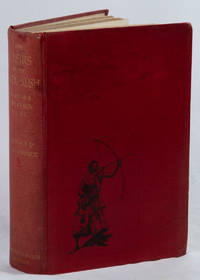
1896223413London.: Lawrence & Bullen Ltd. New Edition. 1896. Coloured folding map tipped in at rear 79 full page and text illustrations by A. D. McCormick xx 658pp original decorated polished red cloth spine gilt-lettered 24 x 15.5 cms front free endpaper browned neat inscription of a previous owner to the front pastedown manuscript short index tipped in by a previous owner at rear boards bumped and stained and spine a little sunned but a good complete copy. A distinguished soldier diplomat and Anglo-Indian administrator Sir George Scott Robertson 1852–1916 journeyed in Kafiristan in 1890-91 living for a year among the "wild" hillmen. <br>The Kafirs’ polytheistic religion and customs were rapidly disappearing by the time Robertson visited and his work served as one of the most important eyewitness accounts of the pre-Islamic cultures of the Hindu Kush and as valuable historical record of a culture that was quickly being assimilated into the broader Afghan Islamic state. It is one of the last detailed accounts of the Kafir people before they were forced into Islam or eradicated by Afghan forces. <br>Robertson’s book also provides important historical context for understanding the political dynamics of the Great Game. His observations of the Kafirs’ resistance to the Afghan Amir and his concerns about the potential spread of Islam in the region highlight the intersection of politics culture and religion in Central Asia during the 19th century. <br>The profuse illustrations are after sketches and watercolours by Arthur David McCormick who was artist on Sir Martin Conway's expedition to the Karakoram subrange of the Himalayas and in 1895 on Clinton T. Dent's expedition to the Caucasus Mountains. . Lawrence & Bullen Ltd. hardcover
192963842London: H.F. & G. Witherby 1929. Tall 8vo. 223 pp. plus 1 pp. publisher’s ads. Photo frontisp. numerous photo plates throughout by W. Woodhouse. Red embossed publisher’s cloth gilt lettering & ruling on spine minor bumping to couple corners edgewear to lower fore-edges dustsoiling to upper fore-edge minor sunning head of spine w/ d.j. wraparound cover art image of hunter shooting at a man-eater lion w/ brushfire in the background chipping & tear to head of spine w/ about 1.75 in. of loss to lettering chipping & edgewear to foot of spine some minor creasing still a VG/G- copy w/ mimeographed private library slip laid-in for M.R. Steele and bookseller’s label on rear pastedown. First edition stated of this work describing the author’s hunting adventures while leading an American hunting party through the African bush tracking down man-eating lions and rogue elephants. Chadwick 1882 had first emigrated to South Africa in the 1920’s and became a transport rider and member of the Bechuanaland Protectorate Police while working as a professional hunter earning a living selling ivory and lion skins from his trophies. The original dustjacket is exceedingly scarce with Ellen Herring of Trophy Room Books noting that they had only seen this one copy. H.F. & G. Witherby, hardcover
195759514New York: Wilfred Funk Inc. 1957. 8vo. 6 214 pp. Photo illust. maps on endpapers. Mustard-coloured cloth black lettering w/ d.j. cover art by Frank Cozzarelli minor chipping head & foot of spine creasing edgewear couple closed tears price-clipped still VG/G- copy. First edition of this memoir by a professional hunter who kills African crocodiles for their belly-skins on Lake Nyasa in East Africa. Wilfred Funk, Inc., hardcover
63841London: Published by “East Africa†East Africa Ltd. 1928. Tall 8vo. xvi 318 pp. Frontisp. map with numerous photo plates. Brown publisher’s cloth gilt lettering on spine minor shelfwear edgewear rubbing w/ printed dark brown d.j. minor scuffing edgewear couple closed tears tidemarks at couple corners still VG-/G copy. First edition of this very scarce follow-up to this African adventurer’s “King of the Wa-kikuyu†and relates his adventures as an elephant ivory poacher in the Lado Enclave of East Africa and travels through British East Africa Uganda Belgian Congo and Ethiopia. He was the first Eurocaucasian trader to travel from Addis Ababa Ethiopia to the capital of Kenya. Boyes 1874-1951 first arrived in East Africa when Nairobi was largely uninhabited made friends with the Kikuyu was admitted to their blood brotherhood became their uncrowned king and later settled down as a coffee grower and dairy farmer. Very scarce in original dustjacket. Published by “East Africa,†East Africa, Ltd., hardcover
190455454London: Rowland Ward Ltd. 1904. Tall 8vo. xvi 292 pp. plus 2 pp. publisher’s ads. Photo frontisp. 44 photos and plates 1 large folding map in rear pocket. Green publisher’s cloth gilt lettering front cover & spine simulated Zebra skin endpapers minor bumping to corners edgewear slight spotting on the spine still VG copy. First edition of this excellent early account of hunting on the Kenai Peninsula including descriptions of Alaskan Native Americans salmon cannery operations and more. Radclyffe had acquired a permit from the Bureau of Biological Survey with the USDA in order to collect big game specimens for the British Museum and the account was dedicated to a longtime fellow hunter and friend Theodore Roosevelt. The author details his experiences with hunting Alaskan Brown Bears Grizzly Bears Moose Dall Sheep and running afoul of the zealous US Deputy Marshal Sexton a stickler for the new game regulations instituted on the Kenai in 1903 not to mention destroying the distilling operation of Alaskan hunter & miner Andrew Berg. He managed to survive a charging bear sow after being abandoned by his guide as well as the Alaskan courtroom but his companions were not so lucky as the judge ruled that the permit did not extend to the hunting party. Radclyffe returned later to hunt Alaska on the Kenai in August 1910 employing Andrew Berg as his head guide. See: Catherine Cassidy Alaska’s No. 1 Guide: The History and Journals of Andrew Berg 1869-1939 pp. 28-29 38. Rowland Ward Ltd., hardcover
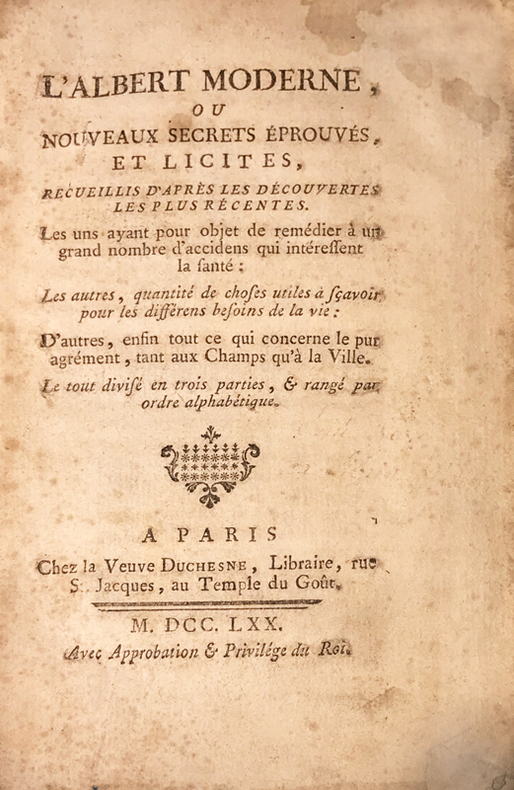
177011006Paris, Veuve Duchesne, 1770 ; in-12 ; cartonnage rigide de papier marbré bleu, étiquette manuscrite au dos, non rogné ; XXII pp. (y compris le titre), (1) f., 384 pp.