SALINGER, PIERRE - LAURENT, Eric.Livre Rare Book

4 135 résultats
199001390Paris, O. Orban, 1990. In-8 (22 cm), broché, couverture souple illustrée, 304 pages.
Large 8vo. XVIII, 200 pp. With half-title, frontispiece portrait, 5 black-and-white plates, folding map and "Genealogical table of members of the Al Bu Said dynasty". Publisher's original blue cloth, title gilt on spine & upper cover, Said bin Sultan name gilt in Arabic on upper cover. Rare first edition. - Said-Ruete was the son of Princess Salma (1844-1924), daughter of Sayyid Sai’id ibn Sultan (1791-1856), ruler of Oman and Zanzibar. The Princess married Friedrich Ruete, a clerk at the German embassy, and lived for 52 years as a widow in Germany. Their son Rudolph produced this remarkable survey of his grandfather’s life and times, considered as important as Vincenzo Maurizi‘s "History of Seyd Said, Sultan of Muscat" (London 1819). Sayyid Said ibn Sultan became the ruler of Oman in 1806, when he was about 15 years of age. After defeating the opposition with British help he determined to reassert Oman's traditional claims in East Africa. He eventually succeeded, and in about 1840 shifted his capital to Zanzibar, where he introduced the cloves that became the foundation of the island's economy. He also controlled the Arab traders that brought back slaves and ivory from the African interior. In this monograph the author highlights the early history of Oman, the rise of Said ibn Sultan to power in Oman and Zanzibar, and his relations with foreign powers (France, England, and the United States). In his foreword to this work, Major General Sir Percy Cox identifies the establishment of an Arab dominion in Zanzibar as Sultan Said's most lasting achievement. - Covers a little soiled (lower cover more so); light wear to extremeties; insignificant spotting confined to flyleaves. A fine copy with ticket of The Times Book Club to lower pastedown. Provenance: from the library of Christopher Palmer Rigby (1820-85), who served as the East India Company's agent and British Consul in Zanzibar from 1858 to 1861. Macro 1986. OCLC 5705061.
Large 8vo. XVIII, 200 pp. With half-title, frontispiece portrait, 5 black-and-white plates, folding map and "Genealogical table of members of the Al Bu Said dynasty". Publisher's original blue cloth, title gilt on spine & upper cover, Said bin Sultan name gilt in Arabic on upper cover. Rare first edition: presentation copy from Said-Ruete to Sir Saleh bin Ghalib Al-Qu'aiti, Sultan of Shihr and Makalla (ruled 1936-56), inscribed in green ink: "To / His Highness The Sultan / of Shiher and Makalla / Saleh bin Galib Alcaity / a token of sincere esteem / by the Author. / London, May 7th 1937". Below this is pasted a printed bookplate in Arabic. - The Qu'aiti Sultanate of Shihr and Mukalla, in the Hadhramaut region of the southern Arabian Peninsula (now Yemen), was the third largest kingdom in Arabia after the Kingdom of Saudi Arabia and the Sultanate of Oman. While the monarchy was toppled by communists in 1967 and Sultan Ghalib II was forced to abdicate, the Qu'aiti royal family still thrives in exile. - Said-Ruete was the son of Princess Salma (1844-1924), daughter of Sayyid Sai’id ibn Sultan (1791-1856), ruler of Oman and Zanzibar. The Princess married Friedrich Ruete, a clerk at the German embassy, and lived for 52 years as a widow in Germany. Their son Rudolph produced this remarkable survey of his grandfather’s life and times, considered as important as Vincenzo Maurizi‘s "History of Seyd Said, Sultan of Muscat" (London 1819). Sayyid Said ibn Sultan became the ruler of Oman in 1806, when he was about 15 years of age. After defeating the opposition with British help he determined to reassert Oman's traditional claims in East Africa. He eventually succeeded, and in about 1840 shifted his capital to Zanzibar, where he introduced the cloves that became the foundation of the island's economy. He also controlled the Arab traders that brought back slaves and ivory from the African interior. In this monograph the author highlights the early history of Oman, the rise of Said ibn Sultan to power in Oman and Zanzibar, and his relations with foreign powers (France, England, and the United States). In his foreword to this work, Major General Sir Percy Cox identifies the establishment of an Arab dominion in Zanzibar as Sultan Said's most lasting achievement. - Minimal wear to extremeties; insignificant spotting to first few leaves as common. Upper spine-end professionally repaired. A beautiful copy. Macro 1986. OCLC 5705061.
19792Paris Imprimerie Royale 1838 in 8 (22x14) 1 volume reliure à la bradel demi percaline bleue, dos lisse, pièce de titre de cuir marron, XXIII et 296 pages, avec 1 planche gravée hors-texte, quelques rousseurs sur les premières et les dernières pages. Reliure fin XIXème. Ouvrage posthume publié sous les auspices du Ministère de l'Instruction Publique. Saint-Martin Antoine-Jean, membre de l'Académie royales des Inscriptions. Rare. Bel exemplaire ( Photographies sur demande / We can send pictures of this book on simple request )
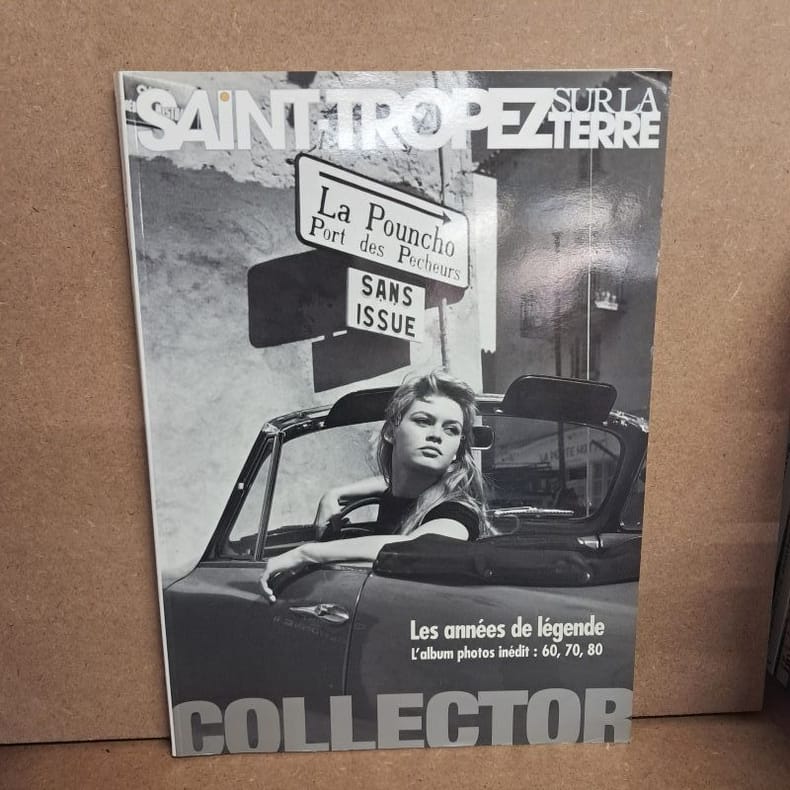
19995271999 - broché - Numéro 15 - Juin 1999 - Supplément de la Tribune de Saint-Tropez - Revue éditée par JJF Editions - In-folio (33,5 x 24 cm) broché - 172 pages - Très nombreuses photographies - Jean-Jacques FOURNY (Directeur de la publication) - Dominique BOIN (Rédactrice en chef) - SOMMAIRE : Revival, La Riva Cup - Régate. La Giraglia - Le Musée de l'Annonciade - Yachting. La Rolex Cup - Le Festival de Ramatuelle - Les bravades - Rencontre équestres, la Saint-Tropez Polo Master - Mode - L'album-photo des années de légende - Guides - Architecture - Immobilier - ...
281 pages. Index. Discusses the Camp David negotiations, the unjust destruction of Palestinian society, and the illegality of the continued Israelli occupation of Arab territories. "The most interesting part is based on Arabic sources that are not otherwise accessible." - Noam Chomsky. Usual library markings. Average wear. Worthy working copy. Book
5 glass positive lantern slides (85 × 100 mm), each with a black paper mask, paper tape around the edges, a letterpress slip at the foot giving the publisher's name and city, and a slip at the head with the manuscript title. Stored in a contemporary purpose-made wooden box with brass fittings, with the word "Mekka" on the top of the hinged lid. Five of the earliest and best photographs of Mecca and Medina, beautifully preserved as silver gelatin glass plates, including the first photograph of the Ka'ba in Mecca's Masjid al-Haram (Great Mosque). Two of the photographs were taken by the first person to photograph Mecca and Medina, the Egyptian Colonel Muhammad Sadiq Bey (1832-1902), who made them in 1880 for the Ottoman Sultan Abdülhamid II. The others were taken by the first European to photograph Mecca, Christiaan Snouck Hurgronje, and Al-Sayyid 'Abd al-Ghaffâr, who worked closely with him. Snouck Hurgronje (1857-1936), one of the greatest pioneering Dutch Arabists, converted to Islam and lived in Mecca from January to about July 1885. The photographs by these three men are best known and most frequently reproduced from the published collotype facsimiles, while the rare surviving early albumen prints are usually faded or otherwise in bad condition. The present five plates, sold as lantern slides for magic lantern presentations, are therefore of the greatest importance as well-preserved high quality specimens of these famous photographs, providing the best early images of the mosques of Mecca and Medina. - All five slides are in very good condition, with only a bit of dust and the occasional smudge on the glass. They show: 1) The Masjid al-Haram in Mecca (the Great Mosque); 2) a closer view of the Ka'ba in Mecca; 3) the portrait of an unidentified Mu'ezzin in Mecca; 4) a portrait of an unidentified East Indian pilgrim; 5) the al-Masjid an-Nabawi in Medina (the Prophet's Mosque). Cf. D. v.d. Wal, Christiaan Snouck Hurgronje (2011); J. J. Witkam, new introduction to the 2007 reprint of the 1931 English translation of Hurgronje, Mekka.
8vo. XXIX, (1), 879, (1), 28, (3) pp. Publisher's temporary wrappers with series title stamped to upper cover. Detailed study of the Shafi'i school of fiqh named after Abu 'Abdullah Muhammad ibn Idris, Imam al-Shafi'i, or 'Shaykh al-Islam'. Al-Shafi‘i developed the science of fiqh unifying 'revealed sources' - the Quran and hadith - with human reasoning to provide a basis in law. With this systematization of shari'a he provided a legacy of unity for all Muslims and forestalled the development of independent, regionally based legal systems. The four Sunni legals schools or madhhabs- keep their traditions within the framework that Shafi'i established. The Shafi'i school is followed in many different places in the Islamic world, including Indonesia, Malaysia, Egypt, Somalia, and Yemen. - Includes the Arabic text of 'Abû-Shugâ. - An uncut, untrimmed copy.
8vo. 95, (1) pp. - (Bound with) II: Delaporte, Jean Honorat. Principes de l'idiome Arabe en usage a Alger suivis d'un conte Arabe avec la pronunciation et le mot-à-mot interlinéaires. Algiers & Paris, Bastide & Charles Hingray, 1845. (8), 163, (1) pp. With 5 folding letterpress tables. Contemporary navy blue half leather with giltstamped spine. First French edition, with the translation (by Silvestre de Sacy) and the Arabic text printed in parallel, entitled "The race with the lightning and the clouds above: on the success of the messenger pigeon". The Syrian linguist Michel Sabbagh (1784-1816) served as interpreter to the Imperial Army during Napoléon's Egyptian Campaign. He emigrated to France when the army left Egypt and attached himself to Silvestre de Sacy and the Imperial Library and print shop. His original work on carrier pigeons remains a classic. - Bound with this is the third and final edition of a work on Algerian Arabic, first published in 1836 by the Frenchman Jean-Honorat Delaporte (1812-71), who worked as interpreter for the Ministry of the Interior in Algiers. His work begins with the alphabet, vowels, letter forms, orthography, all set out in folding tables, followed by chapters on grammar, syntax, numbers, etc. Included at the end, as an exercise, is the Arabic story known as "La ruse des femmes" (from the Sindbad cycle of Alf layla wa-layla), with a word for word translation into French. - Extremeties a little rubbed; occasional light brownstaining, but a good copy. I: GAL II, 479. OCLC 11618486. Schnurrer BA 426. - II: Chauvin VI, p. 173, no. 331.2. H. Fiori, Bibliographie des ouvrages imprimés à Alger de 1830 à 1850, 50. Playfair, Bibliography of Algeria 1124.
4to. 116 ff. With 26 illuminated miniatures. Native paper heavily gilt, illuminated in a fine calligraphic hand, with attractive borders. Decorated cloth. A highly interesting Persian manuscript in Nastaliq style containing the two major works of the celebrated Persian poet (1184-1291). "Gulistan" ("The Rose Garden", 1258) and "Bustan" ("The Orchard", 1257) are both filled with semi-autobiographical stories, philosophical meditations, pieces of practical wisdom, and humorous anecdotes and observations, depicted in 26 miniatures in this manuscript. - Binding rubbed and chafed, spine damaged. Some of the miniatures slightly rubbed.
Large 8vo (180 x 270 mm). 6 parts in one volume. 38, 12, 124, 134, 71, (1), 256 (instead of 258, lacking 253-254) pp. Each part with separate title-page. Lithographed Persian verse and prose, 19 lines of Urdu script to the page. Early 20th century green half cloth over red printed paper boards. Handwritten spine label. Indian-produced single volume set containing the works of Sheikh Saadi: the Qasids (elegies), the famous Gulestan (Rose Garden), Bustan (Orchard), Gjaualiat (lyrical poems), Mofradat, Rubayyat, etc. All pages divided into an inner and outer writing field. - Binding rubbed and a little wormed. Interior browned throughout, light worming and edge flaws to beginning and end; lacks a single leaf near the end of the volume. A few 20th century annotations in English and Persian.
12mo. (22), 372 pp. With engr. t.p. and 12 engr. plates. Contemp. calf with giltstamped red spine label. Third and final impression of this edition, comprising the Latin part of the first complete translation of Saadi's "Rose Garden" into any western language. Text taken from the Persian-Latin edition of 1651; the annotations are in Latin translation only. The engraved title page still bears the first impression's 1680 date, the charming illustrations were first issued in 1655. - Some browning, otherwise a very good copy. Cf. Brunet V, 24. Schwab 1010.
Mm 165x240 Brossura editoriale con copertina illustrata a colori, 88 pagine con disegni originali. Note introduttive di Adriano Redler e Momo Mugano. Opera in buone condizioni. SPEDIZIONE IN 24 ORE DALLA CONFERMA DELL'ORDINE
Small 8vo (143 x 110 mm). 32 ff. of sketches in coloured chalk pastels and charcoal on bluish-grey laid paper. Contemp. half cloth. Contains 19 pp. of sketches showing the Keferloh horse market (some dated September 14), the others mostly showing landscape views from the environs of Munich (captioned Herrsching, Großhesselohe, Grünwald, Solln, Karlsfeld, Allach etc.). Inside front cover has Röhm's autograph name and address in pencil. - The painter, etcher, and lithographer Röhm studied at Nuremberg and the Munich Academy (1898-1902) with Wilhelm von Diez war. In 1927 he became professor in Munich (cf. Thieme/Becker and Nürnberger Künstlerlexikon). - The Keferloh horse market (known as "Keferloher Montag") was the largest of its kind in the German Reich until the Second World War. - Binding somewhat stained and rubbed; interior very well preserved.
Large 4to (252 x 295 mm). X, 115, (1) pp. Printed original wrappers. First edition of Rödiger's thesis that earned its author the right to lecture in theology as well as a professorship of oriental languages at the University of Halle. Rödiger (1801-74) denied that the Arabic version of the Old Testament's historical books was derived from the Alexandrian translation: instead, he proved that the Arabic translation of the Book of Judges, Ruth, and the Books of Samuel as well as of several parts of the Books of Kings and of Nehemiah as published in the Paris and London Polyglots was based on the Syriac Bible and constituted the work of several Christian writers of the 13th and 14th centuries. Other parts of the Books of Kings and of Nehemiah, he showed, were translated into Arabic by an 11-century Jewish author directly from the Hebrew text. - Some browning and foxing throughout. Old French library stamps to title-page. Spine reinforced with later paper. Uncut, untrimmed copy. ADB XXIX, 26.
1999036212Fédération Royale Belge De Golf broché Bristol illustré Bruxelles 1999 131 pages en format 10 - 15 cm
Folio (218 x 282 mm). (12), 382, (2) pp. With separate engraved title-page, 21 engravings in the text, 3 engraved headpieces and 3 engraved initials. Contemporary full calf with giltstamped spine (rebacked preserving the original spine). The rare first French edition (first issue, in-folio) of Sir Paul Rycaut‘s famous Turkish chronicle, drawn from various authentic sources and from the author‘s own observations. "His most important work [...] presents an animated and, on the whole, faithful picture of Turkish manners" (DNB). "This work is regarded as one of the best of its kind with respect to the religious and military state of Turkey" (Cox). "Provides an account of the society and political system of the Ottoman Empire with unprecedented thoroughness" (cf. Osterhammel, Die Entzauberung Asiens, 32). "An extremely important and influential work, which provides the fullest account of Ottoman affairs during the 17th century" (Blackmer). The attractive engravings depict dignitaries and persons of various ranks in their costumes, also including the illustration of a turban. "Rycaut was appointed consul in Smyrna, where he resided for eleven years. His information on the Ottoman Empire was taken from several sources: original records, and from a Polish resident of some nineteen years at the Ottoman court" (Aboussouan). - 18th century ink ownership of Paul Lignon de Brassac on title page; additional ownership ("Dr. Lignon") and notes on flyleaf. Some browning fingerstaining, mainly confined to margins; slight worming affecting upper edge of first two leaves. Binding rubbed; corners bumped. A wide-margined copy. Weber II, 330. Goldsmith R 1262. Aboussouan 806 (lacking a leaf). Graesse VI/1, 108. Cf. Atabey 1069. Blackmer 1464. Lipperheide Lb 19 (all 2nd ed.). Hiler 770 (1686 English ed.). Howgego R 92 (Rouen 1677 ed.). Cox I, 210. Not in Colas.
Folio (204 x 324 mm). 2 parts in 1 vol. (6), 89, (1) pp. 336, (16) pp. With 2 engr. portrait frontispieces and 3 full-page engravings in the text (2 portraits and "a Turkish pageant"); separate half-title: "The Memoirs of Paul Rycaut, Esq., Containing the History of the Turks from the year 1660 to the year 1678". Contemporary full calf with giltstamped red spine label. First edition. "[D]edicated to the king. This was a continuation of Knolles's 'Turkish History', to the sixth edition of which (3 vols. 1687-1700) it was printed as a supplement. The whole work was abridged, with some addenda by Savage", in 1701" (DNB 50, p. 39). Sir Paul Rycaut (1629-1700) was first employed as private secretary to the British ambassador to Constantinople and later became British Consul and factor at Smyrna. - The portraits show the author and the Ottoman Sultans Murad IV, Ibrahim, Mehmed IV. as well as a splendidly decorated ornate palm, as high as a mast - a gift for the circumcision of the Prince. - Some brownstaining; hinges and edge defects professionally repaired. Bookplate of John Evans (d. 1724), Lord Bishop of Bangor and sometime adversary to Jonathan Swift. Atabey 1074. Aboussouan 808. Wing R2406. Not in Blackmer.
Folio (198 x 310 mm). (8), 218 pp. With 19 text engravings and two plates (29 costume illustrations in all); wants the frontispiece. Later half calf on five raised bands, gilt, with giltstamped spine label. Marbled endpapers. Edges sprinkled in red. Second printed edition of Sir Paul Rycaut‘s famous Turkish chronicle (the first available), drawn from various authentic sources and from the author‘s own observations. "His most important work [...] presents an animated and, on the whole, faithful picture of Turkish manners" (DNB). "Provides an account of the society and political system of the Ottoman Empire with unprecedented thoroughness" (cf. Osterhammel, Die Entzauberung Asiens, 32). "An extremely important and influential work, which provides the fullest account of Ottoman affairs during the 17th century" (Blackmer). The 1666 first edition, which this replaces, was almost entirely destroyed by the Great Fire of London. The attractive engravings depict dignitaries and persons of various ranks in their costumes, also including the illustration of a turban. The loss of the frontispiece is to some degree extenuated by the fact that it merely showed a repeat of the engraving on fol. B2v (Sultan Mehmed IV on his throne). - Corners bumped. Some foxing, but still a good, prettily bound copy. Provenance: bookplate of Stefanos Karatheodoris, a Greek Phanariote diplomat in Ottoman service and father of the mathematician Constantin Carathéodory. Blackmer 1463. Wing R2413. Weber II, 326. Lipperheide Lb 19 (= 1408), note. Howgego R92. Cf. Atabey 1067 (third ed. only).
4to. (4), 22, (2), V pp. With 3 plates of drawings. Original printed wrappers, stapled. First edition, rare. - Practical beginner's guide to falconry by a member of the British Falconers' Club, reissued in the 1950s and 1960s. It recommends the kestrel as a suitable hawk for beginners due to the "ease with which young kestrels may be obtained, their amenability to training and their relative hardiness" (p. 3), and describes the preparations required before taking up an eyass, including the acquisition of suitable perches, blocks, jesses, swivels, leashes and gloves. Includes notes on the kestrel's feeding an training, as well as on the bird's health and common diseases, including damaged feathers, and gives instructions on how to hood a falcon. Originally hand-drawn, then printed, the illustrations show the main tools used by a falconer, including a block, perch, and jess, as well as a step-by-step guide to tying the falconer's knot. - A sheet of advertisements by the Bate and Slice Society for their 1976 reprint of Joseph Wolf's famous portrait of a hooded white gyrfalcon from Schlegel and Wulverhorst's 1844 "Traité de Fauconnerie", as well as a handwritten note ("Is this your permanent address?") signed "G. A.", are loosely enclosed. - Covers slightly creased. Interior with light brownstaining; traces of a fold to top right corner of first page. Two small annotations with ballpoint pen on pp. 19 and 22. Only three institutions holding copies of this treatise are traceable internationally (the British Library, the University of Oxford, and the US Air Force Academy). Never seen at auction. Oelgart 27A. OCLC 19755003.
2004128790Northwich, Golf Links Publishing, 2004.
50 pages. Articles: Why Hitler Declared War on Russia - how Rudolph Hess and his flight figured into it; Why I Publish the Fritz Thyssen Manuscript - the dramatic story behind a remarkable Liberty series; My Life in the Army - by Jimmy Stewart; Problem Horse - the surprising story of Whirlaway; Tournament Golf - It's Tough!; Short Stories: A Very Blind Date; Johnny Allenby and the Beautiful Rebel; Diagnosis; The Indian Sign. Serials: Murder with Southern Hospitality - Part 5; Footsteps Behind Her - Part 9. Ads: Great photo ad inside the front cover features's Toronto's Park Plaza Hotel; Fantastic colour centerfold by GM advocates "A Good Life Work for Any Man"; Castoria children's laxative; Post's Bran Flakes; Palmolive Soap; Sal Hepatica; Cameo Menthal Cigarettes; Dettol; The 1941 CNE; Kotex; Lux Soap - featuring Madeleine Carroll; Tampax; Great WWII ad on back cover photo-illustrates the marine lifeline to Britain and promotes lending to support the war effort. Crossword completed. Average wear. A sound vintage copy. Book
Octavo in a purple and pink DJ ; 183 p ; 22 cm Golf -- Novel -- Crime -- Mystery Fiction
Small 8vo. 8 parts in 2 vols. Egypt: VIII, 225, (1) pp.; (4), 163, (1) pp. With 11 plates and a folding map. Palestine: XII, 169, (1) pp.; VI, 194 pp. With 9 plates and a folding map. Persia: XII, 210, (2) pp.; (III)-VII, (1), 222 pp. With 12 plates, one text illustration and a folding map. Barbary: IX, (1), 160 pp.; VIII, 216 pp. With a frontispiece, 10 plates and a folding plate. Illustrations mostly counted in the pagination. Contemporary red marbled boards with giltstamped spine labels. Uncommon, profusely illustrated series of sketches of the Middle East and Muslim Northern Africa (Egypt, Palestine, Persia, and the Barbary Coast), each in two parts, with maps of the respective regions. Translated from English accounts by August Diezmann and Johann Sporschil. The illustrations include the famous portrait of Viceroy Muhammad Ali, after Forbin's 1818 drawing published in Mengin's "Histoire de l’Egypte". The map of Persia (bound head-over-heels) includes the northern coastline of the Arabian Peninsula, showing Bahrein and the Great Pearl Bank. - Some maps rather wrinkled. Occasional foxing due to paper, binding slightly bumped at extremeties, but well-preserved on the whole. From the Library of count Ferenc Széchényi (1835-1908), grandson of the founder of the Hungarian National Library and National Museum in Budapest, with his ownership on the title page; additional bookplate of the Swiss theologian and educator Abraham Emanuel Fröhlich (1796-1865) on front pastedown. OCLC 744721949.
4to. 2 vols. XXIV, 446, XXIII, (3) pp. VII, (1), 430, XXXIV, (26) pp. With engraved frontispiece and 20 numbered engraved plates (5 of which folded) on 19 sheets. Contemporary full calf with giltstamped spine labels. All edges red. Second edition of this authoritative account of Aleppo and Ottoman life and manners, based on Russell's experience as physician to the British factory in Aleppo from 1740 to 1753. Enlarged with 3 additional plates compared to the 1756 first edition. Includes an engraved frontispiece with a view of the city, a plan by Carsten Niebuhr (vol. I, plate I), and an additional plate showing fish (vol. II, plate VI). Apart from the Syrian flora and fauna as well as the local climate, Russell's monograph discusses the everyday life of the local population, including that of European merchants living in Aleppo, the organisation of their trade activity, and their social life. Also includes a section on the plague and other epidemic diseases in the 1740s. The descriptions of the education system, of the production of manuscripts, and of the commercial activity in Syria are unusually detailed and can be considered unique in contemporary travel literature on the Ottoman Empire (cf. Chatzipanagioti-Sangmeister). The botanical plates were produced by G. D. Ehret, and one plate of fish bears the name of W. Skelton, while the remainder of plates, including the ones depicting birds and domestic life, are unsigned, but were probably produced by Russell himself. - Binding lightly scuffed; interior fresh and extremely well preserved. A charmingly bound set documenting an era of scientific and economic prosperity in Syria. Blackmer 1458. Nissen BBI 3534. Navari 1458. Cox I, 227. Chatzipanagioti-Sangmeister 893. ESTC T149605. Cf. Atabey 1064 (1762 Dutch edition).